
Reviewed · BERLIN WALL TOURS
Berlin: E-Bike Tour of the Berlin Wall and Mitte Highlights
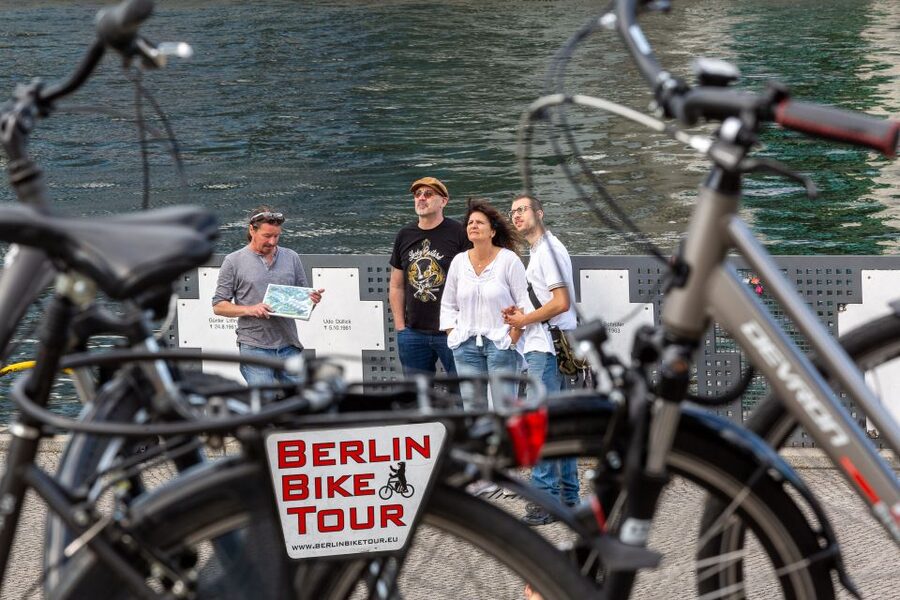
Berlin’s past is best seen on two wheels. This 210-minute e-bike tour links the former Berlin Wall with Mitte’s major sights, giving you a clear sense of how the divided city once worked and how quickly it changed. I like the route’s mix of serious history and famous landmarks, and I like that the electric bikes make a long city ride manageable. The main consideration is that the tour is conducted in German, so you need enough language ability to follow the guide’s stories.
The small group, limited to eight people, should make it easier to hear and ask questions. Feedback has especially praised the guides for making the Wall’s construction and fall vivid, with Ference singled out for clear and engaging explanations. The tour runs rain or shine, so weather-ready clothing is not optional.
In This Review
- Key points to know before you book
- Why this e-bike tour works for seeing Berlin
- Bornholmer Strasse and the night the border opened
- Mauerpark and the Wall’s physical trace
- Bernauer Strasse, the Chapel of Reconciliation, and Nordbahnhof
- Mitte and the Charité hospital
- Reichstag, Brandenburg Gate, and the Tiergarten
- The Holocaust Memorial and Berlin’s difficult memory
- Gendarmenmarkt, Bebelplatz, and Unter den Linden
- Nikolaiviertel and the modern center
- What the $48 price really includes
- Language, weather, and comfort considerations
- Who should book this Berlin ride?
- Should you book it?
- FAQ
- How long does the e-bike tour last?
- Where does the tour begin?
- What language is the tour conducted in?
- How many people are in the group?
- Is the e-bike included in the price?
- Are food, drinks, and attraction tickets included?
- What happens if it rains?
Key points to know before you book
- The route begins at Bornholmer Strasse, the first border crossing opened on the night of November 9, 1989.
- You cover both Wall history and central Berlin, including the Reichstag, Brandenburg Gate, Holocaust Memorial, Gendarmenmarkt, and Alexanderplatz.
- The electric bikes matter, since the ride lasts three and a half hours and crosses a large part of central Berlin.
- The group is capped at eight, a useful size for hearing a guide and keeping the ride together.
- The tour is German-language only, an important factor when the guide’s storytelling is central to the experience.
- The $48 price is reasonable for a half-day outing, since it includes the e-bike, lock, guide, and the full guided ride, but not food, drinks, or attraction tickets.
Why this e-bike tour works for seeing Berlin
Berlin is spread out. The former Wall ran through several districts, while the Reichstag, Brandenburg Gate, Gendarmenmarkt, Museum Island area, and Alexanderplatz sit in different parts of the center. Walking between all of them would take much of a day, and a standard bus tour can make the city feel flat and distant.
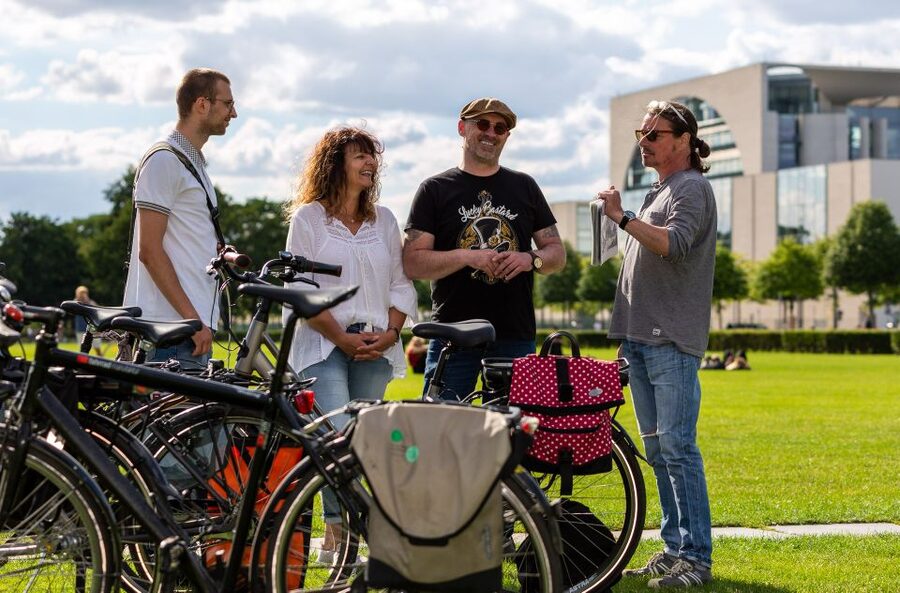
An e-bike gives you a useful middle ground. You still move through the streets and parks at ground level, but the motor takes some strain out of the ride. I like this format for Berlin because the physical act of crossing former East and West districts helps make the city’s division easier to picture.
The tour lasts 210 minutes, or three and a half hours. That is long enough to connect the main sites, but short enough to fit into a busy sightseeing day. You are not buying entrance to museums or monuments. Instead, you are paying for the bikes, the route, and the guide’s explanation of what happened at each stop.
The small group is another real advantage. With no more than eight participants, the guide can keep the ride personal and explain details without speaking to a large crowd. Several ratings praise the tour as informative, interesting, and easygoing. Ference receives particular credit for bringing the Wall story to life in a clear way.
More Bike Tours in Berlin
- Berlin: Sights and Highlights Bike Tour with a Local Guide
★ 4.8 · 2,698 reviews - Berlin Highlights 3-Hour Bike Tour
★ 5.0 · 948 reviews - Berlin City Bike Tour with Beer Garden Stop
★ 5.0 · 917 reviews
Bornholmer Strasse and the night the border opened
Meet outside Bornholmer Strasse 75, where the tour begins and ends. This is not just a convenient starting point. It is the former border crossing associated with one of the most important moments in modern Berlin.
On the night of November 9, 1989, East Berliners gathered at the crossing after confusing announcements about new travel rules. The gates eventually opened, and people moved through into West Berlin. Starting here gives the tour an immediate human focus: the Wall was not only concrete and guard posts, but also a barrier that families and neighbors crossed in moments of fear, hope, and celebration.
The listed stop is called the Place of 9 November 1989. Expect to pause while the guide explains the setting before getting back on the bike. This opening works well because it begins with the Wall’s collapse, then moves into the structure and daily reality of the divided city.
Mauerpark and the Wall’s physical trace
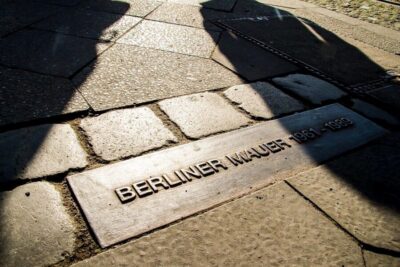
The next section leads to Mauerpark. The park was once split by the Wall, and its name still points to that former division. Today, the area feels open and public, which makes it a useful place to discuss how ordinary spaces were cut apart.
I like this part of the route because it asks you to picture the missing barrier rather than simply photograph a preserved piece of it. The contrast between a public park and the former border line shows how Berlin’s reunification changed the use of the city.
The cycling itself is part of the lesson. You are not being driven from one monument to the next. You ride across the old boundary, then continue along streets that once had different rules, identities, and political systems. The e-bike keeps the pace comfortable, though you should still be prepared for several hours in the saddle.
Bernauer Strasse, the Chapel of Reconciliation, and Nordbahnhof
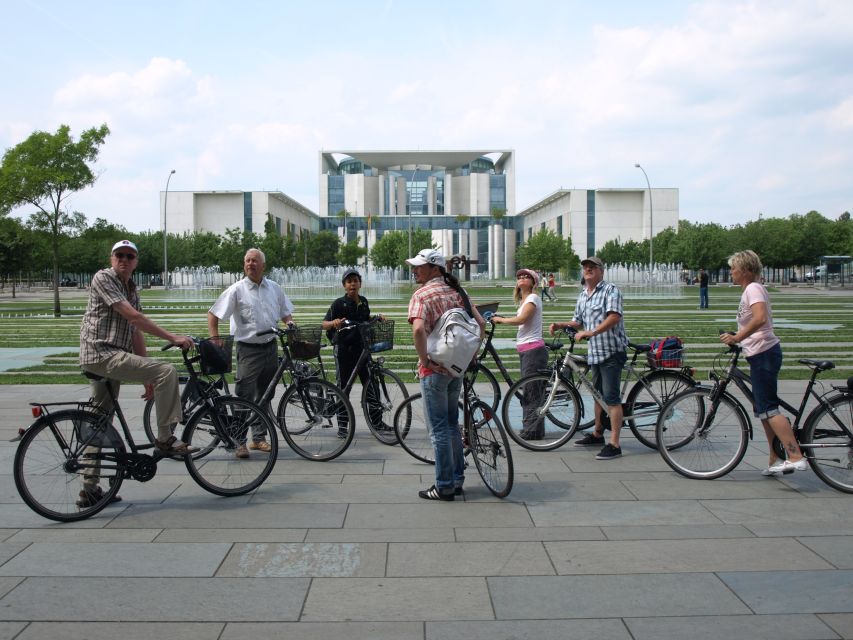
Bernauer Strasse is one of the most important Wall locations in Berlin. Buildings stood right beside the border here, and the street became known for escape attempts, divided families, and dramatic images from the period.
The route includes the Wall Memorial and the Chapel of Reconciliation. The chapel occupies the site of a former church that was caught within the border zone and later destroyed. Its presence gives the stop a quieter tone than the larger central monuments.
This is where the tour’s serious side becomes strongest. The guide can connect the surviving traces, memorial spaces, and nearby streets to the choices people faced under the East German border system. If you want only light sightseeing, this section may feel heavy. If you want to understand how the Wall affected real lives, it is essential.
The ride then reaches Nordbahnhof, once a ghost station. During the division, trains on some West Berlin subway and rail lines passed through stations in East Berlin without stopping. The closed platforms became eerie reminders of the border below the city. A former transportation stop may sound less dramatic than the Brandenburg Gate, but it explains how the division reached into daily routines.
More Berlin Wall Tours in Berlin:
- Skip-the-Line: Berlin Wall Museum at Checkpoint Charlie
★ 4.1 · 2,041 reviews - Cold War, Berlin Wall, Spies and the East Side Gallery
★ 5.0 · 1,024 reviews - Berlin: Guided Bike Tour of the Berlin Wall and Third Reich
★ 4.7 · 499 reviews - Berlin: Cold War Walking Tour on Berlin Wall Route
★ 4.8 · 437 reviews
Mitte and the Charité hospital
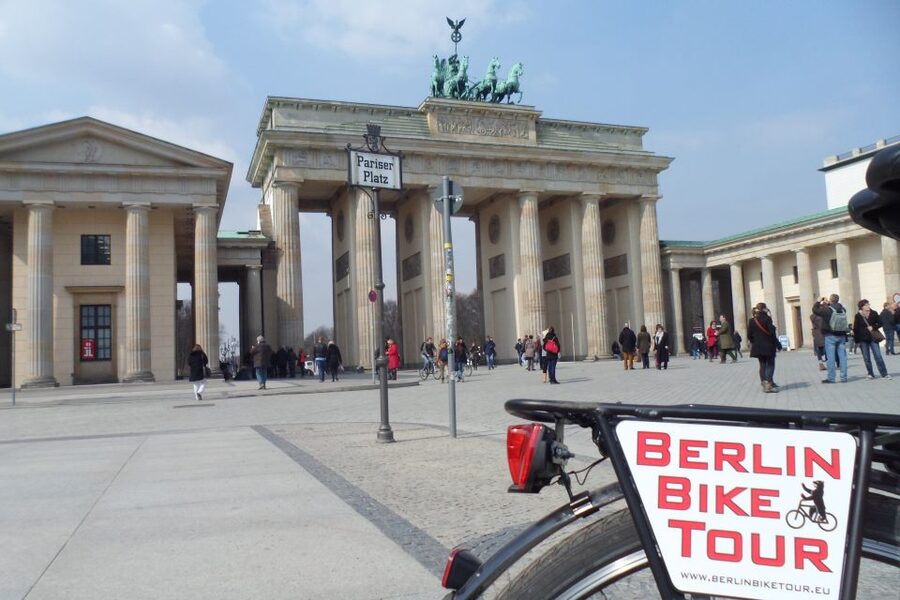
From the Wall sites, the route moves into Mitte, Berlin’s central district. This shift is useful because it shows that the divided city was not confined to a single memorial zone. Its borders ran through working neighborhoods, transport routes, parks, and major civic areas.
The Charité hospital is included along the way. It is one of Berlin’s long-established medical institutions and adds a different kind of context to the ride. You are not simply ticking off monuments. You are seeing the central city as a place where hospitals, government buildings, streets, and memorials sit close together.
The route’s variety is one of its best qualities. In a single outing, I can picture the Wall as a physical barrier, a transport problem, a political symbol, and a personal hardship. The guide’s role matters here, since the value comes from understanding the connection between the stops rather than just seeing them.
Reichstag, Brandenburg Gate, and the Tiergarten
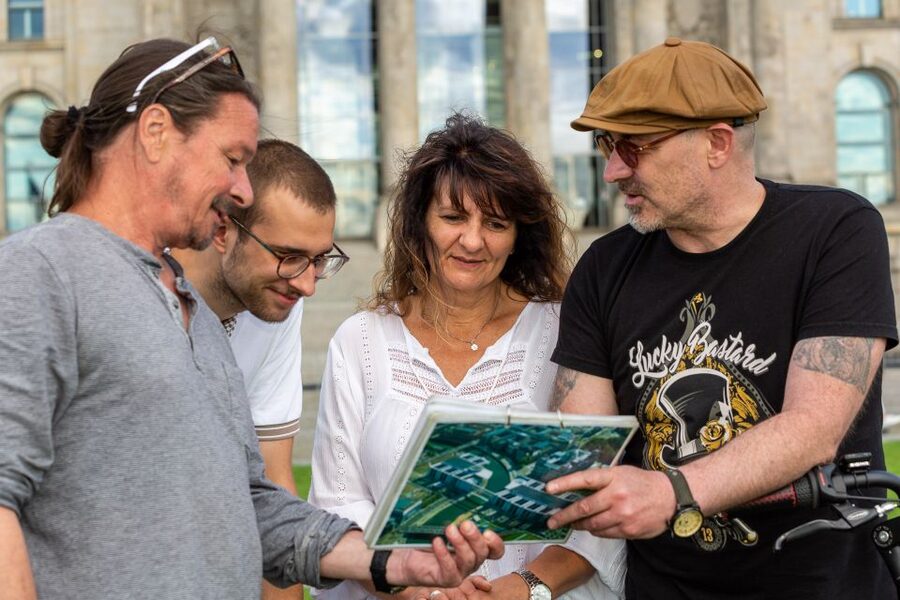
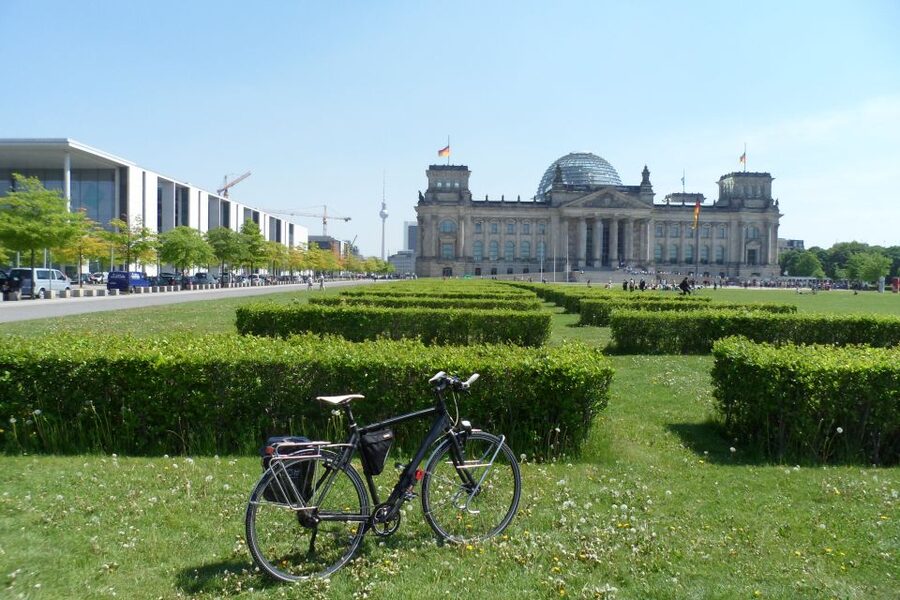
The government quarter brings the ride to the Reichstag. The building’s historic role and prominent dome make it one of Berlin’s most recognizable sights, even if you only view it from outside on this tour. Entrance tickets are not included, so do not expect a visit inside.
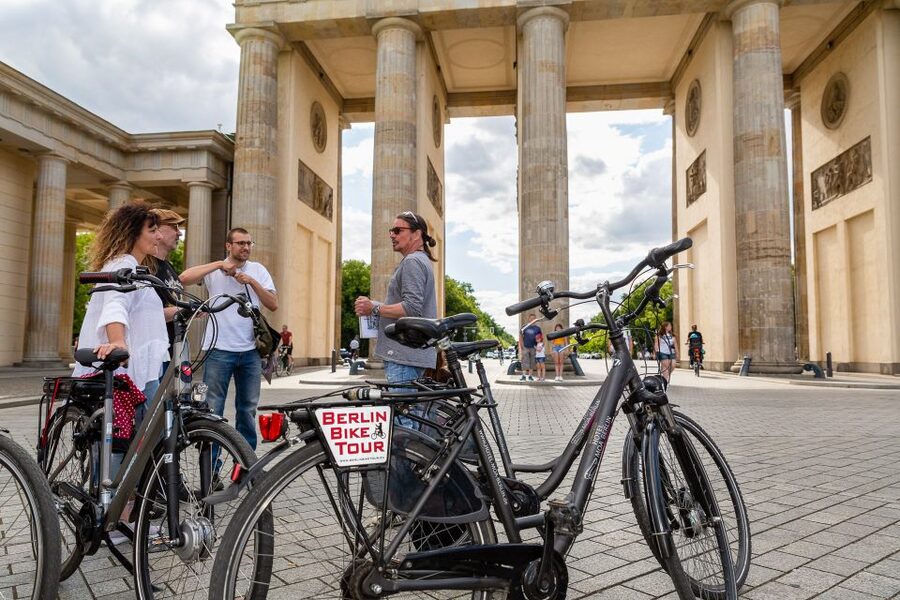
Nearby, the Brandenburg Gate provides one of the clearest symbols of Berlin’s divided past and reunification. It once sat close to the Wall and became a powerful image when the border opened. The guide can place the monument within the larger political story, rather than treating it as just another grand photo stop.
The ride also passes through the leafy Tiergarten. This large park offers a change of pace after the Wall memorials and government buildings. It gives you a chance to see central Berlin from a calmer angle while staying on the route toward the city’s main historic squares.
A practical note: the tour is not built around long indoor visits. You see many major sights from the street, with the guide providing context at stops. That makes the experience efficient, but you will need separate plans if you want to tour the Reichstag or enter other attractions.
The Holocaust Memorial and Berlin’s difficult memory
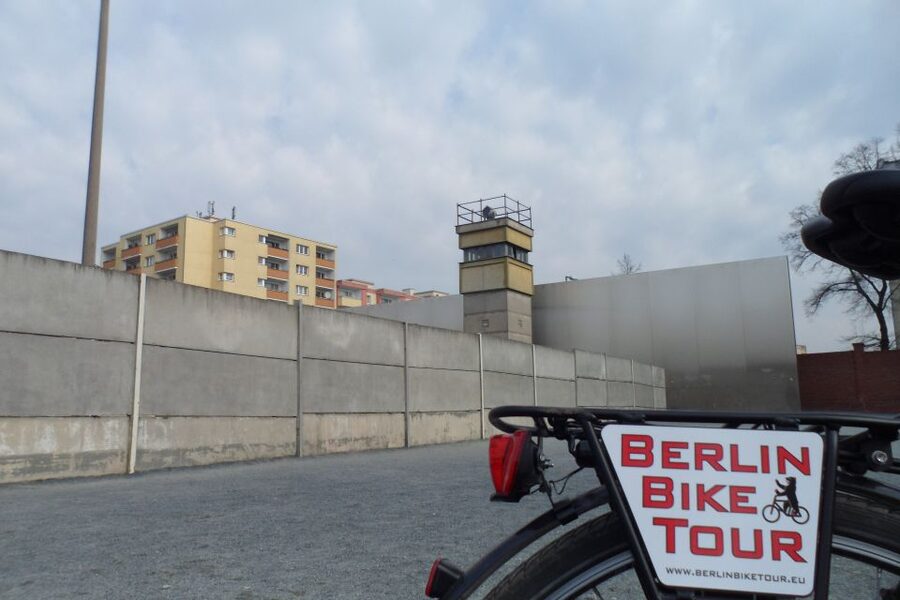
The Holocaust Memorial is one of the tour’s most important pauses. Its field of concrete slabs creates an unsettling space in the heart of the capital, close to the Brandenburg Gate and government district. The tour asks you to stop and pay respects to the Jews of Europe murdered during World War II.
This section is not a quick landmark photo. Give it the attention it deserves and listen carefully to the guide’s explanation. The memorial is intentionally open to interpretation, and its changing paths and uneven ground create a strong physical response.
Because the ride covers so much ground, some stops are necessarily brief. You may want to return here later on foot if you prefer more time for reflection. Still, including the memorial in the route gives the tour a wider view of Berlin’s twentieth-century past. The Wall story is central, but it did not happen in isolation.
Gendarmenmarkt, Bebelplatz, and Unter den Linden
Gendarmenmarkt brings an elegant architectural pause to the ride. The square is known for its imposing historic buildings and formal layout, a sharp contrast with the Wall’s rough edges and border infrastructure.
Nearby Bebelplatz carries a darker memory. It is associated with the Nazi book burning of 1933, so this stop adds another chapter to Berlin’s difficult twentieth-century story. Together, the two squares show the city’s mix of beauty, political power, and painful memory.
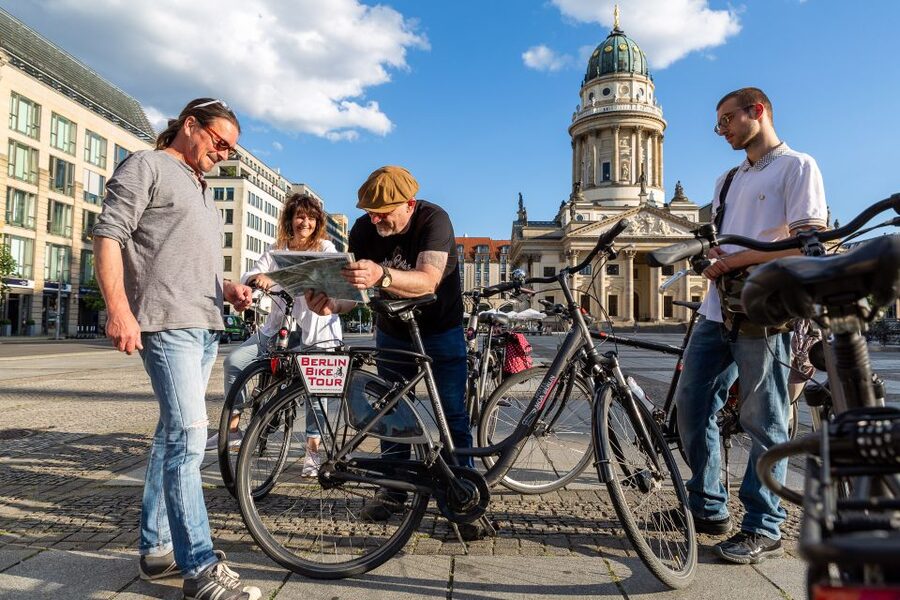
The route then follows Unter den Linden, the broad avenue leading through the historic center. Cycling here helps you understand the city’s scale and connections better than a series of isolated stops. Along the way, you see Berlin Cathedral and the renovated Berlin Palace.
The palace area reflects the city’s changing appearance. Berlin has repeatedly rebuilt, removed, and reinterpreted major buildings, and the ride gives you a quick look at that process without pretending the past is simple. You should think of this as an outdoor overview, not a detailed architectural tour.
Nikolaiviertel and the modern center
Nikolaiviertel offers a smaller, more intimate setting. It is described as the original village that formed Berlin, and its narrow, charming streets feel very different from Unter den Linden’s grand avenue. This is a useful reminder that Berlin began as a settlement before it became a capital.
The final section moves toward the modern center. You see the Rotes Rathaus, or Red Town Hall, followed by Marien Church, Alexanderplatz, and the World Clock. The TV Tower dominates the area and provides an unmistakable marker of East Berlin’s postwar identity.
Alexanderplatz is especially useful as a closing point because it brings the story into the former East Berlin. The route has moved through old border crossings, West Berlin government areas, historic Prussian spaces, and East German civic architecture. Ending among the TV Tower, World Clock, and large square gives the tour a clear sense of how many different Berlins exist within a short ride.
You finish back at Bornholmer Strasse 75. Returning to the starting point completes the circle and puts the opening border crossing back into perspective.
What the $48 price really includes
At $48 per person, this is a fair price for a three-and-a-half-hour small-group outing. You receive the e-bike, bike lock, guide, and guided route. The value is strongest if you want both transportation and interpretation, since covering these districts independently would require careful route planning and a fair amount of riding.
The cost does not include food, drinks, or entrance tickets. Bring your own drink, and budget separately if you plan to enter attractions after the ride. Since most of the sightseeing happens outdoors, the price is mainly paying for access to the bike and the guide’s knowledge of the city’s history.
I would not choose this tour as a replacement for museum visits. I would choose it as a strong first look at Berlin, especially if you want to understand how the Wall affected the city’s layout. It can help you decide which memorials and buildings deserve a longer visit later.
Language, weather, and comfort considerations
The live guide speaks German, and the supplied information lists German as the tour language. That is the single biggest booking question. Since the guide’s explanations are the heart of the experience, you should be comfortable listening to German for several hours.
The tour runs rain or shine. Wear weather-appropriate clothing and bring a drink. The e-bike reduces the effort compared with a regular bicycle, but it does not turn the outing into a passive sightseeing ride. You are still cycling through Berlin for 210 minutes.
The small group size should help with keeping together and hearing the guide. Feedback repeatedly praises the bikes, the routes, and the clear explanations. The most common strengths are the informative storytelling, the pleasant guides, and the quality of the electric bikes.
Who should book this Berlin ride?
I would recommend it to active visitors who want a broad introduction to Berlin’s Wall history and central sights in one outing. It suits people who prefer streets, parks, and real city movement over sitting in a vehicle.
It is also a good choice for anyone who finds Berlin’s history overwhelming. The route gives you a sensible sequence: the border opening, the Wall’s former path, memorial sites, government buildings, historic squares, and the modern East Berlin center.
I would hesitate if you need an English-language tour, want long visits inside attractions, or dislike cycling in uncertain weather. The tour is also not ideal for someone looking only for postcard landmarks, since the Wall memorials and Holocaust Memorial require attention and emotional maturity.
Should you book it?
Book this tour if you want Berlin’s major sights tied together by the story of a divided city. The best features are the small group, the well-chosen route, the easy-to-use e-bikes, and the guides’ strong reputation for informative, lively explanations. Ference’s clear storytelling is a useful sign of the level to expect, though guide assignments can vary.
Skip it if German is not suitable for you or if you prefer indoor sightseeing. For the right participant, $48 buys more than a bicycle ride. It gives you a practical way to cross Berlin’s former East and West, see the city at street level, and understand why these places matter.
FAQ
How long does the e-bike tour last?
The tour lasts 210 minutes, or three and a half hours.
Where does the tour begin?
Meet your guide outside Bornholmer Strasse 75. The tour also returns to Bornholmer Strasse 75 at the end.
What language is the tour conducted in?
The live guide speaks German, and German is the listed tour language.
How many people are in the group?
The group is limited to eight participants.
Is the e-bike included in the price?
Yes. The e-bike, bike lock, tour guide, and guided e-bike tour are included.
Are food, drinks, and attraction tickets included?
No. Food, drinks, and entrance tickets to attractions are not included. You should bring a drink.
What happens if it rains?
The tour takes place rain or shine, so bring weather-appropriate clothing.
More E-Bikes in Berlin
- Best of Berlin E-Bike Tour
★ 5.0 · 77 reviews - Best of Berlin E-Bike Tour
★ 5.0 · 37 reviews - Berlin Bike and Electric Bike Rentals
★ 4.5 · 12 reviews - Dresden: E-Bike Tour and Dresden Heath Forest Trails
★ 4.9 · 34 reviews
Just added around Berlin
- Private Walking Tour in Berlin: Hitler’s Germany & WWII★ 5.0 · 7 reviews
- The History of Berlin: WWII PRIVATE Walking Tour With Locals★ 5.0 · 209 reviews
- Berlin: Private Bike Tour of the Berlin Wall and Third Reich★ 5.0 · 23 reviews
- Private Berlin WWII and Cold War History Tour with Local Expert Guide★ 5.0 · 28 reviews
- Private Walking Tour Berlin 3 hours: Brandenburg, Historic Center★ 5.0 · 7 reviews
- Berlin: Guided Private Bike Tour to Explore the Highlights★ 5.0 · 12 reviews
- Berlin Photography Masterclass – Private Photography Lesson★ 4.5 · 23 reviews
- Group Driving Tour 1 to 6 people. Berlin Shore Excursion incl pick-up at Port★ 5.0 · 8 reviews
Berlin Wall Tours, compared.
Skip-the-Line: Berlin Wall Museum at Checkpoint Charlie
Read our review →
Cold War, Berlin Wall, Spies and the East Side Gallery
Read our review →
Cold War, Berlin Wall, Spies and the East Side Gallery
Read our review →
East Berlin and the Berlin Wall 2-Hour Walking Tour
Read our review →
Browse the lists this tour appears in