
Reviewed · BERLIN WALL TOURS
Cold War, Berlin Wall, Spies and the East Side Gallery
Berlin’s past is never far away. This three-hour tour turns that past into a walk through border crossings, surveillance stories, escape routes, socialist architecture, and the painted remains of the Berlin Wall. For $18.04 per person, it offers a lot of historical context for a modest price.
I especially like the visit to the Palace of Tears, where the Cold War becomes personal rather than abstract. I also like the way the tour connects political events with daily life in East Berlin, including CIA, KGB, and Stasi methods. The main drawback is practical: you need a Berlin AB transport ticket, and the route can feel hurried or less organized if your guide has difficulty managing the group.
The tour earns a 4.9 rating from 1,024 reviews, with 99 percent of customers recommending it. Guides such as Klaus, Xavier, Nikolai, Paul, Jamie, and Tobi receive repeated praise for clear explanations, personal stories, and an easygoing willingness to answer questions. Still, one poor experience described weak sound, loose organization, and too much time spent on guessing games, so the quality may depend heavily on the individual guide.
In This Review
- Key points to know before booking
- Why Cold War Berlin works best on foot
- Friedrichstrasse Station and the Palace of Tears
- The SED, Alexanderplatz, and socialist power
- Karl-Marx-Allee and the GDR’s grand display
- Death strip sites and the Berlin Wall Memorial
- Brandenburg Gate and the meaning of reunification
- East Side Gallery: a strong finish, with a modern twist
- Guides make the biggest difference
- Price, transport, and the real value
- Who should book this Berlin Wall tour?
- Should you book it?
- FAQ
- How long does the Cold War Berlin tour last?
- Where does the tour begin?
- Where does the tour finish?
- What time does the tour start?
- Is public transport included?
- What is included in the tour price?
- Are food and drinks included?
- What group size should I expect?
- Can I cancel for a full refund?
Key points to know before booking
- A former border crossing gives the tour its emotional center: The Palace of Tears shows how the Berlin Wall split families and turned ordinary goodbyes into painful final meetings.
- You use Berlin public transport during the route: The required AB ticket costs €10 per person and is not included in the tour price.
- The tour links political power with everyday life: Alexanderplatz and Karl-Marx-Allee help explain how East Germany presented itself to the world and how people lived behind the Wall.
- You see more than famous postcard sites: The route includes Wall remains, death strip areas, escape stories, the former Stasi, and the East Side Gallery.
- The group is capped at 22 people: That is small enough for questions, though you still need to stay close to the guide during transit.
- The end point is useful for the rest of your day: The tour finishes at the East Side Gallery, near several transport options.
Why Cold War Berlin works best on foot
Berlin’s Cold War story can feel scattered when you see the sights alone. A railway station, an apartment boulevard, a memorial, and a painted wall may seem unrelated until someone connects them. This tour does that connecting work.
You begin at Friedrichstrasse Station, a fitting place because the station once sat directly in the machinery of division. The guide sets out the larger story: after World War II, Berlin became the main pressure point between the United States and its NATO partners on one side, and the Soviet Union and its allies on the other.
That opening matters. Without it, the Berlin Wall can look like a single tragic structure. With the political background, you understand why Berlin became the center of a struggle over two competing systems and why the city carried such importance far beyond Germany.
The walking format also lets you notice changes in the city. You move between preserved sites, rebuilt areas, grand GDR architecture, and surviving Wall sections. I like this mix because it shows that the Cold War was not sealed inside a museum. It shaped streets, stations, buildings, families, and daily routines.
More Museums in Berlin
- Berlin: Natural History Museum Entrance Ticket
★ 4.6 · 3,382 reviews - Skip-the-Line: Berlin Wall Museum at Checkpoint Charlie
★ 4.1 · 2,041 reviews - Berlin: Museum Island Multiple Museum Entry Ticket
★ 4.4 · 2,007 reviews
Friedrichstrasse Station and the Palace of Tears
The meeting point is outside Friedrichstrasse train station, listed at Reichstagufer 17 in central Berlin. You should arrive 15 minutes early and check the exact meeting instructions carefully, since one customer was dropped at the wrong place by an Uber and could not reach the group in time.
The first portion lasts about 15 minutes. Your guide introduces the route and explains how Friedrichstrasse functioned during the divided years. The tour also refers to the underground ghost train, a route that once connected East and West Berlin. That detail helps explain how Berlin’s transport system continued to operate even while the city above was split by walls, controls, and armed borders.
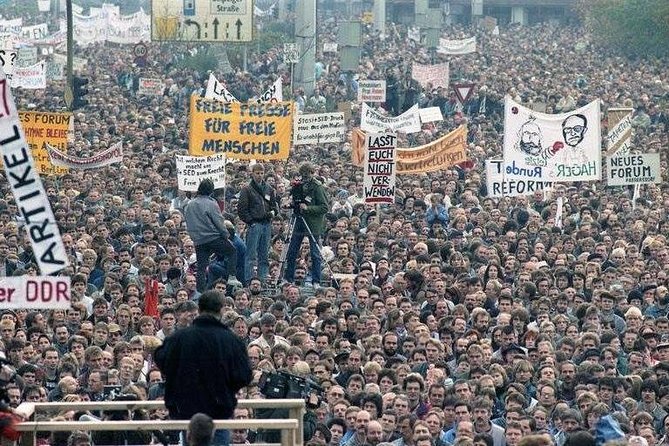
From there, you visit the Tränenpalast, or Palace of Tears. This former border crossing handled departures between East and West Berlin. For families, it became a place of forced goodbyes. The name is not a clever tourist label. It reflects the sorrow attached to this station and the people separated there.
The museum visit lasts about 20 minutes and is free. Exhibits cover escape attempts, the practical rules of separation, and the eventual reunification. I consider this one of the strongest parts of the tour because it shifts the subject away from leaders and military strategy. You see what the Wall did to parents, children, couples, and friends.
The stop is short, so you should not expect a long museum visit. If you want to examine every display in detail, you may need to return later on your own.
The SED, Alexanderplatz, and socialist power
A brief stop at the Admiralspalast points out where the Socialist Unity Party of Germany, or SED, was founded in 1946. The stop lasts only about five minutes, but it gives you a useful political marker. This was the party that governed East Germany, formally the German Democratic Republic.
Next comes Alexanderplatz, once the main public stage of East Berlin. The square combined government messaging, large rallies, GDR architecture, shopping, transport, and ordinary errands. That mixture is important. The Cold War was not only about spies and missiles. It was also about buying groceries, going to work, raising children, and moving through a city where the state watched its citizens closely.
The guide explains how propaganda met daily life here. You may hear about surveillance, political control, and the gap between the image East Germany wanted to project and the experience of people living under that system.
This is also a useful point to ask questions. Several guides have been praised for making room for questions rather than delivering a memorized speech. Klaus, in particular, receives praise for combining a broad command of the period with stories that made the material easier to understand. Paul has also used photographs on an iPad to show how places looked during the divided years.
Karl-Marx-Allee and the GDR’s grand display
Karl-Marx-Allee gives you a different view of East Germany. Instead of a border crossing or secret police office, you see a monumental boulevard built to express socialist power.
The avenue was designed as a showcase. Its grand Stalinist buildings were meant to present East Germany as strong, modern, and orderly. Your guide uses the architecture to explain ideology and state control, while also placing it against the reality of ordinary life behind the Iron Curtain.
The stop lasts around 20 minutes. Admission is not included, although the tour information does not identify a separate entrance fee. The main value here is the explanation. Without a guide, you might admire the scale of the buildings without understanding why this particular style mattered politically.
The route does cover a lot of ground. One customer praised the moderate pace, while another noted that the tour ran beyond the advertised length. That can work in your favor if you enjoy questions and extra stories, but it may cause trouble if you have a fixed lunch booking or afternoon appointment.
More Berlin Wall Tours in Berlin:
- Berlin: Guided Bike Tour of the Berlin Wall and Third Reich
★ 4.7 · 499 reviews - Berlin: Cold War Walking Tour on Berlin Wall Route
★ 4.8 · 437 reviews - Berlin: Berlin Wall & East Side Gallery Walking Tour
★ 4.9 · 264 reviews - Cold War, Berlin Wall, Spies and the East Side Gallery
★ 4.8 · 254 reviews
Death strip sites and the Berlin Wall Memorial
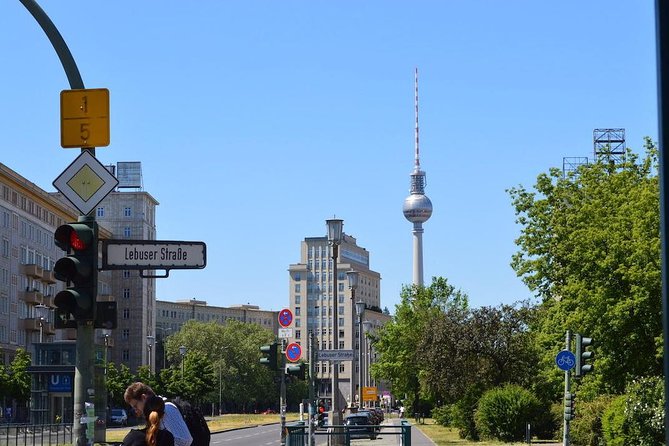
The most sobering part of the experience comes when the tour reaches the Wall and former death strip areas. The death strip was the controlled zone between sections of the border system, designed to expose escape attempts. It included obstacles and surveillance measures intended to prevent people from reaching the West.
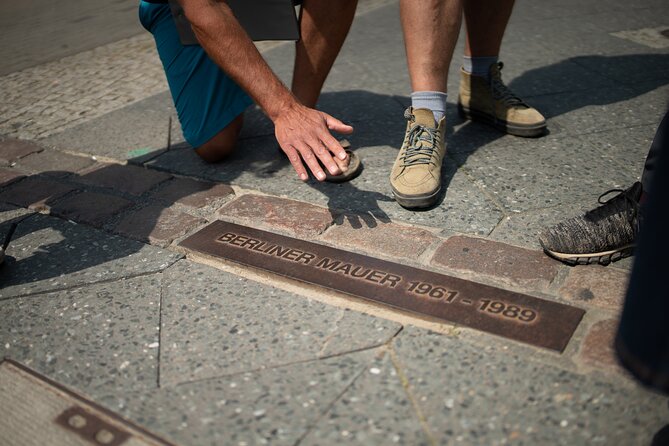
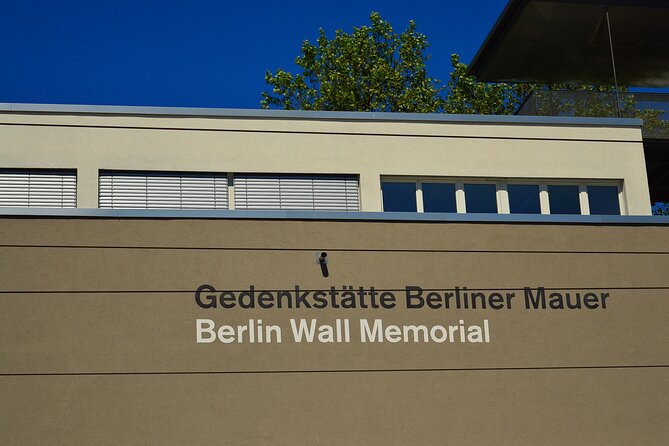
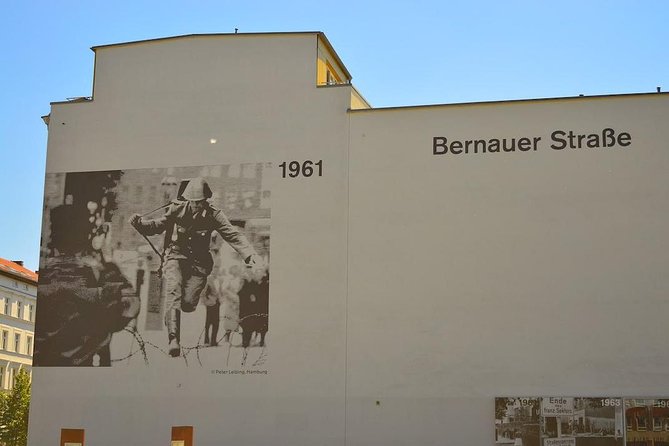
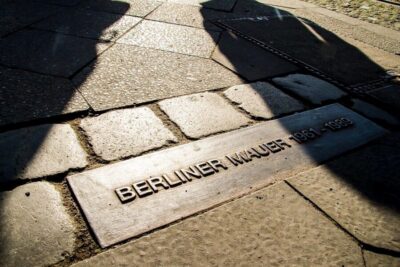
The route includes Bernauer Strasse and the Berlin Wall Memorial, both tied to escape attempts and the physical structure of the border. The area helps you understand that the Wall was not simply one slab of concrete. It was a fortified border zone, reinforced by watch points, patrols, barriers, and strict control.
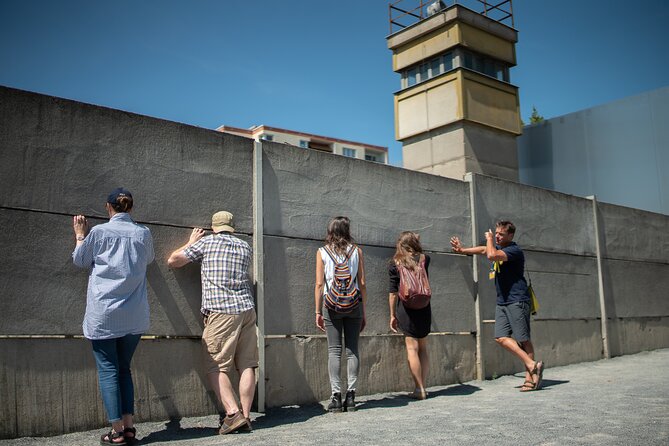
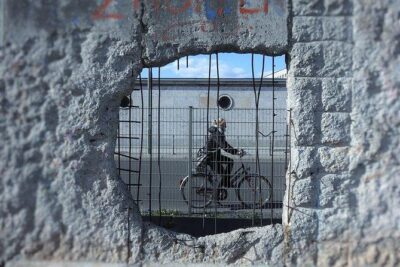
A particularly powerful detail comes from the way you view the Wall from the eastern side. One customer described looking through a crack toward the western side across the former death zone. That perspective can be more unsettling than standing beside a brightly painted section of Wall. It forces you to think about the risk involved in crossing, not just the later celebration of the Wall’s fall.
The tour also discusses the former Stasi, East Germany’s secret police. You learn about surveillance techniques used by the Stasi and compare them with methods associated with the CIA and KGB. This comparison gives the tour a wider Cold War frame, but the East German focus remains central.
If you want a fuller look at the Stasi, one guide specifically suggested continuing with a separate Stasi museum visit. That is good advice. This tour gives you an introduction and places the organization within Berlin’s divided society, but it is not a dedicated Stasi museum tour.
Brandenburg Gate and the meaning of reunification
The tour description includes the Brandenburg Gate as a major point in Berlin’s Cold War story. During the division, the gate became a symbol of a separated city and country. Since reunification, it has taken on a new meaning as a national symbol of peace and unity.
The gate is one of the clearest examples of how Berlin reuses its symbols. The same monument once represented separation and now represents the end of that separation. Your guide places it within the larger story of Berlin, from its early development through the Nazi period, postwar occupation, division, and reunification.
The exact stop order may vary with the guide and route, so do not treat every listed location as a long formal stop. The experience works best as a connected story rather than a series of extended museum visits.
East Side Gallery: a strong finish, with a modern twist
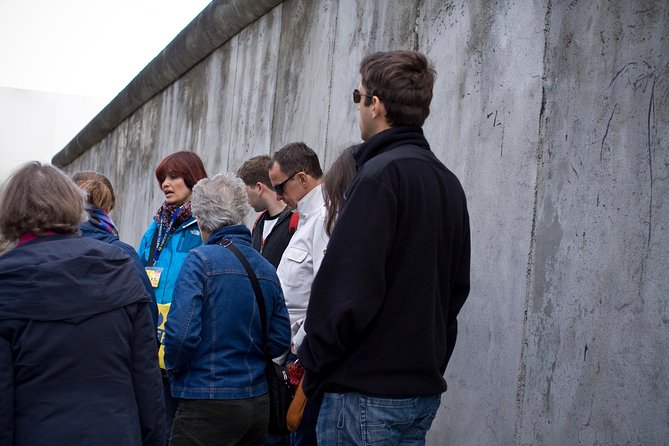
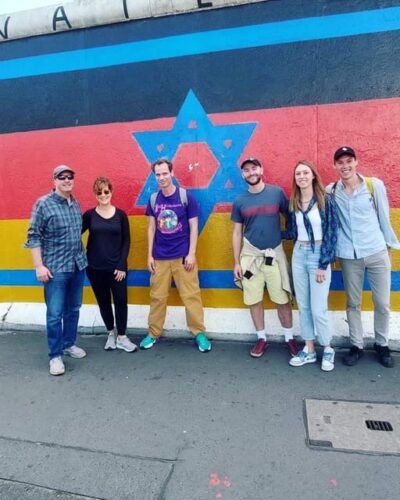
The tour ends at the East Side Gallery on Mühlenstrasse. This is the longest permanent graffiti wall in the world and the largest remaining section of the Berlin Wall. Its murals turned a former border into public art about freedom, resistance, hope, and political change.
After the darker sections of the route, the East Side Gallery gives the tour a different final note. The paintings do not erase the Wall’s purpose, but they show how Berliners and artists reclaimed it. You can see why this remains one of Berlin’s most popular places for understanding the city after 1989.
The visit lasts about 25 minutes. That is enough for an introduction and several murals, but not enough for a slow look at every painting. Since the tour finishes here, you can stay longer on your own if the art interests you.
The ending is also practical. The East Side Gallery is surrounded by transport choices, making it easy to continue sightseeing or return to your accommodation.
Guides make the biggest difference
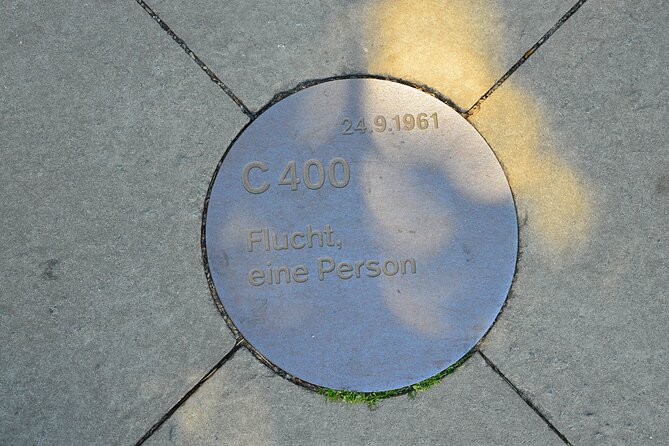
The strongest praise goes to the guides. Klaus is repeatedly described as engaging, calm, and full of useful background stories. Xavier receives praise for answering many questions while keeping the tone lively. Nikolai is especially valued for connecting Berlin’s political past with the effect of the Iron Curtain on his own family.
That personal angle can be powerful. One family found that Nikolai’s stories helped children understand why the Wall mattered. Tobi also brought firsthand experience of growing up in communist East Germany, giving the subject a human voice that a textbook cannot provide.
Other guides, including Ariel, Grayson, James, Tina, Rohan, Aran, Eran, Cameron, Glen, and Jamie, are praised for clear delivery and enthusiasm. Cameron’s historical background impressed someone who had lived in Berlin during the 1990s, which suggests that the tour can add context even if you already know the city.
Still, guide quality is not perfectly consistent. One very unhappy customer reported poor group control, trouble hearing, little structure, and too many question-and-answer guessing games. That complaint is worth taking seriously, especially if you prefer a formal lecture with a fixed sequence of dates and facts.
Price, transport, and the real value
At $18.04, the tour is inexpensive for three hours with a local expert guide. The price is especially fair if you are new to Berlin’s Cold War story and want a clear route through several important areas.
The extra cost is the Berlin AB transport ticket, listed at €10 per person. It is required and not included. Since the tour uses public transport during the route, you should buy or arrange that ticket before the tour begins rather than waste time at the meeting point.
The group maximum is 22 people. That is not a private tour, but it is far more manageable than a large coach group. You should still stay close to the guide, particularly during the U-Bahn portion. One positive account specifically praised a guide for keeping the group together during public transport travel.
Food, drinks, hotel pickup, and hotel drop-off are not included. Plan a snack and water before you arrive, since the schedule is built around historical stops rather than a meal break.
The tour is offered in English and provides a mobile ticket. It is near public transport, service animals are allowed, and most people can participate. Wear comfortable shoes and dress for the weather because the experience takes place outdoors and the route may run longer than three hours.
Free cancellation is available up to 24 hours before the 10 a.m. start time. Changes or cancellations inside that window are not accepted for a refund.
Who should book this Berlin Wall tour?
I would choose this tour if you want a structured introduction to Cold War Berlin without spending a full day in museums. It suits first-time visitors, families with older children, and anyone who wants personal stories alongside political history.
It is also a good choice if you have already seen the Brandenburg Gate or East Side Gallery but felt you lacked context. The guide helps tie familiar sights to the Berlin Wall, the GDR, the Stasi, and the wider conflict between the superpowers.
You may want something else if you dislike public transport, need a strict finish time, or want long visits inside museums. The route covers many places, but the stops are often short. If your main goal is an in-depth study of the Stasi, plan a separate museum visit.
Should you book it?
Yes, if the history of divided Berlin interests you and you value a guide who can explain why the sites matter. The Palace of Tears, death strip views, socialist architecture, and East Side Gallery make a strong three-hour sequence, and the price is hard to argue with.
Book with a little flexibility in your day. Arrive early, confirm the meeting point, buy the AB ticket, and stay near the guide during the train ride. If you get a guide in the mold of Klaus, Nikolai, Xavier, Paul, or Tobi, you can expect an engaging lesson that connects Berlin’s Cold War past to real human lives.
FAQ
How long does the Cold War Berlin tour last?
The tour lasts approximately three hours, although the end time may vary if the guide answers questions or adds extra information.
Where does the tour begin?
The meeting point is outside Friedrichstrasse train station. The supplied meeting information gives Reichstagufer 17, 10117 Berlin, Germany, so you should check the exact location before setting out.
Where does the tour finish?
The tour ends at the East Side Gallery on Mühlenstrasse, 10243 Berlin, Germany.
What time does the tour start?
The listed start time is 10 a.m. You should arrive 15 minutes before the start.
Is public transport included?
No. You need a Berlin AB Zone transport ticket, listed at €10 per person. The ticket can be purchased from the meeting point.
What is included in the tour price?
A local expert English-speaking guide and a mobile ticket are included.
Are food and drinks included?
No. Food and drinks are not included, so you should make your own arrangements.
What group size should I expect?
The maximum group size is 22 people.
Can I cancel for a full refund?
Yes, if you cancel at least 24 hours before the experience begins. Cancellations or changes made less than 24 hours before the start are not accepted for a refund.
More Cold War Tours in Berlin
- Berlin: Third Reich and Cold War 2 Hour Walking Tour
★ 4.9 · 6,830 reviews - Berlin’s Best: 2 Hour Walking Tour Third Reich and the Cold War
★ 5.0 · 5,486 reviews - Berlin: Cold War Era History Guided Bike Tour
★ 4.8 · 413 reviews - Explore The Berlin Wall: Cold War Berlin and Behind the Berlin Wall
★ 5.0 · 168 reviews
Just added around Berlin
- Private Walking Tour in Berlin: Hitler’s Germany & WWII★ 5.0 · 7 reviews
- The History of Berlin: WWII PRIVATE Walking Tour With Locals★ 5.0 · 209 reviews
- Private Berlin WWII and Cold War History Tour with Local Expert Guide★ 5.0 · 28 reviews
- Private Walking Tour Berlin 3 hours: Brandenburg, Historic Center★ 5.0 · 7 reviews
- Berlin: Private Bike Tour of the Berlin Wall and Third Reich★ 5.0 · 23 reviews
- Berlin: Guided Private Bike Tour to Explore the Highlights★ 5.0 · 12 reviews
- Berlin Photography Masterclass – Private Photography Lesson★ 4.5 · 23 reviews
- Group Driving Tour 1 to 6 people. Berlin Shore Excursion incl pick-up at Port★ 5.0 · 8 reviews
Berlin Wall Tours, compared.
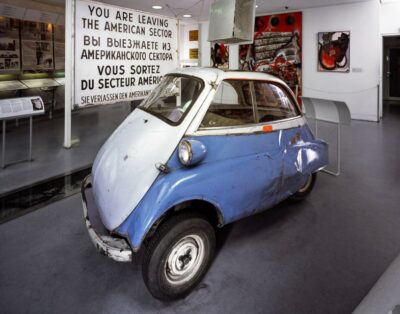
Skip-the-Line: Berlin Wall Museum at Checkpoint Charlie
Read our review →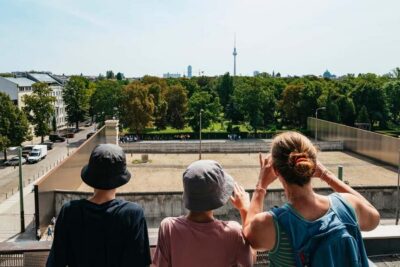
Cold War, Berlin Wall, Spies and the East Side Gallery
Read our review →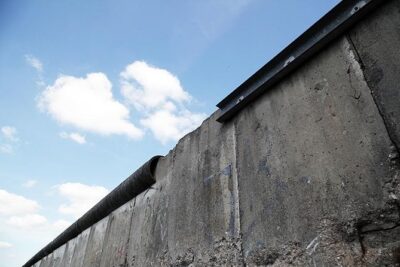
East Berlin and the Berlin Wall 2-Hour Walking Tour
Read our review →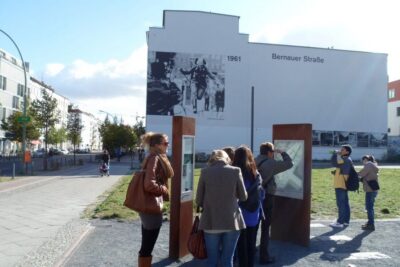
Explore The Berlin Wall: Cold War Berlin and Behind the Berlin Wall
Read our review →Browse the lists this tour appears in