
Reviewed · BERLIN WALL TOURS
East Berlin and the Berlin Wall 2-Hour Walking Tour
Berlin’s past is under your feet. This two-hour East Berlin walking tour links the Berlin Wall, the former Stasi headquarters, and the place where the Wall fell, while guides explain the Cold War in clear, human terms. I like the chance to touch surviving Wall remains, and I like the focus on ordinary East Berlin life rather than only grand political events. The main drawback is time: two hours goes quickly, and the tour uses Berlin public transport, so you must buy your own AB Zone ticket.
The tour costs about $21.78 per person, a fair price for a small-group experience capped at 20 people. Guides such as Anastasia, Ariel, Dylan, Tom, Georgia, Jasper, Jimmy, Nathan, Heidi, Hannah, Tobi, Pip, Susan, and Campbell have been praised for turning hard history into stories you can follow. Dylan, in particular, was noted for answering questions and suggesting other places to visit, though one group found his transport instructions unclear.
In This Review
- Key points to know before you book
- Why this East Berlin tour works so well
- Starting at Hackescher Markt and Friedrichstrasse
- Seeing the Wall at Bernauer Strasse
- The Chapel of Reconciliation and the old watchtower
- Bornholmer Strasse and the night the Wall opened
- Inside the story of the Stasi
- Ending at Alexanderplatz and the TV Tower
- Guide quality, group size, and pace
- Is two hours enough for Berlin’s Wall story?
- Price and practical value
- Who should book this walking tour?
- Should you book the East Berlin and Berlin Wall tour?
- FAQ
- Where does the tour begin?
- What time does the tour start?
- Where does the tour finish?
- How long does the walking tour last?
- Is public transportation included?
- Is the Berlin TV Tower admission included?
- Can I cancel for a full refund?
Key points to know before you book
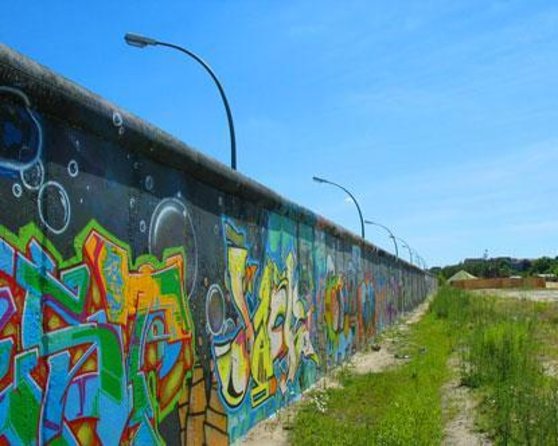
- Touch original Berlin Wall remains at the Berlin Wall Memorial, where preserved sections make the division feel physical rather than distant.
- See the former Death Strip from above, with an explanation of escape attempts and East Germany’s shoot-to-kill orders.
- Learn why the Wall fell on November 9, 1989, including the accidental political mistake that helped open the border.
- Visit the former Stasi headquarters, a powerful stop for understanding surveillance and government control in East Germany.
- Use public transport during the route, with a Berlin Transport AB Zone pass costing about 10.60 euros and not included.
- Finish at Alexanderplatz, near the TV Tower and the former center of East Berlin, close to Nordbahnhof.
Why this East Berlin tour works so well
Berlin offers many ways to study the Cold War. You can read museum panels, visit memorials on your own, or follow the Wall’s old route with a map. This tour adds something important: a guide connects separate sites into one story.
You begin with the division of Germany after World War II, then move through the political tension between the United States and the Soviet Union. From there, the guide explains how Berlin became a city split between two military blocs and why the border hardened over time.
That framework matters. Without it, the Wall can look like a line of concrete and painted fragments. With it, you start to understand why a railway station, a church, an apartment block, or a watchtower could become part of a system designed to control movement.
I especially like the tour’s human scale. The guide discusses daily life for East Berlin citizens, escape plans, families separated by the border, and the way the East German government watched its own people. The history stays connected to individual lives.
The rating of 4.9 from 228 reviews and a recommendation rate of 97 percent suggest very strong satisfaction. More useful than the numbers, though, is the pattern in the feedback: the guides are repeatedly praised for storytelling, clear explanations, humor, and the ability to answer questions. That makes the quality of the guide a major part of the experience.
More Walking Tours in Berlin
- Discover Berlin Half-Day Walking Tour
★ 5.0 · 9,624 reviews - Berlin: Third Reich and Cold War 2 Hour Walking Tour
★ 4.9 · 6,830 reviews - Berlin: Discover Berlin Walking Tour
★ 4.9 · 5,998 reviews
Starting at Hackescher Markt and Friedrichstrasse
The tour starts at Neue Promenade 3, beside Hackescher Markt station, at 10:00 in the morning. This is a practical meeting point in central Berlin, and the nearby rail connection makes it easy to reach by public transport.
The opening stop is brief, but the guide begins setting the political scene immediately. You hear how the United States and the USSR moved from wartime allies to Cold War rivals, and why Berlin became the most visible pressure point between them.
The route includes Friedrichstrasse, one of central Berlin’s major streets. Here, the story shifts from international politics to the experience of people moving between East and West.
You also hear about the Palace of Tears, the former border crossing at Friedrichstrasse railway station. Its nickname came from the farewells that took place there, especially when East German families said goodbye to visitors returning to West Germany.
This is a small but meaningful detail. Political borders are often explained through treaties and leaders. The Palace of Tears reminds you that the division also meant repeated, painful goodbyes between parents, children, relatives, and friends.
The stop itself is short, so do not expect a long indoor museum visit as part of the walking tour. The value comes from the guide’s explanation and the way the site fits into the larger story.
Seeing the Wall at Bernauer Strasse
The Berlin Wall Memorial at Bernauer Strasse is the heart of the tour. You spend about an hour in this area, far longer than at the other stops, and rightly so.
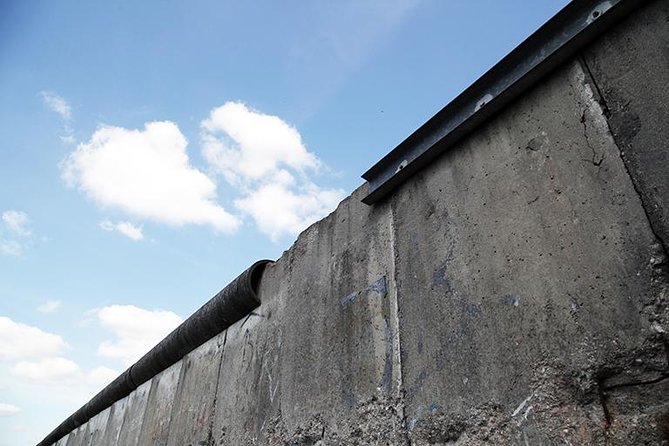
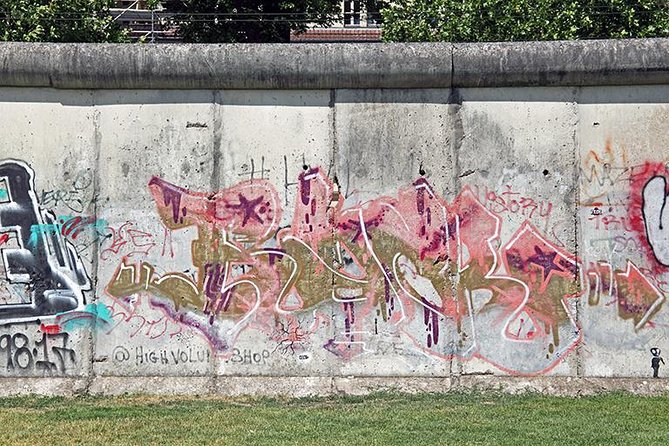
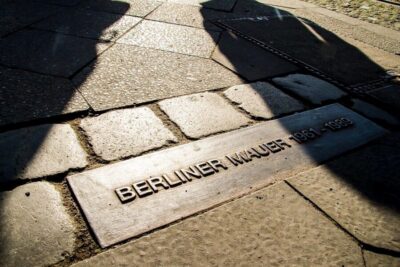
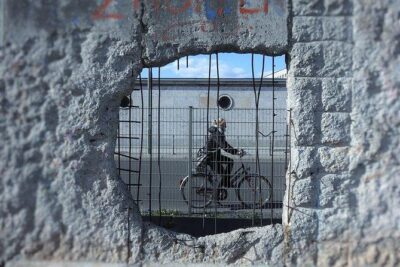
Here, you see a section of the Wall preserved in its original form. You can touch surviving Wall remains, an unusual chance in a city where many fragments have been moved, painted, or placed in museums. The physical material helps you grasp the Wall’s size and purpose.
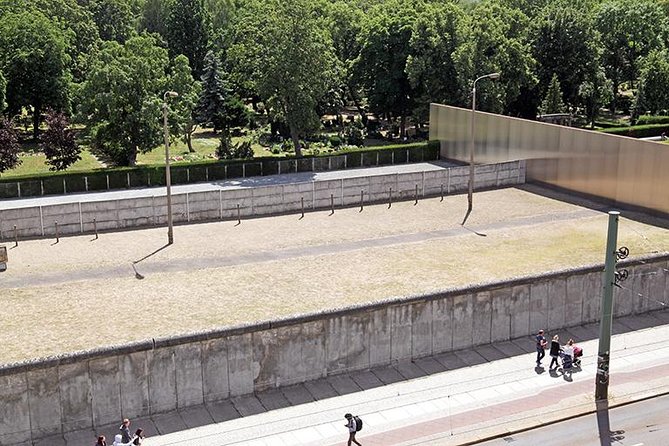
The memorial also lets you look down over the former Death Strip. The guide explains the layout between the front and rear barriers, along with the watchtowers, open ground, and security measures that made escape so dangerous.
This is where the tour takes on emotional weight. The guide discusses escape attempts, including plans involving tunnels and other methods. Some people made it across. Others were killed or caught. You also learn how East German authorities used buildings along the border to prevent escapes, including the sealing and bricking up of homes.
Photos of people who died trying to cross add a personal face to the site. You are not simply looking at old concrete. You are looking at a place where a decision to run, hide, climb, or dig could determine the rest of a person’s life.
The memorial’s open layout can be confusing if you visit alone. The former border line is not always obvious, and the surviving structures do not tell the whole story by themselves. A guide helps you read what is left.
One practical point: the tour is described as a walking experience, but public transport is used to connect parts of the route. Bring or buy a Berlin AB Zone pass, which costs about 10.60 euros and is not included in the tour price.
The Chapel of Reconciliation and the old watchtower
Near the memorial, the group pauses at the Chapel of Reconciliation. The guide explains the history of the site and its place beside the former Wall line.
The chapel provides a quieter moment after the more intense account of escape attempts and deaths. It also shows how the memorial area includes places of worship and reflection, not only border structures and political displays.
The route then reaches a former GDR border watchtower. It is described as the oldest remaining relic of the Berlin Wall. The tower is a modest structure, but that is part of its impact. The border system depended on many practical objects: towers, fences, roads, lights, barriers, and observation points.
At Ackerstrasse, the guide continues explaining the area’s history. These short pauses can be easy to dismiss, but they help you see how the Wall ran through ordinary streets and neighborhoods. The division was not placed in a remote military zone. It cut across the city that people lived in every day.
You should expect several brief stops rather than long visits inside buildings. The tour’s main activity is listening, looking, and asking questions while walking between locations.
More Berlin Wall Tours in Berlin:
- Skip-the-Line: Berlin Wall Museum at Checkpoint Charlie
★ 4.1 · 2,041 reviews - Cold War, Berlin Wall, Spies and the East Side Gallery
★ 5.0 · 1,024 reviews - Berlin: Guided Bike Tour of the Berlin Wall and Third Reich
★ 4.7 · 499 reviews - Berlin: Cold War Walking Tour on Berlin Wall Route
★ 4.8 · 437 reviews
Bornholmer Strasse and the night the Wall opened
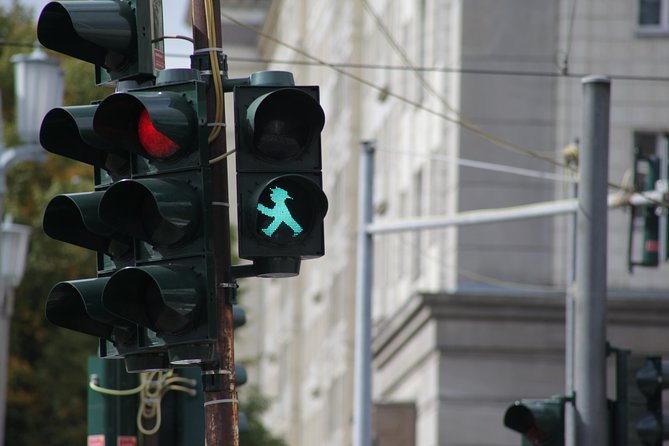
The route includes Bornholmer Strasse, the place where the Wall came down on November 9, 1989. This is one of the most important moments in modern European history, and the guide explains the unlikely chain of events behind it.
The opening was not planned as a simple public announcement followed by an orderly border crossing. An East German politician made a mistake while explaining new travel rules, creating confusion about when they would take effect. Crowds gathered at the checkpoints, and border guards eventually opened the gates.
That story is valuable because it shows how fragile the system had become. Governments may build rigid structures, but those structures still depend on people following orders. On this night, confusion met public pressure, and the border began to fail.
The guide uses the site to explain the wider collapse of East German control. The Wall’s fall was not only a political event in Berlin. It was a moment when ordinary people gathered and forced a system to respond.
If this part of the route is especially important to you, remember that the two-hour schedule limits how long the guide can spend on it. You will get the key story, but not a full seminar on the revolutions of 1989 across Eastern Europe.
Inside the story of the Stasi
The former Stasi headquarters is another major stop. The Stasi was East Germany’s secret police, and its role reveals how control continued far beyond the Wall itself.
The guide explains how the government increasingly spied on its own population. Surveillance reached into ordinary life, creating fear and suspicion while giving the state an enormous amount of information about its citizens.
This section broadens your understanding of East Germany. The Wall stopped people from leaving, but the Stasi helped control those who remained. The two systems worked together: one restricted movement across the border, while the other monitored behavior inside the country.
The headquarters is not treated as a spooky backdrop. Its importance comes from the system it represents. You learn how government control affected trust, family life, personal choices, and the ability to speak openly.
A guide makes this stop much stronger than a quick look at the building from outside. The architecture alone does not explain the fear attached to the institution. You need the stories and context.
Several guides have been praised for making this material accessible to an international group. Tom, for example, was noted for explaining both the broad political story and individual experiences. Pip was praised for answering questions and making sure the group stayed together. That combination of facts and personal attention is useful on a topic that can become dry or overly political.
Ending at Alexanderplatz and the TV Tower
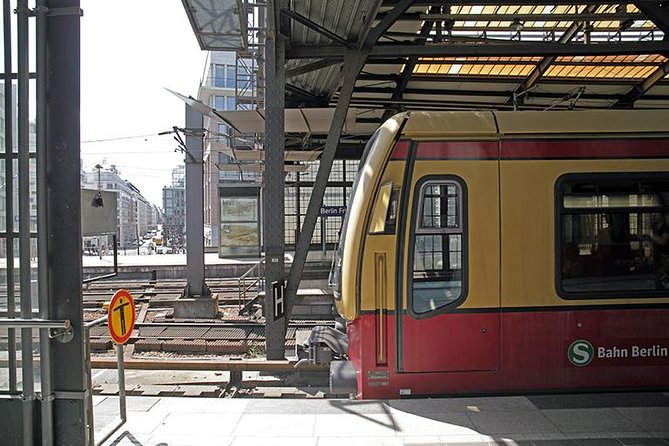
The tour finishes at Alexanderplatz, near Berlin’s famous TV Tower. This was the center of the former East German capital, so the ending returns you to the public face of East Berlin.
Alexanderplatz is a good place to finish because it connects the political story with the city you see today. After spending time at border memorials and government sites, you end in a major square with transport links, shops, and nearby sights.
The TV Tower admission is not included. The tour only brings you to the area, so you must arrange a separate visit if you want to go up.
The end point is also close to Nordbahnhof S-Bahn station. That makes it easy to continue sightseeing, return to your accommodation, or visit another Cold War site. Since the tour begins near Hackescher Markt and ends in a different part of the city, you get a genuine one-way walk rather than a loop back to the starting point.
Guide quality, group size, and pace
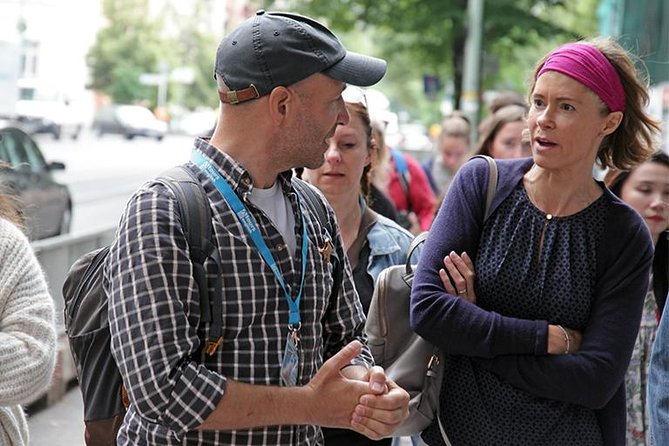
The tour allows a maximum of 20 people. Some groups have been smaller, with around 10 participants, which can make it easier to hear the guide and ask questions.
The guide is the key variable. Names praised in the feedback include Anastasia, Ariel, Dylan, Tom, Georgia, Jasper, Jimmy, Nathan, Heidi, Hannah, Tobi, Pip, Susan, and Campbell. Their strengths include clear storytelling, humor, strong command of German history, and an ability to explain complicated events without making the walk feel like a classroom lecture.
Campbell was praised for explaining the history with ease and bringing it to life. Jasper was described as a patient storyteller who took time for questions. Nathan was noted for making the human impact clear, while Georgia received praise for making the tour engaging for first-time learners.
The main criticism concerns communication during a train transfer. One group found that Dylan did not clearly explain the plan when some participants needed to buy tickets, and the group felt rushed boarding the train. This is a useful warning: buy your AB Zone ticket before the tour if possible, and stay close to the guide at transport stops.
The pace appears manageable for most people, and the tour is suitable for most participants. Still, it is an outdoor walk in all weather. Wear proper shoes and bring clothing for rain, wind, heat, or cold.
Is two hours enough for Berlin’s Wall story?
Two hours is enough for a strong introduction, not a complete study. You cover the Cold War background, Friedrichstrasse, the Palace of Tears, the Berlin Wall Memorial, Bornholmer Strasse, the Stasi, and Alexanderplatz in one morning.
That range is impressive, but it creates limits. Some participants wished the tour lasted longer, and one guide-led walk elsewhere in Berlin continued for four hours. You should choose this experience if you want the main story in a compact format. If you already have a strong interest in Cold War history, you may want extra time at the memorial or a separate visit to Stasi-related sites.
I think the length works well for a first day in Berlin. You get enough context to make later sightseeing more meaningful, without giving up a full day. Families and mixed-age groups may also appreciate the compact schedule, especially when the guide uses stories and visuals to keep the subject clear.
Price and practical value
At about $21.78 per person, the tour offers good value if you want interpretation rather than simply a route between monuments. The cost covers a professional guide and two hours of walking. Your transport pass and any TV Tower admission cost extra.
The real value is the organization of the story. You could visit some of these sites for free, but you would need to work out the route, understand the geography, and research the political background yourself. Here, one guide connects the Palace of Tears, Wall memorial, Death Strip, watchtower, Stasi headquarters, and Alexanderplatz.
Free cancellation is available if you cancel at least 24 hours before the start time. Confirmation arrives when you book. The tour operates in all weather, service animals are allowed, and the meeting point is near public transportation.
Who should book this walking tour?
I would choose this tour if you are visiting Berlin for the first time, want a clear introduction to the Cold War, or prefer personal stories to museum labels. It also suits anyone who wants to understand why the Berlin Wall remains such a powerful symbol.
It is a good fit for families, couples, solo visitors, and mixed international groups. The guide style appears conversational, and several guides have been praised for answering questions and offering ideas for other places to visit in Berlin.
You may want a longer or more specialized experience if you are a serious Cold War student, want extensive indoor museum time, or dislike changing trains during a walking tour. Also keep the weather in mind. This is not a sightseeing bus ride with shelter at every stop.
Should you book the East Berlin and Berlin Wall tour?
Yes, I would recommend it for most visitors. The tour gives you the essential Berlin Wall story, but it does more than point at concrete. It explains the political split, the danger of escape, the emotional cost of divided families, the Stasi surveillance system, and the accidental opening of the border.
Book it early if your Berlin dates are fixed, since it is commonly reserved about 18 days ahead. Buy your AB Zone transport ticket before meeting the guide, arrive ready for all weather, and keep your expectations focused: this is a sharp, well-organized introduction, not a full-day study of every Wall site.
For about $21.78, it is a strong way to get your bearings fast and understand what you are seeing for the rest of your time in Berlin.
FAQ
Where does the tour begin?
The tour begins at Neue Promenade 3, 10178 Berlin, beside Hackescher Markt station.
What time does the tour start?
The scheduled start time is 10:00 am.
Where does the tour finish?
The tour ends at the Berlin Wall Memorial area, close to Nordbahnhof S-Bahn station and near Alexanderplatz and the TV Tower area.
How long does the walking tour last?
The tour lasts approximately two hours.
Is public transportation included?
No. You need a Berlin Transport AB Zone pass, which costs approximately 10.60 euros.
Is the Berlin TV Tower admission included?
No. The tour finishes at Alexanderplatz near the TV Tower, but admission to the tower is not included.
Can I cancel for a full refund?
Yes. You can cancel at least 24 hours before the experience start time for a full refund. Changes or cancellations made less than 24 hours before the start time are not accepted for a refund.
Just added around Berlin
- Private Walking Tour in Berlin: Hitler’s Germany & WWII★ 5.0 · 7 reviews
- The History of Berlin: WWII PRIVATE Walking Tour With Locals★ 5.0 · 209 reviews
- Private Berlin WWII and Cold War History Tour with Local Expert Guide★ 5.0 · 28 reviews
- Private Walking Tour Berlin 3 hours: Brandenburg, Historic Center★ 5.0 · 7 reviews
- Berlin: Private Bike Tour of the Berlin Wall and Third Reich★ 5.0 · 23 reviews
- Berlin: Guided Private Bike Tour to Explore the Highlights★ 5.0 · 12 reviews
- Berlin Photography Masterclass – Private Photography Lesson★ 4.5 · 23 reviews
- Group Driving Tour 1 to 6 people. Berlin Shore Excursion incl pick-up at Port★ 5.0 · 8 reviews
Berlin Wall Tours, compared.
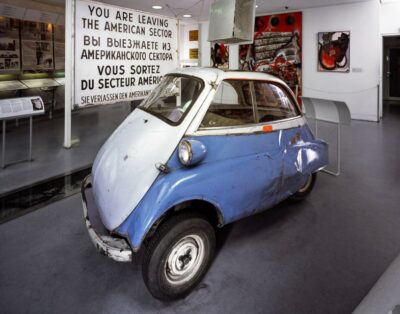
Skip-the-Line: Berlin Wall Museum at Checkpoint Charlie
Read our review →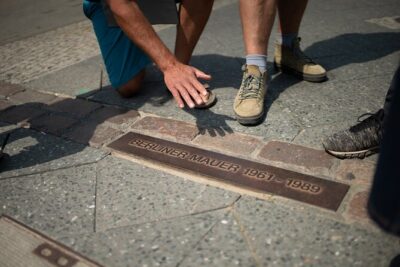
Cold War, Berlin Wall, Spies and the East Side Gallery
Read our review →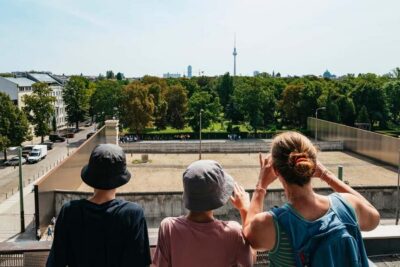
Cold War, Berlin Wall, Spies and the East Side Gallery
Read our review →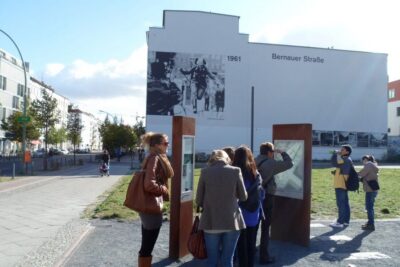
Explore The Berlin Wall: Cold War Berlin and Behind the Berlin Wall
Read our review →Browse the lists this tour appears in