
Reviewed · CONCENTRATION CAMP MEMORIAL VISITS
Berlin: Sachsenhausen Concentration Camp Tour in English
Some places demand your full attention. Sachsenhausen does, and this six-hour tour gives the site the care and context it deserves. I like the licensed English-speaking guides, who explain difficult material with clarity and respect. I also like the public-transport route, which connects Berlin to Oranienburg in a practical, authentic way.
The tour covers Sachsenhausen before, during, and after the Nazi period, including the Soviet use of the camp after World War II. Guides such as Daniel, Xavier, Georgia, Irish Paul, Rebecca, and Chris have been praised for combining strong historical detail with patience and empathy.
The main drawback is the amount of walking. You’ll walk from Oranienburg station to the memorial, spend about three hours on site, and often stand outdoors in cold, wind, or rain. You must also pay separately for an ABC public transport ticket.
In This Review
- Key points to know before booking
- Why Sachsenhausen deserves a day from Berlin
- Meeting at Friedrichstraße and getting to Oranienburg
- The 20-minute walk from the station
- Starting at the Camp Administration Center
- Barracks, punishment cells, and prisoner life
- Resistance, notable prisoners, and the Death March
- Station Z and the places of mass murder
- The Watchtower and Commandant’s House
- Special Camp 1/7 and the Soviet period
- How the tour handles a difficult subject
- Is $22 good value?
- Who should book it?
- My verdict on the Sachsenhausen tour
- FAQ
- How long does the Sachsenhausen tour take?
- Where does the tour meet in Berlin?
- Is public transport included in the price?
- What places are included at Sachsenhausen?
- Is the tour suitable for wheelchair users?
- What should I bring?
Key points to know before booking
- A full day of serious history: The tour lasts about 5.5 to 6 hours, including train travel, walking, and roughly three hours at the memorial.
- Public transport is part of the experience: Your guide travels with you from central Berlin to Oranienburg and back.
- The site covers more than the Nazi camp: You’ll also learn how the Soviets used Sachsenhausen after 1945.
- Expect difficult places and stories: The route includes Station Z, the gallows, punishment cells, the infirmary, and the Jewish barracks.
- Good value at $22: The price includes a licensed guide, the guided visit, and a €3 donation, but not transport, food, or drinks.
- The walking matters: Comfortable shoes, water, snacks, and weatherproof clothing will make a real difference.
Why Sachsenhausen deserves a day from Berlin
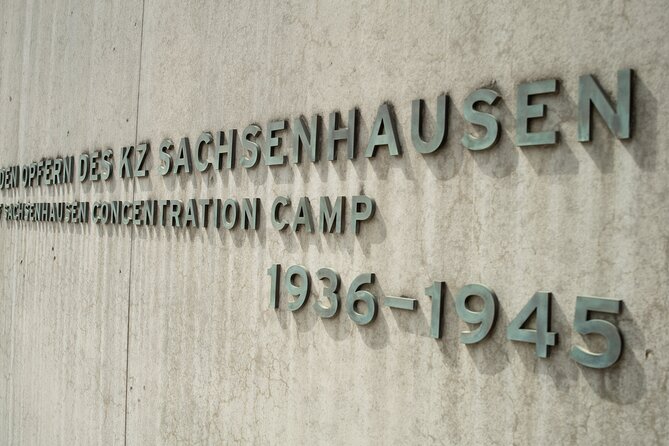
Sachsenhausen is in Oranienburg, north of Berlin. It was built by the SS in 1936, first to imprison people who opposed the Nazi regime. Its purpose soon widened, and the camp held many groups considered dangerous or unwanted by the NSDAP.
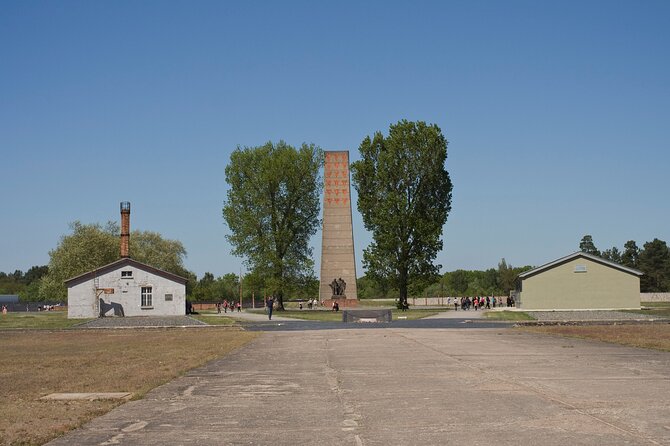
This is not a light sightseeing stop. You’ll see bare grounds, surviving structures, memorials, and museum displays connected with imprisonment, forced labor, torture, medical experiments, mass murder, and death. The physical setting is important because it helps you understand the scale and control of the camp in a way that a book or city museum cannot fully provide.
I think a guided visit is especially useful here because Sachsenhausen is spread across a large site and its meaning is not always obvious at first glance. A guide can explain what a building was used for, who was held there, and how each part fitted into the camp system.
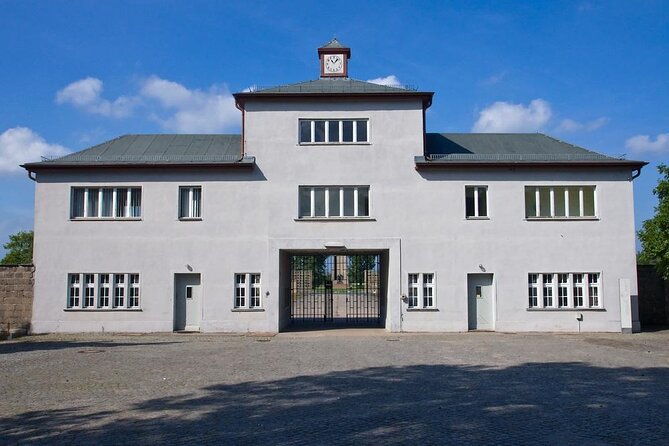
The tour also places Sachsenhausen within a wider structure. The Camp Administration Center once oversaw the Third Reich’s 32 main concentration camps and more than 1,000 satellite camps. That detail changes the way you see the site. It was not simply an isolated prison. It was part of a large administrative machine.
Other memorial sites open to visitors:
- Berlin: Sachsenhausen Concentration Camp Tour in English
★ 5.0 · 5,711 reviews - Berlin: Sachsenhausen Concentration Camp Memorial Tour
★ 4.7 · 3,716 reviews - Sachsenhausen Concentration Camp Bus Tour in English from Berlin
★ 5.0 · 1,962 reviews
Meeting at Friedrichstraße and getting to Oranienburg
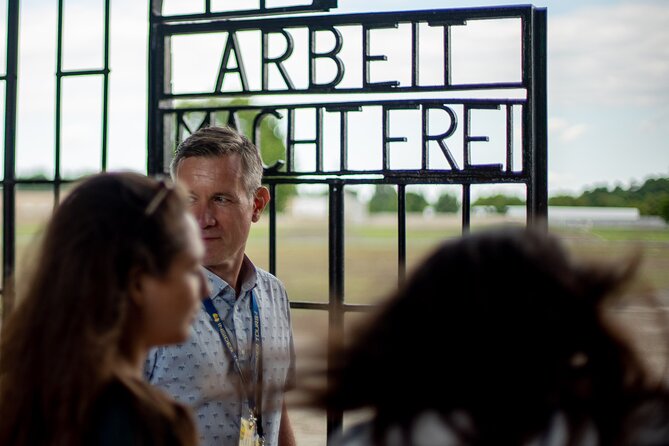
You meet your guide outside Friedrichstraße train station, on the square beside the Tränenpalast, also called the Palace of Tears. Look for the yellow umbrellas. This is a useful meeting point in central Berlin, though you should arrive with enough time to find the correct side of the station.
Your guide accompanies you on public transport. The train ride is usually around 25 to 35 minutes on the way out, while the return journey is listed at about 45 minutes. The exact timing can vary with the service and the day’s arrangements.
You need an ABC zone public transport ticket. It is not included in the tour price, but staff can help you buy the correct ticket at the meeting point. This is worth sorting out before the group leaves, since a wrong ticket can create unnecessary stress.
I like this arrangement because the guide is with you from the start, rather than appearing only at the memorial. The ride gives you time to hear the basic background, ask questions, and understand what you are about to see. It also means you do not have to work out the route alone.
The tradeoff is comfort and speed. There is no private vehicle, and the journey is part of the day. If you want a door-to-door excursion, this is not that kind of tour. If you prefer to travel as people in Berlin actually do, the train route is straightforward and practical.
The 20-minute walk from the station
From Oranienburg station, the group walks for about 20 minutes to the Sachsenhausen Memorial. This is an ordinary urban walk, but it can feel long after the train ride and before a three-hour visit.
One person described the walk from the station as the only real negative point. That is useful advice if you have limited stamina. The tour involves a moderate amount of walking, and the memorial itself is broad and mostly outdoors.
Wear comfortable shoes. Bring water and a snack, since food and drinks are not included and there is no scheduled meal in the itinerary. In winter, gloves and warm layers matter. In rain, a waterproof jacket is much more useful than an umbrella, especially when the guide is speaking and the group is moving around the site.
The walk also has a practical value. It gives the group time to leave the noise of central Berlin behind and prepare mentally for the memorial. The setting becomes quieter, and the change helps mark the difference between an ordinary city excursion and a visit to a place of mass suffering.
Starting at the Camp Administration Center
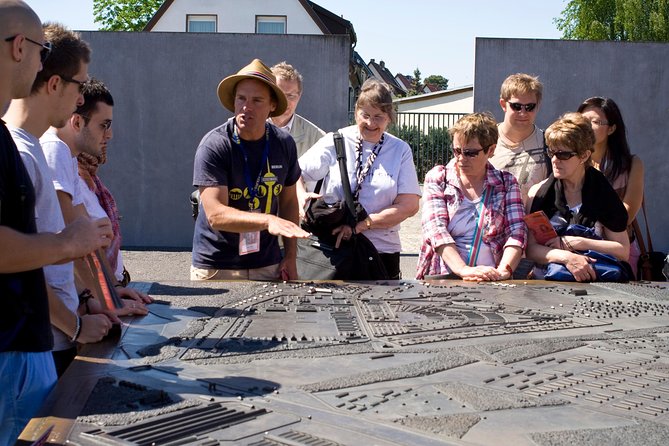
The guided visit begins at the Camp Administration Center, now an on-site museum. This building formerly served as the Concentration Camps Inspectorate, the office that supervised the wider camp network.
Starting here gives you a framework for everything that follows. Instead of seeing isolated barracks and ruins, you begin with the system behind them. Your guide explains how the camp was organized and how the SS used administration, surveillance, punishment, and forced labor to control prisoners.
This is also where the tour begins to connect individual lives with government policy. The story is not presented only as a list of buildings. You learn about prisoner groups, the reasons people were imprisoned, and the different ways they were treated.
The guides receive particularly strong praise for making this material accessible to people with different levels of prior knowledge. That matters because Sachsenhausen can be overwhelming if you arrive with no background, yet too simplified if every explanation stays at the most basic level.
Names such as Daniel, Pete F, Xavier, Georgia, Lucia, Ariel, and Irish Paul appear repeatedly in the guide feedback, but your assigned guide depends on the date and group. The consistent point is the care taken with explanations, questions, group organization, and the emotional weight of the subject.
A few more Berlin trips worth comparing
- Berlin: Reichstag, Dome and Government District Guided Tour
★ 4.7 · 18,288 reviews - Berlin: 1-Hour City Tour by Boat with Guaranteed Seating
★ 4.3 · 16,993 reviews - Berlin: Boat Tour Along the River Spree
★ 4.4 · 11,252 reviews - Discover Berlin Half-Day Walking Tour
★ 5.0 · 9,624 reviews
Barracks, punishment cells, and prisoner life
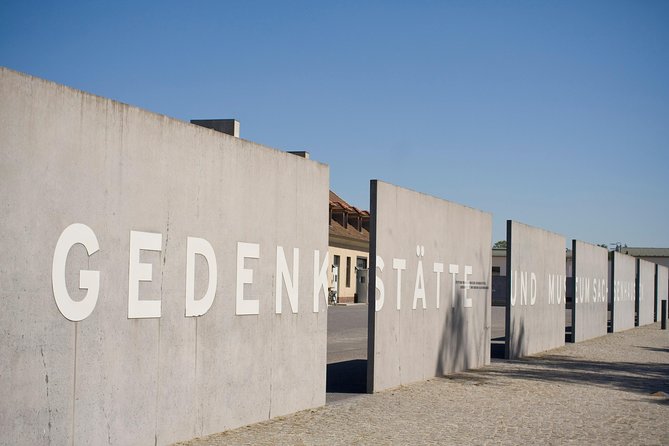
The barracks show where prisoners were confined and how harsh daily life could be. The tour explains the treatment of inmates, the restrictions imposed on them, and the conditions that shaped every part of camp life.
You will also visit the Jewish Barracks. This part of the route is especially important because it helps you understand the persecution of Jewish prisoners within the wider camp system. The tour also discusses other prisoner groups and their different fates.
The Punishment Cells offer a more concentrated look at imprisonment and discipline. These spaces are not grand monuments. Their power comes from their plainness. You are looking at rooms and structures used to break people through isolation, violence, and fear.
The route includes the Pathology Laboratory and the Infirmary, where the guide explains sites connected with medical experimentation. These stops require a respectful approach. Some people find the detail hard to hear, and you should not expect the guide to soften the facts simply to make the tour easier.
At the same time, the best guides keep the information clear rather than sensational. Several guides have been praised for using personal stories and photographs to help explain how people lived and died at the camp. That approach gives the history human scale without turning suffering into spectacle.
Resistance, notable prisoners, and the Death March
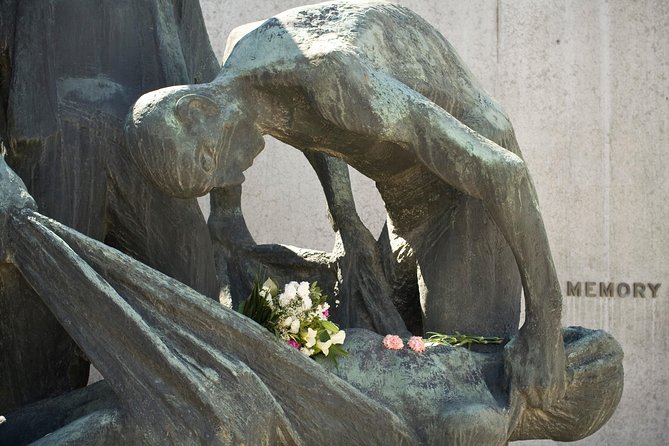
Sachsenhausen was a place of oppression, but prisoners were not passive figures in the story. The tour covers the Jewish prisoners’ revolt in 1942, resistance by British prisoners of war, and acts of sabotage by Soviet and Polish prisoners.
These stories add an important layer. They show the risks people took even when the camp system was designed to make resistance almost impossible. The guide explains the limits, dangers, and consequences of these acts rather than presenting resistance as an easy or simple choice.
You also hear about notable prisoners, including Stalin’s son. Individual stories can make the broader history easier to grasp, but the tour keeps returning to the large number of ordinary people who suffered there. The focus is not only on famous names.
The guide discusses the Death March that took place before liberation in 1945. This part explains what happened as the camp was evacuated and why liberation did not simply mean that every prisoner was immediately safe.
I find this wider timeline one of the strongest parts of the experience. You learn about the camp before and during the Nazi period, then follow its story into 1945 and beyond. That prevents the common mistake of treating liberation as the final page.
Station Z and the places of mass murder
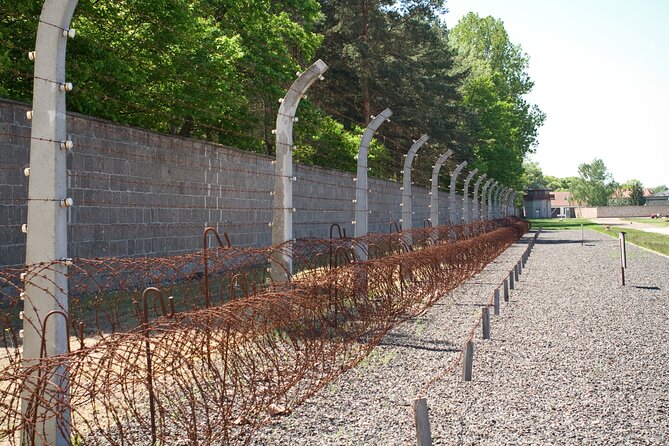
Station Z is one of the most difficult stops. It was the site of mass murder, and the tour identifies the location of the gas chamber and other killing facilities.
The name is chilling because it was linked to the final destination of prisoners selected for death. The guide explains the purpose of the site and the crimes committed there. You should expect this section to be emotionally heavy.
The route also includes the gallows. Seeing these places in person can be upsetting, but it is also why a visit to Sachsenhausen matters. The memorial is not asking you to consume tragedy. It is asking you to confront the physical locations where people were stripped of their rights and murdered.
Guides are expected to handle this with restraint. The strongest feedback highlights sensitivity, compassion, and respect for victims. You can ask questions, but it is worth remembering that this is a memorial site first and a tour stop second.
The Watchtower and Commandant’s House
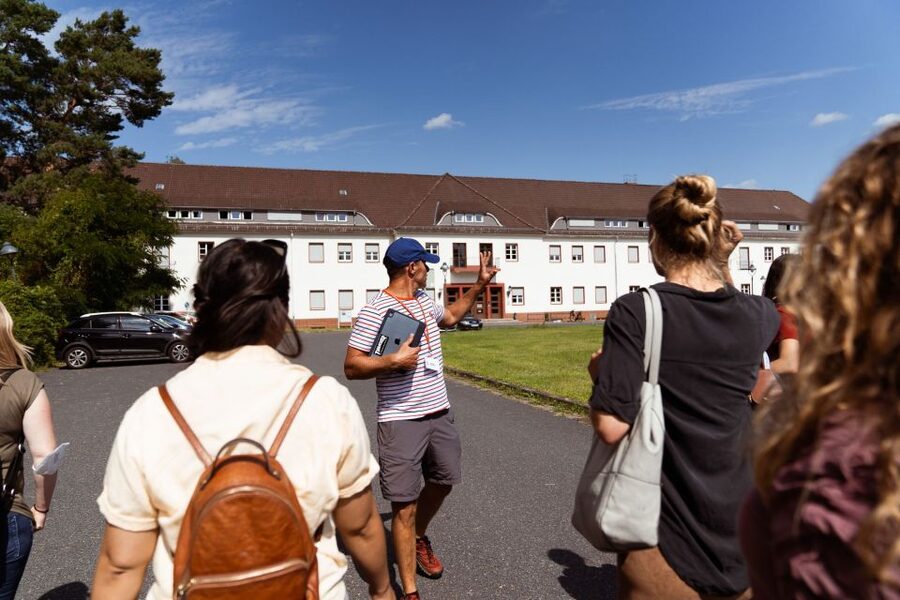
The Watchtower and Commandant’s House help explain how the camp was watched and managed. These structures show the contrast between those who controlled the camp and those imprisoned inside it.
Your guide connects the buildings to the camp’s layout and security system. The Watchtower is not just a photo stop. It helps you understand how surveillance shaped movement and behavior throughout the grounds.
The Commandant’s House adds another layer to the story of authority. It represents the administrative and personal side of the SS presence at Sachsenhausen, while the barracks and punishment areas show what that power meant for prisoners.
Because much of the site is open and spread out, the guide’s positioning matters. On cold or windy days, guides such as Georgia and Irish Paul have been praised for choosing sheltered spots and adjusting the pace. That may sound minor, but it makes a three-hour outdoor explanation far easier to follow.
Special Camp 1/7 and the Soviet period
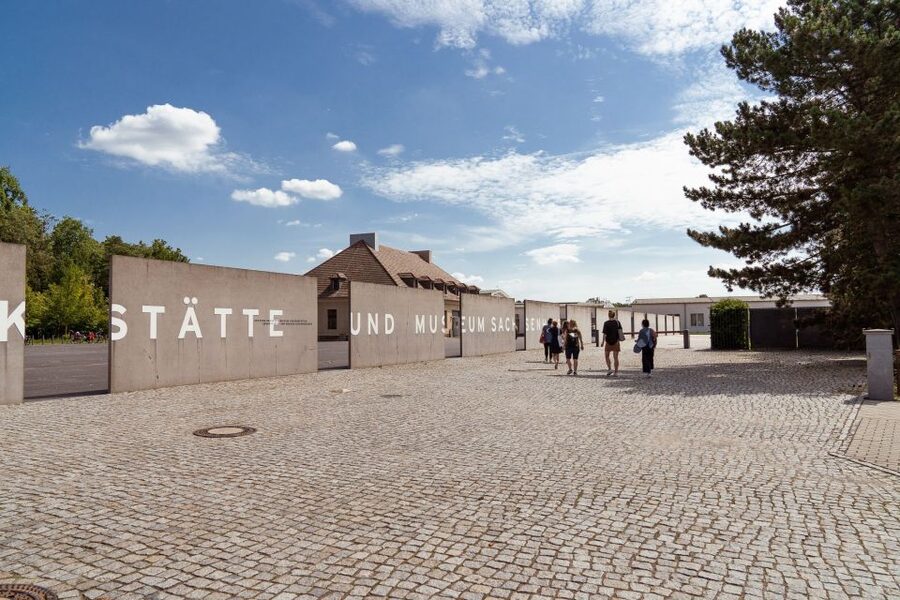
Sachsenhausen did not simply disappear after the Nazi camp was liberated. The Soviets later used part of the site as Special Camp 1/7.
This section is one reason I would choose this tour over a visit focused only on the Holocaust. It shows how the site continued to be used after World War II and how political imprisonment did not end with the fall of the Nazi regime.
You learn about the Soviet period as part of the camp’s afterlife. That broader timeline encourages careful thinking about how memorial sites are used, remembered, and interpreted across different periods.
The tour also visits the SS Training Camp. Together with the Camp Administration Center, this helps explain that Sachsenhausen was connected to the training and management of the wider concentration camp structure.
How the tour handles a difficult subject
A good Sachsenhausen tour needs more than facts. It needs judgment. The best feedback repeatedly praises guides for keeping the material serious while remaining approachable and responsive to questions.
Daniel is often praised for his energy, organization, and use of images. Xavier is noted for a balanced presentation and careful context. Georgia is praised for explaining the site with sensitivity and for looking after the group in difficult weather. Irish Paul receives strong marks for detailed explanations, care with safety, and helpful advice during the return journey.
The tone can vary by guide. Some use gentle humor or a friendly manner to help a group stay focused during a long day. That does not mean the subject is treated lightly. It means the guide understands that people absorb difficult material better when they are comfortable enough to ask questions.
You may also find children or teenagers in the group. One family found the tour helpful for giving two children a clearer understanding of how the camp system developed. Still, parents should decide if their children are ready for descriptions of imprisonment, torture, medical experimentation, and mass murder.
Is $22 good value?
At $22 per person, the tour is inexpensive for a 5.5 to 6-hour guided excursion. The price includes a licensed guide, the guided visit, and a €3 donation to the memorial.
You pay separately for the ABC transport ticket, and you must bring your own food and drinks. Those extra costs are modest, but they should be included in your planning.
The value comes mainly from the guide. You are not paying for a luxury transfer or an elaborate attraction. You are paying for help with the train route, the walk, the memorial’s large layout, the historical timeline, and the difficult interpretation of what happened there.
A busy departure may be split into smaller groups once you reach the memorial. That is useful because a single very large group would make it harder to hear and ask questions. Private and small-group options are also available, with private-tour pickup possible at your hotel or preferred location. Even then, transport remains public rather than private.
Who should book it?
I would book this tour if you want serious historical context and prefer not to navigate Sachsenhausen alone. It suits first-time visitors, history-focused visitors, families with older children who are prepared for the subject, and anyone who wants the Nazi camp placed within its prewar and postwar setting.
I would hesitate if you dislike group travel, have difficulty walking, or want to spend the whole day indoors. The tour is not wheelchair accessible and is not recommended for people with limited mobility or walking impairments.
Dress for the forecast, but assume you will be outside in all weather. The tour runs in rain, cold, and wind, so shoes, water, snacks, and comfortable clothing are not optional extras.
My verdict on the Sachsenhausen tour
This is a strong-value day trip from Berlin, with a serious purpose and a well-managed route. I especially like the combination of public transport, a trained English-speaking guide, and a visit that covers the camp’s full story rather than only its most famous horrors.
Book it if you want the memorial explained with care and structure. Skip it only if the walking, outdoor exposure, or emotional subject matter would make the day unsuitable for you. For most visitors who are ready to face difficult history respectfully, Sachsenhausen is a worthwhile and important use of a Berlin day.
FAQ
How long does the Sachsenhausen tour take?
The tour lasts about 5.5 to 6 hours. This includes the train journey from Berlin, the walk from Oranienburg station, about three hours at the memorial, and the return journey.
Where does the tour meet in Berlin?
Meet your guide outside Friedrichstraße train station, on the square beside the Tränenpalast, also known as the Palace of Tears. The guides hold yellow umbrellas.
Is public transport included in the price?
No. You need to buy an ABC public transport ticket for the trip to Sachsenhausen and the return to Berlin. Staff can help you purchase the correct ticket at the meeting point.
What places are included at Sachsenhausen?
The route includes the Camp Administration Center, Station Z, a Watchtower, the Commandant’s House, Jewish Barracks, Punishment Cells, the Pathology Laboratory, the Infirmary, Special Camp 1/7, the SS Training Camp, and the gallows.
Is the tour suitable for wheelchair users?
No. The tour is not wheelchair accessible and is not recommended for people with limited mobility or walking impairments.
What should I bring?
Bring comfortable shoes, water, snacks, comfortable clothing, and your public transport ticket. Dress for all weather conditions because much of the visit takes place outdoors.
Just added around Berlin
- Private Walking Tour in Berlin: Hitler’s Germany & WWII★ 5.0 · 7 reviews
- The History of Berlin: WWII PRIVATE Walking Tour With Locals★ 5.0 · 209 reviews
- Private Berlin WWII and Cold War History Tour with Local Expert Guide★ 5.0 · 28 reviews
- Private Walking Tour Berlin 3 hours: Brandenburg, Historic Center★ 5.0 · 7 reviews
- Berlin: Private Bike Tour of the Berlin Wall and Third Reich★ 5.0 · 23 reviews
- Berlin: Guided Private Bike Tour to Explore the Highlights★ 5.0 · 12 reviews
- Berlin Photography Masterclass – Private Photography Lesson★ 4.5 · 23 reviews
- Group Driving Tour 1 to 6 people. Berlin Shore Excursion incl pick-up at Port★ 5.0 · 8 reviews