
Reviewed · THIRD REICH HISTORY TOURS
Berlin: Third Reich and World War II Private Guided Tour
History feels close in Berlin. This three-hour private walk connects the Reichstag, Holocaust Memorial, and Hitler’s Bunker with the story of how the Third Reich changed Germany and Europe. I like the focused route and the chance to ask a guide direct questions rather than follow a large group. I also like that the guide can speak English, German, Russian, French, Spanish, or Italian.
The main concern is the price: $224 per person is a serious outlay for a walking tour that does not include attraction entry fees, meals, drinks, or transport. You should also expect a lot of walking and emotionally difficult subject matter. One verified booking in January 2025 reported that the guide did not arrive, while later feedback praised Sven for being punctual and professional, so I would allow time to confirm the appointment.
In This Review
- Key points at a glance
- What this private Berlin history tour actually offers
- Starting at Brandenburg Gate and the Reichstag
- The Soviet War Memorial in Tiergarten
- Reading the Holocaust Memorial in the right way
- Finding Hitler’s Bunker without expecting a preserved attraction
- The Topography of Terror and the machinery of persecution
- Ending near Checkpoint Charlie
- How much value do you get for $224?
- Guide quality, languages, and reliability
- Walking, weather, and what to carry
- Who should book this Berlin history walk?
- Should you book this private Third Reich tour?
- FAQ
- How long does the Berlin Third Reich and World War II tour last?
- Where does the tour begin?
- Where does the tour finish?
- Is the tour private?
- Which languages are available?
- Are entrance fees included?
- Is transportation included?
- What should I bring?
- Can children join the tour?
Key points at a glance
- A compact route through Nazi-era Berlin: The tour links seven important stops, from Brandenburg Gate to Checkpoint Charlie.
- Private guiding matters here: You can ask questions and adjust the conversation to your own level of interest.
- The Holocaust Memorial is more than a photo stop: The guide provides context for the field of concrete blocks and its place in present-day Berlin.
- Hitler’s Bunker is an outdoor historical site: There is no promise of entry into a preserved bunker interior.
- The Soviet War Memorial adds another viewpoint: Its location in Tiergarten helps explain the Soviet role in the defeat of Nazi Germany.
- A walking tour with mixed practical value: Three hours is efficient, but comfortable shoes, water, and weather-ready clothing are essential.
What this private Berlin history tour actually offers
This experience is best understood as a guided walk through central Berlin, not as a museum tour with long indoor visits. You meet beside the Hotel Adlon Kempinski Berlin, near Brandenburg Gate, and follow a route through major sites connected to the Third Reich, World War II, Nazi persecution, and the final defeat of Germany.
The private format is the key feature. A professional multilingual guide leads your group alone, giving you more room to ask about political events, military decisions, memorial design, or Berlin’s physical destruction. If you already know the basic timeline, you can ask for more detail. If the subject is new to you, the guide can build the story step by step.
The route is ambitious for three hours. You will not spend equal time at every stop, and the exact landmarks may change with weather, season, preferences, or available time. That flexibility can be useful, but it also means you should not treat every listed stop as a guarantee of a long visit.
More Third Reich History Tours in Berlin
- Berlin: Third Reich and Cold War 2 Hour Walking Tour
★ 4.9 · 6,830 reviews - Berlin’s Best: 2 Hour Walking Tour Third Reich and the Cold War
★ 5.0 · 5,486 reviews - Third Reich Berlin: Hitler and WWII Walking Tour
★ 5.0 · 3,301 reviews
Starting at Brandenburg Gate and the Reichstag
Brandenburg Gate is a strong place to begin because it gives you an immediate sense of Berlin’s political center. It is also close to the meeting point beside the Hotel Adlon Kempinski, making the first few minutes simple if you arrive by public transport or on foot.
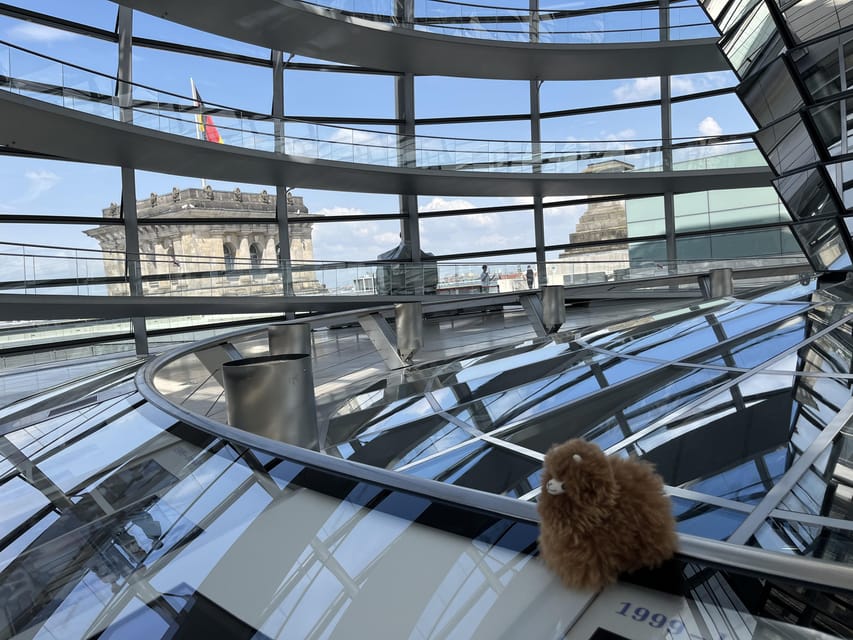
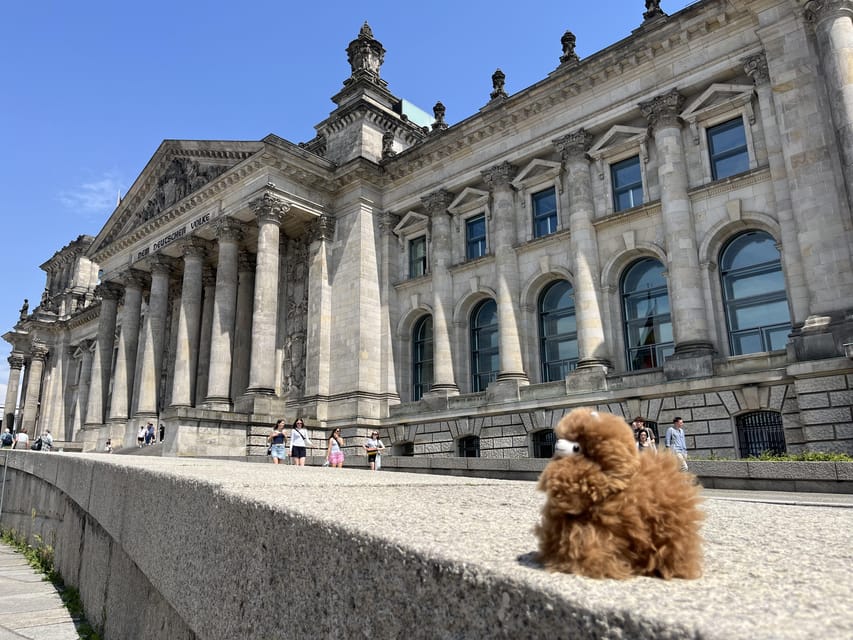
From there, the tour moves to the Reichstag, home of Germany’s federal parliament. The building helps frame the story of the German state before, during, and after Nazi rule. Your guide can connect the parliament, the collapse of democratic government, and the later rebuilding of Berlin as the capital of a modern democracy.
The itinerary describes a guided visit at the Reichstag, but it does not include entrance fees. That distinction matters. You should ask before booking exactly what access is planned and if any admission or reservation cost will be yours to pay. The tour may focus on the exterior and surrounding area rather than an interior visit.
I like this early stop because it gives the tour a political frame instead of beginning with military ruins alone. You are not just looking at old buildings. You are considering how institutions can fail, how power can be concentrated, and how Germany later chose to present its government in a rebuilt capital.
The Soviet War Memorial in Tiergarten
The Soviet War Memorial in Tiergarten brings the victorious Allied armies into the story. Its presence makes clear that Berlin’s final chapter in World War II was also a battle between military powers, with the Soviet Union playing a major role in the defeat of Nazi Germany.
The memorial offers a different mood from Brandenburg Gate and the Reichstag. It is a formal monument, and the guide’s explanation helps connect its design and location to the events of 1945. This is one of the places where a private guide can add real value, since a quick walk past the monument would provide only a fraction of its meaning.
The practical drawback is distance. The tour includes significant walking, and Tiergarten is spread out. You should wear shoes you can use comfortably for several hours and carry water. The tour is not designed for people who have difficulty walking, and the activity information says it is not suitable for people with mobility impairments or wheelchair users, despite also using the phrase wheelchair accessible. I would clarify this contradiction directly before reserving.
Reading the Holocaust Memorial in the right way
The Memorial to the Murdered Jews of Europe is one of Berlin’s most recognizable sites. Its field of concrete blocks can be visually striking, but a photograph alone cannot explain what the memorial represents or why its design creates such different reactions.
A guide helps place the memorial in the context of the Holocaust and Germany’s public memory. You can expect an explanation of the site and its purpose rather than a simple photo opportunity. The stop is likely to be quiet and serious, so give yourself room to listen and think.
There is a useful lesson here for your visit: the memorial does not replace a museum or a full study of the Holocaust. It is a place of remembrance in the city center. The value of the stop comes from connecting the physical site to the persecution and murder of Europe’s Jews, then considering how modern Berlin acknowledges those crimes in public.
Photography is allowed, but flash photography is not permitted inside certain landmarks. Even outdoors, I would treat this memorial with care. The guide can help you understand the setting, but you should avoid making the visit feel like a routine sightseeing photo stop.
Still Berlin, at a slower pace:
- Berlin: Reichstag, Dome and Government District Guided Tour
★ 4.7 · 18,288 reviews - Berlin: 1-Hour City Tour by Boat with Guaranteed Seating
★ 4.3 · 16,993 reviews - Berlin: Boat Tour Along the River Spree
★ 4.4 · 11,252 reviews - Discover Berlin Half-Day Walking Tour
★ 5.0 · 9,624 reviews
Finding Hitler’s Bunker without expecting a preserved attraction
Hitler’s Bunker is an unusual stop because the original site is not presented as a conventional tourist attraction. The tour takes you to the location and explains its role in the final days of the Nazi regime and the Battle of Berlin.
You should arrive with the right expectations. The provided information does not promise entry into a bunker interior, and it does not describe a preserved underground complex. This is a historical location explained on site, not a dramatic set piece.
That can be a strength. The modest nature of the place prevents the site from turning into a shrine. A good guide keeps attention on the decisions, crimes, and human cost connected with the location rather than on the personality of Hitler.
This stop also shows why the guide matters. Without explanation, you might walk through an ordinary-looking part of central Berlin and miss its connection to the end of the war. With context, the absence of a grand monument becomes part of the story.
The Topography of Terror and the machinery of persecution
The Topography of Terror is the route’s most direct connection to the institutions that carried out Nazi repression. The tour includes a guided visit, though attraction entrance fees are not included.
The site helps shift the focus from Hitler and battlefield events to the police and security structures behind persecution. That makes it an important counterweight to the bunker stop. The Nazi period was not created by one person alone. It relied on organizations, officials, orders, and systems that targeted political opponents and entire groups of people.
Because the overall tour lasts only three hours, you should not expect to study every display in detail. If you want a long museum visit, plan separate time for the Topography of Terror. On this walk, the guide’s role is to select the material that best fits the larger route and help you understand how the stops connect.
I consider this one of the most valuable parts of the experience for first-time visitors. It helps you move beyond famous names and dramatic photographs and look at how a dictatorship operated in daily practice.
Ending near Checkpoint Charlie
The tour finishes at the Wall Museum near Checkpoint Charlie. This brings the route beyond World War II and into Berlin’s later division, reminding you that the city’s political story did not end in 1945.
Checkpoint Charlie is closely linked with the Cold War and the separation of East and West Berlin. As a final stop, it extends the timeline from Nazi dictatorship to postwar occupation, division, and the competing political systems that shaped the city for decades.
The finish is useful if you want to continue sightseeing in central Berlin. It also gives you a practical choice: you can spend more time in the area, visit nearby attractions independently, or use the location to continue to another part of the city.
Again, check what the tour includes. The experience finishes at the Wall Museum, but the supplied details do not say that museum admission is included. The $224 price covers the private guide, not entrance fees.
How much value do you get for $224?
At $224 per person, this is not a budget walking tour. The price is easier to justify for a small private group that wants a tailored history lesson, especially if the group can share the cost or needs guiding in a particular language.
You are paying for the guide’s time, a private format, historical explanation, and a carefully linked central route. You are not paying for meals, drinks, transport, or admission to attractions. That means the real cost may rise if you decide to enter museums or other sites along the way.
I would compare the price with your priorities. If you want a personal introduction to Berlin’s Nazi and World War II sites in one efficient session, it may offer good value. If you prefer to spend hours inside museums, move at your own pace, or keep costs low, a self-guided route with separate museum tickets may suit you better.
The private setup is particularly useful for families with older children, couples, or friends who want to discuss difficult subjects openly. Children under 10 are not suitable for this tour, and the themes are serious even for older children. I would choose it for adults and young people who can engage respectfully with genocide, dictatorship, war, and mass death.
Guide quality, languages, and reliability
The guide is central to the experience. The tour offers English, German, Russian, French, Spanish, and Italian, which is a meaningful benefit if you want complex historical explanations in a language you follow comfortably.
The available feedback is mixed but specific. A Spanish-speaking participant in August 2024 described the tour as dynamic and highly informative, praised the guide’s explanations, and appreciated the guide’s pleasant manner and broad command of the subject. In July 2025, Venancio from Mexico gave five stars and specifically praised Sven as punctual and professional.
There is also a serious warning. Michael from Australia reported a one-star experience in January 2025 because the guide did not arrive. The overall score is 3.9 from five ratings, so the sample is small. I would not treat it as a firm measure of every departure, but I would confirm the meeting time and guide details before the day of the tour.
Walking, weather, and what to carry
This is a walking-heavy experience. Wear comfortable shoes, bring water, and check the forecast before leaving. Berlin weather can change, and much of the route takes place outdoors.
Bring a camera if you want photographs, but remember that flash photography is not allowed inside certain landmarks. Food and drinks are not allowed during the tour, so eat beforehand and do not plan on a café break while the guide is speaking.
Large bags or luggage may be awkward because of the walking. The tour does not include transportation to or from the activity, so you must make your own way to the meeting point and arrange your onward journey from Checkpoint Charlie.
The activity information describes the tour as wheelchair accessible while also saying it is not suitable for wheelchair users or people with mobility impairments. That is too unclear to ignore. If accessibility affects your decision, ask the provider for precise route details before paying.
Who should book this Berlin history walk?
I would choose this tour if you want a serious introduction to Berlin’s Third Reich and World War II sites, prefer a private guide, and value historical explanation over simply collecting photographs. The route covers a lot in a short period, and the multilingual option is a real advantage.
It is also a good fit if you have limited time in Berlin and want an organized first look at the Reichstag, Holocaust Memorial, bunker site, Topography of Terror, and Checkpoint Charlie. You can then return to the places that deserve more time.
I would hesitate if you dislike walking, need guaranteed indoor visits, want included admission, or expect a relaxed sightseeing pace. The subject matter is heavy, the schedule is compact, and the cost is high for a tour with no entry fees included.
Should you book this private Third Reich tour?
Book it if you want a private, guide-led framework for understanding Berlin’s Nazi and wartime past, especially in a language that suits you. Sven’s punctual and professional service and the strong Spanish-language feedback are encouraging, but the reported no-show means I would confirm the appointment before setting out.
For the best value, treat the tour as an introduction rather than the whole subject. Wear good shoes, budget separately for museum admissions, and leave extra time afterward for the Topography of Terror or the Wall Museum if they capture your interest.
FAQ
How long does the Berlin Third Reich and World War II tour last?
The tour lasts three hours.
Where does the tour begin?
The meeting point is next to the Hotel Adlon Kempinski Berlin, near Brandenburg Gate.
Where does the tour finish?
The tour finishes at the Wall Museum near Checkpoint Charlie.
Is the tour private?
Yes. It is offered as a private group experience.
Which languages are available?
The live guide may speak English, German, Russian, French, Spanish, or Italian.
Are entrance fees included?
No. Entrance fees to attractions are not included in the tour price.
Is transportation included?
No. Transportation to and from the activity is not included.
What should I bring?
Bring comfortable shoes, water, a camera, and clothing suited to the weather.
Can children join the tour?
The tour is not suitable for children under 10 years old.
Just added around Berlin
- Private Walking Tour in Berlin: Hitler’s Germany & WWII★ 5.0 · 7 reviews
- The History of Berlin: WWII PRIVATE Walking Tour With Locals★ 5.0 · 209 reviews
- Private Berlin WWII and Cold War History Tour with Local Expert Guide★ 5.0 · 28 reviews
- Private Walking Tour Berlin 3 hours: Brandenburg, Historic Center★ 5.0 · 7 reviews
- Berlin: Private Bike Tour of the Berlin Wall and Third Reich★ 5.0 · 23 reviews
- Berlin: Guided Private Bike Tour to Explore the Highlights★ 5.0 · 12 reviews
- Berlin Photography Masterclass – Private Photography Lesson★ 4.5 · 23 reviews
- Group Driving Tour 1 to 6 people. Berlin Shore Excursion incl pick-up at Port★ 5.0 · 8 reviews