
Reviewed · BERLIN WALL TOURS
Berlin Wall: City Tour of Divided Germany
Berlin still carries its border. This two-hour walking tour makes that past readable, linking Friedrichstraße station, the Brandenburg Gate, Potsdamer Platz, and Checkpoint Charlie. I like the route because it connects major sights with the daily effects of division, and I like the focus on personal stories, which can make Cold War history feel close rather than abstract. The main consideration is simple: the tour is in German only, and you will need comfortable shoes.
A small-group setting can make this experience especially useful. One German booking review described an intensive tour that was extended by an hour, while Sophie praised guide Stefan for sharing personal details not usually heard on standard walks. The $21 price is fair for a focused, guide-led history tour, but you should choose it for the human stories and context, not for museum interiors or a long list of indoor attractions.
In This Review
- Key points about Berlin’s divided city tour
- Why this two-hour walk makes Berlin’s division easier to understand
- Meeting at Tränenpalast beside Friedrichstraße station
- Following the Spree toward the government district
- The Brandenburg Gate and the symbol of a divided capital
- The Holocaust Memorial and the former death strip
- Potsdamer Platz and the former Tiergarten Triangle
- The longest remaining wall stretch and Checkpoint Charlie
- What the guide adds to the experience
- Is $21 a fair price for two hours?
- Practical details before you book
- Who will get the most from this tour?
- Should you book Berlin’s divided city tour?
- FAQ
- Where does the tour meet?
- Does Tränenpalast have more than one entrance?
- How long does the tour last?
- What language is the tour conducted in?
- What places are included along the route?
- What should I bring?
- How much does the tour cost?
- Can I cancel or pay later?
Key points about Berlin’s divided city tour
- Starts at Tränenpalast: Meet at the only entrance to the Palace of Tears, beside Friedrichstraße station.
- Follows the former border: The route moves from the old border station along the Spree toward the parliament and government district.
- Covers Berlin’s best-known division sites: See the Brandenburg Gate, Potsdamer Platz, the former Tiergarten Triangle, and Checkpoint Charlie.
- Includes a surviving wall section: The tour shows the longest remaining stretch of the Berlin Wall named in the route.
- German-language storytelling: The live guide speaks German, with personal accounts given special praise.
- Flexible booking: You can cancel up to 24 hours before the start for a full refund and reserve without paying immediately.
Why this two-hour walk makes Berlin’s division easier to understand
Berlin’s Cold War story can feel scattered. A museum explains one piece, a wall fragment marks another, and a famous checkpoint appears several blocks away. This route helps you connect those places as parts of one border system.
I like that the tour is built around movement through the city. You are not only shown a wall segment. You follow the line of division through transport, government, open space, memorials, and major public squares. That makes the border feel like an obstacle that shaped ordinary routines, not just a political line on a map.
The tour also promises attention to daily life. The wall affected where people could go, how they traveled, and how they experienced their own city. The supplied feedback gives that promise some weight: personal storytelling is repeatedly praised, and Sophie specifically noted that Stefan shared information she would not otherwise have encountered.
The route is brisk but manageable on paper. Two hours is enough for a clear overview without taking up an entire day. You should still expect to walk continuously between stops, so wear comfortable shoes. In cold weather, dress warmly. Sophie was very pleased with the tour despite low temperatures, but Berlin’s exposed former border areas can feel chilly.
More City Tours in Berlin
- Berlin: 1-Hour City Tour by Boat with Guaranteed Seating
★ 4.3 · 16,993 reviews - Berlin: City Sightseeing Hop-On Hop-Off Bus Tour
★ 4.1 · 4,233 reviews - Potsdam: City and Castles Tour
★ 4.7 · 3,721 reviews
Meeting at Tränenpalast beside Friedrichstraße station
The tour begins at the entrance to Tränenpalast, also called the Palace of Tears, in front of Friedrichstraße station on Reichstagufer, postal code 10117. The location matters because Friedrichstraße was the single border station during the Cold War.
Do not wander around the building looking for a second meeting point. Tränenpalast has only one entrance, so that is where you should wait. The nearby station makes the starting point practical, especially if you are fitting the walk between other Berlin plans.
This opening location gives the guide a strong way to set the scene. A railway station is a natural place to explain how division entered daily travel. For people in a divided city, crossing from one side to another was not a casual matter. The station was tied to border controls and separation, not simply trains and timetables.
The tour is conducted in German. That is an important choice point. If you understand German well, you can benefit from the guide’s explanations and the personal stories that past participants valued. If you do not, this is not the right booking for you based on the information provided, since no other tour language is offered.
Following the Spree toward the government district
From Friedrichstraße, the route follows the Spree toward the parliament and government district. This part of the walk helps show how the border ran through areas that now feel central and civic.
The key point is not just the river view. Buildings connected with Germany’s parliament and government stood partly along the border strip. That gives the route a useful contrast: places associated with national authority were positioned beside a heavily controlled divide.
I find this kind of stop more valuable than a quick photo at a famous landmark. You get a sense of how political separation occupied real city space. The border was not tucked away in an empty corner. It ran beside major institutions and through the capital’s daily geography.
Because this is an outdoor city tour, the guide’s commentary matters a great deal. The site itself may not explain what happened there in a clear way. A good explanation can connect what you see now with the barriers, restricted movement, and divided routines that once shaped the area.
The Brandenburg Gate and the symbol of a divided capital
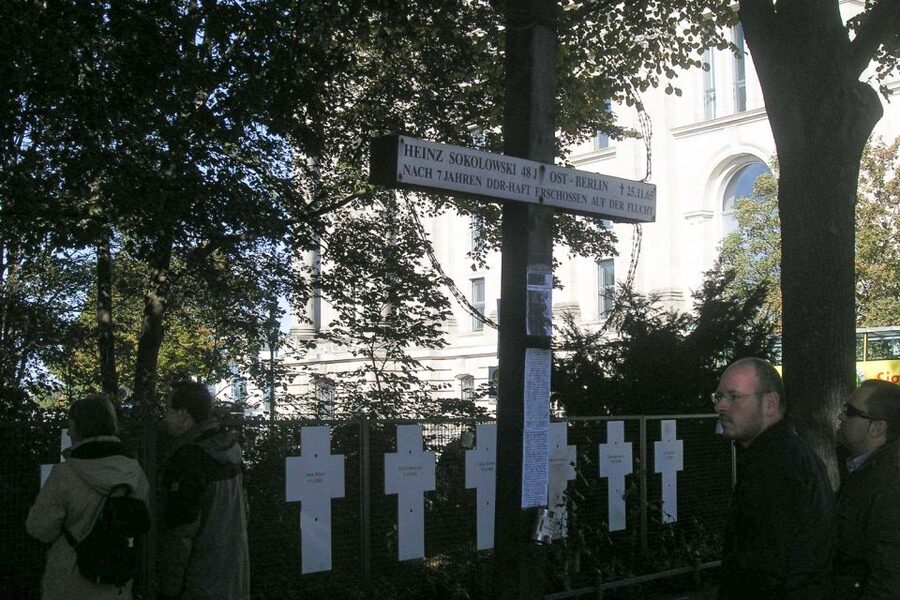
The Brandenburg Gate is one of Berlin’s most familiar sights, but this tour presents it in a different light. The border ran here, turning a grand city monument into a symbol of separation and the fate of Berlin.
That shift in viewpoint is one of the route’s strengths. On a typical sightseeing walk, you may admire the gate and move on. Here, you are asked to understand its position within the border. The building becomes part of the story of a city split into hostile systems.
I would pay close attention at this stop, even if you have already photographed the gate. The value is not a new view of the architecture. It is the explanation of what the monument represented when movement through Berlin was controlled.
The tour’s focus on hidden places and individual stories should also help prevent the stop from becoming a simple political lecture. The city’s division affected real people, and the personal details praised in the feedback can give this landmark a more human scale.
More Berlin Wall Tours in Berlin:
- Skip-the-Line: Berlin Wall Museum at Checkpoint Charlie
★ 4.1 · 2,041 reviews - Cold War, Berlin Wall, Spies and the East Side Gallery
★ 5.0 · 1,024 reviews - Berlin: Guided Bike Tour of the Berlin Wall and Third Reich
★ 4.7 · 499 reviews - Berlin: Cold War Walking Tour on Berlin Wall Route
★ 4.8 · 437 reviews
The Holocaust Memorial and the former death strip
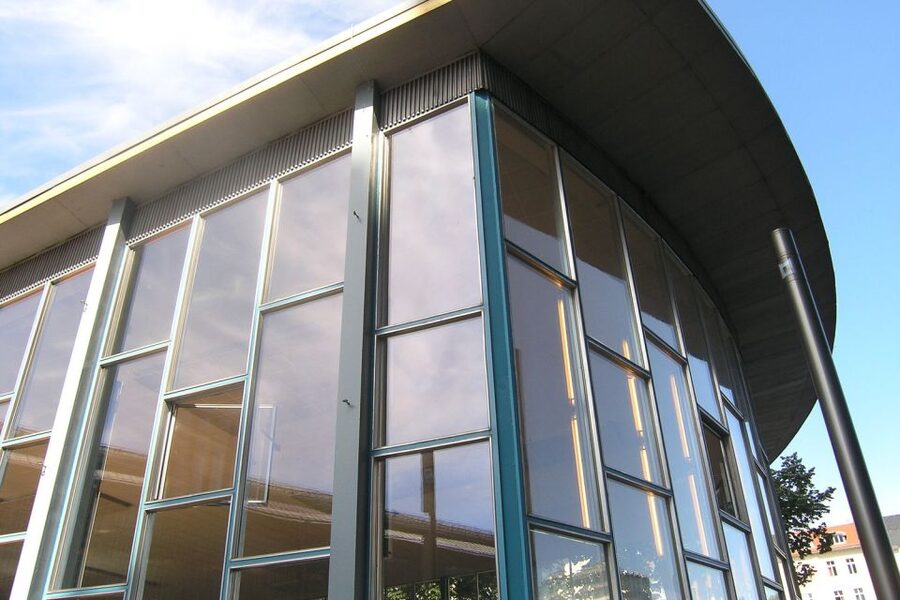
The route continues from the Holocaust Memorial at the former death strip. This is a serious section of the tour, and it brings together two difficult layers of Berlin’s past.
The memorial is connected in the route with the space where the border once created a deadly zone. That does not make the subjects interchangeable. Instead, it places the later division of Berlin within a city already marked by the crimes and destruction of the Nazi period.
You should expect the guide to treat this section with care. The supplied information does not promise a separate memorial visit or an indoor presentation, so think of this as an outdoor stop and explanation rather than a museum appointment.
For me, the value here lies in seeing how different periods overlap in the same city. Berlin’s streets do not tell one single story. The walk helps you notice that the former border was built across a capital already carrying enormous historical weight.
Potsdamer Platz and the former Tiergarten Triangle
At Potsdamer Platz, the split is described as particularly visible in the former Tiergarten Triangle. This is a useful place to consider how much the border changed the shape and use of central Berlin.
Potsdamer Platz is famous today for its modern city setting, but the route directs your attention to the old division. The former Tiergarten Triangle shows how a prominent part of Berlin could be cut by the border and experienced as a restricted edge rather than a normal urban crossroads.
You will probably find this stop most rewarding if you resist rushing toward the modern buildings. Look at the spaces between major sights and listen for the explanation of where the border ran. The point is to read the gaps and lines of the city, not only its polished attractions.
This is also where the tour’s short length works well. You receive a focused explanation of the site without spending half a day on one square. Still, two hours means the guide must keep moving. If you want long time for photographs or extended visits inside attractions, schedule those separately.
The longest remaining wall stretch and Checkpoint Charlie
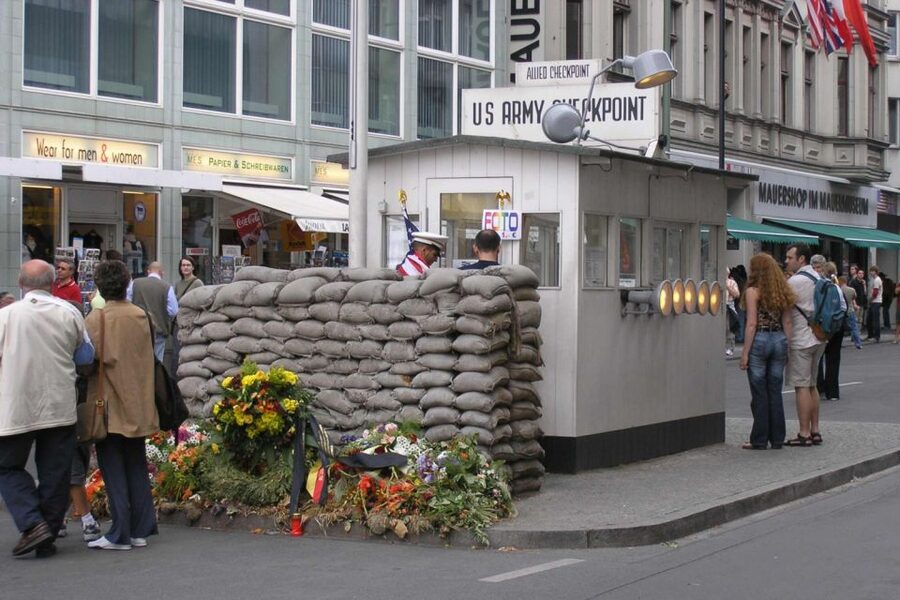
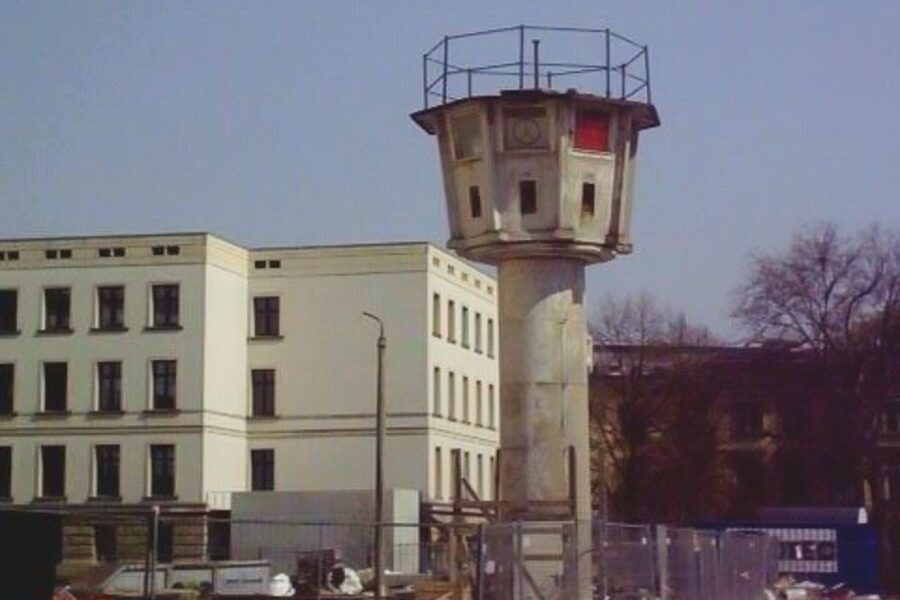
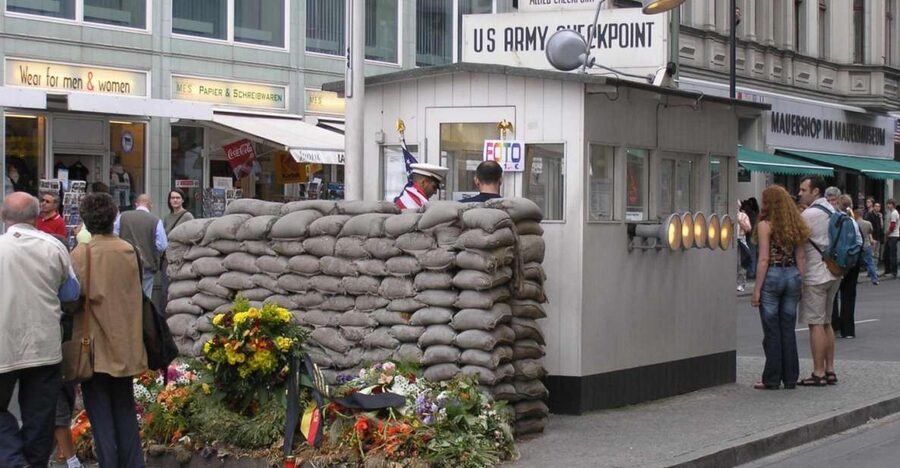
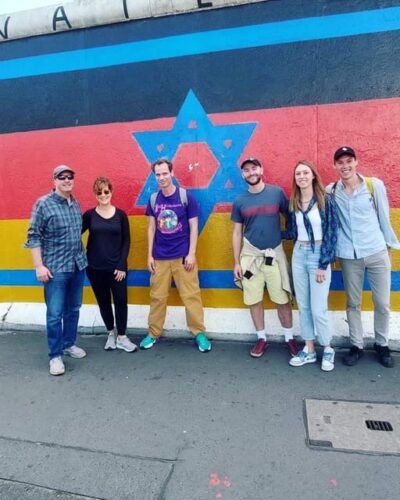
The itinerary includes the longest remaining stretch of the Berlin Wall named in the tour, followed by world-famous Checkpoint Charlie. These stops provide two very different ways to encounter the former border.
A remaining wall section gives you a physical sense of the barrier. You can see an actual surviving piece rather than relying only on photographs or reconstructed markers. The supplied information does not give the exact address of this section, so the guide’s explanation is especially useful in placing it within the route.
Checkpoint Charlie is the famous name, but fame can create a trap. It is easy to treat the site as a quick photo stop and miss its meaning. On this walk, the checkpoint belongs to a wider story that began at Friedrichstraße and continued through government buildings, the Brandenburg Gate, the memorial area, and Potsdamer Platz.
I like that the route ends with a place many people recognize. By then, you have heard how the border affected transport, public space, government, and individual lives. Checkpoint Charlie can then make more sense as one part of a system rather than an isolated Cold War postcard.
The itinerary also includes the longest remaining wall stretch and Checkpoint Charlie in the same two-hour framework. That gives you strong coverage, but it may not satisfy someone who wants a long, detailed stop at every location. Think of this as a connected introduction with human context.
What the guide adds to the experience
The strongest praise is aimed at the guide, not at a particular landmark. Manuela highlighted personal accounts. Peter described the tour as very interesting and the guide as very good. Sophie gave Stefan a full recommendation and again pointed to personal information that is not usually heard.
The spelling appears as both Stefan and Stephan in the supplied feedback, so you may see either form associated with the guide. What matters for your planning is that personal storytelling is a repeated strength.
One German booking described a small group and an especially intensive experience. The guide even extended that tour by an hour. You should not assume every departure will run three hours, since the stated duration is two hours, but the detail suggests that the guide may allow extra time when the group and subject matter call for it.
A live guide can also answer questions in a way a plaque cannot. The published information does not promise a specific group size for every departure, so I would not book this expecting a guaranteed private or tiny group. Still, the small-group feedback is encouraging if you prefer a more direct history walk.
Is $21 a fair price for two hours?
At $21 per person, this tour offers solid value if you want a guided introduction to Berlin’s division. You are paying for a live German-language city tour that links several important sites and adds historical explanation to places you could otherwise see for free.
The value is strongest for first-time visitors to Berlin or for anyone who has seen the major sights but lacks a clear picture of how they fit together. The route covers a lot in two hours, and a guide can help you notice the former border in places where little physical evidence remains.
The price is less attractive if you want entrance tickets, transport, or a museum visit included. The inclusion is the city tour itself. Tränenpalast is the meeting point, not a stated included admission, and the route description does not promise tickets to the Holocaust Memorial or any other attraction.
You also need to count the value of the language. German speakers get the full benefit of the live narration. If you need English, this particular experience does not fit, since German is the only stated language.
Practical details before you book
Plan to arrive at the entrance of Tränenpalast in front of Friedrichstraße station on Reichstagufer. Since there is only one entrance, the meeting point is clear, but giving yourself a little extra time will help you find it without stress.
Wear comfortable shoes. The route connects multiple parts of central Berlin and is designed as a walking tour, not a seated presentation. Warm clothing is wise in colder months, especially around open former border areas.
The duration is two hours, with starting times dependent on availability. That makes it easy to place before or after another Berlin activity, but you should avoid scheduling an attraction with a tight entry time immediately afterward.
The booking terms are useful for uncertain plans. You can reserve now and pay later, and cancellation is free up to 24 hours in advance for a full refund. Those terms do not change the tour’s language or walking requirements, so use them as flexibility, not as a reason to book the wrong format.
Who will get the most from this tour?
I would recommend it most strongly to:
- German-speaking visitors who want the Cold War story tied to real streets and landmarks
- First-time Berlin visitors seeking a clear two-hour orientation
- History-minded adults who value personal accounts over quick photo stops
- People who want to understand how division affected transport, government, and ordinary city life
- Visitors comfortable walking between outdoor sites in changing weather
I would be more cautious if you want a museum-heavy experience, extensive free time at each stop, or narration in a language other than German. The tour is also not ideal for anyone who dislikes walking or needs a fully indoor activity.
Should you book Berlin’s divided city tour?
Book it if you speak German and want Berlin’s division explained as a connected city story. The route is well chosen, the price is reasonable, and the strongest feedback points to personal storytelling from guides such as Stefan or Stephan.
I especially like the way it begins at a border station and ends at Checkpoint Charlie, with the Brandenburg Gate, the government district, the former death strip, Potsdamer Platz, and a remaining wall stretch in between. You get context, not just famous names.
Skip it if you need English, want admission to museums included, or prefer to explore at your own pace. For the right audience, though, this is a practical and thoughtful way to spend two hours reading Berlin through the line that once split it.
FAQ
Where does the tour meet?
It meets at the entrance of Tränenpalast, the Palace of Tears, in front of Friedrichstraße station on Reichstagufer, 10117 Berlin, Germany.
Does Tränenpalast have more than one entrance?
No. Tränenpalast has only one entrance, which is the meeting point.
How long does the tour last?
The stated duration is two hours. One past German booking described a tour that was extended by an hour, but you should plan around the official two-hour duration.
What language is the tour conducted in?
The live tour guide speaks German. German is the only language stated for this activity.
What places are included along the route?
The route includes Friedrichstraße station, the Spree, the parliament and government district, the Brandenburg Gate, the Holocaust Memorial area at the former death strip, Potsdamer Platz, the former Tiergarten Triangle, a remaining stretch of the Berlin Wall, and Checkpoint Charlie.
What should I bring?
Bring comfortable shoes for the walking route. Warm clothing may also be sensible in cold weather, although only comfortable shoes are specifically listed.
How much does the tour cost?
The listed price is $21 per person.
Can I cancel or pay later?
Yes. You can cancel up to 24 hours in advance for a full refund. You can also reserve your place and pay later, keeping your plans flexible.
Just added around Berlin
- Private Walking Tour in Berlin: Hitler’s Germany & WWII★ 5.0 · 7 reviews
- The History of Berlin: WWII PRIVATE Walking Tour With Locals★ 5.0 · 209 reviews
- Private Berlin WWII and Cold War History Tour with Local Expert Guide★ 5.0 · 28 reviews
- Private Walking Tour Berlin 3 hours: Brandenburg, Historic Center★ 5.0 · 7 reviews
- Berlin: Private Bike Tour of the Berlin Wall and Third Reich★ 5.0 · 23 reviews
- Berlin: Guided Private Bike Tour to Explore the Highlights★ 5.0 · 12 reviews
- Berlin Photography Masterclass – Private Photography Lesson★ 4.5 · 23 reviews
- Group Driving Tour 1 to 6 people. Berlin Shore Excursion incl pick-up at Port★ 5.0 · 8 reviews
Berlin Wall Tours, compared.
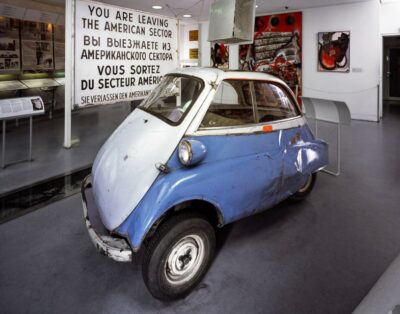
Skip-the-Line: Berlin Wall Museum at Checkpoint Charlie
Read our review →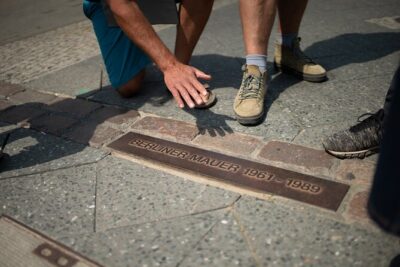
Cold War, Berlin Wall, Spies and the East Side Gallery
Read our review →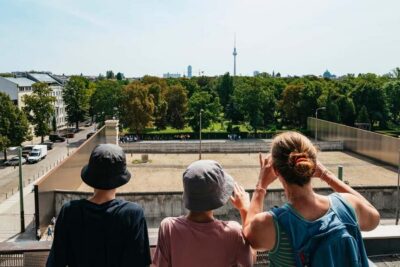
Cold War, Berlin Wall, Spies and the East Side Gallery
Read our review →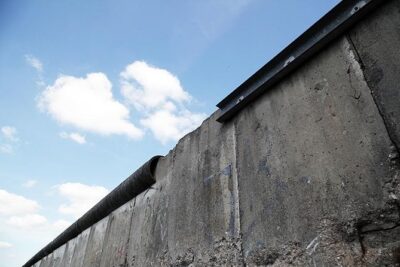
East Berlin and the Berlin Wall 2-Hour Walking Tour
Read our review →
Browse the lists this tour appears in