Reviewed · WALKING TOURS
Eisenach: Private Guided Walking Tour
History comes alive here. Eisenach packs Martin Luther, Johann Sebastian Bach, Saint Elizabeth of Thuringia, Richard Wagner, Wartburg Castle, and more into a compact hill town below one of Germany’s best-known castles. I like the private format, which lets your guide adjust the pace and answer your group’s questions, and I like the unusual mix of church history, music, medieval life, and automobile production.
The main consideration is time. Ninety minutes passes quickly, especially if you want to enter museums or Wartburg Castle. Entrance fees are not included, and the walk is not suitable for wheelchair users or people with mobility impairments.
In This Review
- Key points to know before booking
- Why Eisenach makes a strong walking-tour setting
- Starting at Bach House on Frauenplan
- St. George’s Church and three very different lives
- Martin Luther’s teenage years in Eisenach
- Wartburg Castle above the town
- The Reuter-Wagner Museum and Eisenach’s literary side
- Eisenach’s unexpected automobile tradition
- Finding the Tiny House
- What the private format changes
- Timing, pace, and practical limits
- Who will get the most from this walk?
- Should you book the Eisenach walking tour?
- FAQ
- Where does the Eisenach walking tour meet?
- How long does the tour last?
- What languages does the guide speak?
- Is the tour private?
- Are entrance fees included?
- Is the tour suitable for wheelchair users?
Key points to know before booking
- Bach House meeting point: The tour begins at Bach House, Frauenplan 21, a fitting starting place in the composer’s birthplace.
- Several major figures in one walk: You connect Bach, Luther, Saint Elizabeth, Goethe, and Wagner with the same small town.
- St. George’s Church is a highlight: Bach was baptized here, Luther sang in the choir, and Saint Elizabeth married here at age 14.
- Private groups up to 15: Your guide is with your party only, with some scope to adjust the tour during the walk.
- The car story adds variety: Eisenach’s factory produced cars for more than a century, and the first BMW left its assembly line here in 1929.
- Good shoes matter: Eisenach is hilly, and the route includes historic streets and sites around the town center.
Why Eisenach makes a strong walking-tour setting
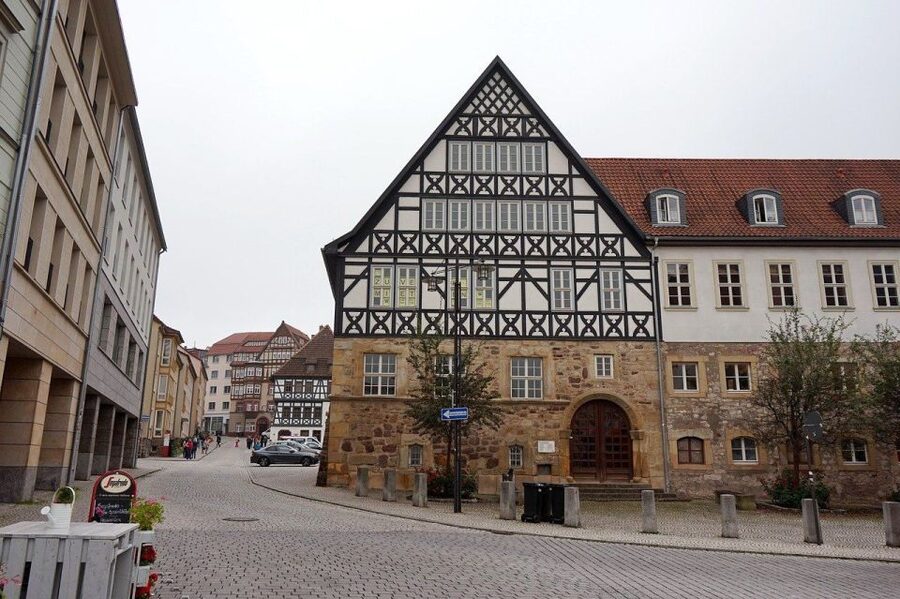
Eisenach is small enough to understand on foot, yet its story reaches far beyond its size. The town sits below Wartburg Castle, a UNESCO World Heritage site, and its streets tie together medieval religion, the Reformation, classical music, royal marriage, literature, and industry.
That mix is the real appeal. You are not simply looking at old façades. You are moving through places connected with people who changed European culture. A guide helps turn a church, school, or narrow house into part of a larger story.
I especially like the way the tour links people who lived centuries apart. Martin Luther was a choirboy at St. George’s Church. Johann Sebastian Bach was baptized there in 1685. Saint Elizabeth was married in the same church in 1221. Those connections are easy to miss if you walk Eisenach alone with only a map.
Goethe called Eisenach a marvellous place. The town’s hills and castle setting help explain why. You get a sense of the surrounding height and history even during a short central walk, though the castle itself deserves separate time if you want to visit its interiors.
More Walking Tours in Germany:
- Discover Berlin Half-Day Walking Tour
★ 5.0 · 9,624 reviews - Berlin: Third Reich and Cold War 2 Hour Walking Tour
★ 4.9 · 6,830 reviews - Munich: Third Reich & WWII Walking Tour
★ 4.6 · 6,181 reviews
Starting at Bach House on Frauenplan
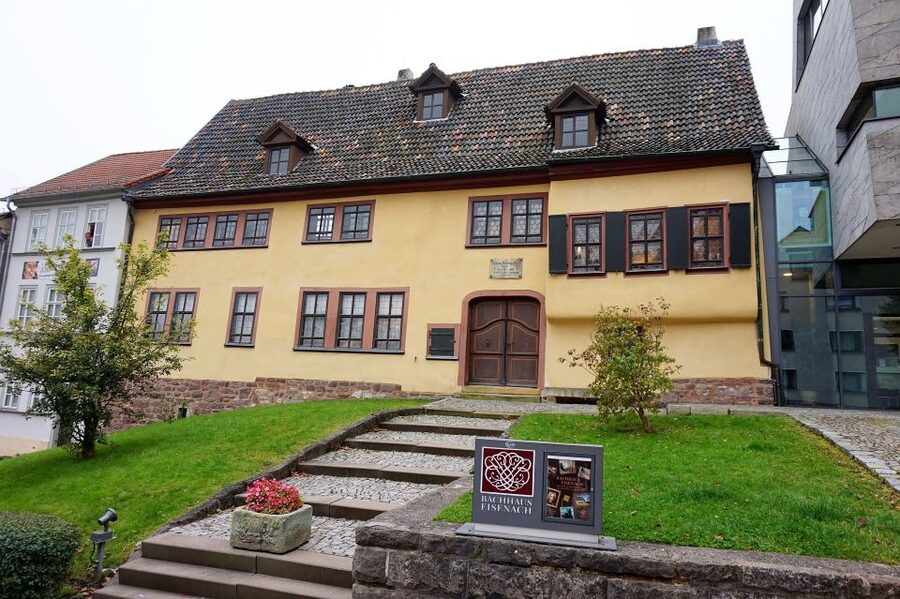
The meeting point is in front of Bach House at Frauenplan 21. This is more than a convenient address. Eisenach is Johann Sebastian Bach’s birthplace, and the museum gives the tour an immediate musical connection.
Bach attended school in Eisenach, at the same school Martin Luther had attended centuries earlier. That shared link is one of the tour’s best details because it makes the town feel connected rather than divided into unrelated attractions.
You should think of Bach House as a starting point, not necessarily a museum visit included in the walk. Entrance fees are not part of the tour, so ask your guide how to fit an interior visit into your plans if music is your main interest.
The opening section should suit anyone who likes context. Instead of hearing only that Bach was born in Eisenach, you can place him within the town’s schools, churches, and musical tradition. Members of the Bach family served as organists at St. George’s Church for 132 years, a striking reminder that music here was a family profession as well as a personal talent.
St. George’s Church and three very different lives
St. George’s Church is likely to be the emotional center of the walk. Its medieval setting brings together three important Eisenach stories.
Johann Sebastian Bach was baptized here in 1685. Martin Luther sang here as a choirboy, then later preached in the church while traveling to and from the Diet of Worms in 1521. Saint Elizabeth of Thuringia was married here in 1221, when she was only 14.
That last detail can sound startling to modern ears, and it should. A good guide can explain it as part of medieval dynastic and religious life rather than treating it as a quaint curiosity. Elizabeth’s marriage shows how different family, power, and personal duty were in the Middle Ages.
The church also gives you a useful way to understand Luther. His connection to Eisenach was not limited to a short school stay. He learned here, sang here, and returned to preach. Seeing the church helps make his path through the Reformation more concrete.
Depending on the guide’s timing and the church’s arrangements, the emphasis may be on the exterior and historical setting rather than a full interior visit. Since entry fees are separate, confirm what you will see inside if that is important to you.
Martin Luther’s teenage years in Eisenach
The Luther Museum occupies the house where the teenage Martin Luther lived with the Cotta family while attending school in Eisenach from 1498 to 1501. The two rooms associated with his stay have been restored to their original condition.
This stop works best when you remember Luther was not yet the famous reformer. He was a schoolboy finding his way through a demanding education. The restored rooms allow you to picture the young student before the events that made him one of Europe’s most influential religious figures.
I like this part of the tour because it changes the scale of Luther’s story. Dates and theological arguments can feel remote. A teenage boy living away from home is easier to picture, and the house provides a direct link between the future reformer and ordinary daily life.
The museum itself may require an entrance ticket, which is not included. With only 90 minutes, you may have to choose between a quick exterior explanation and a later self-guided visit. If Luther is your priority, plan extra time after the walking tour.
A few more Germany trips worth comparing
- Berlin: Reichstag, Dome and Government District Guided Tour
★ 4.7 · 18,288 reviews - Dresden: Semperoper Tickets and Guided Tour
★ 4.7 · 12,102 reviews - Berlin: Government District around the Reichstag Guided Tour
★ 4.7 · 8,447 reviews - Hamburg: Elbphilharmonie Plaza Guided Tour
★ 4.7 · 5,882 reviews
Wartburg Castle above the town
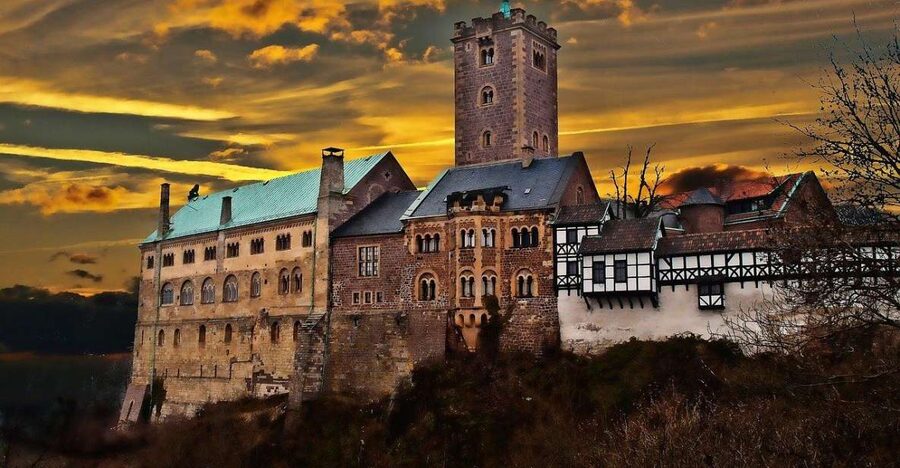
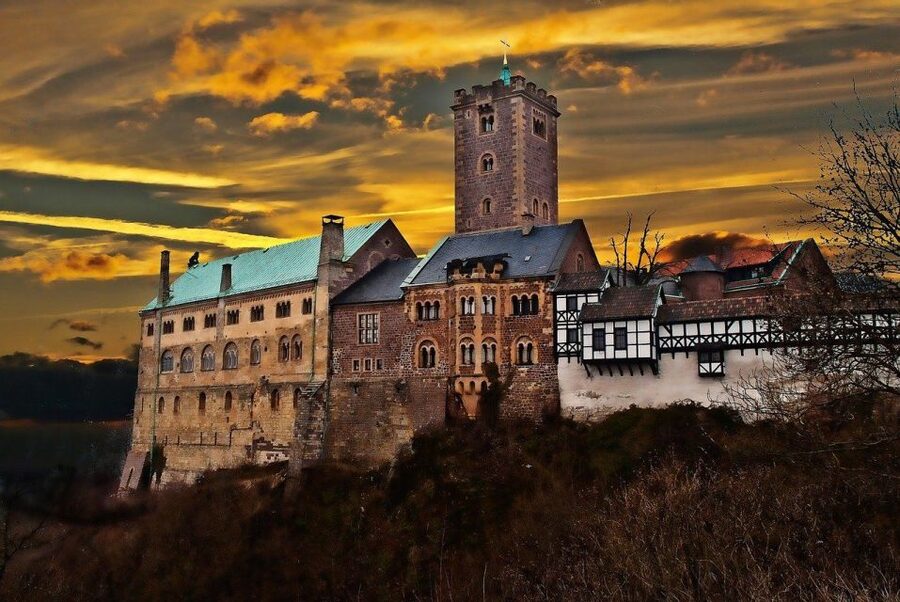
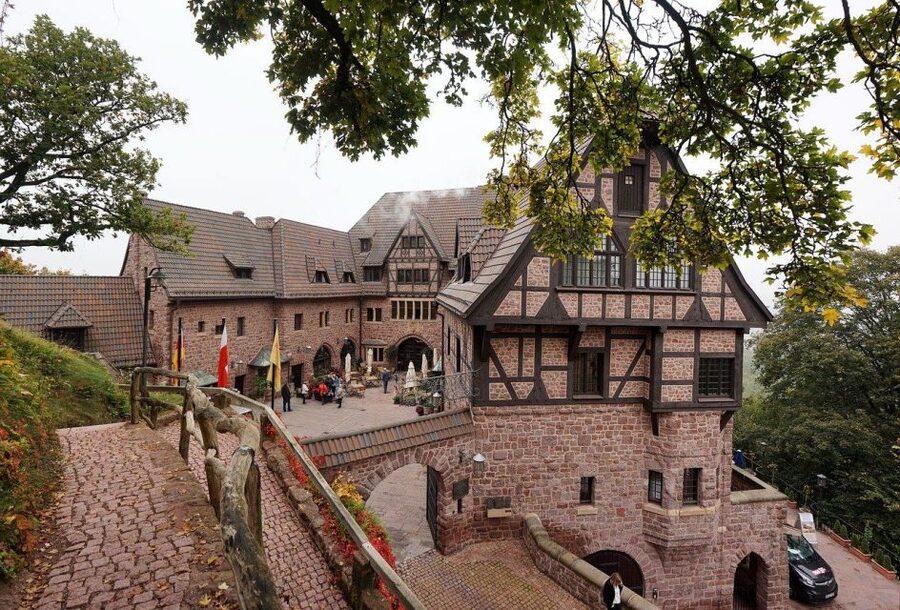
Wartburg Castle is the landmark that gives Eisenach its shape and reputation. It rises above the town and is listed as a UNESCO World Heritage site. The castle’s connection with German history is central to Eisenach, but this particular walk is not a castle admission tour.
That distinction matters. You can learn about the castle and admire its position during the town walk, but entrance fees are not included, and the 90-minute schedule does not leave room for an unhurried castle visit. If you want to explore the buildings, collections, and castle grounds, make a separate block of time for it.
The town tour is still useful before a castle visit because it places Wartburg in context. From below, you see how the castle shaped Eisenach’s identity. From inside the castle, you can then pursue the details at your own pace.
The route’s hills are another practical point. Comfortable shoes are specifically recommended, and that advice should be taken seriously. The town’s setting is attractive partly because it is not flat, so anyone who tires easily should discuss the walking demands with the provider before booking.
The Reuter-Wagner Museum and Eisenach’s literary side
Eisenach’s cultural story does not stop with Bach and Luther. The Reuter-Wagner Museum holds what is described as the largest exhibit of Richard Wagner memorabilia, including his death mask.
This is an unexpected addition to the route. Wagner is often associated with major opera houses and grand musical drama, while Eisenach is more commonly linked with Bach. The museum gives you another angle on the town’s musical life and shows that its cultural importance continued beyond the Reformation and the Bach family.
The death mask is the kind of specific object that can make a museum memorable. It is not a reason for everyone to plan an entire visit, but it will interest anyone drawn to Wagner, nineteenth-century music, or unusual historical artifacts.
Again, museum admission is extra. In a short private walk, your guide may explain the museum’s importance without taking you through every room. That is sensible if your aim is a broad introduction to Eisenach, but music specialists may want to return independently.
Eisenach’s unexpected automobile tradition
The town’s automobile story gives the walk a welcome change of pace. Eisenach’s factory produced cars for more than 100 years, and the first BMW rolled off the assembly line there in 1929.
This industrial thread is easy to overlook when you arrive expecting castles and churches. It shows that Eisenach is not only a medieval or musical town. It also played a role in Germany’s modern manufacturing history.
I find this kind of contrast valuable on a walking tour. After hearing about bishops, saints, composers, and reformers, you get a reminder that the town kept changing. The automotive tradition connects Eisenach’s past with engineering, factory work, and twentieth-century German industry.
The information provided does not promise a factory visit or a dedicated car museum stop, so treat this as part of the guide’s town commentary rather than a separate automobile attraction. If cars are your main reason for visiting, ask how much time the guide can devote to that subject.
Finding the Tiny House
One of Eisenach’s more playful sights is the Tiny House, described as Germany’s narrowest inhabited half-timbered house. It is only 6 feet, 8 inches wide, or about 2 meters.
This is a perfect walking-tour detail. You do not need a long visit to appreciate it, and it gives the route a human scale after the large subjects of castle politics and religious reform. The question is immediate: how does anyone live in a house that narrow?
The house also helps you notice the town’s older buildings in a different way. Rather than looking only for famous monuments, you start paying attention to how people used limited urban space. Small features such as this can make a walk feel more personal and less like a checklist.
Do not expect the Tiny House to be a major interior attraction unless your guide confirms otherwise. Its value is in seeing it, hearing the story, and adding one memorable image to the day.
What the private format changes
The tour costs $294 per group of up to 15 people. That price deserves a careful look. For one or two people, it is expensive compared with a shared walking tour. For a larger family or group, the cost can be reasonable because the price is not charged per person.
At the maximum group size, the cost works out to about $19.60 per person. With 10 people, it is about $29.40 per person. For a private guide who speaks English or German and focuses only on your group, that can be fair value, particularly if you prefer questions and conversation over a fixed script.
A private group also gives you some flexibility. The guide can possibly customize the walk on the spot, so you might give more attention to Luther, Bach, Wagner, Saint Elizabeth, or the automobile tradition. The exact amount of adjustment will depend on time and the guide, but the option is useful.
The strongest praise for this experience centers on the guide’s teaching style. One German group of 10 found that its guide explained key facts in a vivid way and brought the group into the story through dialogue. The group regretted that the tour ended so quickly. That is a good sign for people who dislike being talked at.
The same guide was praised for showing Eisenach through its culture and taking the group on a journey through Luther and Bach. Another guest simply described the guide as very well informed. Across the available feedback, the human side of the tour receives more attention than any single monument.
Timing, pace, and practical limits
Ninety minutes is enough for a well-shaped introduction, not a full museum day. You can expect a brisk route through the main stories, with stops or explanations connected to Bach House, St. George’s Church, Luther’s teenage home, Wartburg Castle, Wagner, the car industry, and the Tiny House.
You should wear comfortable shoes. Eisenach is hilly, and the tour is not suitable for wheelchair users or people with mobility impairments. The information does not give a precise distance or step count, so if walking is difficult, contact the provider before reserving.
The guide speaks English or German. That makes the tour suitable for international visitors and German-speaking groups, and the private format avoids sharing the walk with strangers.
There is free cancellation up to 24 hours before the start, and you can reserve while paying later. Those policies are useful when your schedule depends on trains, castle visits, or changing weather, but the main decision should still be whether a 90-minute overview fits your day.
Who will get the most from this walk?
I would recommend this tour to a family, small group, or history-minded couple that wants a clear introduction to Eisenach without arranging several separate visits. It is especially well suited to people interested in Luther and the Reformation, Bach and classical music, medieval royalty, or the way a historic town developed into an industrial center.
It also works for a group with mixed interests. One person can follow the Bach story, another can focus on Luther, and someone else can enjoy the castle, Wagner, or cars. A private guide has a better chance of keeping all those interests in play than a narrow specialist tour.
I would be more cautious if you want extensive castle interiors, long museum visits, or a leisurely pace. The tour does not include entrance fees, and 90 minutes cannot cover every site in depth. Use it as an orientation, then return to the places that catch your attention.
Should you book the Eisenach walking tour?
Book it if you want a private, compact introduction to a town where several major German stories meet. The best value comes with a group of several people, since the $294 price covers up to 15 participants.
I especially like the church connections, the restored Luther rooms, and the unexpected car-making story. The Tiny House adds a bit of fun, while Wartburg Castle gives the whole walk a strong visual anchor.
Skip it if you need step-free access, dislike hills, or want admission to the museums and castle included. For everyone else, this is a useful first look at Eisenach, with a guide-led conversation that can make the town’s famous names feel like people who once lived, studied, worshipped, and worked here.
FAQ
Where does the Eisenach walking tour meet?
The meeting point is in front of Bach House at Frauenplan 21, 99817 Eisenach, Germany.
How long does the tour last?
The walking tour lasts 90 minutes.
What languages does the guide speak?
The tour is available with a live guide speaking English or German.
Is the tour private?
Yes. It is a private group tour, with the guide reserved for your group only. Groups can include up to 15 people.
Are entrance fees included?
No. Entrance fees are not included in the tour price.
Is the tour suitable for wheelchair users?
No. The tour is not suitable for wheelchair users or people with mobility impairments. Comfortable shoes are recommended.
Just added around Germany
- Private Walking Tour in Berlin: Hitler’s Germany & WWII★ 5.0 · 7 reviews
- The History of Berlin: WWII PRIVATE Walking Tour With Locals★ 5.0 · 209 reviews
- Private Berlin WWII and Cold War History Tour with Local Expert Guide★ 5.0 · 28 reviews
- Private Walking Tour Berlin 3 hours: Brandenburg, Historic Center★ 5.0 · 7 reviews
- Berlin: Private Bike Tour of the Berlin Wall and Third Reich★ 5.0 · 23 reviews
- Berlin: Guided Private Bike Tour to Explore the Highlights★ 5.0 · 12 reviews
- Berlin Photography Masterclass – Private Photography Lesson★ 4.5 · 23 reviews
- Group Driving Tour 1 to 6 people. Berlin Shore Excursion incl pick-up at Port★ 5.0 · 8 reviews
Walking Tours, compared.