
Reviewed · CONCENTRATION CAMP MEMORIAL VISITS
Never Again Sachsenhausen Concentration Camp
Sachsenhausen is not an easy day out. This four-hour tour makes the visit more approachable by pairing a small group with clear explanations of the camp’s Nazi, Soviet, and later political history. I like the maximum group size of 15, which gives the experience a more personal feel, and I like that guide Siobhán connects the site to current issues without losing sight of the victims. The main consideration is the tour’s progressive, feminist political lens, which may not suit everyone.
You meet at Potsdamer Platz and travel out toward the memorial, with public transportation arranged at your own cost. I also appreciate that the tour includes a donation to the memorial and allows time for independent exploration. Still, this is a serious visit with difficult material, and you should arrive ready for a physically active, emotionally heavy morning rather than a light sightseeing trip.
In This Review
- Key points to know before booking
- Why this Sachsenhausen tour is worth your morning
- Meeting at Potsdamer Platz and heading to the memorial
- The visitors’ center explains a camp built for control
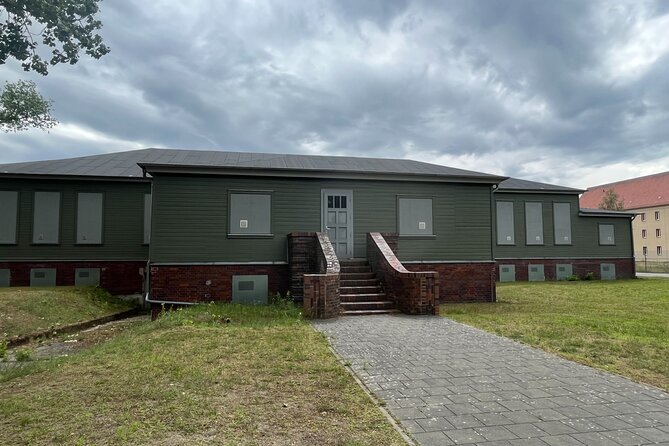
- Prisoner barracks and the camp kitchen
- The infirmary and the crimes committed in the name of medicine
- What makes the guide’s approach different
- Cost, timing, and what you need to bring
- Who should choose this experience
- Should you book the Sachsenhausen tour?
- FAQ
- Where does the tour begin?
- Where does the tour end?
- How long does the tour last?
- Is public transportation included?
- Is admission to the memorial included?
- Is the tour offered in English?
- How many people can join the tour?
- Can I cancel for a full refund?
Key points to know before booking
- Small group of up to 15: The limited size helps the guide speak with the group rather than at it.
- Four hours from central Berlin: The schedule gives you enough time to reach Sachsenhausen, hear the historical context, and explore major buildings.
- Public transportation is not included: You need a ticket covering Berlin’s ABC zones.
- Guide Siobhán’s approach: Her commentary links the camp’s history with feminism, racism, eugenics, and present-day far-right politics.
- Donation included: Part of your payment supports the memorial, while snacks and bottled water are your responsibility.
- A demanding but respectful visit: The subject matter includes murder, forced labor, medical abuse, and attacks by Holocaust deniers.
Why this Sachsenhausen tour is worth your morning
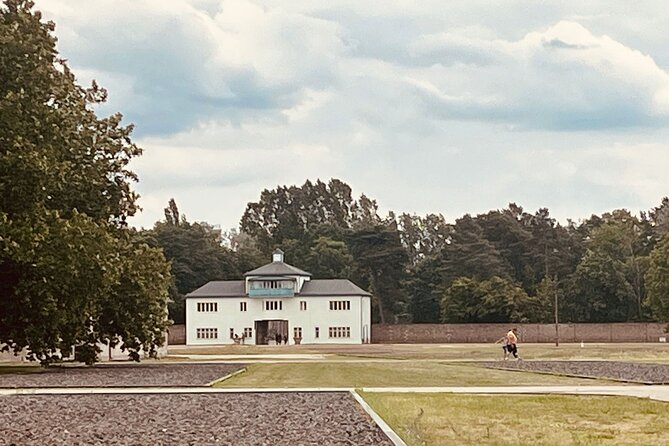
Sachsenhausen is outside central Berlin, so it takes effort to reach. That effort is part of the point. The memorial does not feel like a quick city-center museum stop that you can squeeze between lunch and shopping. You leave Berlin, set aside several hours, and give the place the attention it requires.
I like the way this tour sets the site in a wider frame. Sachsenhausen was first used by the Nazis as a model concentration camp, designed to express control and supposed racial superiority. After the war, it became a Soviet special camp, then later served as a site for pro-communist and anti-fascist political messaging. Those later chapters matter because the story did not simply end when Nazi rule ended.
The visit is guided, but not a tightly scripted academic lecture. That can be a strength if you want room for questions and discussion. It can be a weakness if you prefer a dense, date-by-date presentation with every detail delivered in a fixed order.
Guide Siobhán’s style is especially important here. Her commentary takes a progressive and feminist view, with attention to women’s bodies, racism, eugenics, and the way Nazi doctors used prisoners for career advancement. The political links continue into the present, including discussion of the AfD, a German far-right party.
That approach gives the visit urgency. It also means you should choose this tour because you are comfortable with interpretation, not just basic facts. If you want a politically neutral audio guide experience, this may not be the best match.
Other memorial sites open to visitors:
- Berlin: Sachsenhausen Concentration Camp Tour in English
★ 5.0 · 5,711 reviews - Berlin: Sachsenhausen Concentration Camp Memorial Tour
★ 4.7 · 3,716 reviews - Sachsenhausen Concentration Camp Bus Tour in English from Berlin
★ 5.0 · 1,962 reviews
Meeting at Potsdamer Platz and heading to the memorial
The tour begins at Potsdamer Platz 10, a practical central meeting point in Berlin. From there, you make your way by public transportation toward Sachsenhausen. Your ABC-zone ticket is not included, so buy or arrange that before setting off.
The exact transport instructions should be checked with your confirmation, but the key planning point is simple: allow enough time to reach the meeting place and do not forget the ABC fare. The memorial is beyond Berlin’s central fare areas, and arriving without the correct ticket can create an avoidable problem.
The walk from the station to the visitors’ center forms part of the experience. It helps you shift out of city mode before entering the memorial. This is not a grand approach with dramatic architecture. Instead, the transition gives you time to think about where you are going and why the place matters.
The tour lasts about four hours, so wear practical shoes and be ready to walk and stand. A moderate level of fitness is recommended. Service animals are allowed, and the site is near public transportation, but the tour should still be treated as an active outing.
The visitors’ center explains a camp built for control
The first major stop is the visitors’ center, where detailed models show how the camp was laid out. These models help you understand that Sachsenhausen was not an accidental collection of buildings. Its physical design helped the SS control prisoners and reinforce a hierarchy built on terror and racial ideology.
This is one of the most useful parts of the tour because memorial sites can be difficult to read at first. Barracks, walls, towers, and open spaces may look disconnected when you see them without context. The models clarify how the different areas worked together and how architecture served the camp system.
The tour also addresses an unsettling modern fact: the former SS training camp was later transformed into a Brandenburg police academy. That reuse makes the site harder to place neatly in the past. You are not only looking at preserved remnants. You are also confronting the ways institutions and communities decide what happens on ground marked by crime.
I value this kind of context because it avoids turning Sachsenhausen into a collection of grim objects. The buildings matter, but so do the decisions made around them after 1945.
Prisoner barracks and the camp kitchen
The prisoner barracks and camp kitchen offer a closer look at daily life under imprisonment. The focus is not on ordinary domestic life, of course. These spaces reveal how food, shelter, movement, and routine could become tools of control.
You explore these areas with the guide’s wider explanation, then have time for autonomous examination. That balance works well. A guide can point out the meaning of a structure, but quiet time is also necessary. You need space to read, look, and process what you have just heard.
The camp kitchen carries another painful connection to the present. Neo-Nazis who deny the Holocaust have attacked parts of the site. This detail makes the memorial’s work feel immediate rather than symbolic. Preserving evidence is not only about honoring people who were killed. It also counters deliberate attempts to erase or distort what happened.
The discussion of the AfD adds another modern political connection. The goal is not simply to attach a current party to a historical site. It is to ask how far-right ideas gain ground, how racism is normalized, and why memory still matters in Germany today.
Some people will find these links valuable. Others may feel they want more historical distance during a memorial visit. That difference is worth considering before you book.
A few more Berlin trips worth comparing
- Berlin: Reichstag, Dome and Government District Guided Tour
★ 4.7 · 18,288 reviews - Berlin: 1-Hour City Tour by Boat with Guaranteed Seating
★ 4.3 · 16,993 reviews - Berlin: Boat Tour Along the River Spree
★ 4.4 · 11,252 reviews - Discover Berlin Half-Day Walking Tour
★ 5.0 · 9,624 reviews
The infirmary and the crimes committed in the name of medicine
The infirmary is among the most difficult sections of the visit. Here, the tour addresses racism, control over women’s bodies, eugenics, and the abuse of prisoners by Nazi doctors.
The material is especially disturbing because it shows how medical language and professional ambition were used to support cruelty. Prisoners were treated as laboratory subjects, while doctors used the camp to advance their careers. This was not random violence alone. It was organized, recorded, and carried out by people working inside respected institutions.
The focus on women’s bodies adds an important dimension often missing from general accounts of concentration camps. It brings attention to gendered forms of control and the ways racial policy affected women in particular. You should expect this portion to be upsetting, especially if medical abuse or reproductive control is a sensitive subject.
At the same time, the guide’s tone is not simply relentlessly grim. The visit keeps a respectful mood while allowing some appropriate lightness at carefully chosen points. That does not make the history less serious. It can help you remain present and able to think clearly during a long morning of painful material.
One of the strongest qualities of Siobhán’s approach is this balance. The visit does not try to make the subject comfortable, but it also does not leave you emotionally flattened. The aim is understanding, not shock for its own sake.
What makes the guide’s approach different
This tour is not presented as a purely neutral information service. Siobhán’s commentary uses a progressive, feminist lens and makes direct connections between historical systems of oppression and present politics.
That style can make familiar subjects feel more connected. Nazi racism, eugenics, medical abuse, the suppression of women, and modern far-right movements are treated as related questions about power and exclusion. You are encouraged to think about how language, institutions, and political movements can shape public behavior.
I like that the approach remains sensitive to the emotional state of the group. The subject is handled with care, and the guide responds to questions. A group containing both teenagers and adults can take part, with the explanation adjusted to the people present.
Still, a political viewpoint is not the same as a short neutral orientation. If your ideal tour gives only dates, buildings, and established facts, you may find the interpretation too present-focused. If you want a guide who asks what this history means now, you are more likely to appreciate it.
The small group helps here. With no more than 15 people, questions are easier to manage, and the guide can pay attention to the group’s mood. That size also avoids the disconnected feeling of being one person in a large crowd.
Cost, timing, and what you need to bring
The price is $31.29 per person. That is a fair cost for roughly four hours of guided time, a small group, and a donation to the memorial, though you must add the public transportation fare.
The donation matters. Sachsenhausen is not simply a commercial attraction. Supporting the memorial helps maintain the site and its educational work. You are paying for guidance and organization, but part of the cost also supports the place you came to see.
Bring water and a snack because neither is included. Four hours is long enough for hunger or thirst to distract you, especially when you are walking and standing. There is no need to turn the visit into a picnic, but basic preparation makes the morning easier.
Book ahead if your schedule is fixed. This experience is often reserved about 17 days before the date, and the group is capped at 15 people. That does not guarantee every date will sell out, but it suggests that waiting until the last moment may limit your choices.
The cancellation terms are flexible up to 24 hours before the start time, when you can receive a full refund. Changes or cancellations inside that window are not accepted for a refund. The tour also requires a minimum number of participants, so if the operator cancels for that reason, you can choose another date or receive your money back.
Who should choose this experience
I would choose this tour if you want a guided visit that combines physical evidence with present-day questions. It suits people who are willing to listen, ask questions, and sit with uncomfortable material rather than rush through the memorial.
It is also a good fit for a mixed group of adults and teenagers, provided everyone understands the seriousness of the subject. The guide can respond to questions and adjust to the group, which is more useful than a one-size-fits-all recording.
You may prefer another format if you want a completely self-directed visit, a strictly academic presentation, or a tour without current political discussion. The independent exploration time helps, but this is still a guided experience shaped by Siobhán’s point of view.
The tour is not designed for a casual half-day outing. I would avoid placing it beside a packed list of cheerful activities. Give yourself some quiet time afterward if you can.
Should you book the Sachsenhausen tour?
Book it if you want a serious, human explanation of Sachsenhausen and appreciate links between the past and the politics of today. The small group, thoughtful guide, memorial donation, and careful handling of painful subjects give it real value for the price.
Think twice if the progressive and feminist angle will distract you from the visit. Also remember to budget for the ABC public transportation ticket, bring water and a snack, and allow the full four hours.
For most people seeking more than an audio guide, this is a worthwhile choice. It leaves you with difficult facts, but also with a clearer sense of why Sachsenhausen still matters.
FAQ
Where does the tour begin?
The tour begins at Potsdamer Platz 10, 10785 Berlin, Germany.
Where does the tour end?
The activity ends back at the meeting point.
How long does the tour last?
The tour lasts approximately four hours.
Is public transportation included?
No. You need to pay for your own public transportation ticket covering the ABC zone.
Is admission to the memorial included?
Admission is included, and the experience also includes a donation for the memorial.
Is the tour offered in English?
Yes. The tour is offered in English.
How many people can join the tour?
The maximum group size is 15 people.
Can I cancel for a full refund?
Yes, if you cancel at least 24 hours before the experience start time. Cancellations made less than 24 hours before the start time are not refundable.
Just added around Berlin
- Private Walking Tour in Berlin: Hitler’s Germany & WWII★ 5.0 · 7 reviews
- The History of Berlin: WWII PRIVATE Walking Tour With Locals★ 5.0 · 209 reviews
- Private Berlin WWII and Cold War History Tour with Local Expert Guide★ 5.0 · 28 reviews
- Private Walking Tour Berlin 3 hours: Brandenburg, Historic Center★ 5.0 · 7 reviews
- Berlin: Private Bike Tour of the Berlin Wall and Third Reich★ 5.0 · 23 reviews
- Berlin Photography Masterclass – Private Photography Lesson★ 4.5 · 23 reviews
- Group Driving Tour 1 to 6 people. Berlin Shore Excursion incl pick-up at Port★ 5.0 · 8 reviews
- Berlin: Guided Private Bike Tour to Explore the Highlights★ 5.0 · 12 reviews