
Reviewed · NUREMBERG TOURS
Nuremberg: Medieval Time Travel for Kids
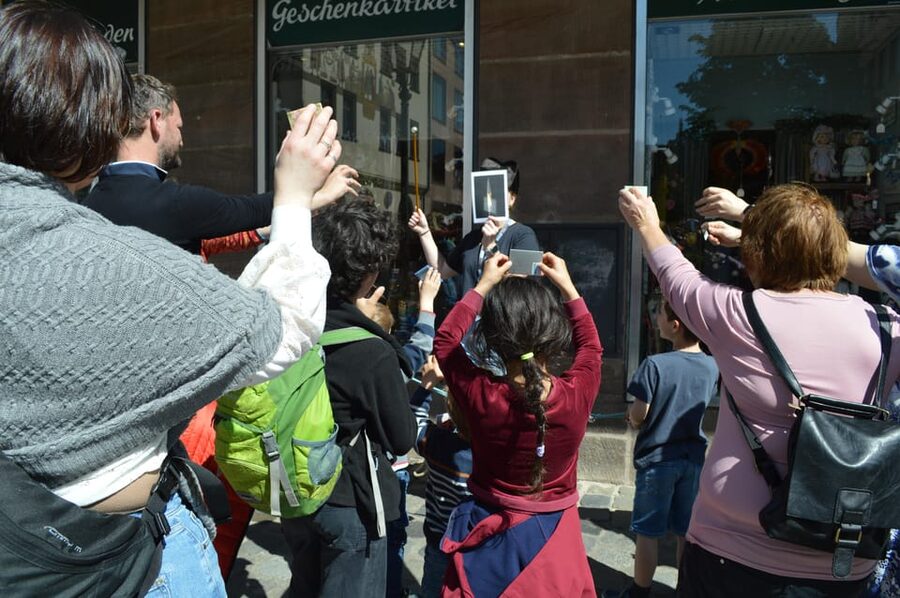
Medieval Nuremberg becomes a playground. This two-hour walk turns the Old Town into a lesson about food, work, faith, water, and childhood, with games and short dramatic scenes that keep young minds moving. I especially like the hands-on activities and the way each stop connects a familiar street or building to daily life long ago. The main drawback is simple: the tour is conducted in German, so families without German language skills may miss much of the story.
I also like the compact route. You cover several central sights without committing to a full-day history program, and the $11 price per person is easy to justify when the guide keeps both children and adults involved. Families should note that the tour is not suitable for children under six or people with mobility impairments, and comfortable shoes are a must.
In This Review
- Key points for families planning this Nuremberg walk
- Why this tour works better than a standard history walk
- Starting at the Henkerhaus
- Trödelmarkt and the Pegnitz: water at the center
- Liebesinsel and the first activities
- Fleischhauerbrunnen and medieval work
- Hauptmarkt and the Christmas market setting
- St. Sebaldus Church and the role of faith
- Weinmarkt and the wider picture of childhood
- Finishing in Weißgerbergasse
- Who should book this two-hour experience
- Booking details and practical value
- Should you book Nuremberg: Medieval Time Travel for Kids?
- FAQ
- Where does the tour start?
- Where does the tour finish?
- How long does the tour last?
- What language is the tour conducted in?
- Is the tour suitable for young children?
- What should I bring?
- Can I cancel the booking?
Key points for families planning this Nuremberg walk
- Water, markets, and work become part of the story: The Pegnitz and the old town’s working areas help explain how medieval people lived.
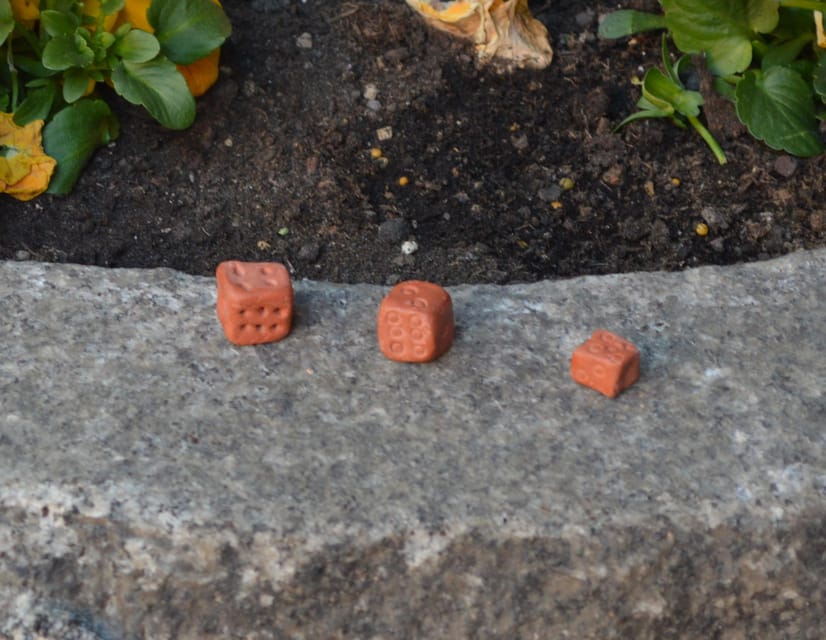
- Games happen along the route: Children do more than listen, with historical games and participation at several stops.
- The church gets a child-friendly explanation: The relief outside St. Sebaldus Church opens a discussion about faith and public life.
- The route covers six Old Town areas: You walk from the Henkerhaus to Trödelmarkt, Liebesinsel, Hauptmarkt, St. Sebaldus, Weinmarkt, and Weißgerbergasse.
- The German-language format matters: The tour suits German-speaking families best, especially children old enough to follow a guided story.
- The strongest age range is roughly six to ten: Children as young as six have enjoyed the games, while seven- and eight-year-olds have been especially enthusiastic.
Why this tour works better than a standard history walk
A medieval city can be hard for children to read. Adults see old façades, churches, bridges, and market squares. Children often see streets that look much like any other streets. This tour gives those places a job.
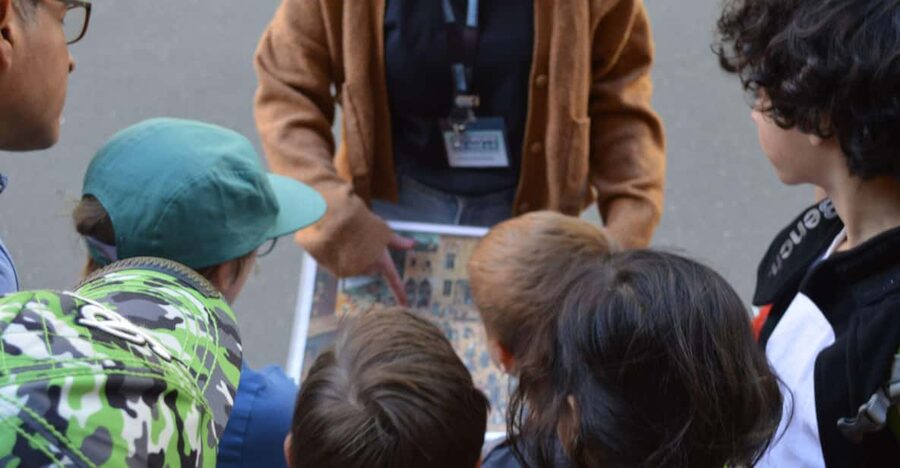
At each stop, the guide links the setting to a question children can grasp: What did people eat? What did children play with? How did water reach the city? What work did people do? Did knights and princesses really live here, or is that mostly storybook material?
That approach gives the walk a clear purpose. You are not simply moving from one attractive building to the next. You are using Nuremberg as a picture book about daily life.
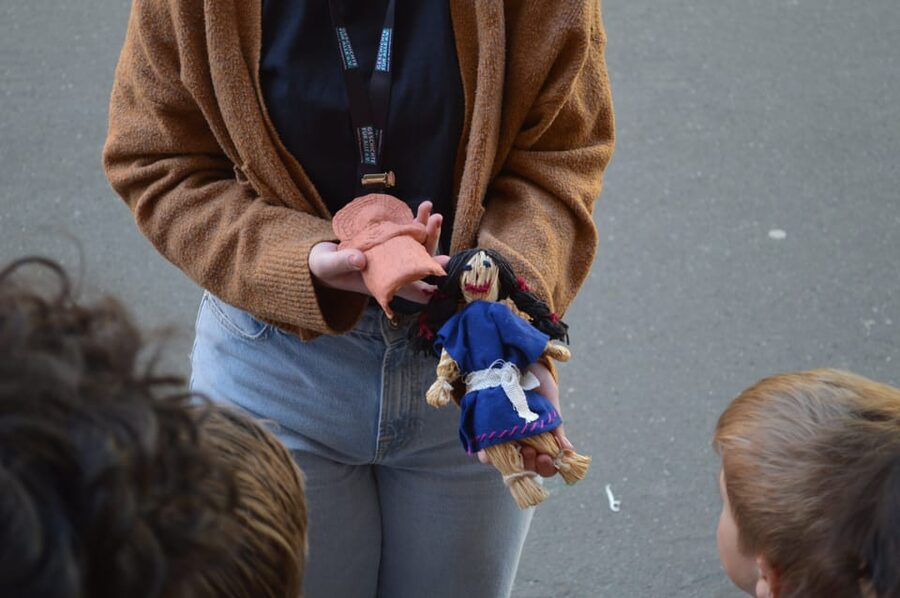
The guide also uses materials, acting, games, and participation. These details matter because a two-hour walk can be a long stretch for a young child, even in a beautiful city. The tour breaks the time into smaller pieces, and feedback from families with children aged six, seven, eight, and ten shows that the format can hold attention across that age range.
It is still a walking tour, not a costumed theme-park show. The emphasis remains on history, but the history is delivered in a way that invites children to take part.
A few more Nuremberg trips worth comparing
- Nuremberg: City Tour with the Bimmelbahn Train
★ 4.4 · 2,475 reviews - Nuremberg: Old Town Guided Walking Tour
★ 4.6 · 2,416 reviews - Nuremberg: Tunnels and Secret Passages in the City Wall Tour
★ 4.8 · 2,334 reviews
Starting at the Henkerhaus
Meet the guide in front of the Henkerhaus, or Hangman’s House, at Trödelmarkt. Look for a green name badge and a folder marked Geschichte Für Alle. That identification detail is useful in a busy Old Town, especially if your family arrives a few minutes early and several groups are gathering nearby.
The starting point immediately gives the walk a strong medieval setting. The Henkerhaus is an unusual place to begin because it raises questions about law, punishment, and the people who carried out difficult public work. The tour then moves toward wider subjects, including ordinary childhood and jobs.
You should arrive ready to walk rather than expecting a seated program. The route includes repeated five-minute walks between several stops, followed by one final stretch of about seven minutes to Weißgerbergasse. The distances are modest, but cobbled and historic streets can still tire small legs.
Trödelmarkt and the Pegnitz: water at the center
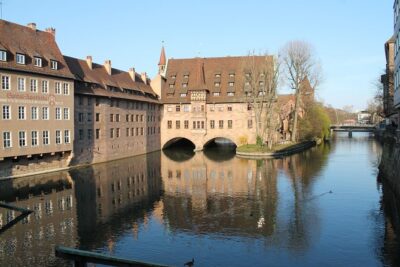
The first part of the tour explores Trödelmarkt and the nearby Pegnitz. Here, the guide explains how medieval people used water in the city.
This is a smart opening subject for children. Water is something they understand at once, yet its role was very different before modern plumbing. The river was tied to work, food, movement, and everyday survival. The discussion helps children see the Pegnitz not just as a scenic stretch of water, but as part of the city’s working life.
The setting also gives the guide room to talk about different medieval professions. The tour does not treat the Middle Ages as a world made only of kings, knights, and princesses. Instead, children learn about the workers who kept a city going and the kinds of tasks people handled each day.
That practical angle is one of the tour’s best choices. Children often remember an ordinary detail, such as food, water, or a job, longer than they remember a date.
Liebesinsel and the first activities
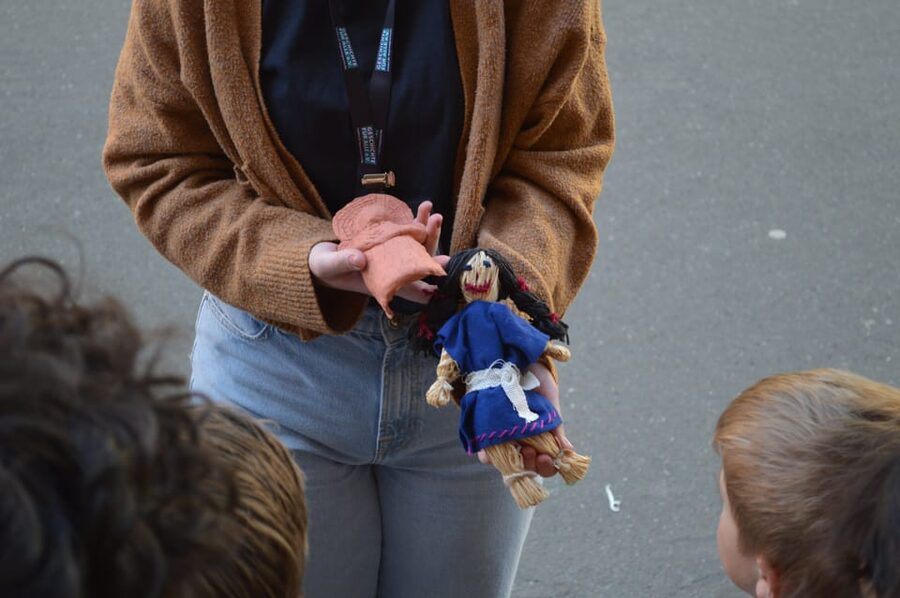
After about five minutes on foot, you reach Liebesinsel. The stop continues the story of the river and the city while giving the guide another chance to use activities.
The precise game or demonstration can vary, but the format includes historical games along the route. This helps make the walk feel active without turning it into a race. Children can test ideas through play, and adults can follow the historical point behind each activity.
I would pay attention here to how the guide handles participation. Some children jump into group activities quickly. Others need a little time to watch first. The use of materials and short performances is helpful for both kinds of children because the group can learn by seeing, not only by answering questions.
Liebesinsel is also a useful pause between the river discussion and the next Old Town sight. The route keeps changing its focus, which helps prevent the history from becoming one long talk.
Still Nuremberg, at a slower pace:
- Nuremberg: Medieval Dungeons Guided Tour
★ 4.8 · 1,726 reviews - Nuremberg: Walking Tour of Former Nazi Party Rally Grounds
★ 4.7 · 1,665 reviews - Medieval Tour in Nuremberg in Spanish
★ 5.0 · 1,374 reviews - Nuremberg: Historischer Kunstbunker WWII Art Bunker Tour
★ 4.8 · 921 reviews
Fleischhauerbrunnen and medieval work
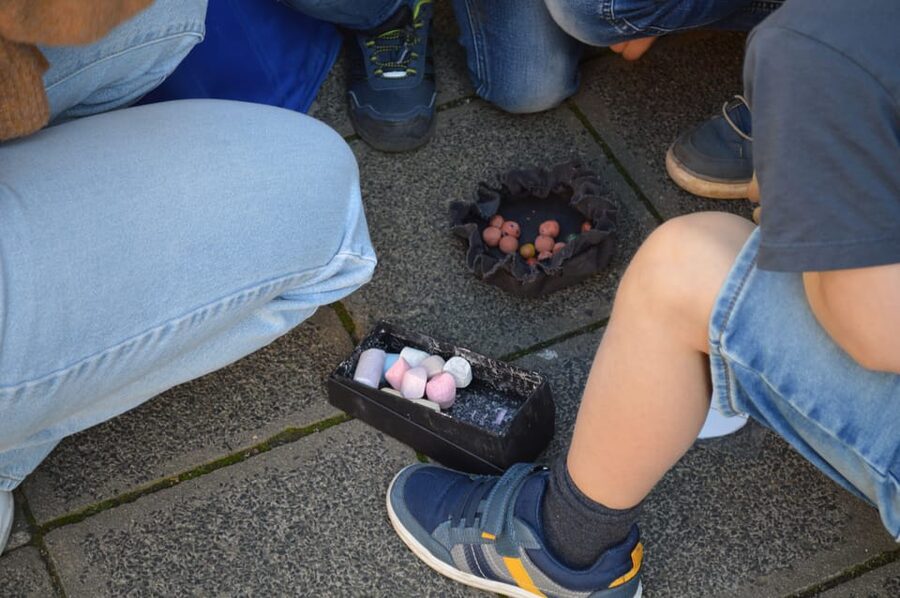
The next stop is Fleischhauerbrunnen, reached after another walk of about five minutes. The name points toward the world of butchers and food production, making this a natural place to discuss work and nutrition.
Children learn what people ate and how food related to occupation and city life. This is often the point when medieval history becomes less romantic. Daily meals were not the same for everyone, and food had to be produced, sold, and prepared by people with specific trades.
The stop also supports the tour’s wider look at professions. You get a more useful picture of medieval society when children hear about workers as well as rulers. A child may not remember a formal title, but the idea that a city depended on many different jobs is easy to understand.
The subject can be lively, though parents should be ready for practical details about food and butchering. The description of the tour keeps the material child-friendly, but the topic is not polished into a fairy tale. That honesty is part of its value.
Hauptmarkt and the Christmas market setting
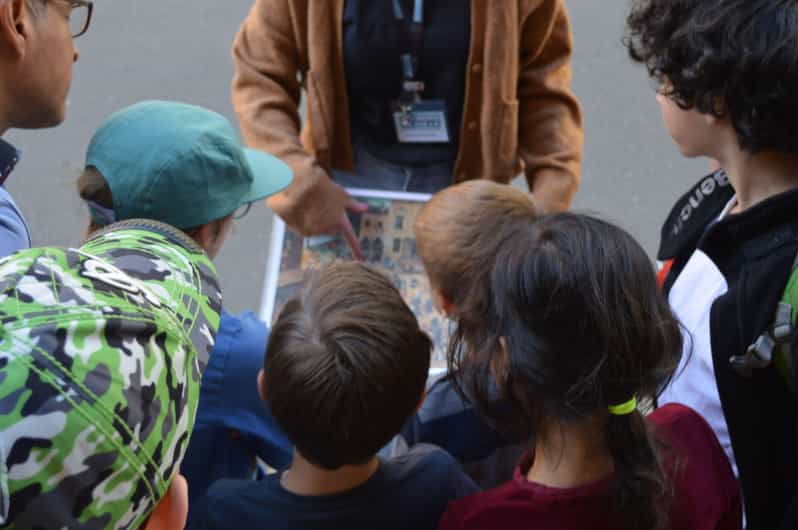
Another five-minute walk brings you to Hauptmarkt, Nuremberg’s famous central market square. This is where the annual Christmas market takes place, so the location is familiar to many visitors even if they have never thought about its medieval purpose.
The square gives the guide a large public setting for explaining trade, markets, food, and civic life. Children can picture the market as a place where goods, people, and news came together. The lesson feels more concrete because the group is standing in a space that still serves a public role today.
Hauptmarkt may be crowded, especially around the Christmas market season. That can make it harder for children to stay close and hear every word. Keep young children within sight, and expect the guide to choose a spot where the group can gather rather than trying to stand in the busiest part of the square.
The tour’s timing is also worth considering. Two hours is long enough to cover several themes, but short enough to fit beside other Nuremberg plans. If you are visiting the Christmas market, this walk can add context to a place you might otherwise see only as a shopping stop.
St. Sebaldus Church and the role of faith
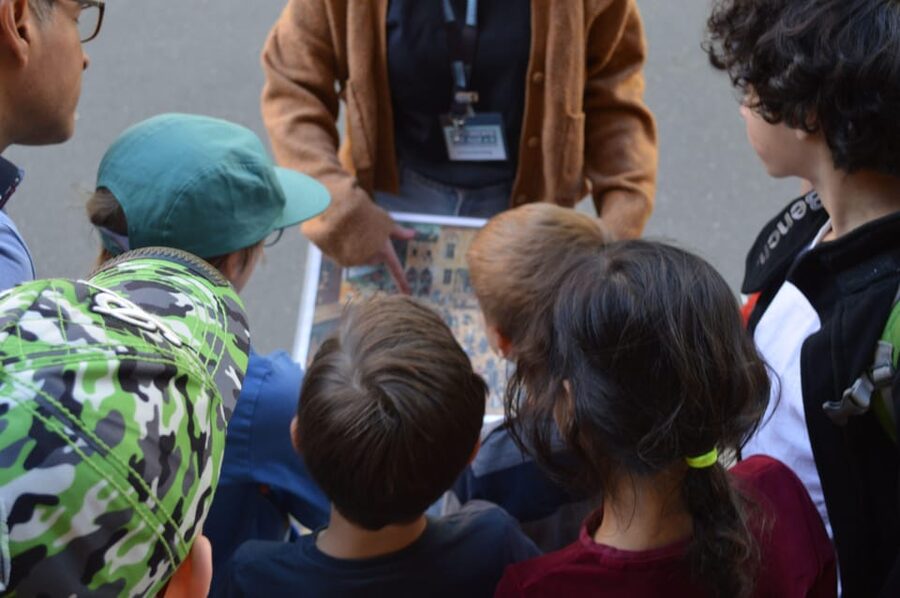
From Hauptmarkt, the group walks about five minutes to St. Sebaldus Church. The guide uses the relief outside the church to explore the role of the church in medieval life.
This is more useful than a simple list of architectural facts. Children learn that the church was not only a place people entered for worship. It shaped the rhythm of life, public rituals, ideas about right and wrong, and the way people understood their place in the world.
The tour also includes a joint staging of a sacred ritual. That activity gives children a way to think about ceremony from the inside, through movement and participation rather than a long explanation. It can be one of the most memorable sections for children who enjoy acting.
The church stop may also prompt questions about childhood. Children in the Middle Ages grew up within a strongly religious society, and the church affected family life, work, festivals, and education. The guide’s job is to keep the subject clear and age-appropriate, which is why the German language level matters so much.
If your child understands only a little German, this stop may be difficult to follow. Visual materials and action can help, but the explanation depends on spoken German.
Weinmarkt and the wider picture of childhood
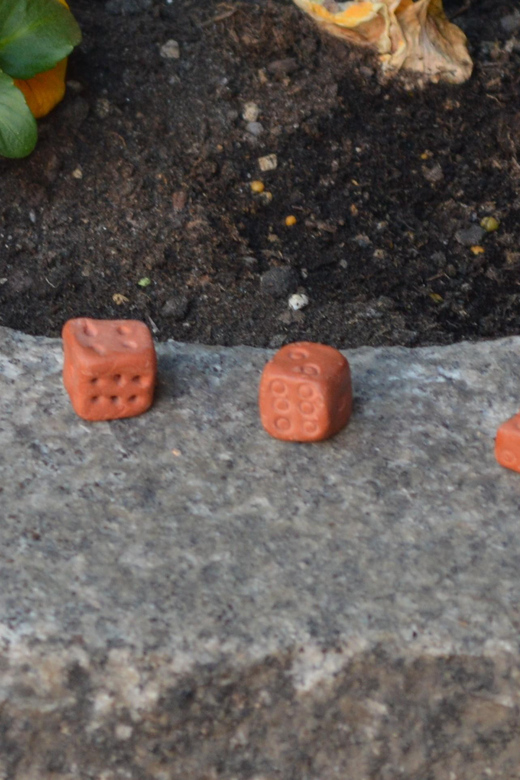
The route continues on foot for about five minutes to Weinmarkt. By this point, the tour has covered water, work, food, markets, and faith. Weinmarkt gives the guide space to bring those threads back to childhood and leisure time.
You learn what children played with and how they spent free time. The tour asks the practical questions that make the past feel close: Did children have toys? What games did they know? How much time could they spend playing if they also had household or work duties?
These questions help correct the usual picture of medieval life. Children were not simply miniature adults, but childhood was not arranged like modern childhood either. The balance between play, family life, and work gives children a clearer sense of how much daily life has changed.
The historical games are especially important here. They give the group a shared activity and let children compare their own play with older forms of entertainment. Adults can take part too, which prevents the tour from becoming something parents merely watch from the side.
Finishing in Weißgerbergasse
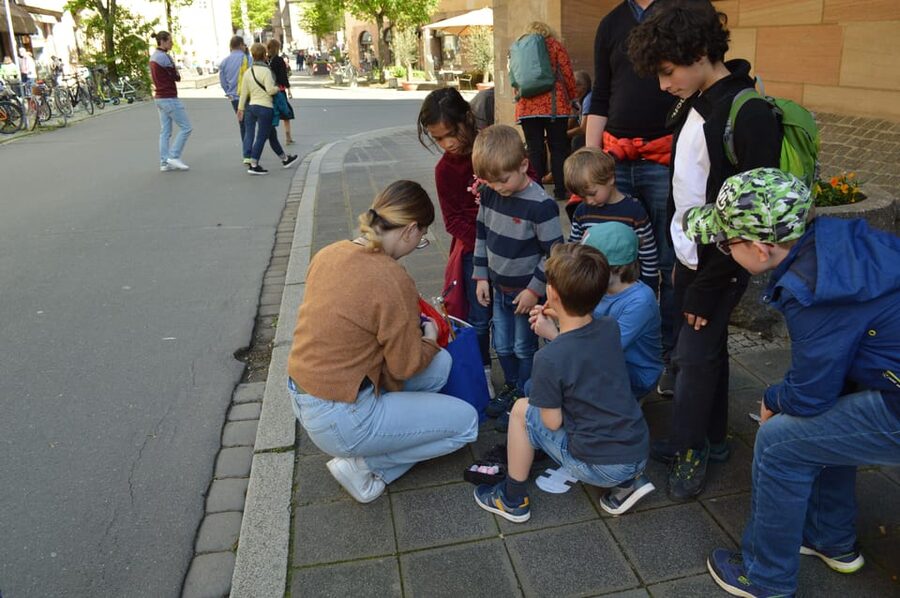
The final walk takes about seven minutes and ends at Weißgerbergasse. The route closes in one of Nuremberg’s Old Town areas after moving through several different parts of medieval city life.
Ending here keeps the last stretch manageable. You are not asked to cross the entire city after two hours of activities. The finish also gives families a natural point to stop, rest, and continue with their own plans.
The tour does not include museum admission or transportation. It is a guided walking experience, so the value comes from the guide’s interpretation, activities, and route rather than from entry to a collection. At $11 per person, that is a fair price if your children enjoy taking part and understand German.
For a family of four, the total remains modest compared with many paid attractions. The value is strongest when you use the walk to help children understand other places you visit in Nuremberg. Hauptmarkt, St. Sebaldus Church, the Pegnitz, and Weißgerbergasse become easier to recognize and discuss afterward.
Who should book this two-hour experience
I would choose this tour for families with children from about six to ten, especially children who learn through movement, games, and short stories. The format has worked particularly well for seven- and eight-year-olds, and children around six can take part if they are comfortable in a group.
It also suits adults who want more than a children’s activity. The subjects include food, labor, religion, water, and public life, so parents can pick up useful context while the children stay busy.
You should think twice if your group does not speak German. The tour is offered in German only, and the guide’s spoken explanations carry much of the content. It may also be a poor match for anyone with mobility impairments, since the experience involves walking between multiple Old Town stops.
Bring comfortable shoes and clothing suited to the weather. The tour runs outdoors, and the cobbled streets, pauses, and walking sections are part of the experience.
Booking details and practical value
The price is $11 per person, and the duration is two hours. You can cancel up to 24 hours before the start for a full refund, and a reserve-now, pay-later option is available. For groups of ten or more, contact Geschichte Für Alle e.V. by email at [email protected].
A GetYourGuide booking confirmation serves as proof of payment because invoices are not issued for those bookings. That is a small but useful point for families, schools, and organized groups that need payment records.
The tour has received a 4.9 rating from 15 reviews, with the clearest praise focused on child-friendly explanations, acting, visual materials, and games at each stop. That combination tells you what the tour does best: it makes history participatory without dropping the historical content.
Should you book Nuremberg: Medieval Time Travel for Kids?
Book it if you want your children to understand Nuremberg through everyday life rather than famous names alone. The tour gives you a careful route, several central sights, historical games, and a guide who keeps the material accessible for young children.
Skip it if your family does not understand German, needs a fully accessible route, or prefers a quiet sightseeing walk with little participation. For German-speaking families with children aged six and up, the $11 price buys a useful two hours of guided time and gives the Old Town a story children can carry with them.
FAQ
Where does the tour start?
It starts in front of the Henkerhaus, also called the Hangman’s House, at Trödelmarkt in Nuremberg. The guide wears a green name badge and carries a folder marked Geschichte Für Alle.
Where does the tour finish?
The tour finishes at Weißgerbergasse after the group visits several Old Town locations.
How long does the tour last?
The guided walking tour lasts two hours.
What language is the tour conducted in?
The live tour guide speaks German. No other tour language is listed.
Is the tour suitable for young children?
It is not suitable for children under six. Children aged six, seven, eight, and ten have been able to enjoy the child-friendly format, games, acting, and participation.
What should I bring?
Bring comfortable shoes and clothing suitable for the weather.
Can I cancel the booking?
Yes. You can cancel up to 24 hours in advance for a full refund. A reserve-now, pay-later option is also available.
Just added around Nuremberg
- Tour en español al Campo Zeppelin★ 5.0 · 8 reviews
- Stein: Public guided tour of the “Old Mine” museum★ 4.5 · 18 reviews
- “Rotes Bier” and “Blaue Zipfel”. A historical-culinary walk★ 4.4 · 190 reviews
- Nuremberg: Old Town Guided Tour By Bus★ 4.4 · 198 reviews
- Nürnberg kennenlernen: Highlights in der Altstadt★ 4.7 · 189 reviews
- Nuremberg: Bar and Club Tour with Free Shots and Free Entry★ 3.8 · 23 reviews
- Nürnberg Bachelor(ette) Party with Night PubCrawl★ 4.2 · 5 reviews
- Nuremberg: WWII Tour, Courtroom 600 and 3rd Reich Sites★ 4.6 · 94 reviews
Nuremberg Tours, compared.

Tunnels and Secret Passages in the City Wall Tour
Read our review →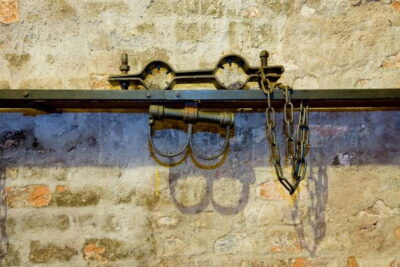
Browse the lists this tour appears in