
Reviewed · TRAIN EXPERIENCES
Nuremberg: Nuclear Bunker in Main Railway Station
The Cold War is still under Nuremberg. This 75-minute tour takes you beneath the city’s main railway station into a nuclear bunker built to protect people from nuclear, biological, and chemical attacks. I like the serious historical setting and the way the tour links military technology to ordinary civilian life. I also like the chance to sit or lie on a pallet and picture several hundred people sharing the same cramped shelter.
The main drawback is clear: the tour is not a good fit if you dislike tight spaces or have mobility limits. It is conducted in German, the entrance is easy to miss, and late arrivals cannot enter. Plan a little extra time before the start.
In This Review
- Key points at a glance
- Why this bunker belongs on a Nuremberg itinerary
- Finding the entrance below the main railway station
- From atomic bomb shock to Cold War shelter plans
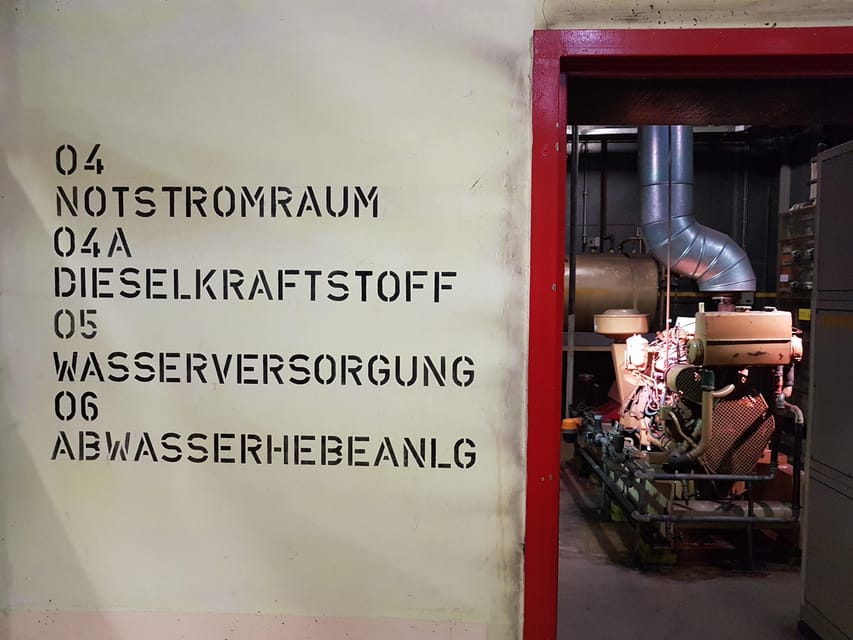
- The bunker itself, built for several hundred people
- Seeing nuclear power through the computer simulation
- Civilian protection, not just military history
- What the 75 minutes feel like
- Is $15 a fair price?
- Who should book, and who should skip it?
- Small practical details that can make or break the visit
- Should you book the Nuremberg nuclear bunker tour?
- FAQ
- Where is the nuclear bunker tour meeting point?
- How long does the tour last?
- What language is the tour conducted in?
- What does the $15 price include?
- Can children join the tour?
- Is the tour suitable for wheelchair users or people with claustrophobia?
Key points at a glance
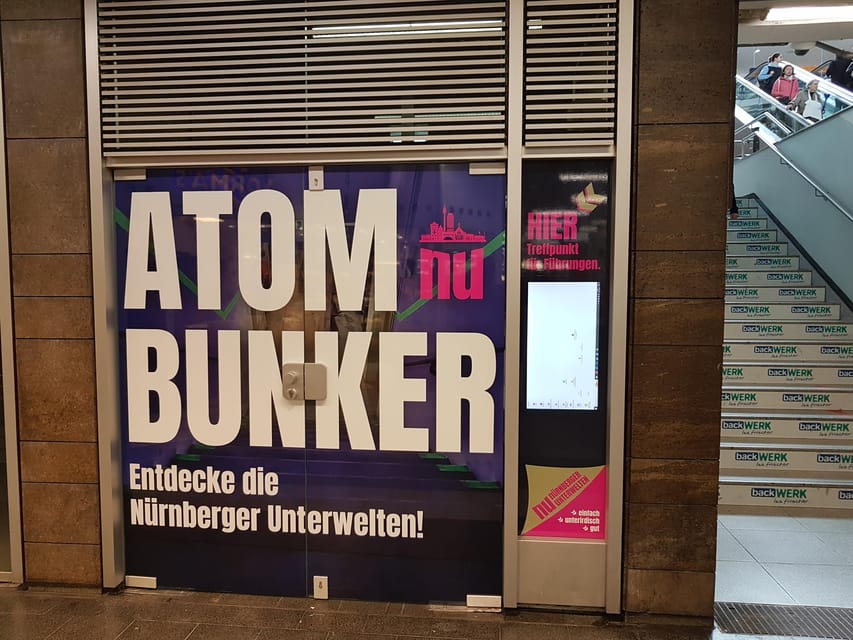
- Beneath Nuremberg’s main station: Enter through the station hall and descend to the Königstorpassage, where the bunker entrance sits beside Yorma’s restaurant.
- A Cold War shelter for real civilians: The facility was intended mainly for city residents and railway passengers facing an immediate threat.
- More than a World War II stop: Exhibits explain how civilian protection changed after the atomic bombings of Japan and during the nuclear arms race.
- A computer simulation of nuclear weapons: See how the destructive power of early atomic bombs compared with later nuclear warheads.
- A physical sense of confinement: Sit or lie on a pallet and imagine spending an emergency inside with several hundred other people.
- German-language tour with practical limits: The 75-minute visit costs $15 per person, but large bags, food, drinks, pets, and smoking are not allowed.
Why this bunker belongs on a Nuremberg itinerary
Nuremberg is often approached through the story of the Nazi era, World War II, and the postwar trials. This bunker adds a later chapter. It shows how fear changed after 1945, when the new danger was no longer only armies crossing borders but weapons capable of destroying an entire city.
The bunker beneath the main station was designed for an acute emergency. Its location mattered. A railway station gathered large numbers of people, including passengers passing through Nuremberg, so this was not simply a private shelter for officials. It was intended to offer protection to some city residents and, above all, people already at the station when an attack came.
That purpose gives the tour a practical edge. You are not only looking at old walls or reading about Cold War politics. You are considering a basic question: what happens to ordinary people when governments prepare for a disaster too large to stop?
I find that question more affecting than a simple display of military equipment. The bunker deals with civilian protection, and that brings the subject close to daily life. Where would people sit? How long could they stay? How would food, air, medical care, and personal space be managed? The tour uses the facility and its exhibits to help you think through those problems.
A few more Nuremberg trips worth comparing
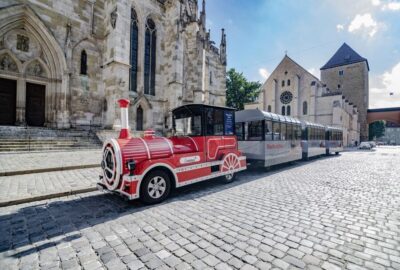
- Nuremberg: City Tour with the Bimmelbahn Train
★ 4.4 · 2,475 reviews - Nuremberg: Old Town Guided Walking Tour
★ 4.6 · 2,416 reviews - Nuremberg: Tunnels and Secret Passages in the City Wall Tour
★ 4.8 · 2,334 reviews
Finding the entrance below the main railway station
The meeting point is inside Nuremberg’s main station, not outside on the street. Enter through the main portal and make your way into the central hall. From there, four escalators lead down toward the basement levels.
You can take the long escalator to the shopping arcade, known as the Königstorpassage. There is also a shorter escalator followed by a staircase. At the foot of the escalator or stairs, turn sharply right. The nuclear bunker entrance is on the right wall, directly by Yorma’s restaurant.
This is the part that needs planning. The entrance is somewhat concealed, and if you are unfamiliar with the station, you can easily walk past it. I would arrive early enough to locate the station hall, descend to the passage, and check the wall near Yorma’s before the appointed time.
Do not treat the station as your final arrival point at the exact start time. There can be no entry after the tour begins. That rule matters in a railway station, where a delayed train, a crowded concourse, or a wrong turn can quickly cost you the visit.
From atomic bomb shock to Cold War shelter plans
The tour begins with the postwar shift in civilian defense. After the Second World War and the atomic bombings of Japan, nuclear weapons became a defining concern. Governments had to consider not only how to fight a war but also how to protect people who had no role in the military action.
The Nuremberg bunker reflects that change. It was built as one answer to the nuclear threat, but its intended use went beyond nuclear fallout or blast protection. The facility was also meant to help shield people from biological and chemical attacks.
That combination tells you something about Cold War planning. Civilian protection had to account for several kinds of danger at once. A bunker was expected to be a refuge, but it was also part of a larger system of emergency planning. The exhibits explain the methods once considered useful against these threats.
I appreciate that the tour does not reduce the subject to a simple story of good technology and bad technology. A shelter may offer protection, but it also creates difficult conditions for the people inside. The bunker was built to save lives, yet the experience of waiting underground would have been stressful, crowded, and uncertain.
The bunker itself, built for several hundred people

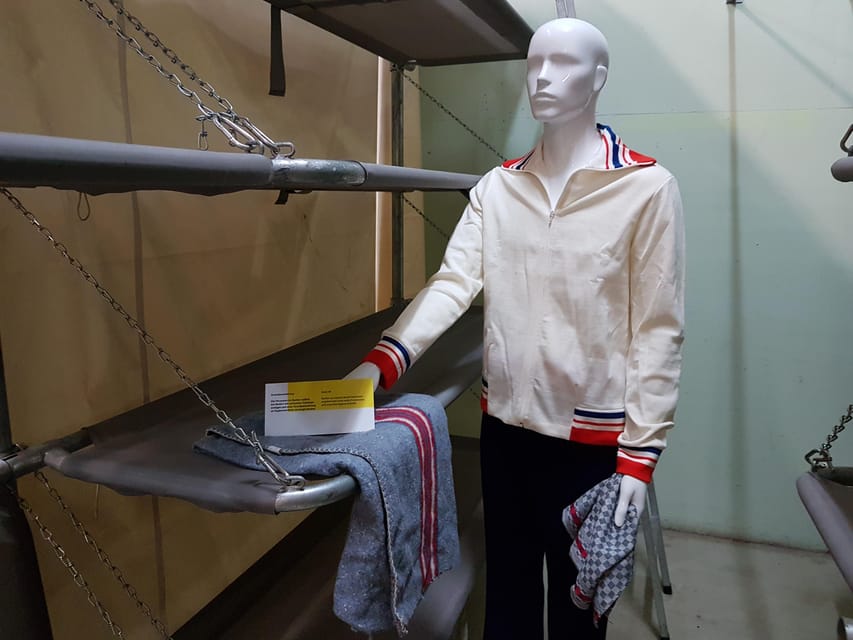
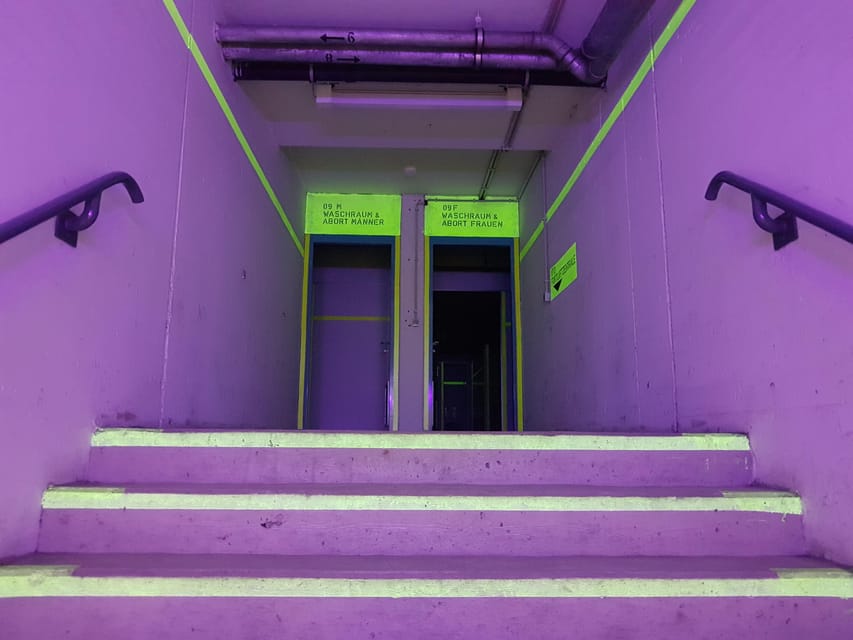
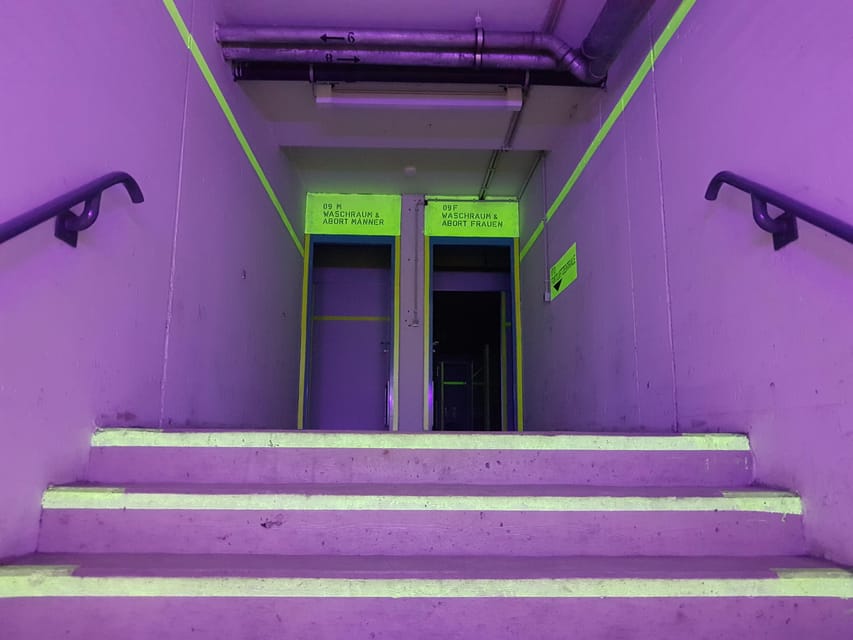
The most direct part of the visit is the physical setting. You can see the confined spaces and consider how the shelter would have felt during a real emergency. The opportunity to lie down on a pallet or sit inside the bunker is especially useful because it turns an abstract topic into a bodily one.
Try not to rush this moment. Sit quietly for a minute and think about the number of people the shelter was expected to hold. Several hundred people sharing an underground refuge would have meant little privacy and limited room to move. Even without a simulated emergency, the tight setting can make the idea of long-term shelter more real.
This is also where the bunker’s limits become part of its value. You are not entering a comfortable modern visitor center. The enclosed environment may feel oppressive, especially for anyone with claustrophobia. That is not a flaw in the historical setting, but it is a real consideration when deciding if this tour suits you.
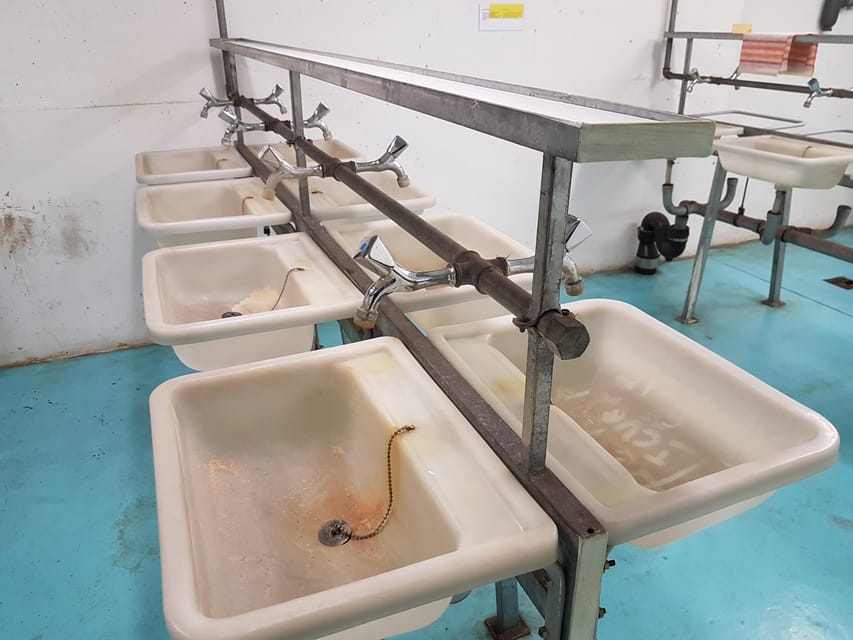
The facility helps you understand why civilian protection is never only about strong walls. A functioning shelter also needs rules, supplies, air management, sanitation, communication, and ways to organize large numbers of people. The tour’s focus on those wider protection plans gives the bunker meaning beyond its concrete structure.
Still Nuremberg, at a slower pace:
- Nuremberg: Medieval Dungeons Guided Tour
★ 4.8 · 1,726 reviews - Nuremberg: Walking Tour of Former Nazi Party Rally Grounds
★ 4.7 · 1,665 reviews - Medieval Tour in Nuremberg in Spanish
★ 5.0 · 1,374 reviews - Nuremberg: Historischer Kunstbunker WWII Art Bunker Tour
★ 4.8 · 921 reviews
Seeing nuclear power through the computer simulation
One of the tour’s clearest teaching tools is a computer simulation showing the destructive development of nuclear weapons. It helps compare the first atomic bombs with modern nuclear warheads.
That comparison is important because many people know the broad outline of Hiroshima and Nagasaki but may not grasp how nuclear weapons changed after 1945. The early bombs were already devastating. Later warheads made the possible scale of destruction even more alarming.
A computer display cannot reproduce the human cost of a nuclear attack, and the tour does not pretend that it can. Its value is different. It gives you a visual way to understand the growth of the arsenal and the reason civilian defense became such a major concern.
I find this section useful for visitors who want context rather than a collection of dates. The bunker gives you the place, while the simulation gives you a sense of scale. Together, they connect the small rooms below the station with the much larger political standoff of the Cold War.
The topic is heavy, but the guide’s manner can make a difference. Recent feedback praises the tour guide for balancing the bunker’s grim atmosphere with humor and common sense. That sounds like the right approach here. A completely solemn presentation could become stiff, while too much humor would feel careless. The best tone helps you stay engaged without making light of the subject.
Civilian protection, not just military history
The strongest part of this experience is its attention to people who were not soldiers. The bunker was meant to protect residents and passengers, so the central question is personal: if an attack happened now, what would you need to survive?
The exhibits show how authorities imagined confronting nuclear, biological, and chemical dangers. They also reveal the limits of those plans. Civilian defense can reduce risk, but it cannot erase the danger of nuclear war.
This is why the tour works well as a companion to Nuremberg’s better-known historical sites. The city’s museums and memorials often ask you to examine how mass violence began and how responsibility was assigned afterward. The bunker asks a different question: how did people prepare for the next possible catastrophe?
You may also come away with a clearer sense of how quickly the public mood changed after 1945. The end of one war did not bring a lasting feeling of safety. Instead, a new threat shaped architecture, public policy, and everyday ideas about survival.
What the 75 minutes feel like
The visit lasts 75 minutes, which is enough time for a guided explanation without turning the subject into an all-day commitment. The duration works well if you are building a busy Nuremberg schedule around the railway station.
Expect a focused tour rather than a casual walk-through. You will spend time learning about the bunker’s purpose, examining exhibits, considering nuclear weapons, and experiencing the shelter’s cramped conditions. The guide leads the visit in German, so your ability to follow German will affect how much you gain from the explanations.
If you do not understand German, the visual displays and physical setting may still communicate something, but the tour is not advertised with another language option. I would choose it mainly if you can follow German or are comfortable accepting that limitation.
The rain does not affect the visit because the tour takes place underground, but the tour operates in all weather. That makes it a useful choice on a wet day, though weather is not a reason to expect a relaxed indoor attraction. The bunker remains a confined, serious place.
Is $15 a fair price?
At $15 per person, the cost is reasonable for a guided visit lasting 75 minutes. The price includes admission and a guide, so you are paying for interpretation as well as access to a place that is not simply an open public room.
The value depends on your interests. If you want a polished attraction with broad appeal, this may feel narrow. The subject is specific, the tour is in German, and the physical setting is restrictive. If you care about modern European history, Cold War politics, public safety, or unusual places beneath cities, the price is easier to justify.
I especially like that the experience offers something a standard museum cannot. You are not only reading about emergency shelters. You are standing inside one beneath a working railway station and considering how its spaces were intended to function.
Food, drinks, and transportation are not included, but that is not a serious issue here. The meeting point is already inside the main station, where you can arrange your own refreshments before or after the tour. Just leave food and drinks outside the bunker, since they are not allowed inside.
Who should book, and who should skip it?
I would recommend this tour to adults and older children who enjoy history with a strong physical setting. It suits people who want to understand the Cold War through civilian life rather than only through leaders, weapons, and political speeches.
It is also a smart choice for:
- Visitors with a free hour near Nuremberg’s main station
- People interested in nuclear history and emergency planning
- Those who enjoy unusual underground sites
- German speakers looking for a guided historical experience
- Visitors seeking an indoor activity in poor weather
I would think twice if you have claustrophobia, limited mobility, or difficulty with escalators and stairs. The tour is not suitable for wheelchair users or people with mobility impairments. Children under eight cannot join, and pets are not permitted, although assistance dogs are allowed.
Large bags and luggage are also forbidden. That matters if you are using the station between train connections. You may need to arrange storage elsewhere before arriving at the meeting point.
Selfie sticks are not allowed, and you must not touch the exhibits. Those rules fit the setting. The bunker is a preserved historical environment, not a playground or photo studio.
Small practical details that can make or break the visit
Book with the meeting point in mind, not just the station name. The correct location is by Yorma’s restaurant at the bottom of the escalators, with the bunker entrance on the right wall. Give yourself time to identify it before the group gathers.
Wear something comfortable for moving through a basement facility, though no special equipment is listed. More important than clothing is your comfort with enclosed spaces. If you already know that tight underground rooms make you anxious, this may not be the right use of your time.
The tour has free cancellation up to 24 hours before the start, and you can reserve now while paying later. Those policies provide useful flexibility if your Nuremberg plans are still shifting, but they do not change the strict rule about arriving after the tour has begun.
The experience currently carries a 4.7 rating from 262 ratings. Its strongest praise centers on two things: the informative content and the guide’s ability to balance a grim subject with humor and sensible commentary. The practical warning is equally consistent with the setting: find the entrance early.
Should you book the Nuremberg nuclear bunker tour?
Book it if you want a compact, serious look at Cold War civilian defense in a real underground shelter. The $15 price is fair, the 75-minute length fits easily into a city visit, and the computer simulation and pallet experience give the subject more force than a simple display case.
Skip it if you need an English-language tour, cannot manage stairs or escalators, or feel uneasy in confined spaces. For the right visitor, this is one of Nuremberg’s more unusual history stops, especially because it places ordinary railway passengers at the center of the story.
FAQ
Where is the nuclear bunker tour meeting point?
Enter Nuremberg’s main railway station through the main portal and go to the main hall. Descend to the Königstorpassage using the long escalator, or take the shorter escalator followed by stairs. At the bottom, turn sharply right. The bunker entrance is on the right wall beside Yorma’s restaurant.
How long does the tour last?
The tour lasts 75 minutes.
What language is the tour conducted in?
The live guided tour is conducted in German.
What does the $15 price include?
The price includes entry to the nuclear bunker and a guide. Transportation, food, and drinks are not included.
Can children join the tour?
Children under eight are not permitted to join this experience.
Is the tour suitable for wheelchair users or people with claustrophobia?
No. The experience is not suitable for wheelchair users, people with mobility impairments, or people with claustrophobia.
Just added around Nuremberg
- Tour en español al Campo Zeppelin★ 5.0 · 8 reviews
- Stein: Public guided tour of the “Old Mine” museum★ 4.5 · 18 reviews
- “Rotes Bier” and “Blaue Zipfel”. A historical-culinary walk★ 4.4 · 190 reviews
- Nuremberg: Old Town Guided Tour By Bus★ 4.4 · 198 reviews
- Nürnberg kennenlernen: Highlights in der Altstadt★ 4.7 · 189 reviews
- Nuremberg: Bar and Club Tour with Free Shots and Free Entry★ 3.8 · 23 reviews
- Nürnberg Bachelor(ette) Party with Night PubCrawl★ 4.2 · 5 reviews
- Nuremberg: WWII Tour, Courtroom 600 and 3rd Reich Sites★ 4.6 · 94 reviews
Train Experiences, compared.

Browse the lists this tour appears in