
Reviewed · NUREMBERG TOURS
Nürnberg: Mörder, Fälscher, Messerstecher
Crime once shaped Nuremberg. I like how this two-hour Old Town walk connects familiar sights with darker stories, and I especially like the focus on Franz Schmidt, the city’s famous hangman. The route also gives you a useful look at the medieval justice system, from public punishment at the Hauptmarkt to confinement in the Lochgefängnisse.
The main drawback is clear: the tour is conducted in German, and admission to the Hangman’s House, town hall, and medieval dungeons is not included. Still, at $15 per person, it offers strong value if you want focused local storytelling rather than a general introduction to Nuremberg.
In This Review
- Key points to know before you book
- Why Nuremberg’s crime history makes a good walking tour
- Starting at the Henkerhaus with Franz Schmidt
- Witch hunts at the Weinmarkt
- The town hall and medieval justice
- Inside the idea of the Lochgefängnisse
- The Hauptmarkt beyond the Christkindlesmarkt
- Corporal punishment at the Fleischbrücke
- Peter Henlein and the human side of the route
- Finishing at the Schuldturm
- What the $15 price really gets you
- Who should book this Nuremberg walk?
- FAQ
- How long does the Nuremberg crime history tour last?
- What language is the tour conducted in?
- How much does the tour cost?
- Where does the tour begin?
- How do I identify the guide?
- What is included in the price?
- Are the Henkerhaus, town hall, and medieval dungeon admissions included?
- Can a group of 10 or more join the tour?
- Is cancellation allowed?
- Is the tour suitable for people with mobility impairments?
- Should you book it?
Key points to know before you book
- Franz Schmidt’s story gives the tour a human center, moving beyond dates and buildings into the life of a working hangman.
- The Hauptmarkt becomes a crime scene in historical context, not just the setting for the Christkindlesmarkt.
- The medieval dungeons are discussed as part of Nuremberg’s justice system, with attention to their purpose and conditions.
- Witch hunts at the Weinmarkt add an important warning about fear, accusation, and punishment.
- The route is mostly a compact Old Town walk, with short stops between the main sites and a finish near the Schuldturm.
- German is the only listed tour language, so you should be comfortable following a live German presentation.
Why Nuremberg’s crime history makes a good walking tour
Nuremberg is easy to associate with grand churches, the Christmas market, and the city’s later political history. This tour takes another route. It asks how the medieval city dealt with crime, suspicion, debt, punishment, and death.
That theme works well on foot because the sites are not isolated museum pieces. You move through streets and squares where public life, trade, religion, justice, and punishment once met. A market square could be a place to buy food, hear news, watch a public sentence, or witness an execution. The tour helps you see those different layers at once.
I like this approach because it gives familiar places a sharper edge without turning the walk into a simple parade of grisly tales. The subject is dark, but the route also explains systems and people. You hear about the city’s courts, prisons, punishments, and social fears, not just individual crimes.
The tour lasts about two hours. That is long enough for a connected story, but short enough to fit into a day of sightseeing. The walking distances between stops are modest, although you will be on your feet for the full experience.
A few more Nuremberg trips worth comparing
- Nuremberg: City Tour with the Bimmelbahn Train
★ 4.4 · 2,475 reviews - Nuremberg: Old Town Guided Walking Tour
★ 4.6 · 2,416 reviews - Nuremberg: Tunnels and Secret Passages in the City Wall Tour
★ 4.8 · 2,334 reviews
Starting at the Henkerhaus with Franz Schmidt
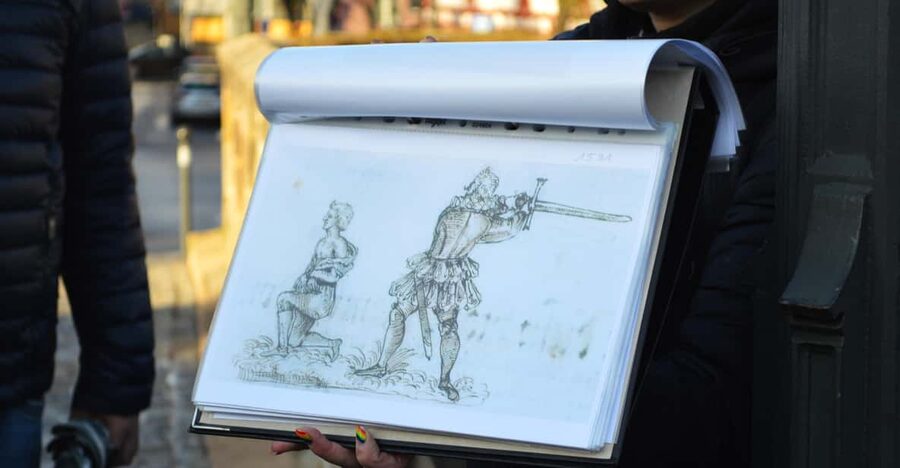
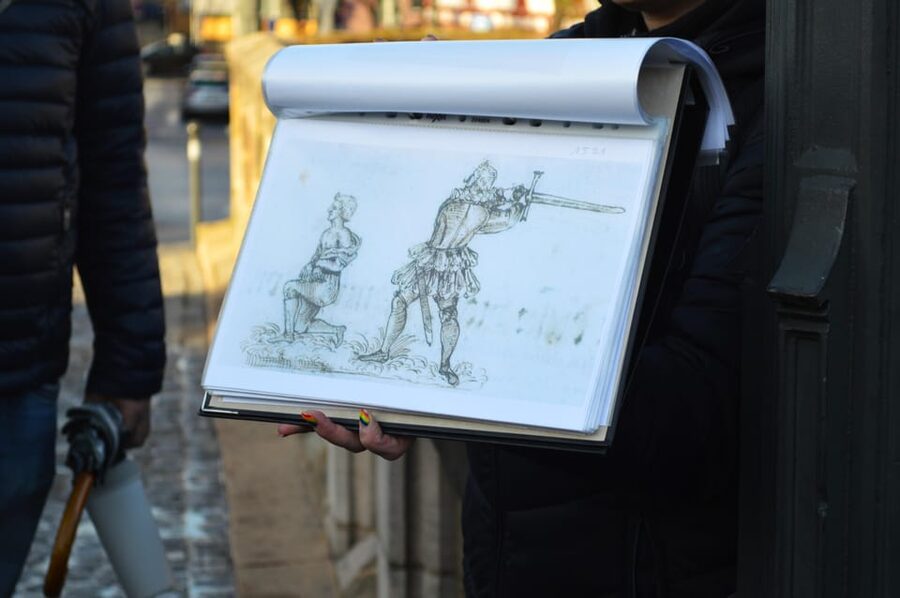
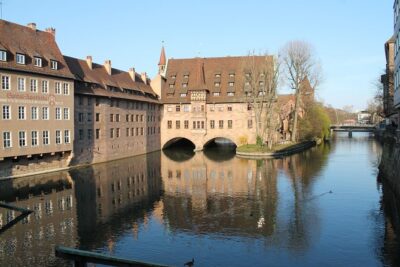
Meet your guide in front of the entrance to the Henkerhaus Museum, also known as the Hangman’s House. The guide carries a picture folder and a green Geschichte Für Alle name tag, which makes the meeting point easier to identify.
The house gives the tour an immediate sense of place. You begin with the role of the hangman and the building associated with that work. The most important figure here is Franz Schmidt, a famous Nuremberg hangman whose career gives the guide a way to explain how punishment operated in the city.
Franz Schmidt is not treated simply as a frightening character. His story helps you consider the strange position of a hangman in medieval society. He carried out official sentences, yet the work placed him outside ordinary social life. That tension makes the opening stop more useful than a quick mention of executions.
You should note that entry to the Hangman’s House is not part of the tour price. The walking experience begins outside the entrance, so you should not assume that you will receive an interior museum visit. If seeing the inside matters to you, ask about admission separately.
The opening also sets the tone for the rest of the route. The subject is serious, but the guide’s job is to explain it clearly and keep the presentation moving. Feedback about the tour especially praises its professional delivery, open attitude, and willingness to answer questions.
Witch hunts at the Weinmarkt
From the Henkerhaus, the group walks about four minutes to the Weinmarkt. This is a short transfer, so the tour spends most of its time on the stories rather than on long stretches of walking.
Here the subject changes from the official work of the hangman to witch hunts in Nuremberg. That shift matters. Witch trials were not only about physical punishment. They also show how accusation, fear, and public pressure could become part of a justice system.
A good guide can make this stop a useful lesson in uncertainty. You learn how suspicion could take hold and how authorities dealt with accusations. The setting is a normal city square, which makes the subject more immediate. It is one thing to read about witch hunts in a book, and another to hear about them while standing in the old city.
This is also one of the places where German language ability matters most. The value comes from the explanation and the answers to questions, not simply from looking at the square. If you understand German well, you should get much more from the guide’s details and context.
The town hall and medieval justice
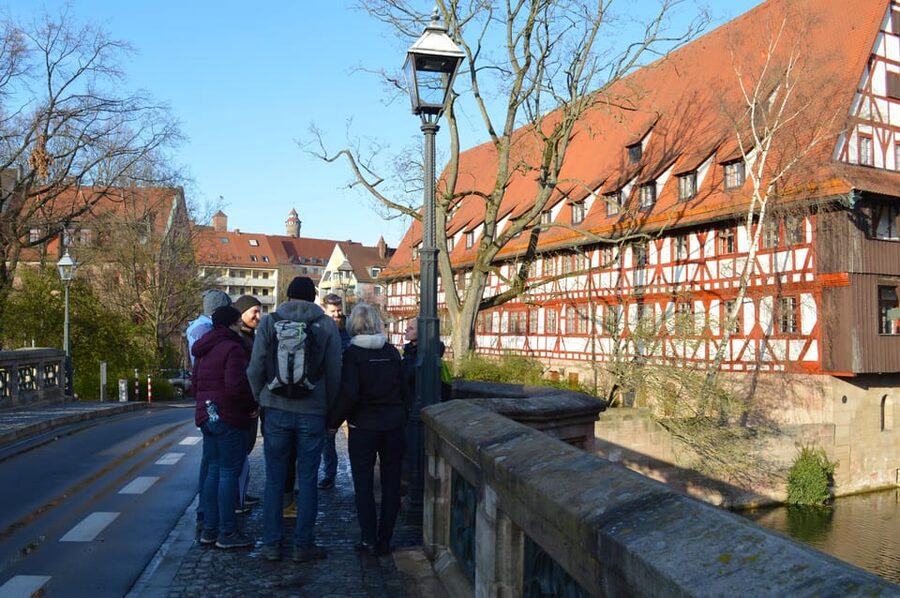
The next stop is the Old City Hall, reached after roughly three minutes on foot. The tour uses the town hall to explain Nuremberg’s medieval justice system and how civic authority handled wrongdoing.
This section should appeal to you if you prefer social history to sensational stories. It places the hangman, the prison, and public punishments within the city’s official structures. You get a clearer picture of who administered justice and how punishment fit into daily government.
Admission to the town hall is not included. The tour may discuss the building from the route, but the supplied details do not promise an interior visit. Keep that distinction in mind when comparing the price with a museum tour.
The town hall stop also helps connect the previous stories. Witch hunts, imprisonment, corporal punishment, and execution were not random events scattered through town. They were tied to civic decisions and accepted ideas about order and authority.
Still Nuremberg, at a slower pace:
- Nuremberg: Medieval Dungeons Guided Tour
★ 4.8 · 1,726 reviews - Nuremberg: Walking Tour of Former Nazi Party Rally Grounds
★ 4.7 · 1,665 reviews - Medieval Tour in Nuremberg in Spanish
★ 5.0 · 1,374 reviews - Nuremberg: Historischer Kunstbunker WWII Art Bunker Tour
★ 4.8 · 921 reviews
Inside the idea of the Lochgefängnisse
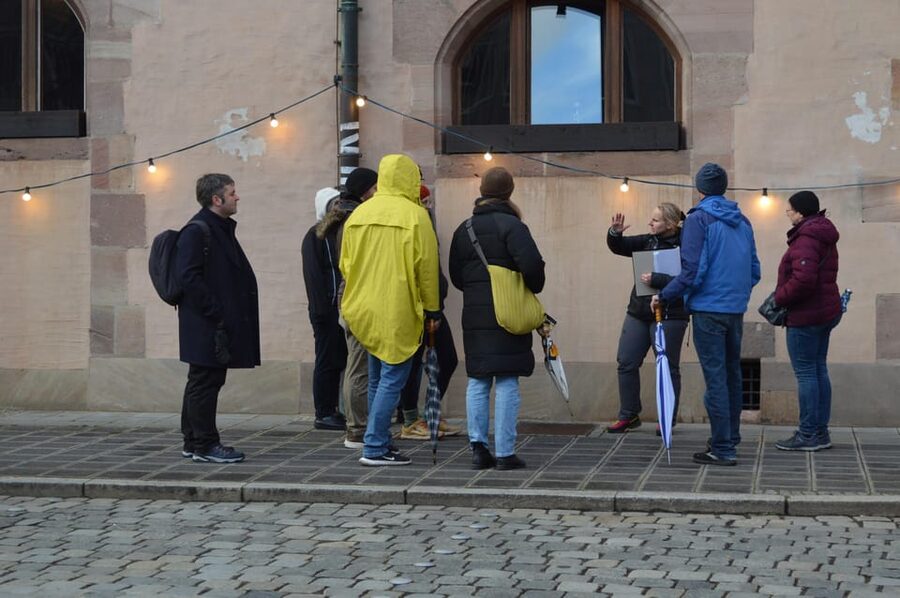
The medieval dungeons, called the Lochgefängnisse, are one of the most distinctive subjects on the walk. Their name refers to the old prison complex beneath the town hall area, and the tour explains its purpose and conditions.
This is the point where the route can feel most physical. A prison is not merely a legal concept. It is a place built to hold people, and the guide’s explanation of the conditions gives you a better sense of what medieval confinement meant.
Entry to the medieval dungeons is not included in the $15 price. That is worth checking before you book if you want an interior visit. The tour itself covers the prison as part of its historical story, but the supplied information does not promise access inside.
The dungeons also add balance to the discussion of punishment. Not every accused person went directly to a public sentence. Imprisonment, investigation, and detention were part of the process. You see how the city could remove people from public life before a final judgment.
Because the tour is not suitable for people with mobility impairments, you should take the walking and historic setting seriously. Even if the route between sites is short, old buildings and medieval prison areas may be difficult for anyone with limited mobility. The activity information gives no detailed step-free access information, so ask the provider before booking if you have specific access needs.
The Hauptmarkt beyond the Christkindlesmarkt
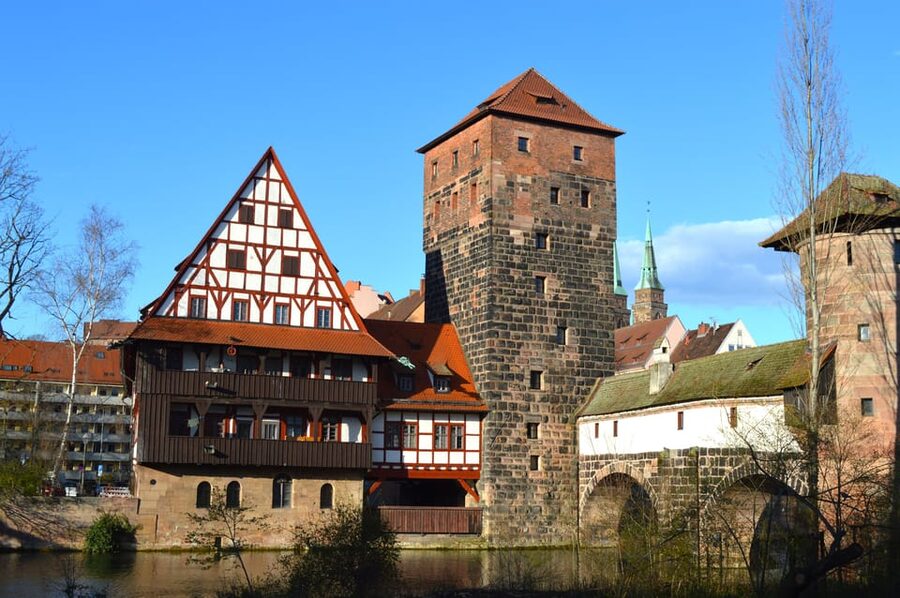
The route then takes you to the Hauptmarkt, only about a minute from the dungeon stop. In December, this is where Nuremberg’s famous Christkindlesmarkt takes place. During the rest of the year, the square remains one of the city’s key public spaces.
The tour looks past the festive image. Here you learn about the market’s connection to everyday crime and the death penalty. That contrast is one of the best ideas in the experience. The same square that now brings shoppers, food stalls, and Christmas traditions together also had a public role in medieval punishment.
I like this stop because it changes how you read the square. You can still enjoy the Christkindlesmarkt, but you also understand that medieval markets were crowded places where news, judgment, trade, and spectacle met. Public punishment was meant to be seen. The location mattered because the crowd was part of the message.
The guide’s account of death penalty practices adds weight to the stop without requiring a separate museum visit. You are standing in a central place, then hearing how crime and punishment once entered ordinary public life.
Corporal punishment at the Fleischbrücke
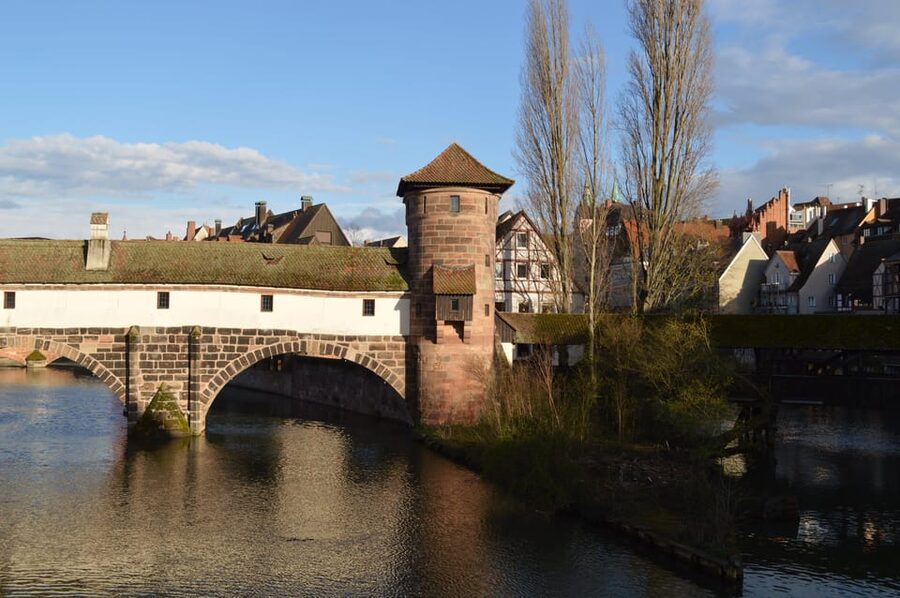
A two-minute walk brings you to the Fleischbrücke, the Meat Bridge. Here the subject is corporal punishment in the Middle Ages.
This stop broadens the story again. The tour is not focused only on execution. Medieval justice could involve several forms of physical punishment, and the bridge provides a setting for discussing how those punishments were used and displayed.
The short walk helps keep the tour moving. You are not crossing the Old Town from one distant district to another. Instead, the guide builds the story from nearby locations, allowing each stop to add another part of the city’s legal culture.
You may find this section uncomfortable, particularly if you prefer light sightseeing. That is not a flaw, but it is a useful warning. The experience deals directly with violence, public punishment, witch hunts, imprisonment, and death. Its value depends on your interest in difficult history.
Peter Henlein and the human side of the route
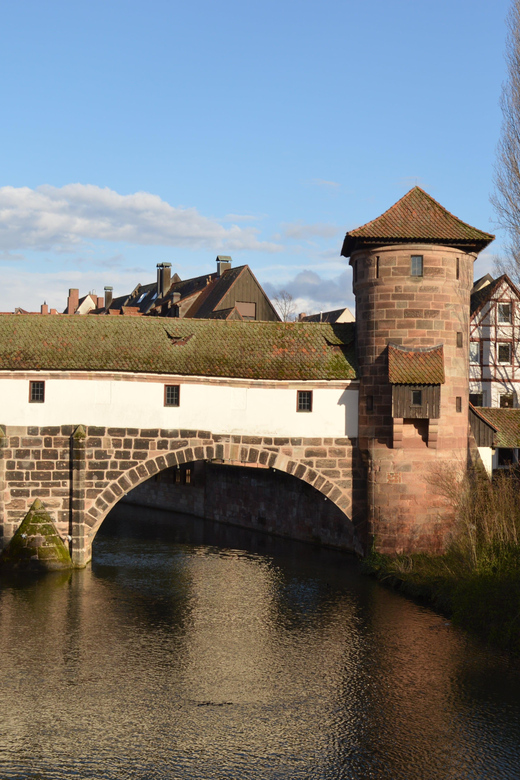
The walk continues to Findelgasse, with about five minutes between the Fleischbrücke and the final stretch. Here the guide tells the story of Peter Henlein, a famous watchmaker.
At first, this may seem like a change of subject. It is actually a helpful pause in a tour filled with punishment and fear. Peter Henlein’s story brings the focus back to a person connected with Nuremberg’s working and inventive life.
The supplied details do not explain how his story links to crime, so you should not expect a separate watchmaking tour. Instead, this stop appears to add another local character and another piece of the city’s past before the final prison story.
That change of pace can make the two-hour format work better. A steady sequence of punishments might become tiring. The Peter Henlein stop gives the narrative a different human angle while keeping you in the Old Town.
Finishing at the Schuldturm
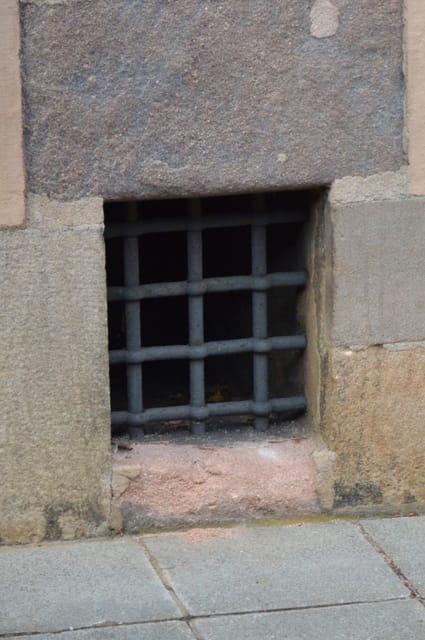
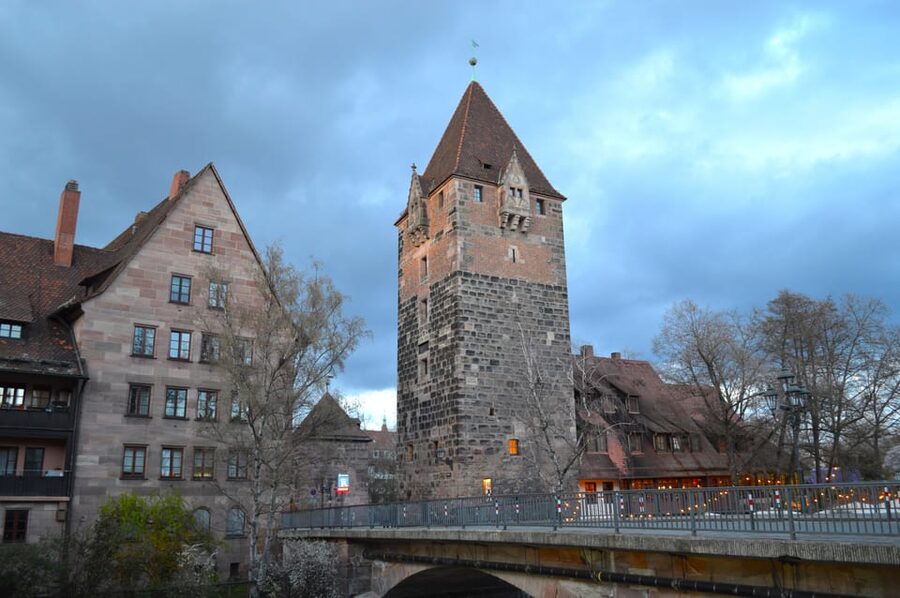
The tour ends in front of the Schuldturm, near Vordere Insel Schütt in Nuremberg-Mitte. The guide explains the tower’s purpose and the people held there.
The name points to debt, and the final stop adds an important reminder: medieval imprisonment was not limited to violent crime. A city’s prison system could also deal with unpaid debts and other civil problems.
Ending at the Schuldturm gives the walk a clear final point. You move from the hangman’s house through witch hunt stories, civic justice, dungeons, public punishment, corporal punishment, and finally detention for debt. The route forms a broad picture of how the city controlled behavior and dealt with people who fell outside its rules.
The finish near Vordere Insel Schütt is practical for continuing your day in the Old Town, although no onward transport details are provided. Plan to use your own map after the tour if you need to reach a station, hotel, or another sight.
What the $15 price really gets you
At $15 per person, this is a good-value specialist walk. You are paying for two hours with a qualified live guide and a focused subject that would be difficult to reconstruct from signs alone.
The price is especially fair if you want stories and context rather than admission to several attractions. It is less of a bargain if your main goal is to enter the Henkerhaus, town hall, or medieval dungeons, since all three admissions are excluded.
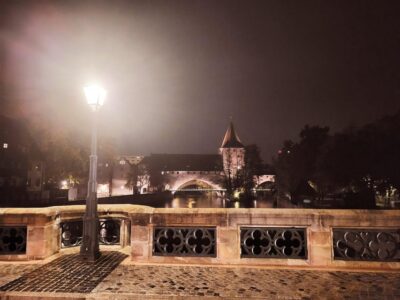
The rating is 4.8 from 53 reviews, with repeated praise for clear storytelling, strong subject knowledge, and guides who answer questions carefully. One especially useful point is that the tour has held up in rain and darkness because the presentation stays lively and well paced. You should still wear comfortable shoes and weather-appropriate clothing.
The tour is offered in German only. That is the biggest factor in deciding its value. If you understand German, you can make good use of the guide’s explanations and question time. If you do not, the walk will not provide the same benefit, and there is no listed English option.
For groups of 10 or more, contact Geschichte Für Alle e.V. at [email protected]. Also note that bookings made through GetYourGuide do not receive an invoice. The booking confirmation serves as proof of payment.
Who should book this Nuremberg walk?
I would recommend it to you if you enjoy local history, historic crime, old justice systems, and guided walks with a clear theme. It is also a good choice if you have already seen Nuremberg’s main sights and want to look at the city from a less familiar angle.
You should be comfortable with serious material. The subjects include witch hunts, corporal punishment, prisons, executions, and debt detention. This is not the right pick if you want a gentle sightseeing stroll centered on architecture and shopping.
German speakers will get the full experience. You should also be ready to walk for two hours, stand during explanations, and dress for the weather. People with mobility impairments should check access arrangements before booking, since the activity is specifically listed as unsuitable for them.
FAQ
How long does the Nuremberg crime history tour last?
The walking tour lasts two hours.
What language is the tour conducted in?
The live tour guide speaks German. German is the only listed tour language.
How much does the tour cost?
The price is $15 per person.
Where does the tour begin?
Meet in front of the entrance to the Henkerhaus Museum, also called the Hangman’s House.
How do I identify the guide?
The guide carries a picture folder and wears a green name tag marked Geschichte Für Alle.
What is included in the price?
The price includes the guided walking tour and a qualified tour guide.
Are the Henkerhaus, town hall, and medieval dungeon admissions included?
No. Entry to the Hangman’s House, town hall, and medieval dungeons is not included.
Can a group of 10 or more join the tour?
Yes, but groups of 10 or more should contact Geschichte Für Alle e.V. by email at [email protected].
Is cancellation allowed?
You can cancel up to 24 hours in advance for a full refund.
Is the tour suitable for people with mobility impairments?
No. The activity is listed as unsuitable for people with mobility impairments.
Should you book it?
Book this tour if you want Nuremberg’s Old Town explained through crime, punishment, prisons, and public life. The compact route, strong focus, and $15 price make it an efficient choice, especially for German speakers who enjoy asking questions.
Skip it if you need an English tour, want extensive indoor access, or prefer a lighter introduction to the city. For the right audience, the walk gives you something valuable: after two hours, the Henkerhaus, Hauptmarkt, Fleischbrücke, and Schuldturm are no longer just attractive Old Town stops. They become part of a difficult, very human story about how Nuremberg tried to keep order.
Just added around Nuremberg
- Tour en español al Campo Zeppelin★ 5.0 · 8 reviews
- Stein: Public guided tour of the “Old Mine” museum★ 4.5 · 18 reviews
- “Rotes Bier” and “Blaue Zipfel”. A historical-culinary walk★ 4.4 · 190 reviews
- Nuremberg: Old Town Guided Tour By Bus★ 4.4 · 198 reviews
- Nürnberg kennenlernen: Highlights in der Altstadt★ 4.7 · 189 reviews
- Nuremberg: Bar and Club Tour with Free Shots and Free Entry★ 3.8 · 23 reviews
- Nürnberg Bachelor(ette) Party with Night PubCrawl★ 4.2 · 5 reviews
- Nuremberg: WWII Tour, Courtroom 600 and 3rd Reich Sites★ 4.6 · 94 reviews
Nuremberg Tours, compared.

Tunnels and Secret Passages in the City Wall Tour
Read our review →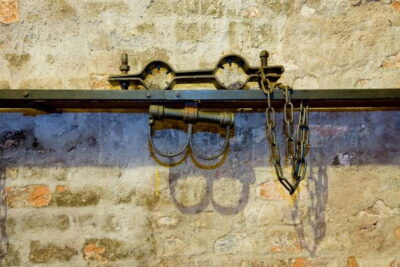
Browse the lists this tour appears in