Reviewed · WALKING TOURS
Rüdesheim: Private Guided Walking Tour
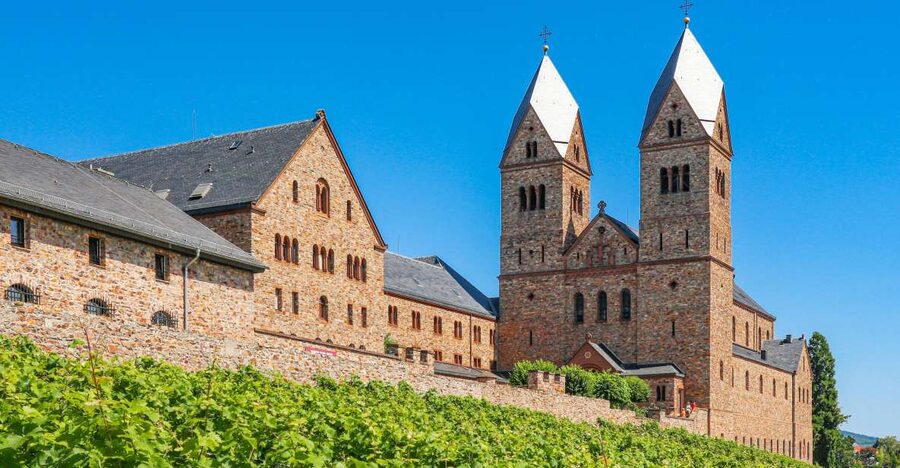
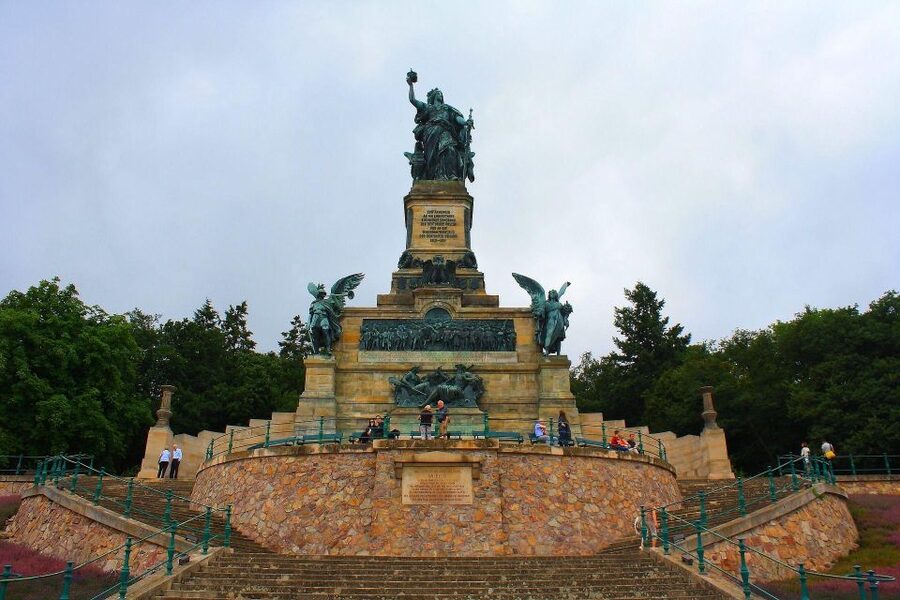
A small town with big stories. Rüdesheim’s half-timbered lanes and vineyard views make this private two-hour tour a pleasant way to get oriented on the Rhine. You’ll move from Roman wine-making roots to medieval fortresses, witch-hunting, the Niederwald Monument, and even an Elvis Presley connection tied to the town’s cable car.
I especially like the private format, which gives your group up to 15 people a guide focused only on you. I also like the mix of famous sights and odd details, including the wine-drinking fountain, the Medieval Torture Museum, and Rüdesheim’s unexpected place in the film G.I. Blues. The main consideration is time: two hours is enough for an engaging introduction, but not enough to thoroughly visit every museum or attraction.
A few practical points matter. The tour begins at the fountain outside the Rüdesheim Cable Car entrance on Oberstraße 37, right in the Old Town. The guide speaks English or German, and Ludwig has received especially warm praise for being friendly, prepared, and helpful with suggestions for places to visit after the tour.
In This Review
- Key points at a glance
- Why Rüdesheim works so well on foot
- Meeting at the cable-car fountain
- Wine heritage in the town center
- Drosselgasse and the old town’s social life
- Market Square and the Klunkhards Estate
- Oberstraße and the darker side of the Middle Ages
- Brömserburg Castle and the Rhine fortresses
- Brömserhof and Siegfried’s musical machines
- The cable car, Niederwald Monument, and Germania
- Rüdesheim’s Elvis connection
- Is $280 good value for two hours?
- Who should book this Rüdesheim tour?
- Final verdict: book it for context and flexibility
- FAQ
- How long does the Rüdesheim private walking tour last?
- Where does the tour meet?
- How much does the private tour cost?
- Which languages does the guide speak?
- Are entrance fees included?
- Can the tour be customized?
Key points at a glance
- Roman wine roots: Learn why vineyards remain part of Rüdesheim’s town center and how wine-growing began here under Roman influence.
- Cable-car panorama: Ride toward the Niederwald Monument for broad views of the vines and the Rhine. Check whether the cable-car fare is included, since entrance fees are not.
- Drosselgasse in 144 meters: Walk Rüdesheim’s famous lane of wine taverns and courtyard restaurants, once linked to boat owners settling in town.
- Medieval stories with a darker edge: Hear about fortresses, punishment, and witch-hunting at the Medieval Torture Museum on Oberstraße.
- Elvis in Rüdesheim: Learn how the town appeared in G.I. Blues and hear a lesser-known story connected with Presley.
- Private value: The $280 price covers the group, not each person, so the per-person cost improves sharply for larger parties.
Why Rüdesheim works so well on foot
Rüdesheim am Rhine is compact, attractive, and easy to read as you walk. Its Old Town combines restored half-timbered houses, wine businesses, lanes, courtyards, and remnants of a town shaped by the river.
That compact layout is a major advantage during a two-hour tour. You are not spending much of your limited time moving between distant sights. Instead, the guide can connect one stop to the next, explaining why vineyards appear so close to old buildings and how the town’s position made it important along the Rhine.
Rüdesheim is also a gateway to the Lorelei Valley, one of the best-known stretches of the Romantic Rhine. The region is famous for steep hills, castles, vineyards, and river traffic. This walk gives you a local starting point before you continue by boat, train, or road through the wider Rhine Valley.
I like tours that explain how a place functions, not just what its buildings are called. Here, the wine trade, river, churches, castles, and old streets all fit into one story. You get a clearer sense of Rüdesheim than you would from simply strolling down Drosselgasse and taking photographs.
More Walking Tours in Germany:
- Discover Berlin Half-Day Walking Tour
★ 5.0 · 9,624 reviews - Berlin: Third Reich and Cold War 2 Hour Walking Tour
★ 4.9 · 6,830 reviews - Munich: Third Reich & WWII Walking Tour
★ 4.6 · 6,181 reviews
Meeting at the cable-car fountain
The meeting point is the fountain in front of the Rüdesheim Cable Car entrance at Oberstraße 37. This is a practical location because it sits in the Old Town and gives you an easy landmark to identify.
Arrive with enough time to find the fountain without rushing. Rüdesheim’s older streets can be visually busy, with signs, façades, restaurants, and shopfronts competing for attention. The cable-car entrance provides a fixed point, and the guide can gather your private group there before setting off.
The meeting point also hints at the tour’s structure. This is not only a street walk. The cable car and its route toward the Niederwald Monument are central to the experience, so you should think of the outing as a walking tour with a scenic ride and elevated viewpoint included in the plan.
The description does not specify that the cable-car fare is included. Since entrance fees are excluded, confirm this before booking or at the start of the tour. That small question can prevent an awkward pause when the group reaches the boarding area.
Wine heritage in the town center
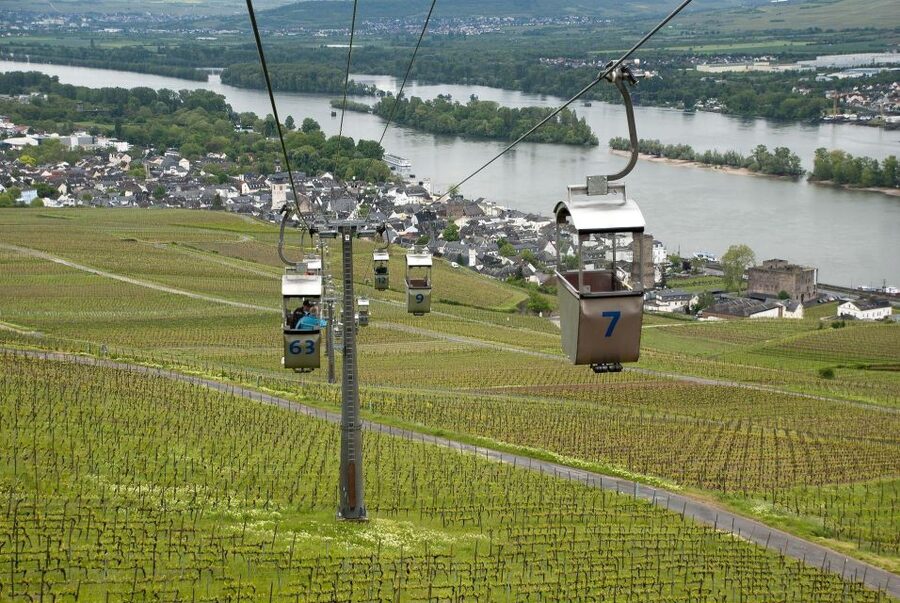
Rüdesheim’s wine tradition reaches back to Roman times. That fact is more interesting when you see how close the vineyards are to the Old Town. They are not simply far-off agricultural fields viewed from a distance. Some vines sit almost within the town itself, beside historic buildings and lanes.
A good guide can make this setting meaningful by showing how wine shaped daily life, trade, and the look of the town. The vines help explain why Rüdesheim feels different from a purely medieval sightseeing stop. It is a working wine town as well as a picturesque one.
You should expect the wine story to be part of the walking commentary rather than a formal tasting. There is no wine tasting listed, so do not book this tour expecting samples or a cellar visit. Instead, use the tour to understand the setting, then choose a tavern or restaurant afterward if you want to try local wine.
The private format helps here. You can ask how Roman traditions relate to modern wine-making, why vineyards were planted in particular places, or which parts of the town best reflect its old trade. With a large public group, those questions can be harder to fit in.
Drosselgasse and the old town’s social life
Drosselgasse is the best-known lane in Rüdesheim. It runs for about 144 meters and is lined with wine taverns and courtyard restaurants. The lane is often treated as a postcard attraction, but its older purpose adds more interest.
It was built for boat owners to settle in town, linking the river economy with the residential and commercial center. That detail gives the lane a practical past. It was not created only for today’s visitors with cameras and menus.
Expect Drosselgasse to be one of the more social parts of the walk. If you enjoy wine taverns, traditional architecture, and the sound of restaurant courtyards, you will probably find it fun. If you prefer quiet lanes and empty viewpoints, this may be the least peaceful section.
Your guide can help you see beyond the obvious. Look upward at the timber framing, check how the lane connects to courtyards, and notice how tightly the buildings fit together. A short explanation about boat owners and wine commerce turns a pretty passage into a glimpse of Rüdesheim’s working past.
A few more Germany trips worth comparing
- Berlin: Reichstag, Dome and Government District Guided Tour
★ 4.7 · 18,288 reviews - Dresden: Semperoper Tickets and Guided Tour
★ 4.7 · 12,102 reviews - Berlin: Government District around the Reichstag Guided Tour
★ 4.7 · 8,447 reviews - Hamburg: Elbphilharmonie Plaza Guided Tour
★ 4.7 · 5,882 reviews
Market Square and the Klunkhards Estate
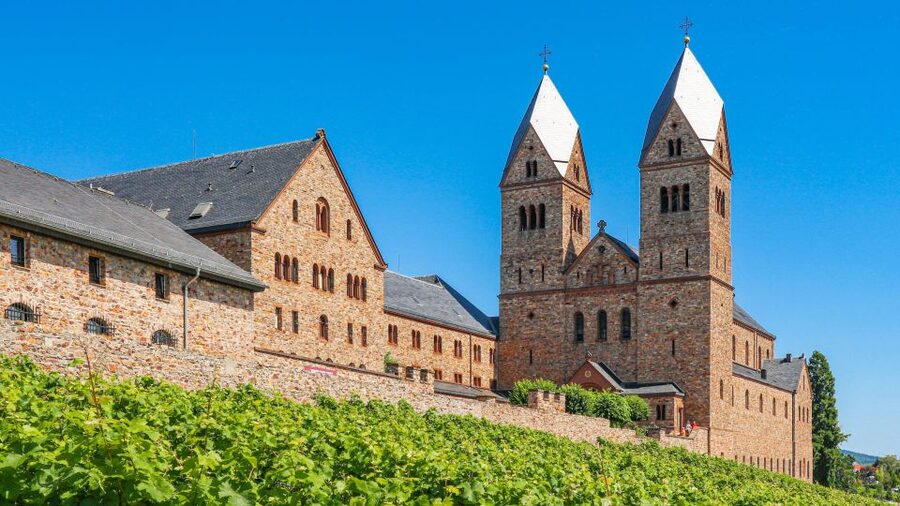
Market Square offers another small but telling detail: a fountain decorated with a statue of a man drinking wine. It is a lighthearted piece of public art, yet it also reinforces the town’s identity. In Rüdesheim, wine is not an isolated product. It appears in the symbols, streets, and social life of the Old Town.
The Klunkhards Estate is one of the architectural highlights. This slightly curved, 16th-century half-timbered building is easy to miss if you are focused only on major monuments. Its shape and timber construction show how much character can be found in a single façade.
I appreciate stops like this because they slow the pace. You do not need a grand castle at every corner to understand a historic town. A guide pointing out an unusual building can teach you how to look at the whole street, including details you might otherwise walk past.
Since the tour lasts only two hours, these exterior stops are likely to be brief. That is not a flaw, but it does mean you should treat the tour as an introduction. Give each explanation your attention, then return later if a particular building or street catches your interest.
Oberstraße and the darker side of the Middle Ages
Oberstraße, or the upper street, brings a more serious tone. The Medieval Torture Museum illustrates punishment and torture in the Middle Ages, along with the history of witch-hunting in Germany.
This part will not suit every child or every adult. The subject matter is grim, and the museum may be more intense than the cheerful wine lanes nearby. You can ask the guide how much time is available or decide to see only the exterior if your group prefers lighter sightseeing.
The subject is valuable because it complicates the pretty picture of medieval Germany. Half-timbered houses and castle ruins can make the past look romantic, but daily life also included harsh punishments, fear, and legal persecution. A short explanation of witch-hunting gives you a more honest view of the period.
Entrance fees are not included, so visiting the museum would cost extra. With only two hours, you may not have time for a full visit anyway. I would treat it as an optional stop and ask the guide whether it fits your group’s interests and schedule.
Brömserburg Castle and the Rhine fortresses
Brömserburg Castle was originally a residence and stronghold of the bishops of Mainz, dating back to the 10th century. Even a short look at the castle helps explain the political importance of the Rhine.
The river was a route for trade, travel, and power. Strongholds were placed along it because controlling the waterway mattered. As you hear about Brömserburg, you also get context for the many medieval fortresses scattered through the wider Romantic Rhine.
The tour does not promise a full castle visit, and entrance fees are excluded. Plan on learning about the site and seeing it as part of the town’s historic setting unless your guide confirms that an interior visit fits the schedule.
I like this stop because it connects local history with the larger Rhine Valley. Rüdesheim is not an isolated wine village. Its story belongs to a river corridor shaped by bishops, fortresses, merchants, and boats.
Brömserhof and Siegfried’s musical machines
The 16th-century Brömserhof is another aristocratic half-timbered residence. Today it houses Siegfried’s Mechanical Music Cabinet, a collection of fascinating musical instruments dating back three centuries.
This is one of the tour’s more unusual possibilities. Many walking tours cover churches, squares, and castles, but mechanical instruments offer a different way into the past. They show how people created entertainment, displayed wealth, and enjoyed technology before modern recording and amplification.
The collection is an optional paid attraction because entrance fees are not included. A two-hour tour may only introduce it from outside or explain its place in the town. If musical instruments interest you, ask your guide whether you should return for a separate visit.
That flexibility is one of the benefits of a private group. A family with young children may prefer to keep walking, while a group fascinated by old machines may want to make the collection a priority later in the day.
The cable car, Niederwald Monument, and Germania
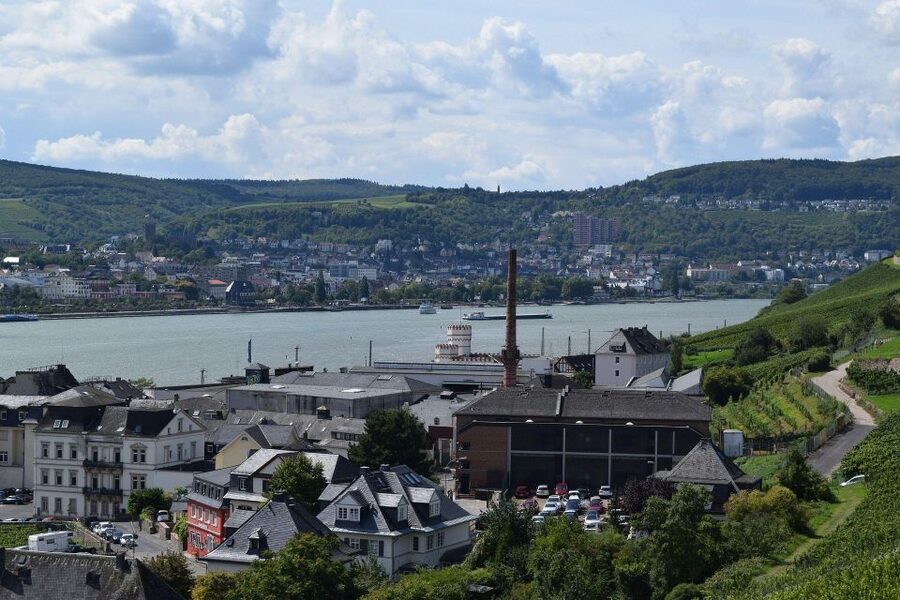
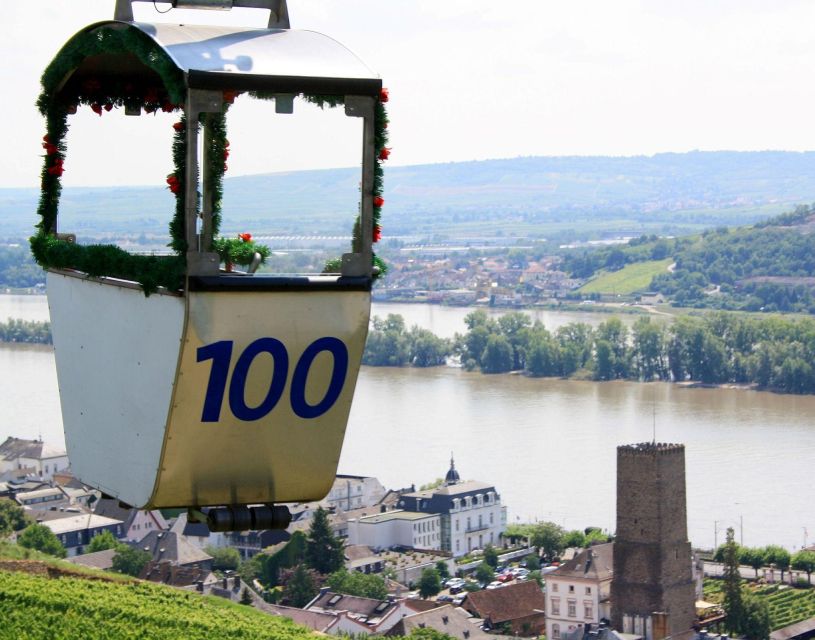
The cable car offers the tour’s broadest view. From above Rüdesheim, you can look across the vineyards and toward the Rhine, gaining the perspective that is difficult to find from the narrow Old Town streets.
The ride also leads toward the Niederwald Monument, whose central figure is Germania. The monument carries national and political meaning, so it deserves more than a quick photograph. Your guide can provide the historical context that helps you understand why it was built and what it represented.
The viewpoint is likely to be a highlight for anyone who enjoys scenery. It also helps you understand the geography of the Rheingau: vineyards on the slopes, the river below, and Rüdesheim gathered along the bank. Bring a camera, but listen to the explanation before rushing to the railing.
The exact cable-car arrangements matter. The experience description presents the ride as part of the route, but the tour details also state that entrance fees are not included. Confirm the ticket situation, and ask about the timing if your group has a train, cruise departure, or restaurant reservation afterward.
Rüdesheim’s Elvis connection
Rüdesheim has an unusual link to Hollywood through G.I. Blues, the film starring Elvis Presley. The cable car and its setting helped make the town familiar to Elvis fans around the world.
You will hear a small secret about Elvis and his connection with the place. That detail gives the tour a welcome change of pace. After Roman vineyards, bishops, castles, and witch-hunting, a pop-culture story keeps the walk from becoming too solemn.
This is not an Elvis-themed tour, so expect one part of the broader story rather than a full film-history program. Still, it is exactly the kind of unexpected local detail that makes a private tour memorable. You can ask the guide for more context if your group includes Presley fans.
Is $280 good value for two hours?
The price is $280 per private group of up to 15 people. At the maximum group size, that works out to about $18.67 per person. For two people, it becomes $140 each, so the value depends heavily on the size of your party.
For a couple, this is a premium introduction to Rüdesheim. You are paying for a private guide, flexible conversation, and the ability to shape the emphasis on the spot. For a family or group of friends, the price becomes much easier to justify.
The private arrangement also removes the uncertainty of being placed with strangers. You can ask questions, pause for photographs, and request more focus on wine, castles, Elvis, or the darker medieval subjects. The guide can adjust the walk on the spot, although the two-hour limit still applies.
Remember to budget separately for any museum or attraction entrance and potentially the cable car. The tour is strongest as a guided orientation, not as an all-inclusive admission package.
Who should book this Rüdesheim tour?
I would recommend it to first-time visitors who want the town explained before exploring on their own. It also suits families, small groups, history fans, and anyone arriving with only a short window in Rüdesheim.
Wine lovers will appreciate the Roman roots and vineyards in the town center, though this is not a tasting tour. History fans get fortresses, bishops, witch-hunting, and the Niederwald Monument. Pop-culture fans get the Elvis connection, while architecture lovers have the Klunkhards Estate, Brömserhof, Brömserburg Castle, and other half-timbered residences.
You may want another plan if your main goal is spending hours inside museums or taking a leisurely cable-car ride without commentary. Two hours moves quickly, and the walk covers many subjects. If you want to visit every attraction, schedule extra time before or after.
The guide quality is an important part of the value. Ludwig has been praised for being friendly, prepared, and generous with recommendations beyond the planned route. Other feedback highlights a kind guide and an informative, pleasant experience. Since the assigned guide can vary, the strongest practical advice is to use the private format actively: ask questions and explain what interests your group.
Final verdict: book it for context and flexibility
Book this tour if you want Rüdesheim to make sense, not just look pretty. The combination of wine lanes, medieval buildings, Rhine fortresses, the cable-car viewpoint, Germania, witch-hunting, and Elvis gives you a surprisingly varied two-hour introduction.
Skip it if you prefer exploring entirely alone or want every admission included in one price. Otherwise, it offers a useful balance of scenery and stories, especially for a group that can share the $280 fee.
The best plan is to use the tour to get your bearings, note the places you want to revisit, and leave time afterward for a wine tavern, museum, or longer look at the Rhine views.
FAQ
How long does the Rüdesheim private walking tour last?
The tour lasts two hours.
Where does the tour meet?
It meets at the fountain in front of the Rüdesheim Cable Car entrance, Rüdesheimer Seilbahngesellschaft, Oberstraße 37, 65385 Rüdesheim am Rhein, Germany.
How much does the private tour cost?
The price is $280 for a private group of up to 15 people.
Which languages does the guide speak?
The live guide is available in English or German.
Are entrance fees included?
No. Entrance fees are not included in the tour price.
Can the tour be customized?
Yes. The private format allows possible customization with your local guide on the spot.
Just added around Germany
- Private Walking Tour in Berlin: Hitler’s Germany & WWII★ 5.0 · 7 reviews
- The History of Berlin: WWII PRIVATE Walking Tour With Locals★ 5.0 · 209 reviews
- Private Berlin WWII and Cold War History Tour with Local Expert Guide★ 5.0 · 28 reviews
- Private Walking Tour Berlin 3 hours: Brandenburg, Historic Center★ 5.0 · 7 reviews
- Berlin: Private Bike Tour of the Berlin Wall and Third Reich★ 5.0 · 23 reviews
- Berlin: Guided Private Bike Tour to Explore the Highlights★ 5.0 · 12 reviews
- Berlin Photography Masterclass – Private Photography Lesson★ 4.5 · 23 reviews
- Group Driving Tour 1 to 6 people. Berlin Shore Excursion incl pick-up at Port★ 5.0 · 8 reviews
Walking Tours, compared.