

Reviewed · THIRD REICH HISTORY TOURS
Third Reich and the Holocaust in Berlin Private Guided Tour
Berlin makes history impossible to keep at arm’s length. This private tour connects the Topography of Terror, Holocaust memorials, and major wartime sites with a guide who can explain how Nazi power grew and how Berlin endured it. I especially like the choice of a private pace and the chance to hear the personal story of Otto Weidt, who protected Jewish workers during the war. The main drawback is the $219 per-person price, which makes most sense for visitors who want five focused hours and personal guidance rather than a quick overview.
The tour also earns praise for its guides. Gunnar, Silvia, Manfred, and other named guides are described as warm, punctual, clear, and deeply engaged with Berlin’s past. I would ask about guide availability when booking, especially if you hope for someone with Silvia’s background as a historian specializing in World War II. Expect serious material, plenty of walking, and an experience that may feel emotionally heavy.
In This Review
- Key points at a glance
- Why this Berlin history tour works
- Starting at the Topography of Terror
- Potsdamer Platz and a city split by occupation
- The Memorial to the Murdered Jews of Europe
- Brandenburg Gate and the Reichstag
- Ending at the Soviet War Memorial
- What the five-hour extension adds
- How the private format affects the experience
- Price, walking time, and practical value
- Who should book this experience?
- Should you book the Third Reich and Holocaust tour?
- FAQ
- How long is the tour?
- What does the five-hour tour include?
- Does the three-hour tour include the Jewish Quarter?
- Where does the tour meet?
- Which languages are available?
- Is this a private tour?
- What places are included on the central route?
- What is the price?
- Can I cancel the tour?
Key points at a glance
- The former Gestapo and SS headquarters: The Topography of Terror uses the actual site of Nazi police power to explain persecution, propaganda, and mass murder.
- A private five-hour route: Your guide can adjust the tempo and focus, which matters when the subject calls for time to ask questions.
- Berlin’s central wartime landmarks: Potsdamer Platz, the Brandenburg Gate, the Reichstag, the Memorial to the Murdered Jews of Europe, and the Soviet War Memorial all appear on the route.
- The Jewish Quarter and Otto Weidt: The longer tour adds Friedrichstrasse, the Trains to Life, Trains to Death monument, the New Synagogue area, and the Blindenwerkstatt Museum.
- Live guidance in seven languages: Tours are available in English, French, Russian, Spanish, Italian, German, and Polish.
- A serious history lesson, not a sightseeing stroll: You will hear about Nazi rule, the Holocaust, World War II, propaganda, resistance, and the contrasting experiences of German and Jewish citizens.
Why this Berlin history tour works
Berlin has no shortage of World War II sites, but they are spread across a large central area and often require context. A private guide helps connect them. Instead of seeing a memorial, taking a photograph, and moving on, you can ask why it is there, what happened nearby, and how the site fits into the larger story.
I like the tour’s basic structure because it begins at the Topography of Terror before moving through the Old Town. That order gives you a foundation first. You learn about the Nazi Party’s rise, the Gestapo and SS, and the machinery of persecution before looking at buildings and memorials connected to the war.
The private format is useful here. This is not light sightseeing, and you may want to stop to ask about propaganda, resistance, Jewish life, or the final days of Hitler’s government. A fixed group tour may need to keep moving. Your own guide can adjust the pace and spend more time on the parts that matter most to you.
The review record is small, with five ratings, but the pattern is clear. Silvia was praised for her work as a historian and World War II specialist. Gunnar was described as an excellent guide, while Manfred was appreciated for explaining the city’s story in a relaxed conversation. One Spanish-language review also highlights a guide who was kind, punctual, and helpful with questions. Those details matter because a serious subject needs both accuracy and a human touch.
More Third Reich History Tours in Berlin
- Berlin: Third Reich and Cold War 2 Hour Walking Tour
★ 4.9 · 6,830 reviews - Berlin’s Best: 2 Hour Walking Tour Third Reich and the Cold War
★ 5.0 · 5,486 reviews - Third Reich Berlin: Hitler and WWII Walking Tour
★ 5.0 · 3,301 reviews
Starting at the Topography of Terror
The tour begins in front of Typisch Berlin cafe at Wilhelmstraße 42. You should not enter the cafe, since it is only the meeting point and the staff does not manage the tour.
From there, the first major stop is the Topography of Terror. The museum occupies the former headquarters area of the Gestapo and SS, making the location part of the lesson. The exhibitions explain how Nazi institutions gained power and how they organized repression and terror.
This is the right place to begin because it moves the story beyond Adolf Hitler alone. Hitler was central, but the Nazi state depended on police offices, administrators, propaganda, party officials, and other institutions. The museum helps show how persecution became organized policy.
Your guide adds live commentary in your selected language, with explanations of the people and events shown in the exhibitions. I would plan to pay close attention here rather than treating the museum as a quick indoor stop. The subject is dense, and five hours gives the longer tour room to slow down.
A possible limitation is that the museum itself can be demanding. If you prefer a lighter introduction to Berlin, this may feel like a lot to take in at the start. If you want direct historical detail and a clear account of Nazi crimes, it is one of the strongest parts of the route.
Potsdamer Platz and a city split by occupation
The route continues toward Potsdamer Platz, a major Berlin crossroads with a complicated postwar story. Here, the American, British, and Soviet zones met after the city was liberated.
That detail gives the site more meaning than its modern city setting might suggest. You are not only hearing about the Nazi period. You are also seeing how the war’s end placed Berlin at the center of the new struggle between the Allied powers.
The contrast between present-day streets and the events discussed is part of the experience. Berlin rebuilt and changed, so not every wartime site looks old or visibly damaged. A guide helps you read the city beneath its newer surfaces.
Because this is a walking tour, comfortable shoes will make a real difference. The exact route and time at each stop can change according to your interests, but the itinerary covers several central locations. You should be prepared for an active half-day rather than a short museum visit.
The Memorial to the Murdered Jews of Europe
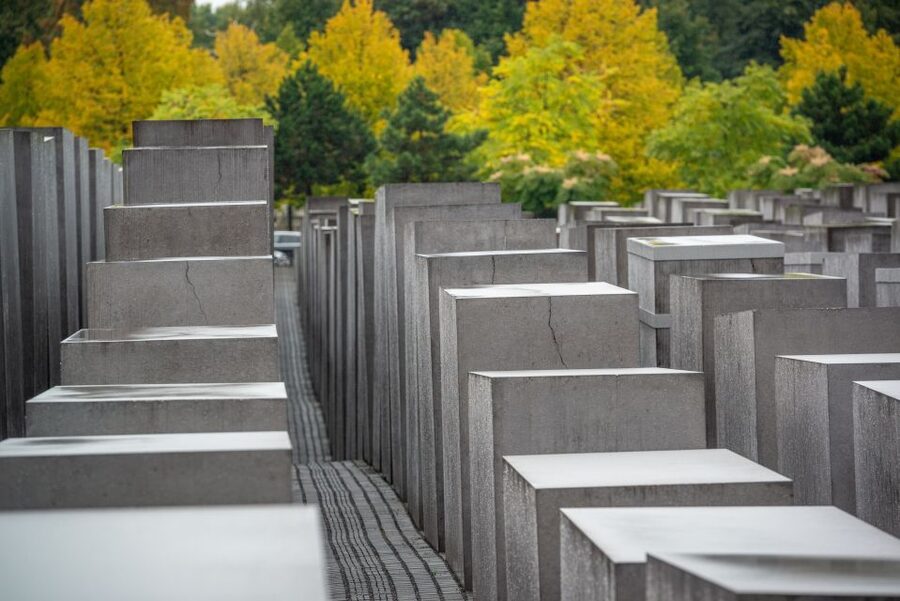
The Memorial to the Murdered Jews of Europe is one of the tour’s most important stops. Its field of concrete blocks creates a powerful, unsettled space in the middle of Berlin.
The memorial commemorates the six million Jewish victims of the Holocaust. Your guide can place it within the larger story of Nazi persecution, deportation, and murder, while also explaining how memorial culture shapes modern Berlin.
I value having a guide here because the memorial is open to personal interpretation. Without context, you might focus only on its design. With context, you can think about the scale of the crime, the absence of individual graves for most victims, and Germany’s effort to keep this history visible in the heart of its capital.
The setting can also feel crowded at times because the memorial is central and well known. A private guide cannot remove that reality, but your guide can help you focus and choose a respectful pace. This is not a place for rushed sightseeing or loud conversation.
Still Berlin, at a slower pace:
- Berlin: Reichstag, Dome and Government District Guided Tour
★ 4.7 · 18,288 reviews - Berlin: 1-Hour City Tour by Boat with Guaranteed Seating
★ 4.3 · 16,993 reviews - Berlin: Boat Tour Along the River Spree
★ 4.4 · 11,252 reviews - Discover Berlin Half-Day Walking Tour
★ 5.0 · 9,624 reviews
Brandenburg Gate and the Reichstag
The Brandenburg Gate is another major stop. The Nazis used this famous Berlin landmark as a backdrop for propaganda rallies, so the guide’s explanation should help you separate the monument’s older symbolism from the way the regime used it.
That distinction is important. Buildings and public spaces do not have only one meaning. The gate survived the Nazi period and became one of Berlin’s best-known symbols, but it was also pulled into the regime’s public theater.
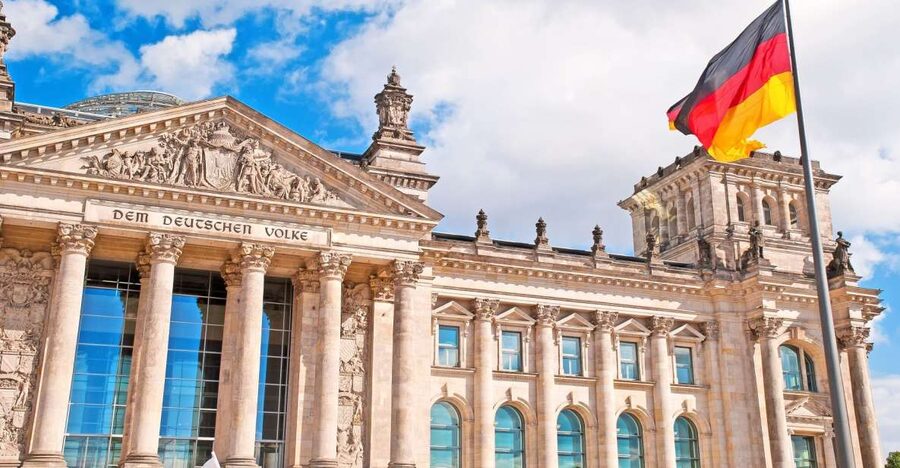
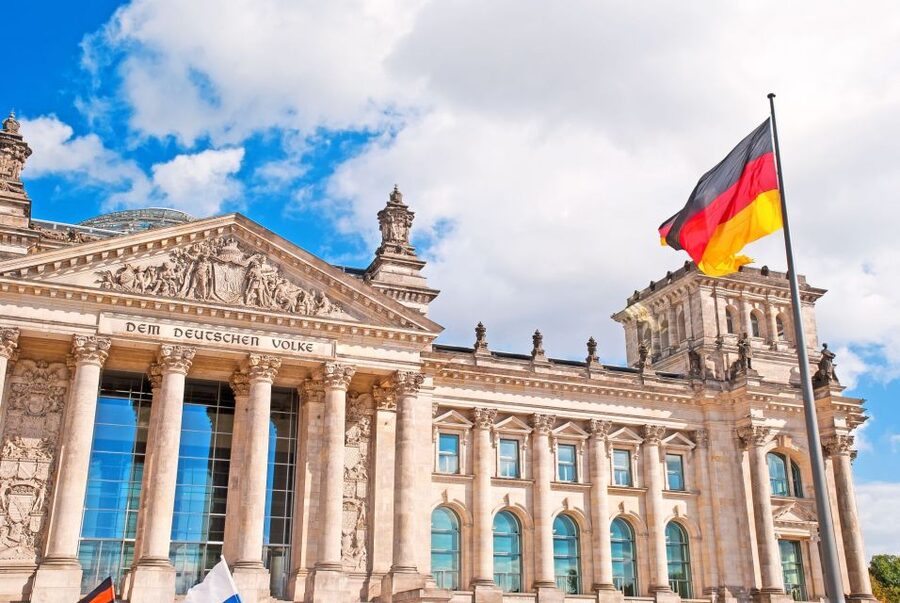
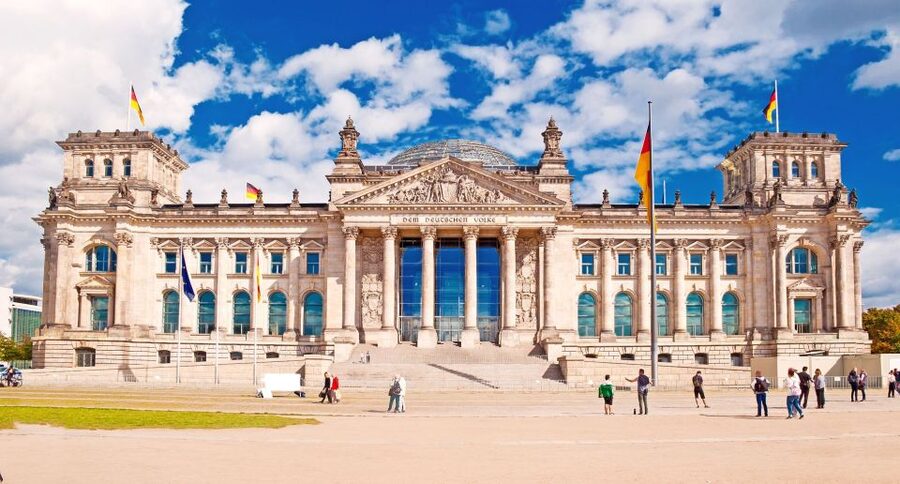
Nearby, you will see the Reichstag Building, Germany’s former parliament. The building was burned in 1933, an event that became a major part of the Nazi consolidation of power.
The tour does not treat the Reichstag as just a grand government building. It shows how a political crisis could be used to weaken democratic freedoms and help a dictatorship take control. For me, this is one of the most useful connections on the route because it links architecture with political change.
You will see these sites from the outside as part of the walking itinerary. The focus is on their role in the Third Reich and World War II, not on a standard interior tour of the parliament building.
Ending at the Soviet War Memorial

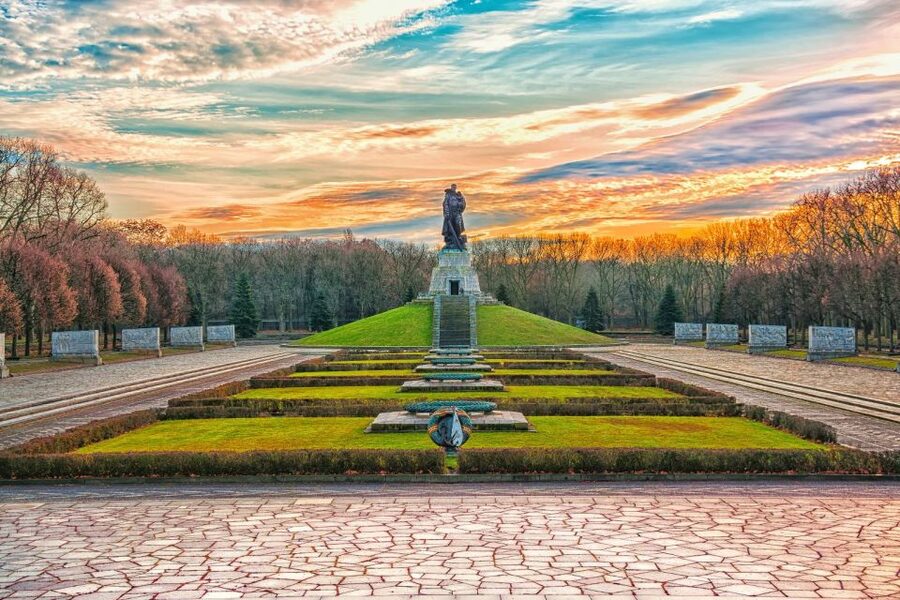
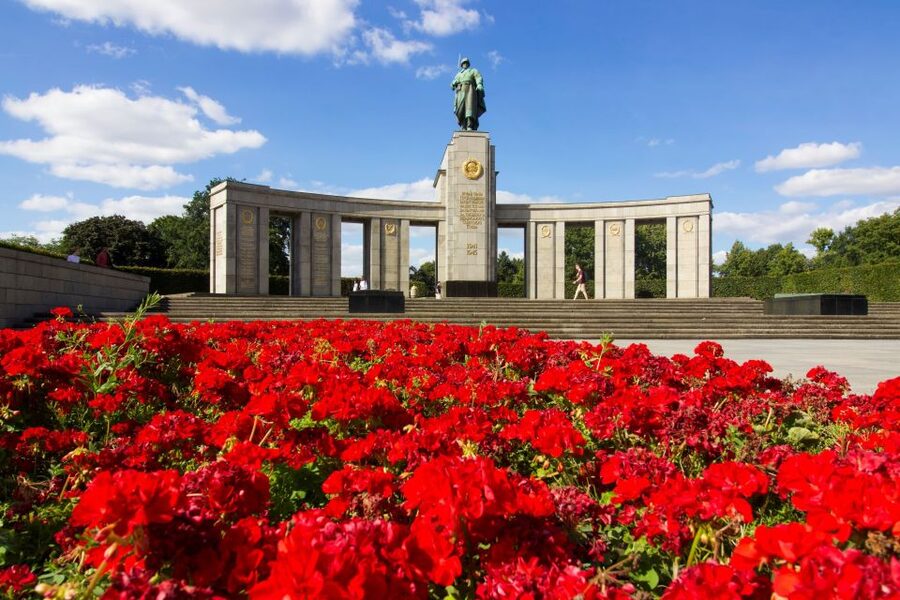
The shorter route ends at the Soviet War Memorial, one of several Berlin memorials built by the Soviet Union for its war dead.
This stop brings a different voice into the story. The earlier sites focus heavily on Nazi power and the Holocaust. The Soviet memorial points toward the military defeat of Nazi Germany and the immense cost paid by Soviet soldiers.
Your guide can help explain how the memorial fits into Berlin’s postwar memory. It also gives the tour a clear ending: Nazi rule, war, liberation, and the political order that followed.
The three-hour option may suit you if you want a concentrated walk through the best-known central sites. It does not include the Jewish Quarter or Blindenwerkstatt Museum, so it offers less time for Jewish history outside the Holocaust memorial itself.
What the five-hour extension adds
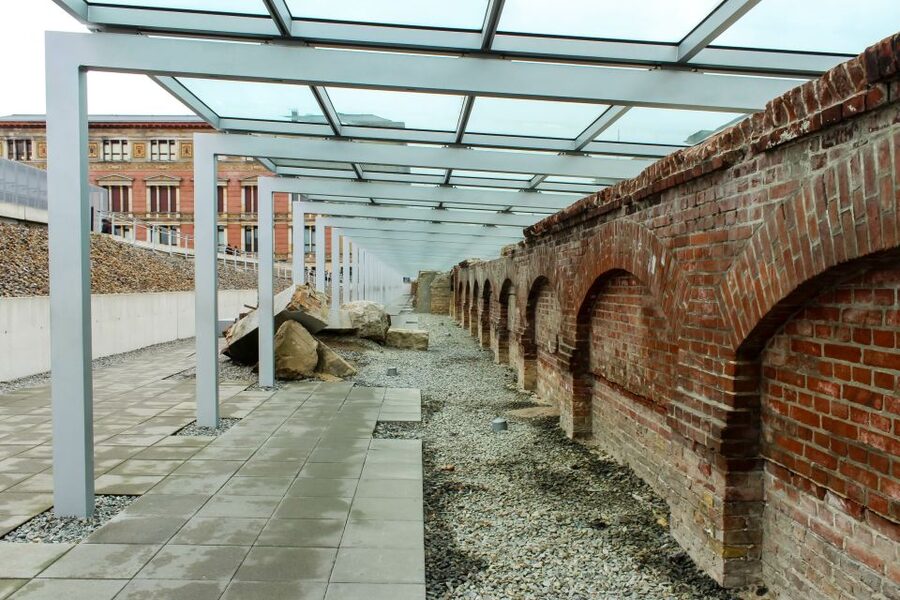
The five-hour version is the better choice if you want a fuller treatment of Jewish life and wartime Berlin. It adds Friedrichstrasse, the Spandauer Vorstadt area, the Jewish Quarter, and Otto Weidt’s Blindenwerkstatt Museum.
Friedrichstrasse is one of Berlin’s best-known streets. On this section of the route, you will see the Trains to Life, Trains to Death monument, which commemorates children murdered during the Holocaust.
The monument gives the subject a specific human focus. Rather than speaking only in vast numbers, it points to children and the rail transports that became part of the Holocaust. I find this kind of stop especially valuable for visitors who want the history connected to individual lives and family loss.
The route then moves through Spandauer Vorstadt and the Jewish Quarter. You will see the area associated with Berlin’s Jewish community and the surviving New Synagogue.
The word surviving matters here. The synagogue’s presence points to Jewish life that existed before the Nazi period, while its survival reflects the complicated story of destruction, damage, protection, and postwar memory. Your guide can connect the neighborhood to the wider history of Jewish Berlin rather than presenting it as only a wartime site.
The five-hour option also visits Otto Weidt’s Blindenwerkstatt Museum. This museum tells the story of Otto Weidt, who employed mostly blind and deaf Jewish workers in his workshop during World War II.
This is a particularly personal addition to the tour. It moves away from government buildings and public memorials and toward one person’s actions within a brutal system. The story does not erase the scale of Nazi crimes, but it shows how individual choices could matter to people facing persecution.
If you have time for only one version, I would choose the five-hour tour for the Blindenwerkstatt Museum and Jewish Quarter. The extra two hours add more than additional walking. They give you a closer look at Jewish history, individual courage, and the lives affected by Nazi policy.
How the private format affects the experience
A private group means you are not sharing the guide with strangers. That has practical value on a subject where questions often come naturally. You can ask for more explanation about a particular site, request a slower pace, or keep moving if a section is already familiar.
The guide can also adapt the focus to your background. Someone who has studied the Holocaust may want more attention on Nazi propaganda, resistance, or postwar memory. Someone new to German history may need more explanation of the Weimar Republic, Hitler’s rise, and the breakdown of democracy.
The advertised guide language choices are English, French, Russian, Spanish, Italian, German, and Polish. Be precise when booking because the quality of the experience depends heavily on clear communication.
The strongest praise attached to this experience concerns the guides’ personal qualities. Silvia was described as passionate, approachable, and able to make the past feel immediate. Gunnar received praise for making the city enjoyable while still teaching a great deal. Manfred was appreciated for a relaxed conversational style. I would use those examples as a reminder to request a guide suited to your preferred style if the operator allows it.
Price, walking time, and practical value
At $219 per person, this is not a budget walking tour. For one person, a couple, or a small private group, the cost buys a five-hour guide, a tailored route, live commentary, and the added Jewish Quarter and Blindenwerkstatt visits.
The value depends on how much guidance you want. If you mainly need a list of sites, you can see several central landmarks on your own. If you want someone to explain the links between Nazi institutions, public memory, Jewish life, war, and postwar Berlin, the private format offers more.
The price is easier to justify for a small group that can share the private guide fee. It is harder to justify if you plan to spend only a few minutes at each stop or if you already know Berlin’s Nazi-era history very well.
The tour includes the private walking route, a licensed five-star guide, the listed stops for your chosen option, and an adjusted tempo. Admission details are not separately described, so I would confirm exactly what is included for the museum visits when booking.
You can cancel up to 24 hours before the tour for a full refund, and you can reserve now and pay later. Check your email the day before because important tour information is sent then. The meeting point is specific, so arrive at Typisch Berlin cafe on Wilhelmstraße 42 without going inside to ask the cafe staff for help.
Who should book this experience?
I would recommend it to first-time visitors who want a serious introduction to Berlin’s Nazi and Holocaust history. It also suits families with older children, history students, and anyone who prefers asking questions rather than listening quietly in a large group.
The five-hour option is best for you if Jewish history is a central reason for visiting Berlin. The Blindenwerkstatt Museum and the Trains to Life, Trains to Death monument give the longer route a more personal focus.
The three-hour option makes sense if your time is tight or you want the principal central sites. It is still a serious experience, but it leaves out the Jewish Quarter and Otto Weidt Museum.
I would not choose this tour for a relaxed introduction to Berlin’s food, neighborhoods, or everyday culture. The subject is difficult, and the route is built around persecution, war, and remembrance. That is its purpose and also its limitation.
Should you book the Third Reich and Holocaust tour?
Book it if you want Berlin’s most important Nazi-era sites explained by one guide who can shape the walk around your questions. I especially recommend the five-hour version because the Jewish Quarter and Otto Weidt Museum add human detail that the central monuments alone cannot provide.
Skip it if you want a low-cost overview or if you prefer to explore museums independently. At $219 per person, the tour earns its price only when you use the private format: ask questions, request context, and give the difficult places the time they deserve.
FAQ
How long is the tour?
The experience is offered in three-hour and five-hour versions. The five-hour option includes the Jewish Quarter and Blindenwerkstatt Museum.
What does the five-hour tour include?
It includes the private walking tour, the Topography of Terror, central Berlin war sites and memorials, Friedrichstrasse, the Trains to Life, Trains to Death monument, the Jewish Quarter, and Otto Weidt’s Blindenwerkstatt Museum.
Does the three-hour tour include the Jewish Quarter?
No. The Jewish Quarter and Blindenwerkstatt Museum are included in the five-hour option, not the three-hour tour.
Where does the tour meet?
The meeting point is in front of Typisch Berlin cafe at Wilhelmstraße 42, 10963 Berlin. You should not enter the cafe because it is only the meeting point.
Which languages are available?
The live guide is available in English, French, Russian, Spanish, Italian, German, and Polish.
Is this a private tour?
Yes. It is offered for a private group, with the pace and interests adjusted to your needs.
What places are included on the central route?
The route includes the Topography of Terror, Potsdamer Platz, the Memorial to the Murdered Jews of Europe, the Brandenburg Gate, the Reichstag Building, and the Soviet War Memorial. The exact number of attractions depends on the selected option.
What is the price?
The listed price is $219 per person.
Can I cancel the tour?
Yes. You can cancel up to 24 hours in advance for a full refund. You can also reserve now and pay later.
Just added around Berlin
- Private Walking Tour in Berlin: Hitler’s Germany & WWII★ 5.0 · 7 reviews
- The History of Berlin: WWII PRIVATE Walking Tour With Locals★ 5.0 · 209 reviews
- Private Berlin WWII and Cold War History Tour with Local Expert Guide★ 5.0 · 28 reviews
- Private Walking Tour Berlin 3 hours: Brandenburg, Historic Center★ 5.0 · 7 reviews
- Berlin: Private Bike Tour of the Berlin Wall and Third Reich★ 5.0 · 23 reviews
- Berlin: Guided Private Bike Tour to Explore the Highlights★ 5.0 · 12 reviews
- Berlin Photography Masterclass – Private Photography Lesson★ 4.5 · 23 reviews
- Group Driving Tour 1 to 6 people. Berlin Shore Excursion incl pick-up at Port★ 5.0 · 8 reviews