
Reviewed · NUREMBERG TOURS
Tour del tercer Reich por Núremberg en español
The past is impossible to ignore here. This three-hour Spanish walking tour explains why Nuremberg became the Nazi regime’s propaganda center, linking medieval symbolism with the crimes of the Third Reich. I like the clear focus on the Nuremberg Trials and the Street of Human Rights, and I also like that the route connects major Nazi sites with the city’s Jewish history and anti-Semitism.
The main consideration is pace. There is a lot to cover in three hours, and some subjects, including the Zeppelin Field and Flossenbürg concentration camp, may be discussed rather than explored at length. Still, at $19 per person, this is a strong-value introduction, especially if you want historical context in Spanish.
In This Review
- Key points about this Nuremberg history tour
- Why Nuremberg became Hitler’s chosen city
- Starting at Hauptmarkt and the Frauenkirche
- Nazi Party congresses and the city of spectacle
- Zeppelin Field and the scale of Nazi power
- The Nuremberg Laws and local anti-Semitism
- The Nuremberg Trials and the Street of Human Rights
- Flossenbürg and the limits of a three-hour route
- Federico’s teaching style and the private group setting
- Is $19 fair for three hours?
- Who should book this Spanish-language tour?
- Should you book it?
- FAQ
- How long does the Nuremberg Third Reich tour last?
- What language is the tour offered in?
- Where does the tour begin?
- Where does the tour end?
- Is the tour wheelchair accessible?
- What should I bring?
- Are food, drinks, and hotel transportation included?
Key points about this Nuremberg history tour
- Nuremberg’s Nazi-era importance: Learn why Hitler selected the city as a symbolic center for the regime.
- Spanish-speaking guide: The tour is led in Spanish, with Federico praised for his cultured, clear, and well-documented explanations.
- Nuremberg Trials: Understand the postwar trials and their place in modern international justice.
- Street of Human Rights: Connect the city’s Nazi past with a public statement about human dignity and equality.
- Private group format: You receive a guided experience for a private group rather than joining a large shared crowd.
- Three hours on foot: Wear comfortable shoes and expect a serious, information-filled walk beginning and ending at Hauptmarkt.
Why Nuremberg became Hitler’s chosen city
Nuremberg is not simply a pretty Bavarian city with half-timbered houses and a grand market square. For the Nazi regime, it carried a powerful symbolic message.
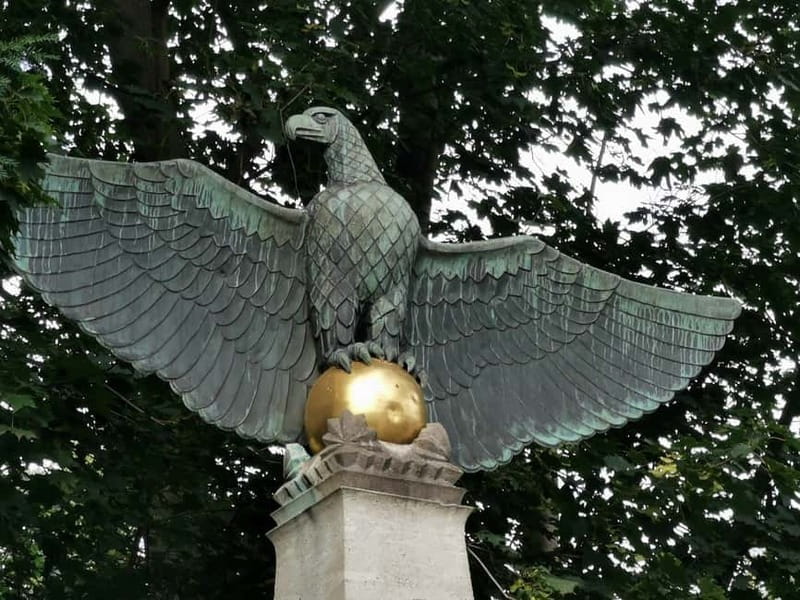
For centuries, Nuremberg had been linked with the Holy Roman Empire and Germanic imperial tradition. Hitler presented the city as the heir to that medieval power. He wanted the Nazi state to look like the continuation of a glorious German past, and Nuremberg provided the setting he needed.
That symbolism explains why the regime used the city for major party congresses, ceremonies, and mass demonstrations. The tour helps you see how architecture, public gatherings, flags, speeches, and historical references were combined to create political theater.
I find this context especially useful because it moves the subject beyond a list of Nazi dates and names. You learn why this particular city mattered to Hitler and how the regime used older German traditions to support a modern dictatorship.
The Spanish-language format adds real value here. The subject includes political language, legal terms, and sensitive historical details. A guide who can explain those ideas naturally in Spanish may make the material easier to follow than a rushed audio guide or a short museum caption.
A few more Nuremberg trips worth comparing
- Nuremberg: City Tour with the Bimmelbahn Train
★ 4.4 · 2,475 reviews - Nuremberg: Old Town Guided Walking Tour
★ 4.6 · 2,416 reviews - Nuremberg: Tunnels and Secret Passages in the City Wall Tour
★ 4.8 · 2,334 reviews
Starting at Hauptmarkt and the Frauenkirche
The meeting point is in front of the main entrance to the Frauenkirche on Hauptmarkt. Look for the white and red umbrellas.
This is a practical starting point. Hauptmarkt is central, easy to locate, and familiar to anyone already walking through Nuremberg’s old town. The tour returns here at the end, so you do not need to arrange transport across town or work out where to leave the group.
The square also provides a useful contrast. You begin in the historic center, surrounded by the older image of Nuremberg that the Nazis tried to claim for themselves. From there, the guide can show how the city’s medieval identity was turned into political propaganda.
Arrive with comfortable shoes. The experience lasts three hours and includes several historical themes, so you will get more from it if you are ready to walk and listen without rushing. Food and drinks are not included, and there is no hotel pickup or drop-off.
Nazi Party congresses and the city of spectacle
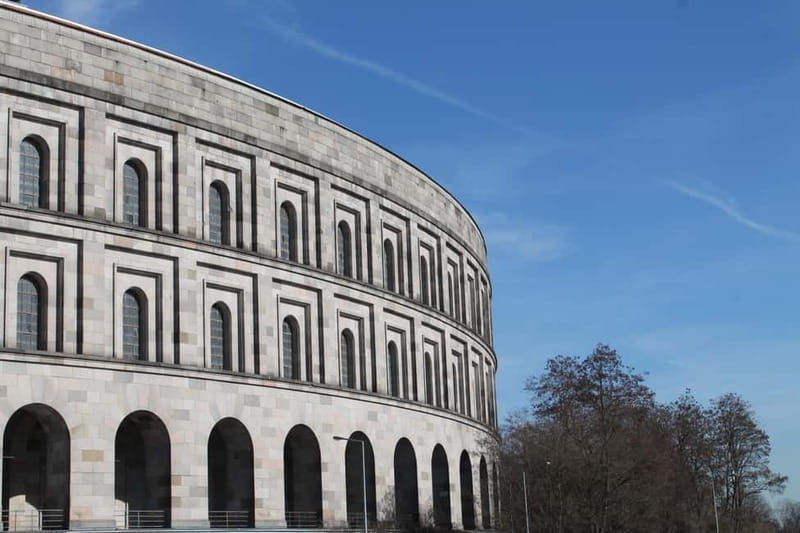
One of the central themes is Nuremberg as the city of Nazi Party congresses. These were not ordinary political meetings. They were carefully staged displays of strength, unity, and obedience.
The regime used enormous gatherings to make individuals feel part of something larger and more powerful. Military formations, speeches, uniforms, banners, and planned movement through public spaces all helped create that effect. Your guide explains how Nuremberg was used as a stage, not merely as a meeting place.
This part of the tour is valuable because the physical city helps explain the method. Political propaganda is easier to understand when you see how public areas were arranged and how crowds were directed. Instead of treating the Nazi period as an isolated chapter, the tour shows how the regime occupied familiar urban spaces and loaded them with new meaning.
The subject can be difficult, particularly for visitors who want a lighter sightseeing walk. This is a serious history tour. You should choose it because you want to understand the machinery of propaganda, not because you expect a general introduction to Nuremberg’s churches, restaurants, or medieval sights.
Zeppelin Field and the scale of Nazi power
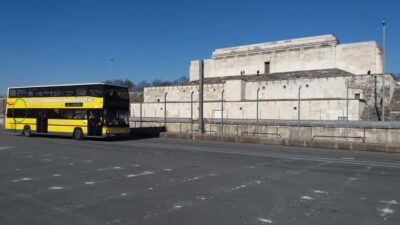
Zeppelin Field is one of the key places connected with the National Socialist demonstrations. It represents the grand scale the regime wanted to project, along with its interest in spectacle and mass control.
The information provided for this experience does not specify how long the group spends at the field or whether every section is visited in detail. That matters because a three-hour city tour must divide its time among many subjects. You should expect Zeppelin Field to be part of the historical explanation, but not assume that the entire afternoon will be devoted to the site.
Even so, its inclusion gives the tour an important physical dimension. You are not only hearing about Nazi rallies in the abstract. You are learning how a real location was used to stage political power and how that setting fits into the wider story of Nuremberg under the regime.
The guide’s role is crucial here. Federico is praised for presenting difficult material in a didactic and pleasant way, with plenty of information and documentation. That combination can help keep the tour serious without making it feel like a dry lecture.
Still Nuremberg, at a slower pace:
- Nuremberg: Medieval Dungeons Guided Tour
★ 4.8 · 1,726 reviews - Nuremberg: Walking Tour of Former Nazi Party Rally Grounds
★ 4.7 · 1,665 reviews - Medieval Tour in Nuremberg in Spanish
★ 5.0 · 1,374 reviews - Nuremberg: Historischer Kunstbunker WWII Art Bunker Tour
★ 4.8 · 921 reviews
The Nuremberg Laws and local anti-Semitism
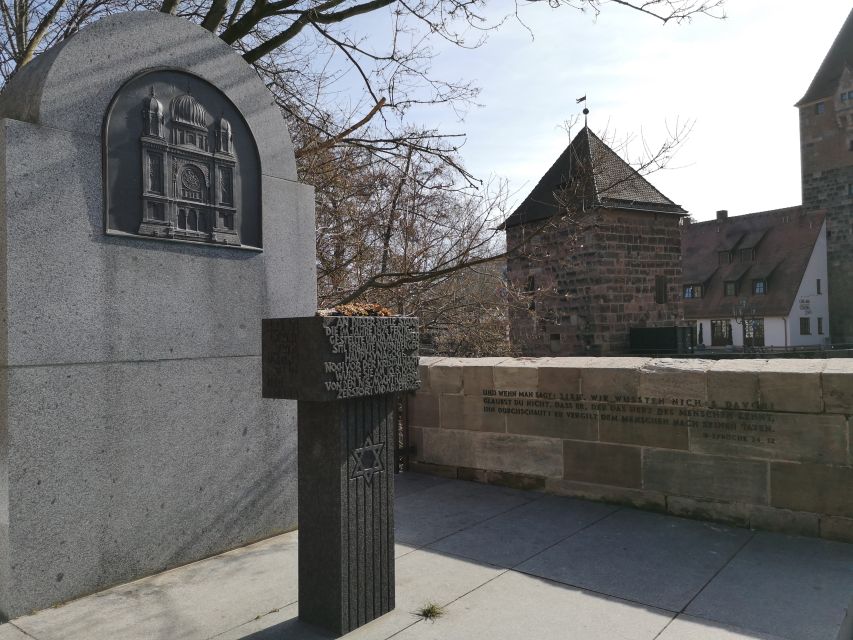
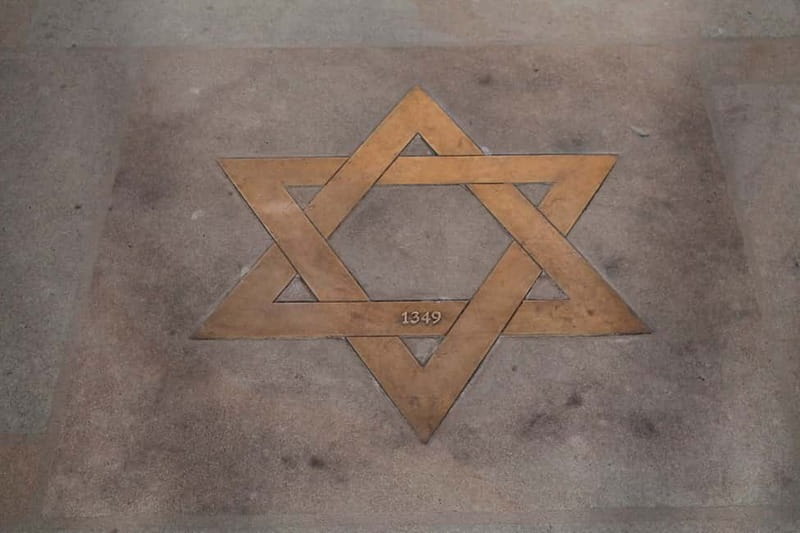
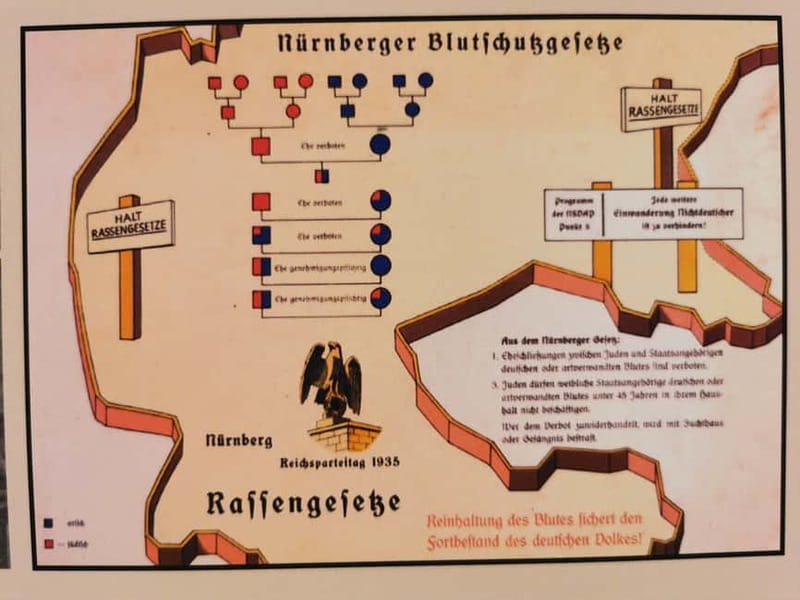
Nuremberg also became closely connected with Nazi racial policy. The tour discusses the Nuremberg Laws, which were written in the city by Wilhelm Frick, and explains the local history of anti-Semitism.
You also learn about Julius Streicher, one of the regime’s most aggressive anti-Semitic figures and the owner and promoter of the weekly newspaper Der Stürmer. His role helps show how propaganda worked through repeated hateful messages, not only through government speeches and official decrees.
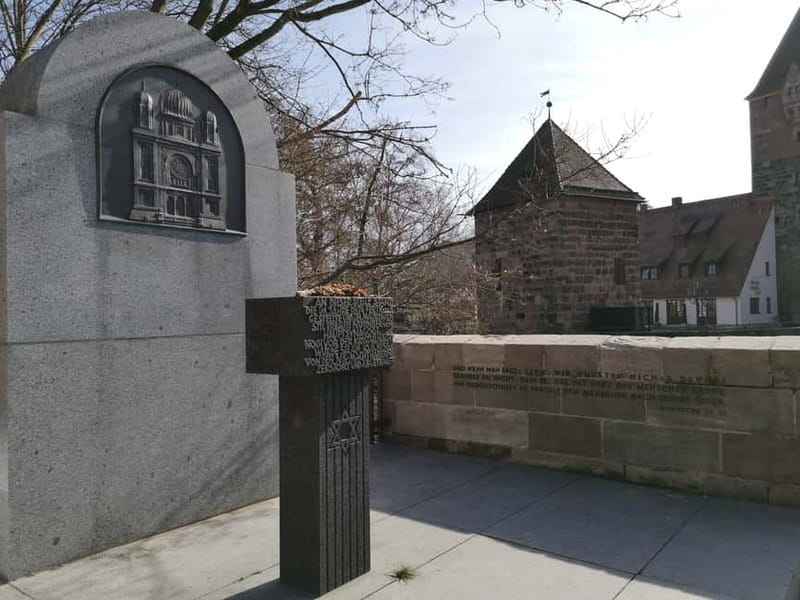
The tour includes the Jewish quarter in Nuremberg as part of this subject. The supplied information does not promise a particular preserved building or a specific memorial stop, so you should think of this as historical interpretation rather than a dedicated Jewish heritage walk.
That distinction is important. The Jewish story is part of the tour’s broader explanation of Nuremberg under National Socialism. If you want a detailed study of Jewish life in the city across many centuries, you may need a separate museum visit or specialist tour. For a three-hour overview of the Nazi period, however, this topic adds necessary balance and prevents the experience from focusing only on Hitler’s grand events.
The Nuremberg Trials and the Street of Human Rights
The Nuremberg Trials are among the most important subjects on the route. After the Second World War, leading Nazi figures were prosecuted in Nuremberg, making the city a key place in the development of international criminal justice.
The tour explains why the trials mattered and how they fit into the city’s modern identity. This is one of the strongest reasons to choose the experience. Nuremberg is not only where Nazi propaganda was staged. It is also where the defeated regime faced public legal judgment.
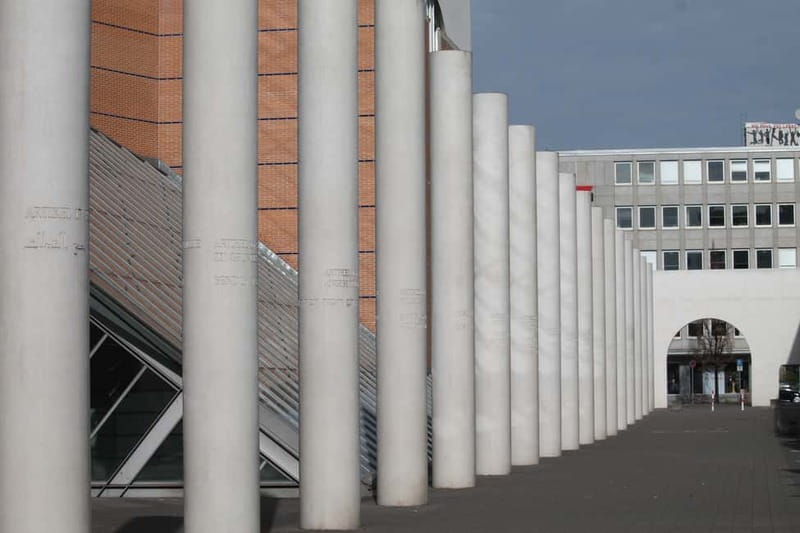
The route includes the Street of Human Rights, a powerful modern counterpoint to the city’s Nazi past. Its presence gives the walk a clear moral direction without reducing the history to a simple good-versus-evil slogan. You see how Nuremberg has tried to address its past through public memory and a commitment to human rights.
The information supplied does not state that the tour enters the courtroom or includes admission to the Memorium Nuremberg Trials. Do not book expecting an indoor museum visit or a courtroom tour. The listed inclusions are a professional guide and guided tour, so the value comes from the explanation, route, and historical connections.
Flossenbürg and the limits of a three-hour route
Flossenbürg concentration camp is included among the subjects covered. The details do not say that the tour travels to the camp, and the three-hour duration suggests that it is treated as part of the wider historical discussion rather than as a separate excursion from Nuremberg.
This is worth clarifying before you book. A visit to Flossenbürg would require a different amount of time and transport planning. Here, the camp’s place in the history of persecution and the Nazi system may be explained alongside the other locations and themes.
That broader view is still useful. It reminds you that the regime’s crimes were not limited to speeches, laws, and political rallies. They involved imprisonment, forced labor, deportation, and murder across a much wider network of sites.
Because the tour covers so many subjects, you may want to note which areas interest you most before meeting the guide. A private group format gives you a better chance to ask questions and request clarification, although the available information does not promise a customized itinerary.
Federico’s teaching style and the private group setting
Federico receives especially strong praise for his cultural background, historical understanding, and ability to explain the subject with documentation. The most useful quality here is not simply knowing names and dates. It is the ability to connect Nuremberg’s medieval image, Nazi propaganda, anti-Semitism, the trials, and the city’s human rights response into one understandable story.
One review describes his approach as clear, educational, and pleasant. Another praises his kindness, friendliness, and ability to explain the subject in a didactic way. Those details matter because a tour about the Third Reich can easily become either too sensational or too academic.
The private group format is another advantage. You are not promised a fixed large-group experience, and a private tour can make it easier to hear the guide, ask questions, and pause when a subject needs more explanation. The exact maximum group size is not provided, so I would not assume that private means one guide and only two people.
The tour is offered in Spanish. That makes it particularly suitable for Spanish-speaking visitors who want to discuss the material in their strongest language, including historical terms and sensitive questions. If your group includes several people with different language needs, confirm the arrangement before booking.
Is $19 fair for three hours?
At $19 per person, the price is modest for a three-hour guided history walk. You are paying for a professional Spanish-speaking guide and a structured route through one of Germany’s most important cities for understanding the Nazi period.
The value is strongest if you want interpretation. You could walk through Nuremberg’s streets on your own, but the meaning of the sites would be much less clear. The tour connects places that might otherwise seem unrelated: medieval imperial symbolism, party congresses, anti-Semitic propaganda, the Jewish quarter, the Nuremberg Trials, Zeppelin Field, and the Street of Human Rights.
The price does not include meals, drinks, hotel transportation, museum entry, or a trip to Flossenbürg. That keeps the cost low, but it also means you should budget separately for any indoor attractions you want to visit.
I would view this as a focused orientation rather than a complete Nazi history program. After the walk, you will know which subjects deserve more time. You can then decide if you want to visit a museum, return to a site, or explore the Nuremberg Trials in greater detail.
Who should book this Spanish-language tour?
I would recommend it to you if you want a serious introduction to Nuremberg’s role in the Third Reich and prefer to learn in Spanish. It also suits history-minded visitors who want links between places, rather than a simple procession of famous buildings.
It is a good choice for a first visit because the three-hour route gives you a framework for the city. The private group setting may appeal to couples, families, or small groups who prefer the chance to ask questions.
You may want something else if your main goal is a general old-town sightseeing tour, a museum visit, or a dedicated excursion to Flossenbürg. The subject is heavy, and the tour does not appear designed as light entertainment.
Book it early in your Nuremberg schedule if possible. That way, the historical context can shape the rest of your visit, especially if you plan to see the Nuremberg Trials museum or return to the Nazi Party Rally Grounds.
Should you book it?
Book this tour if you want the city’s Nazi past explained in Spanish, with special attention to propaganda, the Nuremberg Laws, anti-Semitism, the Nuremberg Trials, and human rights. Federico’s praised teaching style and the private group format make the experience more personal than a basic self-guided walk.
At $19 per person, it offers very good value for three hours of guided context. Just keep your expectations precise: this is a serious outdoor history tour, not a full museum program or a separate Flossenbürg excursion. Wear comfortable shoes, meet at the Frauenkirche entrance in Hauptmarkt, and come ready for an honest look at how Nuremberg became both a showcase of Nazi power and a place where that power was judged.
FAQ
How long does the Nuremberg Third Reich tour last?
The tour lasts three hours. Starting times vary, so check availability when choosing your date.
What language is the tour offered in?
The live guided tour is offered in Spanish.
Where does the tour begin?
It begins in front of the main entrance to the Frauenkirche in Hauptmarkt. Look for the white and red umbrellas.
Where does the tour end?
The tour ends back at the meeting point near the Frauenkirche.
Is the tour wheelchair accessible?
Yes, the activity is listed as wheelchair accessible.
What should I bring?
Bring comfortable shoes, since the experience lasts three hours and is conducted as a guided city tour.
Are food, drinks, and hotel transportation included?
No. Food and drinks, as well as hotel pickup and drop-off, are not included.
Just added around Nuremberg
- Tour en español al Campo Zeppelin★ 5.0 · 8 reviews
- Stein: Public guided tour of the “Old Mine” museum★ 4.5 · 18 reviews
- “Rotes Bier” and “Blaue Zipfel”. A historical-culinary walk★ 4.4 · 190 reviews
- Nuremberg: Old Town Guided Tour By Bus★ 4.4 · 198 reviews
- Nuremberg: Bar and Club Tour with Free Shots and Free Entry★ 3.8 · 23 reviews
- Nürnberg kennenlernen: Highlights in der Altstadt★ 4.7 · 189 reviews
- Nürnberg Bachelor(ette) Party with Night PubCrawl★ 4.2 · 5 reviews
- Nuremberg: WWII Tour, Courtroom 600 and 3rd Reich Sites★ 4.6 · 94 reviews
Nuremberg Tours, compared.
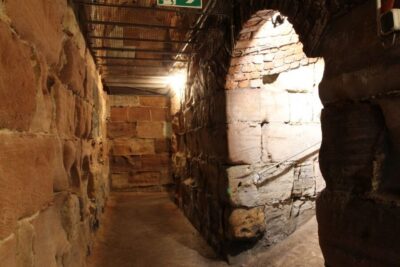
Tunnels and Secret Passages in the City Wall Tour
Read our review →
Browse the lists this tour appears in