
Reviewed · WALKING TOURS
Beelitz-Heilstätten: Baum&Zeit Tree Top Walk Entry Ticket
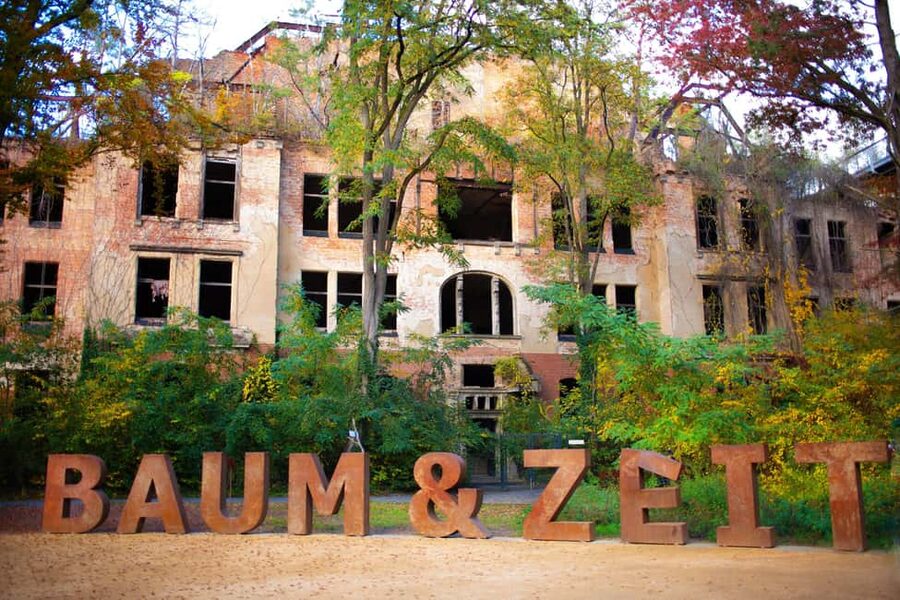
History grows through the trees here. I like the 700-meter barrier-free path and the rare chance to see a forest growing across the ruined roof of the Alpenhaus. The 40-meter tower adds broad views toward Berlin, while the main drawback is that this ticket does not include entry inside the old buildings.
This is more than a short walk in the woods. Beelitz-Heilstätten combines old sanatorium architecture, forest gardens, war ruins, and a well-built elevated path. A 4.9 rating from seven reviews fits the experience’s strongest points: it is fun, unusual, and gives you plenty to learn as you move through the park.
In This Review
- Key points to know before you go
- Why Beelitz-Heilstätten feels so unusual
- Starting the 700-meter treetop and time travel trail
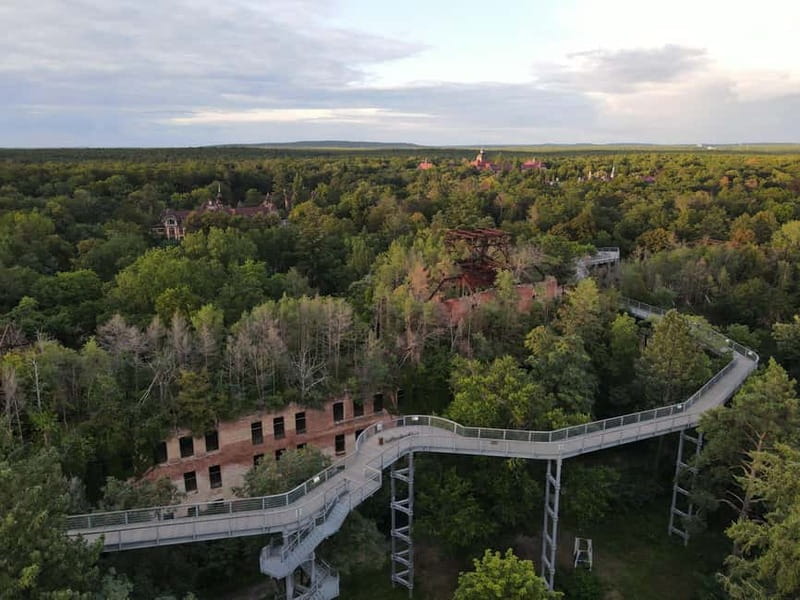
- Crossing the Alpenhaus ruins and its rooftop forest
- Climbing the 40-meter observation tower
- Seeing the old women’s sanatorium from above
- How the seasons change the walk
- What the $19 ticket includes
- Getting there from Berlin
- Who will enjoy this most
- Should you book the Baum&Zeit treetop walk?
- FAQ
- Where is the Baum&Zeit treetop walk located?
- How long is the treetop path?
- How high is the observation tower?
- Can I see Berlin from the tower?
- Does the ticket include access to the buildings?
- What does the $19 admission include?
- Is the treetop walk wheelchair accessible?
- How do I reach the site by train?
- Are pets allowed?
- How late can I enter?
Key points to know before you go
- A 700-meter elevated route: The treetop and time travel trail gives you a new angle on the forest park and the historic sanatorium grounds.
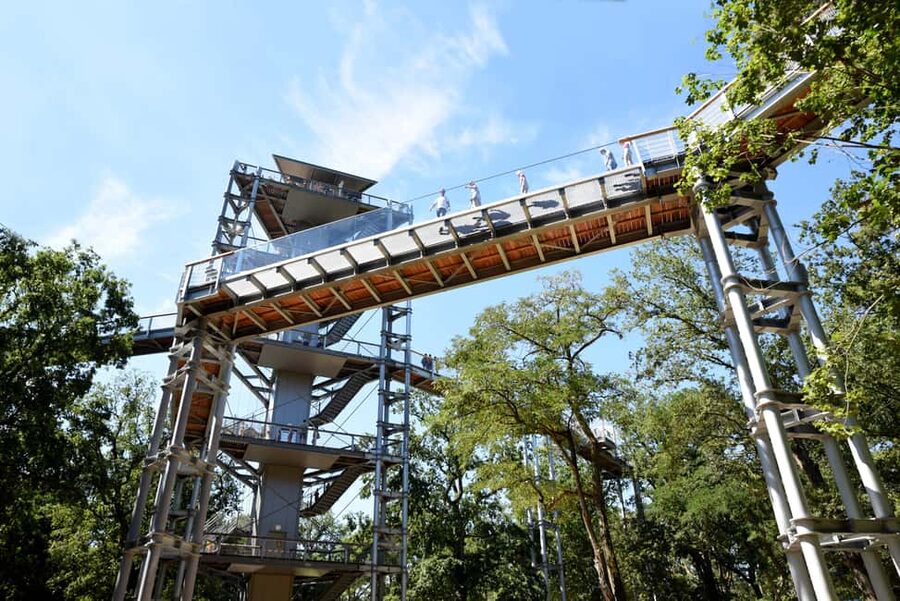
- A 40-meter observation tower: On clear days, you may see as far as Berlin’s television tower.
- A forest growing on wartime ruins: The path crosses the Alpenhaus, where a canopy forest has developed on the roof since 1945.
- A ticket for the park and treetop path: The $19 admission covers one entry on the booked day, but not the interiors of the buildings.
- An easy arrival by regional train: From Beelitz-Heilstätten station, the entrance is about a five-minute walk.
- An all-season outing: Deciduous trees, flowering shrubs, and unusual conifers create different colors in spring and autumn.
Why Beelitz-Heilstätten feels so unusual
Beelitz-Heilstätten is close to Berlin, yet the setting feels far removed from city streets. More than 100 years ago, the complex was built so workers from Berlin could recover from tuberculosis in a clean forest setting. The buildings were designed with care, and the grounds were planned as spacious forest parks rather than a tight urban hospital site.
That original purpose still shapes the visit. You are not simply walking along a platform above ordinary woodland. You are looking down toward old sanatorium buildings, rooflines, garden areas, and ruins that have slowly been taken over by trees and shrubs.
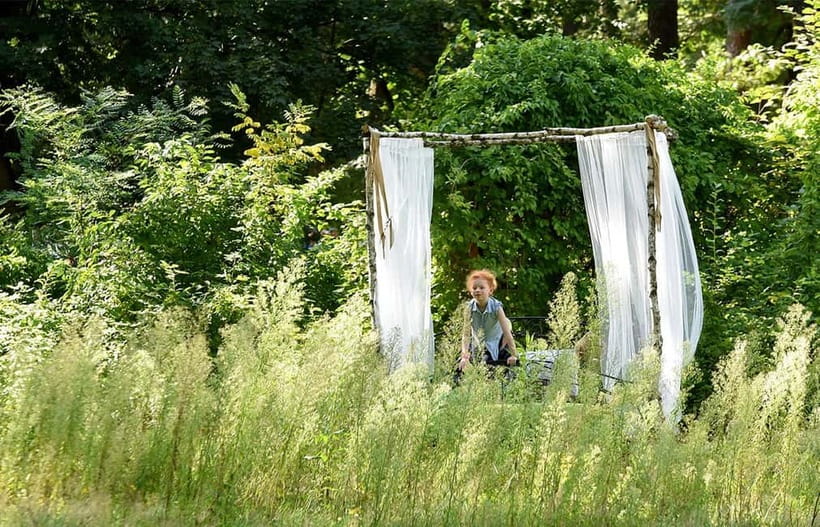
The site keeps much of its original character. About three quarters of the old forest remains, with around 65 kinds of trees and shrubs recorded across the grounds. Deciduous trees and flowering plants provide the strongest seasonal change, while exotic conifers add variety.
I would plan this visit for someone who likes places with several layers. You get outdoor exercise, views, architecture, botany, and local history in one stop. It is also a good choice if you want a break from Berlin museums without giving up something meaningful to see.
More Walking Tours in Berlin
- Discover Berlin Half-Day Walking Tour
★ 5.0 · 9,624 reviews - Berlin: Third Reich and Cold War 2 Hour Walking Tour
★ 4.9 · 6,830 reviews - Berlin: Discover Berlin Walking Tour
★ 4.9 · 5,998 reviews
Starting the 700-meter treetop and time travel trail
The route is the heart of the visit. At 700 meters, it is long enough to feel like a proper outing, but not so long that you need to give up half a day. The path is barrier-free, so you can focus on the surroundings rather than worrying about difficult steps or rough ground.
From above, the forest park looks different from ground level. The elevated position lets you see the arrangement of the trees and the relationship between the woods and the old sanatorium buildings. You also get closer views of upper branches, flowering shrubs, and the changing colors of the park.
The name time travel trail makes sense as you move along. The route links the present-day forest with the site’s earlier medical purpose and its later wartime damage. Your view shifts between living trees, old masonry, and the remnants of the former complex.
I like that the walk does not reduce Beelitz-Heilstätten to a single story. The place is not only an abandoned building site, and it is not only a pleasant park. Its appeal comes from the contrast between planned architecture and untamed growth.
There are also adventure elements along the route. The supplied information does not specify exactly what each feature involves, so I would treat them as a small extra rather than the main reason to buy the ticket. The real draw is the elevated route and the unusual setting beneath it.
Crossing the Alpenhaus ruins and its rooftop forest
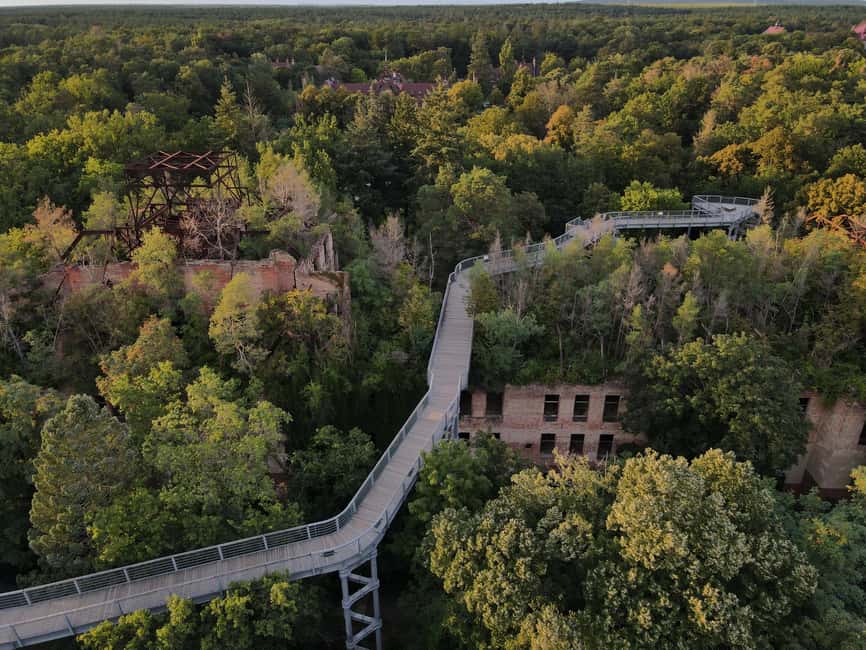
The most distinctive section passes over the ruins of the Alpenhaus. This building was damaged during World War II, and a canopy forest has grown across its roof since 1945.
That detail changes how you look at the ruins. Instead of seeing trees only as a backdrop, you see them growing directly from a damaged human structure. Nature has not erased the building completely, but it has changed the building’s appearance and meaning.
From the walkway, you can study the meeting point between masonry and branches from a safe, elevated position. You might notice how the old roofline and the tree canopy occupy the same space. It is a memorable visual record of time, and one of the strongest reasons this site feels different from a standard woodland walk.
The Alpenhaus section also gives the visit an honest edge. The ruins are not polished museum pieces. They show what can happen when a large complex loses its original purpose and the forest is left to reclaim parts of it.
If you are especially interested in entering abandoned buildings, keep your expectations in check. The standard ticket does not provide access to the interiors. You need to book a separate guided tour for the buildings through Baum&Zeit’s website.
Climbing the 40-meter observation tower
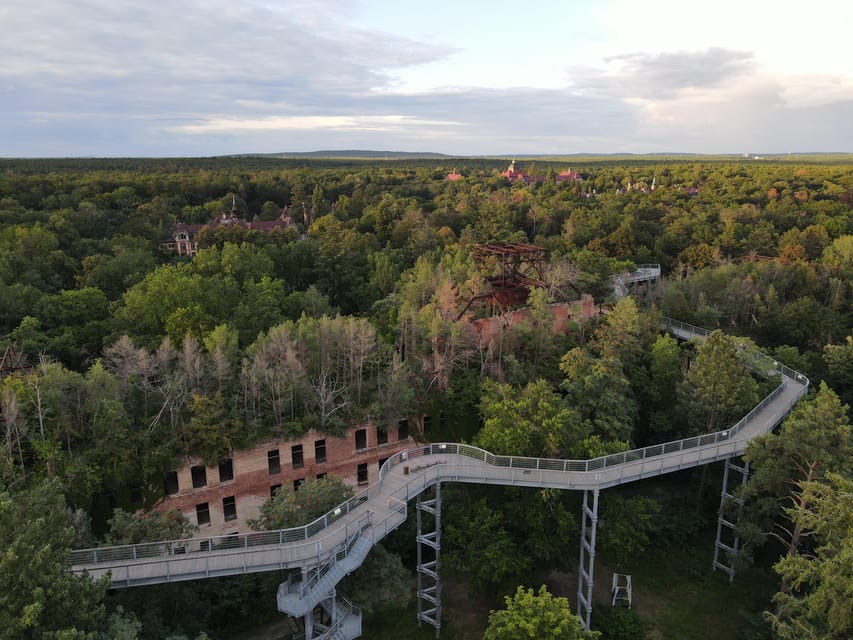
The 40-meter observation tower is the highest point of the visit and the place to pause for a wide view. From the top, you can look across the forest park and surrounding area. In good weather, the view can reach as far as Berlin’s television tower.
Weather matters here. On a clear day, the tower can give you a satisfying sense of the region’s size and position. On a hazy or cloudy day, the long-distance view may be less impressive, but you will still see the forest and historic grounds from a useful height.
I would not rush this part. The tower helps you understand the site as a whole, especially after walking through the lower sections of the treetop route. You can see why the sanatorium was placed in a broad wooded setting rather than among dense city blocks.
The tower and treetop path are wheelchair accessible. That makes the high views available to more people, not just those comfortable with steep trails or long stairways.
A few more Berlin trips worth comparing
- Berlin: Berlin Story Bunker Entry Ticket
★ 4.6 · 6,759 reviews - Berlin: Illuseum Berlin Entrance Ticket
★ 4.1 · 3,970 reviews - Berlin: Madame Tussauds Admission Ticket
★ 4.6 · 3,941 reviews - Berlin: Natural History Museum Entrance Ticket
★ 4.6 · 3,382 reviews
Seeing the old women’s sanatorium from above
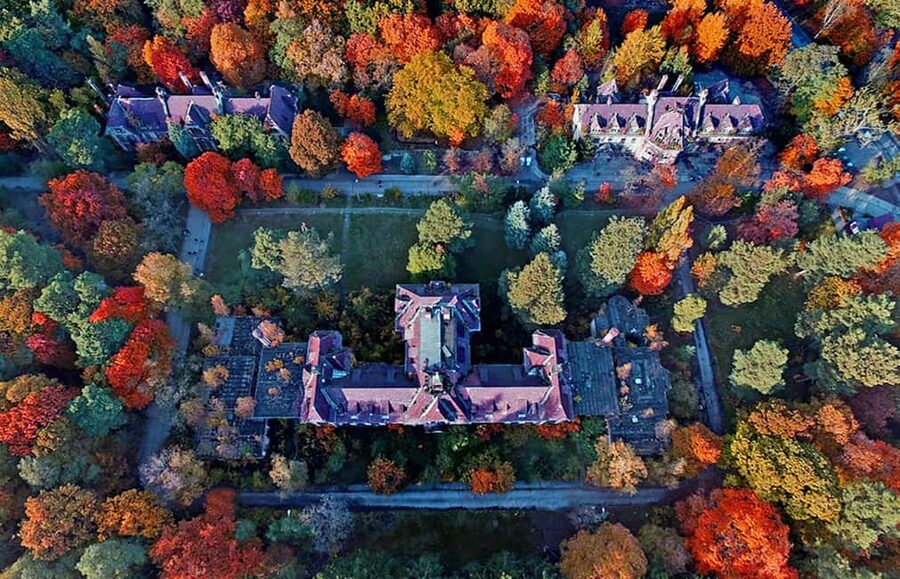
The elevated trail offers views over the historic buildings of the women’s sanatorium. Their castle-like design gives the site a very different feel from a modern medical complex.
The architecture is important because the original planners treated beauty and function as partners. The forest setting was part of the treatment idea, and the buildings were placed within carefully developed grounds rather than isolated from them.
From the path, you see the buildings as part of the wider park. This is useful because the complex was never meant to be understood as one structure alone. The trees, flowering plants, open areas, and architecture all belonged to the same plan.
You will not get the full interior story with this admission ticket. That is the main limit of the basic visit. If you want rooms, corridors, and more detailed accounts of the sanatorium’s past, add one of the guided building tours. The separate tour option lets you expand the visit without forcing every visitor to pay for more than they want.
How the seasons change the walk
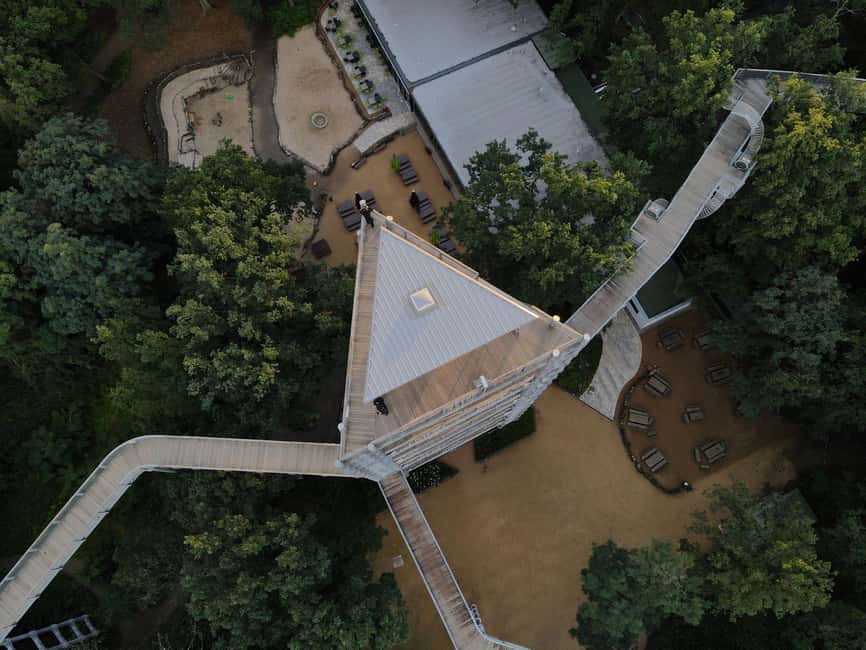
The park has something different to offer across the year. Spring and autumn are likely the most visually rewarding seasons because the mix of deciduous trees, flowering shrubs, and conifers produces strong color changes.
In spring, flowering plants and fresh leaves should make the forest feel lighter and more open. Autumn brings a stronger display from the deciduous trees, with the old buildings and ruins providing a darker backdrop.
Summer may offer fuller greenery and denser tree cover. Winter can make the architecture, branches, and ruined structures easier to see because there is less foliage. The supplied information describes the route as an all-year activity, so the best timing depends on whether you prefer seasonal color or clearer views through the trees.
The changing seasons also suit repeat visits. The same 700-meter route can look noticeably different when flowering shrubs, bare branches, or autumn leaves alter the view.
What the $19 ticket includes
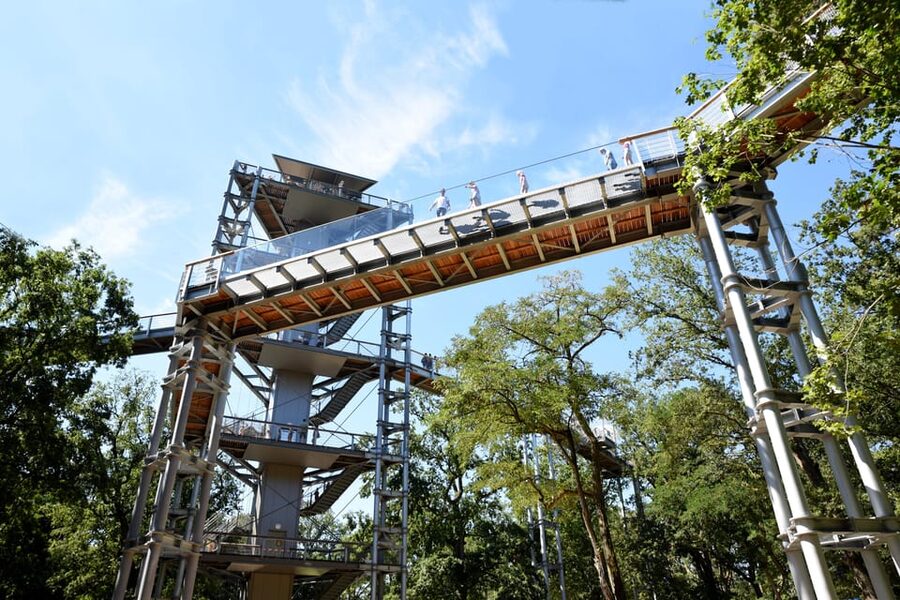
At $19 per person, the ticket is fairly priced if you want a focused outdoor visit with a strong central attraction. You are paying for access to the park grounds, the full treetop path, the observation tower, and the route across the Alpenhaus ruins.
The value is strongest for visitors who would otherwise spend money on several smaller Berlin-area attractions. Here, the admission combines nature, history, views, and a purpose-built elevated route in one outing.
It is less useful if your main goal is to explore the sanatorium interiors. Building access is not included, and you need a separate guided tour ticket. In that case, compare the combined cost and allow enough time for both parts.
The ticket is valid for one day and one admission on the date booked. Check the available starting times before you commit, and remember that last admission is one hour before closing. That matters if you plan to arrive late in the day or connect the visit with another stop.
Free cancellation is available up to 24 hours in advance, and you can reserve now while paying later. Those terms help if your Berlin plans are still shifting, but they do not remove the need to check the booked date and entry details carefully.
Getting there from Berlin
By train, take regional line 7 on the Berlin to Dessau route and leave the train at Beelitz-Heilstätten station. The entrance is about a five-minute walk away, with signs pointing toward the treetop walk.
That is the simplest option if you do not want to drive. The short walk from the station also makes this a practical day trip or half-day outing from Berlin.
By car, follow the A9 between Berlin and Nuremberg and use exit 2, or approach via state road 88. The destination is Beelitz-Heilstätten.
The activity begins and ends at the same meeting point. Wear comfortable clothes, especially if you plan to spend time on the full route and tower rather than making a quick pass through the park.
Pets are not allowed, and drones are prohibited. Those rules are worth noting before you set out, particularly if you were planning a dog walk or hoped to photograph the site from the air.
Who will enjoy this most
I would recommend Baum&Zeit to you if you like unusual combinations. It suits people who enjoy historic places but do not want to spend an entire day indoors. It also works well for families, since the elevated route, tower, and adventure elements give younger visitors something active to do.
The barrier-free design makes the main route suitable for wheelchair users. The tower and treetop walk are both wheelchair accessible, which is a major practical advantage for an attraction built above the forest.
Photography fans should find plenty to work with: old walls, rooftop trees, high branches, seasonal color, and broad views. Drones are not allowed, so your photographs need to come from the path and observation tower.
I would be less likely to choose it for a visitor who wants a guided, room-by-room historical tour as the main event. The standard admission gives you strong views and context, but the interiors require a separate booking.
Should you book the Baum&Zeit treetop walk?
Book it if you want an easy-to-reach outing that combines a 700-meter forest walk, old sanatorium buildings, World War II ruins, and a 40-meter view toward Berlin. The unusual rooftop forest on the Alpenhaus is reason enough to consider it, and the positive feedback points to an outing that feels both enjoyable and informative.
Skip or modify the plan if you only want interior access. In that case, reserve a building tour as well, since the $19 ticket covers the park and elevated route only.
For most people, I would allow time to walk slowly, pause at the Alpenhaus, and spend a few minutes at the tower. This is not a place to race through. Its best moments come from noticing how the forest, ruins, and sanatorium grounds have changed together over time.
FAQ
Where is the Baum&Zeit treetop walk located?
It is located at Beelitz-Heilstätten in the German state of Berlin.
How long is the treetop path?
The treetop and time travel trail is 700 meters long.
How high is the observation tower?
The observation tower is 40 meters high.
Can I see Berlin from the tower?
In good weather, the view can reach as far as Berlin’s television tower.
Does the ticket include access to the buildings?
No. Access to the buildings is available only with a separately booked guided tour ticket.
What does the $19 admission include?
It includes one admission to the park grounds and the Baum&Zeit treetop path on the booked day.
Is the treetop walk wheelchair accessible?
Yes. Both the treetop walk and observation tower are wheelchair accessible.
How do I reach the site by train?
Take regional train line 7 on the Berlin to Dessau route, get off at Beelitz-Heilstätten station, and follow the signs. The entrance is about a five-minute walk away.
Are pets allowed?
No. Pets are not allowed at the activity.
How late can I enter?
The last admission is one hour before closing. Check the available starting times and closing details for your selected date.
Just added around Berlin
- Private Walking Tour in Berlin: Hitler’s Germany & WWII★ 5.0 · 7 reviews
- The History of Berlin: WWII PRIVATE Walking Tour With Locals★ 5.0 · 209 reviews
- Private Berlin WWII and Cold War History Tour with Local Expert Guide★ 5.0 · 28 reviews
- Private Walking Tour Berlin 3 hours: Brandenburg, Historic Center★ 5.0 · 7 reviews
- Berlin: Private Bike Tour of the Berlin Wall and Third Reich★ 5.0 · 23 reviews
- Berlin: Guided Private Bike Tour to Explore the Highlights★ 5.0 · 12 reviews
- Berlin Photography Masterclass – Private Photography Lesson★ 4.5 · 23 reviews
- Group Driving Tour 1 to 6 people. Berlin Shore Excursion incl pick-up at Port★ 5.0 · 8 reviews
Walking Tours, compared.







Old Town & Viktualienmarkt City Walk in German
Read our review →Browse the lists this tour appears in