

Reviewed · HISTORICAL TOURS
Berlin: Charité Hospital History Walking Tour
Medicine gets personal at Charité.
Berlin’s oldest hospital is more than a collection of old buildings. On this two-hour walking tour, you follow the hospital from its start as a plague house in 1710 through medical breakthroughs, women’s changing role in medicine, Nazi crimes, and the divided history of East Berlin. I especially like the visit to the Veterinary Anatomy Theatre, an 18th-century building with a clear link to everyday life in old Berlin. I also like the way the tour connects major figures such as Robert Koch and Rudolf Virchow to the actual campus around you.
The main consideration is simple: most of the tour takes place outdoors. Cold weather, standing, and roughly two hours on foot can make this less comfortable than a museum visit. The content also includes disturbing material about Nazi medical crimes, so I would recommend it mainly for adults and young people aged 14 and up.
In This Review
- Five details that make this Charité tour special
- Starting beside Robert Koch at Robert-Koch-Platz
- The plague house that became Charité
- Inside the Veterinary Anatomy Theatre
- Charité’s medical pioneers and the campus walk
- Rachel Hirsch and the slow change in medicine
- The Nazi period and the collapse of medical ethics
- Charité behind the Iron Curtain
- What you can and cannot see on campus
- Is $28 a fair price?
- Who will enjoy this tour most?
- Should you book the Charité Hospital History Walking Tour?
- FAQ
- How long does the Charité Hospital History Walking Tour last?
- Where does the tour begin?
- Where does the tour finish?
- Is the Veterinary Anatomy Theatre included?
- Is the tour available in English?
- Is the tour suitable for children?
Five details that make this Charité tour special
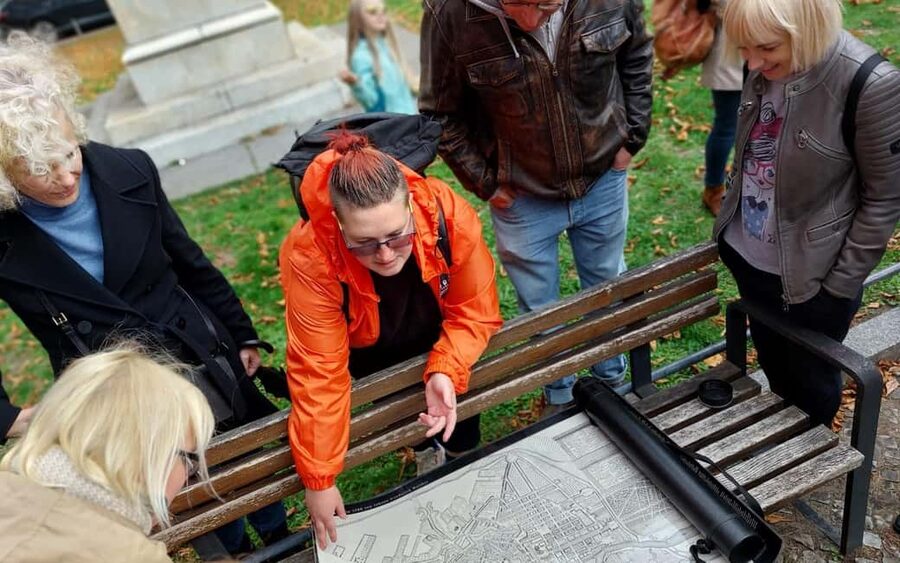
- A plague house became Berlin’s oldest hospital: The tour begins with Charité’s foundation in 1710, when fear of an approaching epidemic led to its construction.
- The Veterinary Anatomy Theatre is the visual highlight: This is Berlin’s oldest surviving academic building and offers a rare look at 18th-century veterinary education.
- Medical history comes with human conflict: Robert Koch, Rudolf Virchow, and Rachel Hirsch appear alongside stories of resistance, prejudice, and institutional change.
- The Nazi and socialist eras receive serious attention: You hear how medical ethics collapsed under Nazi rule and how East Germany later used Charité as a symbol of achievement.
- The tour is well suited to a first Berlin day: It begins at Robert-Koch-Platz and finishes near the city’s Central Station area, giving you useful options for continuing your sightseeing.
Starting beside Robert Koch at Robert-Koch-Platz

Your guide meets you by the Robert Koch statue at Robert-Koch-Platz. Look for the orange umbrella, an especially useful marker in a city where several walking tours may gather near one another.
The starting point gives the tour an immediate sense of purpose. Robert Koch was not simply a famous name in a textbook. He was one of the medical pioneers connected with Charité, and beginning beside his statue frames the walk around people, discoveries, and the institutions that made them possible.
You should arrive ready to walk and stand for about two hours. Comfortable shoes and water are sensible, and warm clothing matters in colder months. The route spends most of its time outside, so this is not the best choice if you want a heated indoor activity or if you tire easily while standing.
The tour is offered in English or German. The guide leads the group through the story rather than presenting a dry list of dates. Martina, one of the guides from Beyond and Beneath Tours, received particular praise for being friendly, well prepared, and able to explain both Charité’s medical story and Berlin’s wider history.
More History Tours in Berlin
- Berlin: Natural History Museum Entrance Ticket
★ 4.6 · 3,382 reviews - Berlin: World Heritage Cruise to Potsdam
★ 4.5 · 1,435 reviews - Berlin Historical Highlights Walking Tour
★ 4.9 · 657 reviews
The plague house that became Charité
The opening story reaches back to 1710, when Berlin faced the threat of plague. Charité began as a simple plague house, built to protect the city from an approaching epidemic.
That origin gives the institution a very different feel from the grand medical center you see today. It began as an emergency response, not as a polished research institution. I find this a useful way to understand old hospitals: they often grew out of crisis, then changed slowly as medicine, science, and public expectations changed.
Early treatment methods were often harsh by modern standards. Bloodletting, mercury, and amputations were common tools, and doctors had limited ways to understand infection or disease. The point is not to mock earlier medicine. Instead, the tour helps you see how much medical care depended on guesswork before modern research methods took hold.
This section works best if you enjoy the connection between science and daily life. You are not only learning that Charité is old. You are seeing how fear of disease shaped Berlin’s buildings, policies, and treatment of the sick.
Inside the Veterinary Anatomy Theatre
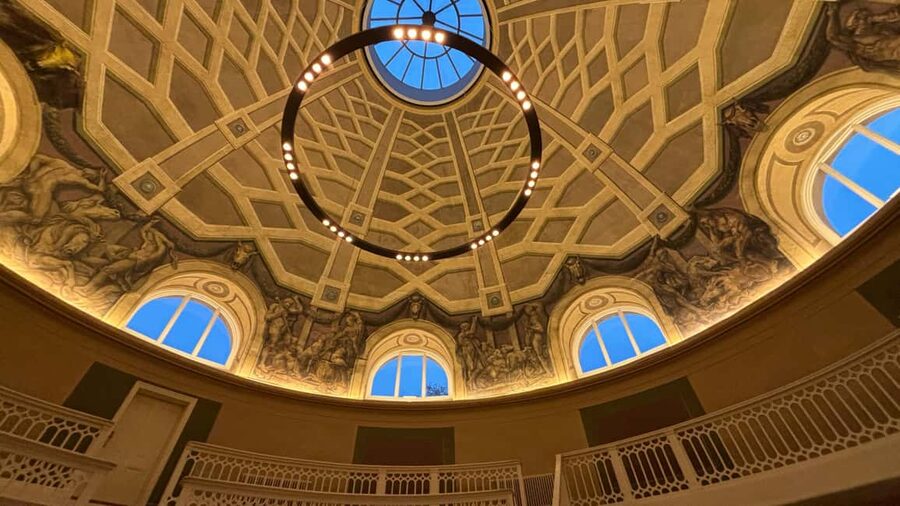
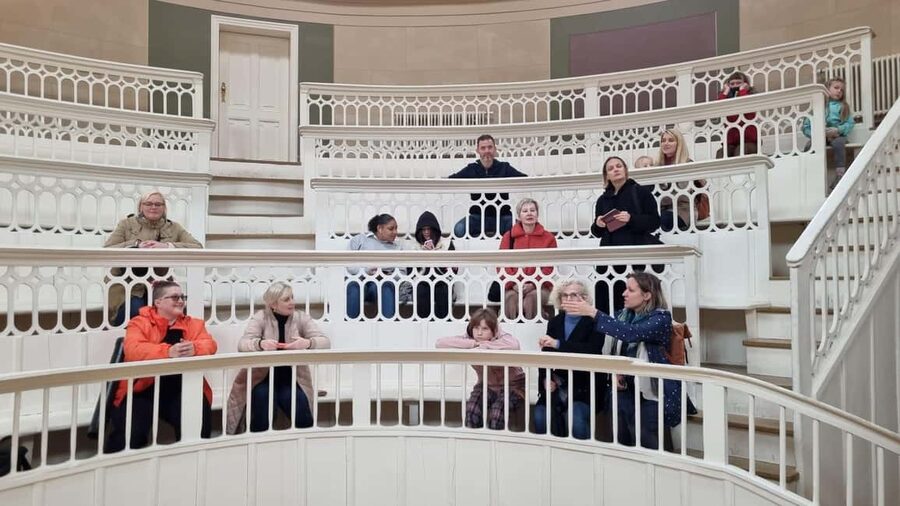
The visit to the Veterinary Anatomy Theatre is the tour’s clearest architectural and historical treat. The building dates to the 18th century and is described as the oldest academic building still in existence in Berlin.
You spend about 15 minutes visiting the theatre. That is not a long stop, but it adds an indoor element to a route that otherwise takes place around the campus. The building also offers a different view of medicine. Instead of focusing only on human patients, the theatre shows how doctors studied diseases affecting livestock and cavalry horses.
That subject mattered in 18th-century Berlin. Livestock supported food supplies and household economies, while cavalry horses had military value. Studying animal illness was not a side issue. It affected transport, agriculture, trade, and the army.
The theatre can occasionally close for internal events or public holidays. If this building is the main reason you are booking, check the operating information for your date. Even if the interior visit cannot take place, the wider campus walk still carries the main historical material, but the experience will lose its most distinctive building.
Charité’s medical pioneers and the campus walk
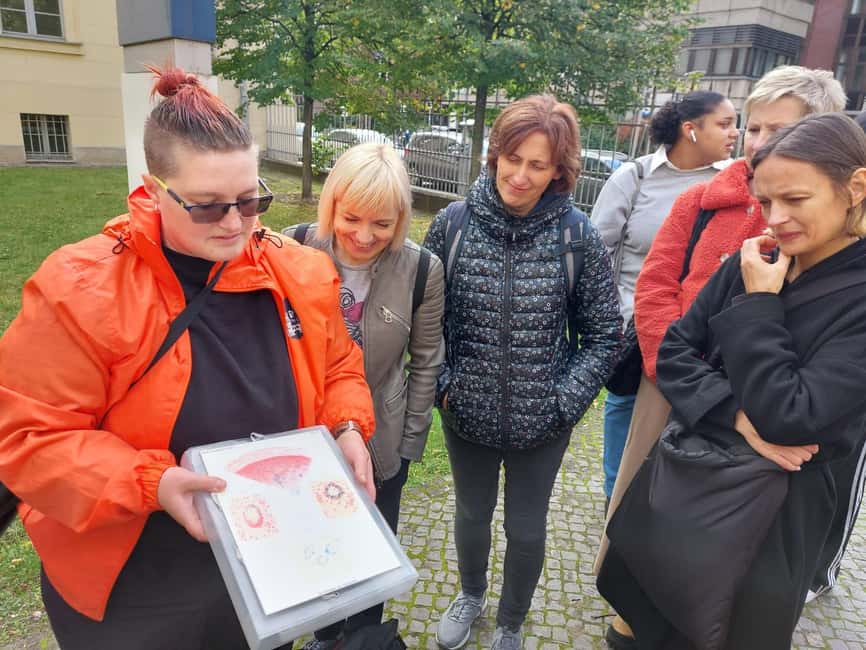
After the theatre, the route circles the historic neo-Gothic campus. The architecture gives the walk a strong visual thread, but the buildings are not treated as decoration alone. They become places where the guide explains how medicine developed and how Charité gained its reputation.
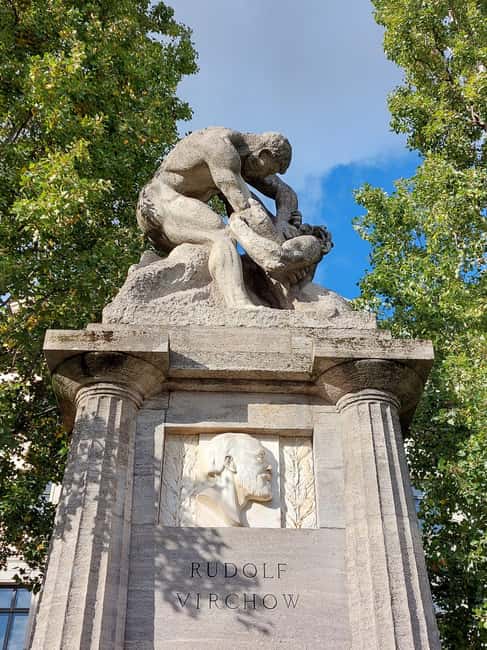
Robert Koch and Rudolf Virchow are two of the major names connected with this story. The tour uses their work to explain the kind of medical research that changed how doctors understood disease and the human body.
You should not expect entry into hospital wards, university rooms, or every historic building. Modern hospital and university activities continue on the site, and some areas are restricted. That limitation is worth knowing in advance. This is mainly an outdoor historical walk around an active medical institution, not a tour of working clinical spaces.
The route includes several guided stops of about 15 minutes each. That pacing should help you absorb the material without rushing from one building to another. Guides may also use extra material to illustrate parts of the story, which can help when the subject involves people, dates, or events that are difficult to picture from buildings alone.
More Walking Tours in Berlin
- Discover Berlin Half-Day Walking Tour
★ 5.0 · 9,624 reviews - Berlin: Third Reich and Cold War 2 Hour Walking Tour
★ 4.9 · 6,830 reviews - Berlin: Discover Berlin Walking Tour
★ 4.9 · 5,998 reviews - Berlin’s Best: 2 Hour Walking Tour Third Reich and the Cold War
★ 5.0 · 5,486 reviews
Rachel Hirsch and the slow change in medicine
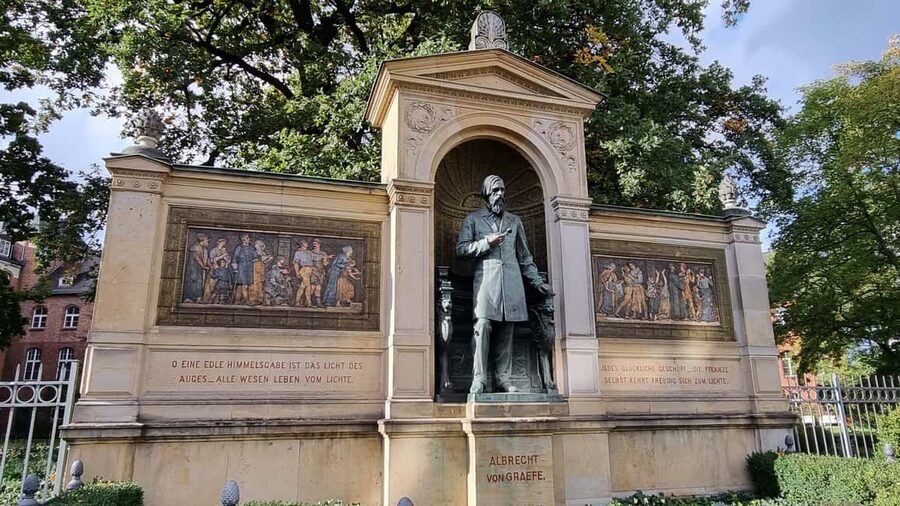
Charité’s story is also a story about who was allowed to practice medicine. Rachel Hirsch became the first woman to hold a medical professorship in Prussia in 1913.
Her appointment marked real progress, but it was not an easy victory. The resistance she faced within the institution shows that professional recognition did not arrive simply because social attitudes were changing. A woman could reach a senior position and still encounter hostility from the same institution that benefited from her work.
I like this part because it keeps the tour from becoming a parade of famous men. Medical progress depends on more than laboratory breakthroughs. It also depends on access to education, professional status, and the willingness of institutions to change.
For visitors interested in women’s history, social reform, or the development of professional medicine, Rachel Hirsch’s story may be one of the most memorable parts of the walk. It gives Charité a human dimension that goes beyond the usual list of scientific achievements.
The Nazi period and the collapse of medical ethics
The tour does not avoid Charité’s darkest chapter. Under the Nazi regime, medical ethics were pushed aside and racial hygiene was imposed with ruthless force.
Some doctors remained silent. Others actively helped organize the extermination of psychiatric patients. This material is difficult, but it belongs in any honest account of a major medical institution. A hospital can produce important discoveries and still become involved in terrible crimes when professional authority is placed above human dignity.
The tour’s value here comes from its direct connection between place and responsibility. You are not only hearing about Nazi policy in a general Berlin setting. You are learning how medical professionals and institutions responded when the state demanded racial persecution and murder.
I would think carefully about bringing younger children. There is no strict age restriction, but the recommended age is 14 and up because of the historical depth and serious subject matter. Teenagers with an interest in history, medicine, or the Second World War may find this section important, but parents should decide based on the child.
Charité behind the Iron Curtain
After the Nazi period, the tour follows Charité into East Germany. The German Democratic Republic took pride in the hospital’s medical achievements, using Charité as evidence of socialist progress.
At the same time, the institution reflected Berlin’s political division. Windows facing the capitalist West were bricked up. That detail is striking because it turns a small architectural change into a reminder of how the Cold War entered everyday life. A hospital was not isolated from politics. Even its windows could be treated as a security problem.
This part links medical history with Berlin’s larger 20th-century story. If you have already visited the Berlin Wall or learned about the division of the city, the Charité example adds another layer. If you are new to Berlin, it shows that the Cold War was not only about checkpoints and concrete barriers. It also shaped workplaces, buildings, research, and public institutions.
The walk does not treat Charité as purely heroic or purely shameful. It presents an institution that changed with the political systems around it, sometimes producing progress and sometimes failing badly.
What you can and cannot see on campus
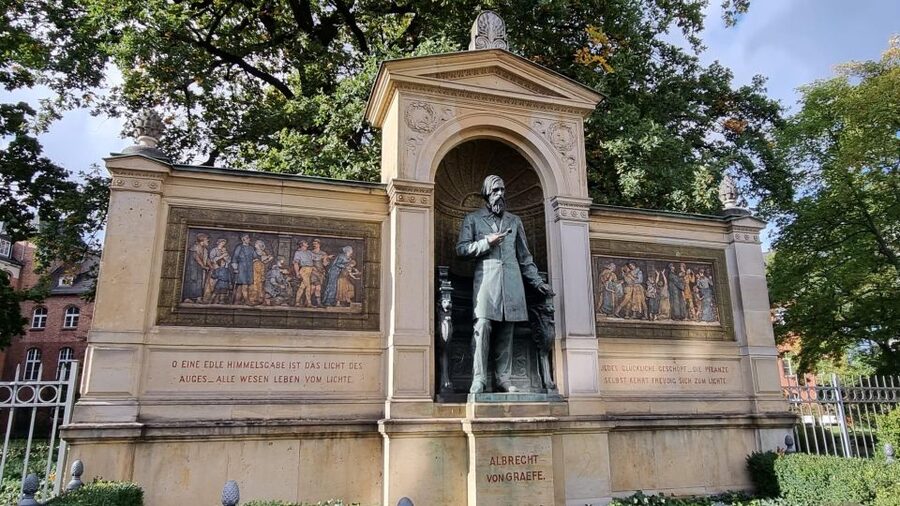
The route covers historical parts of the neo-Gothic campus, but it does not provide access to buildings where hospital or university work is taking place. Certain campus areas are also restricted for guided groups.
That boundary is practical, not a flaw. Charité remains a working medical center, and a walking tour cannot turn active clinical areas into museum rooms. You may be able to explore some areas independently after the guided portion, but access rules still apply.
I would choose this tour if you want context more than a long list of interiors. The guide supplies the links between buildings, people, and political events. If your priority is seeing many rooms or spending most of your time inside, you may find the format limited.
The route finishes at Alexanderufer, close to Berlin Central Station, according to the route information. Another meeting detail describes the activity as ending back at the meeting point, so I would confirm the exact end location when booking. Either way, the area is useful for continuing your day around central Berlin.
Is $28 a fair price?

At $28 per person, the price is reasonable for a two-hour guided walk with an expert local guide and free admission to the Veterinary Anatomy Theatre.
The value comes from the interpretation. You could walk around the Charité campus independently, but you would miss much of the connection between the plague house, early medical treatment, medical pioneers, Rachel Hirsch, Nazi crimes, and East German politics. The guide turns separate buildings into one story.
The included theatre visit also matters. You are not paying only for an outdoor orientation walk. You receive access to a distinctive historic academic building, although that visit can be canceled if the theatre is closed for an event or holiday.
The price feels strongest for visitors who already enjoy serious history and want a focused experience. It may feel less worthwhile if you prefer broad sightseeing, dislike standing outside, or want access to hospital interiors. Free cancellation up to 24 hours before the tour and the option to reserve now and pay later make it easier to fit into a changing Berlin schedule.
Who will enjoy this tour most?
I would recommend it to you if you like:
- Medical history and the origins of modern hospitals
- Berlin’s Nazi and Cold War past
- Architecture with a clear social purpose
- Stories about scientists and professional change
- Walking tours that deal honestly with difficult subjects
It is especially useful for a first visit because the route combines several Berlin themes in one compact experience. You get medicine, architecture, dictatorship, socialism, gender equality, and the city’s geography near Central Station.
You should think twice if you want a light or purely entertaining outing. The tour includes dark material, and the medical content may be too serious for small children. You also need to be comfortable walking and standing for approximately two hours.
Wheelchair access is listed as available, but the tour still takes place largely outdoors and includes a historic building visit. If you have specific mobility needs, it is sensible to confirm the current route and theatre access before booking.
Should you book the Charité Hospital History Walking Tour?
Book it if you want a focused look at Berlin through the story of one institution. The strongest parts are the Veterinary Anatomy Theatre, the accounts of Robert Koch and Rudolf Virchow, Rachel Hirsch’s professional breakthrough, and the frank treatment of Charité under Nazi and socialist rule.
I would give yourself warm clothing, sturdy shoes, and enough attention for serious material. Martina’s lively guiding style, along with the tour’s careful structure, can make the two hours pass quickly, but the experience still asks you to think.
Skip it if you need a mostly indoor tour, access to active hospital buildings, or a family outing for young children. For the right audience, though, $28 buys more than a campus walk. It gives you a sharp, human story about how medicine, politics, and Berlin changed together.
FAQ
How long does the Charité Hospital History Walking Tour last?
The tour lasts approximately two hours. You should be comfortable walking and standing for that length of time.
Where does the tour begin?
The tour begins at Robert-Koch-Platz, by the Robert Koch statue. Look for the guide holding an orange umbrella.
Where does the tour finish?
The route information gives Alexanderufer, 10117 Berlin, as the finish near Berlin Central Station. The meeting details also describe the activity as ending back at the meeting point, so confirm the exact end location when booking.
Is the Veterinary Anatomy Theatre included?
Yes. Admission to the Veterinary Anatomy Theatre is included in the tour price. The theatre may occasionally be closed because of internal events or public holidays.
Is the tour available in English?
Yes. The live tour is offered in English and German.
Is the tour suitable for children?
There is no strict age restriction, but the recommended age is 14 and up because of the serious historical content. All minors must be accompanied by an adult.
Just added around Berlin
- Private Walking Tour in Berlin: Hitler’s Germany & WWII★ 5.0 · 7 reviews
- The History of Berlin: WWII PRIVATE Walking Tour With Locals★ 5.0 · 209 reviews
- Berlin: Private Bike Tour of the Berlin Wall and Third Reich★ 5.0 · 23 reviews
- Private Berlin WWII and Cold War History Tour with Local Expert Guide★ 5.0 · 28 reviews
- Private Walking Tour Berlin 3 hours: Brandenburg, Historic Center★ 5.0 · 7 reviews
- Berlin: Guided Private Bike Tour to Explore the Highlights★ 5.0 · 12 reviews
- Berlin Photography Masterclass – Private Photography Lesson★ 4.5 · 23 reviews
- Group Driving Tour 1 to 6 people. Berlin Shore Excursion incl pick-up at Port★ 5.0 · 8 reviews
Historical Tours, compared.

City History Canal Sightseeing Tour on a Motorboat
Read our review →






Browse the lists this tour appears in