
Reviewed · HISTORICAL TOURS
Berlin: Historic Center Walking Tour with a Real Berliner
Berlin reveals itself one layer at a time. This two-hour walk through Mitte links the city’s oldest quarter with Museum Island, Unter den Linden, and Brandenburg Gate, giving you a useful first look at how a small Spree-side trading settlement became the capital of Prussia, divided Cold War city, and reunited Germany. I especially like the compact route and the guide’s broad story, which reaches well beyond the usual World War II focus.
I also like that the tour can help you get your bearings early in your stay, and the guide may still run the walk for a very small group, even a single booking. The main tradeoff is time: two hours is enough for an excellent outdoor introduction, but not enough to visit the museums or explore the interiors of every landmark.
In This Review
- Key points at a glance
- A useful first walk through Berlin’s Mitte
- Nikolaiviertel and the city’s earliest beginnings
- The Television Tower and Berlin’s changing skyline
- Walking beside the Spree to Museum Island
- Humboldt Forum and the reconstructed City Palace
- Berlin Cathedral, the Old Museum, and royal Berlin
- Unter den Linden, Berlin’s oldest grand boulevard
- Humboldt University and the cultural capital
- Brandenburg Gate and the meaning of reunification
- What the $44 price delivers
- Who will enjoy this Berlin walking tour?
- Practical advice before you go
- Is the Berlin Historic Center Walking Tour worth booking?
- FAQ
- Where does the Berlin historic center walking tour start?
- Where does the tour finish?
- How long does the walking tour last?
- What language is the tour offered in?
- What sights are included on the route?
- Are museum entrance fees included?
- Is hotel pickup included?
- Does the tour run in bad weather?
- Is the walking tour wheelchair accessible?
Key points at a glance
- Starts at Nikolaikirche Museum: Begin in Berlin’s oldest historic quarter, Nikolaiviertel, near the origins of the city.
- Covers Berlin’s central icons: See the Television Tower, Museum Island, Berlin Cathedral, Humboldt Forum, Unter den Linden, and Brandenburg Gate.
- A city story beyond wartime Berlin: The route explains Berlin under Prussian kings, imperial rule, division, and reunification.
- Guide-led and in English: The activity lists a live English-speaking guide, with a professional city guide leading the walk.
- Good first-day choice: The route teaches you how central Berlin fits together and can make later sightseeing easier.
- Practical outdoor format: Wear comfortable shoes and clothing, since the tour runs in all weather and on public holidays.
A useful first walk through Berlin’s Mitte
At $44 per person, this is not Berlin’s cheapest way to see the center. It can still be good value if you want context rather than a checklist of photographs. The route brings together several major sights that are spread across central Berlin, while a local guide explains how they connect.
That connection matters. Berlin’s landmarks are often impressive but can feel disconnected when seen on your own. One building recalls Prussian power, another marks royal ambition, and another carries the weight of division and reunification. A good guide turns those separate stops into one clear story.
The walk is led by a professional city guide from You In Berlin. The activity is described as multilingual, but the specific departure information lists English as the tour language, so you should confirm your preferred language when choosing a time. The guide meets you outside the main entrance of the Nikolaikirche Museum, carrying a Get Your Guide, You in Berlin flag.
The route is mostly about outdoor viewing and explanation. You will not be paying for museum admissions, meals, or hotel transport. That keeps the format simple, but you should see the $44 as payment for the guide’s time, local interpretation, and efficient route rather than for entry tickets.
More History Tours in Berlin
- Berlin: Natural History Museum Entrance Ticket
★ 4.6 · 3,382 reviews - Berlin: World Heritage Cruise to Potsdam
★ 4.5 · 1,435 reviews - Berlin Historical Highlights Walking Tour
★ 4.9 · 657 reviews
Nikolaiviertel and the city’s earliest beginnings
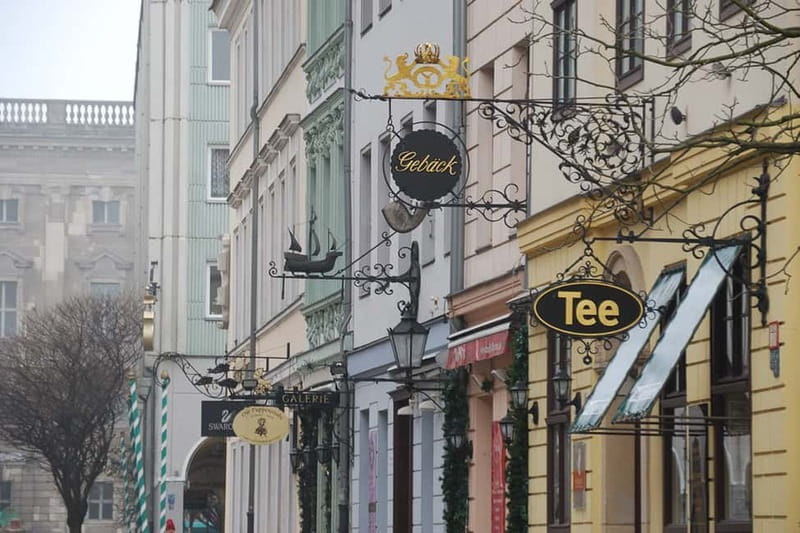
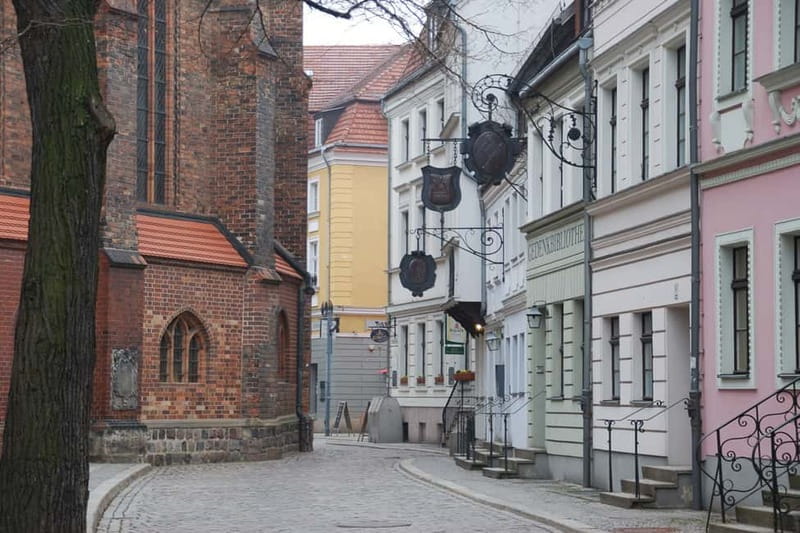
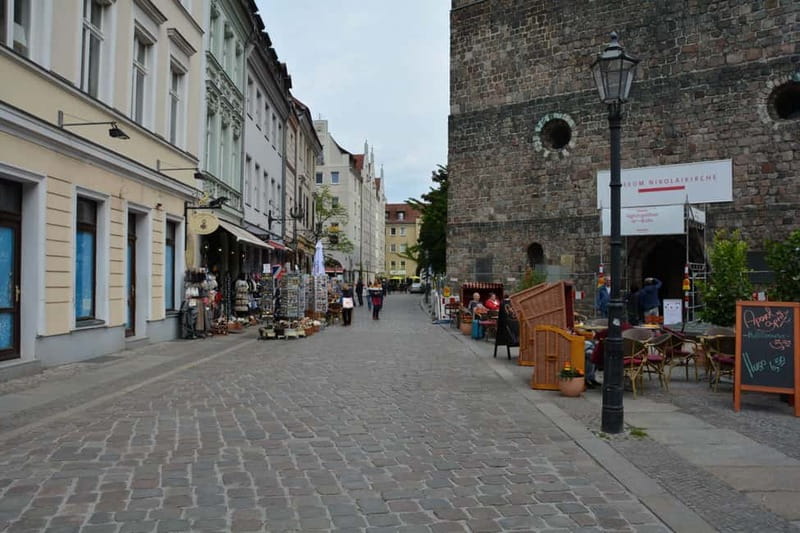
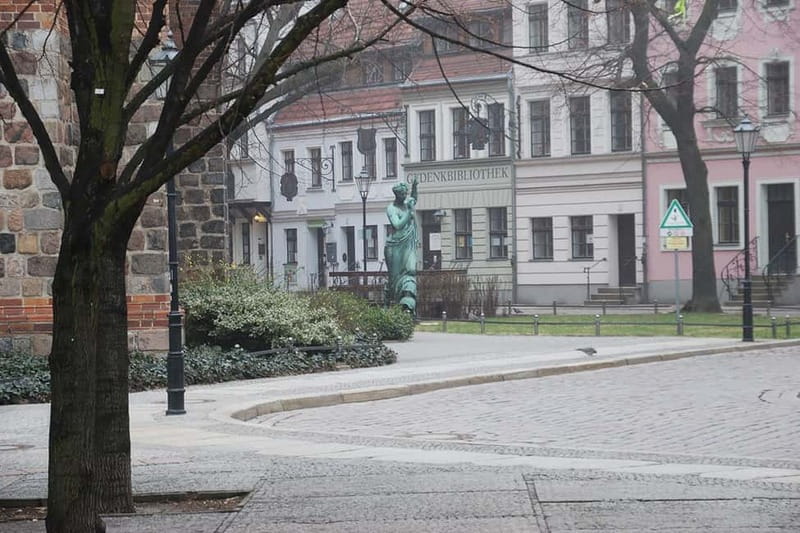
The walk begins at the St. Nicholas Church Museum, in Nikolaiviertel. This is a fitting starting point because the area is tied to Berlin’s earliest development beside the River Spree.
The guide introduces Berlin not as a city that appeared fully formed, but as a small trading settlement that grew into a seat of royal power and later a major European capital. That opening gives you a helpful scale for the rest of the walk. Berlin’s central monuments can feel grand and formal, yet the city began with a much more modest purpose.
Nikolaiviertel is also a good place to begin because it gives the tour a human-sized setting before the route reaches the large ceremonial spaces around Museum Island and Unter den Linden. You can ask questions early, get used to the pace, and learn the basic shape of central Berlin.
I would arrive a little early. The meeting point is specifically in front of the museum’s main entrance, not simply somewhere in the neighborhood. Look for the tour flag and allow time to identify the guide before the walk begins.
The Television Tower and Berlin’s changing skyline
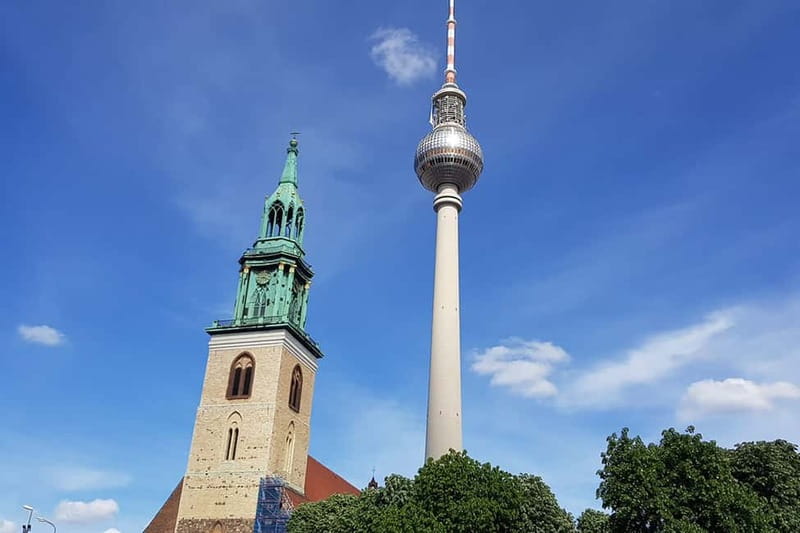
From the old quarter, the route takes in Berlin’s Television Tower, the city’s highest building. The tower is a major visual marker in Mitte, and it helps you understand how the modern city rises directly beside its historic center.
The contrast is useful. Near Nikolaiviertel, the discussion concerns Berlin’s beginnings and medieval roots. The Television Tower points to a much later period and to the city’s divided political identity. Its location and scale make it impossible to ignore, and the guide uses it as part of the wider story of Berlin’s development.
You should not expect to go up the tower during this walking tour. It is a sightseeing stop, not an included observation-deck visit. Still, seeing it in relation to the Spree, Museum Island, and the older buildings gives you a better sense of Berlin than viewing it from a single platform.
Walking beside the Spree to Museum Island
The route follows the Spree toward Museum Island, one of Berlin’s most important cultural areas. Even if you do not enter a museum, this stretch gives you a strong outdoor introduction to the city’s grand central district.
Museum Island is home to several major institutions, but the walk focuses on the buildings and their place in Berlin’s story. The guide points out the Berlin Cathedral, the Old Museum, and the Humboldt Forum, helping you sort out the buildings as you move through the area.
This is one of the tour’s strongest sections because the sights are close together but not interchangeable. The cathedral has a powerful presence, while the Old Museum reflects the city’s royal and classical ambitions. The Humboldt Forum brings a reconstructed palace facade into the middle of modern Berlin.
More Walking Tours in Berlin
- Discover Berlin Half-Day Walking Tour
★ 5.0 · 9,624 reviews - Berlin: Third Reich and Cold War 2 Hour Walking Tour
★ 4.9 · 6,830 reviews - Berlin: Discover Berlin Walking Tour
★ 4.9 · 5,998 reviews - Berlin’s Best: 2 Hour Walking Tour Third Reich and the Cold War
★ 5.0 · 5,486 reviews
Humboldt Forum and the reconstructed City Palace
The Humboldt Forum occupies the site associated with Berlin’s former City Palace. Its reconstructed exterior is one of the most debated and visually striking features in the historic center.
A guide is especially useful here because the building is not just an old palace preserved intact. Its reconstruction raises questions about memory, architecture, monarchy, war damage, political change, and the way a city decides what to rebuild. The walk gives you a chance to understand why the building looks the way it does before you move on.
You should keep your expectations clear. The tour includes an explanation and an exterior visit, not a full interior tour of the Humboldt Forum. If you are interested in its exhibitions, you will need separate time and admission.
Berlin Cathedral, the Old Museum, and royal Berlin
Across the Palace Bridge, the walk enters the historical center associated with kings and emperors. The bridge itself provides a strong transition from the riverfront and Museum Island toward the formal heart of old Berlin.
Berlin Cathedral is one of the most recognizable buildings on the route. Its size and decoration reflect the confidence of imperial Berlin, and its position beside the Spree makes it an easy landmark for orientation. The Old Museum adds another piece to the same story, showing how rulers used architecture and culture to present Berlin as a capital worthy of Europe.
I like this part of the walk because it gives you more than isolated facts. You begin to see how the palace, cathedral, museums, bridge, and boulevard formed a carefully planned center of power. The buildings are close enough to compare, yet each represents a different part of Berlin’s public image.
There is a practical limitation. The route moves at walking-tour pace, so you will mainly see the exteriors. If you want time for photographs, questions, or a closer look at architectural details, you may need to return later on your own.
Unter den Linden, Berlin’s oldest grand boulevard
The walk continues along Unter den Linden, described as Berlin’s oldest boulevard. This broad avenue connects several of the city’s most important civic and royal landmarks.
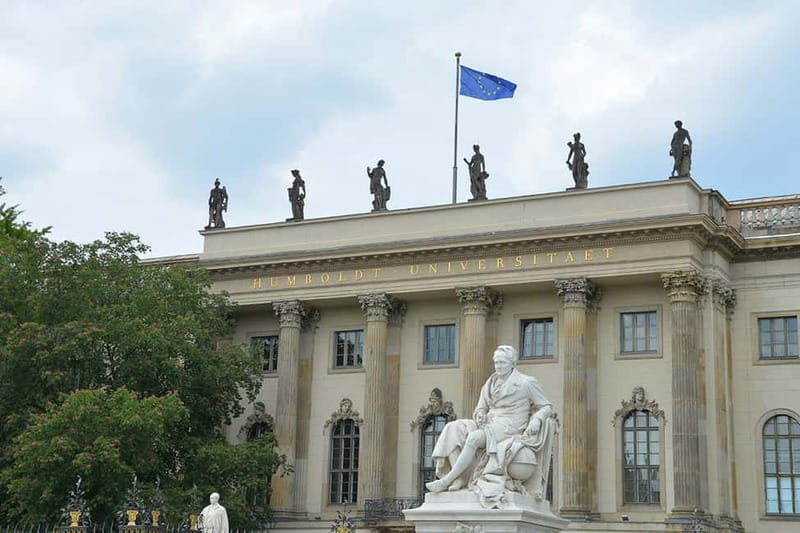
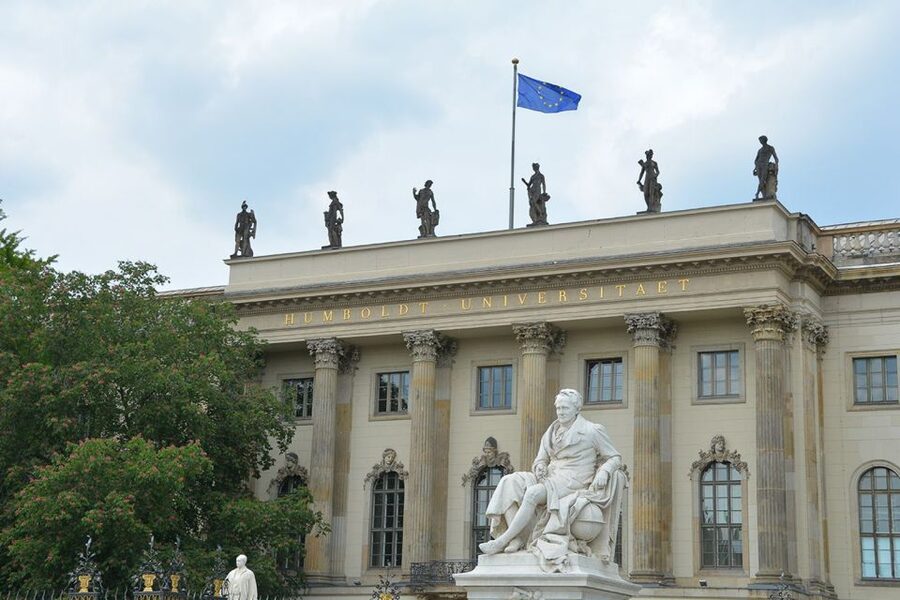
Here you see the Equestrian Statue of Frederick the Great, the State Opera, Humboldt University, and St. Hedwig’s Cathedral. The sequence is valuable because it shows how Berlin’s rulers, scholars, musicians, and religious institutions shared one ceremonial axis.
Frederick the Great is central to the story of Prussian Berlin. The statue gives the guide a natural opening to explain the king’s role and the growth of Prussia’s influence. The State Opera and Humboldt University add cultural and intellectual weight, while St. Hedwig’s Cathedral shows that Berlin’s historic center was not shaped by one institution alone.
This section is also where the tour’s broad approach pays off. The focus is not limited to one era. You hear about the city as a royal residence, a Prussian capital, an imperial center, and a modern German capital. That range was one of the most praised features of the experience, with Carlo, also referred to by some participants as Karlo or Carlos, receiving particular credit for clear explanations and well-chosen stories.
Humboldt University and the cultural capital
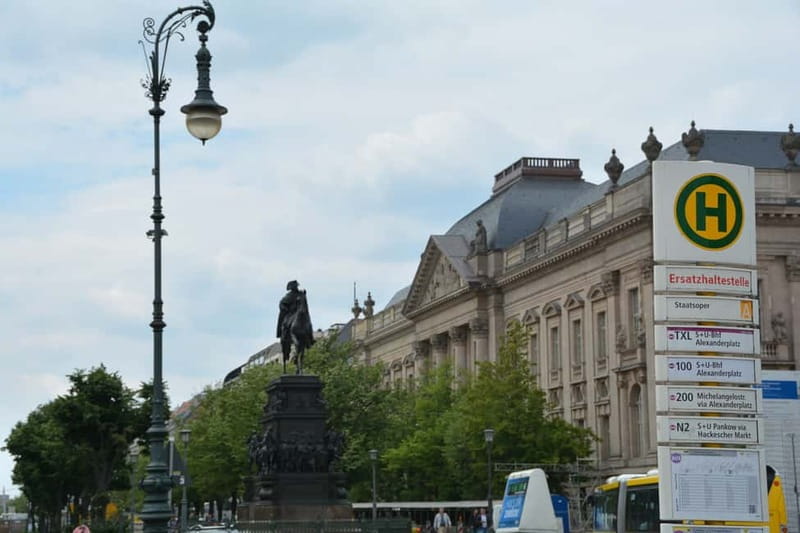
Humboldt University is more than another attractive building along Unter den Linden. It represents Berlin’s role as a center of learning and public thought.
The guide places the university within the city’s wider cultural development. Along this one route, Berlin’s identity comes into focus as a mix of political power, scholarship, music, religion, museums, and public ceremony.
You may find this especially helpful if you are visiting Berlin for the first time and want more than a World War II overview. One particularly strong feature of the guiding is the attention to the full sweep of Berlin’s story, from its early beginnings through Prussian and imperial rule, the city’s division, and reunification.
Brandenburg Gate and the meaning of reunification
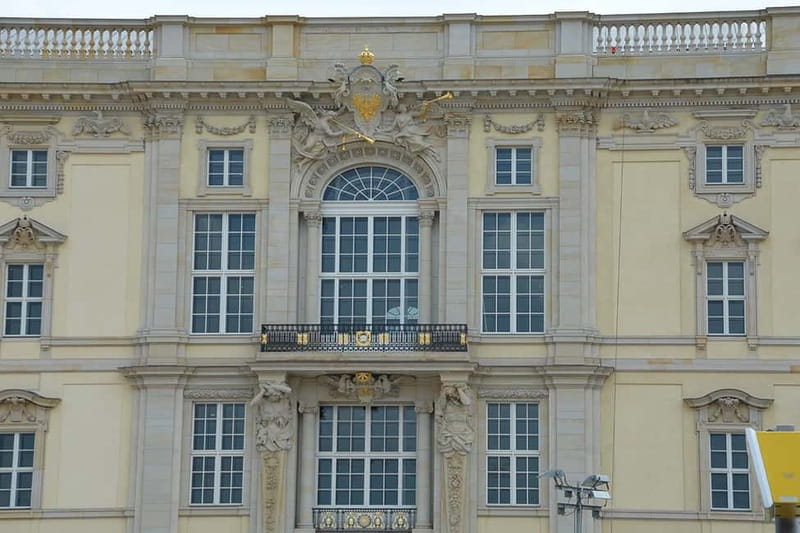
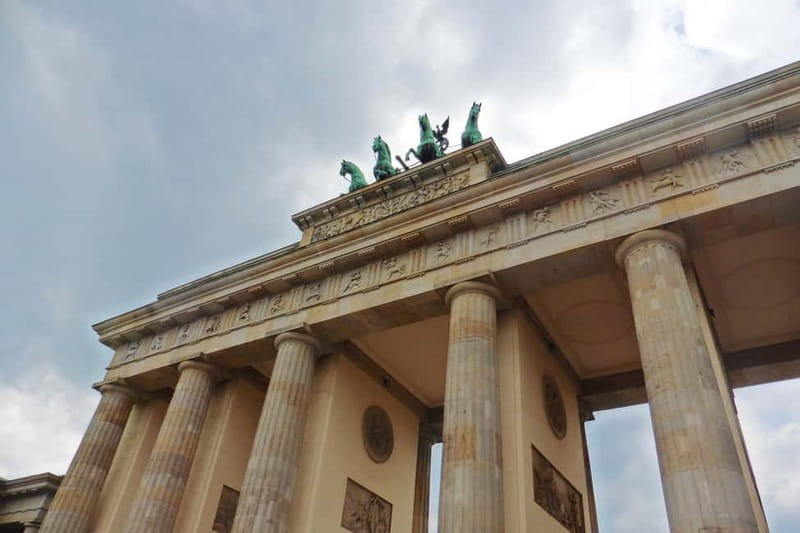
The walk finishes at Brandenburg Gate, Berlin’s most famous symbol. The gate is visually familiar, but its importance changes once you understand how it was used and viewed during the city’s division.
The guide explains the landmark before, during, and after Berlin was split. That context helps you understand why Brandenburg Gate became such a powerful focus for reunification in 1990. It was not simply a handsome neoclassical gateway. It became a marker of separation, a restricted and politically charged site during the division, and then a symbol of the country coming back together.
This is a strong ending because the route has gradually moved from Berlin’s first settlement to the city’s royal center and finally to a landmark tied to modern German unity. You finish with a clear sense of how the city’s past remains visible in its streets.
The stated finish is Brandenburg Gate. The meeting instructions also refer to the activity ending back at the meeting point, so check the exact route details for your selected departure. In practical terms, Brandenburg Gate is well placed for continuing your sightseeing in central Berlin.
What the $44 price delivers
The $44 price includes the professional guide and the walking tour. It does not include hotel pickup, food, drinks, or entrance fees.
I think the value is strongest for a first visit. In two hours, you cover a large part of Mitte and receive a framework that can help you choose where to spend more time later. If you already know Berlin’s center well, the price may feel less attractive because the tour does not include interiors or transportation.
The group size can also affect the value. The experience may operate with a very small group, and Carlo has continued with the full walk even when only one person booked. That is a real benefit if you dislike cancellations or prefer a more personal question-and-answer format.
Several people praised Carlo’s friendly manner, clear explanations, and willingness to help with practical orientation. One person noted that he even walked along to show the way to a bus connection after the tour. That sort of small assistance can be useful on your first day, when Berlin’s streets and transit map are still new.
Who will enjoy this Berlin walking tour?
I would recommend it most strongly to first-time visitors, couples, solo visitors, and anyone who wants a quick introduction before visiting museums or memorials independently.
It also suits people who want Berlin explained as a whole. If every city tour you have taken has focused only on the Nazi period or the Berlin Wall, this route offers a wider view that includes medieval origins, Prussian kings, imperial culture, architecture, education, and reunification.
Families may appreciate the two-hour length, although the tour is still a steady outdoor walk. Anyone with mobility concerns should note that the activity is listed as wheelchair accessible, but comfortable clothing and shoes remain important for everyone.
This is less suitable if you want a museum experience, a food stop, hotel pickup, or a specialized tour focused only on the Cold War. It is also not the best choice for a leisurely architectural photography session, since the guide needs to keep the route moving.
Practical advice before you go
Wear comfortable shoes. The route connects several parts of Mitte on foot, and the tour runs in all weather conditions and on public holidays.
Bring clothing suited to the forecast, since the experience takes place outdoors. Food and drinks are not included, so plan your own refreshment before or after the walk.
The tour lasts two hours, with starting times depending on availability. I would choose an early departure if you want to use the rest of the day for Museum Island or the area around Brandenburg Gate. An evening departure can also work well as a first look at the center, but the important point is to treat this as an orientation walk, not a full day of sightseeing.
The listed live language is English. Although the guide is described as multilingual, confirm the language offered at your chosen time if English is not your preference.
Free cancellation is available up to 24 hours before the start for a full refund, and you can reserve now and pay later. Those terms are useful if your Berlin schedule is still changing.
Is the Berlin Historic Center Walking Tour worth booking?
Book this tour if you want a concise, guided introduction to Berlin’s central story, especially at the beginning of your stay. The route is well chosen, the sights are major ones, and the strongest guiding appears to come from Carlo’s clear explanations, warm approach, and willingness to answer questions.
At $44, the tour makes sense when you value interpretation and orientation more than admission tickets. Skip it if you prefer to move at your own pace, enter museums during the walk, or focus on one narrow period of Berlin’s past.
For a first visit, I would consider it a useful opening chapter. You see the city’s key landmarks, learn how they fit together, and finish at Brandenburg Gate with a better grasp of why Berlin feels both old and startlingly modern.
FAQ
Where does the Berlin historic center walking tour start?
The tour starts in front of the main entrance of the Nikolaikirche Museum, also called St. Nicholas’ Church Museum.
Where does the tour finish?
The itinerary finishes at Brandenburg Gate. The meeting instructions also refer to ending back at the meeting point, so check the exact details for your selected departure.
How long does the walking tour last?
The tour lasts two hours.
What language is the tour offered in?
The activity lists a live English-speaking guide. The guide is also described as multilingual, so confirm the language available when selecting your time.
What sights are included on the route?
The route includes Nikolaiviertel, the Television Tower, Museum Island, the Humboldt Forum, Berlin Cathedral, the Old Museum, Humboldt University, the State Opera, St. Hedwig’s Cathedral, Unter den Linden, and Brandenburg Gate.
Are museum entrance fees included?
No. The price includes the professional guide and walking tour, but not entrance fees.
Is hotel pickup included?
No. Hotel pickup and drop-off are not included.
Does the tour run in bad weather?
Yes. The tour takes place in all weather conditions and on public holidays.
Is the walking tour wheelchair accessible?
Yes, the activity is listed as wheelchair accessible. Comfortable shoes and clothing are recommended.
Just added around Berlin
- Private Walking Tour in Berlin: Hitler’s Germany & WWII★ 5.0 · 7 reviews
- The History of Berlin: WWII PRIVATE Walking Tour With Locals★ 5.0 · 209 reviews
- Private Berlin WWII and Cold War History Tour with Local Expert Guide★ 5.0 · 28 reviews
- Private Walking Tour Berlin 3 hours: Brandenburg, Historic Center★ 5.0 · 7 reviews
- Berlin: Private Bike Tour of the Berlin Wall and Third Reich★ 5.0 · 23 reviews
- Berlin: Guided Private Bike Tour to Explore the Highlights★ 5.0 · 12 reviews
- Berlin Photography Masterclass – Private Photography Lesson★ 4.5 · 23 reviews
- Group Driving Tour 1 to 6 people. Berlin Shore Excursion incl pick-up at Port★ 5.0 · 8 reviews
Historical Tours, compared.
City History Canal Sightseeing Tour on a Motorboat
Read our review →
Browse the lists this tour appears in