
Reviewed · HISTORICAL TOURS
Berlin: Historic Jewish walking tour through the city center
Berlin’s fashion story has a darker turn. This one-hour walk through the city center follows the former Jewish economic district, from Prussian-era commerce and 1920s glamour to Nazi persecution, the Wall years, and Berlin today. I like the tour’s specific focus on the Konfektion industry, a major force in prewar Berlin that is easy to miss among the city’s better-known monuments. I also like the compact route, which gives you a useful history lesson without taking half a day.
The main consideration is its short length. You get only about an hour, with the route centered on Hausvogteiplatz, Werderscher Markt, and Jägerstraße. That makes it a good introduction, but not a full survey of Jewish Berlin. The tour is also donation-based, so you should contact the provider to arrange the booking rather than treat the listed $1.70 price as a standard fixed admission.
In This Review
- Key points to know before you book
- Why the Konfektion story matters in Berlin
- Starting at Hausvogteiplatz
- What you learn at Hausvogteiplatz
- Werderscher Markt and the fifteen-minute connection
- Jägerstraße and the return to the square
- From Prussian commerce to the Roaring Twenties
- What the reviews reveal about the experience
- Price, donation booking, and overall value
- Who should take this walk?
- Practical tips for a smoother visit
- Should you book the Berlin Jewish walking tour?
- FAQ
- Where does the tour begin?
- How can I identify the guide?
- Where does the tour finish?
- How long does the walking tour last?
- What language is the tour conducted in?
- Is the tour wheelchair accessible?
- Are young children allowed to join?
- What locations are included?
- Can I cancel or pay later?
Key points to know before you book
- The story centers on Berlin’s lost Jewish tailoring industry, known as the Konfektion industry, once an economic powerhouse before the Second World War.
- Hausvogteiplatz is both the meeting point and main stop, making the route easy to follow and simple to fit into a day of sightseeing.
- The one-hour walk covers three central locations, with about 30 minutes at Hausvogteiplatz and 15 minutes each at Werderscher Markt and Jägerstraße.
- The tour connects fashion, economics, politics, and persecution, showing how extreme political change affected an entire industry and community.
- English is the tour language, and the activity is wheelchair accessible.
- The tour has a 4.4 rating from five submitted ratings, with praise focused on gaining new insight into Berlin and learning about its lost Jewish tailoring trade.
Why the Konfektion story matters in Berlin
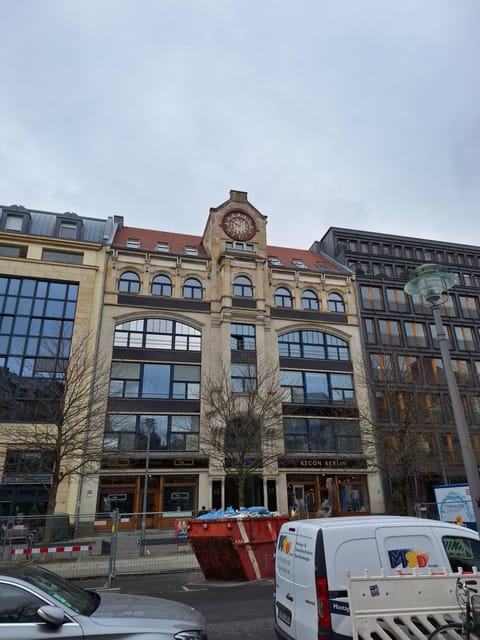
Many first-time visits to Berlin focus on the Wall, the Brandenburg Gate, Nazi-era memorials, or the museums on Museum Island. Those places matter, but this walk adds a less familiar piece of the city’s past: the Jewish businesses and workers who helped shape Berlin’s clothing trade.
The term Konfektion refers to the production and sale of ready-made clothing. Instead of every garment being made for one customer, clothing could be produced in larger numbers and sold through shops and commercial networks. In Berlin, this industry became a major part of the city’s economic life before the Second World War.
That focus gives the tour a practical angle. You are not only hearing about individual buildings or famous people. You are learning how a community worked, earned money, built businesses, and helped create the city’s reputation for fashion and commerce. I find that kind of history especially useful because it explains Berlin as a functioning city, not just as a collection of political landmarks.
The story also shows how quickly political extremism can damage an economy. When Jewish citizens were persecuted, the loss was not limited to homes and families. Businesses, skills, supply networks, shops, and entire professional sectors were destroyed or forced out. This tour uses the tailoring industry to show that wider damage in a direct way.
More City Tours in Berlin
- Berlin: 1-Hour City Tour by Boat with Guaranteed Seating
★ 4.3 · 16,993 reviews - Berlin: City Sightseeing Hop-On Hop-Off Bus Tour
★ 4.1 · 4,233 reviews - Potsdam: City and Castles Tour
★ 4.7 · 3,721 reviews
Starting at Hausvogteiplatz
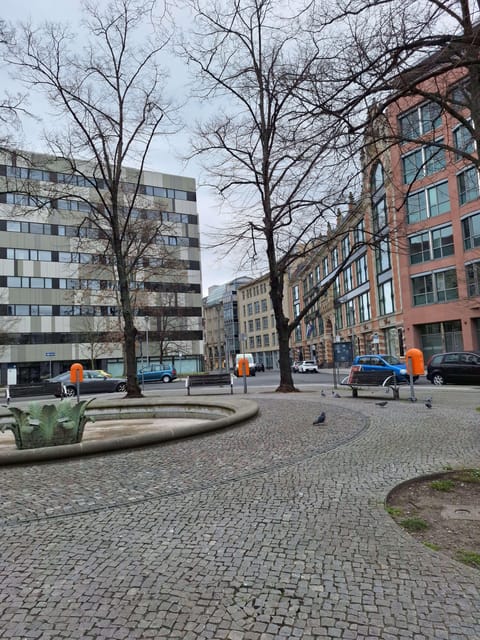
Meet your guide at the fountain in Hausvogteiplatz, close to the U2 station. The guide will carry a white side bag, which should make the meeting point easier to identify in a busy central area.
Hausvogteiplatz is the main stop and receives around 30 minutes of guided attention. That is half the tour, so you can expect the guide to establish the main story here before connecting it to the next two locations. The square also gives you a convenient starting point if you are already exploring central Berlin by public transportation.
I like the choice of meeting point because it keeps the walk focused. You do not spend precious time marching from a distant station to the subject of the tour. If you are planning your day, you can place this activity between other central sights, though you should allow a little extra time to locate the fountain and confirm your arrival.
The tour includes references to historic buildings and areas around the city center. Since the supplied details do not name every building you will enter or view, think of this as a guided outdoor history walk rather than a museum visit. The value comes from the connections your guide makes between the streets, the district, and the economic story.
What you learn at Hausvogteiplatz
The first section introduces Berlin during the Prussian Empire, the years of the Weimar-era Roaring Twenties, the period before the Wall fell, and the city’s current development. That broad time span is ambitious for 30 minutes, but it gives the walk a clear framework.
The most important thread is the rise of Jewish life and business in Berlin. You will hear about a population that developed and prospered, as well as the brutal political forces that destroyed much of that progress. The tour also acknowledges that some people survived, often through luck or extraordinary circumstances. That balance matters. It avoids reducing Jewish Berlin to a single chapter of suffering and instead presents a community with work, ambition, style, and ordinary urban life before persecution changed everything.
I especially like the link between clothing and social change. Fashion can seem lighthearted, even glamorous, but the industry behind it involves labor, trade, money, and status. By following the tailoring trade, you get a sharper idea of how Berlin’s economic life once functioned and how political extremism attacked it.
The guide also connects the district’s past with changes after the fall of the Wall. This is useful because Berlin’s central neighborhoods have not stayed frozen in one period. You will hear how the area developed from the Prussian era through the 1920s, the division of the city, reunification, and the present day.
Werderscher Markt and the fifteen-minute connection
The route continues to Werderscher Markt for about 15 minutes. This is a shorter stop, so expect a focused explanation rather than a long pause. The point is to connect another central setting with the broader story of Jewish commerce, urban change, and Berlin’s shifting identity.
A stop like this can be more valuable with a guide than on your own. Without context, you might see an attractive or historic area and move on without knowing how it relates to the city’s former economic center. The guide’s job is to make that connection clear.
The short time also keeps the tour moving. You are not standing in one place for the entire hour, and the route gives you several views of central Berlin. I would treat Werderscher Markt as part of the story’s middle chapter, not as a separate attraction with a long list of sights.
Because the activity is outdoors and information-led, comfortable walking shoes are sensible. The tour is wheelchair accessible, though the supplied details do not specify the exact surface conditions or facilities along the route. If you need precise access information, contact the provider before booking.
More History Tours in Berlin
- Berlin: Natural History Museum Entrance Ticket
★ 4.6 · 3,382 reviews - Berlin: World Heritage Cruise to Potsdam
★ 4.5 · 1,435 reviews - Berlin Historical Highlights Walking Tour
★ 4.9 · 657 reviews - Berlin Private Complete History All Day Walking Tour
★ 5.0 · 474 reviews
Jägerstraße and the return to the square
The final stop is Jägerstraße, where you spend another 15 minutes. Like Werderscher Markt, this is a brief visit, but it helps complete the route through the former commercial district.
The tour returns to Hausvogteiplatz, so you do not need to arrange transportation from a different end point. That is helpful if you have a timed museum entry, a restaurant reservation, or a train connection later in the day. Still, I would avoid scheduling anything immediately afterward. The listed duration is one hour, and meeting a guide, gathering a group, or taking a few extra minutes at the end can add a little unpredictability.
The return also gives the walk a tidy shape. You begin with the central story, move through two related locations, then finish where you started. For a first look at this part of Berlin, that simple structure works well.
From Prussian commerce to the Roaring Twenties
The historical range is one of the strongest features of the experience. Berlin under the Prussian Empire, the glamour of the 1920s, the years before the Wall fell, and the city today each represent a different stage in the life of the district.
The mention of the Roaring Twenties is particularly useful. It places the tailoring industry within a period often remembered for nightlife and modern culture, but the tour shows that glamour had an economic foundation. Clothing production, fashion businesses, and Jewish entrepreneurship helped give Berlin its commercial energy.
That story becomes more serious as the tour moves toward the Nazi period and the Second World War. The activity is not simply a fashion walk. It examines how persecution dismantled a sector that had once helped power the city. For me, this is the tour’s clearest educational benefit: you see that political violence changes streets and businesses as well as laws and lives.
The later references to the Wall and reunification add another layer. Berlin’s center was shaped by division, and its current appearance is the result of several different political periods. You may come away with a better sense of why this part of the city feels historically complex even when the streets look modern.
What the reviews reveal about the experience
The five submitted ratings produce an overall score of 4.4 out of 5. The strongest praise is very specific: people valued gaining new insight into Berlin and learning about the lost Jewish tailoring industry in the city center.
That is a good sign for anyone who already knows the famous Berlin sights. You are unlikely to get a basic checklist of monuments here. Instead, the tour aims to add information you would probably miss while walking the area alone.
One comment praised the experience for offering insights that the participant would not have gained without the tour. Another called the history of Berlin’s lost Jewish tailoring industry fascinating and strongly recommended the walk. I would place the most weight on those comments because they match the activity’s stated purpose: interpretation, context, and a less familiar subject.
The small number of ratings also matters. A 4.4 score from five ratings gives you a useful early signal, but it is not a large sample. I would book it for the subject and format rather than assuming the score guarantees a perfect experience for every person.
Price, donation booking, and overall value
The listed price is $1.70 per person, but the tour information also says that bookings work on a donation basis and asks you to reach out to arrange one. That makes the price slightly unusual. Before you commit, confirm how the donation is handled and what amount is expected or suggested.
Even at a higher voluntary contribution, the format can offer good value. You receive a live English guide, a one-hour city-center route, historical interpretation, a map, and a list of activities in order. You are paying for the guide’s explanation of places that might otherwise look like ordinary streets and squares.
The value is strongest if you care about social and economic history. If you want a long walking route, inside visits, or a large collection of famous monuments, this will feel limited. If you want a compact introduction to Jewish Berlin and the city’s former clothing trade, the short format keeps the cost and time commitment low.
You must verify your arrival by email or phone, including calls, messages, or WhatsApp. That is a small but important step. Do not assume that simply reserving online completes everything. The activity allows free cancellation up to 24 hours in advance for a full refund, and you can reserve now and pay later, which keeps the booking flexible.
Who should take this walk?
I would recommend it to visitors who want more than Berlin’s standard headline sights. It suits history-minded adults, students, repeat visitors, and anyone interested in Jewish life, fashion, business, or the way political events reshape cities.
It also works well for people with limited time. One hour is short enough to fit into a busy itinerary, and the route begins and ends at the same central square. English speakers can join without a language barrier, and children under six are not suited to the activity.
Families with older children should consider the subject matter carefully. The tour deals with persecution, destroyed businesses, and survival, so it is serious even though the clothing angle may sound lighter at first. The information provided does not give a recommended upper age or a detailed child policy beyond the minimum age.
I would be less likely to choose this as my only Jewish-history experience in Berlin. Its compact route offers an introduction, not an exhaustive account. Pair it with a museum or memorial visit if you want a longer study of the city’s Jewish past, but select that additional activity separately since it is not included here.
Practical tips for a smoother visit
Confirm your arrival with the provider by email, telephone, text, or WhatsApp. This is especially important because the tour is arranged on a donation basis.
Use the U2 station near Hausvogteiplatz and look for the fountain. The white side bag is the guide’s identifying detail. I would arrive a few minutes early so you can find the correct part of the square without rushing.
Keep the walk’s one-hour length in mind when planning the rest of your day. The scheduled route is:
- Hausvogteiplatz, about 30 minutes
- Werderscher Markt, about 15 minutes
- Jägerstraße, about 15 minutes
- Return to Hausvogteiplatz
The activity includes a map and an ordered list of activities. Those materials can help you remember the route afterward and may also make the tour easier to follow as the guide moves between locations.
The tour is wheelchair accessible, but the available details do not explain every street surface or access point. If you have specific mobility needs, ask the provider for current route information before you reserve.
Should you book the Berlin Jewish walking tour?
Book it if you want a short, focused lesson about Berlin’s former Jewish tailoring industry and the economic life behind the city’s fashion reputation. The strongest parts are the unusual subject, the connection between business and political extremism, and the chance to see how the district changed from the Prussian era to modern Berlin.
Skip it if you need a long tour, interior visits, or a broad survey of every major Jewish site in the capital. At about one hour, this is a compact introduction. For the listed low price or a reasonable donation, I think it offers worthwhile context, especially for repeat visitors who have already seen Berlin’s major monuments and want a fresh way to read the city center.
FAQ
Where does the tour begin?
The tour begins at Hausvogteiplatz square, near the fountain and close to the U2 train station.
How can I identify the guide?
The guide will carry a white side bag.
Where does the tour finish?
The activity ends back at Hausvogteiplatz, the starting point.
How long does the walking tour last?
The tour lasts one hour. Starting times depend on availability.
What language is the tour conducted in?
The live tour guide speaks English, and English is the listed tour language.
Is the tour wheelchair accessible?
Yes, the activity is listed as wheelchair accessible.
Are young children allowed to join?
The tour is not suitable for children under six years old.
What locations are included?
The route includes Hausvogteiplatz, Werderscher Markt, and Jägerstraße, followed by a return to Hausvogteiplatz.
Can I cancel or pay later?
You can cancel up to 24 hours in advance for a full refund. You can also reserve your place and pay later, but you must verify your arrival by email or phone, including calls, messages, or WhatsApp.
More Walking Tours in Berlin
- Discover Berlin Half-Day Walking Tour
★ 5.0 · 9,624 reviews - Berlin: Third Reich and Cold War 2 Hour Walking Tour
★ 4.9 · 6,830 reviews - Berlin: Discover Berlin Walking Tour
★ 4.9 · 5,998 reviews - Berlin’s Best: 2 Hour Walking Tour Third Reich and the Cold War
★ 5.0 · 5,486 reviews
Just added around Berlin
- Private Walking Tour in Berlin: Hitler’s Germany & WWII★ 5.0 · 7 reviews
- The History of Berlin: WWII PRIVATE Walking Tour With Locals★ 5.0 · 209 reviews
- Private Berlin WWII and Cold War History Tour with Local Expert Guide★ 5.0 · 28 reviews
- Private Walking Tour Berlin 3 hours: Brandenburg, Historic Center★ 5.0 · 7 reviews
- Berlin: Private Bike Tour of the Berlin Wall and Third Reich★ 5.0 · 23 reviews
- Berlin: Guided Private Bike Tour to Explore the Highlights★ 5.0 · 12 reviews
- Berlin Photography Masterclass – Private Photography Lesson★ 4.5 · 23 reviews
- Group Driving Tour 1 to 6 people. Berlin Shore Excursion incl pick-up at Port★ 5.0 · 8 reviews
Historical Tours, compared.
City History Canal Sightseeing Tour on a Motorboat
Read our review →
Browse the lists this tour appears in