
Reviewed · HISTORICAL TOURS
Berlin History Walking Tour with a French-Speaking Guide
Berlin’s past is never far away. This French-language walking tour links Potsdamer Platz, Checkpoint Charlie, the Holocaust Memorial, Hitler’s bunker site, Unter den Linden, and Museum Island into a clear three-hour introduction. I like the strong route, which moves from Cold War Berlin to Nazi-era sites and then into the city’s royal and modern center. I also like the guides’ personal style, with names such as Anouk, Martin, Arthur, Paul, Jean-Charles, and Céline repeatedly praised for good explanations, humor, and thoughtful answers. The main drawback is simple: you walk the entire route, and no audio equipment is provided, so hearing the guide may be difficult in a group of up to 25.
At $27.81 per person, this is a fair first-day purchase if you want Berlin’s major landmarks explained in French rather than simply photographed. It finishes near Museum Island around lunchtime, but the pace leaves only short stops at several sites, so you should treat it as an orientation tour, not a complete visit to every monument.
In This Review
- Key points to know before booking
- Why this walk works as your first Berlin outing
- Starting at Potsdamer Platz and the Sony Center
- Checkpoint Charlie and the reality of the Cold War
- Hitler’s bunker site and the challenge of an ordinary place
- The Holocaust Memorial, a quiet and demanding stop
- Unter den Linden, where Berlin’s eras meet
- Bebelplatz and the memory of book burning
- The Brandenburg Gate and the road to reunification
- Museum Island and the final view near Alexanderplatz
- Pace, group size, and what to bring
- The guides are the heart of the experience
- Is $27.81 a good price?
- Who should book this French-language walk?
- Should you book it?
- FAQ
- Where does the Berlin History Walking Tour begin?
- What time does the tour start?
- Where does the tour finish?
- How long does the tour last?
- Is the tour conducted in French?
- What landmarks are visited?
- Is transportation included?
- Is food included?
- What is the maximum group size?
- Can I cancel for a full refund?
Key points to know before booking
- A useful first look at Berlin: The route connects modern architecture, Cold War symbols, Nazi sites, Prussian history, and reunification in one morning.
- French-speaking guides with strong personal reviews: Anouk, Martin, Arthur, Paul, Jean-Charles, and Céline are praised for clarity, humor, enthusiasm, and good answers.
- A fully walking experience: Transportation between stops is not included, and you should expect a moderate level of physical activity.
- Sensitive history handled on site: The Holocaust Memorial and Hitler’s bunker location are not abstract museum subjects here. They are explained where the events took place.
- A convenient 10:00 a.m. start: You finish near Museum Island in time for lunch and an afternoon at Berlin Cathedral or one of the nearby museums.
- Good value for a small budget: The tour costs $27.81, includes a local French-speaking guide and local taxes, and has free cancellation up to 24 hours before departure.
Why this walk works as your first Berlin outing
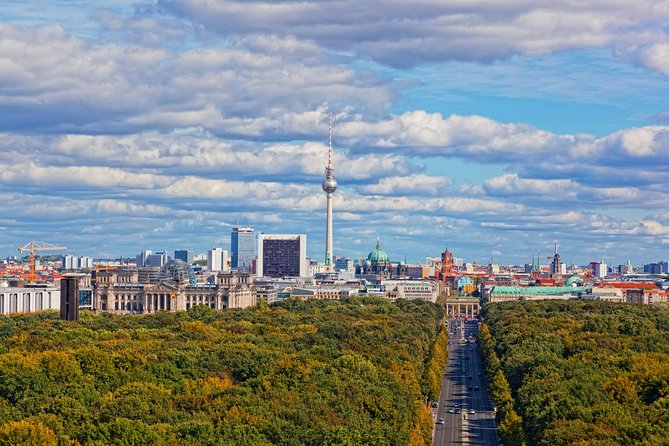
Berlin can be confusing at first. Its historic center was damaged by war, divided by ideology, rebuilt in very different styles, and then reshaped after reunification. Important places are spread across broad avenues and open squares, so a map alone does not always explain why one ordinary-looking corner matters.
This walk gives you a working timeline. You begin at Potsdamer Platz, a symbol of the rebuilt capital, then move through Checkpoint Charlie and the former Nazi government district. From there, the route follows Unter den Linden toward Bebelplatz, the Brandenburg Gate, and Museum Island.
I like that the tour does not focus on just one era. You get Nazi persecution, the Cold War, Prussian Berlin, modern redevelopment, and German reunification in one connected morning. That helps you make better choices for the rest of your stay.
The guide is the key part of the experience. Strong guides have been praised for precise explanations, humor, and the ability to answer individual questions. Arthur is described as especially engaging, while Martin is praised for his passion for Berlin. Anouk receives similar praise for clear answers and careful attention to each person in the group.
There is one practical weakness. The tour does not provide an audiophone. One person specifically found this worth improving, and the concern is reasonable. A group of 25 standing beside a busy street can be hard to hear, especially if you are at the back. Stay close to the guide and speak up early if the sound is poor.
More History Tours in Berlin
- Berlin: Natural History Museum Entrance Ticket
★ 4.6 · 3,382 reviews - Berlin: World Heritage Cruise to Potsdam
★ 4.5 · 1,435 reviews - Berlin Historical Highlights Walking Tour
★ 4.9 · 657 reviews
Starting at Potsdamer Platz and the Sony Center
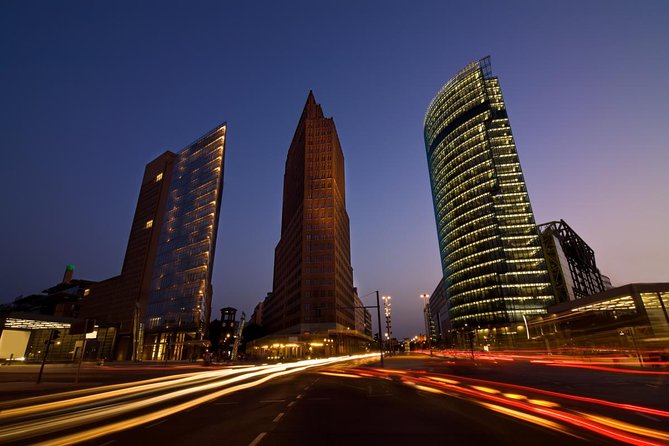
The meeting point is at Potsdamer Platz 10, at the corner of Gabriele-Tergit-Promenade. The tour begins at 10:00 a.m., and Potsdamer Platz makes a useful starting point because it quickly shows how much Berlin has changed.
Today, the area is associated with modern offices, shops, tall buildings, and the Sony Center. The tour uses this polished district to explain the city’s postwar division and later rebuilding. You are not beginning with a preserved medieval quarter. Instead, you start in a part of Berlin that was cut apart by war and political division before becoming a major redevelopment zone.
The scheduled stop is about 10 minutes. That is enough for an explanation and a quick look, not enough for shopping, architecture photography, or a long pause beneath the Sony Center’s roof. If you arrive early, use the time to find the meeting point and settle your footwear before the walking begins.
Checkpoint Charlie and the reality of the Cold War
Checkpoint Charlie takes about 10 minutes. The former crossing point became one of the best-known symbols of the Berlin Wall, where East and West faced one another for decades.
This stop is valuable because the name is familiar, but the political meaning can be harder to grasp without context. A guide can explain why this particular crossing mattered and how the division shaped everyday life in Berlin. The stop also prepares you for later discussions of the Brandenburg Gate and reunification.
You should keep your expectations realistic. The visit is a short outdoor explanation, not a full museum experience. The tour does not include transportation to a separate museum or extended time for exhibits. If you want a longer look at the Berlin Wall period, use this introduction to decide what to visit later.
Hitler’s bunker site and the challenge of an ordinary place
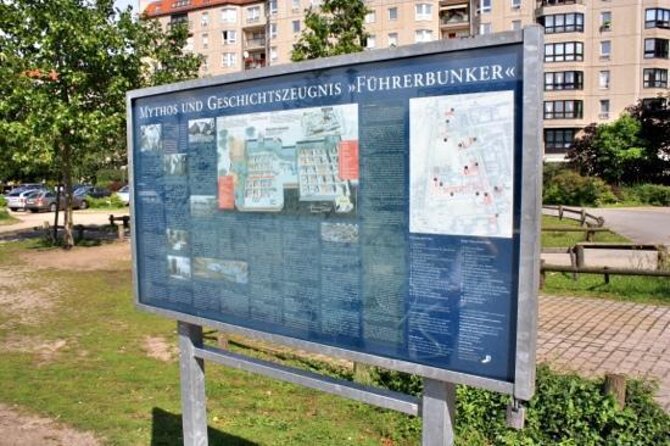
The route then reaches the place where Hitler’s bunker stood and where he spent his final days. The guide explains the site’s meaning and why it looks the way it does today.
This is one of Berlin’s most difficult stops because there is no grand ruin to enter and admire. The site’s present appearance is part of the story. You are asked to understand the location, the events connected to it, and the reasons the bunker is not presented as a conventional memorial attraction.
The tour description refers to admission being included, but the itinerary describes a visit to the place where the bunker was. You should not assume that you are entering an intact underground room. The value here comes from the guide’s explanation and the surrounding historical context.
Ten minutes is brief, but that may be appropriate. The subject is grim, and a short, focused stop keeps the tour from turning the location into a spectacle. Listen closely and save detailed follow-up questions for the guide if time allows.
More Walking Tours in Berlin
- Discover Berlin Half-Day Walking Tour
★ 5.0 · 9,624 reviews - Berlin: Third Reich and Cold War 2 Hour Walking Tour
★ 4.9 · 6,830 reviews - Berlin: Discover Berlin Walking Tour
★ 4.9 · 5,998 reviews - Berlin’s Best: 2 Hour Walking Tour Third Reich and the Cold War
★ 5.0 · 5,486 reviews
The Holocaust Memorial, a quiet and demanding stop
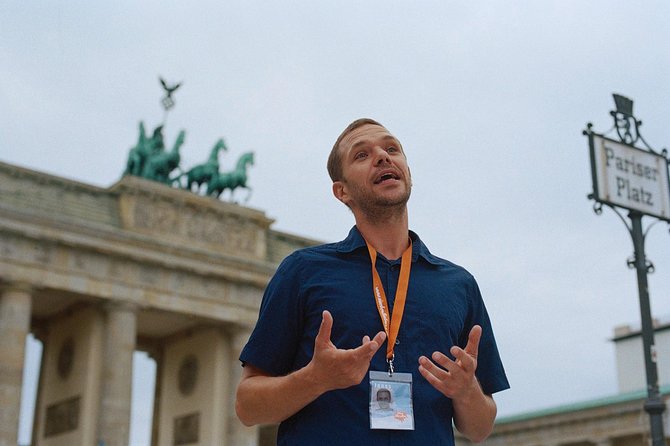
The Memorial to the Murdered Jews of Europe receives about 15 minutes. Its field of concrete stelae creates an unsettling space, and the guide explains its purpose while you are there.
This is not a stop to rush through for a photograph. The memorial remembers the murder of Europe’s Jews by Nazi Germany, and the tour places that crime within the city where the government responsible operated. That setting gives the explanation particular force.
Fifteen minutes allows time to walk among part of the memorial and hear the main points, but it is not a full visit. You may want to return on your own, especially if you wish to spend time in the underground information center. The supplied information does not say that a separate museum visit is included, so plan on this tour providing an introduction rather than a complete memorial study.
The guide’s tone matters here. Several praised guides for making difficult subjects understandable and human. A good explanation should help you think about what the memorial means without turning the stop into a lecture detached from the place itself.
Unter den Linden, where Berlin’s eras meet
The walk continues along Unter den Linden for about 20 minutes. This broad avenue once led toward the emperor’s palace and now connects several of Berlin’s best-known central sights.
This is one of the most useful stretches for learning how to read Berlin. The guide points out different construction periods and the visible wounds left by war. You see how royal ambition, destruction, reconstruction, and modern city life overlap along one avenue.
I like this section because it ties individual buildings to the wider city. Instead of treating each landmark as a separate photo stop, the guide can show you how the street developed and why its architecture changes as you walk.
The route also gives you a break from the most emotionally heavy sites. You continue walking, listening, and looking upward, while the guide connects the buildings to Berlin’s political past. Wear comfortable shoes, since this is a real walking tour rather than a short series of curbside stops.
Bebelplatz and the memory of book burning
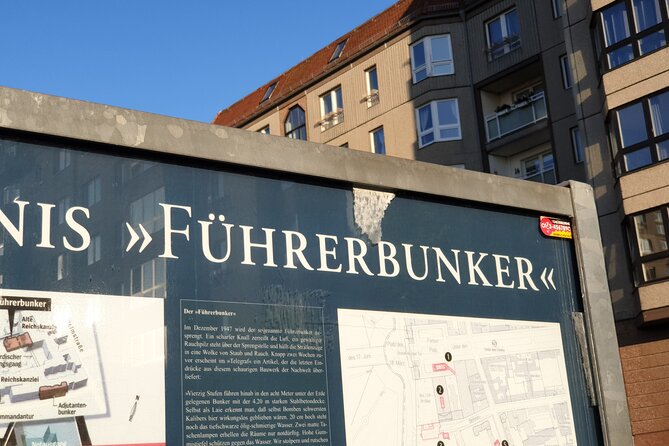
Bebelplatz takes about 10 minutes. The square is known for the Nazi book burning, but it also includes Humboldt University and the Catholic Cathedral.
That combination is important. Berlin’s history is not separated into tidy zones labeled monarchy, dictatorship, and modern democracy. The same public spaces have carried very different meanings over time. A university square can also be a place where Nazi cultural repression was made public.
The guide helps connect the event to the surrounding buildings and political history. This is another short stop, so you will hear the main explanation rather than explore every detail. The square is easy to combine with a later independent visit if the subject catches your attention.
For me, Bebelplatz is one of the tour’s strongest teaching moments because the setting is so open and central. It shows how the city’s most painful memories exist beside normal civic life.
The Brandenburg Gate and the road to reunification
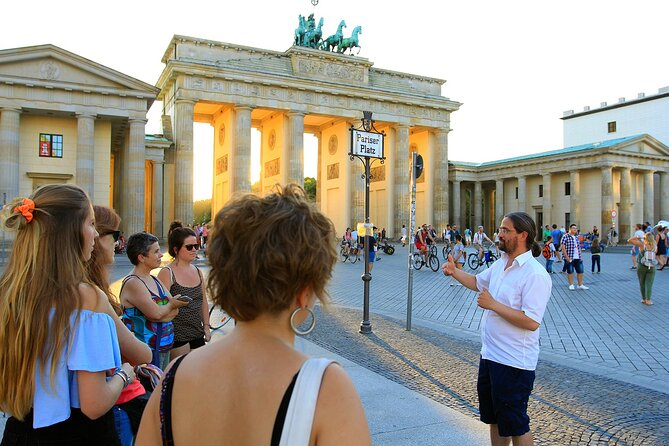
The Brandenburg Gate receives about 10 minutes and is perhaps the most instantly recognizable stop on the route. It began as a symbol of royal power, later represented the division of Berlin, and eventually became associated with German reunification.
That changing meaning is exactly why the stop works. The gate is not important only because it is photogenic. Its symbolism shifted as Berlin moved from monarchy through dictatorship and war, into Cold War division and a reunited Germany.
The short visit gives you time for the central explanation and photographs. Do not expect a long architectural tour. The guide’s strength here is placing the gate within the city’s political story, not simply identifying its columns.
If you visit independently later, you will already understand why the gate appears in so many images of modern Germany. The tour turns a familiar landmark into a marker of several different Berlins.
Museum Island and the final view near Alexanderplatz
The tour ends beside Museum Island, near Berlin Cathedral and the reconstructed Humboldt Forum. The listed finish is Museumsinsel, 10178 Berlin, close to Alexanderplatz.
This is a smart ending point. You finish near some of Berlin’s major museums, the Protestant Berliner Dom, and the Humboldt Forum, which presents a reconstructed architectural presence in the historic center. The guide offers a final look at Berlin’s architectural heritage before you continue on your own.
The tour does not include admission to the museums. That is useful to know before you arrive, since Museum Island can easily fill an entire afternoon. You can stop for lunch first, then decide if you want a museum, a cathedral visit, or more independent sightseeing.
The ending also makes the 10:00 a.m. departure practical. A three-hour walk should leave you with the rest of the day available. One person reported a 3.5-hour experience rather than exactly three hours, so allow a little flexibility if you have a fixed lunch reservation.
Pace, group size, and what to bring
The maximum group size is 25. That is not a private walk, and the missing audiophones matter more at the upper end of that limit. The best position is near the guide, particularly at street corners and open squares where traffic noise can spread the group out.
The tour requires a moderate level of physical fitness. Transportation between attractions is not included, and the itinerary says the visit is completely on foot. Bring comfortable shoes and dress for the weather, since the tour operates in all conditions.
A mobile ticket is provided, and confirmation arrives at booking. The meeting point is near public transportation, but the tour price does not include getting to or from the attractions. Food and drinks are also your responsibility.
The morning schedule is a real advantage. You can start before the day becomes too crowded, finish around lunchtime, and use the afternoon to return to the stop that interested you most. I would avoid pairing this with another fixed appointment immediately afterward, since the walk may run longer than three hours.
The guides are the heart of the experience
The most consistent praise concerns the people leading the walk. Anouk is described as articulate and attentive to individual questions. Martin is praised as a passionate guide who makes the three-hour route pass quickly. Arthur is singled out for his humor, clear speaking style, and command of both Berlin’s past and present.
Paul receives praise for friendliness and strong historical explanations, while Jean-Charles is described as giving precise information and well-researched answers. Céline is praised for making the city feel more immediate than reading about it online.
Those details matter because the route itself is not hard to find on a map. You could walk past most of these places alone. The reason to pay for the tour is the human explanation: how the pieces fit together, what changed, and why the city presents difficult sites in particular ways.
There is one caution. One person found some historical details imprecise and later checked them against other sources. I would not book this expecting an academic seminar. If you need exact scholarly detail, take notes and verify points that matter to you. For a first introduction, the overall rating of 4.9 from 240 reviews and the 99 percent recommendation rate suggest a very strong level of satisfaction.
Is $27.81 a good price?
At $27.81, the price is reasonable for a three-hour, French-language walking tour covering this many central sites. You are paying for a local professional guide, local taxes, and a planned route that would take more effort to understand on your own.
The value is strongest for first-time visitors, French-speaking couples, solo visitors, and families who want a basic city framework before choosing museums and longer visits. It is less useful if you already know Berlin well or want extended time inside memorials and museums.
The short stops keep the tour affordable and moving, but they also limit depth. Think of the fee as paying for orientation, context, and saved planning time. You will still need separate admission fees for museums and your own transportation, food, and drinks.
Free cancellation up to 24 hours before the 10:00 a.m. start adds useful flexibility. Cancellations or changes made less than 24 hours ahead are not refunded or accepted.
Who should book this French-language walk?
I would recommend it most strongly if you are visiting Berlin for the first time and want the central landmarks explained in French. It also suits anyone who prefers a human guide to an audio app, provided you can stay close enough to hear.
It is a good fit for people interested in 20th-century history, especially the Nazi period, the Berlin Wall, and reunification. The tour also gives enough royal and architectural context to keep the morning from feeling like a single-issue history lesson.
You may want another option if walking for three hours is difficult, if you need a private pace, or if you prefer long indoor visits. The group can reach 25 people, there are no audio devices, and the itinerary includes several ten-minute stops rather than extended time at each site.
Should you book it?
Book this tour if you want a practical first map of Berlin’s past, delivered in French by a guide who can answer questions and connect the city’s landmarks. The route is well chosen, the price is fair, and the finish beside Museum Island sets up an easy afternoon.
Skip it if you already know the central sights, need museum admission included, or want a quiet private walk with guaranteed audio equipment. For most first-time French-speaking visitors, though, this is a smart opening morning: serious when the subject demands it, friendly when the city opens up, and broad enough to help you plan what comes next.
FAQ
Where does the Berlin History Walking Tour begin?
It begins at Potsdamer Platz 10, 10785 Berlin, at the corner of Gabriele-Tergit-Promenade.
What time does the tour start?
The tour starts at 10:00 a.m.
Where does the tour finish?
It ends next to Museum Island, at Museumsinsel, 10178 Berlin, near Alexanderplatz.
How long does the tour last?
The scheduled duration is approximately three hours. One reported experience lasted 3.5 hours, so allow some extra time.
Is the tour conducted in French?
Yes. It is operated with a professional French-speaking guide.
What landmarks are visited?
The route includes Potsdamer Platz, Checkpoint Charlie, the Hitler’s bunker site, the Holocaust Memorial, Unter den Linden, Bebelplatz, Museum Island, and the Brandenburg Gate.
Is transportation included?
No. Transportation to and from the attractions is not included, and the tour itself takes place on foot.
Is food included?
No. Food and drinks are not included in the price.
What is the maximum group size?
The tour can have a maximum of 25 travelers.
Can I cancel for a full refund?
Yes, if you cancel at least 24 hours before the experience’s start time. Cancellations or changes made less than 24 hours in advance are not accepted for a refund.
Just added around Berlin
- Private Walking Tour in Berlin: Hitler’s Germany & WWII★ 5.0 · 7 reviews
- The History of Berlin: WWII PRIVATE Walking Tour With Locals★ 5.0 · 209 reviews
- Berlin: Private Bike Tour of the Berlin Wall and Third Reich★ 5.0 · 23 reviews
- Private Berlin WWII and Cold War History Tour with Local Expert Guide★ 5.0 · 28 reviews
- Private Walking Tour Berlin 3 hours: Brandenburg, Historic Center★ 5.0 · 7 reviews
- Berlin: Guided Private Bike Tour to Explore the Highlights★ 5.0 · 12 reviews
- Berlin Photography Masterclass – Private Photography Lesson★ 4.5 · 23 reviews
- Group Driving Tour 1 to 6 people. Berlin Shore Excursion incl pick-up at Port★ 5.0 · 8 reviews
Historical Tours, compared.
City History Canal Sightseeing Tour on a Motorboat
Read our review →
Browse the lists this tour appears in