
Reviewed · HISTORICAL TOURS
Berlin Sightseeing Musical-Historical Walking Tour
Berlin sings if you listen closely. This three-hour walk links major sights with music from the 18th century to hip-hop, giving you a fresh way to read the city. I like the music-led storytelling and the smart route from Museum Island to the Reichstag.
I also like that the price includes a live guide and headphones, so you can hear the commentary and musical tracks while walking. The main catch is that this is largely an audio-guided experience, and one technical problem was reported, so it may not suit anyone expecting a traditional guide-led conversation at every stop.
The route covers a lot of ground for $40, with stops at the Berliner Dom, Humboldt University, Gendarmenmarkt, Checkpoint Charlie, Potsdamer Platz, the Holocaust Memorial, Brandenburg Gate, and the Reichstag. You get a useful first look at central Berlin, but you should wear good shoes and be ready to walk in all weather.
In This Review
- Key points to know before you book
- Berlin’s story told through music
- Starting at the Alte Nationalgalerie and Museum Island
- Humboldt University and the sound of ideas
- Gendarmenmarkt brings the grand Berlin pause
- The Trabi Museum and Berlin’s divided past
- Potsdamer Platz shows Berlin rebuilt
- A quiet stop at the Holocaust Memorial
- Brandenburg Gate and the weight of symbols
- The Reichstag and the final White Crosses stop
- What the audio format is really like
- Is $40 a fair price for three hours?
- Practical advice for the three-hour walk
- Who will enjoy this Berlin walk?
- Should you book the Berlin Sightseeing Musical-Historical Walking Tour?
- FAQ
- How long does the Berlin musical-historical walking tour last?
- Where does the tour begin?
- How do I recognize the guide?
- Which languages are available?
- Are headphones included?
- What sights are included?
- Is the tour suitable for wheelchair users?
Key points to know before you book
- Music shapes the route: You hear material ranging from classical oratorios to 21st-century hip-hop while visiting Berlin’s key sights.
- The three-hour walk covers central Berlin: The route begins at the Alte Nationalgalerie and moves through Museum Island, Gendarmenmarkt, Potsdamer Platz, and the government district.
- Headphones are included: Commentary and music play through the headphones in English, German, or Russian.
- The guide may not lead every story in person: The human guide helps with direction and organization, while much of the content comes through the audio program.
- The tour runs in rain or shine: Some locations depend on weather, and the walk includes only a small break.
- Mobility matters: The experience is not suitable for wheelchair users or people over 70, according to the activity information.
Berlin’s story told through music
Berlin is a city where politics, art, war, division, protest, and popular culture often meet in the same square. This tour uses music to connect those subjects. Instead of hearing only dates and building names, you listen to a changing soundtrack while moving through the city.
That approach can make familiar sights feel less like a checklist. A grand classical work may accompany the older Prussian center. Later music can frame the divided city, modern Berlin, or the social changes that followed reunification. The exact tracks are not listed, so you should think of this as a guided musical atmosphere rather than a concert or a musicology lecture.
I like the idea because Berlin’s identity is not contained in its architecture alone. The city has an audible side, from formal 18th-century music to contemporary hip-hop. The headphones help keep that theme present as you walk, although they also create some distance between you and the guide.
The experience is offered in English, German, and Russian. Both the live tour and audio guide are listed in these languages, which gives you some flexibility when booking.
More History Tours in Berlin
- Berlin: Natural History Museum Entrance Ticket
★ 4.6 · 3,382 reviews - Berlin: World Heritage Cruise to Potsdam
★ 4.5 · 1,435 reviews - Berlin Historical Highlights Walking Tour
★ 4.9 · 657 reviews
Starting at the Alte Nationalgalerie and Museum Island
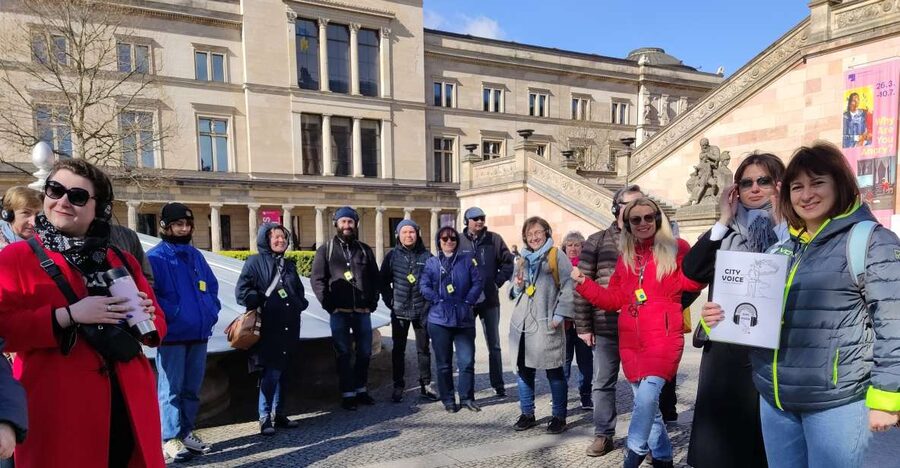
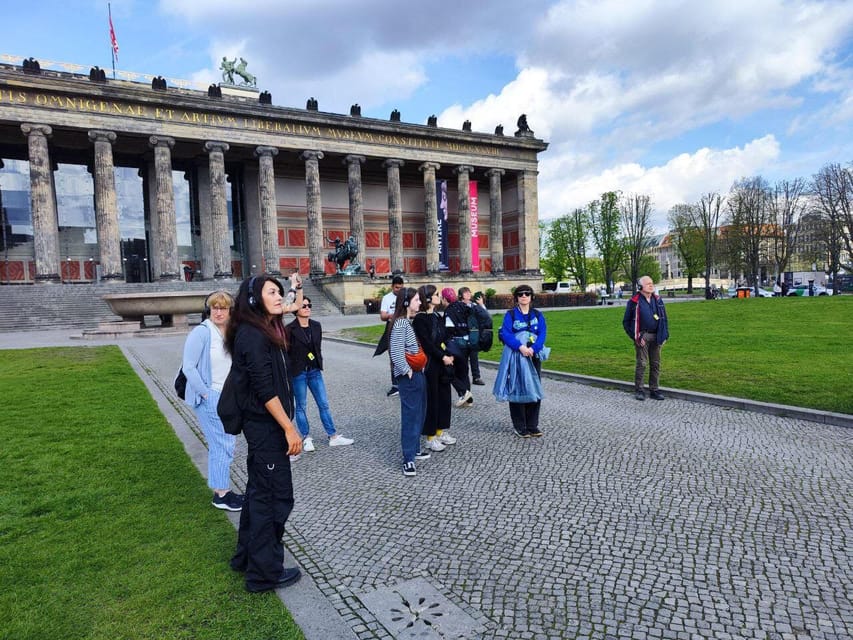
Meet your guide in front of the entrance to the Alte Nationalgalerie. Arrive 10 to 15 minutes early, and look for the guide holding a headphone sign. You can show your ticket on your phone or bring a printed copy.
The first stop is Museum Island, with about 20 minutes for guided sightseeing and walking. This is a strong place to begin because the surrounding museums and monumental buildings introduce Berlin’s artistic and royal past in a compact area.
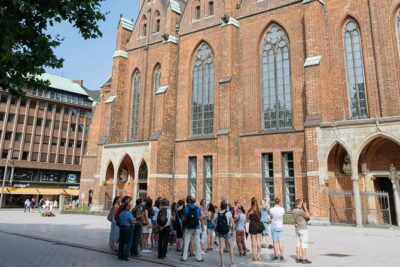
The tour listing also names the Berliner Dom among the sights you will see. You should expect exterior views and commentary rather than a museum admission visit, since entry tickets are not included. This distinction matters: the tour gives you orientation and context, but it is not designed for long indoor visits.
Museum Island is also a practical starting point for a first day in Berlin. You can get your bearings, see how the city places museums beside political and religious landmarks, and begin the musical journey before the route heads west.
Humboldt University and the sound of ideas
The next stop is Humboldt University of Berlin, with about 20 minutes for walking and sightseeing. The university adds a different layer to the route. Here, the focus shifts from museums and royal buildings to education, public thought, and the role of ideas in society.
The tour’s central question is how music can become an engine of history. A university setting fits that question well. Music does not develop in isolation. It reflects the beliefs, conflicts, and public debates of its time, and it can also help shape them.
You will likely spend this part outside, listening through the supplied headphones as the guide links the site to the wider story. If you prefer long explanations from a person standing beside you, the audio format may feel limited. If you enjoy moving at a steady pace with music in your ears, it should keep the walk flowing.
Gendarmenmarkt brings the grand Berlin pause
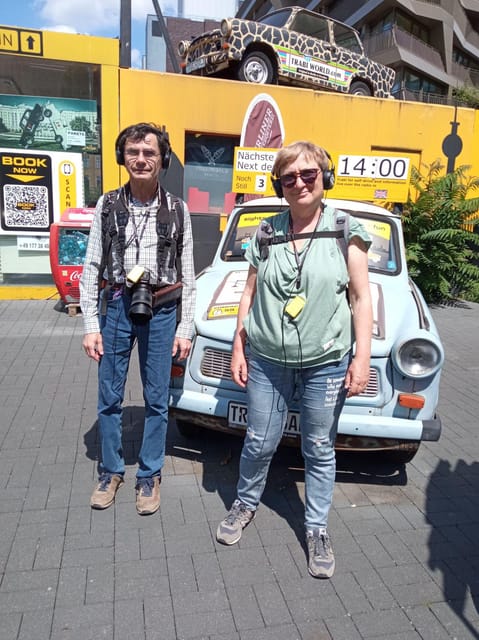
Allow about 30 minutes at Gendarmenmarkt, the longest stop listed on the route. That extra time makes sense. The square is one of the city’s most impressive public spaces, with major historic buildings gathered around an open urban setting.
This is where the tour can make a strong connection between architecture and music. A formal square calls for a different mood from the later stops connected with division, war, and modern city life. The musical changes should help mark that shift.
Gendarmenmarkt is also a good place to slow down and take in the scale of central Berlin. You will not simply rush from one plaque to another. The schedule gives you enough time for a guided explanation, exterior sightseeing, and walking, though the full tour still moves at a brisk pace.
Food and drinks are not included. Since the experience lasts three hours and includes only a small break, carry water and eat beforehand if you know you get hungry while walking.
More Walking Tours in Berlin
- Discover Berlin Half-Day Walking Tour
★ 5.0 · 9,624 reviews - Berlin: Third Reich and Cold War 2 Hour Walking Tour
★ 4.9 · 6,830 reviews - Berlin: Discover Berlin Walking Tour
★ 4.9 · 5,998 reviews - Berlin’s Best: 2 Hour Walking Tour Third Reich and the Cold War
★ 5.0 · 5,486 reviews
The Trabi Museum and Berlin’s divided past
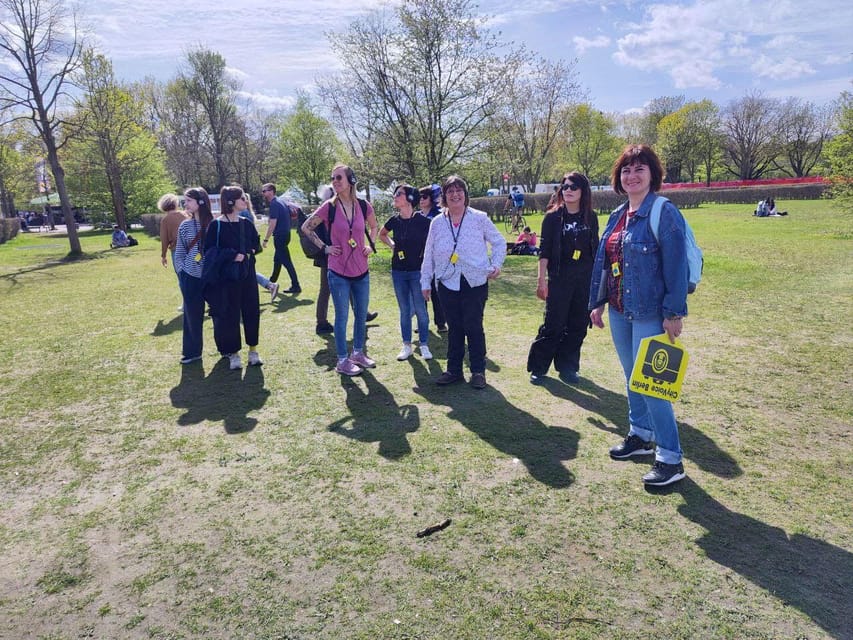
The route then reaches the Trabi Museum for around 20 minutes. The Trabant, often called a Trabi, is closely linked with East Germany and everyday life behind the Berlin Wall. A stop here changes the tone again, moving from grand institutions to a small but memorable symbol of the former East.
This is one of the more unusual stops on the walk. Museum Island, Gendarmenmarkt, and Brandenburg Gate are obvious choices for a first-time city tour. The Trabi Museum gives the route a more ordinary, human scale. It points toward transport, daily routines, and the practical reality of a divided city.
The information provided does not include museum admission, so do not assume the $40 price covers entry inside. Treat this stop as a guided visit to the location unless your booking details clearly state otherwise.
Potsdamer Platz shows Berlin rebuilt
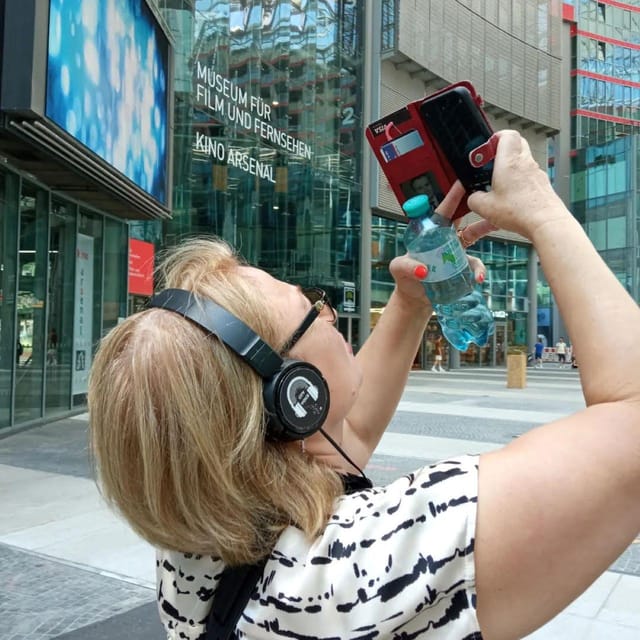
Potsdamer Platz receives another 20-minute stop. Few parts of central Berlin better express the city’s modern transformation. The area is associated with the border between East and West Berlin and with the rebuilding that followed the city’s division.
Here, the tour’s music theme can help you hear the change from older Berlin to the 20th and 21st centuries. Classical sounds may give way to more modern styles as the story moves toward popular culture and a changed city.
The stop is useful because it prevents the tour from becoming only an old-town walk. You get architecture from several eras and a sense of how quickly Berlin’s center can shift in character. Still, 20 minutes is enough for orientation, not a detailed study of every building.
A quiet stop at the Holocaust Memorial

The Memorial to the Murdered Jews of Europe, commonly called the Holocaust Memorial, is scheduled for about 20 minutes. This is a place where you should expect the mood to become more serious.
The memorial is not simply another photo stop. Its design asks you to think about absence, loss, and the difficulty of representing mass murder in a public city space. The audio program can provide historical framing, but give yourself room to look and reflect rather than treating the stop as a quick story between attractions.
Because the tour runs in all weather, the experience here can change with rain, cold, or bright sun. Comfortable clothing matters. The memorial is outdoors, and the full walking route does not offer the comfort of an indoor sightseeing bus.
Brandenburg Gate and the weight of symbols

Brandenburg Gate is given around 20 minutes. It is one of Berlin’s essential sights, but its importance goes beyond its appearance. The gate has been tied to royal power, national identity, division, and reunification.
This is an ideal place for the tour’s historical and musical themes to meet. Public symbols often gain meaning through ceremonies, speeches, celebrations, and protest. Music can help explain why certain places become emotional centers for a city.
Expect a stop focused on viewing and commentary rather than entry into a building. You can take photographs, listen to the guide, and connect the gate with the nearby memorials and government buildings.
The Reichstag and the final White Crosses stop
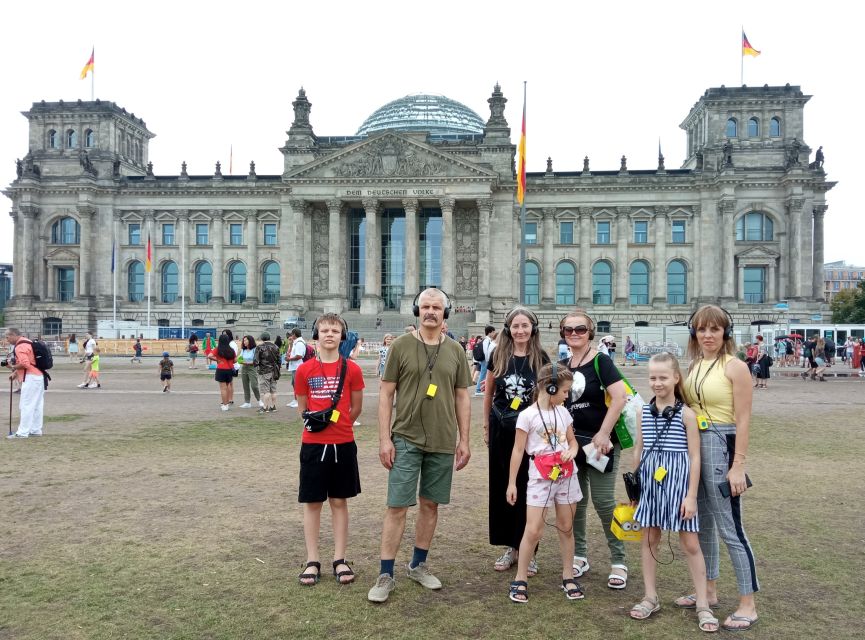
The Reichstag is the final listed sightseeing stop, with about 20 minutes. The building represents Germany’s political life and the complicated path from empire to democracy, dictatorship, division, and reunification.
The route then lists a finish at White Crosses. The meeting information also says the activity ends back at the starting meeting point, so there is a small inconsistency in the provided details. Before setting a tight appointment afterward, confirm the exact end location with CityVoice UG.
That final check is practical, not fussy. A walk crossing central Berlin can leave you near a different landmark from where you began, and the difference matters if you have a train, restaurant booking, or museum entry scheduled.
What the audio format is really like
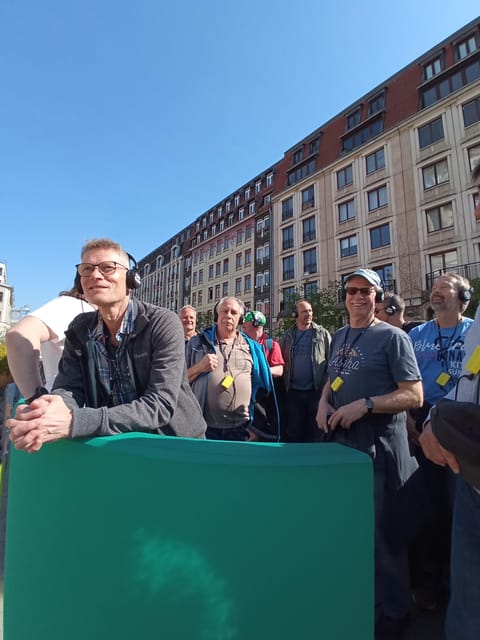
The headphones play an audio guide mixed with music. This is the defining feature of the experience, and it deserves a clear explanation.
The guide is not only speaking live as you walk. Much of the content comes through the headphones, while the human guide helps you find the route and keeps the group together. One 3 out of 5 assessment described the guide mainly as a signpost, while still calling the tour nice and interesting. A technical issue also caused frustration within the group.
That comment gives you a useful warning. Bring realistic expectations. You are booking a walking tour with an audio program, not a private conversation with a local expert who answers questions at every corner.
The format has advantages. You can hear the music clearly, and the narration does not need to compete with city traffic. It also keeps the pace consistent for the whole group. The downside is that a malfunctioning headset or audio system could affect your enjoyment, and the guide may have less time for personal interaction.
The overall rating is 4.6 from 10 reviews, a small sample that suggests the concept has worked well for many bookings but should not be treated as a guarantee. The most appealing parts are the musical framing, the broad route, and the pleasant combination of sightseeing and atmosphere.
Is $40 a fair price for three hours?
At $40 per person, the tour sits in a reasonable range for a three-hour guided experience in central Berlin, especially because headphones and a walking guide are included. You are paying for a planned route, commentary, and a soundtrack that ties the sights together.
The value is strongest if you want a broad introduction to Berlin and enjoy learning through music. In three hours, you see a remarkable number of key locations without arranging several separate walks.
The value is weaker if you want interior visits, museum admissions, food, drinks, or a highly personal guide. None of those are included. You will also need to pay for your own transport to the start, although the route itself is on foot.
I would compare this experience with a standard history walk based on your interests. Choose this one if the soundtrack is central to the appeal. Choose a conventional live guide if you want questions answered in depth and a flexible pace.
Practical advice for the three-hour walk
Wear comfortable shoes. The route includes repeated walking between stops, and the activity notes say to expect only a small break.
Dress for the forecast, but remember the tour runs rain or shine. Some locations depend on weather, and several stops are fully outdoors. Comfortable clothes will make a bigger difference than stylish ones.
Arrive 10 to 15 minutes early at the Alte Nationalgalerie. The guide will be in front of the entrance with a headphone sign. Have your ticket ready on your phone or in print.
Do not plan a substantial meal during the tour. Food and drinks are not included, and the schedule does not promise a long pause. Carry water and use the bathroom before starting if possible.
The activity is not suitable for wheelchair users or people over 70, according to the supplied information. That restriction, along with the amount of walking, means you should consider your mobility and stamina before booking.
Free cancellation is available up to 24 hours before the activity for a full refund. You can also reserve now and pay later, which helps if your Berlin schedule is still changing.
Who will enjoy this Berlin walk?
I would recommend it to first-time visitors who want to see the major central sights in one outing. It also suits music lovers who enjoy hearing how different eras and styles connect with politics, architecture, and public memory.
The tour may work well for visitors who prefer a steady audio experience in English, German, or Russian. You do not need to plan a complicated route, and the headphone system keeps the story with you as the city changes around you.
I would hesitate to recommend it to anyone seeking a slow, detailed museum tour. It is also a poor fit if you dislike headphones, need frequent breaks, use a wheelchair, or want a guide who speaks directly for most of the walk.
Should you book the Berlin Sightseeing Musical-Historical Walking Tour?
Book it if you want an efficient introduction to Berlin’s central sights with a musical point of view. The route is strong, the price is fair for three hours, and the mix of classical music, modern sounds, architecture, and political history gives the walk a clear identity.
Go in knowing that the human guide may function mainly as a route leader while the headphones deliver much of the content. Confirm the ending point, bring good shoes, and keep your schedule flexible in case the outdoor pace takes longer than expected.
For music-minded visitors, this is an appealing way to get oriented. For those wanting a deeply personal history lesson, a more traditional live walking tour may offer better value.
FAQ
How long does the Berlin musical-historical walking tour last?
The tour lasts three hours. Starting times vary, so check availability when booking.
Where does the tour begin?
The guide waits in front of the entrance to the Alte Nationalgalerie. Arrive 10 to 15 minutes before the scheduled start.
How do I recognize the guide?
The guide will hold a headphone sign.
Which languages are available?
The live tour guide and audio guide are available in English, German, and Russian.
Are headphones included?
Yes. Headphones are included, and they play an audio guide mixed with music.
What sights are included?
The route includes Museum Island, the Berliner Dom area, Humboldt University, Gendarmenmarkt, the Trabi Museum, Potsdamer Platz, the Holocaust Memorial, Brandenburg Gate, the Reichstag, and White Crosses.
Is the tour suitable for wheelchair users?
No. The activity is listed as not suitable for wheelchair users or people over 70 years old.
Just added around Berlin
- Private Walking Tour in Berlin: Hitler’s Germany & WWII★ 5.0 · 7 reviews
- The History of Berlin: WWII PRIVATE Walking Tour With Locals★ 5.0 · 209 reviews
- Berlin: Private Bike Tour of the Berlin Wall and Third Reich★ 5.0 · 23 reviews
- Private Berlin WWII and Cold War History Tour with Local Expert Guide★ 5.0 · 28 reviews
- Private Walking Tour Berlin 3 hours: Brandenburg, Historic Center★ 5.0 · 7 reviews
- Berlin: Guided Private Bike Tour to Explore the Highlights★ 5.0 · 12 reviews
- Berlin Photography Masterclass – Private Photography Lesson★ 4.5 · 23 reviews
- Group Driving Tour 1 to 6 people. Berlin Shore Excursion incl pick-up at Port★ 5.0 · 8 reviews
Historical Tours, compared.

City History Canal Sightseeing Tour on a Motorboat
Read our review →




Browse the lists this tour appears in