
Reviewed · THIRD REICH HISTORY TOURS
Berlin: Third Reich, Hitler, and WWII Walking Tour
Berlin keeps its darkest chapters close. This three-hour walking tour connects the places where Hitler’s regime gained power, carried out terror, and met its violent end. I like the clear route through central Berlin and the chance to see sites that are easy to miss without a guide, including the former Nazi ministries, Hitler’s bunker location, and the Soviet War Memorial. I also like the strong focus on context, not just buildings and dates. The main consideration is that this is a serious, information-heavy walk, and there are no scheduled water or toilet breaks.
The tour costs about $20 per person, a fair price for three hours with a live guide. Guides speak English, German, or Spanish, and private or small-group options are available. The standard tour begins outside Friedrichstraße station, beside the Tränenpalast, and returns there. Guides wear a blue lanyard and yellow name tag and carry yellow umbrellas, which makes the meeting point easy to spot.
In This Review
- Key points to know before you book
- Why this Berlin history walk works
- Friedrichstraße and the Palace of Tears meeting point
- The ministries behind the Nazi war machine
- Albert Speer’s Germania plans
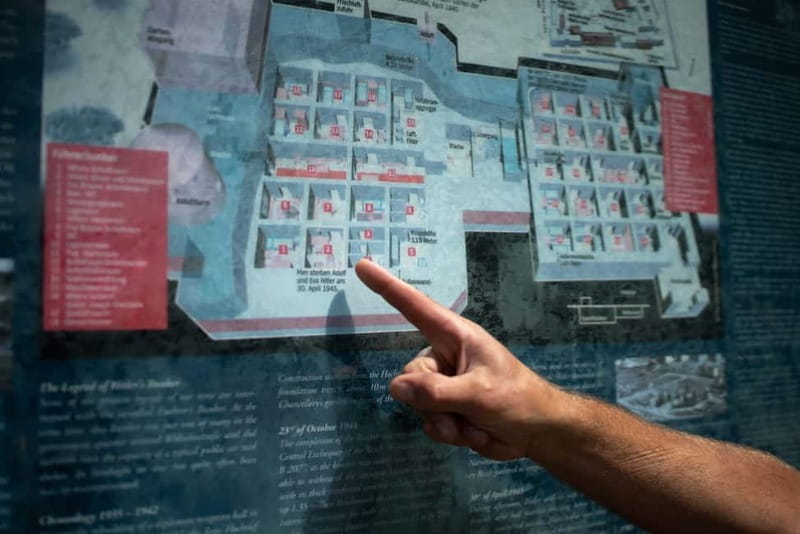
- Above Hitler’s Führer Bunker
- Topography of Terror and the machinery of persecution
- The Reichstag and Brandenburg Gate during the final battle
- Soviet War Memorial and the war’s final chapter
- Three hours on foot: pace, groups, and comfort
- Is $20 a good value in Berlin?
- Who will get the most from this tour?
- FAQ
- How long does the Berlin Third Reich walking tour last?
- How much does the tour cost?
- Where does the tour meet?
- How do I identify the guide?
- Where does the tour end?
- Which languages are available?
- Is hotel pickup available?
- Does the tour operate in bad weather?
- What should I bring?
- Can I cancel the booking?
- Should you book this Berlin history tour?
Key points to know before you book
- Hitler’s bunker site: Stand above the location where Hitler spent his final days and died in April 1945.
- Nazi power centers: See the former sites of the Luftwaffe, Propaganda Ministry, SS, and Gestapo offices.
- Topography of Terror: Visit one of Berlin’s most important exhibits on Nazi persecution and state terror.
- Soviet assault route: Finish with the Reichstag, Brandenburg Gate, and a Soviet memorial guarded by T-34 tanks and artillery.
- Strong guide performance: Guides such as Hannah, Mikhail, Jimmy, Martin, Will, and Xavier are praised for clear explanations and thoughtful answers.
- Practical walking tip: Wear good shoes, bring water, and dress for the weather. The tour runs in rain or shine.
Why this Berlin history walk works
Berlin has plenty of famous monuments, but the story of the Third Reich is scattered across a large part of the city center. A map can show you where the buildings once stood. It cannot easily explain how ministries, police agencies, propaganda offices, military planners, and party leaders worked together.
That is where this tour earns its price. You move through the former political center of Nazi Germany while a guide explains how the dictatorship operated. The walk links locations rather than treating each one as an isolated stop.
I especially like this approach for a first visit to Berlin. You gain a useful framework for later visits to places such as the German Resistance Memorial Center, the Memorial to the Murdered Jews of Europe, or the Sachsenhausen concentration camp memorial outside the city. This tour does not replace those sites, but it helps you understand how Berlin became the administrative center of Nazi persecution and war.
The subject is difficult, and the best guides handle it with care. Hannah is praised for explaining sensitive material respectfully and answering questions fully. Mikhail is described as friendly, prepared, and able to connect Nazi history with Cold War and wider Berlin history. Other guides, including Jörg, Will, Jim, Artie, Callum, Thomas, and Martin, receive similar praise for energy, clarity, and strong command of the subject.
Guide quality always matters on a walking tour. Here, the repeated praise for different guides suggests that the experience does not depend on one individual alone. Still, your exact guide will shape the tone, pace, and depth of the day.
More Third Reich History Tours in Berlin
- Berlin: Third Reich and Cold War 2 Hour Walking Tour
★ 4.9 · 6,830 reviews - Berlin’s Best: 2 Hour Walking Tour Third Reich and the Cold War
★ 5.0 · 5,486 reviews - Third Reich Berlin: Hitler and WWII Walking Tour
★ 5.0 · 3,301 reviews
Friedrichstraße and the Palace of Tears meeting point
The tour starts outside Friedrichstraße train station, on the square between the station and the Tränenpalast, also called the Palace of Tears. The official address is Reichstagufer 17, 10117 Berlin.
This is a useful starting point because the area is well connected by public transport. Look for a guide wearing a blue lanyard and yellow name tag, usually with a yellow umbrella. Arrive a little early so you can identify the group without rushing.
The Tränenpalast adds an extra layer to the meeting point. Its exhibits concern the later division of Berlin, not the Nazi era, but that setting reminds you that the city’s political trauma did not end in 1945. The tour itself focuses on the Third Reich and World War II, yet Berlin’s Nazi and Cold War stories often overlap in the streets you walk.
The standard activity ends back at Friedrichstraße. That makes it easy to plan a museum visit, meal, or train connection afterward. Keep in mind that the route lasts three hours, so this is not a quick orientation walk.
The ministries behind the Nazi war machine
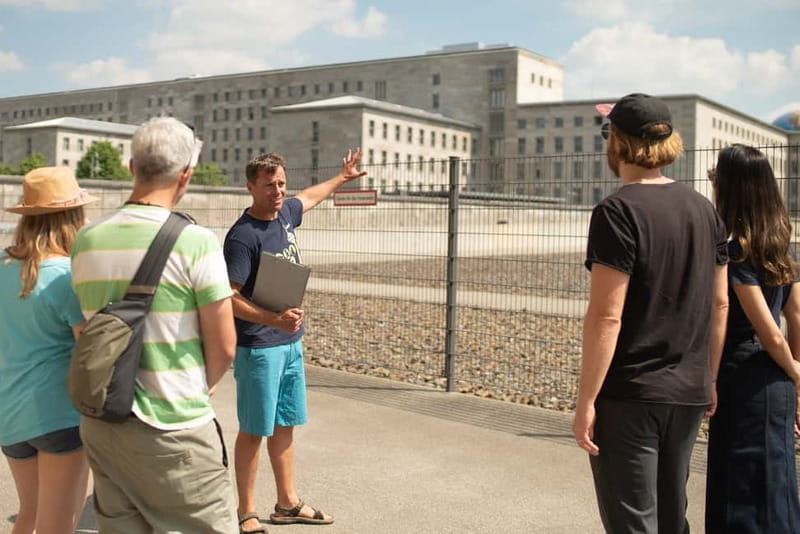
One of the most useful parts of the tour is its attention to the less glamorous buildings that made dictatorship possible. You see the former site of Göring’s Air Ministry, where the Luftwaffe planned air operations including the Blitz.
This stop helps move the story beyond Hitler as a single figure. Nazi Germany depended on departments, officials, police forces, propaganda workers, and military institutions. The former Air Ministry site gives your guide a place to explain how war policy became an organized state project.
You also pass the former locations of Joseph Goebbels’ Propaganda Ministry and Heinrich Himmler’s SS and Gestapo headquarters. These sites were central to political control, public messaging, surveillance, imprisonment, and terror.
Do not expect every original Nazi building to survive in its former form. Some locations are marked by modern structures, open spaces, or plaques rather than dramatic ruins. That can feel anticlimactic if you are expecting a preserved bunker or a museum at every stop. The value comes from understanding what occupied the site and how it fit into the system.
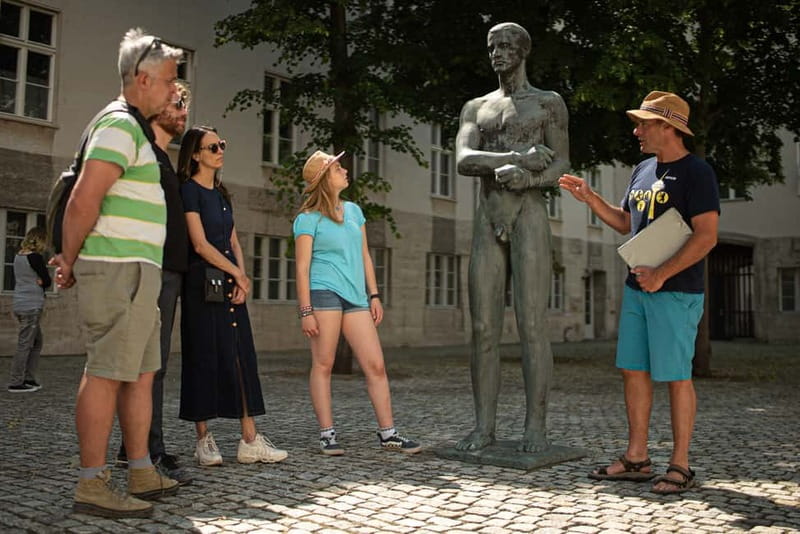
This is where a strong guide makes a real difference. Several guides are praised for pointing out details that visitors had missed on earlier visits. Xavier, for example, is singled out for adding useful information even at familiar landmarks. You should feel free to ask questions, especially if you want to connect a building with a particular Nazi agency or event.
Albert Speer’s Germania plans
The walk follows part of the route connected with Hitler’s planned Germania project, designed by architect Albert Speer. Germania was intended to reshape Berlin into a monumental capital for the Nazi empire.
The plan matters because it shows how architecture served politics. Grand avenues, huge government buildings, and carefully staged public spaces were meant to project power and permanence. The tour helps you read central Berlin not just as a collection of landmarks, but as a city that Nazi leaders tried to redesign for propaganda.
You will not see the full Germania plan brought to life. Much of it was never completed, and the war changed Berlin beyond recognition. Still, walking along the proposed axis gives you a sense of scale and ambition.
I find this part especially useful if you are interested in architecture or urban planning. It also gives the tour a break from the grim details of police terror and wartime destruction. You see how ideology reached into streets, monuments, and the shape of the capital itself.
More Walking Tours in Berlin
- Discover Berlin Half-Day Walking Tour
★ 5.0 · 9,624 reviews - Berlin: Discover Berlin Walking Tour
★ 4.9 · 5,998 reviews - Berlin: Hidden Backyards Guided Walking Tour
★ 4.8 · 5,360 reviews - Berlin: Alternative Berlin Walking Tour
★ 4.6 · 1,204 reviews
Above Hitler’s Führer Bunker
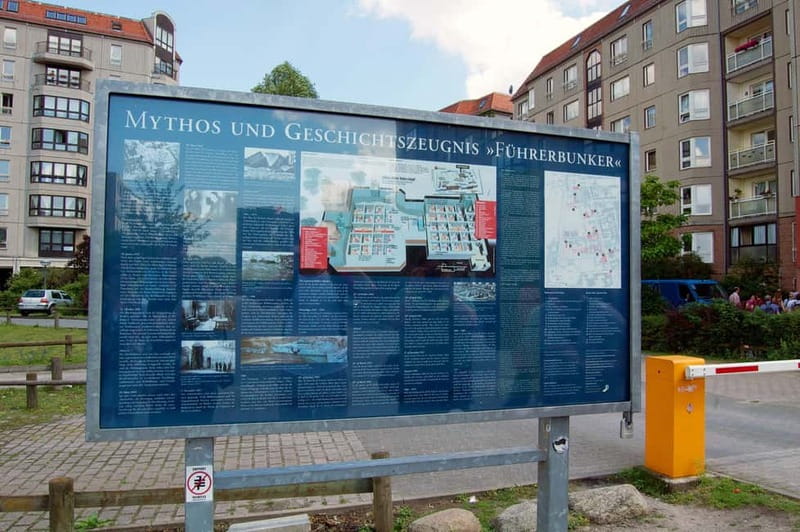
The bunker site is one of the tour’s most anticipated stops. Hitler’s Führerbunker was located beneath the ground near what is now an ordinary urban setting. The bunker itself is not open as a museum, and there is no grand entrance to inspect.
That absence is important. The guide explains where the bunker was, what happened during Hitler’s final days, and how the regime collapsed around him. You hear the sequence of events leading to Hitler’s suicide and the fate of his remains.
A good explanation here corrects a common problem with Nazi history tours: the risk of turning Hitler into a dramatic character rather than examining the crimes of the regime. The strongest guides keep attention on decisions, structures, victims, and consequences.
Expect a stop that relies heavily on spoken explanation. If you need large visual displays at every location, this may feel limited. If you value a clear narrative tied to a precise place, it can be one of the most memorable sections.
The subject can be emotionally heavy. Hannah is praised for treating sensitive material respectfully, while several guides are described as passionate without losing control of the subject. That balance matters at a site connected with mass murder and the final days of the dictatorship.
Topography of Terror and the machinery of persecution
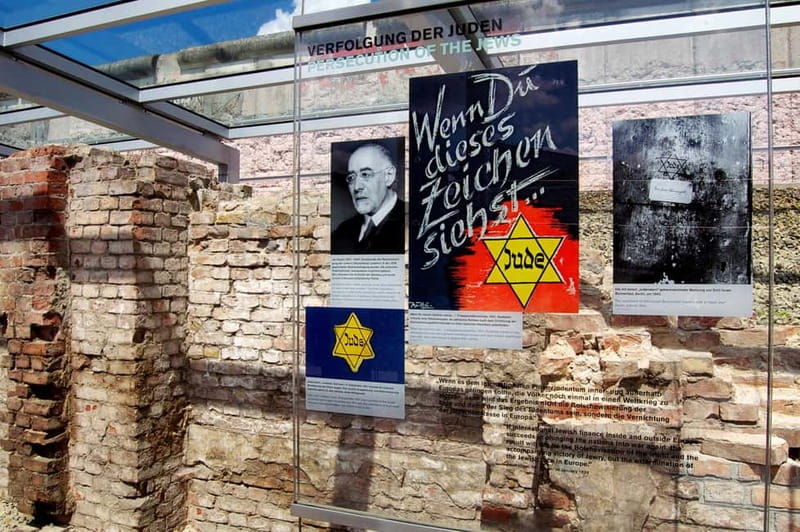
The Topography of Terror exhibit is a major strength of the route. It occupies the former area of the Gestapo and SS headquarters and presents evidence about the institutions that carried out Nazi repression.
This stop gives you more than a street-corner explanation. You have a chance to engage with an established historical exhibit connected directly to the agencies discussed during the walk. The site helps explain how persecution was organized, documented, and enforced.
Allow your attention to shift here from Hitler’s headquarters to the people and agencies who made the dictatorship function. The SS and Gestapo were not abstract symbols. They were bureaucratic bodies with offices, personnel, records, and methods.
The tour does not appear to include a long independent museum visit, so you should think of this as a guided stop within a walking route. If you want to read every panel, study every photograph, and take your time with the displays, you may want to return separately.
The exhibit also helps balance the tour’s focus on military and political locations. Without it, a World War II walk could become too centered on commanders and battle plans. Here, the story returns to state terror and the people harmed by it.
The Reichstag and Brandenburg Gate during the final battle
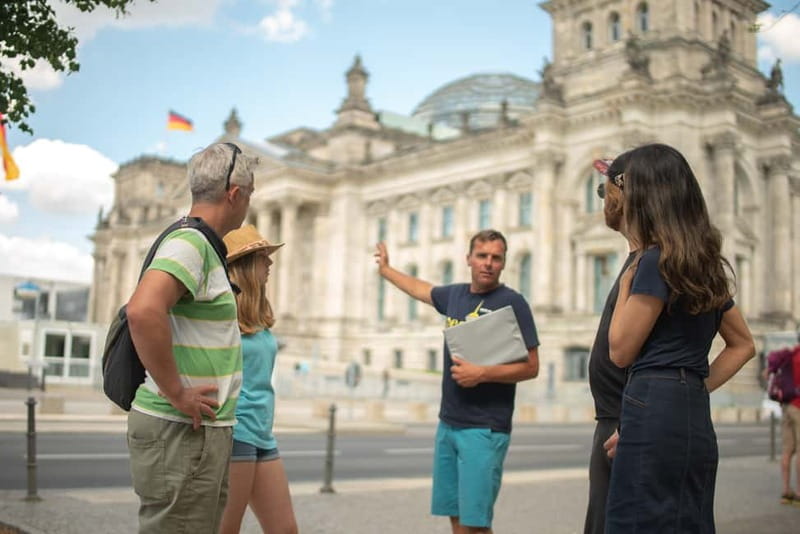
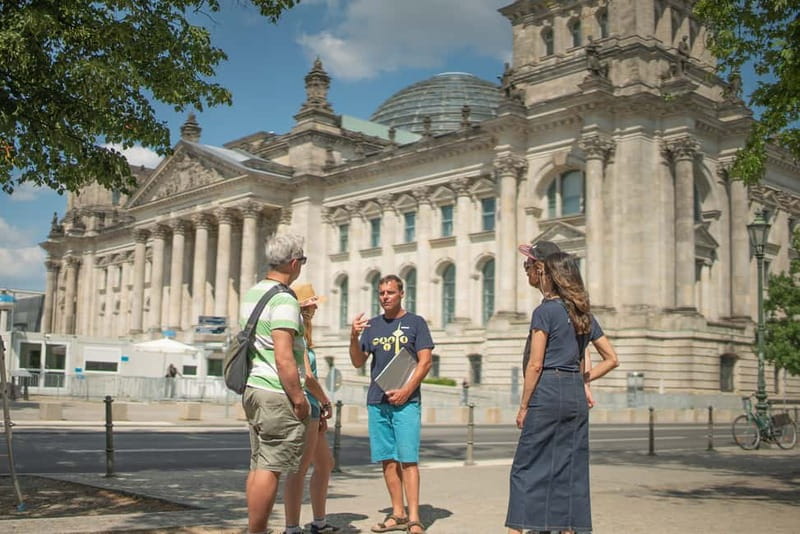
The route continues toward the Reichstag, where the Soviet assault reached the final battlefield of Nazi Germany. The building is one of Berlin’s best-known landmarks, but the tour presents it through the events of 1945 rather than only through its modern glass dome and parliamentary role.
That shift in viewpoint is valuable. You see the Reichstag as a contested political symbol and a military objective during the last stage of the war. The surrounding streets become part of a battlefield story rather than just a sightseeing backdrop.
The walk also passes through the Brandenburg Gate. Its meaning changed repeatedly: it became associated with Nazi ceremony and power, later sat near the Cold War divide, and now serves as one of Berlin’s defining public monuments.
This is one reason the tour works well for visitors who want more than a Nazi-only story. The guide can place World War II within Berlin’s longer political history, then connect the war’s end with the city’s later division. Mikhail is praised for adding Cold War history and broader Berlin context between the main stops.
The Reichstag and Brandenburg Gate can be busy areas. Listen closely when the guide gathers the group, and avoid drifting away while taking photographs. One participant lost the group while checking emails, even though the guide had prepared a careful route. Keep your phone away during explanations and save work for the end.
Soviet War Memorial and the war’s final chapter
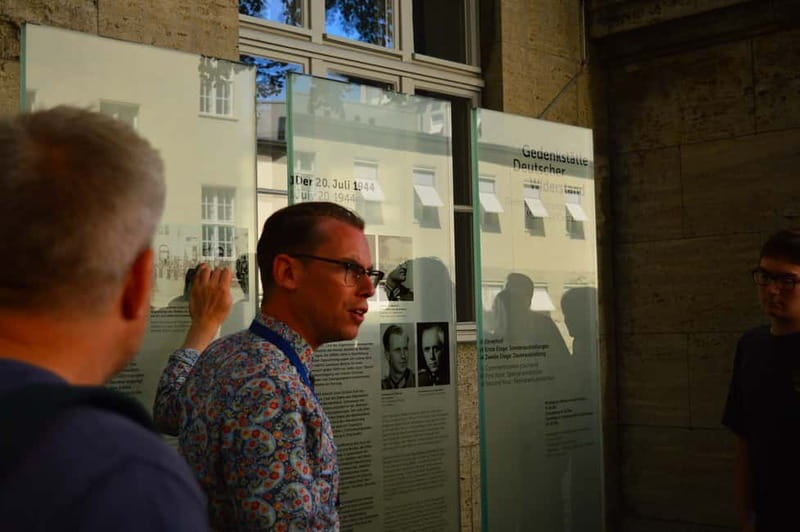
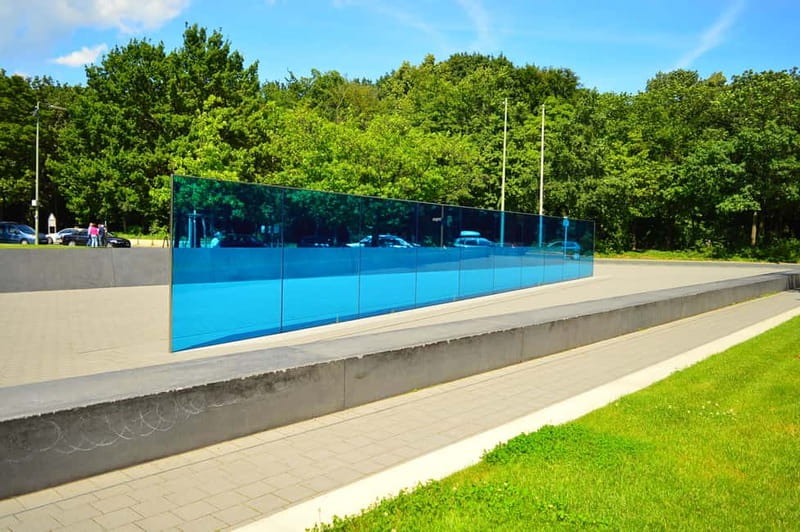
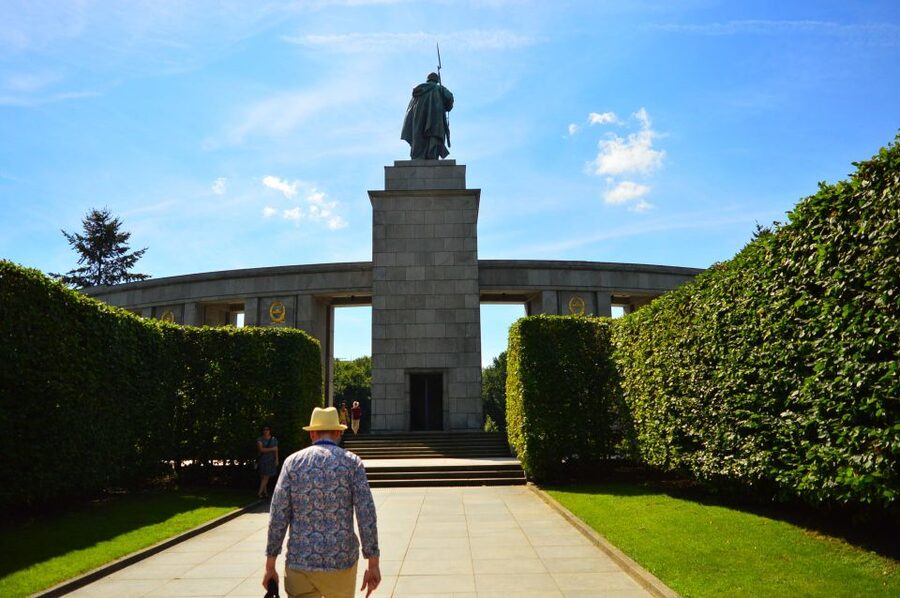
The tour ends its main historical sequence at the Soviet War Memorial, where T-34 tanks and Red Army howitzers flank the site. These military objects make the final phase of the war easier to picture, especially after the earlier discussion of Hitler’s bunker and the fighting around the Reichstag.
The memorial also adds a needed reminder that the defeat of Nazi Germany came through a vast military campaign with enormous losses. It is not simply the closing scene of Hitler’s story. The Red Army’s role, the destruction of Berlin, and the cost of the final assault all deserve attention.
For many people, this is among the most visually striking stops. The tanks and artillery provide clear reference points, while the memorial’s design carries its own political message. Your guide can help you consider both the memorial’s purpose and the events it commemorates.
The walk then returns to Friedrichstraße. Since the ending is back at the starting point, you can easily continue your day in central Berlin.
Three hours on foot: pace, groups, and comfort
Three hours is long enough to cover a lot, but short enough to fit into a busy Berlin schedule. You should expect steady walking between stops, with time for explanations and questions.
Wear comfortable shoes and clothing suited to the weather. The tour operates rain or shine, and much of the experience takes place outdoors. A light raincoat, warm layer, or sun protection can make a major difference.
Bring your own water. Artie’s guide advice is especially practical: there are no water or toilet breaks built into the tour. You may find shops or facilities near parts of the route, but the supplied information does not promise a scheduled stop, so plan ahead before meeting the group.
Group size can affect the experience. Small groups and private options are available, but the standard group may feel larger. Mikey is praised for being engaging, funny, and open to questions, though one comment found the group size less appealing.
A larger group can make it harder to hear, especially near busy streets. A private or small-group booking costs more than the basic $20 rate, but it may be worthwhile if you want a slower pace, more questions, or a more personal discussion.
Is $20 a good value in Berlin?
At around $20, this is a strong-value introduction to Nazi Berlin. You get three hours, a live guide, a central meeting point, and a route that covers several important locations.
The price is especially reasonable if you are new to the city and want a clear orientation before visiting museums or memorials on your own. A guide can connect scattered sites in a way a self-guided walk may not.
The low price also comes with limits. The basic experience is a walking tour, not a private lecture or an extended museum visit. You are paying for the guide’s route and explanations, while entry to separate attractions is not listed as included.
Free cancellation up to 24 hours before the start gives you some flexibility, and you can reserve now and pay later. Check the available starting times when booking, since the schedule can affect how easily the tour fits around other plans.
Who will get the most from this tour?
I would recommend it to first-time Berlin visitors, history students, and anyone who wants to understand how the Nazi government used the city as a center of power. It suits people who enjoy asking questions and learning through place.
It is also a good choice for families with older children or teenagers studying World War II. Martin is praised for making the material useful for a son preparing for GCSE history, which suggests that the guide can explain difficult subjects in a clear, approachable way.
You may want a different format if you dislike long walking tours, need frequent rest stops, or prefer to explore museum displays at your own pace. The subject is grim, and the route does not soften the reality of Nazi persecution, war, and mass death.
FAQ
How long does the Berlin Third Reich walking tour last?
The tour lasts three hours.
How much does the tour cost?
The listed price is $20 per person.
Where does the tour meet?
Meet outside Friedrichstraße train station, on the square between the station and the Tränenpalast, also called the Palace of Tears.
How do I identify the guide?
The guides wear a blue lanyard and yellow name tag and carry yellow umbrellas.
Where does the tour end?
The tour ends back at the Friedrichstraße meeting point.
Which languages are available?
Live guides are available in English, German, and Spanish.
Is hotel pickup available?
Pickup is available only for private options. For those bookings, wait in the hotel lobby five minutes before the scheduled pickup time and look for the guide’s yellow name tag.
Does the tour operate in bad weather?
Yes. The tour operates rain or shine, so bring weather-appropriate clothing.
What should I bring?
Bring comfortable shoes, comfortable clothing, and clothing suitable for the weather. You should also bring water because the tour does not include a scheduled water break.
Can I cancel the booking?
You can cancel up to 24 hours in advance for a full refund. You can also reserve now and pay later.
Should you book this Berlin history tour?
Book it if you want a well-organized introduction to Nazi Berlin, especially if you value strong storytelling over flashy interiors. The route brings together the former ministries, Germania plans, Führer’s Bunker site, Topography of Terror, Reichstag, Brandenburg Gate, and Soviet War Memorial in one morning or afternoon.
I would choose the small-group or private option if your budget allows and you want more time for questions. For the basic price, the standard tour is a practical buy, but bring water, wear proper shoes, and give the guide your full attention. The history is too important to experience while answering emails.
Just added around Berlin
- Private Walking Tour in Berlin: Hitler’s Germany & WWII★ 5.0 · 7 reviews
- The History of Berlin: WWII PRIVATE Walking Tour With Locals★ 5.0 · 209 reviews
- Private Berlin WWII and Cold War History Tour with Local Expert Guide★ 5.0 · 28 reviews
- Private Walking Tour Berlin 3 hours: Brandenburg, Historic Center★ 5.0 · 7 reviews
- Berlin: Private Bike Tour of the Berlin Wall and Third Reich★ 5.0 · 23 reviews
- Berlin: Guided Private Bike Tour to Explore the Highlights★ 5.0 · 12 reviews
- Berlin Photography Masterclass – Private Photography Lesson★ 4.5 · 23 reviews
- Group Driving Tour 1 to 6 people. Berlin Shore Excursion incl pick-up at Port★ 5.0 · 8 reviews