
Reviewed · THIRD REICH HISTORY TOURS
Berlin Third Reich Sites: Half-Day Walking Tour
Berlin’s darkest past is never far below street level. This four-hour walk links Jewish, Nazi, wartime, and postwar sites while an English-speaking historian-guide explains how they fit together. I like the efficient route, which covers far more ground than most people manage alone, and I like the chance to ask questions as the story unfolds. The main drawback is simple: you walk a lot, often outdoors, and the subject matter is heavy from start to finish.
At $21.77 per person, this is a strong buy for anyone who wants historical context without giving up a full afternoon. Guides such as Peter, Hannah, Tom, James, Jonathan, and Gregor have earned especially warm praise for clear explanations, good pacing, and sensitivity. Bring comfortable shoes, dress for the forecast, and arrive ready for serious history rather than a light sightseeing stroll.
In This Review
- The five things to know before you book
- Why this half-day format works
- Hackescher Markt, Jewish Berlin, and the opening context
- Anhalter Bahnhof and the reality of deportation
- The Topography of Terror and the machinery of dictatorship
- The former Aviation Ministry and the victims of Nazi rule
- Resistance at the Johann Georg Elser sculpture
- The Holocaust Memorial and the limits of a quick visit
- The memorial to persecuted homosexuals
- The Soviet Memorial in Tiergarten
- Finishing at the Reichstag
- Guides, group size, and the quality of the experience
- Walking demands, weather, and value
- Who should book this walk
- Should you book Berlin’s Third Reich walking tour?
- FAQ
- Where does the tour start?
- What time does the tour begin?
- Where does the tour finish?
- How long does the walking tour last?
- Is transportation included?
- What language is the tour offered in?
- How large is the group?
- Does the tour operate in bad weather?
- Can I cancel for a refund?
The five things to know before you book
- It begins at Hackescher Markt at 10:00 am: Meet at Neue Promenade 3 near the S-Bahn station, with the tour finishing outside the Reichstag.
- It connects ten important sites: You see places tied to Jewish Berlin, Nazi institutions, resistance, persecution, the Soviet victory, and the German parliament.
- The guide supplies the missing context: Historical photographs, personal stories, timelines, and answers to questions help turn scattered places into one understandable story.
- It is a real walking tour: The route lasts about four hours, so sturdy shoes and weather-ready clothing matter.
- The group can include up to 25 people: That is small enough for questions, though the experience may feel less intimate when fully booked.
- The price covers the guide but not transport: You need an AB Zone ticket, listed at about €3.80, from the station near the meeting point.
Why this half-day format works
The Third Reich period can feel scattered across Berlin. One memorial sits beside a government building, a museum occupies a former Nazi office, and a battered railway ruin gives little away unless someone explains what happened there. This tour solves that problem by creating a clear route through the city.
You begin with the rise of Adolf Hitler and the Nazi Party, then move through dictatorship, persecution, deportation, war, resistance, and defeat. The final stop is the Reichstag, connecting the Nazi seizure of power in 1933 with the fighting and collapse of 1945.
I like the four-hour length. It is long enough to build a proper timeline, but short enough to leave your afternoon open for museums, Checkpoint Charlie, the Berlin Wall, or a quiet meal. You are not locked into an all-day group outing.
The subject is also handled in a way that seems to suit many types of visitors. The strongest guide comments praise people who could explain difficult events without becoming cold or theatrical. Jono N, for example, was appreciated for balancing emotion with carefully timed humor. That matters here. Berlin’s Nazi sites need seriousness, but a guide who can speak naturally keeps the group alert and willing to ask questions.
More Third Reich History Tours in Berlin
- Berlin: Third Reich and Cold War 2 Hour Walking Tour
★ 4.9 · 6,830 reviews - Berlin’s Best: 2 Hour Walking Tour Third Reich and the Cold War
★ 5.0 · 5,486 reviews - Third Reich Berlin: Hitler and WWII Walking Tour
★ 5.0 · 3,301 reviews
Hackescher Markt, Jewish Berlin, and the opening context
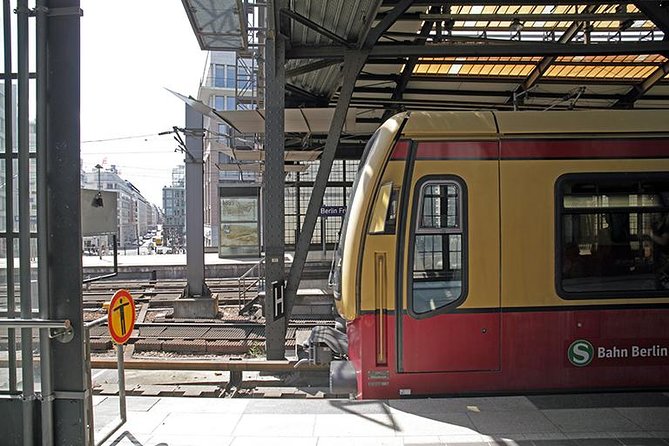
The meeting point at Neue Promenade 3 is near Hackescher Markt S-Bahn station. You will need to arrange the AB Zone transport ticket yourself, at about €3.80 per person. Since the tour starts at 10:00 am, allow enough time to reach the station and find the guide without rushing.
The opening section introduces Hitler, the Nazi Party, and the political conditions that allowed dictatorship to take hold. This early explanation is one of the most useful parts of the walk because the later sites make more sense once you understand the order of events.
The first stop is the Museum Blindenwerkstatt Otto Weidt. The guide explains the history of the workshop and its connection to Jewish life and survival under Nazi rule. You spend only about five minutes here, so treat it as a focused introduction rather than a museum visit.
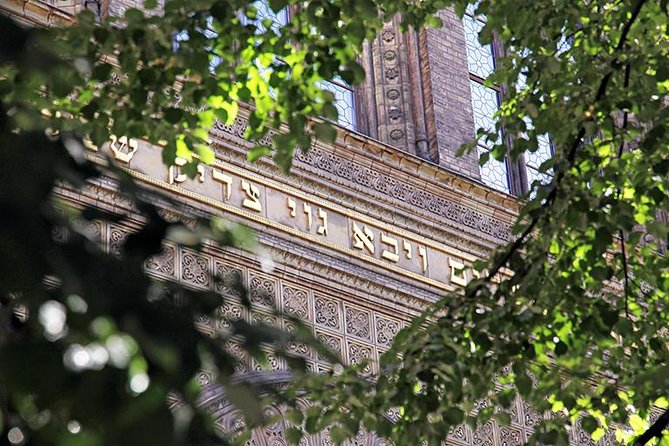
Next comes the Neue Synagoge Berlin, home of the Centrum Judaicum. Again, the stop is brief, with around five minutes devoted to the site. The value is not in entering for a long visit, but in hearing how the guide places Jewish Berlin within the city’s wider story before the tour moves toward deportation and state terror.
This portion is especially helpful if you have little background in Berlin’s Jewish community. It prevents the tour from treating Nazi persecution as an isolated military story. You see the human and civic world that existed before the regime attacked it.
Anhalter Bahnhof and the reality of deportation
The ruins of Anhalter Bahnhof are among the tour’s most affecting stops. Once one of Berlin’s major railway stations, the surviving fragment now looks incomplete and strangely quiet. The guide explains its role in the deportation of many Jewish residents to concentration camps.
The stop lasts about five minutes, but the site does not need a long speech to make an impression. The damaged remains force you to picture a functioning station, crowded trains, and people being removed from their homes by a state using ordinary systems for extraordinary cruelty.
This is where the route moves from political background to personal consequence. I find that useful because it keeps the history grounded. The Nazi regime was not only speeches, uniforms, and battlefield maps. It also depended on trains, offices, police orders, and public spaces that many Berliners knew well.
Do not expect an extended visit inside Anhalter Bahnhof. The attraction is the outdoor site and the explanation provided by your guide. If you want a fuller railway history or a longer look at the area, you will need to return independently.
The Topography of Terror and the machinery of dictatorship
The former SS and Gestapo headquarters on Prinz-Albrecht-Strasse are now associated with the Topography of Terror museum. The guide spends about 15 minutes here, making it one of the longer stops on the route.
This is a crucial point in the tour because the guide explains how the regime operated. The SS and Gestapo were not abstract symbols of evil. They were institutions with offices, officials, systems of surveillance, interrogation, and deportation. Understanding that machinery helps you see how persecution could spread through government departments and police structures.
The Topography of Terror site also helps explain why Berlin’s Nazi past can be difficult to read at street level. The buildings are gone or changed, while the historical importance remains. A guide provides the missing map.
Several guide comments praise the use of historical photographs and reference points. That technique is especially valuable here. Old images can show you what once occupied an otherwise ordinary-looking section of the city, making the distance between present-day Berlin and Nazi Berlin easier to grasp.
You may want more than the 15-minute stop allows. The Topography of Terror is also a museum, and this walking tour does not give you a full indoor museum session. If the subject interests you, return later and plan extra time for the exhibits.
More Walking Tours in Berlin
- Discover Berlin Half-Day Walking Tour
★ 5.0 · 9,624 reviews - Berlin: Discover Berlin Walking Tour
★ 4.9 · 5,998 reviews - Berlin: Hidden Backyards Guided Walking Tour
★ 4.8 · 5,360 reviews - Berlin: Alternative Berlin Walking Tour
★ 4.6 · 1,204 reviews
The former Aviation Ministry and the victims of Nazi rule
The next stop is the former Ministry of Aviation, once the German Luftwaffe headquarters. The building is important not only for its size and government role, but also for the way it brings military administration into the story.
Here the guide discusses the consequences of Nazi rule for Jewish people and for Sinti and Roma communities. That wider focus is important. A tour about the Third Reich should not reduce persecution to one group or treat the Holocaust as separate from the regime’s broader racial program.
The visit lasts about ten minutes. You hear about the building’s former function and the policies carried out by the government operating from places like it. The experience remains primarily explanatory, since the tour does not list an extended interior visit.
I appreciate this stop because it links ideology to administration. The building helps you consider how state offices, paperwork, military planning, and racial persecution could work together. It is a sobering lesson in how modern institutions can be used for destructive ends.
Resistance at the Johann Georg Elser sculpture
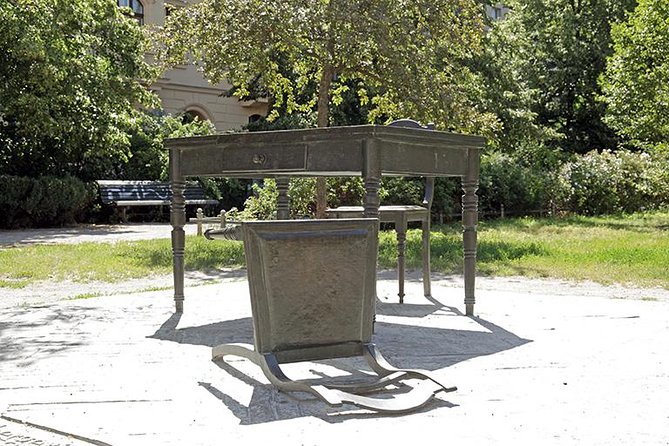
The Johann Georg Elser sculpture recalls an attempt to kill Hitler. The stop lasts about five minutes, but it adds an important complication to the usual story of German society under the Nazis.
Elser acted against Hitler before the war ended, and his story shows that opposition existed even while the regime held power. A brief explanation at the sculpture gives the tour a human face and creates space for questions about courage, risk, and the limits of resistance.
This is one of the shorter stops, so you should not expect a full biography. Still, I like its place in the route. After hearing about government institutions and mass persecution, you are reminded that individuals made choices, sometimes at terrible personal cost.
The Holocaust Memorial and the limits of a quick visit
The Memorial to the Murdered Jews of Europe is one of Berlin’s most recognizable sites. Its field of concrete blocks creates a physical experience that changes as you move through it. The tour allows about ten minutes here, with the guide explaining the memorial’s purpose and history.
Ten minutes is enough for orientation, but not enough for a slow, private visit. If you want to walk through the full field alone or visit the underground Information Centre, plan to return after the tour. This is a place where silence and unhurried thought matter.
The guide’s role is useful because the memorial can be misunderstood when seen only as an unusual arrangement of blocks. You receive the basic background, then can decide how much more time you want to spend with it.
The tour does not treat the Holocaust Memorial as the only story of persecution. The earlier stops on Jewish Berlin and deportation, followed by the discussion of Sinti and Roma communities, provide a broader frame.
The memorial to persecuted homosexuals
The Monument to Homosexuals Persecuted Under National Socialism receives about ten minutes. It gives the tour another chance to show that Nazi persecution affected several communities under the regime’s racial, social, and political rules.
The stop is short, but it matters because the memorial is easy to pass without understanding. Your guide explains what it commemorates and places it alongside the other sites visited during the morning.
This is a good example of the tour’s wider value. You are not simply ticking off famous Nazi landmarks. You are being asked to notice how remembrance in modern Berlin includes Jewish victims, Sinti and Roma victims, homosexual victims, political opponents, and others targeted by the state.
The Soviet Memorial in Tiergarten
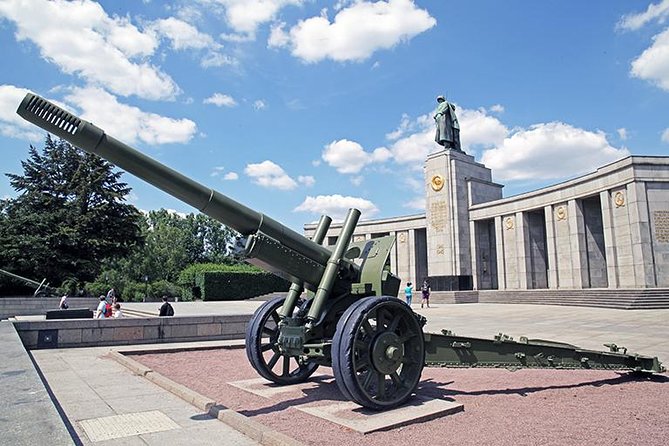
The Soviet Memorial in Tiergarten shifts the story toward the final phase of the war. The guide spends about ten minutes explaining the memorial and its place in Berlin’s wartime history.
This stop helps you understand that the tour is not only about Nazi crimes. It also covers the defeat of the regime and the force that reached Berlin in the final battles. The memorial adds a different political and military layer to the route.
You may find the change of focus useful after several emotionally heavy memorials. At the same time, it can feel like a lot of history in a short span. The guide’s pacing becomes important here. Strong guides such as Gregor and Tom were praised for helping people connect the events rather than simply listing them.
Finishing at the Reichstag
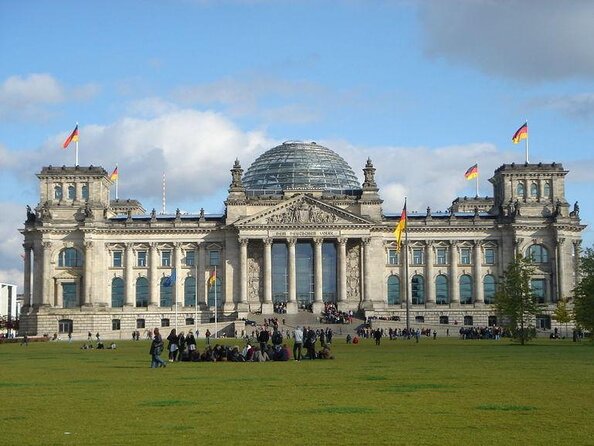
The tour ends outside the Reichstag Building at Platz der Republik. The guide explains the building’s importance, including the Nazi rise to power in 1933 and the final days of the war in 1945.
Ending here gives the walk a clear frame. You start with the political rise of Hitler and finish at a building tied to both the destruction of democracy and Berlin’s wartime collapse. It also places you close to other central sights, so you can continue exploring after the tour.
The tour ends outdoors rather than as an extended Reichstag visit. If you want to enter the building, that is a separate plan. Still, the location makes a practical finish. You are near the government quarter and can continue on foot or use public transport.
Guides, group size, and the quality of the experience
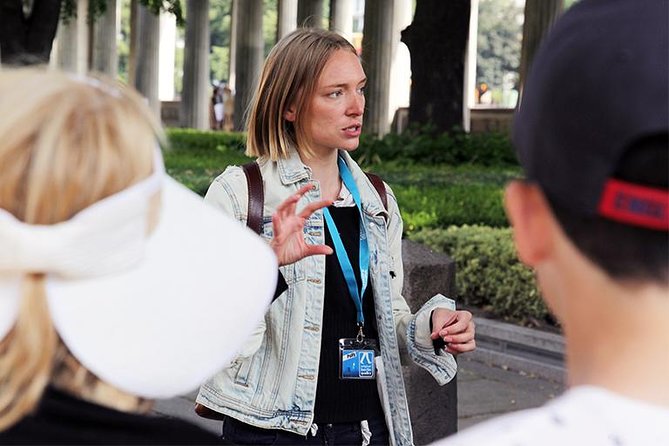
The guide makes or breaks a history walk, and this experience has attracted strong praise for its English delivery and teaching style. Peter was appreciated for being fun, clear, and sensitive. Hannah was praised for passion and strong command of the subject. James kept teenagers interested, while Jonathan answered questions and added personal detail.
Other guide names include Glen, Giles, Jimmy, Anja, Benjamin, Rebecca, Johnathan N, Jonny, Scott, Paul, Eran, and Gregor. The repeated pattern is clear: the best experience comes from a guide who can explain cause and effect, not simply recite dates.
The group limit is 25 people. That is not a private tour, but it is manageable for a city walk. You have a reasonable chance to hear the guide and ask questions, though a full group may feel less personal than a small one.
Several comments also point to easy-to-hear speaking, a friendly manner, and good interaction with different age groups. That makes the walk suitable for families with older children and teenagers, provided they are ready for difficult material.
Walking demands, weather, and value
Four hours on foot is the main practical issue. The route covers a wide section of central Berlin, and one direct comment makes the point plainly: wear comfortable shoes. A participant recovering from leg surgery completed the walk without trouble, but individual fitness and foot comfort vary.
The tour operates in all weather. Bring suitable clothing, since much of the experience takes place outside and the stops are not structured as long indoor visits. One person described very poor weather and still felt the tour was worth doing, but rain can make a serious walk less pleasant.
At $21.77, the tour offers good value if you want an organized introduction to Nazi Berlin. The guide, route planning, and four hours of explanation cost less than many museum admissions or private experiences. Add the roughly €3.80 transport ticket, and you still have a reasonably priced morning.
The value drops if you already know Berlin’s Third Reich sites well or prefer to read museum panels at your own speed. You will move with the group, spend limited time at each stop, and hear a broad story rather than study one location in depth.
Who should book this walk
I would choose this tour if you have only a few days in Berlin and want a strong historical framework early in your stay. It is also a good first activity before visiting the Topography of Terror or other museums independently.
You should book it if you:
- Want an English-speaking guide who can answer questions
- Prefer seeing many sites in one efficient morning
- Are interested in Jewish Berlin as well as military history
- Want to understand how Nazi institutions functioned
- Can walk for four hours in changing weather
- Prefer a group tour to planning a route alone
I would think twice if you want long periods of silence, extensive museum time, or a relaxed sightseeing pace. The subject is intense, the stops are often brief, and the walk asks you to stay focused.
Cancellation is free up to 24 hours before the start time. Any cancellation or change made later is not refunded, so check your plans before booking.
Should you book Berlin’s Third Reich walking tour?
Yes, for most first-time visitors with a serious interest in twentieth-century Berlin. The route gives you Jewish community history, deportation, Nazi administration, resistance, multiple memorials, the Soviet victory, and the Reichstag in one well-planned morning.
Book it for the guide and the connections between sites, not for long visits inside museums. Wear comfortable shoes, bring weather protection, and reserve extra time later if you want to explore the Topography of Terror or Holocaust Memorial at your own pace. At this price, it is a practical and thoughtful introduction to one of Berlin’s most important stories.
FAQ
Where does the tour start?
The tour starts at Neue Promenade 3, 10178 Berlin, near Hackescher Markt S-Bahn station.
What time does the tour begin?
The start time is 10:00 am.
Where does the tour finish?
The tour ends outside the Reichstag Building at Platz der Republik 1, 11011 Berlin.
How long does the walking tour last?
The tour lasts approximately four hours.
Is transportation included?
No. An AB Zone transport ticket is not included. It is available at the station near the meeting point and costs approximately €3.80 per person.
What language is the tour offered in?
The tour is offered in English and includes a professional English-speaking guide.
How large is the group?
The maximum group size is 25 people.
Does the tour operate in bad weather?
Yes. The tour operates in all weather conditions, so you should dress appropriately.
Can I cancel for a refund?
Yes. You can cancel at least 24 hours before the start time for a full refund. Cancellations or changes made less than 24 hours before the start time are not accepted for a refund.
Just added around Berlin
- Private Walking Tour in Berlin: Hitler’s Germany & WWII★ 5.0 · 7 reviews
- The History of Berlin: WWII PRIVATE Walking Tour With Locals★ 5.0 · 209 reviews
- Private Berlin WWII and Cold War History Tour with Local Expert Guide★ 5.0 · 28 reviews
- Private Walking Tour Berlin 3 hours: Brandenburg, Historic Center★ 5.0 · 7 reviews
- Berlin: Private Bike Tour of the Berlin Wall and Third Reich★ 5.0 · 23 reviews
- Berlin: Guided Private Bike Tour to Explore the Highlights★ 5.0 · 12 reviews
- Berlin Photography Masterclass – Private Photography Lesson★ 4.5 · 23 reviews
- Group Driving Tour 1 to 6 people. Berlin Shore Excursion incl pick-up at Port★ 5.0 · 8 reviews