
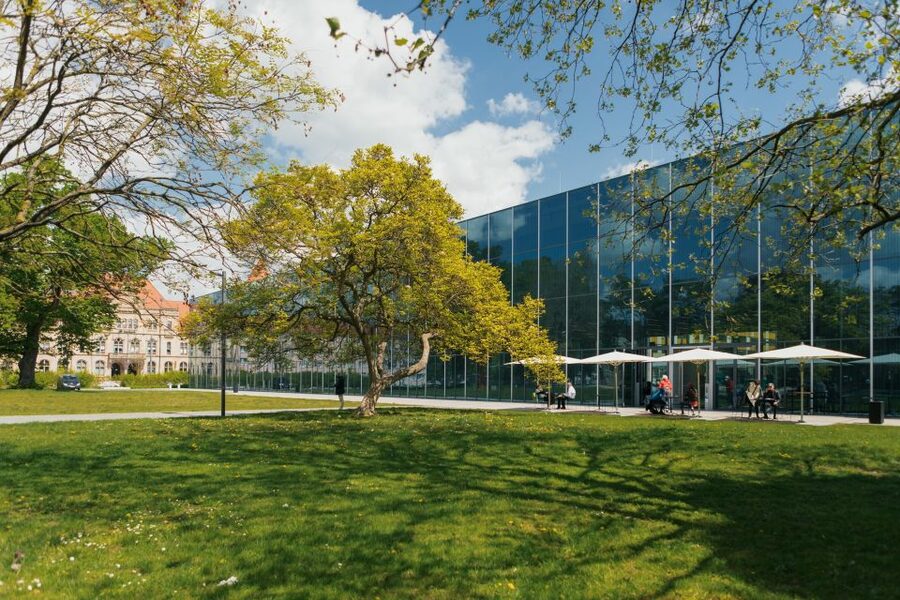
Reviewed · HISTORICAL TOURS
Dessau: Guided Walking Tour through History
Dessau’s story is bigger than its size. This 90-minute walking tour connects the city’s Bauhaus years with its princely past, political importance, music, industry, and the many people who helped shape modern Germany. I especially like the way the tour uses local anecdotes to make large historical subjects easier to grasp, and how it links famous names such as Walter Gropius, Kurt Weill, Moses Mendelssohn, and Hugo Junkers to the streets around you.
I also like the price: at $13 per person, this is an inexpensive way to get your bearings in Dessau while learning why the city matters. The main limitation is language. The live guide speaks German, so you will get the most from the tour if you understand German well enough to follow a fast-moving historical conversation.
In This Review
- Key points to know before you book
- Why Dessau deserves a guided introduction
- The opening walk through eight centuries
- From Mendelssohn to Kurt Weill
- Industry, invention, and the Müller brothers
- How Bauhaus fits into the walk
- Public spaces and the Basic Law
- What the anecdotes add
- Price, pace, and practical value
- Who should book this Dessau history walk
- Should you book it?
- FAQ
- How long does the Dessau guided walking tour last?
- What language is the tour conducted in?
- How much does the tour cost?
- What historical subjects does the tour cover?
- Does the tour discuss Bauhaus?
- Which notable people are connected with the tour?
- Is the tour wheelchair accessible?
- What happens if it rains?
- Can I cancel the booking?
Key points to know before you book
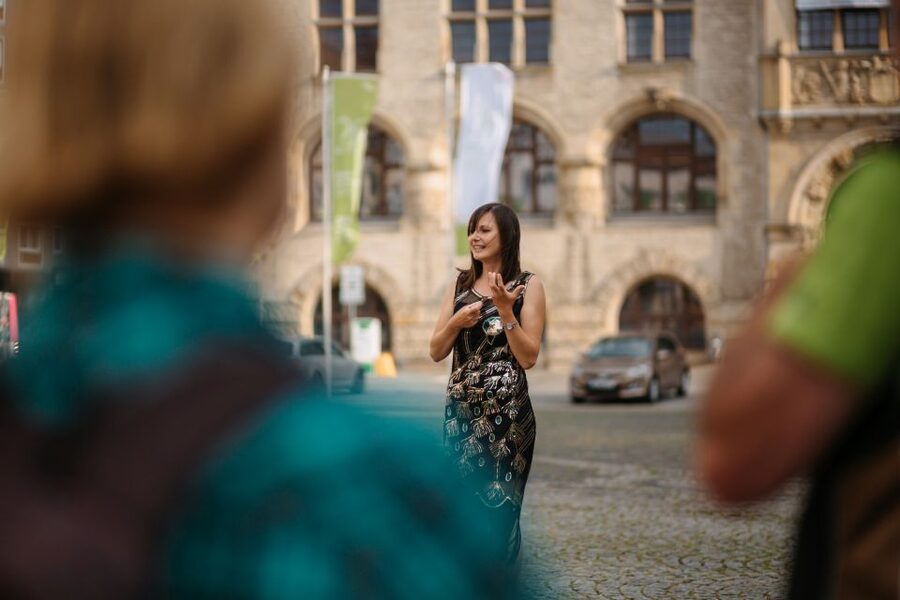
- Dessau’s eight centuries are covered in 90 minutes: The route moves from princes and garden design to Bauhaus, industry, music, and modern German politics.
- Bauhaus is only one part of the story: You learn how the movement came to Dessau, but the tour also covers the Basic Law and people born or active in the city.
- Anecdotes are central to the experience: Small stories help bring otherwise abstract dates, buildings, and public spaces to life.
- The city center is treated as an open-air history book: You will look at urban spaces and connect them with different periods rather than simply pass a list of sights.
- It is led in German: The tour is suitable for German-speaking visitors and for anyone comfortable following a live historical talk in German.
- The practical terms are friendly: You can cancel up to 24 hours ahead for a full refund, reserve now and pay later, and join in rain or shine.
Why Dessau deserves a guided introduction

Dessau-Roßlau is often approached through the Bauhaus. That is understandable. Walter Gropius, Wassily Kandinsky, and other major figures spent important years here, and the city remains closely tied to the school’s development.
But if you treat Dessau as only a Bauhaus destination, you miss much of its character. The city also connects to Prince Leopold III. Friedrich Franz, the designer Friedrich Wilhelm Erdmannsdorff, philosopher Moses Mendelssohn, composer Kurt Weill, industrialist Hugo Junkers, and the brothers Max and Wilhelm Müller.
That list gives you a sense of the tour’s range. It is not built around one famous building or one narrow period. Instead, it asks how a relatively compact city could produce, welcome, or support so many people connected with politics, design, music, philosophy, architecture, and engineering.
I find that approach useful because Dessau’s history can otherwise feel scattered. One moment you are thinking about an eighteenth-century prince, and the next you are considering modernist design or the foundations of postwar Germany. A guide can supply the links that a map or museum label cannot.
The tour also explains what Dessau has to do with the Basic Law, Germany’s postwar constitution. That subject gives the walk a political dimension beyond architecture and local heritage. You are not simply hearing which famous person lived where. You are being shown how the city fits into larger German events.
More History Tours in Germany:
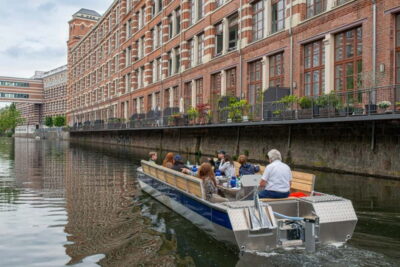
- Leipzig: City History Canal Sightseeing Tour on a Motorboat
★ 4.7 · 6,232 reviews - Berlin: Natural History Museum Entrance Ticket
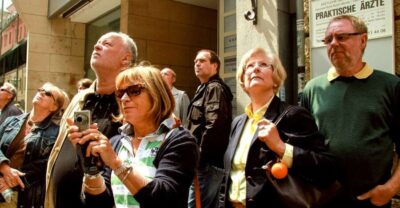
★ 4.6 · 3,382 reviews - Leipzig: 1.5-Hour Historical Walking Tour in German
★ 4.7 · 2,217 reviews
The opening walk through eight centuries
The tour is designed as a guided walk through Dessau-Roßlau’s changing history. The supplied information does not give a fixed stop-by-stop list, so you should not expect a tightly scripted sequence of named interiors or guaranteed admissions. Think of it as a city-center route where streets and public spaces become the main exhibits.
Early sections place Dessau in its princely and cultural setting. Prince Leopold III. Friedrich Franz is one of the historical figures connected with the city, as is Friedrich Wilhelm Erdmannsdorff. Their presence points to a period when local rulers and designers shaped the appearance and ambitions of the area.
A guide can make this part more useful than a quick look at a palace or square. You hear why a space mattered, who used it, and how its purpose changed. Even if you are not already interested in eighteenth-century German history, these stories help explain why Dessau developed the way it did.
This is also where the anecdotes matter. Two German participants who knew Dessau already said they learned something new about their own city and especially enjoyed the smaller stories. That is a strong sign that the tour is not limited to basic facts for first-time visitors.
From Mendelssohn to Kurt Weill
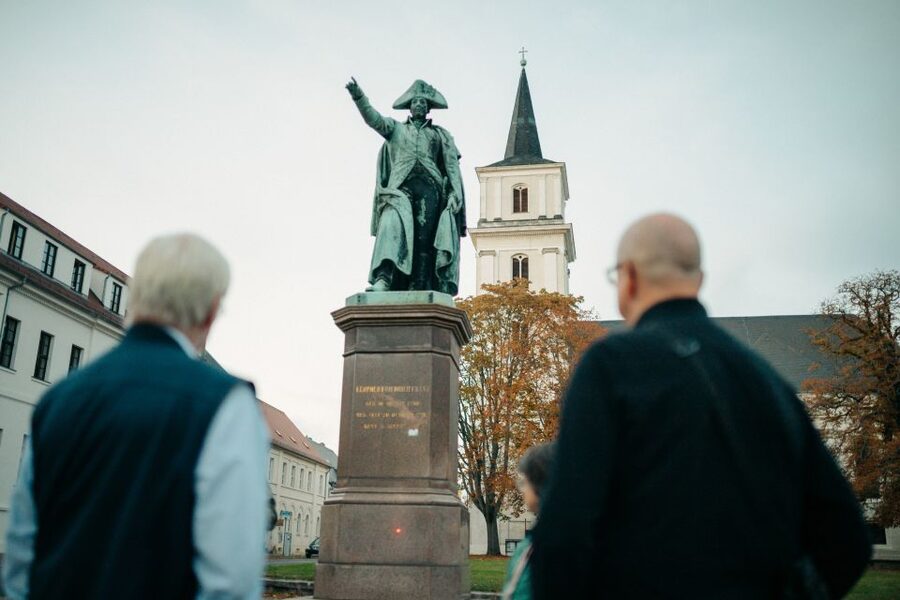
Dessau’s cultural history includes Moses Mendelssohn and Kurt Weill, two names with very different connections to Germany’s intellectual and musical life.
Moses Mendelssohn is associated with philosophy and the Jewish Enlightenment. Kurt Weill became known internationally as a composer. The tour’s promise to explain why some of Dessau’s children are better known abroad than in their birthplace gives you a useful way to approach these figures.
This theme is more interesting than a simple list of famous residents. It asks why recognition travels unevenly. A person may be celebrated in another country, remembered by specialists, or linked to a work that most people do not connect with Dessau at all.
Kurt Weill is a particularly good example of that problem. You may know his name from music history without realizing his connection with the city. The walking tour helps put his story back into a local setting, alongside people from periods that came before and after him.
I would expect this part of the experience to suit visitors who like cultural history but do not want a formal lecture. You can learn about music, philosophy, and local identity while continuing through the city rather than sitting in a classroom.
Industry, invention, and the Müller brothers
The tour also includes Hugo Junkers and Max and Wilhelm Müller. Their inclusion widens the story again, moving from culture and politics into industry, technology, and local enterprise.
Hugo Junkers is internationally associated with engineering and industrial innovation. Even without a separate visit to a technical museum, learning about his connection with Dessau gives you another way to understand the city. Dessau was not only a place of princely culture and artistic experimentation. It was also connected to practical invention and industrial work.
The Müller brothers add another local strand. The available information does not specify the exact sites or achievements discussed on the route, so you should rely on the guide to explain their role rather than expect a detailed independent interpretation in advance.
That uncertainty is not a major flaw, but it is worth knowing. This is a broad historical tour, not a specialist engineering walk. If your main goal is to study Junkers aircraft, Bauhaus architecture, or one particular family in depth, you may need a separate museum or longer visit afterward.
More Walking Tours in Germany:
- Discover Berlin Half-Day Walking Tour
★ 5.0 · 9,624 reviews - Berlin: Third Reich and Cold War 2 Hour Walking Tour
★ 4.9 · 6,830 reviews - Munich: Third Reich & WWII Walking Tour
★ 4.6 · 6,181 reviews - Berlin: Discover Berlin Walking Tour
★ 4.9 · 5,998 reviews
How Bauhaus fits into the walk
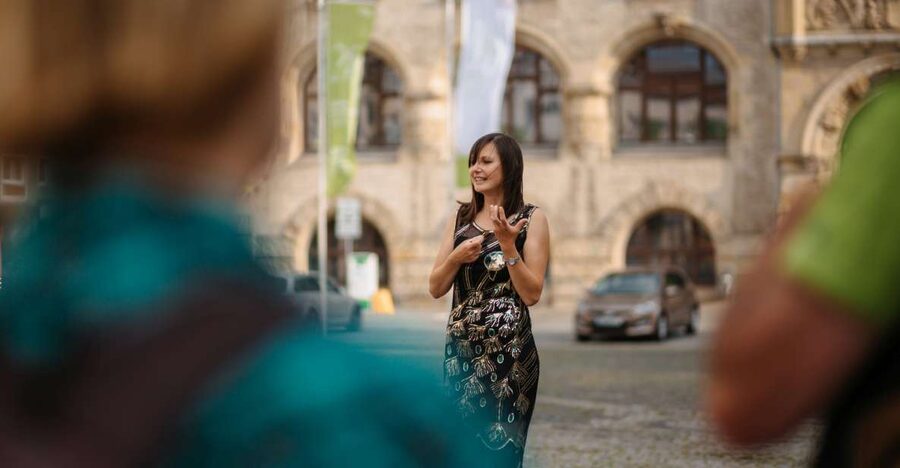
The Bauhaus section is likely to be the strongest draw for many people. Dessau is one of the key places connected with the school, and the tour explains how Bauhaus came to the city.
That wording matters. You are not only shown Bauhaus-related material as an isolated attraction. You learn why the school arrived, how it became part of Dessau’s identity, and how its presence fits within the city’s earlier history.
The tour includes Walter Gropius and Wassily Kandinsky among its major figures. Their names give the discussion a clear international reach, but the walk keeps the focus local. You are encouraged to see Dessau as the working setting behind the names, not merely as a backdrop for modern design history.
I like this format for a first visit. A Bauhaus building can be striking, but its meaning is easier to appreciate when you know what came before it. The guide’s job is to connect the modernist period with the city’s older civic spaces and with the people who shaped Dessau in other ways.
You should keep your expectations realistic. The information provided does not promise entry into Bauhaus buildings, a dedicated Bauhaus museum visit, or an architectural lecture. The experience is a general historical walking tour with Bauhaus as one major chapter.
Public spaces and the Basic Law
One of the more unusual promises is the explanation of Dessau’s connection with the Basic Law. This gives the tour a subject you might not encounter on a standard architecture walk.
The Basic Law is central to modern Germany, so its appearance in a Dessau walking tour helps show that local history does not stop at old rulers, famous composers, or design schools. Public spaces can carry political meaning, and a guide can point out how the city’s past relates to the country that followed the Second World War.
This is the sort of detail I value in a city tour. You may walk through a square or along a street and see only ordinary urban scenery. The guide adds the missing layer: who gathered there, which decisions affected the city, and why the place matters beyond its appearance.
The tour’s stated aim is to give contemporary witnesses from many periods a chance to speak. That is a lively way to describe the method. Rather than forcing the whole city into one tidy story, the guide lets different eras and personalities add their own voices.
What the anecdotes add
The most praised feature of this experience is its use of small stories. The two recent German ratings that mention specific strengths both point to the tour being informative, with one person asking for even more anecdotes after learning new things about Dessau.
That is useful guidance for choosing the tour. If you enjoy human details, odd connections, and short stories that make a place memorable, this format should suit you. You are likely to remember a person or incident more easily than a string of dates.
Anecdotes also help balance the heavier material. The Bauhaus, Basic Law, industrial history, and eight centuries of change can sound like a lot for 90 minutes. Short personal stories give the walk a more relaxed rhythm and keep it from becoming a history exam.
The balance is not guaranteed to suit everyone. If you want long stops with detailed analysis, the pace may feel brisk. A 90-minute route has to cover a wide range of subjects, so each person receives an introduction rather than a complete study.
Price, pace, and practical value
At $13 per person, the tour offers solid value for a first orientation to Dessau. You receive a trained guide, a 1.5-hour walking experience, and an explanation of several periods that would be difficult to connect on your own.
The price is especially fair if you plan to visit other attractions afterward. A short guided walk can help you decide which museums, historic places, or Bauhaus sites deserve more of your time. It may also prevent you from spending your first hours in the city without understanding what you are looking at.
The pace should be manageable for most people who are comfortable walking for 90 minutes. The tour is wheelchair accessible, which is an important practical advantage, though the exact walking surface and route details are not provided.
You need to show your voucher at the ticket counter before the tour begins. This is simple, but do not arrive assuming you can go straight to the guide without checking in.
The tour operates rain or shine. Bring suitable clothing if the forecast is poor, since this is an outdoor walking experience rather than a sheltered museum talk.
The booking terms are flexible. You can reserve and pay later, and cancellation is free up to 24 hours before the start time. The exact departure time depends on availability, so check the schedule that applies to your date.
Who should book this Dessau history walk
I would recommend it most strongly to first-time visitors who want context before visiting Dessau’s individual attractions. It also suits German speakers who enjoy local history, since the guide can explain the city’s connections in the language of the place.
The tour should work well for:
- Visitors interested in Bauhaus who want more than design history
- People curious about German politics and the Basic Law
- Music and philosophy enthusiasts
- Residents who think they already know Dessau
- Visitors who prefer stories and public spaces to a formal museum setting
- Anyone looking for a low-cost introduction lasting less than two hours
I would be more cautious if you speak little or no German. The guide language is German, and no other language is listed. You may still recognize names and subjects, but you would miss much of the detail that gives the experience its value.
I would also choose another activity if you want a specialist tour focused only on Bauhaus, Junkers, architecture, or one historical period. This experience works because it moves across subjects. That breadth is its strength, but it also means no single chapter receives a very long treatment.
Should you book it?
Book this tour if you want Dessau to make sense as a whole rather than as a collection of unrelated famous names. For $13, you get a practical introduction to the city’s princely, cultural, industrial, Bauhaus, and political connections, with local anecdotes adding personality.
Skip it if you need an English-language guide or a detailed specialist route. For German-speaking visitors, especially those new to Dessau or curious to see their own city differently, this is an affordable and worthwhile start.
FAQ
How long does the Dessau guided walking tour last?
The tour lasts 1.5 hours.
What language is the tour conducted in?
The live tour guide speaks German.
How much does the tour cost?
The listed price is $13 per person.
What historical subjects does the tour cover?
The tour covers Dessau’s eight hundred years of history, including its princely past, Bauhaus, the Basic Law, cultural figures, industrial figures, and the city’s changing urban spaces.
Does the tour discuss Bauhaus?
Yes. The tour explains how Bauhaus came to Dessau and includes figures such as Walter Gropius and Wassily Kandinsky.
Which notable people are connected with the tour?
The experience includes Prince Leopold III. Friedrich Franz, Friedrich Wilhelm Erdmannsdorff, Moses Mendelssohn, Kurt Weill, Max and Wilhelm Müller, Hugo Junkers, Walter Gropius, and Wassily Kandinsky.
Is the tour wheelchair accessible?
Yes, the tour is listed as wheelchair accessible.
What happens if it rains?
The tour takes place rain or shine.
Can I cancel the booking?
Yes. You can cancel up to 24 hours in advance for a full refund. You can also reserve now and pay later, subject to the booking terms.
Just added around Germany
- Private Walking Tour in Berlin: Hitler’s Germany & WWII★ 5.0 · 7 reviews
- The History of Berlin: WWII PRIVATE Walking Tour With Locals★ 5.0 · 209 reviews
- Private Berlin WWII and Cold War History Tour with Local Expert Guide★ 5.0 · 28 reviews
- Private Walking Tour Berlin 3 hours: Brandenburg, Historic Center★ 5.0 · 7 reviews
- Berlin: Private Bike Tour of the Berlin Wall and Third Reich★ 5.0 · 23 reviews
- Berlin Photography Masterclass – Private Photography Lesson★ 4.5 · 23 reviews
- Group Driving Tour 1 to 6 people. Berlin Shore Excursion incl pick-up at Port★ 5.0 · 8 reviews
- Berlin: Guided Private Bike Tour to Explore the Highlights★ 5.0 · 12 reviews
Historical Tours, compared.
City History Canal Sightseeing Tour on a Motorboat
Read our review →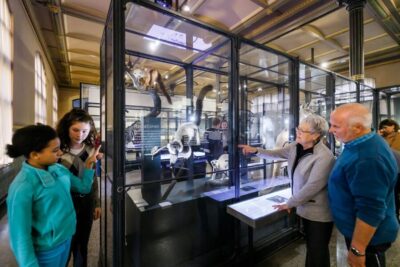
Browse the lists this tour appears in