

Reviewed · HISTORICAL TOURS
Explore Berlin History and Highlights Sightseeing Walking Tour
Berlin rewards anyone willing to walk through its past. This 3.5-hour route links the Brandenburg Gate, Holocaust Memorial, Checkpoint Charlie, Museum Island, and other major sights into one clear story of the city. I especially like the small group limit of 15 and the way the tour moves from Prussian Berlin through Nazi rule, the Cold War, and reunification. The guides, including Aurel, Cairan, Rhys, Eugen, Steve, Aaron, and Paul, are praised for making heavy subjects understandable and personal.
The main thing to consider is simple: this is a proper walking tour, not a sightseeing ride. You will cover a lot of ground, and one person specifically found the distance too much for a companion with limited mobility. Still, at about $32.58 per person, it offers a useful first look at central Berlin, especially if you want context rather than a quick photo stop.
In This Review
- Five useful things to know before you book
- A strong first morning in Berlin
- Brandenburg Gate and the Reichstag: Berlin’s grand front door
- The Holocaust Memorial and Führerbunker site
- From the Luftwaffe headquarters to the Topography of Terror
- Checkpoint Charlie and the divided city
- Gendarmenmarkt and Bebelplatz reveal Prussian Berlin
- Unter den Linden and the long road to Museum Island
- Guides who make the route work
- What the walking pace is really like
- Is this Berlin walking tour worth $32.58?
- Who should book it?
- FAQ
- How long is the Berlin history walking tour?
- What time does the tour begin?
- Where does the tour meet?
- Where does the tour end?
- Is the tour offered in English?
- How many people can join the tour?
- Are entrance tickets included?
- Can I cancel for a refund?
Five useful things to know before you book
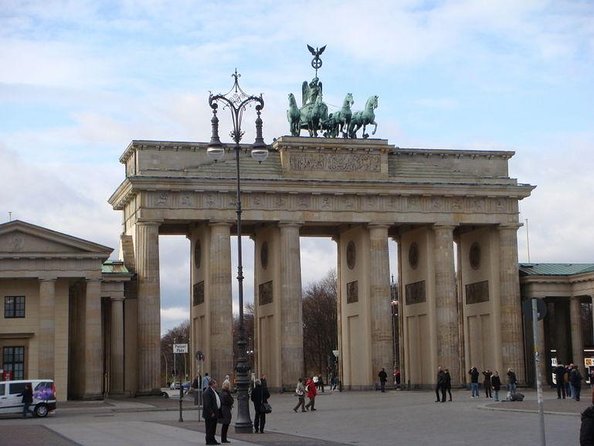
- The route covers 11 major sites: You see Berlin’s best-known landmarks, from the Brandenburg Gate to Museum Island, in one morning.
- The history is broad, not narrow: The guide connects imperial Berlin, Prussia, Nazism, World War II, the Cold War, and modern Germany.
- The group is capped at 15 people: That makes it easier to hear the guide and ask questions than on a large city tour.
- There are no admission tickets to manage: The experience focuses on outdoor explanations at each site.
- Start at 10:00 a.m. near the Brandenburg Gate: The meeting point is Wurst 🙂 am Brandenburger Tor, at Ebertstraße and Scheidemannstraße.
- The tour ends on Museum Island: You finish near Berlin Cathedral, the museums, and views toward Alexanderplatz.
A strong first morning in Berlin
I like this tour best as an early introduction to the city. Berlin can feel scattered at first, with grand Prussian buildings beside war ruins, modern government offices, memorials, and fragments of the Wall. A good guide gives those pieces an order, and this route does that by moving through the city’s central historic zone.
The timing also works well. Starting at 10:00 a.m. gives you a full morning without requiring an especially early alarm. The route lasts about three hours and 30 minutes, so you should expect a steady walk with pauses for explanation, questions, and photographs.
The tour is offered in English and includes an expert guide. It does not include transportation, food, or museum admission. That is not a flaw, but you should see it for what it is: a guided outdoor overview. If you want to enter the Reichstag, visit the Holocaust Memorial information center, or tour one of Museum Island’s museums, plan those separately.
The price is reasonable for the amount covered. You are paying for a guide who places 11 locations into one connected account, not for entry tickets. A private guide would normally cost far more, while a large free-style city walk may give you less individual attention. With a maximum of 15 people, this sits in a useful middle ground.
More History Tours in Berlin
- Berlin: Natural History Museum Entrance Ticket
★ 4.6 · 3,382 reviews - Berlin: World Heritage Cruise to Potsdam
★ 4.5 · 1,435 reviews - Berlin Historical Highlights Walking Tour
★ 4.9 · 657 reviews
Brandenburg Gate and the Reichstag: Berlin’s grand front door
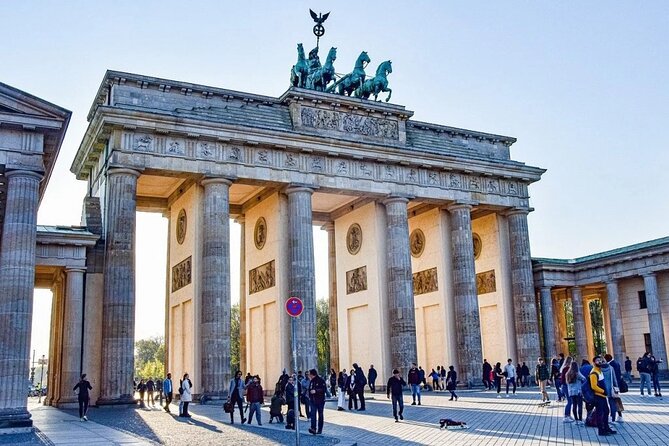
The walk begins at Wurst 🙂 am Brandenburger Tor, close to the Brandenburg Gate. The meeting point is at Ebertstraße and Scheidemannstraße, in the area around the gate. Check the confirmation carefully so you arrive at the correct corner rather than simply wandering around the monument.
The Brandenburg Gate is a good opening stop because it has witnessed so many changes in Berlin. It began as a symbol of Prussian power, later became tied to the division of the city, and eventually came to represent reunification. Your guide uses the gate to explain why Berlin’s political symbols keep changing meaning.
You have about 20 minutes here. That is enough for an introduction and photographs, though not a full architectural study. If you want the quietest pictures, one useful tip is to arrive before 10:00 a.m. or later in the day, when the area may be less crowded.
From there, the route continues to the Reichstag Building for another 20-minute stop. The building connects imperial Germany, the Nazi period, the Second World War, and today’s federal government. The guide explains its role as the parliament of the German Empire, the notorious fire shortly after Hitler became chancellor, and the building’s importance during the Soviet capture of Berlin in 1945.
The tour treats the Reichstag as an outdoor history lesson. There is no indication that entry to the dome or interior is included, so do not book this walk expecting an inside visit. Still, the building makes a powerful backdrop for understanding the city’s political upheavals.
The Holocaust Memorial and Führerbunker site
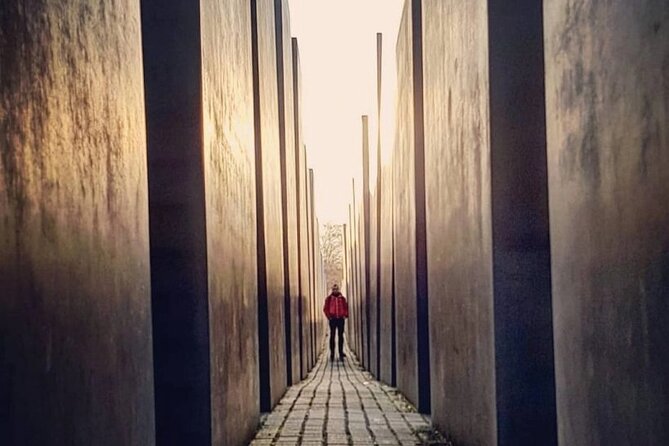
The Memorial to the Murdered Jews of Europe is one of the most serious stops on the route. You spend about 15 minutes learning why the memorial was built and how it addresses the crimes of the Nazi period.
The field of concrete blocks is deliberately unsettling. A guide can help you approach it with care, explain the site’s purpose, and give the memorial its proper historical setting. This is a place where a short explanation can prevent the visit from becoming just another photograph.
The tour then goes to the former Führerbunker site, now marked by an ordinary-looking car park. That contrast is part of the lesson. The bunker was located in the gardens of the New Reich Chancellery, and it was where Hitler ended his life as the Nazi regime collapsed.
Do not expect an underground visit. The bunker itself is not presented as an open attraction. Instead, the guide explains what stood here and why the unremarkable present-day setting matters. This stop is brief, about 15 minutes, but it helps you understand how much of central Berlin was destroyed, rebuilt, or deliberately left without grand decoration.
From the Luftwaffe headquarters to the Topography of Terror
The next stop is the Federal Ministry of Finance, a working government building that formerly served as the headquarters of the Luftwaffe. You spend around 15 minutes hearing about its construction, changing uses, and Cold War connections.
This is a particularly useful Berlin sight because the building’s current purpose can hide its past. The tour shows you how the same structure has been used by different political systems. That approach is one of the route’s strengths: it does not treat history as something locked inside museums.
At the Topography of Terror, the focus turns directly to Nazi persecution. The site once housed the headquarters of the SS, Gestapo, and SD. The 20-minute stop covers the Nazi period and the way postwar Germany chose to memorialize the location.
This is another stop where context helps. The site is not simply about military offices or government architecture. It points to the machinery of terror behind the regime. You can expect a sober explanation rather than a light sightseeing pause.
Because the route covers difficult material in quick succession, this part may feel intense. That is worth knowing before booking. The tour is not only about pretty buildings and famous photographs. It asks you to confront the city’s darkest chapters while walking through places where those events unfolded.
More Walking Tours in Berlin
- Discover Berlin Half-Day Walking Tour
★ 5.0 · 9,624 reviews - Berlin: Third Reich and Cold War 2 Hour Walking Tour
★ 4.9 · 6,830 reviews - Berlin: Discover Berlin Walking Tour
★ 4.9 · 5,998 reviews - Berlin’s Best: 2 Hour Walking Tour Third Reich and the Cold War
★ 5.0 · 5,486 reviews
Checkpoint Charlie and the divided city
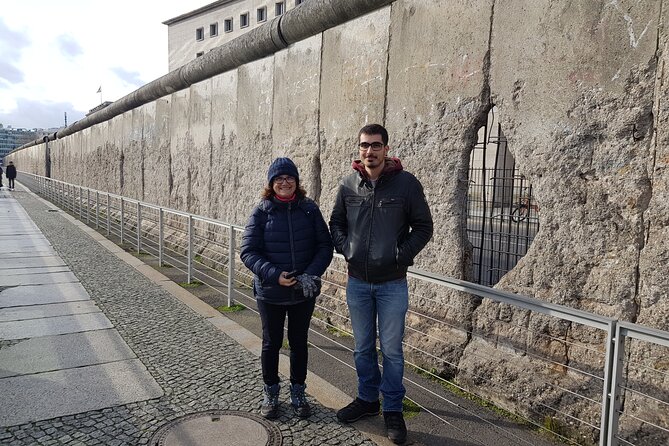
Checkpoint Charlie receives about 20 minutes. It is one of the best-known Cold War locations in Berlin, though the present-day scene can feel more commercial than historic.
A guide adds value here by separating the real border crossing from the later tourist display. You hear about the checkpoint’s role in divided Berlin and the wider struggle between East and West. The stop works best when you treat the replica signs and photo opportunities as a starting point, not the entire story.
The route’s timeline also benefits from this shift. After the Nazi sites, Checkpoint Charlie shows how Berlin’s political divisions continued after 1945. You begin to see the city not as a series of unrelated monuments, but as a place repeatedly reshaped by power, ideology, war, and diplomacy.
Gendarmenmarkt and Bebelplatz reveal Prussian Berlin
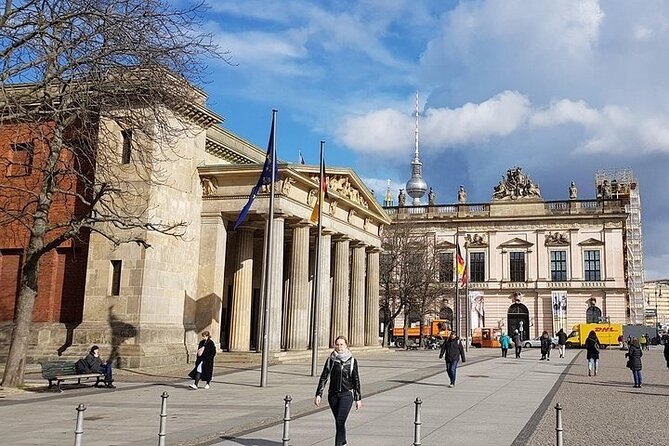
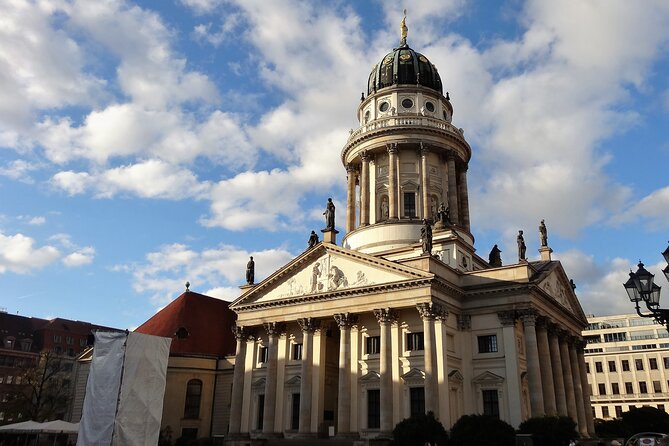
Gendarmenmarkt changes the visual mood. The square is surrounded by grand 18th and 19th-century architecture, and the guide explains its foundation and development. You have about 15 minutes to hear about the square and take in its design.
This is one of the route’s more beautiful stops. It gives you a pause from memorials and government buildings while showing how Frederick the Great’s Berlin was planned and presented. The architectural detail also helps balance the political history with the city’s cultural and royal past.
At Bebelplatz, the focus returns to a darker event: the Nazi book burning of 1933. The square is framed by the grandeur of the old Prussian capital, which makes the memorial to the book burning especially striking.
You spend about 15 minutes here. The stop connects architecture, censorship, propaganda, and the early stages of Nazi rule. It is a good example of the tour’s method: look at the buildings, then ask what happened among them and why the memory remains visible.
Unter den Linden and the long road to Museum Island
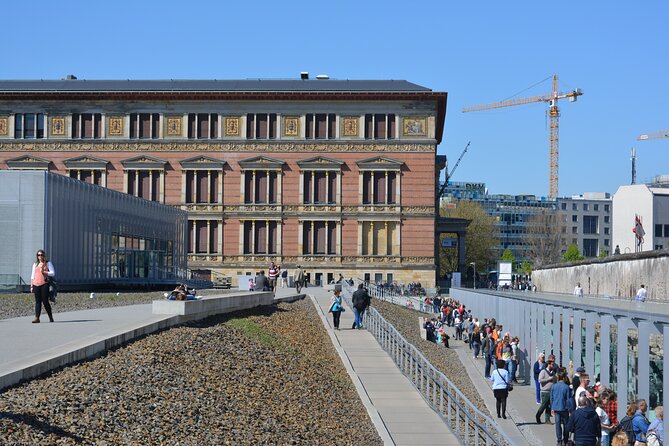
The walk continues along the eastern end of Unter den Linden for approximately 20 minutes. This historic boulevard brings together several important places, including Humboldt University, the Memorial to the Victims of War and Tyranny, and the German Historical Museum.
This section helps you read Berlin’s public spaces. A university, a memorial, and a major museum sit close together, each offering a different view of Germany’s past. The guide explains the buildings and the ideas attached to them, rather than simply naming them as you pass.
The route ends on Museum Island, after another 20-minute stop. This area was part of medieval Berlin and later became home to the City Palace, Berlin Cathedral, and five major museums. From the eastern side of the island, you look toward Alexanderplatz, a central landmark of postwar East Berlin.
Ending here is practical. You are close to major museums and other central sights, so you can continue sightseeing after the tour. You will not have time to visit the museums during the walk, but the guide’s overview can help you choose what to see next.
Guides who make the route work
The strongest part of this experience is the guiding. Aurel is praised for explaining architecture, wartime destruction, rebuilding decisions, and the city’s development through to the present. He also used personal photographs connected to East Berlin, which gave the Cold War section a more human angle.
Cairan is described as friendly, patient, and especially strong at connecting individual sites to German and world history. He reportedly used simple exercises to help the group relate to the past, rather than hearing only a chain of dates. Rhys is praised for humor, clear delivery, and the ability to keep the information accessible, including for someone with only basic English.
Other named guides include Eugen, Steve, Aaron, and Paul. Eugen is noted for being flexible and relaxed, Steve for arranging the story in chronological order, Aaron for warmth and enthusiasm, and Paul for being patient with children and answering questions carefully.
Guide quality can vary on any scheduled group tour, so you cannot select a particular guide from the information provided. Still, the repeated praise for clear explanations, enthusiasm, patience, and personal connection is a strong sign of what the company aims to provide.
What the walking pace is really like
You should prepare for a substantial city walk. The tour moves between 11 stops, with the listed explanations totaling several hours before counting the distance between them. Wear comfortable shoes, bring water, and consider a snack. One useful piece of advice from the experience is simple: there is a lot to take in.
The route is likely manageable for most participants, as the booking information says most people can take part. But it is not designed for someone who cannot walk a long distance. Service animals are allowed, and the meeting point is near public transportation, yet the tour itself remains on foot.
The small group limit matters here. Fifteen people is still a group, but it is small enough for the guide to answer questions and keep people together. Some departures may be much smaller, and one group had only three people, creating a more personal experience.
The tour is also a good fit for English speakers who want history explained in plain terms. The guides are praised for easy-to-understand English, thoughtful storytelling, and a relaxed manner. Families can enjoy it, although the subject matter at the Holocaust Memorial, Führerbunker, and Topography of Terror may be heavy for younger children.
Is this Berlin walking tour worth $32.58?
For $32.58, I consider this good value if you want a guided orientation to central Berlin. You see the city’s most famous political and historical sites without paying separate admission fees, and you receive an organized explanation of how they connect.
The value is less clear if you prefer entering buildings. The route is mainly outdoors, and the listed stops do not include museum tickets, the Reichstag dome, or an underground bunker visit. You are buying interpretation, route planning, and the chance to ask questions, not access to closed attractions.
The tour has a 4.9 rating from 81 reviews, with 99 percent recommending it. Those numbers do not guarantee that every guide or departure will feel identical, but they support the idea that the experience consistently delivers its main purpose: a clear, engaging history walk.
Free cancellation is available if you cancel at least 24 hours before the 10:00 a.m. start time. Changes or cancellations made less than 24 hours before the start are not refunded, so keep that deadline in mind.
Who should book it?
I would choose this tour if you have limited time in Berlin and want to understand the central sights before exploring alone. It is especially useful for first-time visitors, history fans, English-speaking families, and anyone who wants a guide to connect Prussia, Nazism, the Cold War, and reunification.
I would skip it if you need frequent transport, cannot walk for several hours, or mainly want interior visits. You may also prefer a shorter tour if memorials and political history are not your main interests.
For most able walkers, this is a smart first morning. You finish on Museum Island with a better sense of where Berlin’s major chapters took place, plus practical ideas for what to visit next.
FAQ
How long is the Berlin history walking tour?
The tour lasts approximately three hours and 30 minutes.
What time does the tour begin?
The tour starts at 10:00 a.m.
Where does the tour meet?
It meets at Wurst 🙂 am Brandenburger Tor, at Ebertstraße and Scheidemannstraße, 10117 Berlin, Germany.
Where does the tour end?
The tour ends on Museum Island at 10 Berlin, Germany.
Is the tour offered in English?
Yes. The experience is offered in English.
How many people can join the tour?
The maximum group size is 15 people.
Are entrance tickets included?
No admission tickets are required for the listed outdoor stops, and the experience includes only an expert tour guide. Museum entry and other admissions are not included.
Can I cancel for a refund?
Yes. You can cancel up to 24 hours before the experience start time for a full refund. Cancellations made less than 24 hours before the start time are not refunded.
Just added around Berlin
- Private Walking Tour in Berlin: Hitler’s Germany & WWII★ 5.0 · 7 reviews
- The History of Berlin: WWII PRIVATE Walking Tour With Locals★ 5.0 · 209 reviews
- Private Berlin WWII and Cold War History Tour with Local Expert Guide★ 5.0 · 28 reviews
- Private Walking Tour Berlin 3 hours: Brandenburg, Historic Center★ 5.0 · 7 reviews
- Berlin: Private Bike Tour of the Berlin Wall and Third Reich★ 5.0 · 23 reviews
- Berlin: Guided Private Bike Tour to Explore the Highlights★ 5.0 · 12 reviews
- Berlin Photography Masterclass – Private Photography Lesson★ 4.5 · 23 reviews
- Group Driving Tour 1 to 6 people. Berlin Shore Excursion incl pick-up at Port★ 5.0 · 8 reviews
Historical Tours, compared.
City History Canal Sightseeing Tour on a Motorboat
Read our review →
Browse the lists this tour appears in