
Reviewed · HISTORICAL TOURS
Historical Walking Tour of Augsburg
Augsburg’s best stories are close together. This 2.5-hour walk links the city’s grand Rathaus, Fugger landmarks, canals, museums, and cathedral in one clear route through the old town. For $20, I like that you get a live English-speaking guide and access to Augsburg Cathedral without paying for a long, tiring day out.
I especially like the focus on Elias Holl’s Renaissance Town Hall and the chance to connect Augsburg’s merchant wealth with the Fugger family. The stops at the birthplaces of Bertolt Brecht and Leopold Mozart also give the walk a personal touch. The main drawback is practical: it involves a moderate amount of walking and is not suitable for wheelchair users or people with mobility impairments.
In This Review
- Key points to know before you book
- Why this Augsburg walk is worth your morning
- Starting in Rathausplatz beneath Augsburg’s Rathaus
- Following the Fuggers through Augsburg’s old town
- The canals and the little Venice district
- Bertolt Brecht’s birthplace and Augsburg’s literary side
- Leopold Mozart Haus and the family behind the music
- Inside Augsburg Cathedral with Romanesque and Gothic details
- What the $20 price really covers
- Practical advice for the 11 a.m. start
- Who should book this Augsburg tour?
- Should you book the Historical Walking Tour of Augsburg?
- FAQ
- Where does the Augsburg walking tour begin?
- Where does the tour finish?
- How long does the tour last?
- What language is the tour offered in?
- Is Augsburg Cathedral included?
- What should I bring?
Key points to know before you book
- The tour begins at 11 a.m. in Rathausplatz, beside the yellow umbrella, and finishes back at the same meeting point.
- Augsburg Town Hall is the visual centerpiece, with the famous Goldener Saal inside.
- The Fugger section explains how merchant wealth shaped the city, rather than treating Augsburg as just another old German town.
- You visit both Brechthaus and Leopold Mozart Haus, giving the tour a strong cultural and musical side.
- Augsburg Cathedral is included, with Romanesque and Gothic features, 12th-century stained-glass windows, and a detailed bronze door.
- The tour runs in most weather except rain and snow, so comfortable shoes and suitable clothing matter.
Why this Augsburg walk is worth your morning
Augsburg can be easy to underestimate. Many people pass through Bavaria chasing castles, mountain views, or Munich’s beer halls. This walk makes a good case for slowing down in a city shaped by merchants, musicians, writers, civic ambition, and religious history.
The route is also sensibly arranged. You begin in Rathausplatz, the city’s central square, then move through the old town toward Fugger landmarks, the canal district, the Brechthaus, Leopold Mozart Haus, and Augsburg Cathedral. You are not simply ticking off isolated sights. Each stop adds another piece to the city’s story.
I would call the pace moderate rather than strenuous. Two and a half hours is long enough to provide context but short enough to fit into a larger day in Augsburg. You should still wear proper walking shoes, since the tour takes place outdoors for much of the route and includes several old-town sections.
The English-speaking guide is an important part of the value. A self-guided walk can show you the buildings, but it may not explain why the Fugger family matters or how Augsburg connects to Brecht and the Mozart family. Guide Mike has earned especially warm praise for his humor, historical detail, and willingness to adjust the walk to individual interests.
More History Tours in Germany:
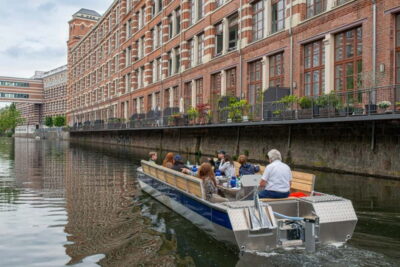
- Leipzig: City History Canal Sightseeing Tour on a Motorboat
★ 4.7 · 6,232 reviews - Berlin: Natural History Museum Entrance Ticket
★ 4.6 · 3,382 reviews - Leipzig: 1.5-Hour Historical Walking Tour in German
★ 4.7 · 2,217 reviews
Starting in Rathausplatz beneath Augsburg’s Rathaus
Your meeting point is Rathausplatz at 11 a.m. Look for the yellow umbrella. That is a simple arrangement, but it is worth arriving a few minutes early because the square can be busy and you do not want to start the walk searching for the group.
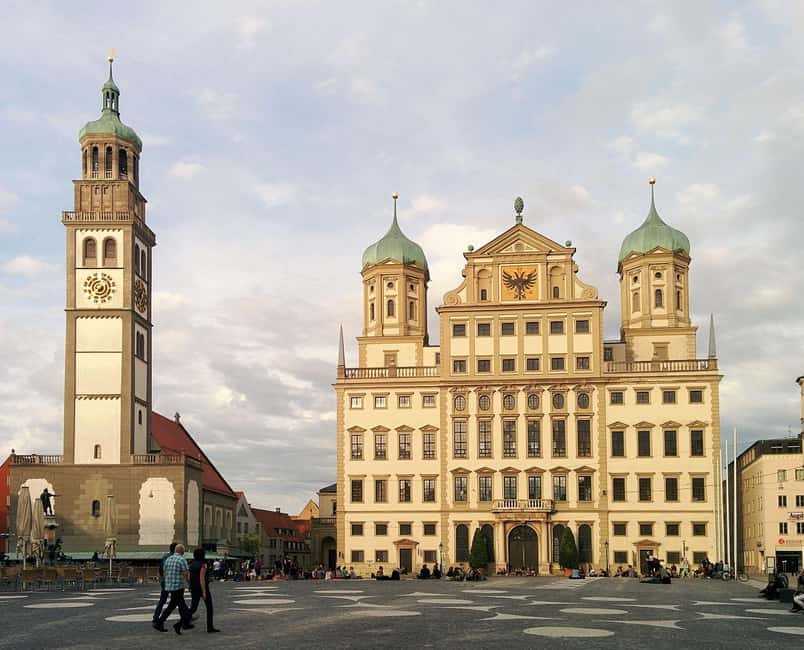
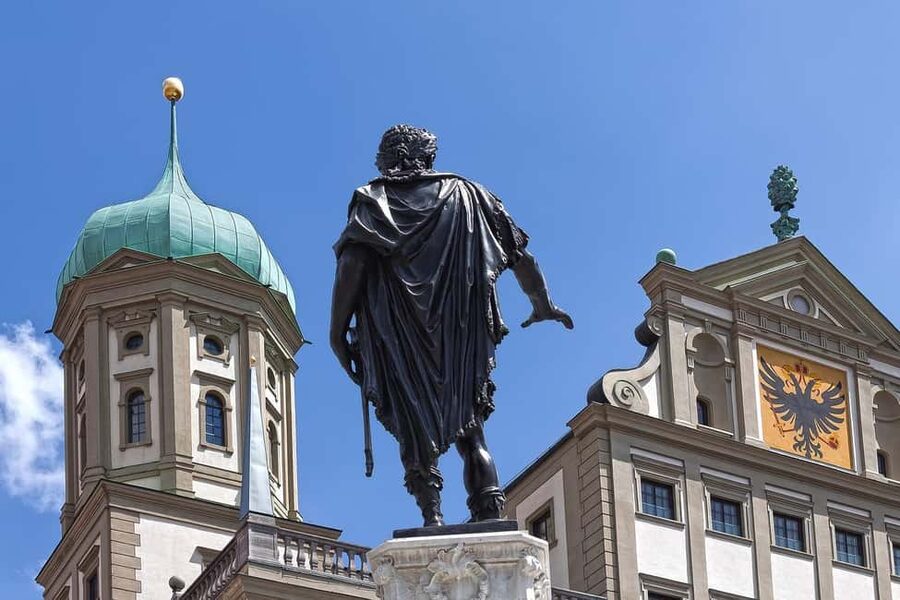
Rathausplatz gives you an immediate sense of Augsburg’s civic pride. The Augsburg Town Hall is the key sight here, a Renaissance masterpiece designed by Elias Holl. Its famous Goldener Saal, or Golden Hall, is the detail to watch for inside.
The hall is the sort of place where a guide adds real value. You can admire ornate architecture on your own, but a good explanation helps you understand the ambition behind it. The building is not presented merely as a pretty façade. It reflects Augsburg’s wealth and confidence during a period when the city had serious commercial power.
The nearby Perlach Tower adds a different note. This former watchtower offers panoramic views of the city. The tour information does not promise a tower climb, so you should treat it as a landmark and possible viewpoint rather than assume you will go to the top. Even from the square, it helps you read Augsburg’s old center and understand how tightly the main sights are grouped.
This opening section is especially useful if you have just arrived in Augsburg. Rathausplatz works as a quick orientation point, and the guide can help you recognize the city’s main landmarks before you set off through the smaller streets.
Following the Fuggers through Augsburg’s old town
From the town hall area, the walk continues to Fugger Square. This is where Augsburg’s commercial story comes into focus.
The Fugger family was one of Europe’s most powerful merchant families. That fact gives the city a different character from towns known mainly for royal courts or military monuments. Augsburg’s history is also a story of trade, finance, family influence, and the public buildings that wealth could create.
I like this part of the tour because it gives meaning to the grand architecture you saw at the start. The Rathaus does not feel like a random display of decoration once you connect it with the economic power behind Augsburg’s growth.
Fugger Square is also a good place to listen closely to the guide. The exact details of the family story can be difficult to absorb from a plaque, while a live explanation can put the Fuggers into the wider story of Europe. The walk’s Australian visitors were particularly pleased by the Fugger-focused part of their experience, which suggests this section can be a highlight for people who enjoy social and economic history as much as royal names and battles.
The tour does not turn the Fuggers into cardboard heroes. Its value is in showing how their success affected the city. You get a better sense of why Augsburg has such impressive civic and religious buildings, and how private fortunes could shape public life.
The canals and the little Venice district
The route then reaches little Venice, a picturesque district with canals that recall Venice. This is a welcome change of mood after the formal scale of the town hall and Fugger buildings.
Here, I would keep your camera ready. The canals and old-town setting give you some of the walk’s most photogenic moments, and photography is allowed throughout the tour. The district is also a useful reminder that Augsburg is not only about monumental architecture. Smaller waterways and streets add texture to the city center.
Do not expect a full Venetian-style canal experience. The attraction is the atmosphere and the contrast with the grand civic sights, not a boat trip or a large waterfront quarter. This section works best as a short scenic pause within the wider historical route.
Because the tour operates outdoors and does not run in rain or snow, weather matters here. On a clear day, the canals should be a pleasant part of the walk. In colder or damp conditions, dress properly and remember that the route still includes other exterior sections before you reach the cathedral.
More Walking Tours in Germany:
- Discover Berlin Half-Day Walking Tour
★ 5.0 · 9,624 reviews - Berlin: Third Reich and Cold War 2 Hour Walking Tour
★ 4.9 · 6,830 reviews - Munich: Third Reich & WWII Walking Tour
★ 4.6 · 6,181 reviews - Berlin: Discover Berlin Walking Tour
★ 4.9 · 5,998 reviews
Bertolt Brecht’s birthplace and Augsburg’s literary side
The next major stop is Brechthaus, the birthplace of playwright Bertolt Brecht. It now serves as a museum dedicated to his life and work.
This stop gives the tour a strong literary angle. Brecht is not included as a random famous name. Visiting his birthplace ties Augsburg to modern theater and reminds you that the city’s cultural identity reaches far beyond its older monuments.
The available information does not promise a long museum visit or a detailed interior tour, so you should expect the guide to place Brechthaus within the walking route rather than spend the entire afternoon inside. That is probably the right balance for a city tour. You get the location, the connection to Brecht, and the chance to decide later if you want to return for a longer visit.
I like the way this stop breaks up the architectural focus. After hearing about merchants and civic power, you turn to an individual artist and his work. It makes the city feel less like a collection of old buildings and more like a place where different kinds of people have lived and worked.
Leopold Mozart Haus and the family behind the music
Leopold Mozart Haus is the birthplace of Leopold Mozart, father of Wolfgang Amadeus Mozart. The building is now a museum covering the musical history of the Mozart family.
This is a particularly useful stop for anyone interested in classical music, but you do not need to be a serious Mozart fan to appreciate it. The family connection gives Augsburg another cultural link, this time through music rather than theater.
The stop also helps put Wolfgang Amadeus Mozart’s family story into a wider setting. The focus here is not only on the more famous son. Leopold Mozart’s birthplace gives him his own place in the story and shows how the city connects with the family before Wolfgang became the better-known name.
As with Brechthaus, the walk should not be mistaken for a full museum visit. The stated experience includes a stop at Leopold Mozart Haus, but it does not specify a lengthy guided tour of every exhibit. If the museum is a main reason for your visit, check how much interior time is available and consider returning independently.
For most people, though, this is a smart addition. It keeps the tour varied and gives you another reason to explore Augsburg beyond the town hall and cathedral.
Inside Augsburg Cathedral with Romanesque and Gothic details
The final major stop is Augsburg Cathedral, or Dom. The building combines Romanesque and Gothic elements, giving you a chance to see different periods in one place.
The cathedral is included in the $20 price, which improves the tour’s value. You are not only walking past the exterior. You can go inside and look for the 12th-century stained-glass windows and the detailed bronze door.
Those windows are the key detail to seek out. They provide a direct link to Augsburg’s medieval past, while the bronze door adds close-up detail after the wider views of the church exterior. A guide can help you notice features you might otherwise pass without a second look.
Ending at the cathedral is also a sensible choice. It gives the walk a strong final sight and brings together several themes from the morning: religious influence, civic wealth, artistic skill, and the long development of the city.
The tour finishes back at Rathausplatz, so you are returned to the same central area where you began. That makes it easy to continue sightseeing, find food, or make your way to another part of Augsburg afterward.
What the $20 price really covers
At $20 per person, this is a strong value if you want an introduction to Augsburg rather than a private, specialist tour. The price includes a guided walk through the historic landmarks and access to Augsburg Cathedral. Food, drinks, and hotel pickup are not included.
The value comes from the range of subjects covered in 2.5 hours. You get architecture at the Rathaus, a merchant-family story at Fugger Square, canals in little Venice, literary history at Brechthaus, music at Leopold Mozart Haus, and religious art at the cathedral.
You are also paying for interpretation. The buildings are free to see from the street, but the guide helps connect them. That matters in Augsburg, where the best parts of the story are spread across different types of sights.
The tour is less suitable if you want long, unhurried museum visits. It is designed as a moving overview, with multiple stops and a fixed finish back at Rathausplatz. You may want to return to Brechthaus or Leopold Mozart Haus later if one of those subjects catches your interest.
The reserve-now-and-pay-later option is useful if your schedule is still changing. You can hold a place without paying immediately, and cancellation is free up to 24 hours before the tour for a full refund.
Practical advice for the 11 a.m. start
Plan to be at Rathausplatz before 11 a.m. and look for the yellow umbrella. Since there is no hotel pickup, you need to make your own way to the square.
Wear comfortable shoes. The tour involves a moderate amount of walking, and the old town is best enjoyed when you are not thinking about sore feet. Bring water, a camera, and clothing suited to the forecast.
The tour runs in all weather except rain and snow. That means a cloudy or cool day does not necessarily cancel the experience, so bring an extra layer if needed. Since much of the route is outside, your comfort will affect how much you enjoy the quieter canal streets and open squares.
Photography is allowed. The Rathaus, Perlach Tower, little Venice, cathedral exterior, stained glass, and bronze door all give you plenty to photograph. Be respectful inside the cathedral and follow any local signs about photography.
The experience is offered in English with a live guide. The guide-led format suits you best if you like asking questions and hearing stories rather than reading a series of signs at your own pace.
Who should book this Augsburg tour?
I would recommend this walk to first-time visitors who want a clear introduction to Augsburg in one morning. It also suits anyone interested in the overlap of architecture, business history, literature, music, and religion.
Families with older children may appreciate the variety of stops. The tour moves between grand buildings, canals, famous people, and a cathedral, so it does not rely on one narrow subject. The humorous, flexible style associated with guide Mike should also help keep the history approachable.
This is a good choice for a short stay, especially if you have only half a day in Augsburg. It gives you a route and a set of landmarks you can explore further on your own.
I would think twice if you have mobility limitations, use a wheelchair, or dislike walking tours. The experience is specifically not suitable for wheelchair users or people with mobility impairments. I would also choose another activity if you want a slow museum day, since the route covers several places rather than spending long periods inside one site.
Should you book the Historical Walking Tour of Augsburg?
Book it if you want to understand Augsburg quickly and at a reasonable price. The strongest parts are the Rathaus and Goldener Saal, the Fugger story, the mix of Brecht and Mozart, and the included cathedral visit.
The best reason to choose this tour is its range. You are not left with only a photograph of the town hall. You come away with a clearer idea of how Augsburg’s merchants, artists, musicians, and religious institutions shaped the city.
Skip it if you need step-free access, want hotel pickup, or prefer to explore museums at your own pace. For most able walkers, though, the $20 cost and 2.5-hour route make this a practical way to get your bearings and see the old town with more meaning.
FAQ
Where does the Augsburg walking tour begin?
It begins at 11 a.m. in Rathausplatz Augsburg. Look for the yellow umbrella.
Where does the tour finish?
The walk finishes back at Rathausplatz, the same place where it begins.
How long does the tour last?
The tour lasts 2.5 hours.
What language is the tour offered in?
The tour is offered in English with a live guide.
Is Augsburg Cathedral included?
Yes. Access to Augsburg Cathedral is included, including the chance to see its Romanesque and Gothic features, 12th-century stained-glass windows, and detailed bronze door.
What should I bring?
Bring comfortable shoes, water, a camera, and clothing suited to the weather. The tour operates in most weather but not during rain or snow.
Just added around Germany
- Private Walking Tour in Berlin: Hitler’s Germany & WWII★ 5.0 · 7 reviews
- The History of Berlin: WWII PRIVATE Walking Tour With Locals★ 5.0 · 209 reviews
- Private Berlin WWII and Cold War History Tour with Local Expert Guide★ 5.0 · 28 reviews
- Private Walking Tour Berlin 3 hours: Brandenburg, Historic Center★ 5.0 · 7 reviews
- Berlin: Private Bike Tour of the Berlin Wall and Third Reich★ 5.0 · 23 reviews
- Berlin: Guided Private Bike Tour to Explore the Highlights★ 5.0 · 12 reviews
- Berlin Photography Masterclass – Private Photography Lesson★ 4.5 · 23 reviews
- Group Driving Tour 1 to 6 people. Berlin Shore Excursion incl pick-up at Port★ 5.0 · 8 reviews
Historical Tours, compared.
City History Canal Sightseeing Tour on a Motorboat
Read our review →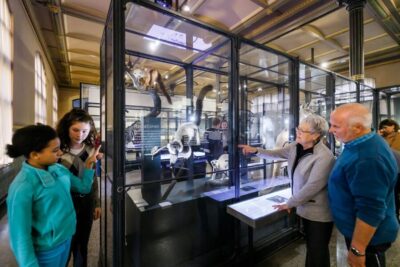
Browse the lists this tour appears in