
Reviewed · HISTORICAL TOURS
Karl-Marx-Allee Walking Tour: Berlin’s Socialist History
Karl-Marx-Allee tells a very big story on a very wide street. This two-hour walk links grand East German architecture with the 1953 workers’ uprising, Stasi surveillance, Cold War ideology, and today’s housing protests. I like the way it treats the avenue as more than a row of impressive buildings. I also like that the route reaches beyond the polished facade to ask how East Berliners actually lived. The main drawback is that this is a serious history walk, not a light sightseeing stroll.
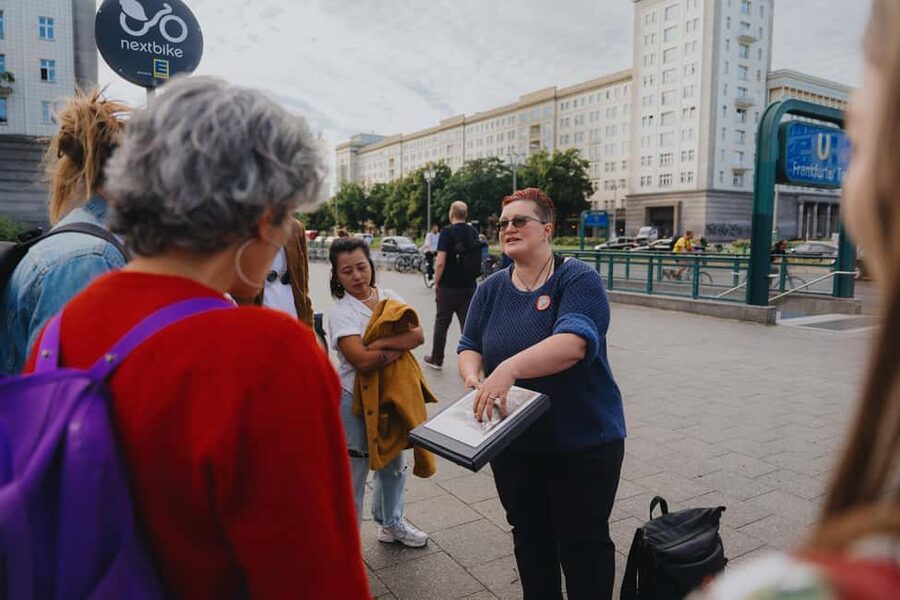
You meet outside Frankfurter Tor U-Bahn station, look for the guide with an orange umbrella, and walk for about 1.5 hours along Karl-Marx-Allee toward Strausberger Platz. Comfortable shoes matter, and children under 10 are not permitted. The tour costs $23 per person, which I consider fair for a focused, English or German guided walk with a strong local angle.
In This Review
- Key things to know before you go
- Why Karl-Marx-Allee matters in Berlin
- Starting at Frankfurter Tor
- Socialist classicism and the power of appearance
- The 1953 uprising and the cost of rebuilding
- Cafes, shops, and the model socialist lifestyle
- Stasi surveillance behind closed doors
- From Stalinallee to an unexpected film set
- After reunification, neglect and a new housing fight
- Is $23 a fair price?
- Who should book this walking tour?
- Should you book Karl-Marx-Allee Walking Tour?
- FAQ
- Where does the Karl-Marx-Allee Walking Tour start?
- Where does the tour finish?
- How long does the walking tour last?
- How much does the tour cost?
- Which languages are available?
- Is the tour wheelchair accessible?
- Is the tour suitable for children?
- What should I bring?
- Can I cancel the booking?
Key things to know before you go
- The avenue was East Germany’s grandest building project: Its monumental blocks were designed to show the strength and promise of the new socialist state.
- The 1953 uprising began with workers: The street’s construction helped create the conditions for a revolt that nearly brought down the young government.
- Architecture changed with politics: Early postwar modernism gave way to ornate socialist classicism, revealing a sharp shift in official ideology.
- The polished public image hid state control: Apartments, attics, and listening stations connected everyday life to the Stasi surveillance system.
- The street has a second life today: Once neglected after German reunification, it now appears in arguments about rents, gentrification, and Berlin’s housing crisis.
- The guide can make or break the experience: Martina receives special praise for listening carefully and encouraging curious questions rather than rushing through a fixed script.
Why Karl-Marx-Allee matters in Berlin
Many Berlin walks focus on the Wall, Nazi Germany, or the old Prussian center. Karl-Marx-Allee gives you another key to the city: the attempt to build a socialist capital from the ruins of World War II.
The avenue was first known as Stalinallee. Its grand scale was deliberate. This was not simply a housing project. It was meant to show that East Germany could rebuild, provide modern homes, and create a proud new society under socialist rule.
As you walk, the size of the buildings does much of the explaining. The broad avenue and large residential blocks make an individual feel small. That effect was useful to the government. The street was built for ceremonies, parades, and public displays of unity, as well as for ordinary people who needed homes after the war.
I find the tension especially useful for understanding the place. The architecture promised dignity and order. The political system behind it depended on discipline, obedience, and surveillance. You do not have to admire the buildings or condemn them to see how closely design and ideology worked together.
More History Tours in Berlin
- Berlin: Natural History Museum Entrance Ticket
★ 4.6 · 3,382 reviews - Berlin: World Heritage Cruise to Potsdam
★ 4.5 · 1,435 reviews - Berlin Historical Highlights Walking Tour
★ 4.9 · 657 reviews
Starting at Frankfurter Tor
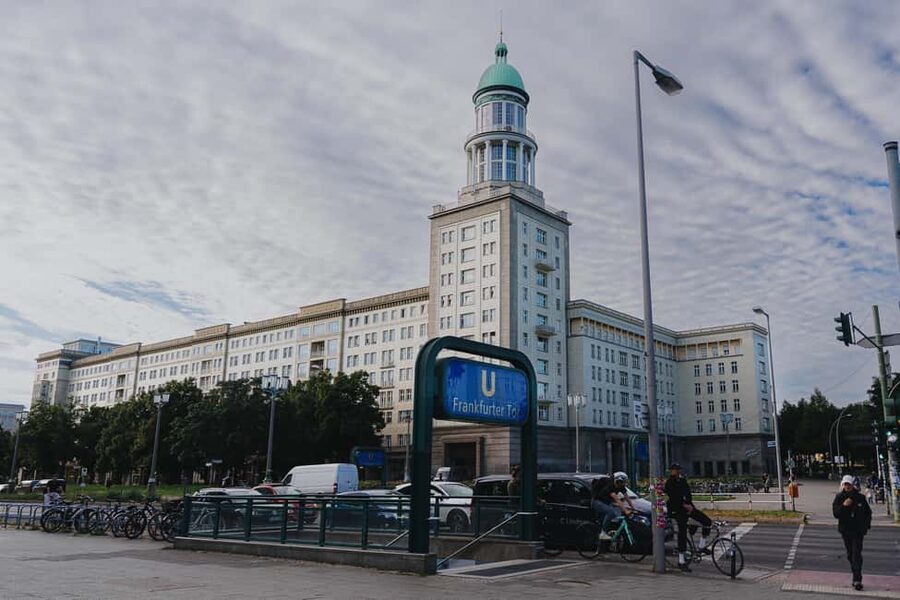
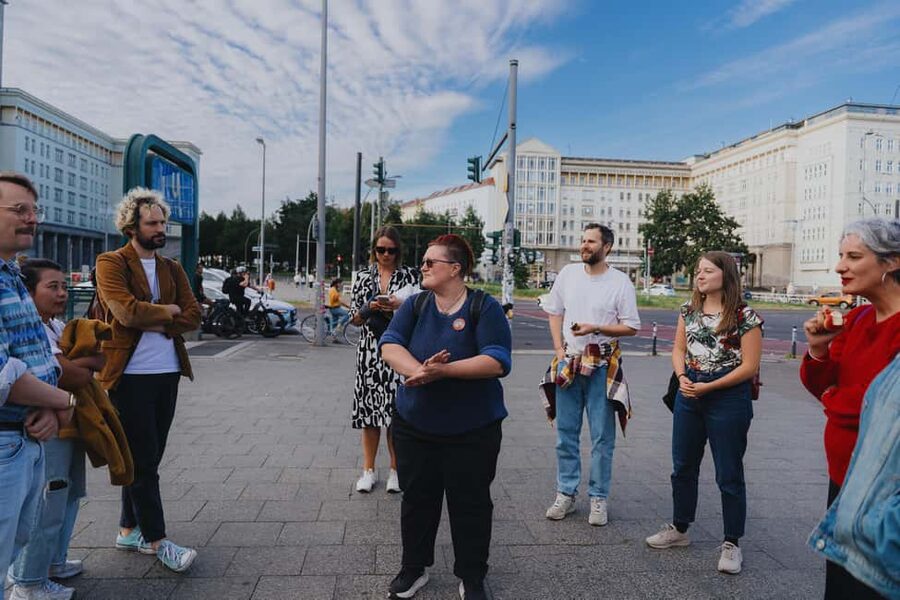
The meeting point is outside Frankfurter Tor U-Bahn station, at the corner of Warschauer Straße and Karl-Marx-Allee. Look for an orange umbrella. That small detail matters at a busy city intersection, especially if you are arriving by public transport and want to get your bearings quickly.
Frankfurter Tor is a fitting start because it presents the avenue at its most imposing. The two tower structures frame the broad street and help you understand the scale of the planned boulevard before the walk moves into its human stories.
The opening section is not just an architecture lesson. It sets up a question that follows you down the avenue: who was this grand city really designed for? The answer shifts as the guide explains construction, housing, official ceremonies, and the daily life expected under socialism.
The meeting point is easy to reach by U-Bahn, but allow a little time to find the correct corner. You will be standing outdoors, so dress for Berlin weather. The tour is wheelchair accessible, though the experience remains a walking tour over two hours, making sensible footwear useful for everyone.
Socialist classicism and the power of appearance
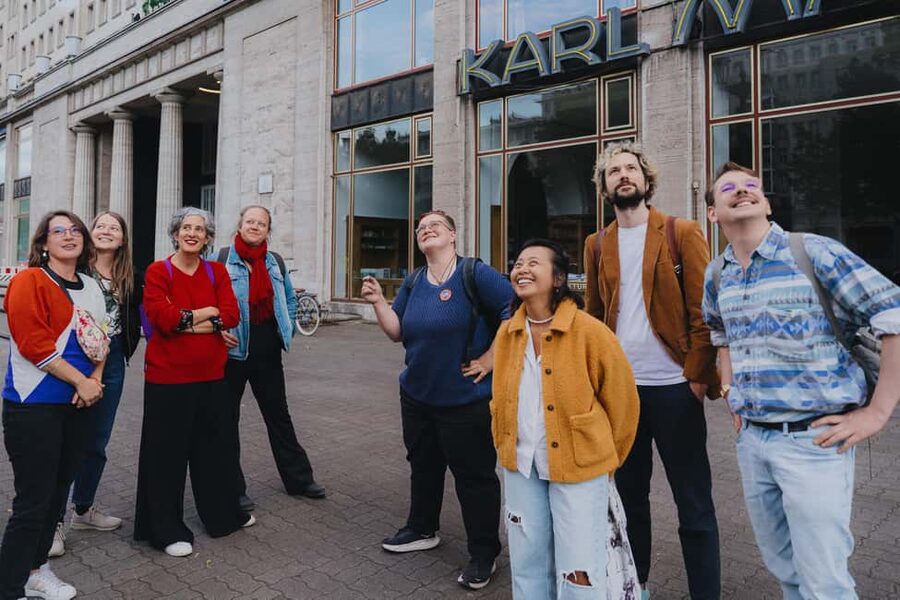
The most famous buildings along the avenue belong to the style often called socialist classicism. Their grand proportions, formal details, and repeated facades were meant to communicate confidence. They were a visual rejection of the idea that East Germany was merely the poorer half of a divided nation.
The street emerged from the rubble with thousands of volunteers working day and night. That effort had a practical purpose, but it also carried political meaning. Reconstruction was presented as proof that the new state could turn destruction into a planned future.
I like this part of the tour because it gives you a way to read architecture as political speech. The buildings are not grand by accident. Their scale, placement, and decorative language were selected to send a message about workers, progress, and the authority of the state.
The avenue also contains an earlier architectural chapter. Modernist buildings from the immediate postwar years reflected utopian ideas about urban life in a ruined city. Later, the East German regime rejected that approach and chose a more formal style for its main boulevard.
Fast-growing poplar trees were used to hide some of the earlier modernist buildings from passersby. That detail shows how quickly architectural taste could change when political leadership changed its view of what socialist living should look like.
You should not expect every building to be explained in equal detail. The tour’s strength is the larger story, linking design choices to political goals. If you want a technical survey of every facade, this may feel too broad. If you want to understand why the street looks the way it does, the approach works well.
The 1953 uprising and the cost of rebuilding
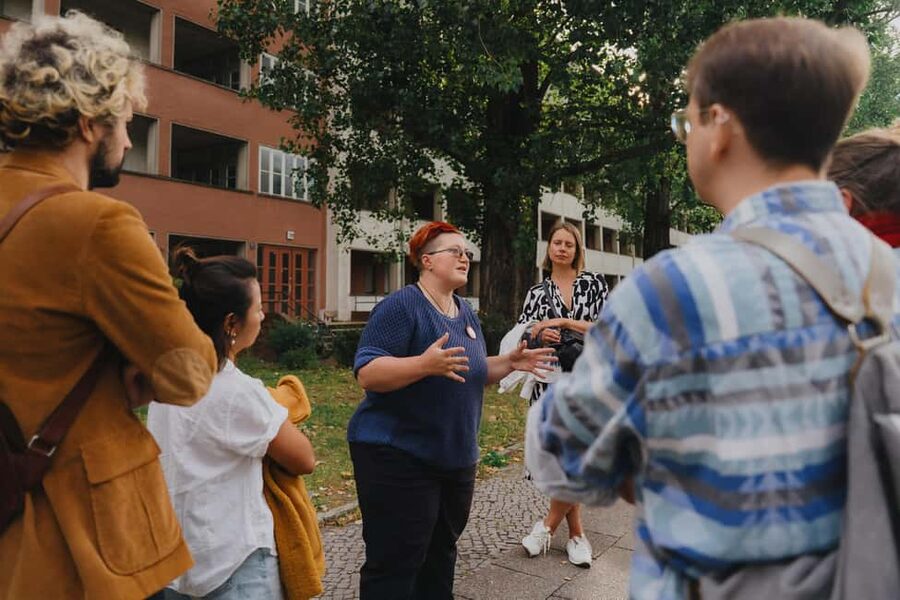
The most important historical turn comes with the East German uprising of June 1953. Workers who were already under pressure became angry when the government increased work demands. The building program that symbolized socialist progress also helped create the conditions for open revolt.
This is where Karl-Marx-Allee stops looking like a simple success story. The state wanted rapid construction and visible results. Workers experienced those demands in their own daily lives. What began as a labor dispute grew into a mass uprising that threatened the existence of the young East German government.
The walk helps place the revolt in the street’s physical setting. These huge residential blocks were not only symbols. They were connected to the people who built them and to the workers who challenged the regime.
You will hear about the government’s response and the wider significance of the uprising. The subject is sobering, but it gives the buildings a human scale. Instead of seeing only wide pavement and formal facades, you begin to picture a society where public celebration and public anger could occupy the same space.
For me, this is one of the strongest reasons to book the tour. A quick photo stop may show you the avenue’s beauty, but it will not explain why its construction was politically dangerous. The guide supplies that missing connection.
More Walking Tours in Berlin
- Discover Berlin Half-Day Walking Tour
★ 5.0 · 9,624 reviews - Berlin: Third Reich and Cold War 2 Hour Walking Tour
★ 4.9 · 6,830 reviews - Berlin: Discover Berlin Walking Tour
★ 4.9 · 5,998 reviews - Berlin’s Best: 2 Hour Walking Tour Third Reich and the Cold War
★ 5.0 · 5,486 reviews
Cafes, shops, and the model socialist lifestyle

Karl-Marx-Allee was intended to offer the best East Berlin could provide. Cafes, restaurants, and well-stocked shops helped create an image of comfort and abundance. The avenue was supposed to show that socialism could provide a satisfying modern life, not only political slogans.
That public image was carefully managed. The street presented an ideal of orderly housing, consumer access, and communal life. Yet the existence of an attractive facade did not mean that every East Berliner enjoyed the same conditions.
The guide’s discussion of daily life adds useful balance. You learn to separate the official image from the private reality. A well-stocked shop or handsome apartment block could coexist with shortages elsewhere, political pressure, and limits on personal freedom.
This part may appeal most to you if you enjoy social history. The architecture is easy to photograph, but the questions about shopping, housing, and public image give the avenue its character. You are not simply looking at where people lived. You are considering what the state wanted those homes and shops to say.
The street’s former role also explains why it felt so different from an ordinary neighborhood. It was a showcase. That made it important to the government and useful for public ceremonies, but it also made the gap between appearance and reality more visible.
Stasi surveillance behind closed doors
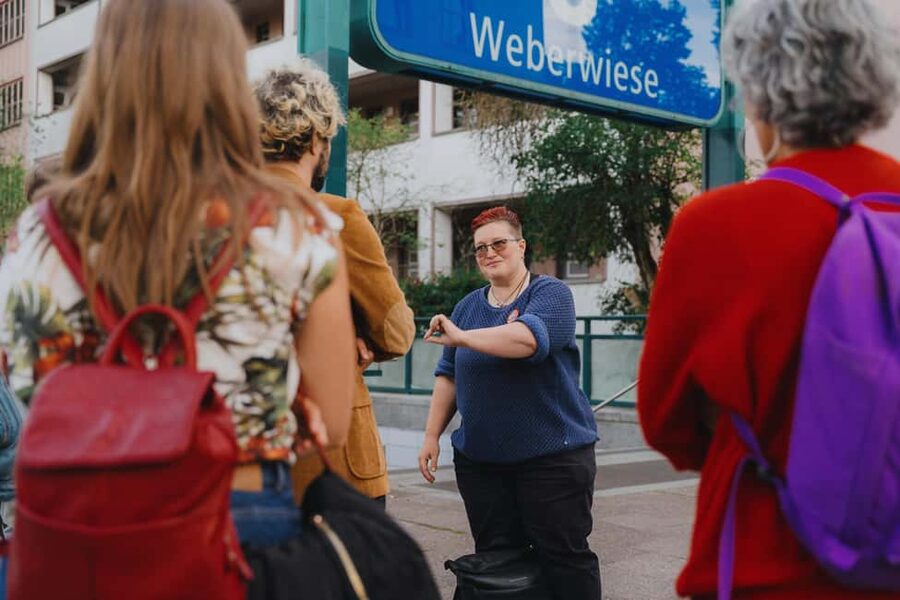
The most unsettling part of the walk concerns the Stasi, East Germany’s secret police. The public face of Karl-Marx-Allee suggested trust, community, and collective life. Behind the scenes, surveillance reached into the private spaces of residents.
Wiretaps in apartments and listening stations in attics were designed to remain unseen. You will hear how this hidden system operated within the same buildings that represented the socialist ideal.
The contrast is sharp. The avenue’s monumental design was meant to be seen by everyone. The surveillance system worked best when people did not know where they were being watched or listened to.
This section is valuable because it avoids a common mistake in Cold War sightseeing. It is easy to treat East Germany as a set of dramatic symbols, but surveillance affected ordinary homes and relationships. The tour connects the street’s political image with the fear and caution that shaped private life.
The subject can be heavy, especially after the uprising discussion. Still, it belongs here. Without the Stasi story, Karl-Marx-Allee might look like an unusual architectural district. With it, you understand why the avenue’s neat order could feel reassuring to some people and threatening to others.
The tour also makes a good companion to films about East Germany. You may recognize locations connected with The Lives of Others, which uses surveillance and private life to show the pressure of the state. The walk gives those screen images a real urban setting.
From Stalinallee to an unexpected film set

The avenue’s earlier name, Stalinallee, reflects its place in the period when Soviet influence shaped East German public life. Renaming the street after Karl Marx marked a political shift, but the buildings continued to carry the visual memory of the earlier era.
The tour also points out filming locations used in The Queen’s Gambit. That may seem like an odd connection beside the uprising and the Stasi, but it shows how Berlin’s built environment can play several historical roles at once.
Film locations are a bonus rather than the reason to book this walk. If you enjoy noticing familiar streets on screen, they add a fun layer. If you do not know the films, the main architectural and political story still works.
I appreciate that the route does not treat the avenue as frozen in the past. Its meaning has changed several times, first as a reconstruction project, then as a showcase boulevard, later as a neglected remnant, and now as part of a live argument about the future of Berlin.
After reunification, neglect and a new housing fight
After the fall of the Wall, Karl-Marx-Allee lost its role as a boulevard for socialist parades. The avenue increasingly looked like an awkward relic from a political system that had disappeared.
That neglect did not last forever. Berlin’s housing crisis made the large apartments and central location attractive to real estate interests. A street once built to display state power became part of arguments about rising rents, gentrification, and who gets to remain in the city.
This modern chapter keeps the tour from becoming a museum piece. The old political symbols may be gone, but housing remains political. The avenue now serves as a stage for local protests against higher living costs and the changing character of Berlin neighborhoods.
You may find this connection particularly useful if you are interested in present-day city life. The tour shows that urban history is not finished when a regime falls. Buildings remain, ownership changes, and residents continue to fight over what a neighborhood should be.
The walk finishes around U Strausberger Platz, giving the route a clear direction through the heart of Karl-Marx-Allee. Meeting information also describes the activity as ending back at the meeting point, so check the exact end details when you reserve. Either way, the route is compact enough to fit comfortably into a morning or afternoon plan.
Is $23 a fair price?
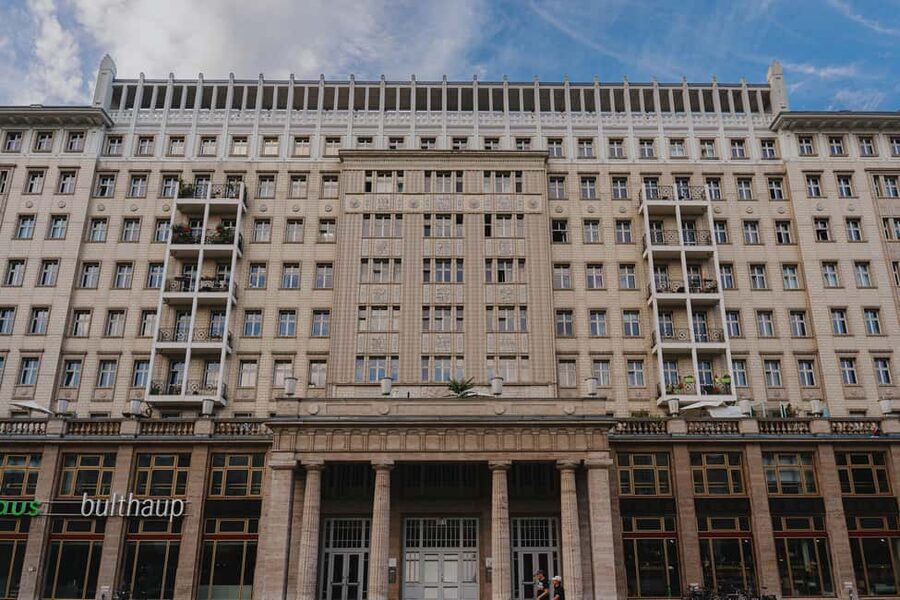
At $23, this is a good-value tour if you want context rather than a quick exterior view. You are paying for two hours with a live guide in English or German, including the major architectural, political, and social themes of the avenue.
The price is especially reasonable for first-time visitors who would otherwise walk past the buildings without understanding their purpose. A guide can explain why the style changed, why the uprising mattered, and how surveillance operated in places that looked ordinary.
The value is lower if you already know East German history well and prefer to explore at your own pace. The walk follows a focused route and does not promise entry into a long list of interiors. Its subject is the street itself, read through stories and architecture.
Free cancellation up to 24 hours before the start gives you useful flexibility. You can also reserve and pay later, which helps if your Berlin schedule is still shifting.
Who should book this walking tour?
I would recommend it to you if you enjoy architecture, Cold War history, urban politics, or films set in divided Berlin. It is also a strong choice if you have already seen the city’s major sights and want a district that explains East Berlin on its own terms.
The tour suits adults and older children who can follow a serious historical discussion. It is not suitable for children under 10. Since the walk lasts two hours, comfortable shoes are a practical necessity rather than a nice extra.
It is less suitable if you want a fast, photo-heavy outing with little political discussion. The subject includes state control, revolt, and surveillance, so the mood can be thoughtful and at times grim.
The guide’s manner matters here. Martina receives particular praise for being attentive to questions and not simply forcing everyone through a rigid script. That is exactly the quality I want on a walk like this, because Karl-Marx-Allee raises questions that do not fit neatly into a prepared speech.
Should you book Karl-Marx-Allee Walking Tour?
Book this tour if you want to understand why one of Berlin’s widest avenues looks so grand, why its construction caused such anger, and how socialist ideals collided with daily life. The combination of architecture, the 1953 uprising, Stasi surveillance, film locations, and current housing protests gives you much more than a building tour.
Skip it if you prefer a relaxed introduction to Berlin with little political content. For everyone else, $23 buys a useful two-hour lesson in how buildings can carry the hopes, fears, and contradictions of an entire country.
FAQ
Where does the Karl-Marx-Allee Walking Tour start?
Meet outside Frankfurter Tor U-Bahn station at the corner of Warschauer Straße and Karl-Marx-Allee. Look for the guide holding an orange umbrella.
Where does the tour finish?
The itinerary describes the guided route as finishing at U Strausberger Platz. The meeting information also says the activity ends back at the meeting point, so check the exact end details when booking.
How long does the walking tour last?
The activity lasts two hours. The main guided section along Karl-Marx-Allee takes about 1.5 hours.
How much does the tour cost?
The price is $23 per person.
Which languages are available?
The tour is available in English and German.
Is the tour wheelchair accessible?
Yes, the activity is listed as wheelchair accessible.
Is the tour suitable for children?
Children under 10 are not permitted on the tour.
What should I bring?
Bring comfortable shoes for the two-hour walking experience.
Can I cancel the booking?
Yes. You can cancel up to 24 hours in advance for a full refund. Reserve now and pay later is also available.
Just added around Berlin
- Private Walking Tour in Berlin: Hitler’s Germany & WWII★ 5.0 · 7 reviews
- The History of Berlin: WWII PRIVATE Walking Tour With Locals★ 5.0 · 209 reviews
- Private Berlin WWII and Cold War History Tour with Local Expert Guide★ 5.0 · 28 reviews
- Private Walking Tour Berlin 3 hours: Brandenburg, Historic Center★ 5.0 · 7 reviews
- Berlin: Private Bike Tour of the Berlin Wall and Third Reich★ 5.0 · 23 reviews
- Berlin: Guided Private Bike Tour to Explore the Highlights★ 5.0 · 12 reviews
- Berlin Photography Masterclass – Private Photography Lesson★ 4.5 · 23 reviews
- Group Driving Tour 1 to 6 people. Berlin Shore Excursion incl pick-up at Port★ 5.0 · 8 reviews
Historical Tours, compared.
City History Canal Sightseeing Tour on a Motorboat
Read our review →
Browse the lists this tour appears in