
Reviewed · HISTORICAL TOURS
Kassel: Historical Walking Tour through Kassel
Kassel rewards curious walkers. I like the way this 1.5-hour tour connects the grand town hall with Kassel’s lesser-known achievements, including Germany’s first permanent theater, first public museum, and first pedestrian zone. I also like that it explains both the city’s medieval past and its postwar rebuilding. The main drawback is simple: the tour is offered only in German, and much of old Kassel was destroyed in World War II.
This is a useful first look at a city that can seem puzzling at street level. You will see surviving historic buildings, postwar architecture, reminders of the Protestant Reformation, and places linked to Jacob and Wilhelm Grimm. At $15 per person, I consider it good value, especially if you want context before exploring Kassel’s museums and documenta sites on your own.
In This Review
- Key points at a glance
- Meeting at Kassel’s town hall staircase
- Why Kassel’s missing old town matters
- The town hall and Kassel’s architectural contrasts
- Kassel’s role in the Protestant Reformation
- Following the Grimm brothers through Kassel
- Three German firsts that change the way you see Kassel
- Postwar rebuilding and the modern city
- What the 90-minute route is likely to feel like
- German-only guiding and who should book
- Is $15 a fair price for Kassel?
- My recommendation for this Kassel walk
- FAQ
- Where does the Kassel walking tour begin?
- Where does the tour end?
- How long does the tour last?
- What does the tour cost?
- What language is the tour conducted in?
- Is the tour wheelchair accessible?
- Can infants join the tour?
- Do pupils and students need identification?
- Can I cancel the booking for a refund?
Key points at a glance
- The grand staircase is the meeting point: Find your guide at the town hall’s main staircase at Obere Königsstraße 8.
- Kassel’s past comes with contradictions: Historic traces survive, but the old city is no longer intact after wartime destruction.
- The Grimm brothers lived here for more than 30 years: Their work reached far beyond fairy tales and helped shape the study of German.
- Three national firsts add real character: Kassel is linked to Germany’s first permanent theater, first museum open to the public, and first pedestrian zone.
- The tour mixes old and new Kassel: You will hear about medieval and Reformation-era history alongside postwar design.
- It is a strong value at $15: The price buys a live, guided introduction lasting 90 minutes, with free cancellation up to 24 hours before the start.
Meeting at Kassel’s town hall staircase
The tour begins at the grand staircase of Kassel’s town hall, at Obere Königsstraße 8. This is a practical meeting point because the walk both starts and ends there, so you do not need to arrange transport between the opening and closing points.
I recommend arriving with enough time to identify the staircase and get settled before the start. The supplied details do not give a group size or a precise route beyond the central Kassel area, so you should think of this as a guided orientation walk rather than a tightly scripted series of ticketed attractions.
The town hall is also a fitting place to begin. One of the tour’s advertised highlights is a visit to the historic town hall, and the building gives the walk an immediate architectural focus. From there, your guide can place the surrounding streets in the wider story of a city that has repeatedly changed its shape.
The tour is wheelchair accessible, which makes the central route more practical for many people. Still, a walking tour can involve ordinary city surfaces and periods of standing, so you may want to ask the provider about the exact route if you need detailed mobility information.
More History Tours in Germany:
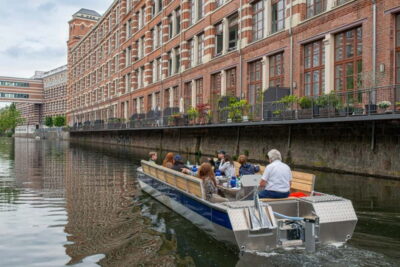
- Leipzig: City History Canal Sightseeing Tour on a Motorboat
★ 4.7 · 6,232 reviews - Berlin: Natural History Museum Entrance Ticket
★ 4.6 · 3,382 reviews - Leipzig: 1.5-Hour Historical Walking Tour in German
★ 4.7 · 2,217 reviews
Why Kassel’s missing old town matters
Kassel is not a city where every turn reveals a perfectly preserved medieval street. World War II caused extensive destruction, and the historic center that once existed is largely gone. That fact is not a minor footnote. It shapes how you read the city.
A walk here asks you to notice fragments. Historic buildings and older patterns can still be found, but they sit beside postwar architecture and modern urban planning. The result is a city of contrasts rather than a single polished historic picture.
I think this is one of the tour’s strongest features. A guide can explain why a building looks modern, why another structure matters even if it seems modest, and how Kassel rebuilt itself after the war. Without that explanation, you might simply compare Kassel with better-preserved German cities and decide it has less to offer.
Instead, you learn to look for the old Kassel that survives in scattered places. The story is not only about loss. It is also about decisions made during reconstruction and the ways the city transformed itself.
The town hall and Kassel’s architectural contrasts
The town hall provides the clearest starting point for the architectural side of the walk. You will have a chance to admire its design and hear how it fits into Kassel’s civic story.
The experience is not presented as a parade of famous façades alone. Kassel’s appeal comes from the mix of architectural periods. Historic buildings, postwar structures, and later changes all help explain the city’s identity.
I like tours that give modern buildings a fair hearing. In many European cities, visitors are encouraged to ignore anything built after the nineteenth century. Kassel does not allow that easy shortcut. Its postwar architecture is part of the city’s character, and the tour treats rebuilding as an important chapter rather than an unfortunate interruption.
The city was once described as one of Germany’s most beautiful. The tour uses that older reputation as a starting point, then shows you the more complicated Kassel that exists today. You should expect interpretation and comparison rather than nonstop postcard views.
That distinction matters when setting expectations. If you want a preserved old town packed with historic façades, this may not be the right walk. If you want to understand how a heavily damaged city rebuilt and redefined itself, the route offers much more.
Kassel’s role in the Protestant Reformation
The tour also covers Kassel’s role in the Protestant Reformation. This gives the walk a useful religious and political dimension, especially if you already know something about the wider changes that swept through German lands.
The Reformation was not only a theological debate. It affected rulers, churches, education, civic life, and the way people understood authority. A guide can connect those larger changes to Kassel, giving you a local setting for events that are often taught as broad European history.
The supplied information does not identify the exact Reformation buildings or stops used on the route, so I would not expect a detailed church-by-church examination. Instead, this part should help you understand why Kassel mattered and how its institutions developed over time.
For you, the value is in the link between a city street and a much larger historical shift. Even a short explanation can make the central district easier to read after the tour, particularly if you continue to museums or historic sites on your own.
More Walking Tours in Germany:
- Discover Berlin Half-Day Walking Tour
★ 5.0 · 9,624 reviews - Berlin: Third Reich and Cold War 2 Hour Walking Tour
★ 4.9 · 6,830 reviews - Munich: Third Reich & WWII Walking Tour
★ 4.6 · 6,181 reviews - Berlin: Discover Berlin Walking Tour
★ 4.9 · 5,998 reviews
Following the Grimm brothers through Kassel
Jacob and Wilhelm Grimm lived and worked in Kassel for more than 30 years. Most people know them for fairy tales, but their work went well beyond collecting stories.
The brothers also helped advance the study of the German language. That makes their Kassel connection especially useful for anyone interested in literature, language, folklore, or the way national culture took shape in the nineteenth century.
You should not expect a dedicated Grimm museum visit from this walking tour. The information describes the brothers as part of Kassel’s wider story, not as a separate ticketed attraction on the route. Their presence works best as one thread among several.
I like that balance. Kassel is not reduced to a fairy-tale marketing theme. The Grimm story becomes a doorway into language, scholarship, and the city’s intellectual life. If you already plan to visit other Grimm-related places, this tour can give you a helpful starting point.
The fact that the brothers spent more than three decades in Kassel also changes the way you see their connection to the city. They were not brief guests passing through. Their long working life here forms a substantial part of Kassel’s cultural history.
Three German firsts that change the way you see Kassel
Kassel’s historical importance is easy to underestimate unless someone points out its unusual firsts. The city is associated with Germany’s first permanent theater building, the first museum open to the public, and the first pedestrian zone.
These details make the walk more than a standard city-center introduction. They show Kassel as a place that experimented with public culture, performance, and urban life.
The first permanent theater matters because it reflects a shift toward theater as a lasting civic institution rather than a temporary event. The first publicly accessible museum points to a broader idea of culture being available beyond private collections or court circles.
The first pedestrian zone brings the story closer to your own experience. Walking through a car-free shopping or civic area may feel ordinary now, but Kassel helped set a model for how city centers could work.
I would pay close attention when the guide explains these claims in context. They are the sort of facts that can sound like trivia if presented quickly, but they become meaningful when tied to public life and urban planning.
This is also where the tour can help you plan the rest of your stay. The walk introduces the city’s museums and cultural institutions, including collections described as unique. It also places documenta within Kassel’s modern cultural identity, even if the tour does not include a full documenta visit.
Postwar rebuilding and the modern city
The most honest part of the experience may be its treatment of reconstruction. Kassel suffered heavy wartime damage, and only a limited number of historic structures remain compared with older German cities.
The walk does not try to hide that. Instead, it explains how Kassel rebuilt and changed after World War II. You will encounter postwar architecture alongside older remains, and the contrast becomes part of the lesson.
This approach suits you if you enjoy understanding why a city looks the way it does. You may find some modern buildings plain or less immediately attractive than historic ones. The guide’s role is to show what those buildings reveal about postwar priorities and Kassel’s attempt to create a new future.
A city tour cannot restore what was destroyed. It can, however, help you avoid a shallow judgment based only on appearances. Kassel’s story includes destruction, rebuilding, cultural ambition, and the survival of older traces.
The short duration works well here. Ninety minutes is enough to give you a framework without turning the tour into a full-day history class. You will not cover every museum or neighborhood, but you should finish with a clearer sense of how the pieces fit together.
What the 90-minute route is likely to feel like
The walk begins at the town hall, moves through central Kassel, and returns to the same address. The exact stops are not listed in detail, so you should expect a broad city overview rather than admission to several interiors.
The guide’s spoken explanation is the main attraction. You will hear about architecture, Kassel’s 1,100-year history, the Reformation, the Grimm brothers, wartime destruction, and the city’s postwar transformation.
That range is ambitious for 1.5 hours. The benefit is variety. You can sample several themes and then decide which museums, buildings, or cultural sites deserve more of your time.
The tradeoff is depth. No single subject can receive a long treatment in such a short walk. If you want a specialist lecture on the Reformation, Grimm scholarship, or documenta, you will need more than this tour.
The tone appears to be another strength. The guide is described as humorous, lively, and informative, and the German-language comments include praise for a cheerful, entertaining presentation. That matters because a long list of dates can make even an interesting city feel flat.
The experience also seems to work for local residents who want to learn something new about their own city. That suggests the tour may offer more than the most obvious landmarks, although the exact content will depend on the guide and the day.
German-only guiding and who should book
The tour is conducted in German, with a live German-speaking guide. This is the single most important booking consideration.
You should book if you can follow spoken German comfortably, especially when the guide moves between architecture, political history, cultural institutions, and postwar planning. If you understand only a few German phrases, you may miss much of the value because the tour depends on explanation rather than visual spectacle alone.
The walk suits:
- First-time visitors who want an orientation to central Kassel
- People interested in architecture and urban change
- Anyone curious about the Grimm brothers beyond their fairy tales
- Museum fans planning to explore Kassel independently
- German speakers who enjoy local history
- Residents who want a fresh look at familiar streets
Families can also join. Infants aged 0 to 5 participate free and do not need a ticket. Pupils and students should bring valid identification to qualify for the relevant rate.
Is $15 a fair price for Kassel?
At $15 per person, this is a modestly priced introduction to the city. You are paying for 90 minutes with a live guide, not for museum admission or a long excursion outside central Kassel.
I see the value in the context. A good city walk can save you time by showing which parts of Kassel deserve a closer look. It can also prevent you from missing the city’s less visible stories, such as its role in public museums, theater, pedestrian planning, and German-language scholarship.
The price is especially fair if you use the tour as the first activity of your Kassel visit. Afterward, you can choose whether to spend more time with the Grimms, museums, documenta, historic buildings, or postwar architecture.
It is less useful if you already know Kassel well and want access to interiors or specialist sites. The route is a guided overview, and the main return is historical context rather than entry to attractions.
Flexible booking adds practical value. You can reserve now and pay later, and cancellation is free up to 24 hours before the start for a full refund. Check the available start times before booking, since the schedule is not fixed in the supplied details.
My recommendation for this Kassel walk
I recommend this tour if you want to understand Kassel before exploring it independently. The combination of surviving history, postwar rebuilding, Grimm connections, Reformation context, and unusual cultural firsts gives you a sharper picture than a landmark checklist.
I would be especially keen to book if I were visiting Kassel for its museums or documenta. The tour helps explain why this city has such a strong cultural identity despite the loss of much of its old center.
Think twice if you do not speak German or if your ideal city walk requires a preserved historic core at every turn. Kassel’s story is more complicated, and some of its most important lessons involve buildings and spaces that are modern rather than ornate.
For $15 and 90 minutes, the risk is low. Book it early in your stay, meet at the town hall staircase, and use the walk to decide what deserves the rest of your afternoon.
FAQ
Where does the Kassel walking tour begin?
The tour begins at the grand staircase of Kassel’s town hall, at Obere Königsstraße 8.
Where does the tour end?
The guided walk returns to Obere Königsstraße 8, the same location where it begins.
How long does the tour last?
The tour lasts 1.5 hours, or 90 minutes.
What does the tour cost?
The listed price is $15 per person.
What language is the tour conducted in?
The tour is offered only in German with a live German-speaking guide.
Is the tour wheelchair accessible?
Yes, the activity is listed as wheelchair accessible.
Can infants join the tour?
Yes. Infants aged 0 to 5 can participate free of charge and do not need a ticket.
Do pupils and students need identification?
Yes. Pupils and students should bring a valid ID.
Can I cancel the booking for a refund?
Yes. You can cancel up to 24 hours in advance for a full refund. You can also reserve now and pay later.
Just added around Germany
- Private Walking Tour in Berlin: Hitler’s Germany & WWII★ 5.0 · 7 reviews
- The History of Berlin: WWII PRIVATE Walking Tour With Locals★ 5.0 · 209 reviews
- Berlin: Private Bike Tour of the Berlin Wall and Third Reich★ 5.0 · 23 reviews
- Private Berlin WWII and Cold War History Tour with Local Expert Guide★ 5.0 · 28 reviews
- Private Walking Tour Berlin 3 hours: Brandenburg, Historic Center★ 5.0 · 7 reviews
- Berlin: Guided Private Bike Tour to Explore the Highlights★ 5.0 · 12 reviews
- Berlin Photography Masterclass – Private Photography Lesson★ 4.5 · 23 reviews
- Group Driving Tour 1 to 6 people. Berlin Shore Excursion incl pick-up at Port★ 5.0 · 8 reviews
Historical Tours, compared.
City History Canal Sightseeing Tour on a Motorboat
Read our review →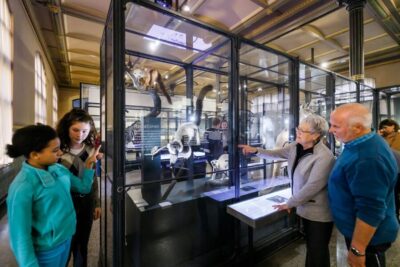
Browse the lists this tour appears in