
Reviewed · WALKING TOURS
Mannheim, guided walking tour: Industrial culture at the commercial port
Mannheim’s working waterfront tells a bigger story. This two-hour walk links the city’s oldest preserved bridge with its major inland port, showing you how shipping, industry, workers, and migration shaped Mannheim. I like the mix of industrial architecture and local history, and I especially like the final turn into Jungbusch, where former port housing now meets art, nightlife, and multicultural city life. The main drawback is that the tour is conducted in German, and the route is not suitable for wheelchair users.
At $17 per person, this is a fair price for a focused city walk with a live guide. You should wear good walking shoes and dress for the weather, since the tour runs in all conditions. I would also pay close attention at the meeting point: two groups have started at the same time before, and one participant accidentally joined a private group instead of the booked tour.
In This Review
- Five things that make this Mannheim walk worthwhile
- Starting at Teufelsbrücke, Mannheim’s oldest preserved bridge
- Crossing Mannheim’s waterways and reading the port
- Industrial architecture that still has a job to do
- The port workers’ world and the making of Jungbusch
- What the two-hour format means for your day
- Is $17 a good price for this port experience?
- Who should book this walk?
- Final verdict: Book it for Mannheim’s working side
- FAQ
- Where does the Mannheim port walking tour meet?
- How long does the walking tour last?
- What language is the tour conducted in?
- Does the tour run in bad weather?
- Is the tour suitable for wheelchair users?
- Are food, drinks, or transportation included?
Five things that make this Mannheim walk worthwhile
- Teufelsbrücke begins the story: Start at Mannheim’s oldest preserved bridge and see a surviving piece of the city’s early industrial age.
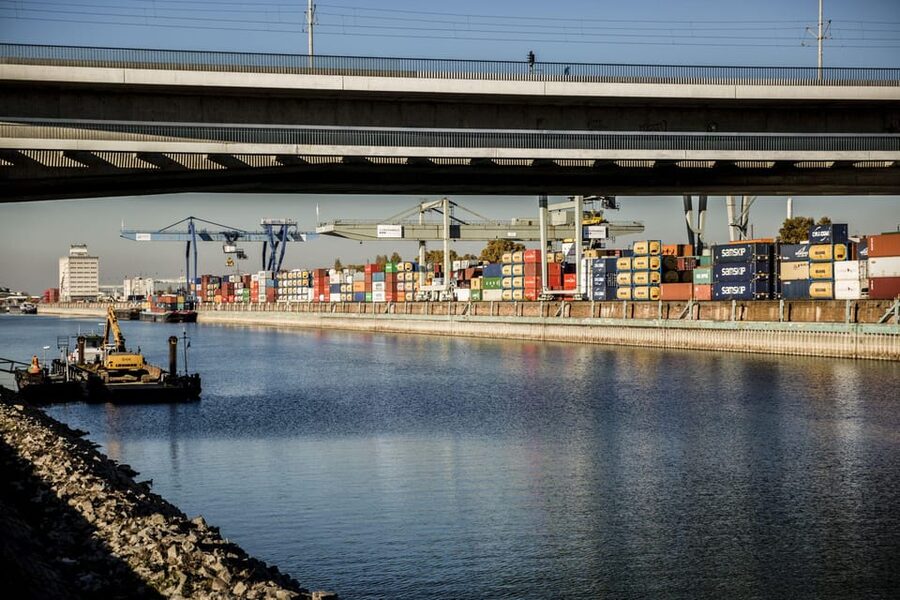
- The port feels like a working place: Container ships, loading stations, warehouses, and waterways provide a real look at modern inland shipping.
- Industrial history meets human history: You learn not only about trade, but also about port workers, sack carriers, and living conditions in the former working-class quarter.
- Jungbusch gives the walk a lively finish: The old workers’ district is now known for creative energy, multicultural life, and nightlife.
- Two hours keeps the subject manageable: The tour offers a clear introduction without taking up an entire day in Mannheim.
Starting at Teufelsbrücke, Mannheim’s oldest preserved bridge
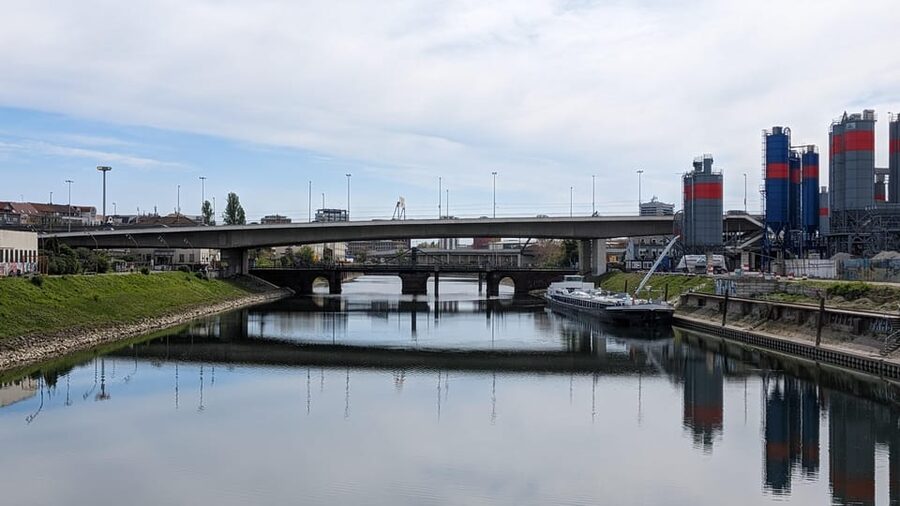
The meeting point is Teufelsbrücke, or Devil’s Bridge. That name gives the walk an immediate sense of character, but the bridge matters for a more practical reason: it is the oldest preserved bridge in Mannheim and a surviving link to the city’s early industrial period.
I like beginning here because the tour does not treat the port as a separate zone that appeared out of nowhere. The bridge helps set up the larger story. Mannheim’s position at the mouth of the Neckar River, where it meets the Rhine, made water transport important for centuries. The port grew from that geography, and the tour uses the bridges and canals to explain how the city developed around moving goods.
You can expect the guide to point out details in the bridge and surrounding industrial architecture. This is not a sightseeing walk built around grand palaces or polished civic squares. The appeal comes from structures that served a job: carrying people, goods, vehicles, and railway or industrial traffic across the water.
That focus will suit you if you enjoy cities where the working parts matter as much as the famous monuments. If you want a classic introduction to Mannheim’s major historic sights, this is not the right route. The subject here is trade, labor, engineering, and urban change.
More Walking Tours in Germany:
- Discover Berlin Half-Day Walking Tour
★ 5.0 · 9,624 reviews - Berlin: Third Reich and Cold War 2 Hour Walking Tour
★ 4.9 · 6,830 reviews - Munich: Third Reich & WWII Walking Tour
★ 4.6 · 6,181 reviews
Crossing Mannheim’s waterways and reading the port
From Teufelsbrücke, the route moves through the port area and crosses waterways several times. The changing views are one of the best reasons to choose this walk. You are not simply standing beside a dock while a guide recites dates. The water itself keeps reappearing, helping you understand why Mannheim became such an important shipping center.
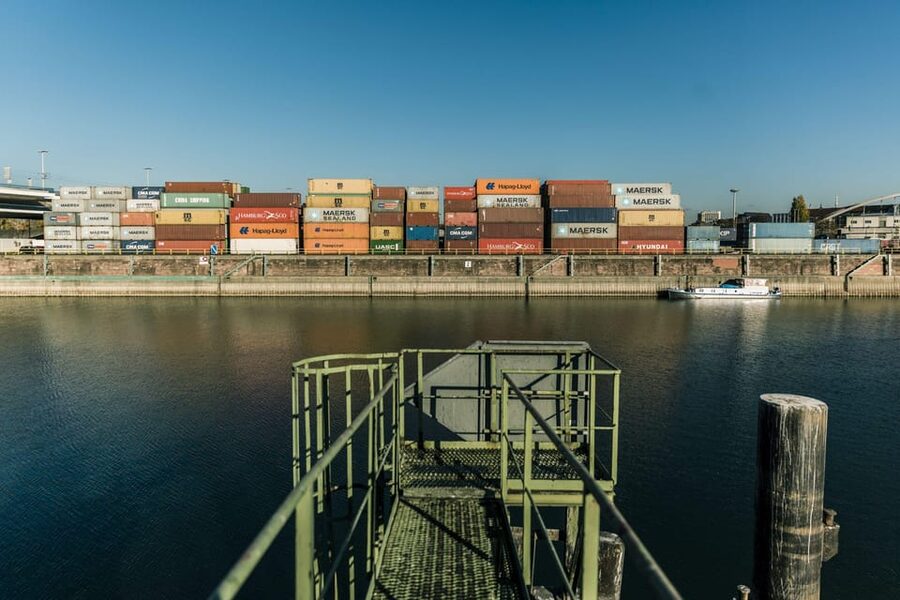
The port of Mannheim is one of Europe’s most important inland ports. That fact becomes easier to grasp when you see the working elements around you: large container ships, loading stations, warehouses, and connecting canals. The port has a cosmopolitan feel, but it is not a decorative waterfront made mainly for visitors. It is a place tied to freight, transport, and trade.
I like this kind of touring because it gives a city a useful sense of scale. Mannheim is not only a place to pass through on the way to Heidelberg or a stop for its Baroque palace. Its port connects inland Germany with the Rhine shipping network and with wider commercial routes. The guide explains the former and current importance of the port for trade and tourism, giving you a better idea of how the city earns and moves its way through the world.
Your experience will depend partly on the guide’s presentation and the activity in the port on the day you visit. The supplied information does not promise a specific ship, loading operation, or viewpoint, so you should not book this expecting a set-piece spectacle. The value comes from seeing the working port and understanding what you are looking at.
Industrial architecture that still has a job to do
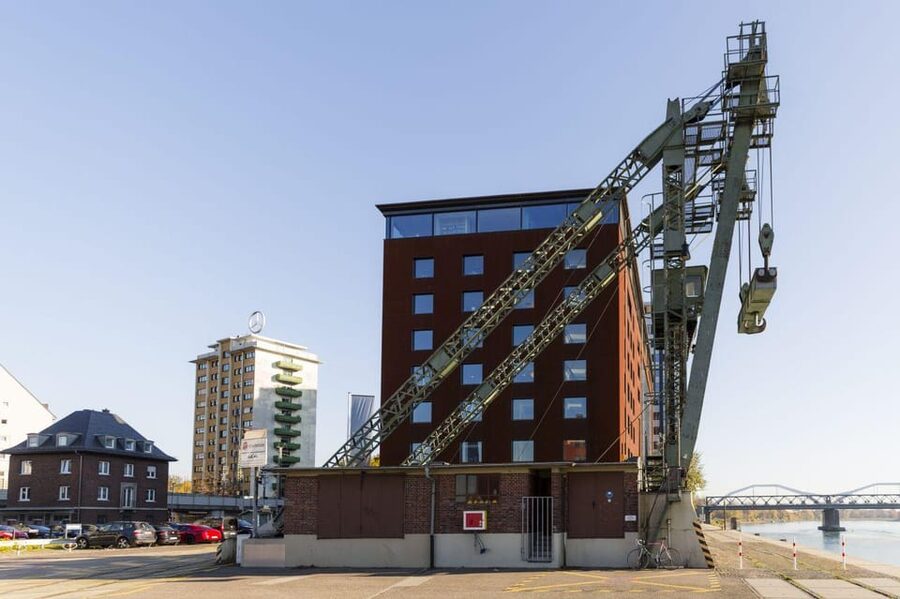
The tour pays attention to bridges and industrial structures, not just the broad history of Mannheim. That is useful because industrial buildings can look plain until someone explains their purpose. A warehouse, loading area, bridge, or canal crossing becomes more interesting when you understand how each part supported the port economy.
The route also covers the beginnings of industrial culture. That phrase matters here. The walk is not only about machines and buildings. It also considers the social changes brought by industrial work, including the life and living conditions of port workers.
This human side should be one of the strongest parts of the experience. Ports need labor, and labor creates neighborhoods. The tour connects the docks with the people who carried sacks, handled goods, and lived close to their jobs. You get a picture of Mannheim as a working-class city, not just as a point on a shipping map.
I would pay attention to how the guide explains the difference between the port’s past and present. Earlier workers dealt with physically demanding cargo work and close living conditions. Today, containers and modern transport systems have changed the work, the buildings, and the movement of goods. The port remains important, but it does not look or function exactly as it once did.
Because this is a guided walk, you can ask questions in German and seek clarification as the story develops. The live language is German, and some content is presented in its original language. That makes the tour a good fit for German speakers, but it may be difficult if you understand only a little German. The activity description does not promise an English-language option or translated handouts.
The port workers’ world and the making of Jungbusch
The route’s social history leads naturally toward Jungbusch. The district is separated from the port area by the connecting canal, but it has long been tied to the waterfront. Workers and sack carriers once lived here, close to the docks and the jobs that supported their families.
This connection gives Jungbusch more meaning than a quick visit to a trendy neighborhood. You see how a district can change while still carrying traces of its earlier role. The tour explains the area’s move from working-class neighborhood to a multicultural and creative part of Mannheim.
I like this transition because it keeps the walk from becoming a technical tour about freight alone. You learn how trade affects streets, homes, businesses, and local culture. A port does not stop at the water’s edge. Its workforce needs housing, food, gathering places, and a social world, and Jungbusch grew from those needs.
The modern district has a bohemian character and is known as a local nightlife hotspot. That does not mean the tour becomes a bar crawl. Food and drinks are not included, and the activity is a walking tour rather than an evening entertainment package. Still, ending in Jungbusch gives you a useful place to continue on your own after the guide says goodbye.
You might find this especially helpful if you are deciding where to spend an evening in Mannheim. The tour gives you context before you explore the district independently. It also lets you see why Jungbusch has a different feel from the historic center.
A few more Germany trips worth comparing
- Mannheim, guided Walking Tour: Discover Mannheim
★ 4.5 · 62 reviews - Mannheim: Guided Street Art Walking Tour
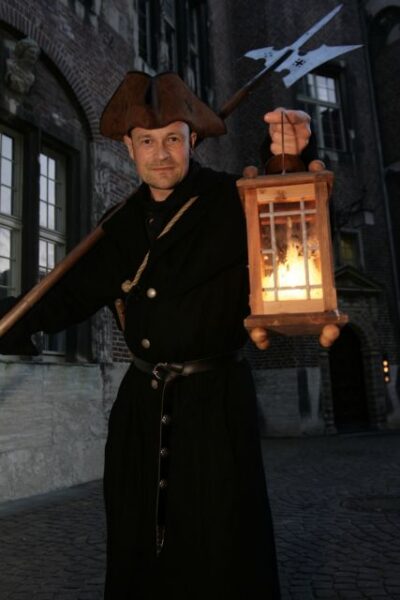
★ 4.7 · 57 reviews - Mannheim, guided costume tour: Tour with Night Watchman
★ 4.9 · 26 reviews - Mannheim: Public Night Watchman Tour with Night Watchwoman Marie
★ 5.0 · 23 reviews
What the two-hour format means for your day
Two hours is a sensible length for this subject. The port area, bridges, waterways, worker history, and Jungbusch could easily fill a much longer tour, but a compact walk gives you a clear introduction without taking over your schedule.
You should still plan for steady walking. Comfortable shoes are specifically recommended, and that advice makes sense for a route that moves between bridge areas, port spaces, waterways, and city streets. The tour takes place in all weather, so a rain jacket, warm layer, or sun protection may matter depending on the forecast.
There is no transportation to or from the meeting point included. You need to make your own way to Teufelsbrücke, and the information provided does not give a pickup service. Allow enough time to identify the bridge and the correct group before the start.
One practical issue deserves extra care. Two groups have previously begun at the same time, one connected with the booked activity and another private group. A participant ended up with the private guide and later paid that group 10 euros, despite already having paid 13 euros through the booking platform. The private guide apparently led the walk well, but the payment confusion was avoidable. Confirm the guide and group before setting off.
Is $17 a good price for this port experience?
At $17, I consider the tour good value if you care about Mannheim’s working history and want a guide to connect the pieces. You are paying for a two-hour city tour, not transportation, a meal, or admission to a major attraction.
The price makes more sense when you consider the subject. You could walk around parts of the port and Jungbusch on your own, but the industrial structures may not explain themselves. A guide adds the links between geography, commerce, architecture, labor, and neighborhood change.
The tour also received an overall rating of 4.8 from five ratings, with the strongest praise focused on clear and informative explanations. One participant described learning about both past activities and what happens today. Another praised the detailed explanation given during a good round through the port.
That praise points to the tour’s real strength: information. You should book it for interpretation, not for luxury. There is no food or drink included, and the guide language is German. If you want a comfortable sightseeing ride or a broad city overview, your money may be better spent elsewhere. If you want to understand how Mannheim works, $17 is reasonable.
Who should book this walk?
I would recommend this tour to several types of visitors:
- You enjoy industrial, architectural, or working-city history.
- You want to see more than Mannheim’s best-known central sights.
- You are interested in ports, bridges, canals, shipping, or urban development.
- You speak German well enough to follow a live guided explanation.
- You want a short activity that can fit around other plans.
- You would like an introduction to Jungbusch before exploring it independently.
Families with older children may also find the ships, bridges, and loading facilities more engaging than a traditional museum. The activity data does not specify a minimum age, so you would need to check the booking details if age rules matter for your group.
I would hesitate if you need step-free access, since the tour is not suitable for wheelchair users. I would also think twice if bad weather would spoil your day, because the walk goes ahead in all conditions. Most important, do not assume the tour will be in English. The live guide language is German.
Final verdict: Book it for Mannheim’s working side
This is a strong choice if you want to see the city from the water’s edge rather than from a palace courtyard. The route gives you a useful blend of bridges, shipping, industrial change, and neighborhood life, then finishes in Jungbusch, where Mannheim’s old port community meets its current creative scene.
Book it if the German language works for you and you are happy to walk outdoors for two hours. Skip it if you want a general city highlights tour, an English-speaking guide, or guaranteed indoor shelter. Before the start, confirm that you are with the correct group at Teufelsbrücke. With that small precaution, $17 buys a focused and worthwhile look at the side of Mannheim many visitors miss.
FAQ
Where does the Mannheim port walking tour meet?
The tour meets at Teufelsbrücke, the Devil’s Bridge.
How long does the walking tour last?
The tour lasts two hours.
What language is the tour conducted in?
The live tour guide speaks German. Some content is shown in its original language.
Does the tour run in bad weather?
Yes. The tour takes place in all weather, so bring weather-appropriate clothing and comfortable shoes.
Is the tour suitable for wheelchair users?
No. The activity is not suitable for wheelchair users.
Are food, drinks, or transportation included?
No. The tour includes the city tour only. Food, drinks, and transportation to and from the meeting point are not included.
Just added around Germany
- Private Walking Tour in Berlin: Hitler’s Germany & WWII★ 5.0 · 7 reviews
- The History of Berlin: WWII PRIVATE Walking Tour With Locals★ 5.0 · 209 reviews
- Private Berlin WWII and Cold War History Tour with Local Expert Guide★ 5.0 · 28 reviews
- Private Walking Tour Berlin 3 hours: Brandenburg, Historic Center★ 5.0 · 7 reviews
- Berlin: Private Bike Tour of the Berlin Wall and Third Reich★ 5.0 · 23 reviews
- Berlin: Guided Private Bike Tour to Explore the Highlights★ 5.0 · 12 reviews
- Berlin Photography Masterclass – Private Photography Lesson★ 4.5 · 23 reviews
- Group Driving Tour 1 to 6 people. Berlin Shore Excursion incl pick-up at Port★ 5.0 · 8 reviews
Walking Tours, compared.
Old Town & Viktualienmarkt City Walk in German
Read our review →Browse the lists this tour appears in