
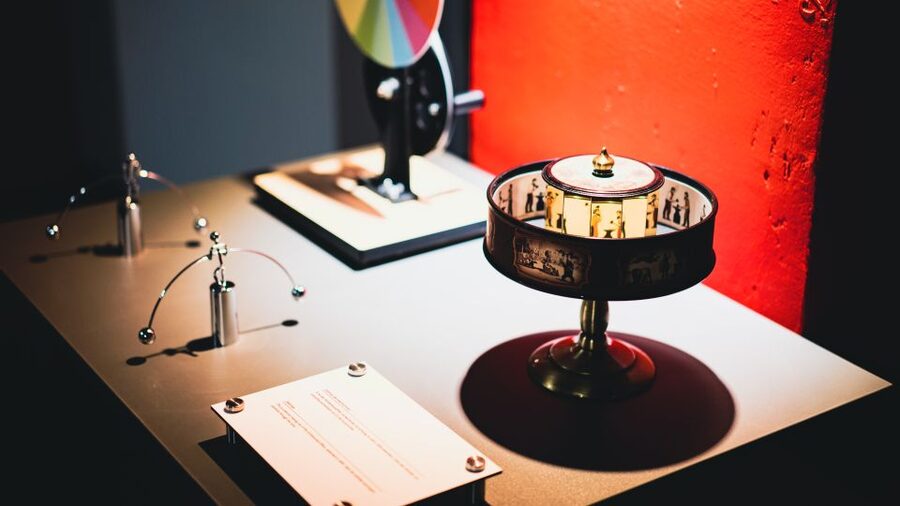
Reviewed · MUSEUMS
Berlin: Interactive DeJa Vu Museum Entrance Ticket
Your eyes are not always telling the truth. That is the fun of Berlin’s DeJa Vu Museum, where optical illusions, mirror rooms, puzzles, and hands-on displays turn you into part of the artwork. I like the easy location near Alexanderplatz, and I like that the exhibits work for families, teenagers, and adults who enjoy taking unusual photos. The main drawback is that the museum can feel short or repetitive if you move quickly, especially when several small rooms are busy.
The museum spreads across two floors and takes about 1.5 hours at the planned pace. I especially like the mix of playful science and art, from the Beuchet-Stuhl and Interactive Sandbox to Oleg Shupliak’s portraits, where one image may contain several faces or figures. At $17 per person, it is a fair choice for a rainy afternoon, though the value depends on whether you stop to test each exhibit rather than simply snap a few pictures and leave.
- A short walk from Alexanderplatz: The entrance is about 300 meters from the Fernsehturm, making this an easy add-on to central Berlin sightseeing.
- Oleg Shupliak’s double-image portraits: Look carefully at the paintings and try to identify the hidden people and shapes inside each portrait.
- Small interactive rooms: The Dark Room, Beuchet-Stuhl, and other enclosed displays put the illusion directly around you.
- Mirror rooms made for photos: Starroom and Abyss offer colorful, disorienting backgrounds for pictures and short videos.
- A good wet-weather activity: The museum gives you something playful to do indoors without taking up a whole day.
- Best at a quiet time: Some rooms hold only two people, so weekend queues can change the pace of your visit.
In This Review
- Why This Museum Works in Central Berlin
- Starting With Optical Illusions and Gallery Spaces
- Oleg Shupliak’s Portraits Reward a Slow Look
- The Dark Room and Projector Displays
- Mirror Rooms: Starroom, Abyss, and Photo Time
- How Long You Really Need
- The $17 Price: Fair, With One Important Condition
- Who Will Enjoy It Most
- Practical Tips for a Better Visit
- Should You Book the DeJa Vu Museum?
- FAQ
- Where is the DeJa Vu Museum in Berlin?
- How long does a visit take?
- What is included with the entrance ticket?
- Is the museum suitable for children?
- Are photos and videos allowed?
- Which languages are available?
- Can I cancel my booking?
Why This Museum Works in Central Berlin
Berlin has no shortage of serious museums, memorials, and grand historic buildings. The DeJa Vu Museum offers a different kind of break. You are not there to study a collection in silence. You are there to test your eyes, press buttons, solve visual puzzles, and laugh when your own sense of balance or scale seems to fail.
That makes the museum particularly useful when your group has mixed interests. Children can interact with the displays, teenagers can create photos and videos, and adults can appreciate the tricks behind the illusions. The experience does not ask you to know anything about art or science before you arrive.
The location helps. From the museum entrance, Alexanderplatz is close by, and the Fernsehturm is roughly 300 meters away. You can pair the visit with central Berlin sightseeing without setting aside an entire day. It also works well when rain, cold, or tired feet make another outdoor plan less appealing.
The overall rating is 4.1 from 1,338 ratings, which fits the experience well. Most of the enjoyment comes from the interactive nature and photo opportunities, while the main limits are the modest size and possible waiting for the smaller rooms.
Starting With Optical Illusions and Gallery Spaces
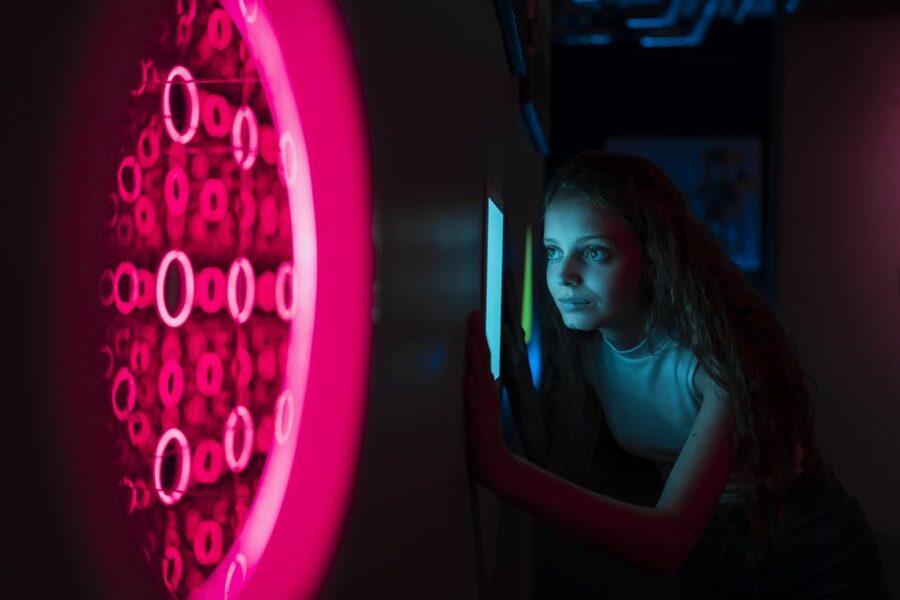
Your visit begins in the gallery areas, where the museum introduces the basic idea: your eyes can misread size, shape, distance, and movement. The displays are designed to be seen and tested, not just read about.
That distinction matters. A sign explaining an illusion is one thing. Standing inside it, changing your position, or watching a friend appear strangely proportioned is more memorable. The museum makes you the subject, so the experience keeps moving even when the individual displays are simple.
The Beuchet-Stuhl is a good example. The name may sound technical, but the appeal is plain: a chair arrangement that plays with perspective and makes a person appear out of proportion. It is the kind of exhibit that becomes clearer when you take a photo, then compare what your eyes saw with what the camera recorded.
The Interactive Sandbox offers another style of activity. Rather than simply looking at an image, you manipulate a display and see how changes affect what appears before you. This hands-on approach is one reason the museum suits families. You can give children a task instead of asking them to stand still in front of artwork.
The museum also includes puzzles. These are useful when you want a little mental challenge between the more theatrical rooms. Do not rush past them. The fun is often in making an initial guess, finding it wrong, and then working out why your eyes made that mistake.
More Museums in Berlin
- Berlin: Natural History Museum Entrance Ticket
★ 4.6 · 3,382 reviews - Skip-the-Line: Berlin Wall Museum at Checkpoint Charlie
★ 4.1 · 2,041 reviews - Berlin: Museum Island Multiple Museum Entry Ticket
★ 4.4 · 2,007 reviews
Oleg Shupliak’s Portraits Reward a Slow Look
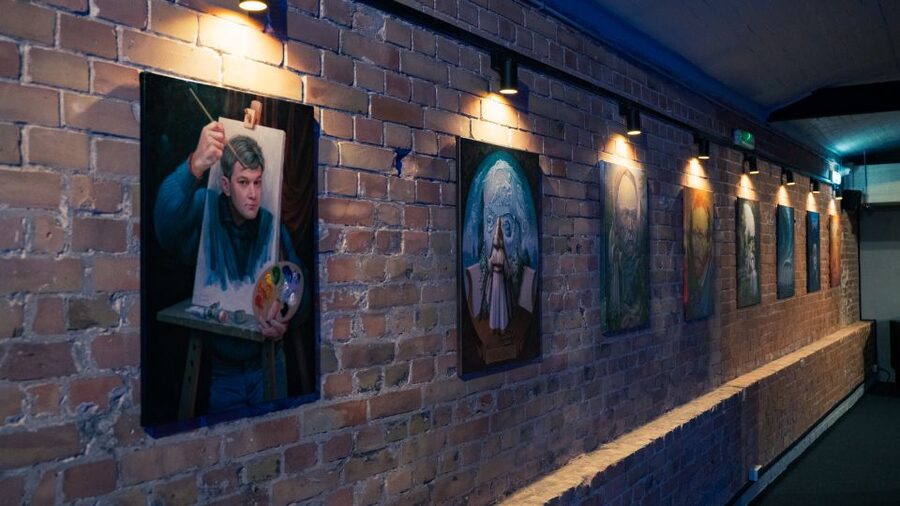
The art gallery by painter Oleg Shupliak gives the museum a more traditional artistic center. His portraits are built in layers, with faces, bodies, and objects arranged so that another image appears when you step back or change your focus.
You can turn this into a simple game. Look at the painting first as a normal portrait. Then search for the second image. Ask the people with you what they see before giving away the answer. This is one of the better parts of the museum for adults, since the pleasure comes from noticing composition rather than just posing for a picture.
The Shupliak gallery also keeps the experience from becoming only a collection of photo booths. You are still dealing with artwork, but the museum gives you a clear way into it. No art background is needed. You only need patience and a willingness to look twice.
That said, the gallery may not hold everyone’s attention for long. If your group wants constant movement and instant effects, the portraits can feel slower than the mirror rooms. I would give them a few extra minutes, especially if you enjoy visual puzzles or want a break from the more crowded interactive areas.
The Dark Room and Projector Displays
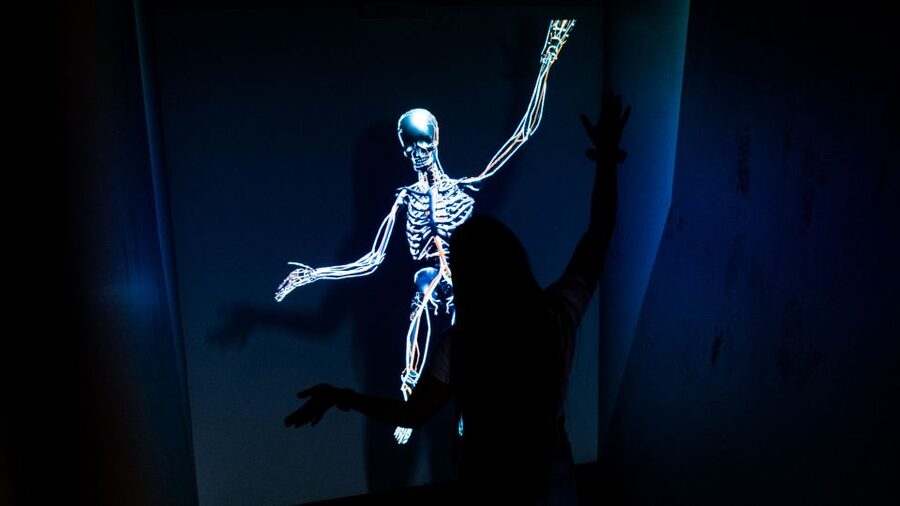
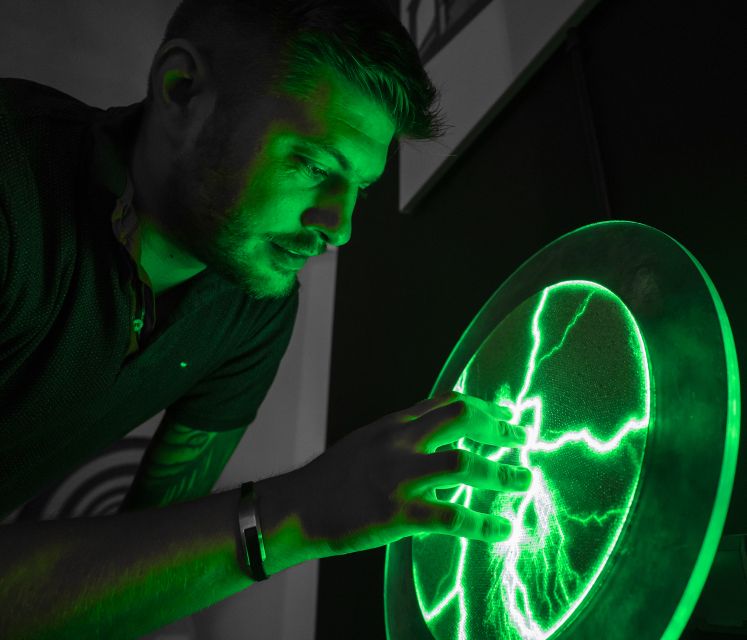
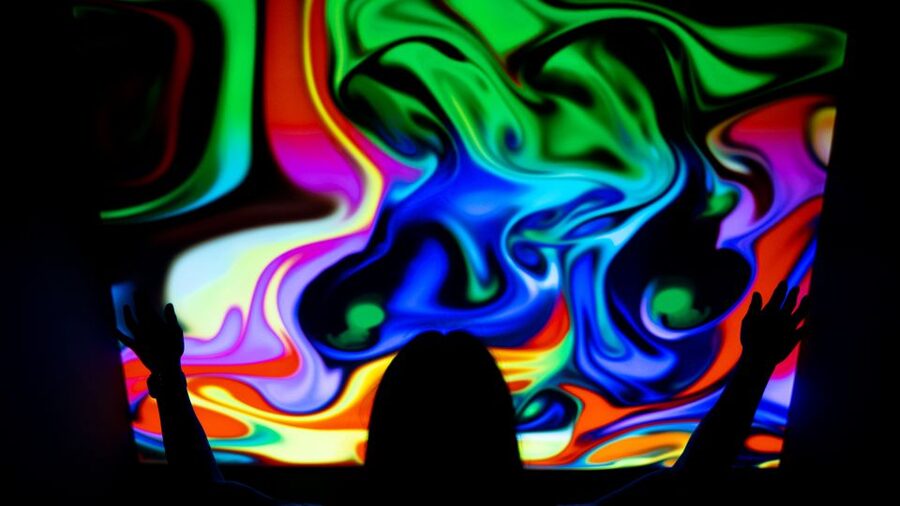
The Dark Room changes the mood. Here, the lack of ordinary light makes you more aware of color, shape, and movement. The room is part of the museum’s effort to show how much your eyes depend on the conditions around you.
Projector rooms add another layer. Instead of looking at a finished display from the outside, you become part of the projected artwork. Your position and movement affect the way the illusion reads, so these rooms are best enjoyed with a friend who can take a photo or video while you experiment.
This is where the museum feels most playful. You are not simply observing an effect. You are trying to create the best version of it. A quick visit can miss that point, so allow time to repeat a pose or try the display from another angle.
The experience is not a guided tour with a long spoken explanation. A host or greeter may be available in English, German, Polish, Spanish, or French, but the exhibits themselves provide much of the entertainment. If you want detailed scientific explanations for every illusion, this may feel light. If you want a clear, accessible introduction to visual tricks, it does the job.
Mirror Rooms: Starroom, Abyss, and Photo Time
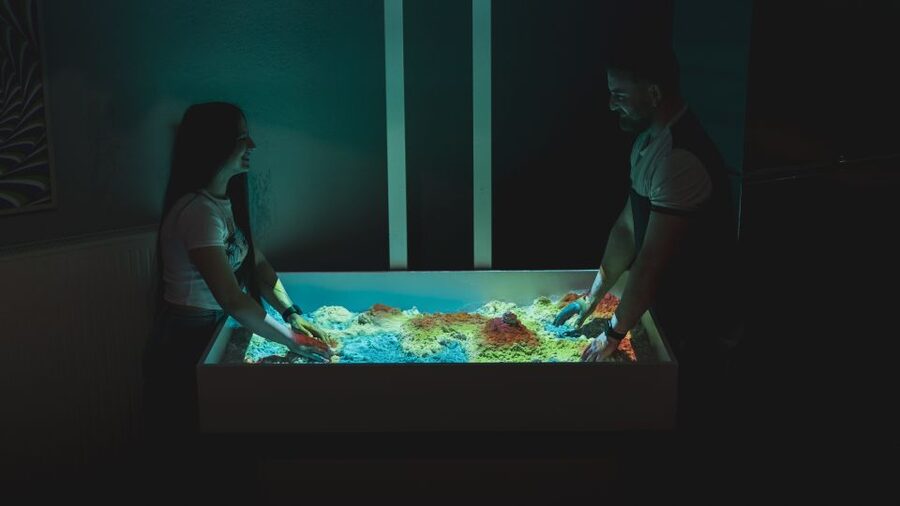
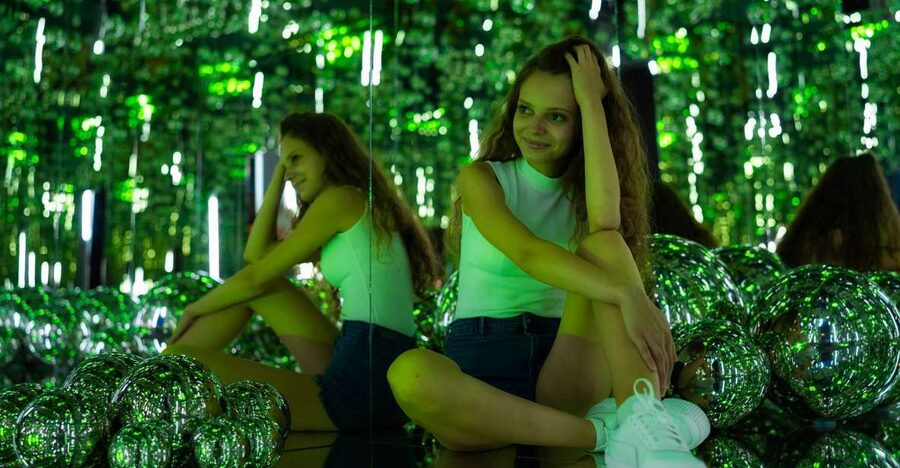
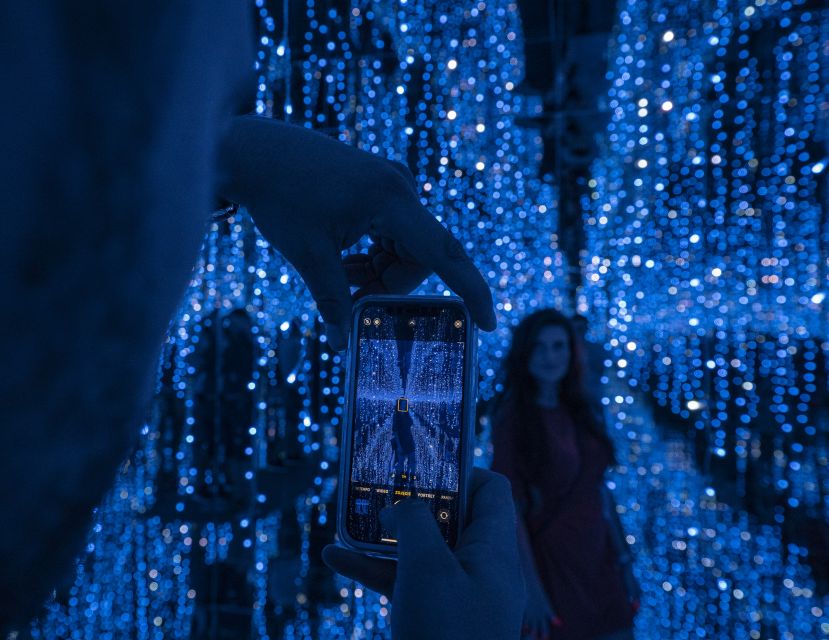
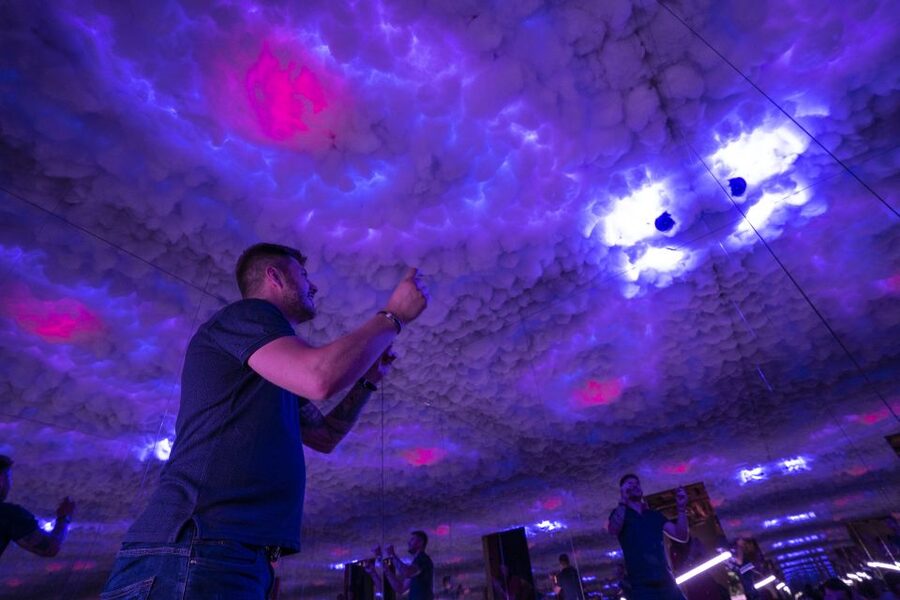
The themed mirror rooms are likely to be the most popular part of the museum. Starroom and Abyss create dramatic settings where reflections seem to continue far beyond the actual walls. They are designed for photos and short videos, so have your phone ready before you enter.
Mirror rooms can be fun in a group, but they are also the areas most affected by crowding. A quiet visit lets you find a good position and take several pictures without feeling hurried. On a busy weekend, you may have to wait for a small room or share the space with other people.
The photo opportunities are strong, but expectations matter. These are staged visual environments, not historic Berlin interiors or fine-art galleries. You are paying for a playful, camera-friendly experience. If that sounds appealing, the rooms are a good part of the price. If you dislike taking photos or prefer conventional museums, they will carry less value for you.
The colorful kaleidoscope displays add another visual option. They are especially useful for videos because changing patterns can make a simple clip look unusual. Just remember that the museum does not allow food or drinks, and pets are not allowed inside.
A few more Berlin trips worth comparing
- Berlin: Berlin Story Bunker Entry Ticket
★ 4.6 · 6,759 reviews - Berlin: Illuseum Berlin Entrance Ticket
★ 4.1 · 3,970 reviews - Berlin: Madame Tussauds Admission Ticket
★ 4.6 · 3,941 reviews - Potsdam: Sanssouci Palace and Prussian Palaces Entry Ticket
★ 4.5 · 2,101 reviews
How Long You Really Need
The stated duration is 1.5 hours, which is a sensible target for a relaxed visit. You can move through the two floors, try the interactive exhibits, spend time with the portraits, and take photos without treating the museum like a race.
Your actual time may vary. A fast group can get through the rooms in around 30 minutes, particularly if no one stops long at the puzzles or art gallery. A group with children, or anyone keen on photos, may use the full 1.5 hours and possibly longer if queues slow things down.
The small-room design is the biggest factor. Some displays hold only two people, so a line can form even when the museum itself does not feel crowded. A quiet Thursday afternoon has been a good time for some visitors, and weekday timing is worth considering if your schedule allows it.
You should also leave room for retakes. The first photograph may show a mirror edge, the wrong angle, or someone stepping into the frame. The museum is more enjoyable when you treat each display as a short experiment rather than a checklist.
The $17 Price: Fair, With One Important Condition
At $17 per person, the DeJa Vu Museum sits in the affordable range for a central Berlin activity. The price makes sense if you spend close to the planned 1.5 hours and use the interactive features. It is also a practical choice for families looking for something different from a standard museum.
The value drops if you finish in 30 minutes. That is not necessarily a problem with the museum, since some people move quickly through visual displays, but it is worth knowing before you book. The best way to protect your value is simple: slow down, read the puzzle instructions, try the displays more than once, and give the Shupliak paintings proper attention.
I would compare the ticket with the cost of other central indoor activities rather than with a major state museum. This is entertainment with an art and science angle. You are paying for participation, photos, and a change of pace, not a vast collection or a full historical narrative.
The free cancellation up to 24 hours before the visit and the option to reserve now and pay later are useful if your Berlin plans are still shifting. Starting times vary, so check availability when choosing your date.
Who Will Enjoy It Most
Families with children will find plenty to do. The displays give young visitors permission to touch, move, guess, and test, which is a welcome change from museums where every object sits behind glass. Children and teenagers are likely to get the most from the rooms that put them directly into the illusion.
Groups of friends are another strong match. Mirror rooms and projector displays work better when one person poses and another takes the picture. The museum can also fill a gap in a day when your group wants a light activity rather than another demanding historical site.
Couples may enjoy the photo side and the smaller rooms, particularly during a quieter time. Solo visitors can still use the exhibits, but some of the fun depends on having someone else react to the illusion or take a picture.
People seeking a serious art museum should set their expectations carefully. Oleg Shupliak’s gallery adds genuine visual interest, but the main purpose is playful interaction. The exhibits can also feel repetitive if you expect every room to offer a completely new idea.
The museum is not suitable for people with mobility impairments or epilepsy. It also prohibits alcohol, drugs, food, and drinks. Those restrictions are important to consider before you arrive.
Practical Tips for a Better Visit
Go at a quieter time if you can, particularly if you want photos without waiting. Weekend visits may bring longer lines because some rooms hold only two people.
Keep your phone charged. The museum encourages photos and videos, and you may want several attempts in the mirror rooms and projector spaces.
Give yourself the full 1.5 hours if you are visiting with children. Young people may want to repeat the same display, while adults may spend longer on the portrait gallery and puzzles.
Start near the beginning with a curious attitude. The museum is more rewarding when you try to work out how an illusion functions instead of treating every room as a quick backdrop.
Plan it with Alexanderplatz. Since the entrance is close to the Fernsehturm, you can fit the museum around other central activities. It is especially handy when you want an indoor stop without traveling across the city.
Should You Book the DeJa Vu Museum?
Book it if you want a playful, photo-friendly activity near Alexanderplatz, especially with children, teenagers, or friends. The interactive displays, mirror rooms, puzzles, and Oleg Shupliak portraits give you more variety than a simple photo attraction.
I would be more cautious if you dislike staged exhibits, need a full-day museum, or expect every room to feel completely different. The visit may take only 30 minutes for a fast-moving group, and small rooms can create waits at busy times.
For most people, $17 is reasonable when you use the museum as a 1.5-hour break from Berlin’s heavier sights. Choose a quieter time, take your time with the illusions, and you will get the most from this clever little outing.
FAQ
Where is the DeJa Vu Museum in Berlin?
The entrance is near Alexanderplatz, approximately 300 meters from the Fernsehturm.
How long does a visit take?
The stated duration is 1.5 hours. Some people may move through the museum in about 30 minutes, while others can spend longer taking photos and trying the displays.
What is included with the entrance ticket?
The ticket includes the interactive exhibits, mirror rooms, puzzles, and the Oleg Shupliak art gallery.
Is the museum suitable for children?
Yes. The interactive exhibits and puzzles make it suitable for children and teenagers, particularly those who enjoy hands-on activities and visual tricks.
Are photos and videos allowed?
The experience includes opportunities to take photos and videos, especially in the colorful kaleidoscope displays and themed mirror rooms such as Starroom and Abyss.
Which languages are available?
Host or greeter support is available in English, German, Polish, Spanish, and French.
Can I cancel my booking?
You can cancel up to 24 hours in advance for a full refund. The booking also offers a reserve-now, pay-later option.
Just added around Berlin
- Private Walking Tour in Berlin: Hitler’s Germany & WWII★ 5.0 · 7 reviews
- The History of Berlin: WWII PRIVATE Walking Tour With Locals★ 5.0 · 209 reviews
- Berlin: Private Bike Tour of the Berlin Wall and Third Reich★ 5.0 · 23 reviews
- Private Berlin WWII and Cold War History Tour with Local Expert Guide★ 5.0 · 28 reviews
- Private Walking Tour Berlin 3 hours: Brandenburg, Historic Center★ 5.0 · 7 reviews
- Berlin: Guided Private Bike Tour to Explore the Highlights★ 5.0 · 12 reviews
- Berlin Photography Masterclass – Private Photography Lesson★ 4.5 · 23 reviews
- Group Driving Tour 1 to 6 people. Berlin Shore Excursion incl pick-up at Port★ 5.0 · 8 reviews
Museums, compared.


Skip-the-Line: Berlin Wall Museum at Checkpoint Charlie
Read our review →
Browse the lists this tour appears in