
Reviewed · MUSEUMS
Berlin: Museum of Communication Entrance Ticket
Communication is older than any city. Berlin’s Museum of Communication turns that huge subject into something you can see, touch, and test, from a hand axe and postal objects to smartphones and digital displays. I especially like the chance to see the Blue Mauritius, one of the world’s rarest stamps, and the hands-on communication gallery, where you can send signals by light, sound, or smoke.
I also like that you can explore at your own speed with an audio-visual app instead of following a fixed guide. The main drawback is the museum’s broad scope: if you want a tightly focused postal museum, some sections may feel spread across too many subjects. Plan on about 1.5 hours for a useful visit, or longer if you try every interactive station.
In This Review
- Key points at a glance
- Why Berlin’s Museum of Communication is worth your time
- Starting with the hand axe and the first signals
- The communication gallery puts you to work
- The Blue Mauritius and the appeal of postal history
- From telecommunication to the smartphone
- A self-guided visit with room to set your own pace
- What the 1.5-hour visit feels like
- The $9 price and who gets good value
- Opening hours, payment, and access
- Who should visit the Museum of Communication?
- Should you book this Berlin museum ticket?
- FAQ
- Do I need to reserve a time slot?
- How long is the experience?
- What is included in the ticket?
- Is the museum wheelchair accessible?
- When is the museum closed?
- What are the public holiday opening hours?
Key points at a glance

- The Blue Mauritius: See one of the most famous and rare stamps in the world.
- 40,000 years in one museum: Follow communication from the hand axe to the smartphone through about 2,000 objects.
- Hands-on learning: Test smoke, light, and acoustic signals in the communication gallery.
- Good family appeal: Interactive displays and the chance to touch and try things make the museum especially suitable for children.
- Flexible visit: Your ticket is valid for one day, and you do not need to reserve a time slot.
- Useful practical detail: The museum is wheelchair accessible and closed on Mondays.
Why Berlin’s Museum of Communication is worth your time
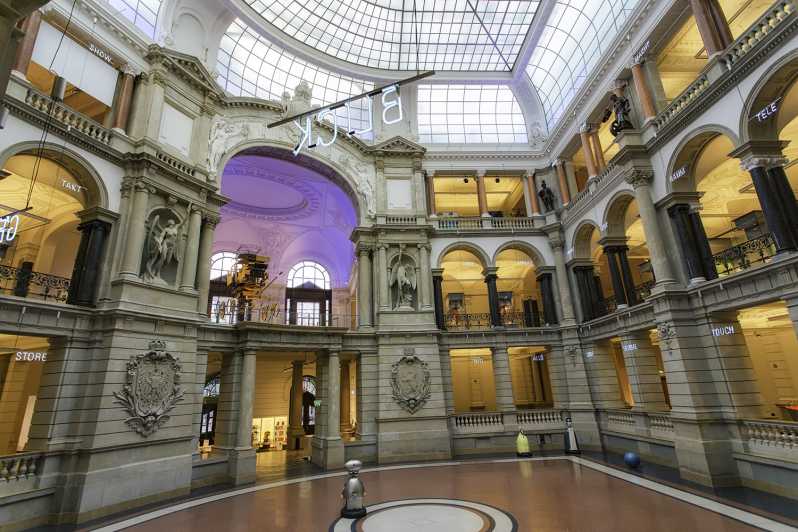
The Museum of Communication Berlin is not just a display of old letters and postal uniforms. It asks a bigger question: how have people tried to send information across distance and time?
That question gives the visit a clear thread. You move from early human tools and signals toward telephones, broadcasting, digital communication, and smartphones. The museum presents about 40,000 years of communication through roughly 2,000 objects, so the collection has plenty of range.
I like this approach because it places familiar technology in a longer story. A smartphone can feel like the final answer to communication, but here it becomes one recent step in a much older process. The museum also connects its displays to current discussions and invites you to take part rather than simply read labels and move on.
The visit works well for adults who enjoy social history, technology, design, or postal history. It also has enough activity for children, especially in the central communication gallery. You can make the visit as serious or playful as you like.
More Museums in Berlin
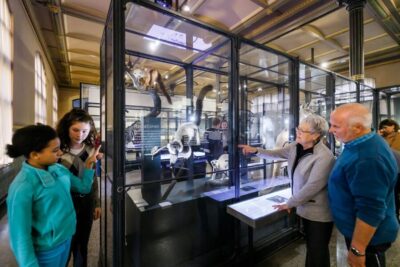
- Berlin: Natural History Museum Entrance Ticket
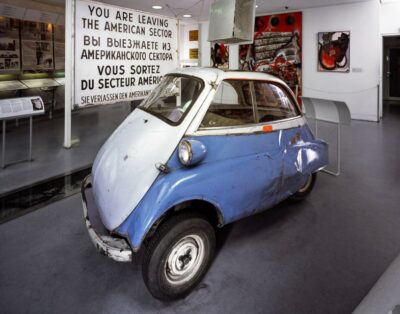
★ 4.6 · 3,382 reviews - Skip-the-Line: Berlin Wall Museum at Checkpoint Charlie
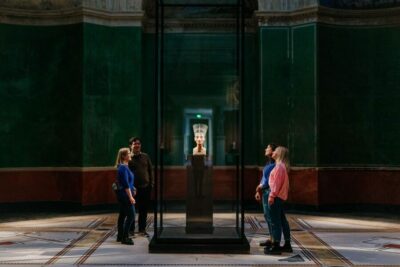
★ 4.1 · 2,041 reviews - Berlin: Museum Island Multiple Museum Entry Ticket
★ 4.4 · 2,007 reviews
Starting with the hand axe and the first signals
The museum’s story begins far before the age of envelopes and postage stamps. The hand axe represents an early form of human communication because objects can carry meaning, show skill, and help people share knowledge across generations.
From there, the displays trace the many ways people have sent messages without modern tools. The subject is not limited to written language. Gestures, sounds, light, and smoke all become part of the story.
This opening section gives you a useful way to think about the rest of the museum. Communication is not only about sending words. It can involve warning, greeting, identifying, remembering, organizing, and showing who you are.
You may find this part less immediately dramatic than the stamp collection or interactive equipment. It works best if you take time with the idea behind the objects rather than rushing from case to case. The museum is asking you to think about communication as a human need, not simply a series of inventions.
The communication gallery puts you to work
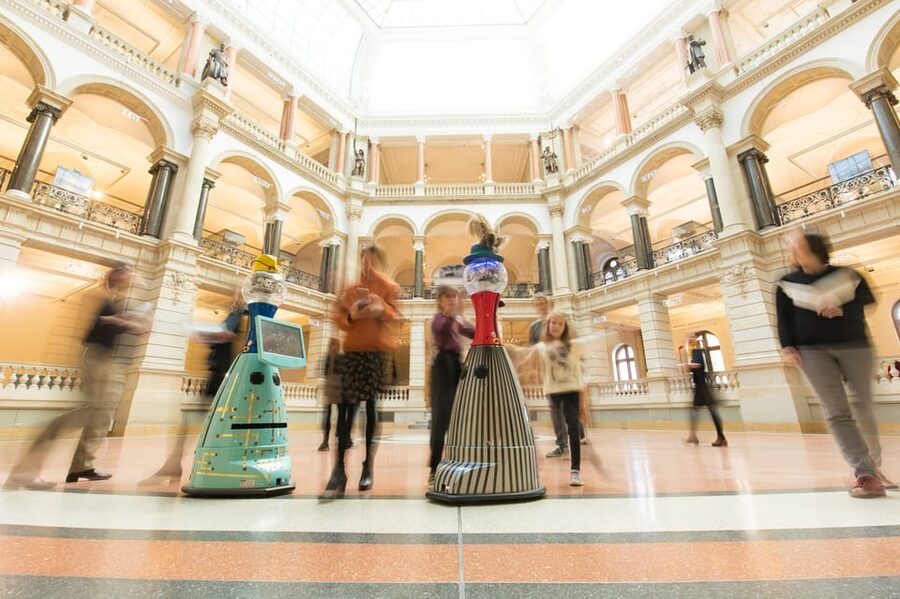
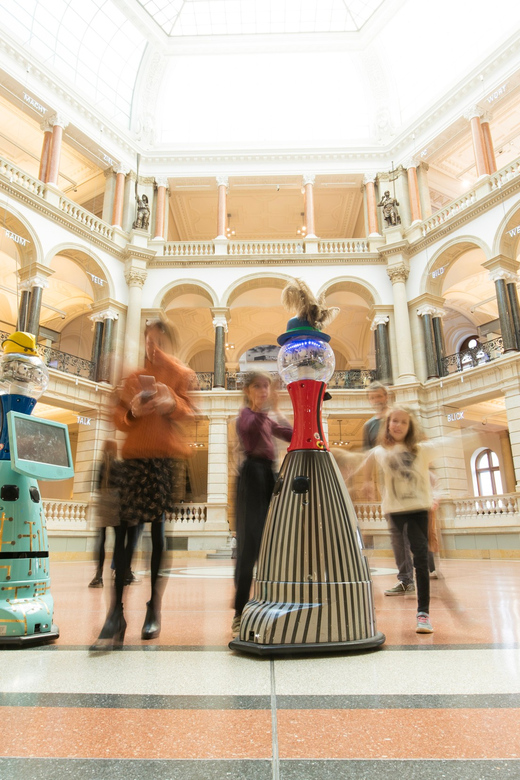
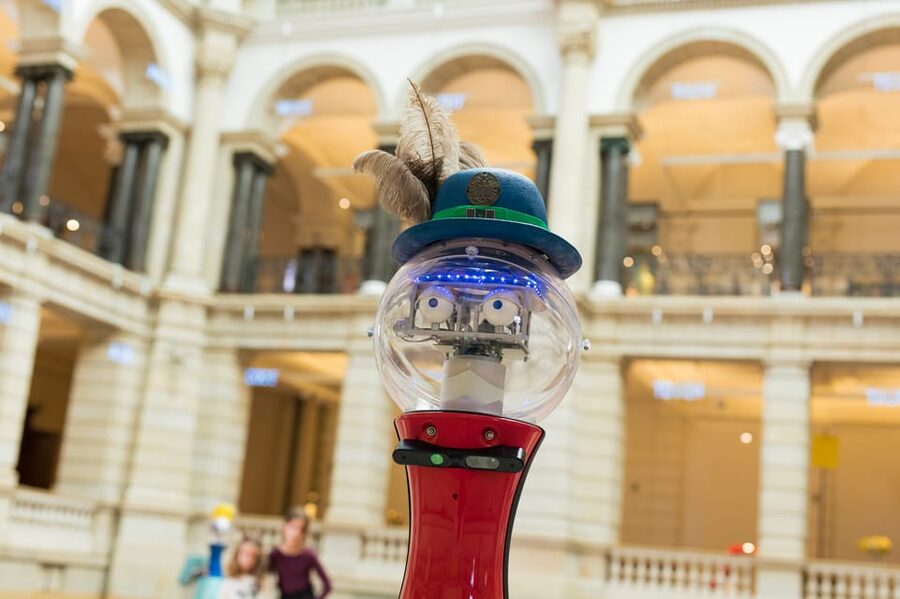
The communication gallery around the atrium is the museum’s most active area. Interactive terminals explain basic ideas about communication and let you try several forms of signaling.
You can experiment with smoke, light, and acoustic signals, then use digital displays to see how messages change depending on the method. This is a welcome break from passive museum viewing. Instead of reading that people once used signals across distances, you get a chance to test the principle yourself.
The gallery also includes an activity about greeting people from around the world. That small feature brings communication down to a very human level. Technology may carry a message, but greetings, sounds, gestures, and social customs still affect how the message is understood.
I would give children plenty of time here. One recent German comment praised the museum as a place where you can touch and try things, with special appeal for children. That matches the design of this section: it encourages curiosity, not quiet obedience.
The possible weakness is that interactive stations can take longer than expected. If you are trying to complete the entire museum in a short visit, set a limit before you begin. Otherwise, the communication gallery can easily become the main event.
The Blue Mauritius and the appeal of postal history

The Blue Mauritius is the museum’s most famous single object. This rare stamp has an important place in philately, and seeing it gives the postal section a clear focus.
Even if you do not collect stamps, the display helps explain why small paper objects can matter so much. A stamp carries an image, a place, a value, and a connection to a postal system. Its importance comes not from size but from rarity and the stories attached to it.
The postal material also adds a more practical side to the museum’s larger story. Before instant digital messages, communication depended on physical networks. Letters had to be prepared, marked, carried, sorted, and delivered. Postal objects show how much organization was required to move information from one person to another.
The museum is described as the world’s oldest postal museum, which gives this section particular weight. You are not looking at an isolated stamp display. You are seeing postal communication placed within a long institutional history.
Still, the Blue Mauritius is a highlight rather than a full visit by itself. If stamps are your main interest, you may want to allow extra time for the postal displays. If you came mainly for technology and interactive exhibits, treat the stamp as one memorable stop before moving on.
A few more Berlin trips worth comparing
- Berlin: Berlin Story Bunker Entry Ticket
★ 4.6 · 6,759 reviews - Berlin: Illuseum Berlin Entrance Ticket
★ 4.1 · 3,970 reviews - Berlin: Madame Tussauds Admission Ticket
★ 4.6 · 3,941 reviews - Potsdam: Sanssouci Palace and Prussian Palaces Entry Ticket
★ 4.5 · 2,101 reviews
From telecommunication to the smartphone
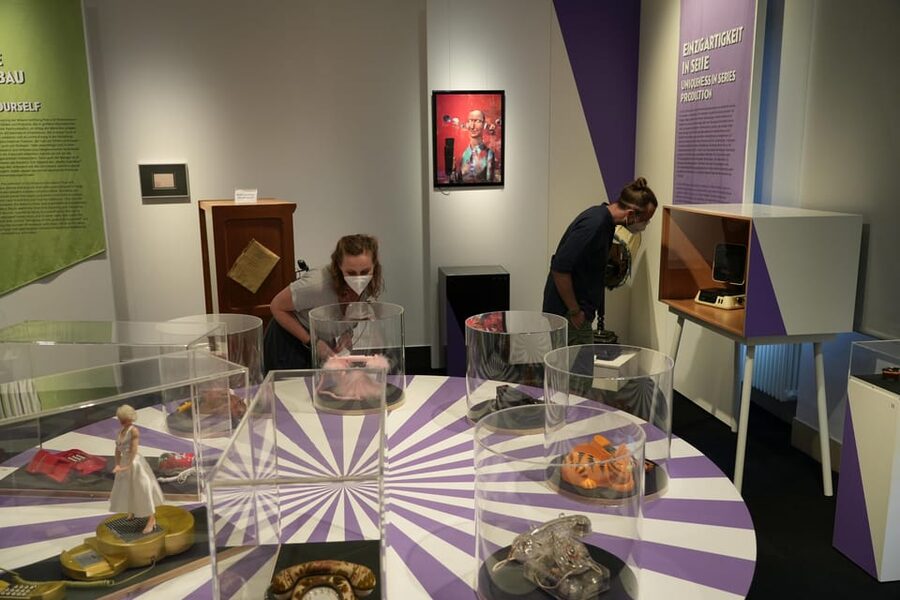
The museum’s central story moves from early signaling toward modern devices. The hand axe and smoke signal eventually lead to the telephone, electronic communication, and the smartphone.
That progression makes familiar technology seem less ordinary. A smartphone combines several earlier communication functions in one small device, but the museum helps you see the separate stages that came before it.
The exhibition also refers to current debates and asks you to consider how communication affects modern life. The museum does not present technology as automatically good or bad. Instead, it offers different points of view and encourages participation in the discussion.
That balance matters. A technology museum can easily turn into a celebration of gadgets. This one keeps returning to the people using them, the systems supporting them, and the meaning carried by each message.
The information provided does not promise a specific collection of smartphone brands or a particular phone display, so I would not visit expecting a detailed history of every mobile model. The stronger attraction is the broad arc from early human communication to today’s connected world.
A self-guided visit with room to set your own pace
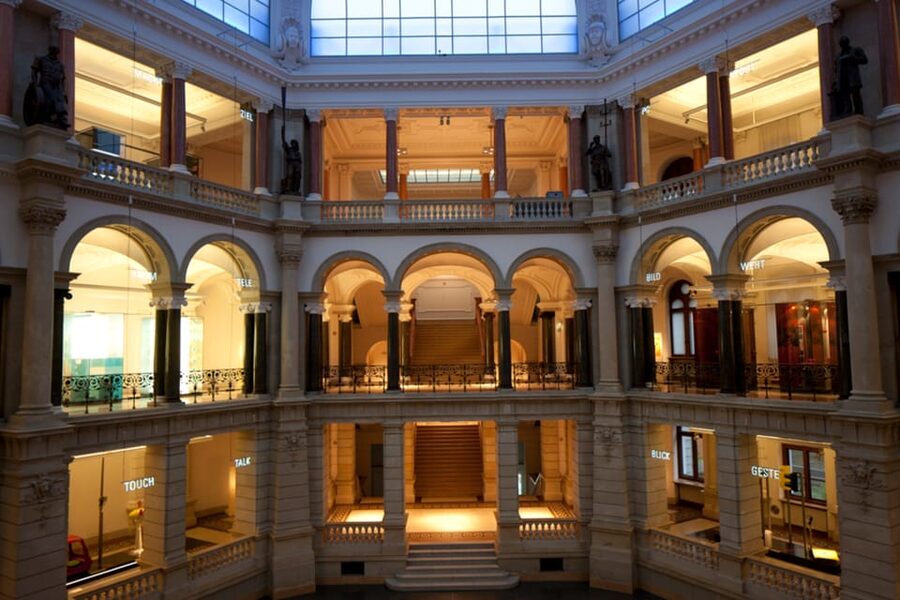
Your admission includes an audio-visual app that guides you through the museum. This is useful if you want extra explanation but do not want to join a timed tour.
You can pause, replay, or move ahead according to your interests. That flexibility suits the museum’s wide subject range. I would use the app for context around major objects, then spend more time at the interactive displays and the Blue Mauritius.
The self-guided format also makes it easier to visit with different interests in one group. One person can focus on postal history while another explores digital communication. Children can spend time at the hands-on terminals without forcing the whole group to follow one pace.
There is no need to reserve a time slot, which simplifies planning. The ticket is valid for one day, though the main visit described for this experience lasts about 1.5 hours. You can make that enough for the main highlights, but the app and interactive areas may tempt you to stay longer.
No hotel pickup or drop-off is included. This is a museum admission experience, not a guided city tour, so you need to make your own way to the Museum for Communication Berlin.
What the 1.5-hour visit feels like
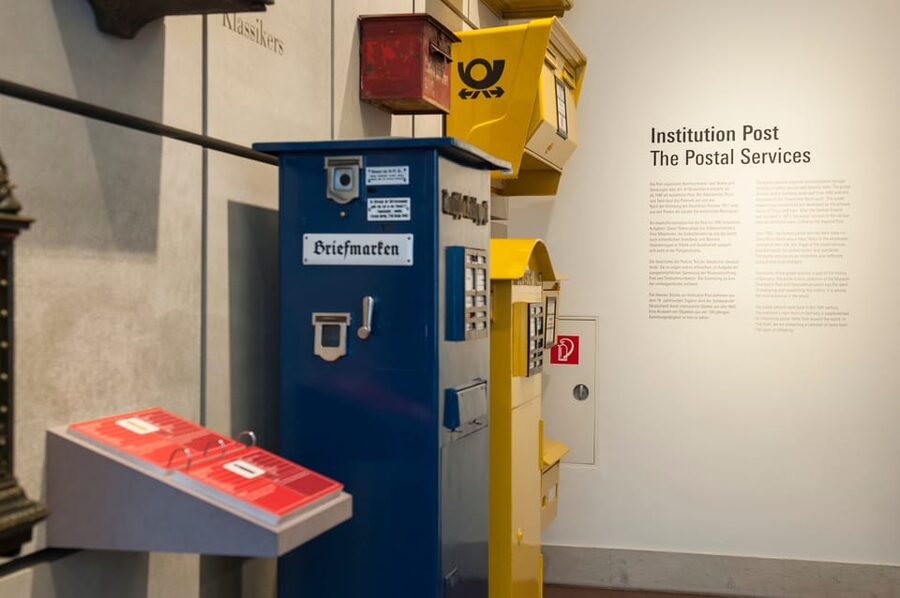
The planned museum visit is simple: start at the Museum for Communication Berlin, enter with your admission ticket, and explore independently.
A practical order would be:
- Begin with the long timeline, from early tools to modern devices.
- Spend time in the communication gallery around the atrium.
- Look for the Blue Mauritius and the postal displays.
- Use the audio-visual app for extra background.
- Return to any interactive station you skipped.
This order gives you the museum’s full story before you settle into the hands-on sections. You can also reverse it if you are visiting with children who need an active start.
The museum includes sight-based displays, interactive terminals, and opportunities to experiment with signals. The activity is not a guided class in the usual sense, so you should expect freedom rather than a host leading every step.
A recent positive comment described the Berliner Salon as fascinating and beautiful. That suggests you should keep an eye out for this area during your visit, though the supplied information does not give a full description of its contents. It may be worth asking at the museum counter or checking the app for its position and current presentation.
The $9 price and who gets good value
At $9 per person, this is a low-cost cultural stop for Berlin. The value is strongest if you spend the full visit using the interactive stations and audio-visual app rather than simply walking through the cases.
The price also makes the museum easy to pair with other Berlin activities. You do not need to build an entire day around it. A 1.5-hour visit gives you a substantial museum experience without taking over your schedule.
I would call the ticket a particularly good buy for families. Hands-on exhibits give children something to do, while the postal and technology sections offer adults enough context to keep the visit from feeling like a children’s attraction.
It is also good value for anyone curious about communication but not deeply interested in stamps. The museum gives you several entry points, including technology, human behavior, design, social history, and the practical machinery of postal systems.
The value is weaker if you want a polished guided tour with a live expert explaining every room. The ticket includes admission and the audio-visual app, but no hotel transfer and no named personal guide. You are responsible for setting your pace and choosing what deserves your attention.
Opening hours, payment, and access
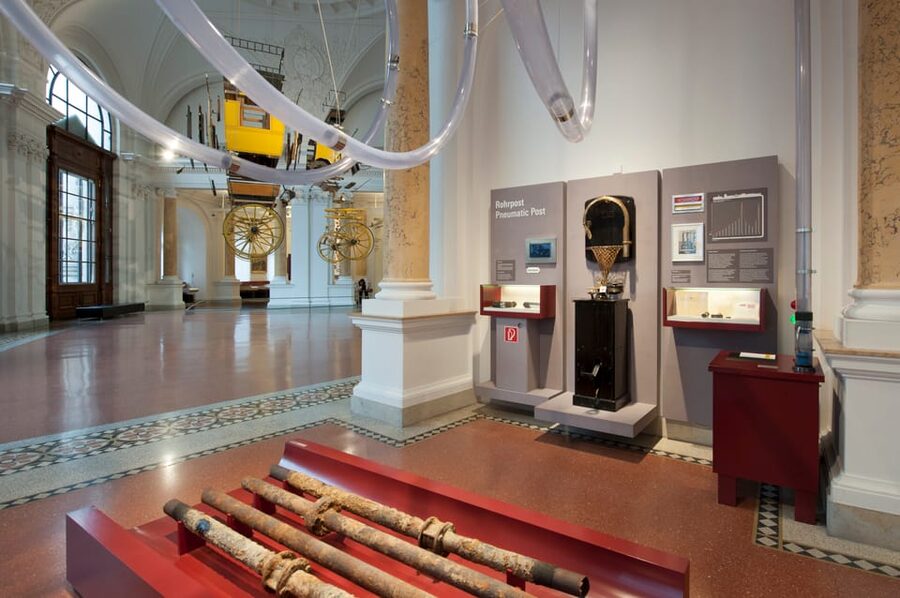
The museum is closed on Mondays. It is also closed on December 24, December 25, and December 31.
On public holidays, it is open from 10:00 AM to 6:00 PM. Since the general information gives public holiday hours but not a complete weekly schedule, check the current opening information before setting out.
You do not need to reserve a museum time slot. Payment information indicates that you can purchase without cash, while cash is accepted at the museum counter. If you prefer a particular payment method, confirm the current arrangement when booking or at the counter.
The museum is wheelchair accessible. That makes it a practical choice for visitors who need step-free access, though the supplied details do not describe the exact route, lift, seating, or restroom setup.
Free cancellation is available up to 24 hours in advance, and the reserve now, pay later option can help if your Berlin schedule is still changing. Those features are useful, but the main reason to book is the museum itself, not the booking flexibility.
Who should visit the Museum of Communication?
I would recommend it to:
- Families looking for an indoor activity with things to try
- Adults interested in technology, postal systems, or social history
- Visitors who prefer self-guided museums
- Anyone who enjoys seeing famous objects such as the Blue Mauritius
- People with about 1.5 hours for a focused cultural stop
- Visitors who want an accessible museum experience
You may want to skip it if you strongly dislike interactive displays or prefer a single narrow subject. The museum covers a very large span, and its range can feel less focused than a specialist collection.
It also may not satisfy someone seeking a guided, story-driven tour with a fixed route. The audio-visual app offers support, but you remain in charge of the visit.
Should you book this Berlin museum ticket?
At $9, I think this is an easy recommendation for most museum-friendly visitors. The Blue Mauritius gives you a memorable object, while the communication gallery gives the visit energy and makes the subject understandable.
Book it if you want a flexible, family-friendly museum that connects early human signals with the smartphone in your pocket. Allow around 1.5 hours for the main experience, and longer if you plan to test the interactive stations carefully.
Skip it only if your Berlin plans leave no room for a self-guided museum or if you want a narrowly focused postal collection. For everyone else, the combination of famous stamps, hands-on experiments, and a long view of human communication offers solid value at a modest price.
FAQ
Do I need to reserve a time slot?
No. You do not need to reserve a time slot for your museum visit.
How long is the experience?
The museum visit is described as lasting about 1.5 hours. Your ticket is valid for one day.
What is included in the ticket?
Admission to the Museum of Communication Berlin and access to an audio-visual app are included.
Is the museum wheelchair accessible?
Yes. The experience is listed as wheelchair accessible.
When is the museum closed?
The museum is closed on Mondays and on December 24, December 25, and December 31.
What are the public holiday opening hours?
On public holidays, the museum is open from 10:00 AM to 6:00 PM.
Just added around Berlin
- Private Walking Tour in Berlin: Hitler’s Germany & WWII★ 5.0 · 7 reviews
- The History of Berlin: WWII PRIVATE Walking Tour With Locals★ 5.0 · 209 reviews
- Private Berlin WWII and Cold War History Tour with Local Expert Guide★ 5.0 · 28 reviews
- Private Walking Tour Berlin 3 hours: Brandenburg, Historic Center★ 5.0 · 7 reviews
- Berlin: Private Bike Tour of the Berlin Wall and Third Reich★ 5.0 · 23 reviews
- Berlin: Guided Private Bike Tour to Explore the Highlights★ 5.0 · 12 reviews
- Berlin Photography Masterclass – Private Photography Lesson★ 4.5 · 23 reviews
- Group Driving Tour 1 to 6 people. Berlin Shore Excursion incl pick-up at Port★ 5.0 · 8 reviews
Museums, compared.




Skip-the-Line: Berlin Wall Museum at Checkpoint Charlie
Read our review →
Browse the lists this tour appears in