
Reviewed · MUSEUMS
Berlin: “Pergamonmuseum. The Panorama” Exhibition Tickets
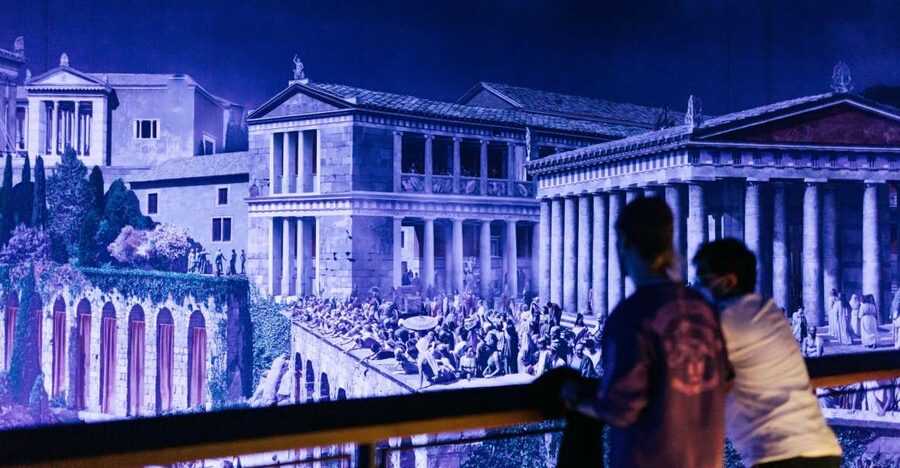
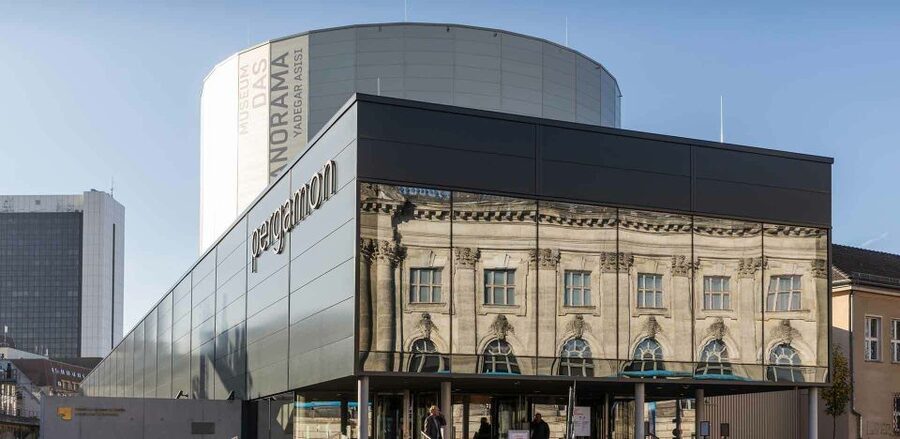
Ancient Pergamon comes alive in Berlin. This temporary exhibition pairs Yadegar Asisi’s 360-degree panorama with real sculptures from the ancient city, including a major section of the Telephos frieze. I especially like the changing light, music, and night-to-day sequence, plus the chance to see Pergamon’s famous works in their original architectural setting. The main caution is timing: the ticket is valid for only 15 minutes from first activation, and access is not the same as entry to the closed Pergamonmuseum itself.
The exhibition is at Am Kupfergraben 2, beside Museum Island, and costs $16 per person. It is an easy choice for families, ancient-history fans, and anyone who wants more than rows of statues behind glass. Still, security can feel a little too watchful, and the panorama may feel underwhelming if you prefer original ruins to modern artistic reconstruction.
In This Review
- Key points to know before you go
- What this exhibition actually offers
- Entering the temporary exhibition at Am Kupfergraben 2
- The 80 ancient works that give the panorama weight
- Seeing the Pergamon Altar in its original setting
- The 360-degree panorama by Yadegar Asisi
- How long should you allow?
- Is $16 good value?
- Who will enjoy it most?
- Timing, closures, and practical cautions
- Final verdict: should you book it?
- FAQ
- Where is Pergamonmuseum. The Panorama located?
- Does this ticket include the Pergamonmuseum?
- Does the ticket include other museums on Museum Island?
- How much does admission cost?
- How long is the activity?
- Can visitors under 18 enter for free?
- Are backpacks allowed?
- Is the exhibition wheelchair accessible?
- Is an audio guide available?
- When is the exhibition closed for renovations?
Key points to know before you go
- Pergamon in AD 129: See the city during the High Roman Empire under Emperor Hadrian.
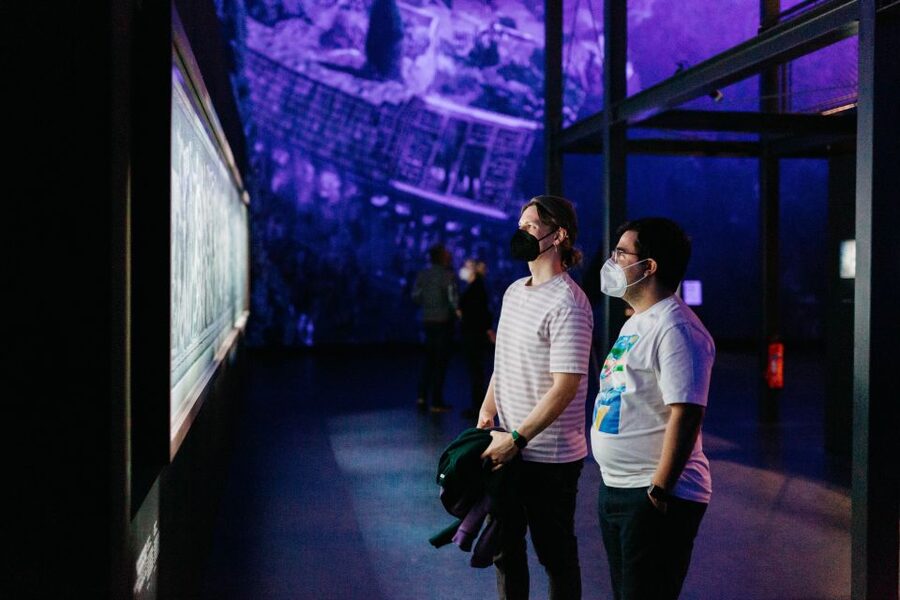
- A 360-degree view: Yadegar Asisi rebuilt the ancient city as a large-scale visual scene with 40 new details.
- Real ancient objects: View about 80 important pieces from the Antikensammlung.
- The Pergamon Altar restored in context: For a limited period, the altar appears as part of the ancient Acropolis rather than as isolated fragments.
- Music and changing light: Day turns to night, giving the panorama a theatrical quality.
- Short ticket window: Your ticket is valid for 15 minutes from first activation, so arrive ready and do not wander to the wrong entrance.
What this exhibition actually offers
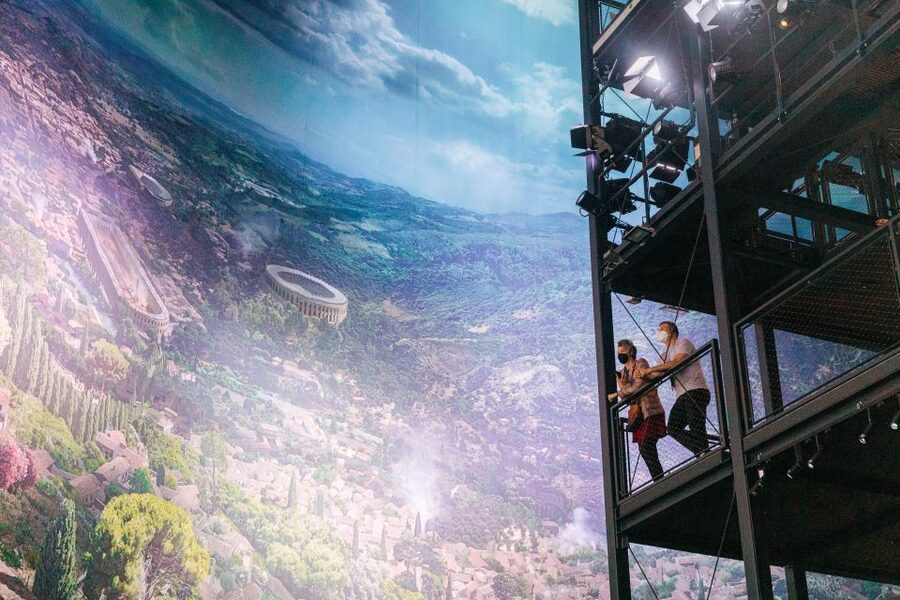
Pergamonmuseum. The Panorama is not a normal museum gallery and not a guided walking tour. It is a compact exhibition built around a huge circular image of Pergamon, the ancient city on the west coast of Asia Minor, in modern Turkey.
The date is AD 129, during the rule of Emperor Hadrian from AD 117 to 138. That choice matters. You are not seeing a vague version of Pergamon from any point in its long past. You are seeing a researched reconstruction of the city during the High Roman Empire, when its temples, public buildings, sculptures, and Acropolis could be viewed as a connected urban setting.
I like that the exhibition brings together two types of evidence. The panorama is a modern artistic interpretation, while the nearby sculptures and architectural pieces are genuine ancient works. You can first look at the reconstructed city, then examine the objects that help explain what the city may have looked like.
That mix makes the exhibition easier to appreciate than a display of disconnected fragments. A column, relief, or portrait can feel remote in a standard gallery. Here, the setting gives each object a place in the city.
More Museums in Berlin
- Berlin: Natural History Museum Entrance Ticket
★ 4.6 · 3,382 reviews - Skip-the-Line: Berlin Wall Museum at Checkpoint Charlie
★ 4.1 · 2,041 reviews - Berlin: Museum Island Multiple Museum Entry Ticket
★ 4.4 · 2,007 reviews
Entering the temporary exhibition at Am Kupfergraben 2
The meeting point is Pergamonmuseum. Das Panorama at Am Kupfergraben 2, 10117 Berlin. Do not assume this means you enter the main Pergamonmuseum. Admission to this panorama exhibition is separate, and your ticket does not include the Pergamonmuseum or other museums on Museum Island.
That distinction is important because Berlin’s Museum Island has several major institutions close together. If you follow signs only for the Pergamonmuseum, you may lose time. One useful tip is to ask directly for Pergamonmuseum. Das Panorama rather than relying on general signs for the main museum.
Backpacks are not allowed. Plan to arrive without one, or expect to deal with the venue’s storage arrangements if available. The museum shop accepts only non-cash payment methods, so bring a card or another cashless option if you plan to buy anything there.
Security can feel more intense than expected. One visitor found the close attention from staff disconcerting, so do not be surprised if you feel watched as you move through the exhibition. It is not a deal breaker, but it can affect the relaxed mood of the visit.
The 80 ancient works that give the panorama weight
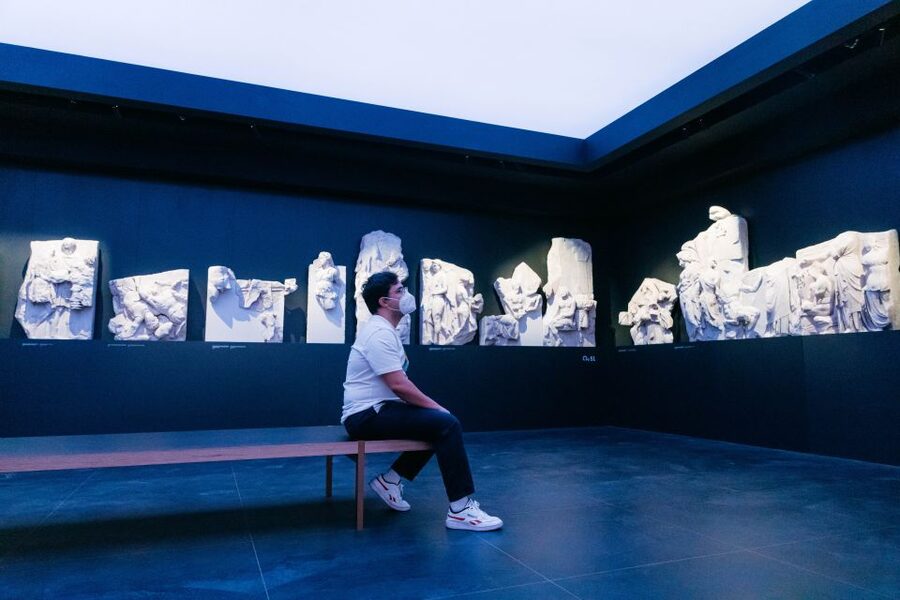
Before or around the panorama, you see roughly 80 important works from Pergamon’s collection in the Antikensammlung. These include sculpture, reliefs, portraits, and pieces connected to the city’s palace and sacred buildings.
The strongest part for many people will be the large section of the Telephos frieze from the Pergamon Altar. The altar is one of the best-known monuments associated with Pergamon, and seeing its sculpture close up helps you understand the skill and scale involved.
The exhibition also includes several memorable figures and fragments:
- The Beautiful Head
- The giant head of Herakles
- Portrait sculptures of the king
- The Archaistic Dancer from the palace
- The Prometheus group
- Athena with a cross-strapped shield
These are not minor decorative pieces. They represent the artistic ambition of Pergamon and help show how the city used sculpture to express power, religion, mythology, and royal identity.
I would give these objects proper attention rather than rushing straight to the panorama. The large image is the obvious attraction, but the actual ancient pieces provide the evidence behind the reconstruction. Without them, the display would be a striking visual show with less historical weight.
Seeing the Pergamon Altar in its original setting
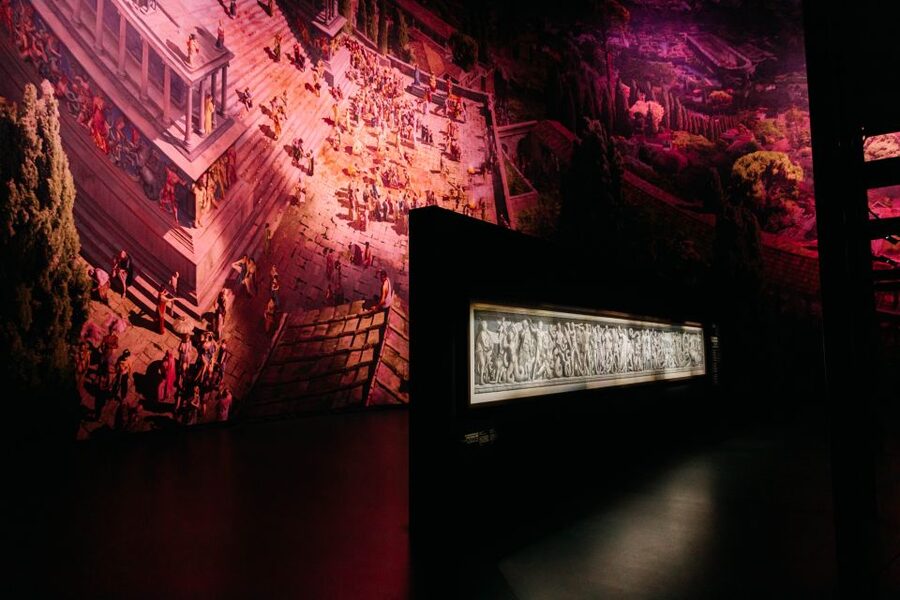
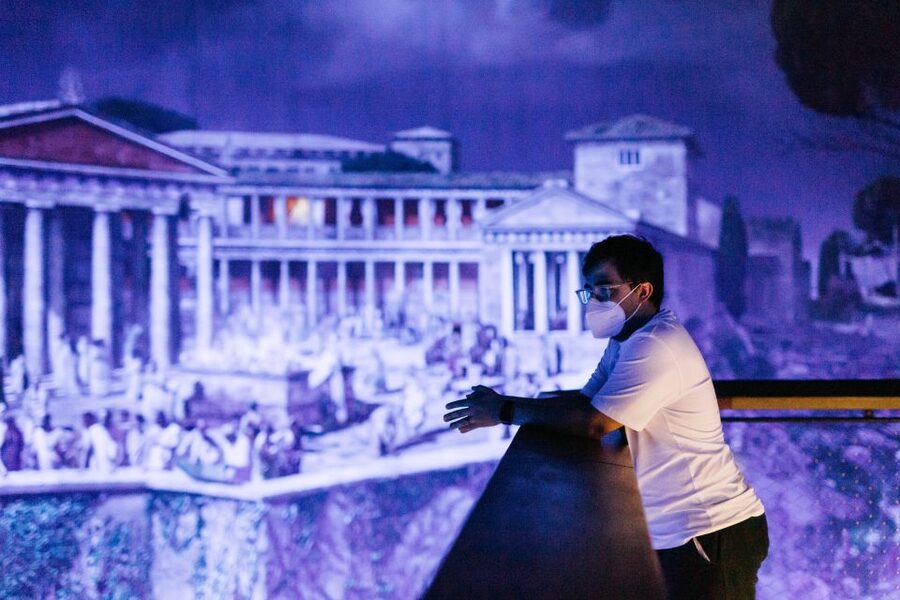
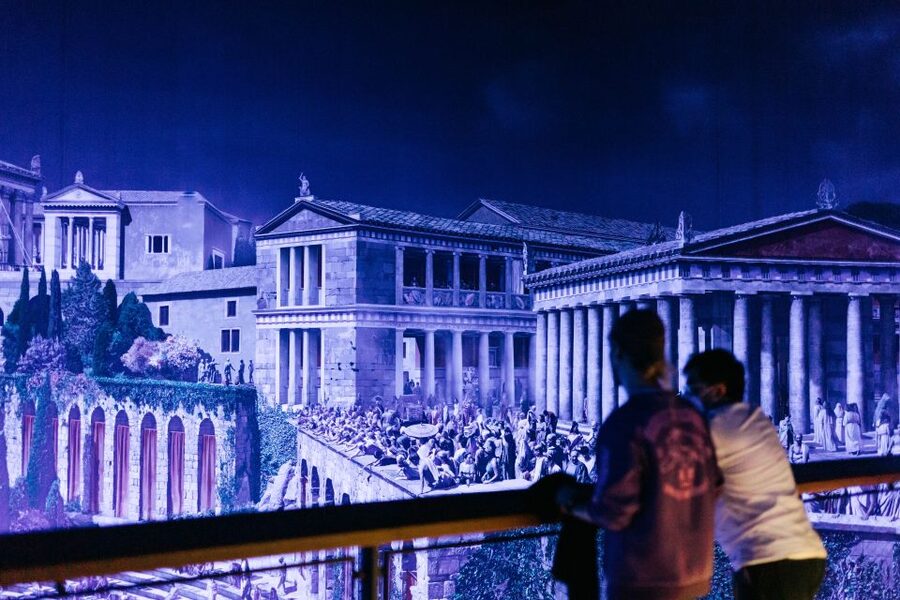
A special feature is the chance, for a limited period, to see the Pergamon Altar represented in its original architectural context on the Acropolis. Instead of viewing the frieze as a detached museum object, you can place it within the larger arrangement of terraces, buildings, and open space.
That context changes your sense of scale. Ancient monuments were designed as part of a city, not as isolated walls in a modern gallery. The panorama lets you see how the altar may have related to the rest of Pergamon’s Acropolis.
This is also where the exhibition succeeds as an educational tool. You do not need a long lecture to grasp the basic idea. The surrounding image does some of the work for you, showing how fragments may have belonged to a larger public and religious setting.
There is a limit, though. This is a reconstructed artistic vision, not a time machine or a fully proven map of every building. You should enjoy the scene while remembering that ancient evidence is incomplete and that the artist has made choices about color, movement, crowds, and daily life.
A few more Berlin trips worth comparing
- Berlin: Berlin Story Bunker Entry Ticket
★ 4.6 · 6,759 reviews - Berlin: Illuseum Berlin Entrance Ticket
★ 4.1 · 3,970 reviews - Berlin: Madame Tussauds Admission Ticket
★ 4.6 · 3,941 reviews - Potsdam: Sanssouci Palace and Prussian Palaces Entry Ticket
★ 4.5 · 2,101 reviews
The 360-degree panorama by Yadegar Asisi
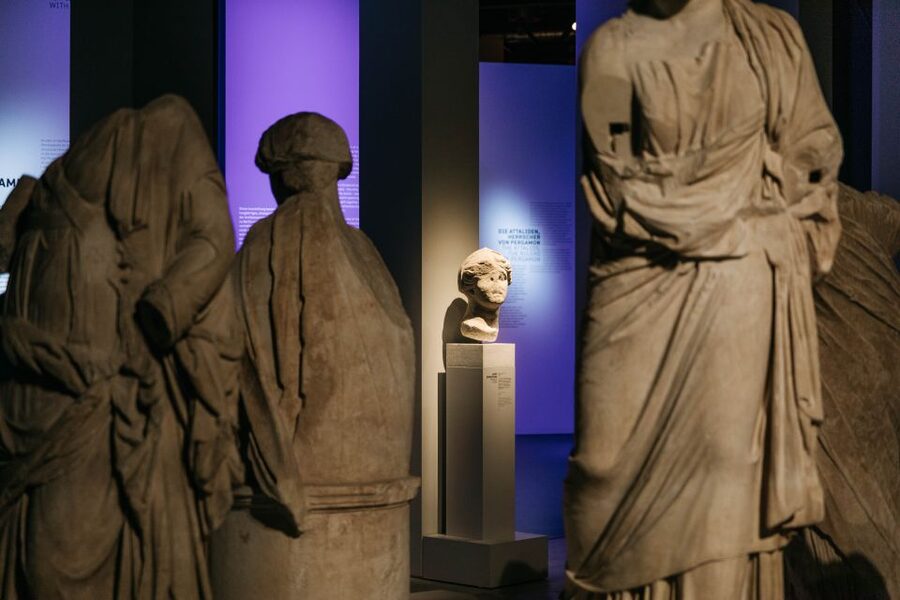
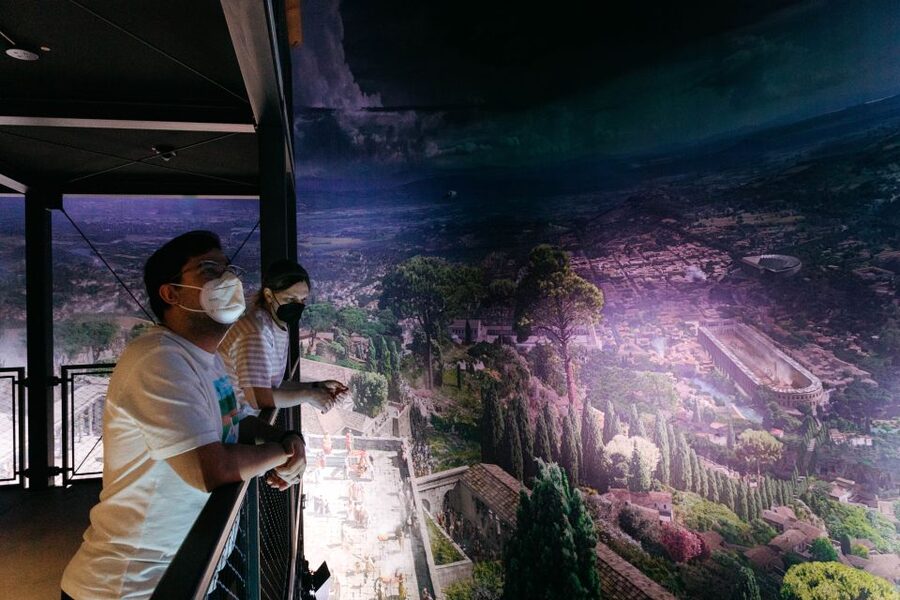
The centerpiece is Yadegar Asisi’s enormous panoramic reconstruction of Pergamon. The scene presents the city in AD 129, with 40 new scenes woven into the image.
The best way to view it is not to glance once and leave. A visitor specifically suggested spending at least half an hour in the auditorium and gradually moving up the steps. That advice makes sense. From different heights, you notice different parts of the city, and the wide circular view rewards slow looking.
The lighting is a major part of the effect. Day changes into night, and music and sound help mark the passage of time. The result is closer to a carefully staged visual performance than a static painting.
I like the way the changes encourage you to look again. In daylight, you can study buildings, people, sculptures, and activity across the city. As the light shifts, the same view feels different. The music adds emotion, though its theatrical quality may not appeal to everyone.
There are also small details hidden in the panorama. Ask one of the guides in the room to point out the visual Easter eggs. These details reward a second look and give children something specific to search for.
Still, keep your expectations in check. If you want original ruins under open skies, this will not replace a visit to an archaeological site. If you enjoy visual reconstruction, sound, and light, it can be remarkable. One less enthusiastic response found the 360-degree view interesting but the overall presentation underwhelming. That difference comes down to taste.
How long should you allow?
The listed duration is 15 minutes, and the ticket is valid for 15 minutes from first activation. That makes this a short, tightly timed attraction rather than a half-day museum visit.
At the same time, the auditorium deserves longer if the rules and your ticket conditions allow it. One detailed recommendation was to stay at least 30 minutes, gradually taking in the panorama from the steps. Because the official ticket information specifies a 15-minute validity period, check the exact timing at entry before settling in for an extended look.
The practical lesson is simple: do not activate the ticket casually while still finding the entrance. Get to the correct building first. The experience is short enough to fit between other Museum Island stops, but it is not something I would squeeze into a rushed ten-minute gap.
For families, the compact format can be useful. Children can see a large visual scene, real statues, lighting changes, and music without facing several hours of dense text. Older children may enjoy searching for the hidden details in the panorama.
Is $16 good value?
At $16 per person, the ticket is reasonably priced for a short Berlin cultural attraction, but value depends on what you want. You are paying for a specialized presentation, a large artistic reconstruction, and access to a group of important ancient works.
The price feels fair if you like archaeology and visual storytelling. The real sculptures alone give the visit substance, while the panorama provides the memorable image. You also avoid committing to a much longer museum session.
The value is weaker if you expect entry to the main Pergamonmuseum. That is not included. Other museums on Museum Island are also separate, so budget for them independently.
Those under 18 can enter free, but every person still needs a ticket. That is useful for families, though you should not arrive assuming children can simply walk in without an issued admission ticket.
An audio guide is available and can add useful background. It is not listed as part of the basic admission, so ask about the current arrangement if you want more explanation. The audio guide was especially praised for making the display more informative.
Who will enjoy it most?
I would recommend this to you if you like ancient history but want a break from conventional galleries. The changing light, music, and 360-degree image make the past feel active and visual.
It is also a good pick for families. The exhibition combines archaeological research with a modern artistic approach, so younger visitors can respond to the scale and drama even if they do not read every label.
Art and architecture fans should pay attention to the way the panorama connects buildings, sculpture, and city planning. The Acropolis view is especially useful if you want to understand monuments in relation to one another.
You may be less impressed if you are seeking a quiet, traditional museum experience. The sound and lighting are deliberate and theatrical. The reconstruction is also an interpretation, so visitors who want only original material may find the presentation too polished.
The venue is wheelchair accessible only in part, and the information also lists it as not suitable for wheelchair users. If you use a wheelchair, contact the venue before booking and ask exactly which areas can be reached.
Timing, closures, and practical cautions
The exhibition is scheduled to close for renovations from September 1 through October 13. Check your date carefully before paying, since the activity is non-refundable.
The exhibition is in Berlin State, Germany, at the Museum Island area. The supplied information does not specify a tour guide, group size, or transport service. You should therefore treat this as timed exhibition admission, not a guided excursion through Berlin.
Wear or bring what you need without a backpack, since backpacks are not allowed. Keep your visit focused on the correct building, especially if you are also planning to see the Pergamonmuseum or another Museum Island collection.
Final verdict: should you book it?
Book this if you want a short but memorable look at Pergamon through a mix of original sculpture and modern visual reconstruction. The strongest reasons are the Telephos frieze, the Acropolis setting, the large 360-degree scene, and the changing music and light.
I would not book it expecting entry to the main Pergamonmuseum, a long guided tour, or an archaeological site visit. Treat it as a separate, highly visual exhibition. At $16, it is a sensible add-on for ancient-history fans and families, provided your date avoids the September 1 to October 13 renovation closure and you are comfortable with the short ticket window.
FAQ
Where is Pergamonmuseum. The Panorama located?
It is located at Am Kupfergraben 2, 10117 Berlin, Germany.
Does this ticket include the Pergamonmuseum?
No. The ticket includes entry to the Pergamonmuseum. The Panorama exhibition only.
Does the ticket include other museums on Museum Island?
No. Entry to other museums on Museum Island is not included.
How much does admission cost?
The listed price is $16 per person.
How long is the activity?
The listed duration is 15 minutes, and the ticket is valid for 15 minutes from first activation.
Can visitors under 18 enter for free?
Yes. Visitors under 18 can enter free of charge, but every visitor still needs a ticket.
Are backpacks allowed?
No. Backpacks are not allowed inside the exhibition.
Is the exhibition wheelchair accessible?
The museum is only partially accessible for wheelchairs, and the information also lists the activity as not suitable for wheelchair users. Check directly before booking if you need wheelchair access.
Is an audio guide available?
Yes. An audio guide is available, though it is not listed as included with the basic exhibition ticket.
When is the exhibition closed for renovations?
The Panorama is scheduled to close from September 1 through October 13 for renovations.
Just added around Berlin
- Private Walking Tour in Berlin: Hitler’s Germany & WWII★ 5.0 · 7 reviews
- The History of Berlin: WWII PRIVATE Walking Tour With Locals★ 5.0 · 209 reviews
- Private Berlin WWII and Cold War History Tour with Local Expert Guide★ 5.0 · 28 reviews
- Private Walking Tour Berlin 3 hours: Brandenburg, Historic Center★ 5.0 · 7 reviews
- Berlin: Private Bike Tour of the Berlin Wall and Third Reich★ 5.0 · 23 reviews
- Berlin: Guided Private Bike Tour to Explore the Highlights★ 5.0 · 12 reviews
- Berlin Photography Masterclass – Private Photography Lesson★ 4.5 · 23 reviews
- Group Driving Tour 1 to 6 people. Berlin Shore Excursion incl pick-up at Port★ 5.0 · 8 reviews
Museums, compared.


Skip-the-Line: Berlin Wall Museum at Checkpoint Charlie
Read our review →
Browse the lists this tour appears in