
Reviewed · MUSEUMS
Berlin: Samurai Museum Entry Ticket
Samurai history gets wonderfully hands-on. Berlin’s Samurai Museum brings armor, swords, ninja lore, tea culture, and Japanese theater together in an easy-to-use exhibition. I like the mix of authentic objects and interactive screens, and I especially like the holographic performances and fox guide Kitsune, which give younger visitors a reason to stay engaged. The museum also provides German and English information, a useful touch for international visitors.
The main consideration is that this is not a quiet, traditional display of objects in glass cases. It uses projections, touchscreens, sound, and digital storytelling throughout. I love that approach for families and first-time learners, but visitors seeking a strictly scholarly museum may find the playful presentation a little busy. Food, drinks, pets, luggage, and large bags are not allowed inside.
In This Review
- Key points to know before you go
- Auguststraße puts samurai culture in the middle of Berlin
- The Peter Janssen Collection gives the museum its substance
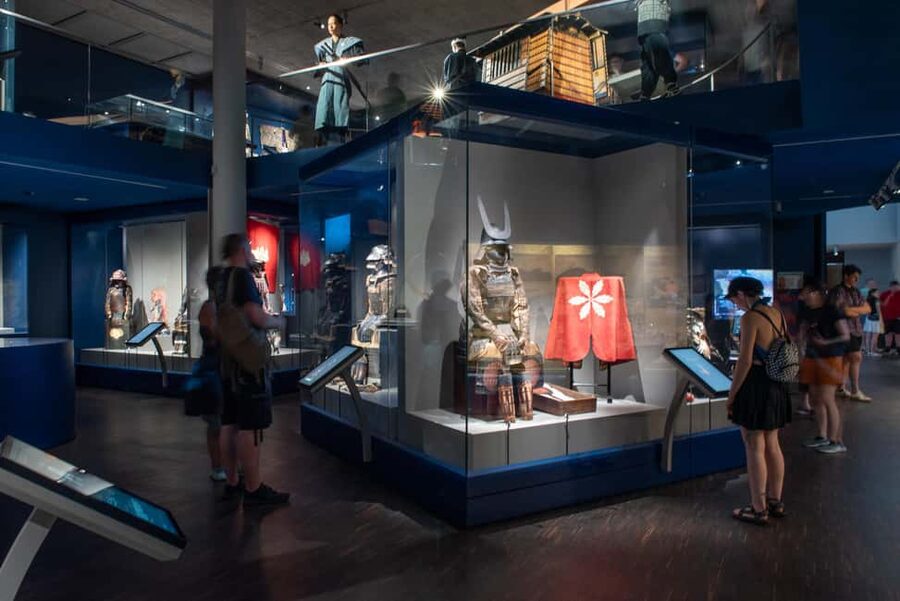
- Armor and swords make the strongest first impression
- Kitsune turns the exhibition into a question game
- The Noh theater and tea house add cultural depth
- Ninja, Yōkai, and technology keep the pace moving
- How much time should you allow?
- Is the $15 ticket good value?
- Who will enjoy this museum most?
- Practical details that can save you trouble
- Should you book the Berlin Samurai Museum?
- FAQ
- Where is the Samurai Museum Berlin?
- How much does admission cost?
- How long is the ticket valid?
- Can I skip the ticket line?
- Is the museum wheelchair accessible?
- What public transport stops near the museum?
- Can I bring food, drinks, pets, or large bags?
Key points to know before you go
- More than armor: The collection includes weapons, tea utensils, a palanquin, art, and objects dating from the sixth to the nineteenth century.
- A real Japanese Noh theater: The theater was built in Japan with traditional materials and then reconstructed in Berlin.
- Kitsune keeps children involved: The fox character asks questions and guides you through parts of the exhibition.
- Strong family appeal: Interactive installations, ninja techniques, holographic music, and hands-on learning make this more than a standard museum visit.
- A central Mitte location: Auguststraße is close to Museum Island, Alexanderplatz, cafés, restaurants, and public transport.
- Flexible ticket use: The ticket is valid for one to fourteen days, depending on the selected availability, and lets you choose your visit time with less advance planning.
Auguststraße puts samurai culture in the middle of Berlin
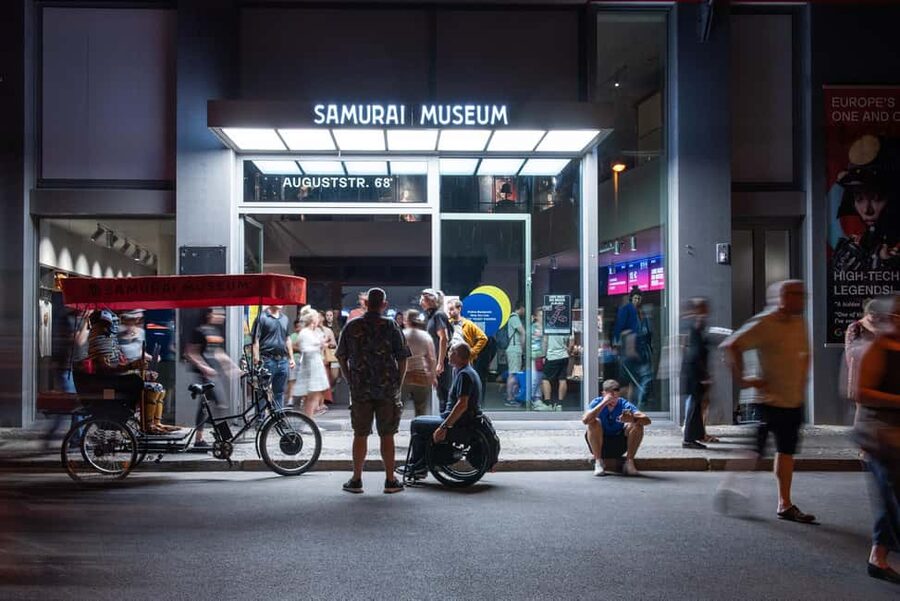
The museum is on Auguststraße in Berlin-Mitte, a useful location for a day of sightseeing. You can pair it with Museum Island, Alexanderplatz, or a walk through the surrounding streets without making a special cross-city trip.
Public transport is straightforward. The nearest U-Bahn options are Oranienburger Tor on the U6 and Rosenthaler Platz on the U8. S-Bahn services stop at Oranienburger Straße, including the S1, S2, S25, and S26. Trams M1 and M5 also stop at Oranienburger Straße, while M8 serves Rosenthaler Platz. Bus options include 142 at Tucholskystraße and M41 at Abgeordnetenhaus.
That central setting matters because the museum works best as part of a larger Berlin day. You could visit in the morning, stop for lunch nearby, and then continue toward Museum Island. Or use it as a change of pace after a day spent with Berlin’s more familiar landmarks.
The entrance is wheelchair accessible. The ticket is shown on your smartphone, and you can go directly to the entrance barrier rather than waiting at a separate ticket line. Since large bags and luggage are not permitted, pack lightly and avoid arriving with airport bags or bulky shopping.
More Museums in Berlin
- Berlin: Natural History Museum Entrance Ticket
★ 4.6 · 3,382 reviews - Skip-the-Line: Berlin Wall Museum at Checkpoint Charlie
★ 4.1 · 2,041 reviews - Berlin: Museum Island Multiple Museum Entry Ticket
★ 4.4 · 2,007 reviews
The Peter Janssen Collection gives the museum its substance
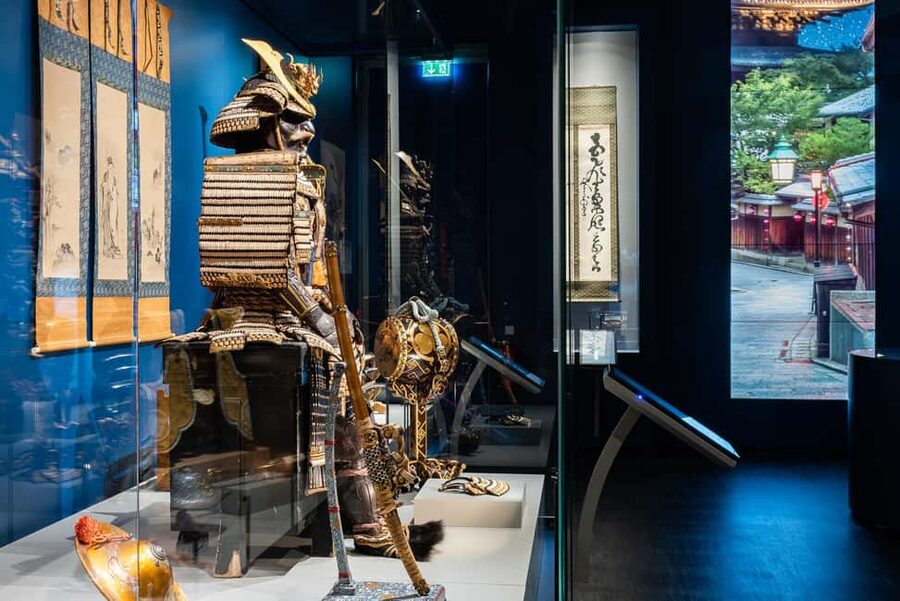
The museum’s foundation is the Peter Janssen Collection, which began with a flea market find in Berlin and grew into a private collection of more than 4,000 objects. The exhibition presents about 900 historical objects, giving you plenty to see without requiring you to sort through every piece in the full collection.
The dates cover the late Kofun period through the early Meiji period, roughly the sixth through nineteenth centuries. That broad range lets you see changes in Japanese craftsmanship, samurai equipment, art, and customs over many centuries.
Several objects are singled out as major highlights:
- An eighteenth century palanquin
- A seventeenth century suit of armor linked to the Matsudaira clan
- Tea utensils associated with the period of Sen no Rikyū, who lived from 1522 to 1591
- Samurai armor and weapons
- Objects connected with sword making and Japanese artistic traditions
The useful thing here is the combination of practical and ceremonial objects. Armor and weapons explain how samurai were equipped, while tea utensils, theater, and decorative arts show how samurai influence reached far beyond the battlefield.
You will not simply see a sword and move on. The displays connect the object to its making, use, and place in Japanese culture. That broader view gives the museum more range than a collection focused only on combat.
Armor and swords make the strongest first impression
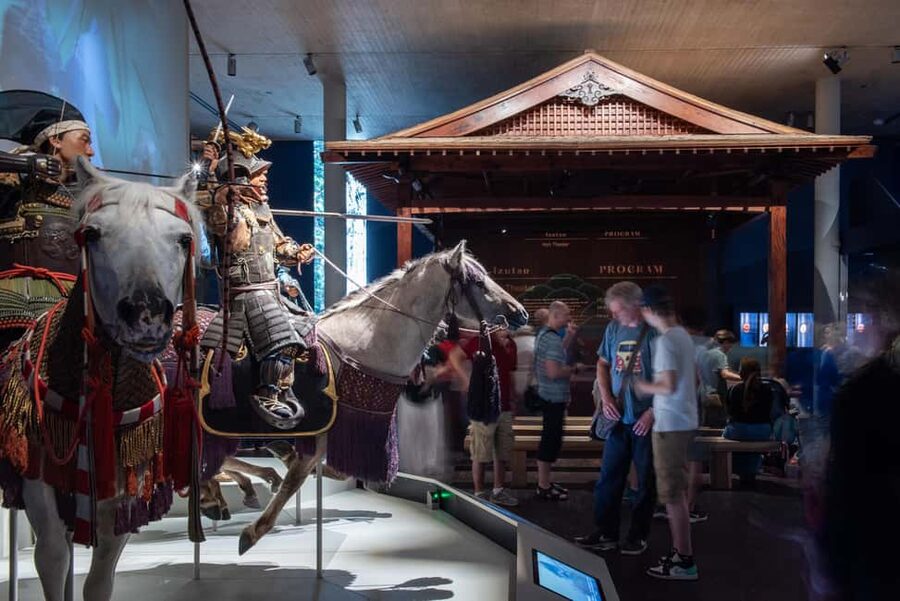
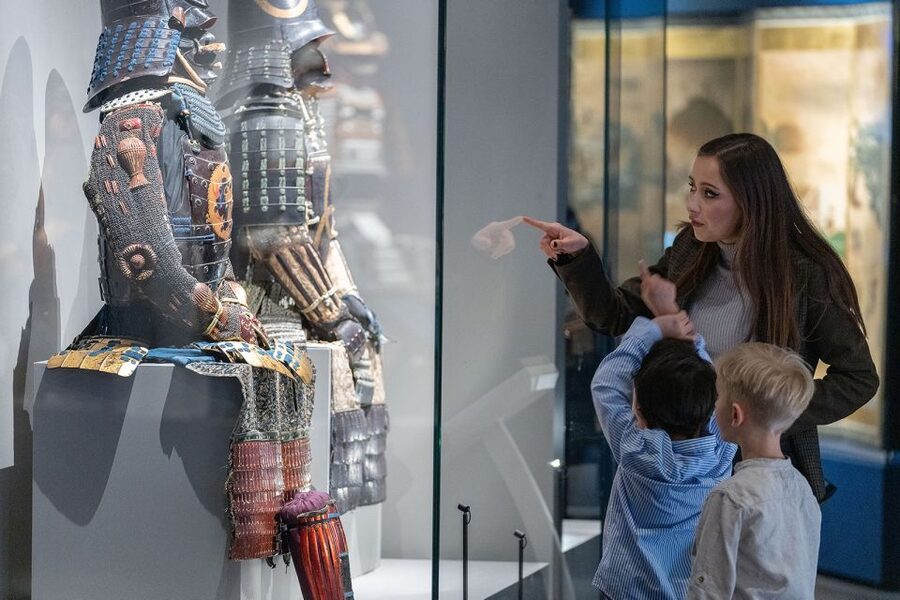
Samurai armor is naturally the star attraction. Its shapes, layers, surfaces, and details are much easier to appreciate when you can view them at close range. The displays let you study the craftsmanship rather than reducing the armor to a costume from a film or television show.
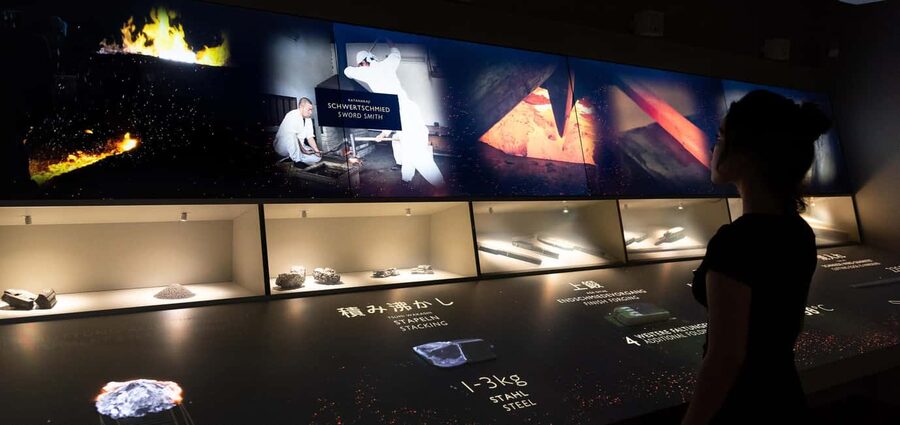
The sword collection offers another strong section. The museum explains the art of swordsmithing and the work involved in producing legendary blades. For many people, this will be the most memorable part of the visit because it connects a famous samurai symbol with the technical skill behind it.
I would give this section extra time if you already enjoy weapons, metalwork, or traditional crafts. You may also find it useful if you know little about samurai culture, since the interactive explanations help establish the basics without demanding specialist knowledge.
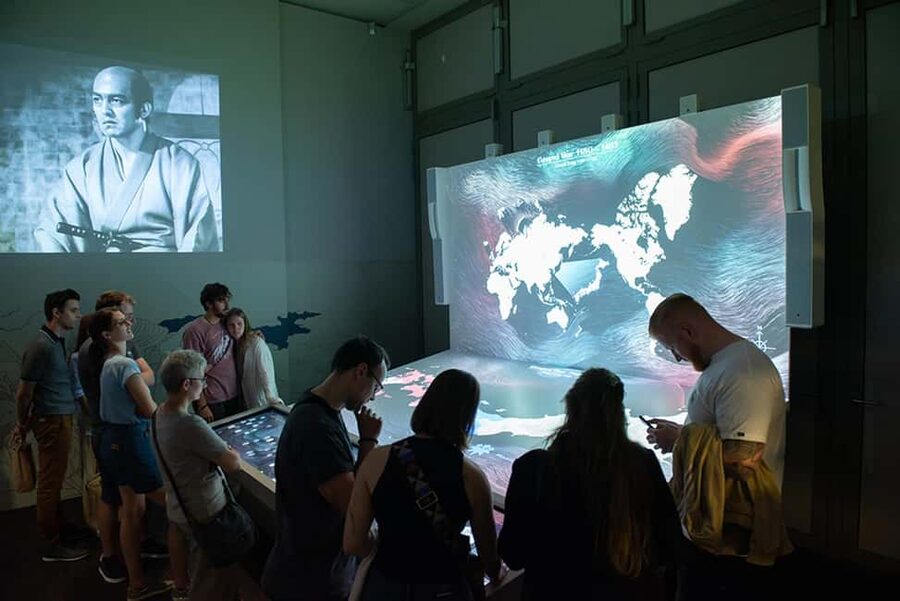
The museum’s digital tools are important here. Touchscreens and projections add context around the physical objects. They also make it easier for children and casual museumgoers to follow what they are seeing.
The tradeoff is that the technology can compete with the objects. If you prefer labels, cases, and silence, you may need to slow down and choose where to focus. The museum is designed to be active, not hushed.
Kitsune turns the exhibition into a question game
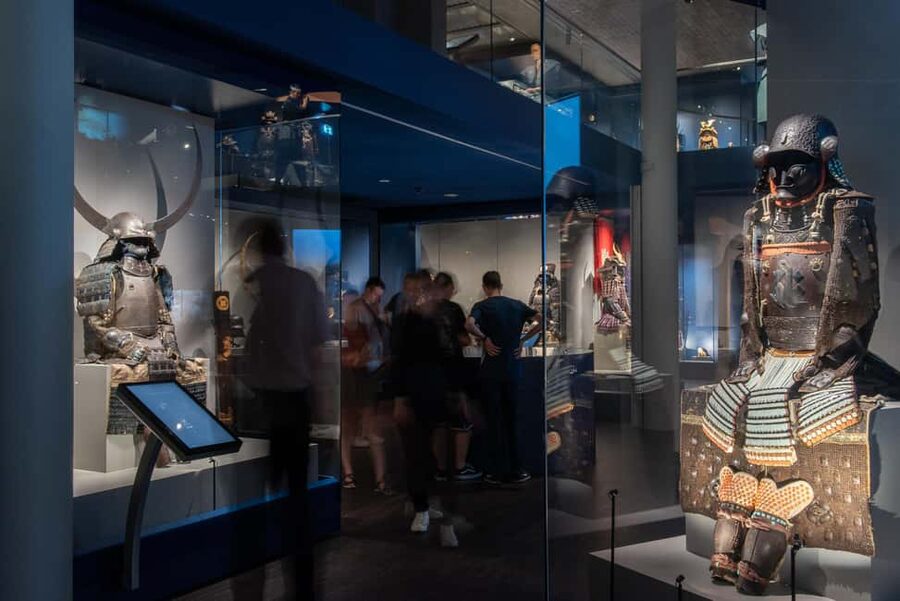
One of the museum’s most distinctive features is Kitsune, a fox character who asks questions during the visit. The reference to the traditional nine-tailed fox gives the character a touch of myth and makes the exhibition feel like an adventure rather than a school lesson.
This is particularly effective for children. Instead of simply reading one label after another, they have prompts to answer and details to look for. The interactive system also received strong praise for making the armor and weapons more approachable.
Adults can use the same system as a guide through the collection. It gives structure to a large exhibition and helps you notice details that you might otherwise pass by. If you are visiting with a family group, Kitsune can keep the pace moving when attention begins to wander.
The museum does not present the material only through English. Information is available for both German and English speakers, and the staff have been described as very helpful on arrival. That makes a practical difference when you are trying to understand how the installations work or decide where to begin.
A few more Berlin trips worth comparing
- Berlin: Berlin Story Bunker Entry Ticket
★ 4.6 · 6,759 reviews - Berlin: Illuseum Berlin Entrance Ticket
★ 4.1 · 3,970 reviews - Berlin: Madame Tussauds Admission Ticket
★ 4.6 · 3,941 reviews - Potsdam: Sanssouci Palace and Prussian Palaces Entry Ticket
★ 4.5 · 2,101 reviews
The Noh theater and tea house add cultural depth
The museum includes a spacious Noh theater built in Japan with traditional materials and techniques. It was then taken apart, transported, and erected in Berlin. The result gives you a physical sense of Japanese theater architecture, rather than only an image or a short video.
Noh theater is a valuable addition because it widens the story beyond warriors and blades. Samurai culture influenced ceremony, performance, design, and social customs. The theater helps explain that cultural reach in a form you can walk into and examine.
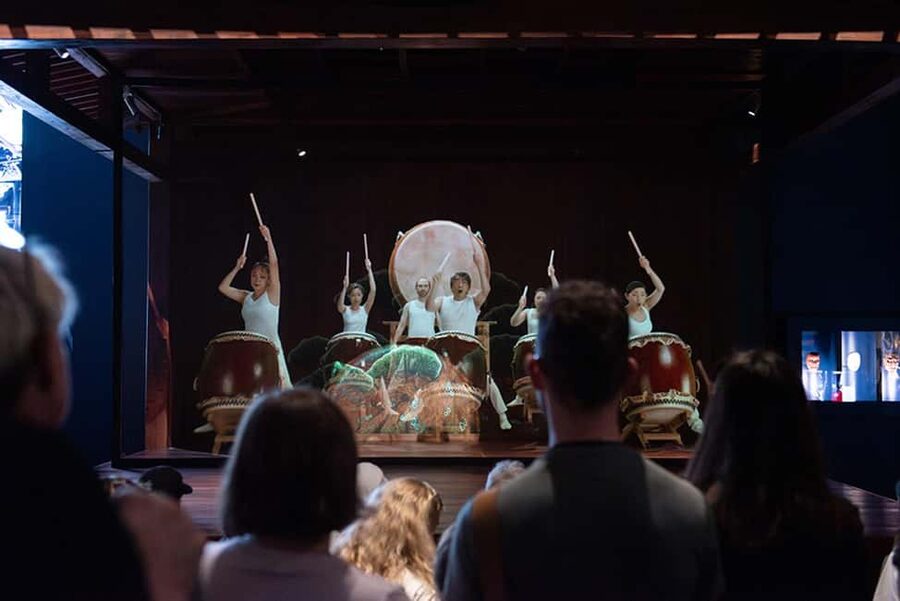
The museum also uses realistic projections in the theater. These help show how the space functions and bring performances into the display. A holographic drum performance is another highlight, combining traditional sound with modern presentation.
Next comes the tea house. Like the theater, it was built in Japan using traditional materials and techniques before being reconstructed in Berlin. The tea house introduces the steps and setting of the centuries old tea ceremony.
This area should appeal to visitors who want more than battlefield history. It shows the discipline, precision, and ritual that shaped Japanese cultural life. The tea ceremony may also give you a calmer counterpoint to the louder, more active parts of the museum.
Ninja, Yōkai, and technology keep the pace moving
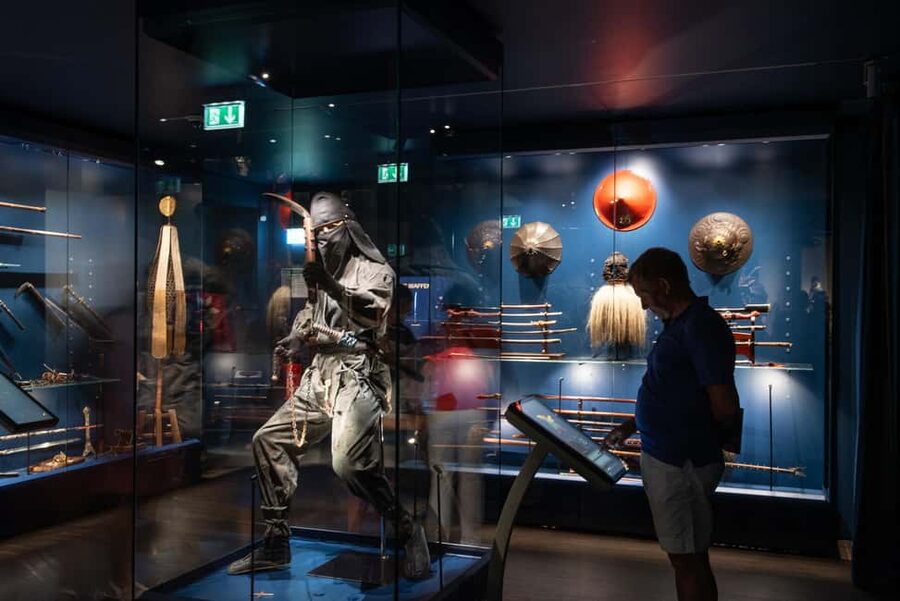
The museum also covers ninja techniques and Yōkai, the supernatural creatures and spirits of Japanese folklore. These subjects give the exhibition a wider popular appeal, but they are not simply added as decoration. They help show how legend, myth, and historical identity overlap in Japanese culture.
Interactive installations guide you through projections and touchscreens. You might find yourself learning a ninja technique, following a digital explanation of sword production, or watching a performance rather than reading a long text panel.
That variety makes the museum a good choice when your group has mixed interests. A history enthusiast can focus on the objects and craftsmanship. A child can follow Kitsune and the interactive tasks. Someone interested in art, theater, or folklore can spend more time with those sections.
The high-tech approach also makes the museum accessible to people who have never studied Japan. You do not need to arrive knowing the difference between a samurai and a ninja. The exhibition introduces the subjects through visual demonstrations and short explanations.
Still, keep your expectations in check. The museum offers an engaging introduction, not a replacement for a specialist course in Japanese history. If you want lengthy academic interpretation or a narrow focus on political history, this may feel lighter than expected.
How much time should you allow?
The ticket is valid for one to fourteen days, with starting times based on availability. This flexible format is useful if your Berlin schedule is still changing. You can choose a time within the permitted period rather than locking yourself into a rigid sightseeing plan far ahead.
The supplied information does not give a fixed visit length, so I would plan enough time to explore at an unhurried pace. The museum includes hundreds of objects, interactive installations, the sword collection, theater, tea house, and digital performances. Rushing through all of that would weaken the experience.
Families may need extra time because children will want to stop at the interactive stations. Adults interested in craftsmanship may linger over the armor and swords, while those drawn to theater and tea culture may spend longer in those reconstructed spaces.
Because the museum is in Mitte, you can also keep the day flexible. If you find yourself moving quickly, continue to another nearby sight. If the interactive displays hold your attention, you do not have to hurry off for a distant appointment.
Is the $15 ticket good value?
At $15 per person, this is a reasonably priced cultural stop in central Berlin. The value comes from the unusual combination of authentic objects, traditional Japanese structures, digital presentations, and family-friendly interaction.
A conventional museum ticket might give you access to objects and labels. Here, you also receive a more active explanation of swordsmithing, tea ceremony, Noh theater, ninja culture, and Yōkai. The holographic music performance and Kitsune system add variety without requiring a separate guided tour.
The ticket includes entry only. An exhibition catalog is not included, so you should not expect a book or printed guide as part of the price. If you want a permanent reference, you will need to arrange that separately.
The flexible ticket terms strengthen the value for short city breaks. You can reserve now and pay later, and cancellation is free up to 24 hours before the visit for a full refund. Those terms help if your Berlin plans are still shifting.
I would consider the ticket especially good value for a family, a museumgoer who enjoys technology, or anyone looking for an indoor activity near Alexanderplatz and Museum Island. A visitor interested only in traditional, object-focused displays may find the price fair but the presentation more theatrical than expected.
Who will enjoy this museum most?
I would recommend the Samurai Museum to:
- Families with children who need activity and variety
- First-time visitors learning about samurai culture
- Fans of Japanese art, weapons, folklore, theater, or tea ceremony
- Visitors who like technology used to explain historical objects
- Anyone staying in or sightseeing around Berlin-Mitte
- People looking for a wheelchair-accessible museum with smartphone entry
It is also a good rainy-day choice because the exhibition offers many indoor activities. The museum can work for a solo visit, but it may be even more fun with children or friends who enjoy answering questions and trying interactive stations.
I would be more cautious if your main goal is a silent, traditional art museum. The projections, holograms, touchscreens, and digital characters are central to the experience. They make the subject approachable, but they also shape the mood.
Practical details that can save you trouble
The Samurai Museum is on Auguststraße in Mitte, and the activity ends at the same location where you begin. You do not need to coordinate a separate return journey.
Show your ticket on your phone at the entrance and go directly to the barrier. The ticket line can be skipped, but you still need to arrive during the time and date available for your booking.
Do not bring pets, food, drinks, luggage, or large bags. This is worth remembering if you are connecting the museum with a hotel change or arriving straight from a train station.
Staff assistance is available at arrival, and the exhibition supports German and English. The museum is wheelchair accessible, which makes it a practical option for a broad range of visitors.
Should you book the Berlin Samurai Museum?
Book it if you want samurai culture presented through real armor, swords, tea utensils, theater architecture, folklore, and modern technology. The combination is unusual, and the central location makes it easy to fit into a Berlin sightseeing day.
I would especially choose it for families and curious first-time visitors. Kitsune, the interactive questions, holographic performances, and touchscreens give children something to do while adults study the collection.
Skip it only if you strongly prefer quiet galleries and long academic labels. For everyone else, the $15 price, flexible ticket period, English and German information, and accessible Mitte location make this a sensible and distinctive museum stop.
FAQ
Where is the Samurai Museum Berlin?
The museum is located on Auguststraße in Berlin-Mitte, near Alexanderplatz and Museum Island.
How much does admission cost?
The entry ticket costs $15 per person.
How long is the ticket valid?
The ticket is valid for one to fourteen days. You should check availability for the starting time and date connected with your visit.
Can I skip the ticket line?
Yes. Use the ticket on your smartphone and go directly to the entrance barrier.
Is the museum wheelchair accessible?
Yes, the museum is wheelchair accessible.
What public transport stops near the museum?
You can use U6 to Oranienburger Tor or U8 to Rosenthaler Platz. S-Bahn services stop at Oranienburger Straße, and trams M1, M5, and M8 serve nearby stops. Bus options include 142 at Tucholskystraße and M41 at Abgeordnetenhaus.
Can I bring food, drinks, pets, or large bags?
No. Pets, food, drinks, luggage, and large bags are not allowed inside.
Just added around Berlin
- Private Walking Tour in Berlin: Hitler’s Germany & WWII★ 5.0 · 7 reviews
- The History of Berlin: WWII PRIVATE Walking Tour With Locals★ 5.0 · 209 reviews
- Private Berlin WWII and Cold War History Tour with Local Expert Guide★ 5.0 · 28 reviews
- Private Walking Tour Berlin 3 hours: Brandenburg, Historic Center★ 5.0 · 7 reviews
- Berlin: Private Bike Tour of the Berlin Wall and Third Reich★ 5.0 · 23 reviews
- Berlin Photography Masterclass – Private Photography Lesson★ 4.5 · 23 reviews
- Group Driving Tour 1 to 6 people. Berlin Shore Excursion incl pick-up at Port★ 5.0 · 8 reviews
- Berlin: Guided Private Bike Tour to Explore the Highlights★ 5.0 · 12 reviews
Museums, compared.


Skip-the-Line: Berlin Wall Museum at Checkpoint Charlie
Read our review →
Browse the lists this tour appears in