
Reviewed · MUSEUMS
Berlin: Tickets for the BODY WORLDS Museum in Berlin
The human body is stranger than fiction. Berlin’s BODY WORLDS Museum uses real human plastinates, including whole-body preparations, to show how bones, muscles, organs, nerves, and disease work together. I like the way the exhibition turns complex anatomy into something you can follow without a medical degree. I also like its wider questions about happiness, stress, and healthy living. The main drawback is that some visitors move through it quickly, and a few displays and audio points may feel tired or difficult to locate.
This is not a light museum stop in the usual sense. The material is direct, sometimes confronting, and built around actual human bodies. Still, the presentation is generally clear, educational, and suitable for many families with older children and teenagers. Give yourself time, use the available phone guide if helpful, and expect the experience to leave you thinking about your own body long after you exit.
In This Review
- Key Points Before You Go
- Entering BODY WORLDS at Panoramastraße
- The First Look at Real Human Preparations
- Following the Skeleton and Muscles
- The Digestive System and the Body at Work
- The Heart, Blood Vessels, and Breathing
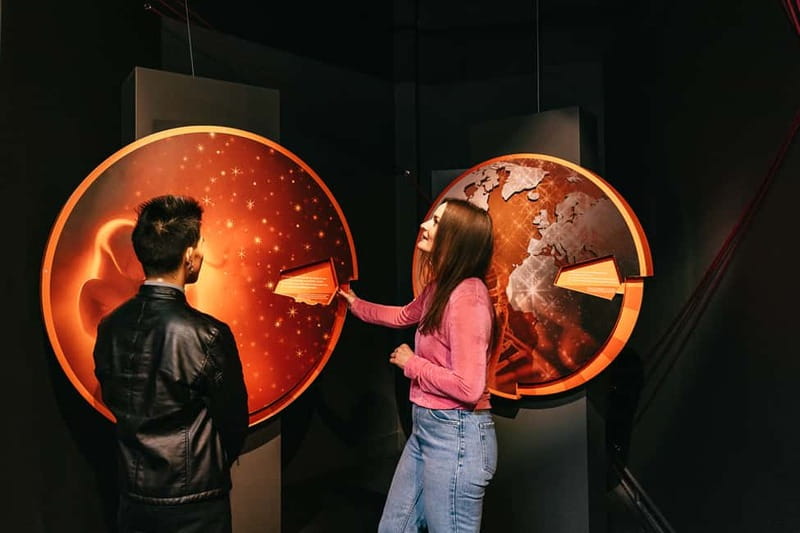
- The Nervous System and Embryo Development
- From Anatomy to Happiness and Stress
- How Much Time Should You Allow?
- Is $22 a Fair Price?
- Who Will Enjoy This Museum Most?
- Practical Tips for a Better Visit
- Should You Book BODY WORLDS Berlin?
- FAQ
- Where is BODY WORLDS Museum in Berlin?
- What are the opening hours?
- What is the last admission time?
- How long is the ticket valid?
- What does the ticket include?
- Are lockers and cloakroom service included?
- Is an audio guide included?
- Is the museum wheelchair accessible?
- Can I cancel my booking?
Key Points Before You Go
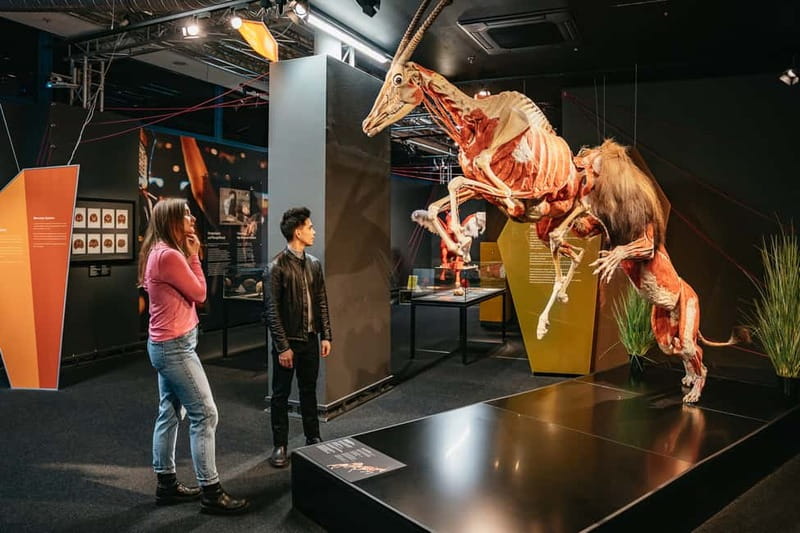
- Real whole-body plastinates: See preserved human preparations that show the position and relationship of organs, muscles, bones, and blood vessels.
- A full tour of human systems: Displays cover the skeleton, muscles, digestion, the cardiovascular system, breathing, nerves, and fetal development.
- More than anatomy: Sections explore happiness, stress, moderation, and the habits linked with a long and healthy life.
- Easy central location: The museum is at Panoramastraße 1a, 10178 Berlin, near the city center.
- Plan for a flexible visit: Your ticket is valid for one day, with opening hours from 10 AM to 7 PM and last admission at 6 PM.
- Good value for curious minds: At $22 per person, the ticket offers a focused educational experience, especially for families, students, and anyone interested in medicine.
Entering BODY WORLDS at Panoramastraße
The museum is at Panoramastraße 1a, 10178 Berlin. This central address makes BODY WORLDS easy to add to a day of sightseeing, though the entrance was not immediately clear to everyone. I would allow a few extra minutes to get your bearings rather than arriving at the last admission time and rushing inside.
The ticket gives you entrance to the exhibition. Cloakroom use, lockers, and an audio guide cost extra or are not included, so travel light if you can. You do not need a scheduled guided tour to understand the main displays. Text is available in English, and the information is written to explain body systems in plain terms.
Opening hours are 10 AM to 7 PM every day, except December 24. The final admission is at 6 PM. Since the ticket is valid for one day, you have some freedom around your timing, but do not treat that as permission to arrive late in the afternoon. One hour may be enough for a quick look, yet the exhibition rewards a slower pace.
The museum is wheelchair accessible. That matters here because the route is built around close viewing of displays and explanatory panels, not a quick pass through a single room.
A few more Germany trips worth comparing
- Dresden: Semperoper Tickets and Guided Tour
★ 4.7 · 12,102 reviews - Berlin: Jewish Museum Berlin Entrance Ticket
★ 4.5 · 8,393 reviews - Berlin: Berlin Story Bunker Entry Ticket
★ 4.6 · 6,759 reviews
The First Look at Real Human Preparations
The first major impression comes from seeing real human bodies presented as educational specimens. These are not plastic models or ordinary museum skeletons. The plastination process allows whole bodies and individual organs to be displayed in ways that reveal their structure and position.
For some people, this is the most powerful part of the experience. You can see how the body is arranged as a working machine, with the skeleton supporting the body, muscles controlling movement, and organs occupying a surprisingly compact space. A textbook can show the same information, but a three-dimensional preparation makes the relationships much easier to grasp.
You should also think about your own comfort before booking. BODY WORLDS deals with death, illness, and exposed human anatomy in a direct way. The displays are educational rather than presented as a horror attraction, but the material may still feel intense. If you are sensitive to medical subjects, you might prefer a shorter visit or a slower start.
The museum presents the human body with a strong focus on wonder. That does not mean it ignores weakness. Alongside healthy structures, you see examples that help explain common diseases and the damage caused when body systems stop working well.
Following the Skeleton and Muscles
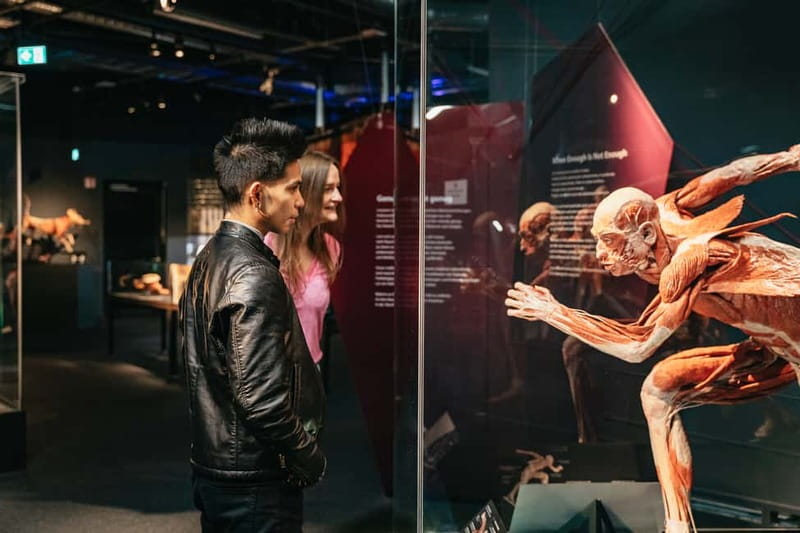
The skeleton provides a natural starting point because it gives the rest of the body its basic framework. The displays help you see bone not as a collection of separate pieces, but as a structure linked to muscles, joints, and movement.
The muscular system is especially useful for families and students. You can look at how muscles work with bones rather than studying each one in isolation. The point is not to memorize a list of anatomical names. It is to understand the practical connection between structure and movement.
I like this part because it makes the body feel less abstract. You begin to notice that every ordinary action depends on a carefully arranged system. Walking, breathing, lifting a bag, and even maintaining posture all rely on cooperation between parts that you rarely think about.
Do not expect the museum to provide a hands-on science center experience. One visitor wanted more interactive elements, and that is a fair criticism. The exhibits are mainly visual and explanatory. If you learn best by touching, testing, or using large interactive stations, you may find the presentation more traditional than expected.
The Digestive System and the Body at Work
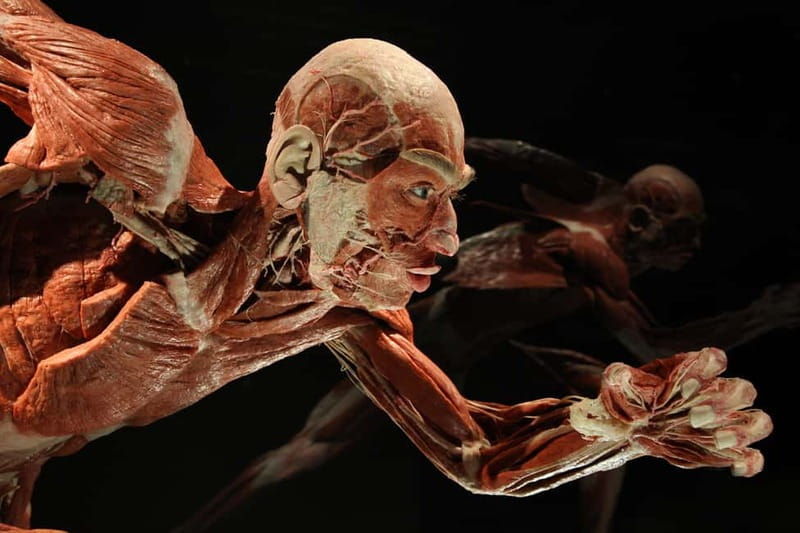
The digestive system section shifts attention from the visible frame of the body to the organs that keep it supplied. Displays explain how food moves through the body and how the organs work together.
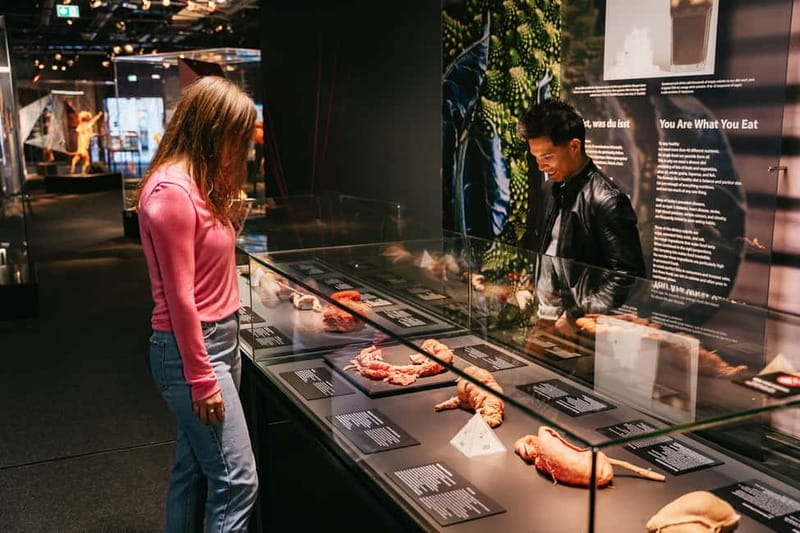
This is where the exhibition’s clear presentation is most useful. The digestive system can be hard to picture from a diagram because it is folded and packed into a small area. A real preparation shows the scale and position of the organs more clearly.
You also get a wider message about excess and restraint. The museum considers the middle ground between overindulgence and modesty, along with what the body needs for a long and healthy life. That gives the visit a practical angle. You are not simply looking at organs. You are asked to consider how daily choices affect them.
The museum does not turn this into a detailed health consultation, and it should not replace medical advice. Think of it as a visual lesson about how your body works and what can put that system under pressure.
More Museums in Germany:
- Berlin: DDR Museum Tickets
★ 4.3 · 3,443 reviews - Berlin: Natural History Museum Entrance Ticket
★ 4.6 · 3,382 reviews - Berlin: Neues Museum Entry Ticket
★ 4.6 · 3,261 reviews - Cologne: Chocolate Museum Entrance Ticket
★ 4.4 · 2,790 reviews
The Heart, Blood Vessels, and Breathing
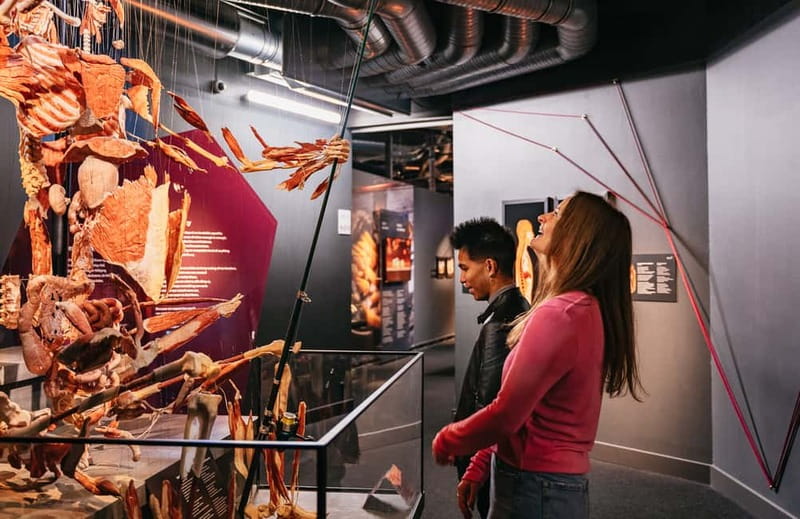
The cardiovascular system is one of the exhibition’s strongest subjects because it shows the body as a connected network. The heart is not just a single organ to identify on a diagram. It works with blood vessels to carry oxygen and nutrients throughout the body.
The respiratory system adds another layer. The displays help explain how breathing supports the rest of the body and why the lungs are so important to everyday function. Seeing organs in their real three-dimensional relationships can make these lessons easier to remember.
The museum also uses disease examples to show what happens when healthy systems are damaged. This is one reason the exhibition can appeal to adults as much as to school-age visitors. You may arrive expecting a basic anatomy display and leave with a clearer idea of how fragile the body can be.
Some display areas may look a little dusty or worn, and a few audio stations have reportedly been out of order. That does not erase the value of the main plastinates, but it can reduce the polish of the visit. If you pay extra for an audio guide, check that the equipment or access points are easy to use before you get too far into the museum.
The Nervous System and Embryo Development
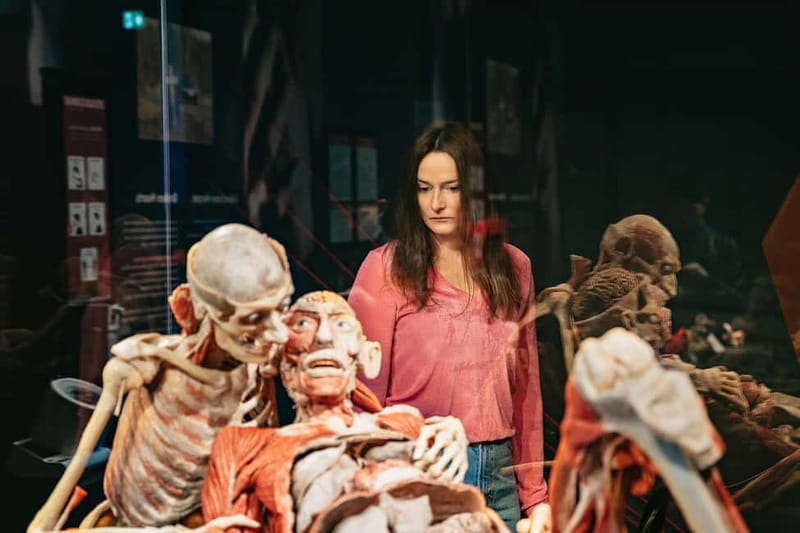
The nervous system section brings the visit back to control and communication. The brain, nerves, and spinal structures help explain how the body receives information and directs action. This part can be fascinating, though it may feel dense if you try to absorb every label.
The display on embryo development in the womb offers a different kind of perspective. It shows the body not as a finished object, but as something that develops in stages. That makes the museum useful for students and for parents discussing human development with older children.
The exhibition’s English translations are generally easy to follow. A few small wording or spelling issues may appear, but the main explanations remain accessible. If you have a smartphone, the interactive phone guide may add useful context and help you move through the rooms with more purpose.
School groups can affect the atmosphere. The displays are popular with children, and young visitors may run, hide, or speak loudly. If you want a quieter experience, a weekday morning may be a better choice than a busy school period. The supplied hours give you plenty of scope to choose your moment.
From Anatomy to Happiness and Stress
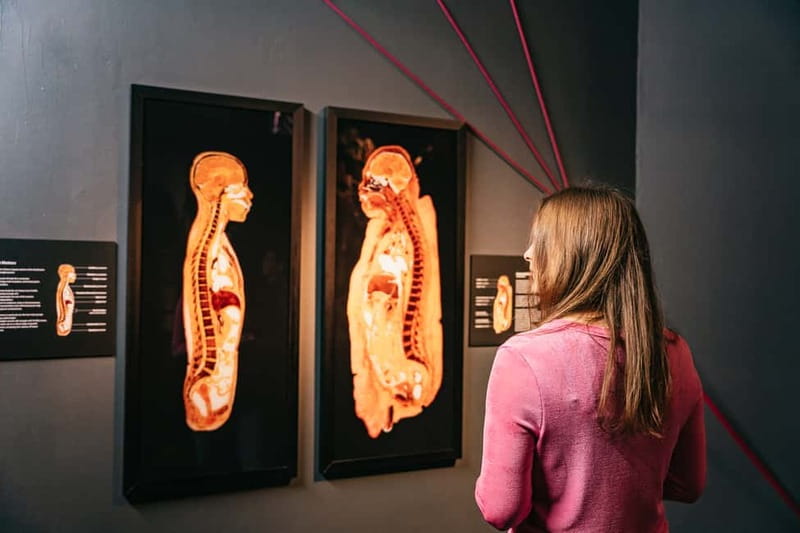
BODY WORLDS is not limited to organs and systems. It also asks what shapes human existence, including happiness and stress.
This section gives the visit some emotional range. After looking at bones, lungs, and blood vessels, you are encouraged to think about the forces that affect the body from the inside. Stress is not shown as an isolated feeling. It is connected to how the body copes, adapts, and eventually suffers under too much pressure.
The discussion of happiness may seem less scientific than the anatomy rooms, but it broadens the purpose of the museum. The exhibition wants you to see the body as part of a whole life, not as a set of spare parts.
I find this useful because it gives the visit a clear ending point. You begin with physical structure and finish by considering how you treat that structure. The ideas are broad rather than deeply researched in the museum setting, so you should see them as prompts for reflection rather than a full course in psychology or preventive medicine.
How Much Time Should You Allow?
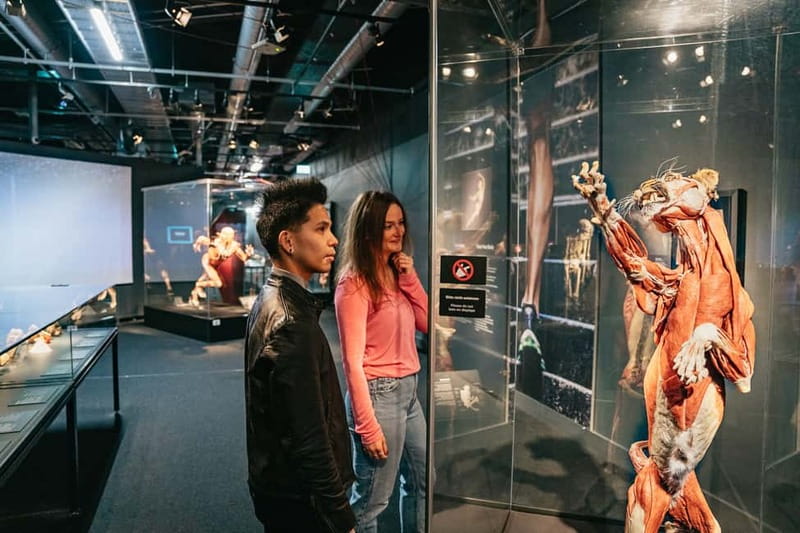
The ticket is valid for one day, but the information provided does not set a fixed visit duration. Your timing will depend on how closely you read the panels, how much time you spend at the plastinates, and whether you use the audio or phone guide.
A quick visit is possible. That may suit you if you want a compact indoor stop between other Berlin sights. However, moving too fast is the easiest way to miss the point. The exhibition contains several body systems, disease explanations, development displays, and sections on healthy living.
I would plan enough time to pause at each major area:
- The skeleton and muscular system
- Digestion and organ function
- Embryo development
- The cardiovascular and respiratory systems
- The nervous system
- Happiness, stress, and healthy living
You may find some areas more compelling than others. That is normal. The museum works best when you follow your own interests instead of trying to read every panel word for word.
Is $22 a Fair Price?
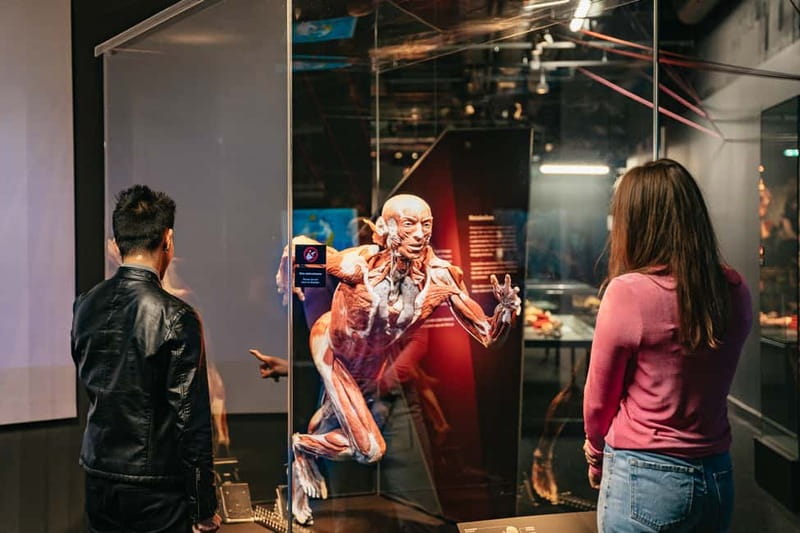
At $22 per person, BODY WORLDS is not Berlin’s cheapest museum stop, but it offers something very specific. You are paying to see real plastinates and a carefully arranged lesson in human anatomy, not for a large collection covering many unrelated subjects.
I consider the price reasonable if you are genuinely interested in the human body. It is also a practical choice for a family looking for an educational indoor activity, particularly if school-age children or teenagers are studying anatomy. The displays can make classroom topics more memorable.
The value is less certain if you only have a few hours in Berlin and are choosing between many major museums. Some people find the exhibition shorter than expected, especially when they walk quickly. Others appreciate the focused format and feel the experience is fairly priced.
The ticket includes admission only. A cloakroom, lockers, and audio guide are not included. Reserve now and pay later is available, and you can cancel up to 24 hours in advance for a full refund. Those terms help if your Berlin plans are still changing.
Who Will Enjoy This Museum Most?
I would recommend BODY WORLDS to you if you enjoy science, medicine, biology, or exhibitions that give you a new view of ordinary life. It is particularly well suited to teenagers and adults who want more than a standard sightseeing stop.
Families should consider the age and temperament of their children. The museum can be educational for young people, but the real human preparations may not suit every child. A curious teenager may find it gripping, while a younger child may focus more on the unusual appearance of the displays than on the lessons behind them.
It can also work for repeat visitors to Berlin. The museum offers a different kind of experience from the city’s art collections, war museums, and historic sites. You leave the streets of Berlin and spend time considering the one place every person carries with them.
I would be more cautious if you dislike medical displays, want a highly interactive attraction, or expect a polished audio experience at every station. You may still appreciate the main exhibition, but your expectations should be realistic.
Practical Tips for a Better Visit
Book a time that gives you room to linger. Even though the ticket is valid for one day, last admission is at 6 PM, and the museum closes at 7 PM.
Use English display text if you need it. The translations are generally clear, and an interactive phone guide may help you find more detail. Since the audio guide is not included, check the extra cost before deciding.
Travel light if possible. Lockers may carry a charge, and cloakroom service is not included. Keeping your belongings simple makes it easier to move between displays and focus on the information.
Take the ethical and emotional side seriously. The exhibition is made from real human preparations, so you may want to tell children what to expect before entering. A calm explanation can prevent the displays from feeling like a shock.
If the first room feels overwhelming, slow down. You do not need to see everything. Choose the body systems that interest you most, then move on to the sections about stress and healthy living.
Should You Book BODY WORLDS Berlin?
Book it if you want a focused, unusual, and educational museum visit that puts anatomy at the center. The real plastinates, clear body-system displays, and sections on stress and healthy living give the experience more substance than a simple collection of curiosities.
Skip it if you want a large interactive museum, a fully guided tour, or a quiet attraction free from school groups. A few tired displays and unreliable audio points can also take away some polish.
For most curious adults, families with older children, and students, $22 is a fair price for the subject matter. Go slowly, read selectively, and treat the museum as a lesson in both the strength and fragility of being human.
FAQ
Where is BODY WORLDS Museum in Berlin?
The museum is at Panoramastraße 1a, 10178 Berlin.
What are the opening hours?
It is open Monday through Sunday from 10 AM to 7 PM. It is closed on December 24.
What is the last admission time?
Last admission is at 6 PM.
How long is the ticket valid?
The ticket is valid for one day. Starting times depend on availability when you book.
What does the ticket include?
The ticket includes entrance to the BODY WORLDS exhibition.
Are lockers and cloakroom service included?
No. Cloakroom service is not included, and lockers may be available for an additional charge.
Is an audio guide included?
No. The audio guide is not included in the admission ticket.
Is the museum wheelchair accessible?
Yes. The activity is wheelchair accessible.
Can I cancel my booking?
Yes. You can cancel up to 24 hours in advance for a full refund. Reserve now and pay later is also available.
Just added around Germany
- Private Walking Tour in Berlin: Hitler’s Germany & WWII★ 5.0 · 7 reviews
- The History of Berlin: WWII PRIVATE Walking Tour With Locals★ 5.0 · 209 reviews
- Private Berlin WWII and Cold War History Tour with Local Expert Guide★ 5.0 · 28 reviews
- Private Walking Tour Berlin 3 hours: Brandenburg, Historic Center★ 5.0 · 7 reviews
- Berlin: Private Bike Tour of the Berlin Wall and Third Reich★ 5.0 · 23 reviews
- Berlin: Guided Private Bike Tour to Explore the Highlights★ 5.0 · 12 reviews
- Berlin Photography Masterclass – Private Photography Lesson★ 4.5 · 23 reviews
- Group Driving Tour 1 to 6 people. Berlin Shore Excursion incl pick-up at Port★ 5.0 · 8 reviews
Museums, compared.




Skip-the-Line: Berlin Wall Museum at Checkpoint Charlie
Read our review →
Browse the lists this tour appears in