
Reviewed · MUSEUMS
Berlin Trabi Museum: Day Ticket
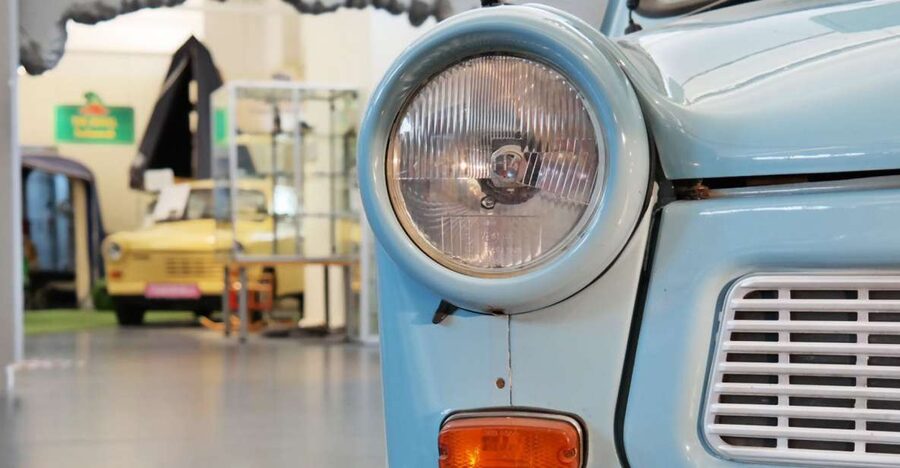
Tiny cars, big Cold War stories. Berlin’s Trabi Museum gives you a compact look at the Trabant, the famous two-stroke car of the former GDR, right beside Checkpoint Charlie. I like the mix of unusual vehicles and short films, which makes the visit more than a row of old cars. I also like the miniature GDR world, a small detail that adds atmosphere and context.
The main drawback is size. With 14 vehicles, this is a quick museum visit rather than a half-day attraction, and one visitor found it very small. At about $10 per person, I think the ticket works best when you are already exploring Checkpoint Charlie and want a focused, affordable stop.
In This Review
- Key Points About the Berlin Trabi Museum
- Why the Trabant Matters in Berlin
- At Zimmerstrasse 14 to 15
- Fourteen Vehicles, Fourteen Ways to See the Trabi
- The Lightshow Theater and Short Films
- A Miniature GDR World
- The Trabi Safari Is a Separate Choice
- What a One-Day Ticket Really Means
- Who Will Enjoy This Stop Most
- Practical Planning for Your Visit
- Should You Book the Berlin Trabi Museum?
- FAQ
- Where is the Berlin Trabi Museum?
- How much does entry to the Trabi Museum cost?
- How long is the ticket valid?
- What can I see inside the museum?
- Is the Trabi Safari included with museum admission?
- Is the museum wheelchair accessible?
Key Points About the Berlin Trabi Museum
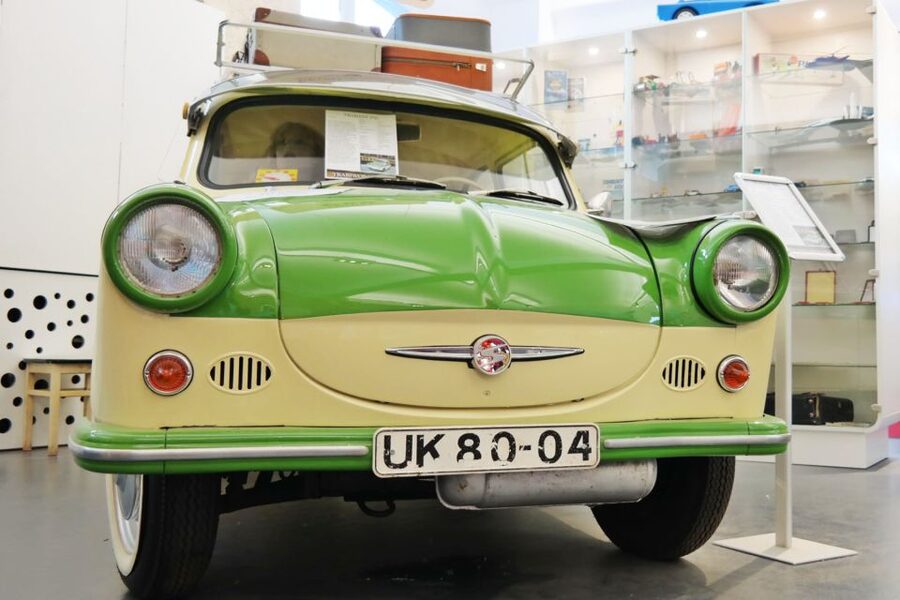
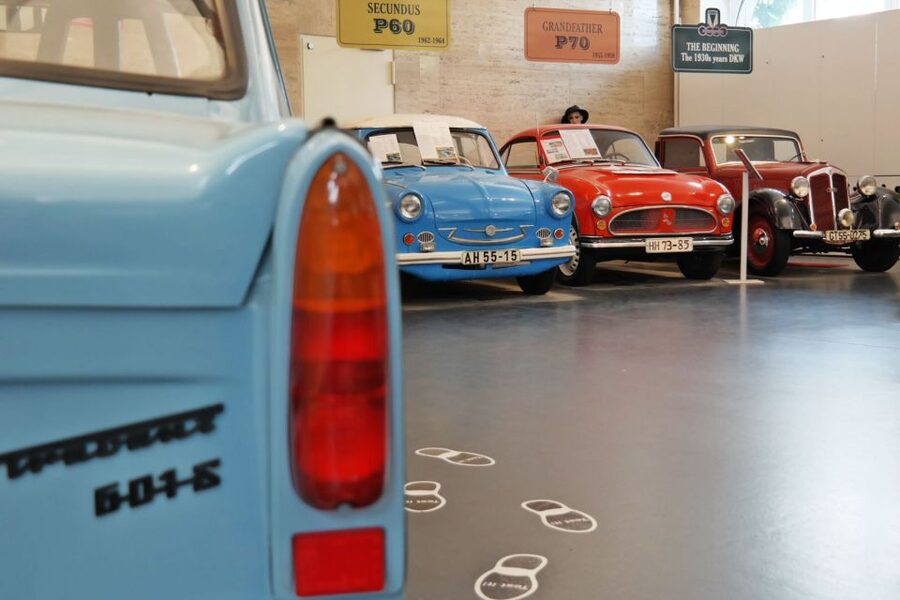
- Fourteen Trabants and related vehicles show how the car changed from an early model to camping, military, racing, and other versions.
- Checkpoint Charlie location makes the museum easy to pair with Berlin Wall and Cold War sights in central Berlin.
- Short films in the lightshow theater give the collection a visual explanation without asking you to read every panel.
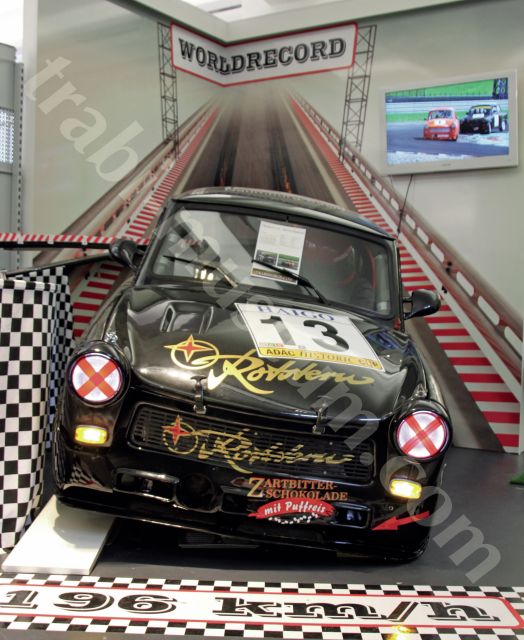
- Rare examples include a Trabant P70 with a wooden undercarriage and a model presented as the fastest Trabi.
- The miniature GDR world adds a playful look at daily life behind the former Iron Curtain.
- A museum ticket does not include a Trabi Safari, though you can learn about driving a Trabant through Berlin separately.
Why the Trabant Matters in Berlin
The Trabant was not just an old car. In the former German Democratic Republic, it was the people’s car, a practical symbol of everyday life behind the Iron Curtain. Production began in 1958 at the VEB Automobilwerk Zwickau, and the car became known for its small size, simple design, and two-stroke engine.
The nickname Rennpappe, roughly racing cardboard, points to the car’s unusual body material and modest performance. The name is affectionate, but it also captures the humor surrounding the vehicle. The Trabant was slow by modern standards, yet it was prized because owning any private car in the GDR could require patience and planning.
I find that context important. If you see only an old, noisy little car, the museum may feel slight. If you see it as a piece of ordinary life in a divided country, the collection becomes more meaningful. The cars connect large political events with simple concerns such as family trips, camping, work, and getting from one place to another.
More Museums in Berlin
- Berlin: Natural History Museum Entrance Ticket
★ 4.6 · 3,382 reviews - Skip-the-Line: Berlin Wall Museum at Checkpoint Charlie
★ 4.1 · 2,041 reviews - Berlin: Museum Island Multiple Museum Entry Ticket
★ 4.4 · 2,007 reviews
At Zimmerstrasse 14 to 15
The museum is at Zimmerstraße 14 to 15, 10969 Berlin, close to Checkpoint Charlie. That location is useful because you can fit the visit into a walking day focused on the Berlin Wall, the former border crossing, and nearby Cold War sites.
The entrance arrangement deserves a quick note. If the door at the museum address is closed, cross the street and look for TrabiWorld at Zimmerstraße 97 to 100. This is the practical detail most likely to save you a few minutes of standing around and wondering if you have arrived at the wrong place.
The museum offers skip-the-ticket-line entry, so your time is spent with the cars rather than sorting out admission on site. English and German are available, and a host or greeter can help visitors get oriented. The museum is wheelchair accessible, which makes this short indoor stop easier for more people to include.
I would not plan the whole day around the museum. Instead, use it as a well-placed stop before or after the nearby historical sights. Its central location is a bigger part of its value than its size.
Fourteen Vehicles, Fourteen Ways to See the Trabi
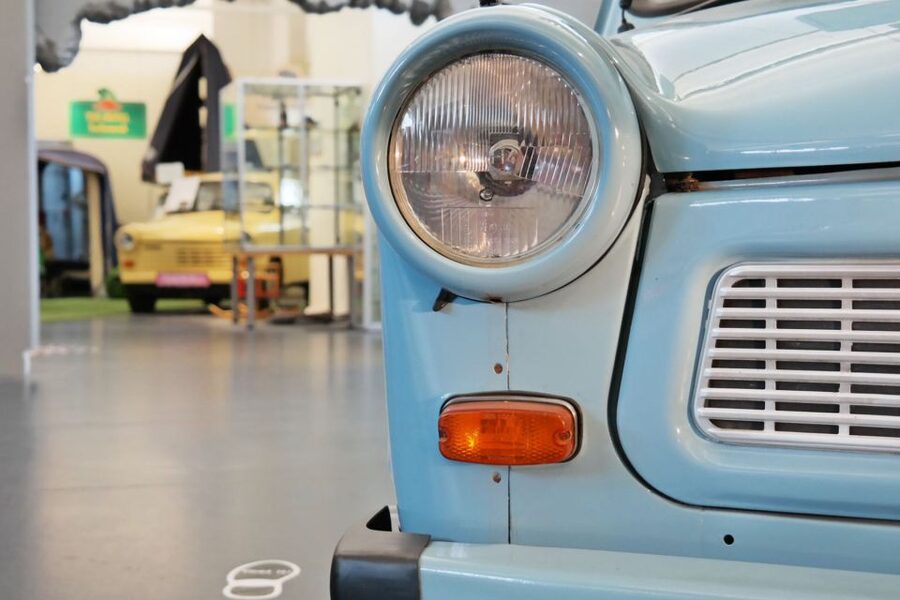
The display covers different stages of Trabant development and different jobs the vehicle was asked to do. That variety keeps the collection from feeling like the same car repeated 14 times.
You can see standard versions alongside special uses, including camping Trabants and military vehicles. These examples show how a small basic car could be adapted for holidays, official work, or more practical tasks. The camping models are especially helpful for understanding how families used the car for trips, even when space and comfort were limited.
The museum also includes rarities. A Trabant P70 with a wooden undercarriage gives you a glimpse of an earlier stage in the car’s development. Another display presents the fastest Trabi, a reminder that enthusiasts found ways to push this modest machine beyond its everyday role.
You should expect close-up viewing rather than a huge automotive collection. The strength here is the story told through contrasts: ordinary car and special edition, family vehicle and military machine, slow commuter and racing curiosity.
For a car enthusiast, the appeal lies in the details of design and adaptation. For a general visitor, the appeal is simpler. Each vehicle offers a fresh answer to the question of how people made do with the car they could get.
The Lightshow Theater and Short Films
The lightshow theater adds movement and sound to a museum that could otherwise be mostly static. Short films about the Trabant give you a quick way to understand the car’s place in GDR life and its later reputation.
I like this feature because it breaks up the viewing. You can look at the vehicles, then sit down for a short film and let the story take shape. You do not need to be an automobile expert, and you do not have to depend entirely on technical labels.
The theater also suits families and younger visitors. A child may not care about production history, but a film and a room full of unusual cars can make the subject easier to grasp. The lightshow format adds a bit of fun without changing the museum into a full entertainment attraction.
The exact running time of the films is not specified, so I would treat the theater as part of the visit rather than plan your schedule around a particular showing. If you arrive with limited time, see the vehicles first, then watch the film if it is available during your stop.
A few more Berlin trips worth comparing
- Berlin: Berlin Story Bunker Entry Ticket
★ 4.6 · 6,759 reviews - Berlin: Illuseum Berlin Entrance Ticket
★ 4.1 · 3,970 reviews - Berlin: Madame Tussauds Admission Ticket
★ 4.6 · 3,941 reviews - Potsdam: Sanssouci Palace and Prussian Palaces Entry Ticket
★ 4.5 · 2,101 reviews
A Miniature GDR World
The miniature GDR world is one of the museum’s most charming details. It gives you a small-scale setting for the cars and helps connect them with the country and society that produced them.
Miniatures can make history feel less abstract. Instead of thinking only about the Trabant as a manufactured object, you can picture it as part of streets, homes, and daily routines in the former East Germany. The exhibit is not a replacement for a full museum about the GDR, but it adds useful atmosphere to this focused collection.
I would pay attention to this section even if you came mainly for the cars. It is easy to rush past small displays when the full-size vehicles catch your eye. Here, the smaller scale is the point.
The Trabi Safari Is a Separate Choice
The museum introduces the possibility of getting behind the wheel of a Trabant on a Trabi Safari. Routes can take you through the former East or West, along sections connected with the former Berlin Wall, or along a route of your choice.
That sounds appealing, but you should keep the two experiences separate when planning your budget. The day ticket includes entry to the museum only. It does not include the driving safari.
This distinction matters because the museum gives you the background, while the safari offers the hands-on part. If you want only a quick look at the cars, the $10 entry is enough. If driving an old two-stroke through Berlin is the main reason you are interested, you will need to arrange the safari as an additional activity.
The museum can work as a preview before you decide. After seeing the different models and uses, you will have a better sense of why the car has such a loyal following. You can also skip the driving experience entirely and still get the museum’s historical and visual highlights.
What a One-Day Ticket Really Means
The ticket is valid for one day, with admission priced at about $10 per person. That is a fair price for a short specialty museum, especially if you are already near Checkpoint Charlie.
The value depends on your expectations. If you want several hours of detailed automotive history, the collection may feel too small. If you want a focused stop lasting part of your walking route, the price is easier to justify.
I would compare it with the cost of other central Berlin attractions, but not expect the same scale as a major national museum. The museum’s job is narrow: explain the Trabant through a selection of vehicles, films, and models. It does that without requiring a large time commitment.
The current overall rating is 4.1 out of 5 from 63 reviews, which fits the experience well. The strongest reaction is often simple enjoyment of the cars, while the clearest criticism is that the museum is very small. Both points are fair. You are paying for a compact specialty exhibit, not a full day of entertainment.
Who Will Enjoy This Stop Most
I would recommend the museum to several types of visitors:
- Car enthusiasts who enjoy unusual designs, rare models, and vehicles with a strong social story.
- Cold War history fans who want an everyday object connected to life in the former GDR.
- Families looking for a short indoor attraction with colorful cars, films, and miniatures.
- First-time Berlin visitors already walking around Checkpoint Charlie.
- Budget-conscious visitors who want an inexpensive addition to a central Berlin day.
You may want to skip it if your schedule is packed with major museums or if you expect a large collection with extensive technical information. The museum’s small size is not a secret, and it is better viewed as a concentrated experience than as a major Berlin attraction.
I also think it works well for people who enjoy a little humor in their history. The Trabant is not presented only as a serious political symbol. Its quirks, limitations, and affectionate nickname make the subject approachable.
Practical Planning for Your Visit
Allow enough time to look closely at all 14 vehicles, watch the short film, and see the miniature GDR display. The exact visit length is not stated, but the collection’s size suggests a brief stop rather than a long museum session.
Visit it as part of a Checkpoint Charlie route. That way, the museum adds a different angle to the area. You can move from the border and Wall story to the ordinary car that helped people live within the divided country.
The museum is available in English and German. If you do not speak German, you can still follow the visit through the vehicles, theater, and visual displays, with an English-speaking host or greeter available.
For access, the museum is wheelchair accessible. If you book ahead, you can reserve now and pay later, and free cancellation is available up to 24 hours before the visit. Those terms are useful if your Berlin schedule may change, but they do not change the basic character of the attraction: a small, easy-to-fit-in museum.
Should You Book the Berlin Trabi Museum?
Book it if you are near Checkpoint Charlie, like quirky vehicles, or want an approachable look at everyday GDR history. The 14 cars, short films, and miniature world give you more variety than a simple showroom, and the $10 price is reasonable for a compact stop.
Skip it if you need a large museum or a long, highly detailed technical visit. The collection is small, and that is the one clear limitation.
My practical advice is simple: add the museum to a central Berlin walking day, not to a day built around it alone. If the idea of driving a Trabant appeals to you, ask about the separate Trabi Safari. If not, the museum ticket gives you a cheerful, affordable look at one of Germany’s most recognizable cars.
FAQ
Where is the Berlin Trabi Museum?
The museum is at Zimmerstraße 14 to 15, 10969 Berlin, near Checkpoint Charlie. If the door is closed, cross the street and look for TrabiWorld at Zimmerstraße 97 to 100.
How much does entry to the Trabi Museum cost?
The listed price is $10 per person. The ticket includes entry to the museum.
How long is the ticket valid?
The ticket is valid for one day. You should check availability for the available starting times.
What can I see inside the museum?
You can see 14 different vehicles, including camping and military Trabants, a Trabant P70 with a wooden undercarriage, and the fastest Trabi. The museum also has a lightshow theater with short films and a miniature GDR world.
Is the Trabi Safari included with museum admission?
No. The museum ticket includes entry only. The Trabi Safari is a separate driving experience.
Is the museum wheelchair accessible?
Yes. The museum is wheelchair accessible, and assistance is available in English and German.
Just added around Berlin
- The History of Berlin: WWII PRIVATE Walking Tour With Locals★ 5.0 · 209 reviews
- Private Walking Tour in Berlin: Hitler’s Germany & WWII★ 5.0 · 7 reviews
- Private Berlin WWII and Cold War History Tour with Local Expert Guide★ 5.0 · 28 reviews
- Private Walking Tour Berlin 3 hours: Brandenburg, Historic Center★ 5.0 · 7 reviews
- Berlin: Private Bike Tour of the Berlin Wall and Third Reich★ 5.0 · 23 reviews
- Berlin: Guided Private Bike Tour to Explore the Highlights★ 5.0 · 12 reviews
- Berlin Photography Masterclass – Private Photography Lesson★ 4.5 · 23 reviews
- Group Driving Tour 1 to 6 people. Berlin Shore Excursion incl pick-up at Port★ 5.0 · 8 reviews
Museums, compared.




Skip-the-Line: Berlin Wall Museum at Checkpoint Charlie
Read our review →
Browse the lists this tour appears in