
Reviewed · BERLIN WALL TOURS
Cold War and Berlin Wall Tour in Italian
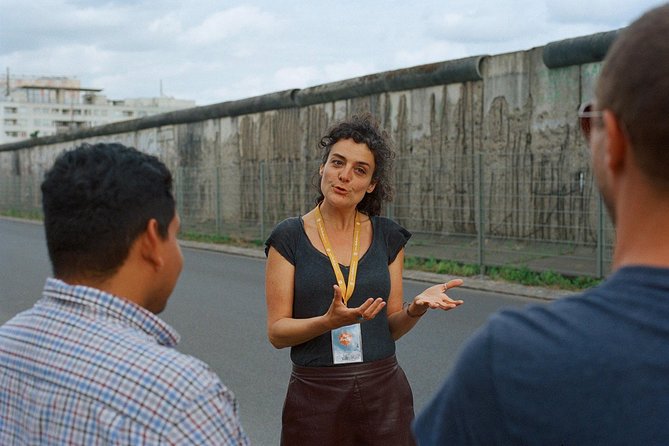
Berlin’s divided past is best read on foot. This three-and-a-half-hour walk links the Berlin Wall Memorial, Alexanderplatz, Karl-Marx-Allee, and the East Side Gallery, with an Italian-speaking guide explaining what happened at each stop. I love the way the route connects famous sights with less obvious Cold War details, including ghost stations and Stalinist architecture. I also like that the tour finishes at the East Side Gallery, where the remaining Wall becomes an open-air gallery.
The main drawback is the amount of walking and the use of public transport between some points. You will need to reach the meeting point at Potsdamer Platz on your own, and the tour does not include transport, food, drinks, or hotel pickup. Still, at about $27.87 per person, the price is fair for a small-group experience capped at 25 people and led in Italian.
In This Review
- Five details that shape the experience
- Why this Berlin Wall walk works
- Meeting at Potsdamer Platz at 10:00
- Nordbahnhof and Berlin’s ghost stations
- The Berlin Wall Memorial in 50 minutes
- Alexanderplatz and the public face of the GDR
- The Berlin TV Tower from outside
- Karl-Marx-Allee and Stalinist architecture
- East Side Gallery and the Wall as public art
- Walking, transport, and group size
- Is $27.87 a fair price?
- Who should book this tour?
- Should you book the Cold War and Berlin Wall Tour in Italian?
- FAQ
- Where does the Cold War and Berlin Wall Tour in Italian begin?
- What time does the tour start?
- How long does the tour last?
- Where does the tour end?
- Is transportation included?
- What is the cancellation policy?
Five details that shape the experience
- The route covers several major Cold War sites in about three and a half hours, so you can see far more than you would by visiting one memorial alone.
- The Berlin Wall Memorial gets the most time, with about 50 minutes devoted to how the Wall was built, escape attempts, and the people killed while trying to cross.
- The guide speaks Italian throughout, a useful advantage if you want historical detail without relying on translated signs or English-language explanations.
- The tour includes ghost-station history at Nordbahnhof, a curious part of divided Berlin that many visitors miss.
- The East Side Gallery is the final stop, offering the longest remaining section of the Wall and its famous murals about freedom.
- The tour has earned a five-star rating from 81 reviews, with 100 percent of the listed recommendations marked positive. Guide Antonella receives particular praise for bringing the events of 1989 to life.
Why this Berlin Wall walk works
Berlin’s Cold War story is scattered across the city. A remaining Wall segment may sit beside modern apartments, a former East German boulevard can look like ordinary city architecture, and a transport station may reveal more about division than a grand monument.
That is where this walk earns its price. Instead of spending hours locating each site and trying to understand how they fit together, you move through a connected story. The route begins in the former West Berlin area around Potsdamer Platz, then reaches the Wall Memorial, East Berlin’s Alexanderplatz, the grand Karl-Marx-Allee, and finally the East Side Gallery.
I especially like the progression. You first learn how the border worked, then see how East Germany presented itself through architecture and public spaces. At the end, you reach the famous painted Wall, where the political barrier has become a public symbol of freedom.
The tour is not built around museum admissions or special access. The included value is the guide’s explanation and the structure of the route. That makes the experience a good fit if you want context more than indoor exhibits.
The five-star score from 81 reviews gives the tour a strong record. The most consistent praise centers on the quality of the Italian commentary. One review calls the guide very well prepared, while another singles out Antonella for making the emotions of 1989 feel immediate. Those comments suggest that the guide matters greatly here. Berlin’s Wall sites can be powerful, but without explanation, some of them can feel like isolated fragments.
More Berlin Wall Tours in Berlin:
- Skip-the-Line: Berlin Wall Museum at Checkpoint Charlie
★ 4.1 · 2,041 reviews - Cold War, Berlin Wall, Spies and the East Side Gallery
★ 5.0 · 1,024 reviews - Berlin: Guided Bike Tour of the Berlin Wall and Third Reich
★ 4.7 · 499 reviews
Meeting at Potsdamer Platz at 10:00
The walk begins at Potsdamer Platz 10 at 10:00 in the morning. Look for the blue bicycle and the VIVE BERLIN TOURS flag with the company logo. The starting point is close to the S-Bahn and U-Bahn station at Potsdamer Platz, so public transport is the sensible way to arrive.
The first stop is brief, about 10 minutes, and acts as the gathering point rather than a full sightseeing stop. You will meet the Italian-speaking guide, confirm the group, and begin the route.
Because hotel pickup is not included, leave time to reach Potsdamer Platz independently. The tour also ends at the East Side Gallery, not back at the starting point. That is convenient if you plan to continue sightseeing in eastern Berlin, but less convenient if you have left bags or other plans near Potsdamer Platz.
Nordbahnhof and Berlin’s ghost stations
At Berlin-Nordbahnhof, the guide spends about 10 minutes discussing the city’s ghost stations. This is one of the more unusual subjects on the route.
During the division of Berlin, some subway and railway lines passed through East Berlin while serving stations in the western part of the city. Several stations were closed to East Berlin residents, and trains passed through without stopping. The dark, controlled atmosphere of these sealed stations became a striking feature of divided Berlin.
The stop is short, but it gives you a clear sense of how the border affected ordinary movement. The Wall was not only a concrete barrier above ground. It also shaped railway lines, platforms, streets, and daily travel.
Do not expect a long station visit or a separate attraction admission. This is a guide-led explanation in an active transport setting. Its value comes from the story, not from a large display or formal museum.
The Berlin Wall Memorial in 50 minutes
The Berlin Wall Memorial receives the longest portion of the walk, around 50 minutes. That is a wise choice. This is the place where the physical design of the border and the human cost of division come together most clearly.
The guide explains how the Wall was built and how the border system developed. You will also hear about victims who died trying to cross and the different escape methods people attempted. That focus keeps the visit grounded in real lives rather than treating the Wall as only a political symbol.
The memorial is especially useful for understanding that the Wall was not simply one slab of concrete. It formed part of a wider border system, with controlled spaces and barriers designed to stop escape. Seeing the site while hearing how those systems worked gives the history a practical scale.
I would treat this as the emotional center of the tour. The East Side Gallery is more colorful and immediately photogenic, but the Memorial offers the clearest reminder of fear, separation, and loss.
The main limitation is that 50 minutes is enough for an informed overview, not every story connected with the site. If you want to read every panel or examine the memorial at length, you may want to return on your own. The guided visit gives you a strong framework, then leaves you able to explore further.
More Cold War tours in Berlin:
- Berlin: Third Reich and Cold War 2 Hour Walking Tour
★ 4.9 · 6,830 reviews - Berlin’s Best: 2 Hour Walking Tour Third Reich and the Cold War
★ 5.0 · 5,486 reviews - Berlin: Cold War Walking Tour on Berlin Wall Route
★ 4.8 · 437 reviews - Berlin: Cold War Era History Guided Bike Tour
★ 4.8 · 413 reviews
Alexanderplatz and the public face of the GDR
The route then moves to Alexanderplatz for about 15 minutes. Here, the focus shifts from the border itself to the German Democratic Republic, or GDR, and the way East Germany expressed its political ideals through architecture and public space.
Alexanderplatz is a useful stop because it shows East Berlin on a large civic scale. Broad open areas and imposing modern structures reflect the GDR’s desire to project order, progress, and state power. The guide also discusses the major public demonstration held here, an event that helped lead to the fall of the Wall.
That connection is important. The Wall did not fall because of one isolated moment. Public pressure, political change, and events in 1989 combined to weaken the East German government. Alexanderplatz helps place the Wall’s fall within the wider story of citizens demanding change.
The stop lasts only 15 minutes, so you will not have much time for an extended architectural study. Still, the guide’s explanation can help you look at the square differently. Without context, Alexanderplatz may seem like a large city plaza dominated by shops and traffic. With context, its role in the final months of East Germany becomes much more visible.
The Berlin TV Tower from outside
The next stop is the Berlin TV Tower, seen from outside for about 10 minutes. Built during the GDR period, it remains Berlin’s tallest building and one of the city’s most recognizable structures.
The tower carried practical and political meaning. It provided television transmission, but it also served as a powerful symbol of East German modernity. Its height and prominent position helped the GDR present itself as a technologically advanced state.
This is a photo and explanation stop, not a tower visit. Admission is not included because you do not go inside. If you want to ride up the tower separately, that would be an additional plan and cost, and it would not form part of this walking experience.
Ten minutes is enough to hear the historical background and view the structure, but not enough for a full visit. That is fine for this tour because the goal is to understand the tower’s place in the GDR story, not to spend the morning at an observation deck.
Karl-Marx-Allee and Stalinist architecture
At Karl-Marx-Allee, the tour spends about 20 minutes examining one of the clearest examples of East German state architecture. The boulevard is lined with monumental buildings from the Stalinist era, giving the area a very different feel from central Berlin’s older streets and newer construction.
The guide uses the boulevard to explain the beginnings of the GDR. The buildings were meant to communicate strength, order, and a new socialist society. Their scale also reveals how architecture can carry political messages. This is not simply a street of large apartment blocks. It is a planned statement about how the new state wanted to be seen.
I like this part of the tour because it moves beyond the familiar Wall story. You are not only learning where the border stood. You are seeing how East Germany tried to shape daily life and public identity.
Twenty minutes provides enough time for an introduction and a walk through the setting, though anyone interested in architecture may want to return for a slower look. The value here is the guide’s interpretation. Without it, the grand facades may seem impressive but disconnected from the political system that created them.
East Side Gallery and the Wall as public art
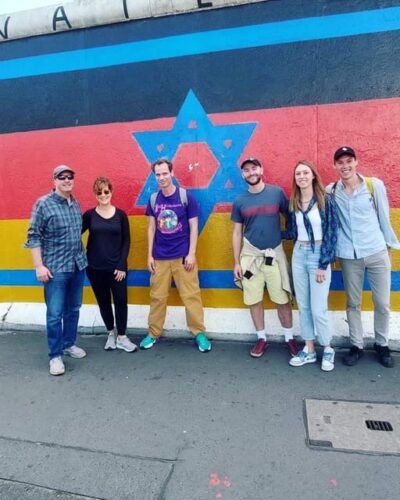
The final major stop is the East Side Gallery, where the tour spends about 20 minutes. This is the longest remaining section of the Berlin Wall and the most famous part for its murals.
The paintings turn a former barrier into an open-air gallery. Their themes include freedom, hope, political change, and the memory of division. The art is often the most accessible part of the tour, especially if you are visiting Berlin with family members or friends who may not want a long lecture about twentieth-century politics.
The guide helps connect the murals to the Wall’s earlier purpose. That contrast is what makes the East Side Gallery meaningful. You are looking at artwork on a structure that once stopped people from leaving East Berlin. The paintings do not erase that darker purpose, but they show how Berlin has reclaimed the site.
The 20-minute stop is enough to see part of the murals and understand why this section matters. It is not enough to study the full length of the gallery in detail. Since the tour ends here, you can choose to stay longer after the guide finishes, provided your plans allow.
The ending is practical too. The guide can advise you on which public transport to take after the tour. That helps, since the final location is some distance from Potsdamer Platz and the route does not return to the starting point.
Walking, transport, and group size
The experience lasts about three hours and 30 minutes. You should be ready for a substantial city walk, along with public transport between parts of the route. Transport to and from the attractions is not included, so bring the appropriate ticket or payment method for Berlin’s network.
The maximum group size is 25 people. That is not a private tour, but it is small enough for the guide to remain audible and keep the group together at most stops. The quality of the experience will still depend on how clearly the guide handles the group, especially in busy public areas.
Wear comfortable shoes. The tour includes several outdoor stops, and Berlin’s weather can change quickly. Food and drinks are also not included, so plan a snack or meal before or after the walk rather than expecting a scheduled food break.
Most people can participate, and service animals are allowed. Confirmation arrives when you book. Free cancellation is available if you cancel at least 24 hours before the local start time. Within 24 hours, the payment is not refunded, and late changes are not accepted.
Is $27.87 a fair price?
At about $27.87 per person, I consider this good value if Italian commentary is important to you. You are paying for a guided route covering seven locations, not for entrance tickets or private transport.
The price works because the main sights are public places with no admission fee. You can visit many of them independently for less money, but you would need to research the route, connect the sites, and build the historical story yourself. The guide saves that preparation time and gives you a clear order for understanding Berlin’s division.
The value is strongest for a first visit to Berlin or for anyone who wants to grasp the Cold War story in one morning. It is less useful if you already know the city well, have studied the Wall in detail, or prefer to spend long periods at each memorial and museum.
The Italian language is the deciding factor for many people. A strong guide can make difficult political history easier to follow, and Antonella’s praised ability to recreate the emotions of 1989 is exactly the kind of quality that can justify the fee.
Who should book this tour?
I would recommend it to Italian-speaking visitors who want a clear introduction to Berlin’s Cold War past without spending hours planning a route. It also suits couples, families, and small groups who prefer to learn while walking rather than sit through a formal museum visit.
It is a particularly good choice if you want to see both serious memorial sites and more visual locations such as Karl-Marx-Allee and the East Side Gallery. The mix keeps the morning from becoming one long sequence of Wall panels.
You may want a different plan if you have limited mobility, dislike extended walks, or need a tour that begins and ends at the same location. The tour is near public transport, but it does not include rides, hotel transfers, or meals.
Should you book the Cold War and Berlin Wall Tour in Italian?
Book it if you want a well-organized Italian-language introduction to Berlin’s divided past and are comfortable walking between several city locations. The route covers the essential Wall sites, adds ghost stations and GDR architecture, and ends at the city’s most famous painted Wall section.
The strongest reason to choose it is the guide commentary, especially if you want the events of 1989 explained with feeling rather than reduced to dates and political labels. The main caution is simple: this is a brisk outdoor tour, not a slow museum day.
At $27.87, with free cancellation up to 24 hours before departure and a group limit of 25 people, I would book it early, especially since it is commonly reserved about 24 days ahead. Just arrive at Potsdamer Platz before 10:00, bring comfortable shoes, and leave room in your schedule to continue exploring around the East Side Gallery afterward.
FAQ
Where does the Cold War and Berlin Wall Tour in Italian begin?
The tour begins at Potsdamer Platz 10, 10785 Berlin, near the Potsdamer Platz S-Bahn and U-Bahn station. Look for the blue bicycle and the VIVE BERLIN TOURS flag.
What time does the tour start?
The tour starts at 10:00 am.
How long does the tour last?
The experience lasts approximately three hours and 30 minutes.
Where does the tour end?
The tour ends at the East Side Gallery in Berlin. The guide can advise you about public transport after the tour.
Is transportation included?
No. Transportation to and from the attractions is not included. Hotel pickup and drop-off are also not provided.
What is the cancellation policy?
You can cancel for a full refund up to 24 hours before the local start time. Cancellations or changes made within 24 hours are not accepted for a refund.
Just added around Berlin
- Private Walking Tour in Berlin: Hitler’s Germany & WWII★ 5.0 · 7 reviews
- The History of Berlin: WWII PRIVATE Walking Tour With Locals★ 5.0 · 209 reviews
- Private Berlin WWII and Cold War History Tour with Local Expert Guide★ 5.0 · 28 reviews
- Private Walking Tour Berlin 3 hours: Brandenburg, Historic Center★ 5.0 · 7 reviews
- Berlin: Private Bike Tour of the Berlin Wall and Third Reich★ 5.0 · 23 reviews
- Berlin: Guided Private Bike Tour to Explore the Highlights★ 5.0 · 12 reviews
- Berlin Photography Masterclass – Private Photography Lesson★ 4.5 · 23 reviews
- Group Driving Tour 1 to 6 people. Berlin Shore Excursion incl pick-up at Port★ 5.0 · 8 reviews
Berlin Wall Tours, compared.
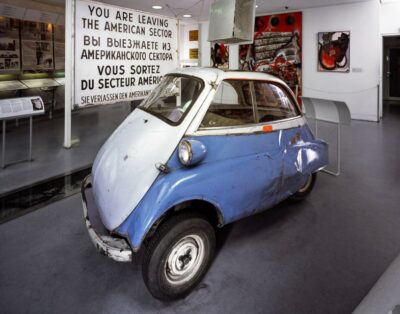
Skip-the-Line: Berlin Wall Museum at Checkpoint Charlie
Read our review →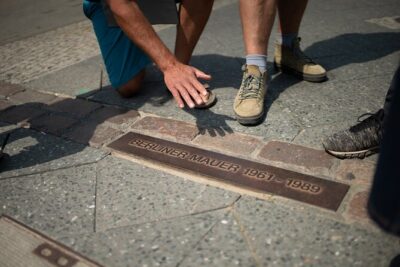
Cold War, Berlin Wall, Spies and the East Side Gallery
Read our review →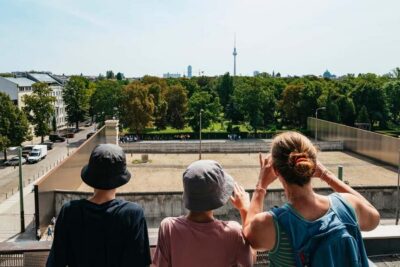
Cold War, Berlin Wall, Spies and the East Side Gallery
Read our review →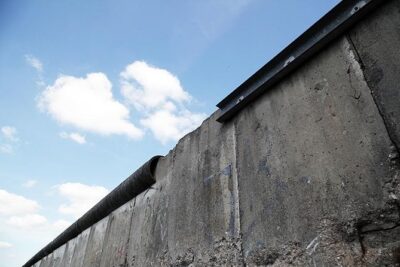
East Berlin and the Berlin Wall 2-Hour Walking Tour
Read our review →
Browse the lists this tour appears in