
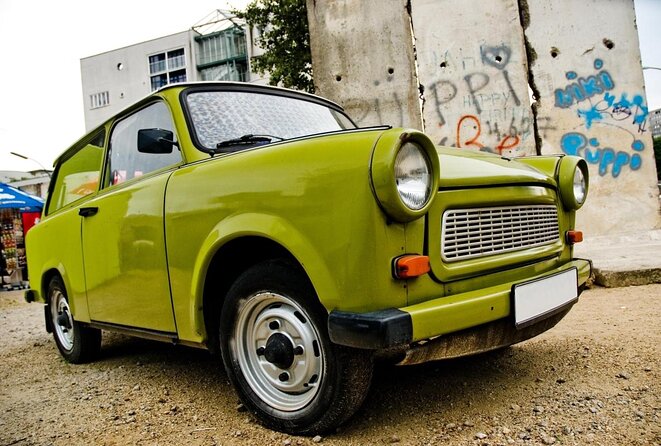
Reviewed · MUSEUMS
DDR Museum Berlin Admission Ticket
The Iron Curtain opens inside a living room. The DDR Museum packs daily life in socialist East Germany into hands-on displays, recreated rooms, films, household objects, and political exhibits. I especially like the chance to sit inside a Trabant and walk through a reconstructed GDR apartment. I also like that the museum puts ordinary life beside the larger story of the Socialist Unity Party, surveillance, and the Berlin Wall. The main drawback is its size: at busy times, the compact layout can feel crowded and hard to navigate.
The museum sits directly opposite Berlin Cathedral at Karl-Liebknecht-Strasse 1, beside the Spree. Admission costs about $16.26 per person, and most visits last from one to two hours. You choose a date and time slot, then make your own way there. The long opening hours, 9 a.m. to 9 p.m. daily, give you useful flexibility, especially if central Berlin is already full of sightseeing plans.
In This Review
- Key points to know before you go
- What the DDR Museum is trying to show
- Entering the museum opposite Berlin Cathedral
- Recreated homes and the feel of ordinary life
- The Trabant display and virtual East Berlin
- Politics, voting, and the Stasi interrogation room
- Leaving through the Berlin Wall
- How long to spend inside
- Is $16.26 good value?
- Who will enjoy this museum most
- Practical advice for a smoother visit
- Should you book the DDR Museum?
- FAQ
- Where is the DDR Museum located?
- What are the DDR Museum opening hours?
- How long does a visit take?
- How much does admission cost?
- Is the ticket available on a mobile phone?
- Is the DDR Museum suitable for children?
- What can you see inside the museum?
- Is food or drink included?
- Can you cancel the ticket for a refund?
Key points to know before you go
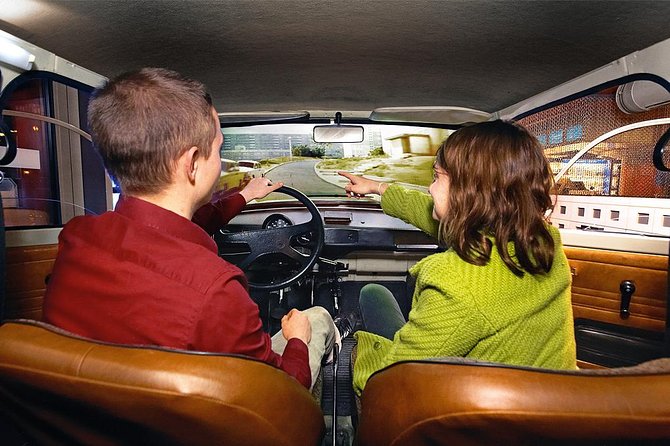
- Sit inside a Trabant: The famous East German car exhibition includes a hands-on driving simulation with films of Berlin streets.
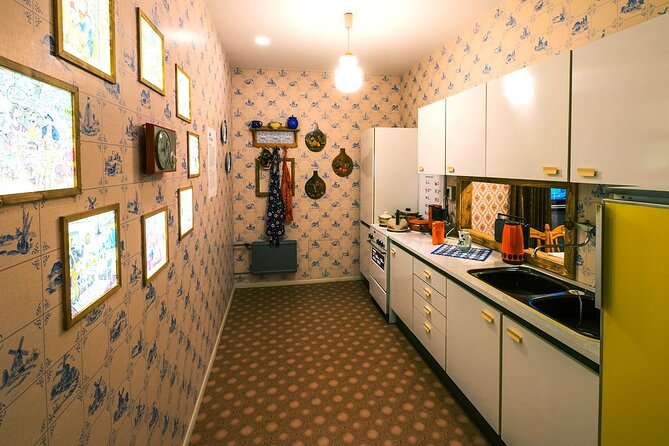
- Walk through a GDR home: Recreated living spaces show kitchens, bedrooms, furniture, appliances, and the cramped reality of state-assigned housing.
- Expect a compact museum: You can see the main displays in about an hour, but readers who stop for every English text and video may need two hours.
- Go at a quiet time: Crowding is the most common complaint, and the small exhibition area becomes difficult when school-age children and large groups arrive together.
- Read as well as touch: The museum is interactive, but much of that interaction means opening drawers, lifting panels, pressing buttons, and reading the information inside.
- Use the central location wisely: The museum works well between Berlin Cathedral, Museum Island, the Fernsehturm, and other sights in central Berlin.
What the DDR Museum is trying to show
The DDR Museum presents East Germany from 1949 to 1989, the years when the German Democratic Republic operated as a socialist state behind the Iron Curtain. Its focus is not only government leaders and major events. Instead, it asks a more personal question: What did an ordinary day feel like under this system?
That focus gives the museum its appeal. You see how people lived, worked, shopped, voted, traveled, watched television, and raised families. Political control is always present, but it is explained through daily routines rather than only through dates and official speeches.
I like this approach because the objects make the past easier to picture. A cupboard, television, kitchen appliance, or small apartment can tell you something about economic limits and state planning without requiring a long lecture. At the same time, you should not expect a large national museum with spacious galleries and a huge collection. This is a concentrated experience.
The museum also uses a playful presentation. You open compartments, pull out drawers, enter rooms, watch films, and try interactive stations. That makes the subject accessible to children, but it can create a tension. The GDR was shaped by censorship, restricted travel, surveillance, and political pressure. A family-friendly format can help younger visitors engage, yet the buttons and moving parts can sometimes make the place feel more like an attraction than a solemn museum.
More Museums in Berlin
- Berlin: Natural History Museum Entrance Ticket
★ 4.6 · 3,382 reviews - Skip-the-Line: Berlin Wall Museum at Checkpoint Charlie
★ 4.1 · 2,041 reviews - Berlin: Museum Island Multiple Museum Entry Ticket
★ 4.4 · 2,007 reviews
Entering the museum opposite Berlin Cathedral
You make your own way to the museum at Karl-Liebknecht-Strasse 1. Its position beside the Spree, opposite Berlin Cathedral, is one of its practical strengths. You can pair it with a visit to Museum Island or stop here after seeing the cathedral and nearby central Berlin sights.
The admission is sold as a mobile ticket, with a chosen date and time slot. Confirmation is supposed to arrive at booking. Still, take a moment to check the ticket carefully before you leave your hotel. Some phone vouchers have caused problems at the entrance because they did not show a usable QR code or barcode. In a few cases, visitors had to show the voucher by email or ask staff to open the gate manually.
That problem does not appear to define the museum itself, but it can sour the first few minutes. Save the ticket where you can open it quickly, and do not rely on a weak mobile connection at the door. The booking information describes the admission as a way to enter directly, but the exact ticket format can matter.
Opening hours are listed as 9 a.m. to 9 p.m. every day. This is a major advantage. If you want the best chance of moving freely, try early morning or a later visit. One useful pattern is arriving around 9:15 a.m. Another is visiting after the main daytime rush, since the museum remains open into the evening.
Recreated homes and the feel of ordinary life
The first major section places you inside the everyday world of East Germany. The reconstructed living room is one of the most effective parts of the museum. You can inspect an original Carat living room cupboard, see period household items, and watch East German television programming, including propaganda.
This section works because it avoids making the GDR seem like an abstract political idea. The furniture and appliances show how a home functioned. The television reminds you that information and entertainment came through a state-controlled system. The room also helps explain how much of life took place in limited domestic space.
The kitchen recreation is especially useful. It shows the tight quarters assigned to many families and gives you a clearer sense of how housing policy affected daily life. You might spend only a few minutes looking at a room, yet the small footprint says plenty about material limits and family routines.
You will find bedrooms, a kitchen, and a living room rather than an entire apartment building. That distinction matters. Some people expect a large series of fully furnished homes and feel disappointed by the limited scale. The museum offers a snapshot, not a full residential district.
There is a good amount of English text throughout the displays. If you want to read every label, watch each video, and open every drawer, plan closer to two hours. If you mainly want the visual experience and the most popular hands-on stations, one hour may be enough.
The Trabant display and virtual East Berlin
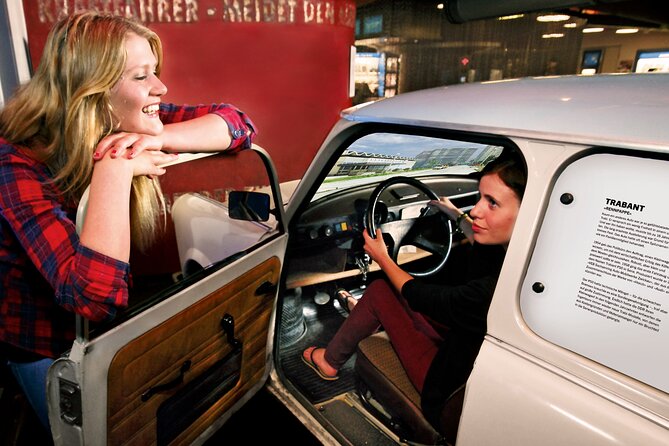
The Trabant section is among the museum’s biggest crowd-pleasers. The Trabant, often called the Trabi, was a standard car of the Eastern Bloc and an everyday symbol of East German life. Here, you can sit inside the vehicle and use the driving simulation.
Films show ordinary scenes from East Berlin while the simulation gives you a virtual trip through a GDR housing estate. This is a smart way to connect transport, housing, and city planning. You are not simply looking at a car behind a barrier. You get a sense of how it fit into the streets and routines of the period.
The Trabi is also a strong family feature. Children can understand a car quickly, even if they do not yet grasp the political setting. Adults often find the physical experience more memorable than another text panel. Expect a wait when the museum is full, since the car is one of the displays people naturally want to try.
The limitation is space. When several groups gather around the car, the nearby displays become difficult to reach. If you arrive during a crowded period, move through the area once, note what you want to try, then return when the flow eases.
A few more Berlin trips worth comparing
- Berlin: Berlin Story Bunker Entry Ticket
★ 4.6 · 6,759 reviews - Berlin: Illuseum Berlin Entrance Ticket
★ 4.1 · 3,970 reviews - Berlin: Madame Tussauds Admission Ticket
★ 4.6 · 3,941 reviews - Potsdam: Sanssouci Palace and Prussian Palaces Entry Ticket
★ 4.5 · 2,101 reviews
Politics, voting, and the Stasi interrogation room
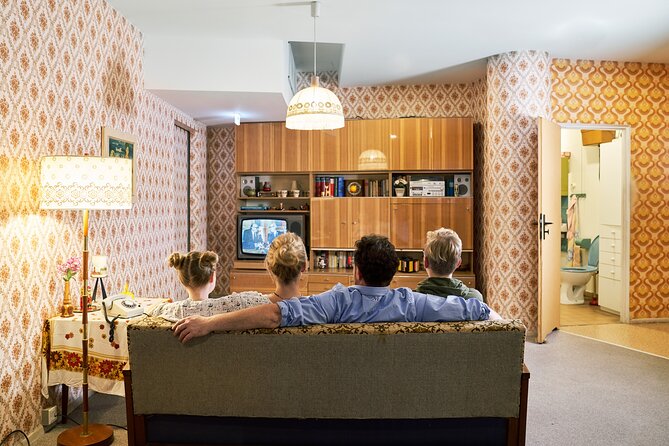
The museum does not stop at household life. Displays explain the Socialist Unity Party and the political structure of East Germany. You can also take part in an interactive voting exhibit that shows how a GDR election worked.
This is important context. A museum about daily life can accidentally make the past seem cozy or harmless. The political stations prevent that by showing the system behind the household objects. You see that work, housing, shopping, media, and public life were tied to a one-party state.
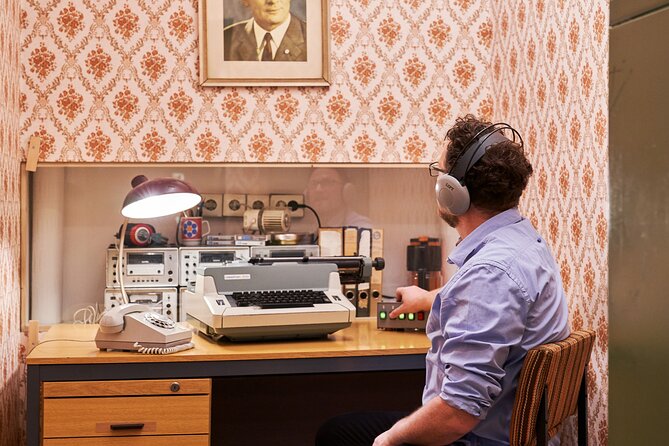
The Stasi interrogation experience adds another serious note. It lets you enter a setting connected to state surveillance and questioning. The presentation is interactive, but the subject is sobering. I would give this part time to breathe rather than racing from button to button.
The balance is not perfect for every visitor. The museum’s hands-on design can make difficult subjects easier to approach, but the same design may feel too light for someone seeking a formal account of repression. If your main interest is the Stasi, the Berlin Wall, or the mechanics of surveillance, you may want this museum to be one stop among several rather than your only source.
Leaving through the Berlin Wall
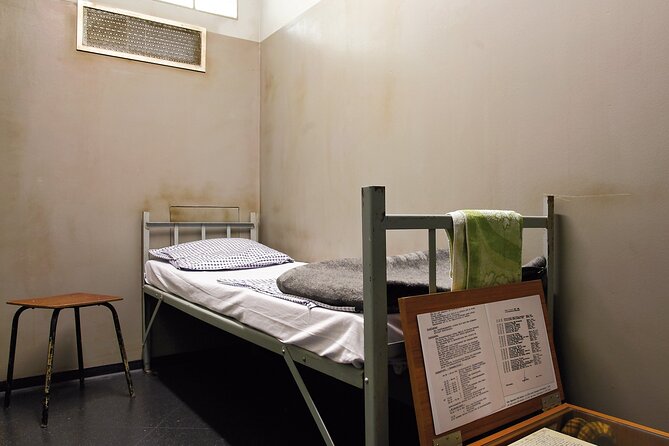
The route ends at a hole in the Berlin Wall. It is a simple but effective exit. After seeing apartments, televisions, cars, elections, and interrogation spaces, you leave through a physical reminder of division and escape.
This ending gives the visit a clear shape. You begin with daily life inside the GDR and finish with the barrier that defined Berlin for decades. The transition is more useful than a final room packed with dates because it sends you back into modern Berlin with the city’s division in mind.
Do not expect a large outdoor wall memorial here. The museum’s wall feature is part of the exhibition route. For a fuller look at the Wall, you would need to visit another Berlin site as well.
How long to spend inside
The official estimate is one to two hours, and that feels right. A fast visit focused on the main rooms and interactive displays can take about an hour. A slower visit, with English reading, videos, political exhibits, and the recreated home, can fill two hours.
The museum is small enough to fit into a busy sightseeing day. That is good news if you have limited time in Berlin. It also explains why crowding matters so much. There is not much spare space between the displays, so a busy afternoon can make a one-hour visit feel hurried.
If you want to examine every object, choose a quiet opening period. Early morning has been a particularly useful time for a calmer visit. The late closing time gives you another option, although the exact crowd level will vary by day.
The building can also become very warm. Air conditioning is not available according to one detailed account, and heat combined with a full museum can make it hard to stay for the entire visit. Dress for an indoor space that may feel uncomfortable during a busy period.
Is $16.26 good value?
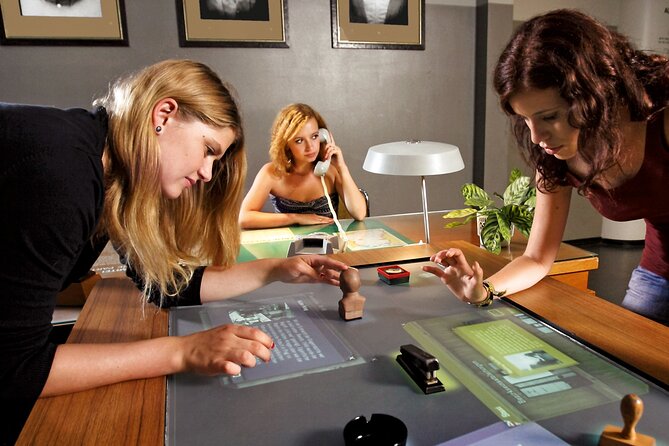
At about $16.26 per person, the ticket is not a bargain attraction, but it can be good value if you use the museum’s interactive features and stay for the full two hours. The price covers admission only. Food, drinks, and transport are not included, although the central location makes getting there straightforward by public transportation.
I would rate the value this way:
- Good value: You enjoy social history, hands-on displays, and English reading, and you stay for 90 minutes or more.
- Fair value: You want a compact introduction to East German life and have a central Berlin sightseeing route.
- Poor value: You expect a large museum, a quiet scholarly setting, or a mostly object-based collection with little reading.
The ticket is easiest to justify for families and first-time visitors who want a clear introduction. Children can interact with the displays, while adults can focus on the political and social context. Still, do not buy it solely because it is advertised as fun for kids. Much of the information requires reading, and interactive often means opening a drawer or panel rather than using a high-tech simulator.
The 3.8 out of 5 average rating reflects that split. The strongest praise goes to the Trabant, the apartment recreation, the informative English text, and the hands-on format. The weakest experiences usually involve crowding, heat, ticket trouble, or expectations that the museum would be larger.
Who will enjoy this museum most
I would recommend the DDR Museum to you if you want to understand East Germany through ordinary objects and routines. It is especially suitable for:
- Families with children who learn better by touching and trying things
- Adults curious about homes, transport, shopping, work, and television in the GDR
- First-time Berlin visitors who want a compact Cold War stop
- Anyone already visiting Berlin Cathedral or Museum Island
- History buffs who enjoy reading labels and watching short films
You may want to lower your expectations if you need a quiet, spacious museum. The subject is serious, but the format is lively. Some people appreciate that contrast. Others find the family focus too playful, particularly when children press buttons or move around the exhibits while adults are trying to read.
The museum also suits mixed-age groups well. A 10-year-old can try the driving simulation and inspect the apartment, while someone older can think about political control and memories of the GDR. That range is one of its best qualities.
Practical advice for a smoother visit
Book ahead if you want a set date and time, since admission is offered for selected slots and is often booked around 12 days in advance. Keep the confirmation accessible on your phone, but check whether it contains a scannable code. If it does not, be ready to show the voucher by email or ask the entrance staff for help.
Choose early morning or a later evening slot if you dislike crowds. The museum is open from 9 a.m. to 9 p.m., so you have more choices than at many Berlin museums.
Allow two hours if you plan to read the English panels and watch the videos. Wear comfortable clothing for a warm indoor space, and remember that there is no food or drink included with admission.
Free cancellation is available if you cancel at least 24 hours before the start time. Cancellations inside that window are not refunded, and changes made within 24 hours are not accepted. The cut-off follows local Berlin time.
Should you book the DDR Museum?
Book it if you want a compact, interactive introduction to East German daily life. The recreated apartment, Trabant car, television footage, voting display, and Stasi interrogation room give you plenty to see in one to two hours. Its central location and late opening also make it easy to fit into a Berlin itinerary.
I would skip it if you expect a large, quiet museum or a detailed specialist study of the Stasi and the Berlin Wall. You should also think twice if crowded indoor attractions quickly wear you down.
For most first visits to Berlin, I think the ticket is worthwhile, especially when you arrive early or late and give yourself enough time to read. Just see it for what it is: a small, hands-on museum about how politics shaped ordinary homes and routines, not a grand national collection.
FAQ
Where is the DDR Museum located?
The museum is at Karl-Liebknecht-Strasse 1 in central Berlin, opposite Berlin Cathedral and beside the Spree.
What are the DDR Museum opening hours?
The listed opening hours are 9 a.m. to 9 p.m., Monday through Sunday.
How long does a visit take?
Most visits take about one to two hours. You can see the main interactive areas in about an hour, while reading the English information and watching videos may take closer to two hours.
How much does admission cost?
The admission price is about $16.26 per person.
Is the ticket available on a mobile phone?
Yes. The experience includes a mobile ticket. Check that your voucher displays a usable QR code or barcode, since some phone vouchers have required extra help at the entrance.
Is the DDR Museum suitable for children?
Yes. The museum is presented as suitable for both children and adults, with hands-on displays, a Trabant car simulation, and recreated living spaces. Much of the information still requires reading.
What can you see inside the museum?
You can see reconstructed East German living spaces, household appliances, East German television programming, a Trabant car exhibition, a virtual tour of a GDR housing estate, Socialist Unity Party displays, a GDR voting activity, and a Stasi interrogation exhibit.
Is food or drink included?
No. Food and drinks are not included in the admission ticket.
Can you cancel the ticket for a refund?
Yes. You can cancel for a full refund up to 24 hours before the experience start time. Cancellations or changes made less than 24 hours before the start time are not accepted for a refund.
Just added around Berlin
- Private Walking Tour in Berlin: Hitler’s Germany & WWII★ 5.0 · 7 reviews
- The History of Berlin: WWII PRIVATE Walking Tour With Locals★ 5.0 · 209 reviews
- Private Berlin WWII and Cold War History Tour with Local Expert Guide★ 5.0 · 28 reviews
- Private Walking Tour Berlin 3 hours: Brandenburg, Historic Center★ 5.0 · 7 reviews
- Berlin: Private Bike Tour of the Berlin Wall and Third Reich★ 5.0 · 23 reviews
- Berlin: Guided Private Bike Tour to Explore the Highlights★ 5.0 · 12 reviews
- Berlin Photography Masterclass – Private Photography Lesson★ 4.5 · 23 reviews
- Group Driving Tour 1 to 6 people. Berlin Shore Excursion incl pick-up at Port★ 5.0 · 8 reviews
Museums, compared.




Skip-the-Line: Berlin Wall Museum at Checkpoint Charlie
Read our review →
Browse the lists this tour appears in