

Reviewed · MUSEUMS
Heidelberg: BODY WORLDS Museum Entry Ticket
See what lies beneath. Heidelberg’s BODY WORLDS Museum uses real human plastinates to explain organs, body functions, illness, and health in a clear, striking way. I like the carefully prepared exhibits and the playful Anatomy of Happiness section, which turns an abstract subject into something you can examine for yourself. The main consideration is that some displays may feel intense, especially if you are not comfortable seeing preserved human bodies.
The museum suits curious adults, medical students, older children, and anyone who wants a thoughtful indoor stop in Heidelberg. I also like the flexible one-day admission, since you can visit without joining a timed tour. Give yourself roughly a couple of hours, and bring a phone if you want to use the audio content available through a QR code.
In This Review
- Key points to know before you go
- At the Altes Hallenbad on Poststraße
- How the permanent BODY WORLDS collection works
- Following the body from structure to function
- The Anatomy of Happiness exhibition
- Using the audio guide and finding your way around
- How much time should you allow?
- Is the $22 admission good value?
- Who will appreciate this museum most?
- Practical advice for a smoother visit
- Should you book BODY WORLDS Heidelberg?
- FAQ
- Where is BODY WORLDS Museum Heidelberg located?
- How much does admission cost?
- How long is the ticket valid?
- What are the museum’s opening hours?
- Is the museum wheelchair accessible?
- Is an audio guide included?
- Are lockers or a cloakroom included?
- Where do I redeem the ticket?
- Can I cancel the booking?
Key points to know before you go
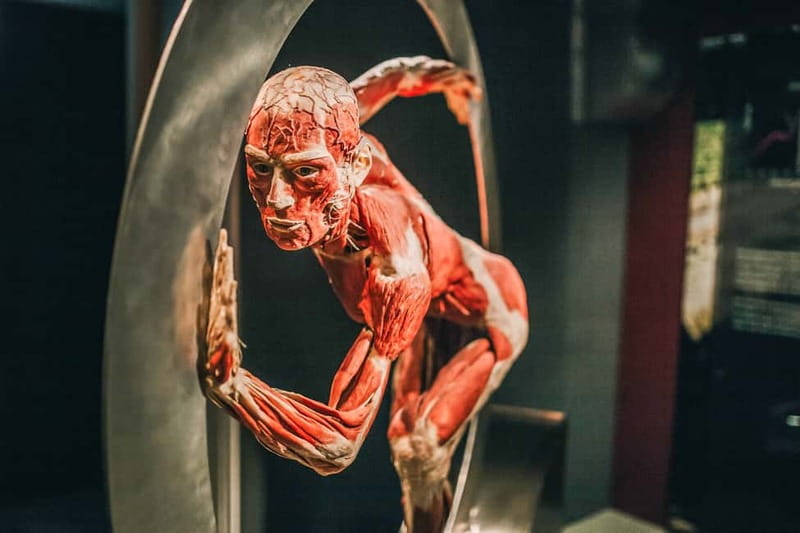
- Real human plastinates explain anatomy: The permanent collection presents organs, body systems, and disease through scientifically prepared specimens.
- Anatomy of Happiness adds a lighter angle: Interactive stations let you consider and track your own happiness.
- A central Heidelberg location helps: The museum is in the Altes Hallenbad on Poststraße 36/5, within walking distance of the main station and Bismarckplatz.
- You set your own pace: The ticket is valid for one day, with no guided group itinerary to follow.
- Plan for a phone-based audio option: An audio guide can be accessed through a QR code, but it is not included as a separate audio device.
- The $22 price is reasonable for a focused visit: It works best if you want two solid hours of anatomy and health exhibits rather than a full-day attraction.
At the Altes Hallenbad on Poststraße
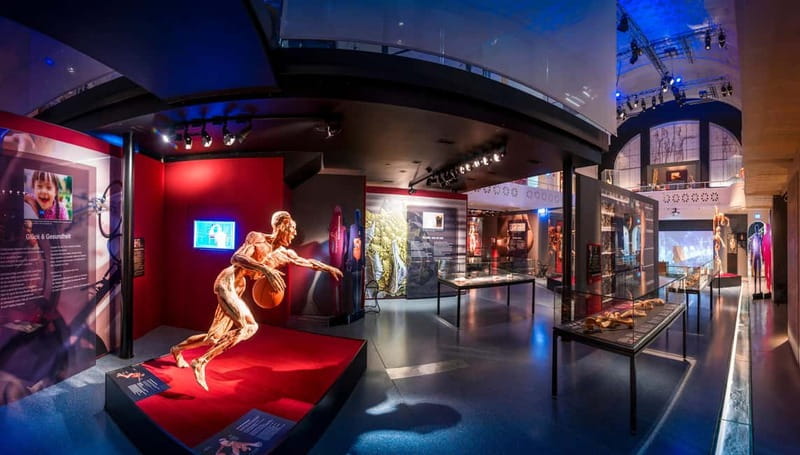
BODY WORLDS Heidelberg occupies the Altes Hallenbad at Poststraße 36/5. That location matters because you do not need a special excursion or complicated transport plan. You can walk there from Heidelberg’s main station or from Bismarckplatz, making it an easy addition to a day in the city.
Your ticket is redeemed directly at the box office. The admission is valid for one day, so you can choose your visit within the available operating schedule rather than committing to a detailed guided program. The museum is open daily from 10 a.m. to 6 p.m., with last admission at 5 p.m. It is closed on December 24.
I would aim to arrive earlier in the day if you want a quieter, unhurried visit. A late arrival still works, but entering at 5 p.m. gives you only an hour before closing. That is not enough time for the thoughtful pace this museum deserves.
The museum is wheelchair accessible. Cloakroom service and lockers are not included, so travel light and avoid bringing more than you want to keep with you during the visit.
A few more Germany trips worth comparing
- Dresden: Semperoper Tickets and Guided Tour
★ 4.7 · 12,102 reviews - Berlin: Jewish Museum Berlin Entrance Ticket
★ 4.5 · 8,393 reviews - Berlin: Berlin Story Bunker Entry Ticket
★ 4.6 · 6,759 reviews
How the permanent BODY WORLDS collection works
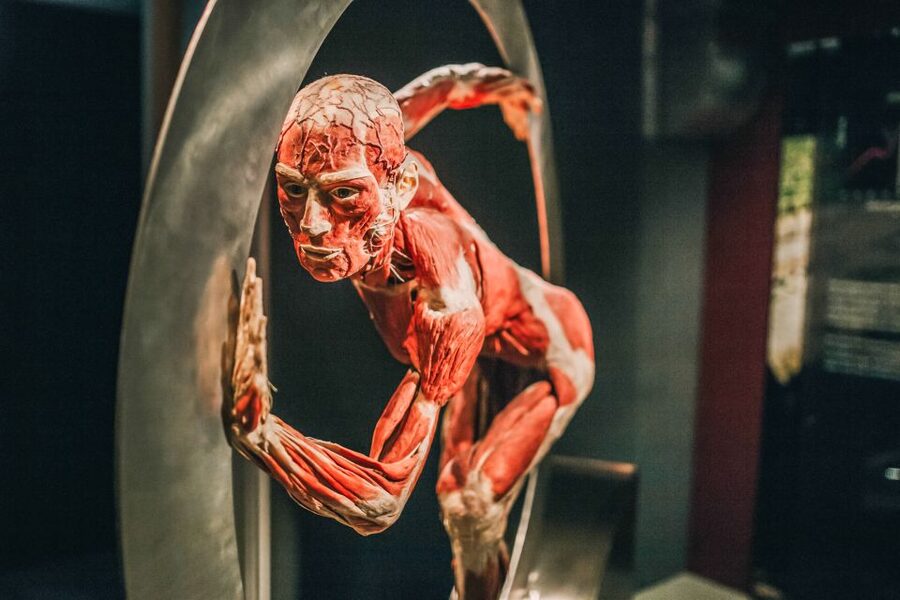
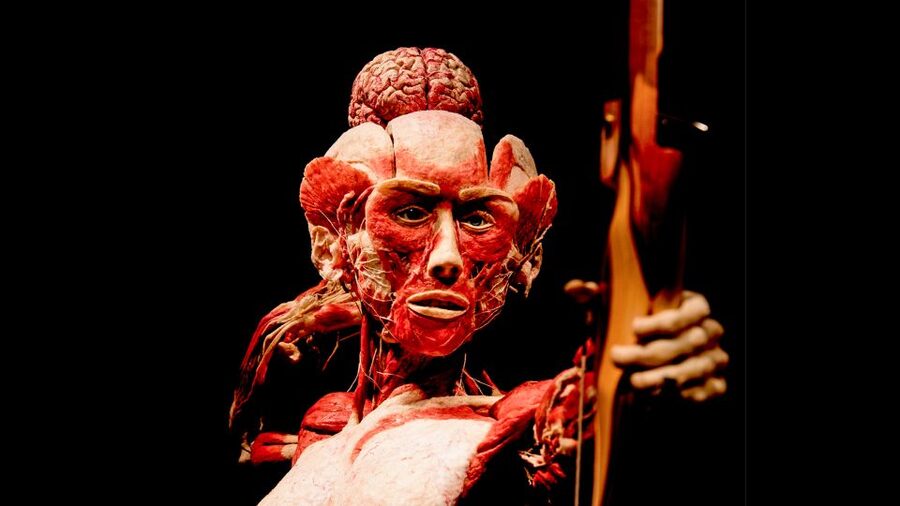
The heart of the museum is the permanent collection created by plastinator Dr. Gunther von Hagens and curator Dr. Angelina Whalley. It presents the human body through plastinates, specially prepared specimens that show structures in a lasting, carefully arranged form.
This is not a typical display of diagrams and plastic models. You see actual human anatomy presented in ways that make muscles, organs, bones, and body systems easier to understand. The purpose is scientific, but the presentation also has an artistic quality. Some arrangements are precise and formal, while others are creative and even slightly whimsical.
That mixture is one of the museum’s strengths. Anatomy can feel distant when you encounter it only in a textbook. Here, the body is shown as a connected working system. You can better grasp the relationship between organs and the physical structures that support them.
I find this most useful when you slow down and ask simple questions. What does this organ do? Where is it positioned? How does it connect with the rest of the body? What changes when disease affects it? The exhibits are designed to help you think through those questions rather than simply glance at a row of objects.
The displays address organ functions, health, and disease. They can be particularly useful for anyone studying medicine or biology, since the specimens turn abstract terms into visible forms. You do not need a medical background, though. The subject is presented for general visitors as well as students.
Following the body from structure to function

As you move through the exhibition, expect to encounter displays that focus on how the body works. The value here is not just seeing individual organs. It is understanding that the body depends on many linked systems, each with a specific job.
The preparation of the plastinates is exact and science-focused. You can look closely at physical structures that are normally hidden from view, then connect them with basic questions of health. That makes the visit more than a collection of unusual objects.
The artistic presentation may surprise you. Some specimens are arranged in poses that reveal movement, balance, or the relationship between bones and muscles. The result can be visually engaging, but it also asks you to think about the body as something active and functional.
Still, this is a serious museum. A few hours among real human specimens is not the same as visiting a conventional history or art museum. If you know you are sensitive to medical imagery, consider that before buying your ticket. The subject matter is central to the experience, not a minor part of it.
The museum’s tone is educational rather than sensational. That helps, especially if you are visiting with a student or someone who wants clear information about anatomy. Even so, the directness of the exhibits can be confronting. I would explain the nature of the visit to children before arriving.
The Anatomy of Happiness exhibition
The Anatomy of Happiness section gives the museum a change of direction. Instead of focusing only on organs and disease, it asks what makes people feel content and how happiness relates to the body and mind.
This section is more interactive than the anatomy displays. You can use stations to consider your own happiness and track it through the available activities. That personal element keeps the subject from feeling like a lecture.
I like this part because it connects a large philosophical question with something you can examine in a practical way. Happiness is often discussed as an emotion or a life goal. Here, you are invited to think about it through the physical and inner workings of a person.
The section also gives the visit a useful rhythm. After studying detailed anatomy, you can pause and take part in something more reflective. It is still linked to the body, but the emphasis shifts from physical structure to the inner world.
Do not expect the museum to provide a single answer to what makes you happy. The interactive stations are better understood as prompts for reflection. They encourage you to notice your own reactions and consider how health, feelings, and daily life connect.
For families, this may be the most approachable part of the museum. For adults, it can add an unexpected personal angle to a visit that might otherwise feel strictly medical.
More Museums in Germany:
- Berlin: DDR Museum Tickets
★ 4.3 · 3,443 reviews - Berlin: Natural History Museum Entrance Ticket
★ 4.6 · 3,382 reviews - Berlin: Neues Museum Entry Ticket
★ 4.6 · 3,261 reviews - Cologne: Chocolate Museum Entrance Ticket
★ 4.4 · 2,790 reviews
Using the audio guide and finding your way around
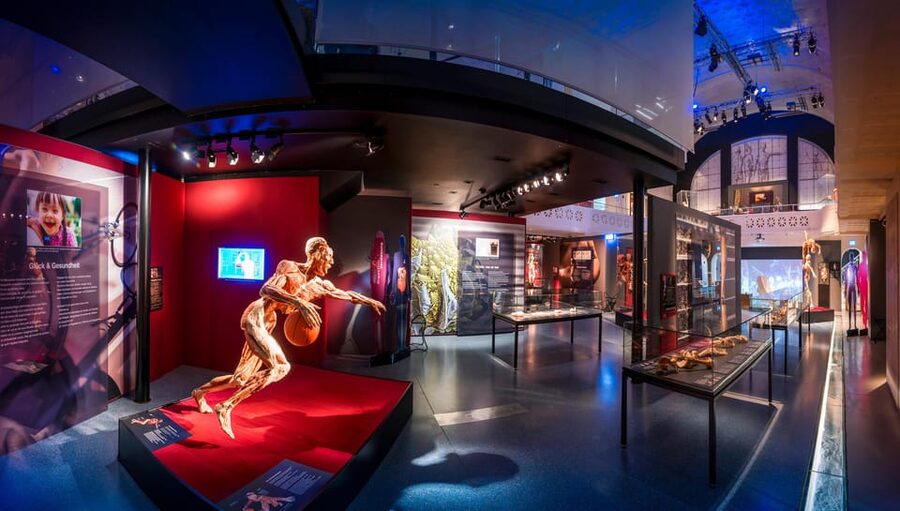
The admission includes entry only. A separate audio guide is not listed as included, but an audio guide can be accessed through a QR code on your phone. If you want to listen as you walk, bring a charged phone and make sure you are comfortable using your own device.
The layout may require some patience. The numbering sequence can be difficult to follow, so I would not assume that every display must be visited in a perfectly obvious order. Take a moment at the start to get your bearings, then choose a steady route instead of rushing from number to number.
This is one reason the flexible admission works well. You are not being pushed along by a guide or a fixed group schedule. If a particular specimen catches your attention, you can spend time with it. If a section feels too intense or technical, you can move on and return later.
The lack of a formal guided tour is both a strength and a weakness. Independent visitors get freedom. Those who prefer a clear narrative may find the sequence less natural, especially if they rely on the exhibit numbers alone.
I would use the museum signs first, then add the phone audio when it helps. Listening to everything may take longer, and phone use can become a distraction. For many people, a mix of reading, looking closely, and selecting only the audio sections that interest them will work best.
How much time should you allow?
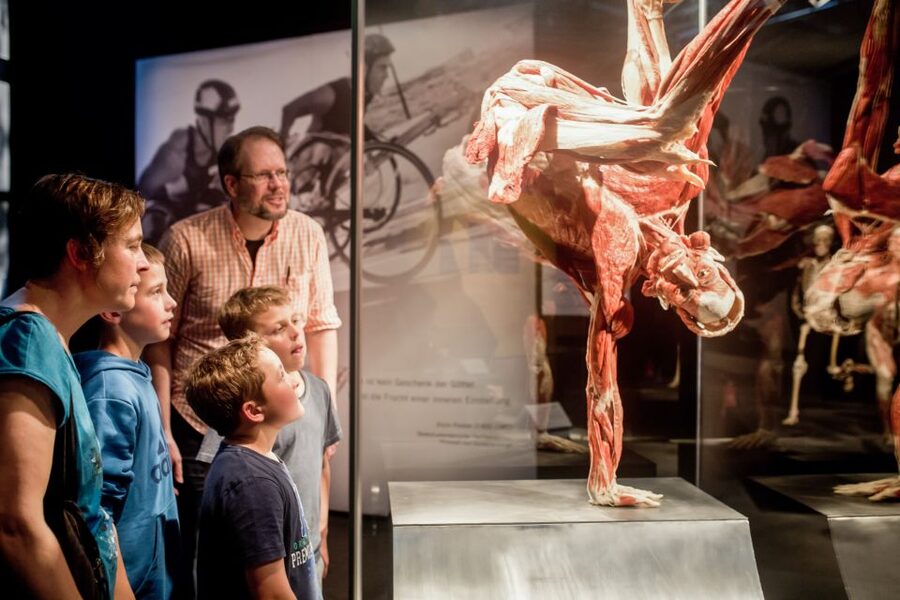
The official ticket is valid for one day, but that does not mean you need an entire day at the museum. A couple of hours is a sensible plan for most visitors who want to study the anatomy, spend time in Anatomy of Happiness, and use some of the explanatory material.
You can make the visit shorter if you are mainly interested in the visual displays. You can make it longer if you are studying medicine, using the audio content, or taking time at each interactive station.
The museum works especially well as a half-day stop. You can visit in the morning, have lunch afterward, and continue exploring Heidelberg. Its position near the main station and Bismarckplatz makes it easy to fit into a walking day.
The one-day validity is useful if your schedule changes. You are not buying a ticket for a fixed one-hour slot, and there is no required start time beyond checking the available admission details. That flexibility is valuable in a city where weather, train arrivals, and sightseeing plans can shift.
Keep the 5 p.m. last admission in mind. The museum closes at 6 p.m., so arriving near the end of the day leaves little room for a full visit.
Is the $22 admission good value?
At $22 per person, I see this as fair value for a specialized museum visit. You are paying for access to an unusual permanent collection, detailed anatomy displays, and the Anatomy of Happiness section. It is not a quick photo stop, and the material rewards attention.
The value depends on your interests. If you enjoy biology, medicine, health, psychology, or unusual museums, you can easily justify the price with a two-hour visit. Students may find the specimens especially useful because they show anatomy in a direct way that books and diagrams cannot fully match.
If you are searching for a light, entertaining attraction with little serious content, the ticket may feel less worthwhile. The museum deals with real human bodies, organs, and disease. Even the playful elements in Anatomy of Happiness sit within an educational setting.
The absence of a separate audio device is worth noting. You do not get a traditional guided headset as part of the entrance fee. Since audio content can be reached through a QR code on your phone, the extra value depends partly on your own device and willingness to use it.
For a central Heidelberg attraction that can fill a couple of hours, the cost is reasonable. I would be more cautious about booking it for a very short visit, especially if you arrive after 4 p.m.
Who will appreciate this museum most?
I would recommend BODY WORLDS Heidelberg to:
- Medical and biology students who want a direct look at human anatomy
- Adults with a strong interest in health, organs, and how the body functions
- Families with older children who can handle realistic medical displays
- Visitors looking for an indoor activity close to central Heidelberg
- People interested in the connection between physical health, emotions, and happiness
I would think twice if you dislike anatomical exhibits or prefer a museum built around objects with a traditional historical story. The plastinates are the reason to visit, and they are impossible to separate from the experience.
The museum can also suit solo visitors. You can move at your own pace, read carefully, use the phone audio when useful, and spend as long as you like at the interactive happiness stations. Couples and families may enjoy comparing their responses to the happiness activities, though the subject matter remains more educational than purely entertaining.
Practical advice for a smoother visit
Buy or reserve your ticket with your wider Heidelberg day in mind. Since the museum is near the main station and Bismarckplatz, it can fit before or after other central sightseeing without requiring a separate transport plan.
Arrive with enough time to read. The specimens are visually striking, but the explanations are what give them meaning. If you only walk through quickly, you may remember the unusual displays without fully understanding the anatomy behind them.
Bring a charged phone if you want to use the QR-code audio guide. Since lockers and cloakroom service are not included, keep your belongings manageable and avoid planning to store a large bag.
Use the interactive areas as a natural break. The Anatomy of Happiness section can make the visit feel less heavy, especially after several detailed anatomy displays.
Finally, remember that the museum is open every day except December 24, from 10 a.m. to 6 p.m., with last entry at 5 p.m. Free cancellation up to 24 hours before the visit and a reserve-now, pay-later option add useful flexibility if your Heidelberg schedule is still moving.
Should you book BODY WORLDS Heidelberg?
Book it if you want a serious, unusual museum that explains the human body through real plastinates and interactive material. The strongest parts are the scientific preparation, the clear focus on organ function and health, and the Anatomy of Happiness section with its personal activities.
Skip it if realistic human anatomy would make you uncomfortable, or if you have only a short amount of time before closing. For most curious visitors, $22 buys a worthwhile couple of hours in a central location, especially on a rainy day or during a break from Heidelberg’s outdoor sights.
FAQ
Where is BODY WORLDS Museum Heidelberg located?
The museum is at Altes Hallenbad, Poststraße 36/5, Heidelberg. It is within walking distance of Heidelberg’s main station and Bismarckplatz.
How much does admission cost?
The listed price is $22 per person.
How long is the ticket valid?
The ticket is valid for one day. Check the available admission details for starting times.
What are the museum’s opening hours?
The museum is open Monday through Sunday from 10 a.m. to 6 p.m. Last admission is at 5 p.m. It is closed on December 24.
Is the museum wheelchair accessible?
Yes, the activity is wheelchair accessible.
Is an audio guide included?
A separate audio guide is not included. Audio content can be accessed through a QR code on your phone.
Are lockers or a cloakroom included?
No. Cloakroom service and lockers are not included.
Where do I redeem the ticket?
You can redeem the voucher directly at the museum box office.
Can I cancel the booking?
Yes. You can cancel up to 24 hours in advance for a full refund. A reserve-now, pay-later option is also available.
Just added around Germany
- Private Walking Tour in Berlin: Hitler’s Germany & WWII★ 5.0 · 7 reviews
- The History of Berlin: WWII PRIVATE Walking Tour With Locals★ 5.0 · 209 reviews
- Berlin: Private Bike Tour of the Berlin Wall and Third Reich★ 5.0 · 23 reviews
- Private Berlin WWII and Cold War History Tour with Local Expert Guide★ 5.0 · 28 reviews
- Private Walking Tour Berlin 3 hours: Brandenburg, Historic Center★ 5.0 · 7 reviews
- Berlin: Guided Private Bike Tour to Explore the Highlights★ 5.0 · 12 reviews
- Berlin Photography Masterclass – Private Photography Lesson★ 4.5 · 23 reviews
- Group Driving Tour 1 to 6 people. Berlin Shore Excursion incl pick-up at Port★ 5.0 · 8 reviews
Museums, compared.




Skip-the-Line: Berlin Wall Museum at Checkpoint Charlie
Read our review →
Browse the lists this tour appears in