
Reviewed · CONCENTRATION CAMP MEMORIAL VISITS
Sachsenhausen Memorial: Walking Tour from Berlin
History asks something of you here. The Sachsenhausen Memorial tour brings you from Berlin into a place built to control, punish, and kill, then helps you understand how that system worked. I like the three-hour guided walk and the way guides such as Fabio, Soleil, Lorenzo, Sueli, and Andrea have been praised for clear, heartfelt storytelling. The main drawback is the long day of walking, with no meal stop and public transport costs added to the tour price.
This is not a casual sightseeing outing. It is a serious visit to a former concentration camp, and the subject matter can be painful. Still, I like that the tour explains both the camp itself and its wider role in Nazi Germany, including forced labor, SS training, private industry, propaganda, resistance, and the camp’s later use under Soviet occupation.
In This Review
- Key points to know before you go
- Why Sachsenhausen matters beyond its Berlin location
- Leaving Berlin by S-Bahn
- Oranienburg and the walk to the memorial
- Tower A and the roll-call square
- Forced labor, punishment, and the prison barracks
- The kitchen museum and medical rooms
- Station Z and the hardest part of the visit
- The camp’s wider role in Nazi Europe
- What the guides add to the experience
- The return to Berlin and time on your own
- Is the $511 price fair?
- Who should book this Sachsenhausen tour?
- FAQ
- How long does the Sachsenhausen tour take?
- How long is the guided visit inside Sachsenhausen?
- How do I reach Sachsenhausen from Berlin?
- Do I need to buy a public transport ticket?
- Is there a memorial donation?
- Can I eat during the tour?
- What languages are available?
- Is this a private tour?
- What should I wear?
- Should you book it?
Key points to know before you go
- Sachsenhausen was built in 1936 as a model camp: Its layout and buildings were designed to place prisoners under constant SS control.
- The tour takes about six hours door to door: Allow time for the S-Bahn ride from Berlin, the walk from Oranienburg, the three-and-a-half-hour memorial visit, and the return journey.
- Station Z is one of the most difficult stops: This area once held the crematoriums and gas chamber, so prepare yourself for a heavy part of the visit.
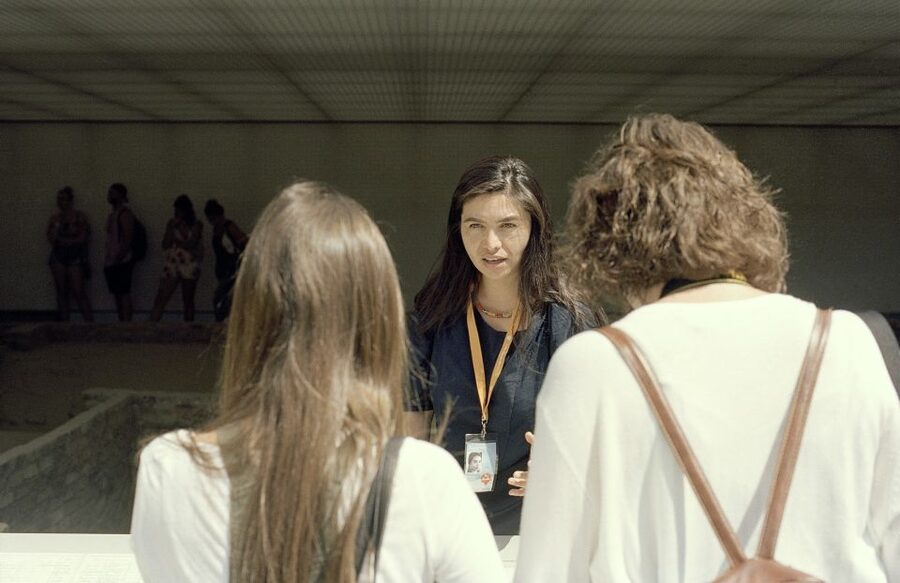
- Guides are the heart of the experience: Fabio, Soleil, Lorenzo, Sueli, and Andrea are specifically praised for empathy, preparation, and vivid explanations.
- Bring lunch, but do not plan to eat at the memorial: Food is not permitted inside the site, and there is no lunch break during the activity.
- The $511 price works best for a full private group: It covers up to six people, but you still pay for public transport and the required €3 memorial donation.
Why Sachsenhausen matters beyond its Berlin location
Sachsenhausen sits about 35 kilometers north of Berlin, close to Oranienburg. Its location matters. This was the concentration camp nearest to the Nazi capital, and the regime used it as a model for the wider camp network.
The camp opened in 1936, first holding political opponents of the Nazi government. Over time, the prisoner population included Sinti and Roma, Jews, prisoners of war, and Jehovah’s Witnesses. More than 40,000 people died here under starvation, disease, forced labor, violence, execution, and other brutal conditions.
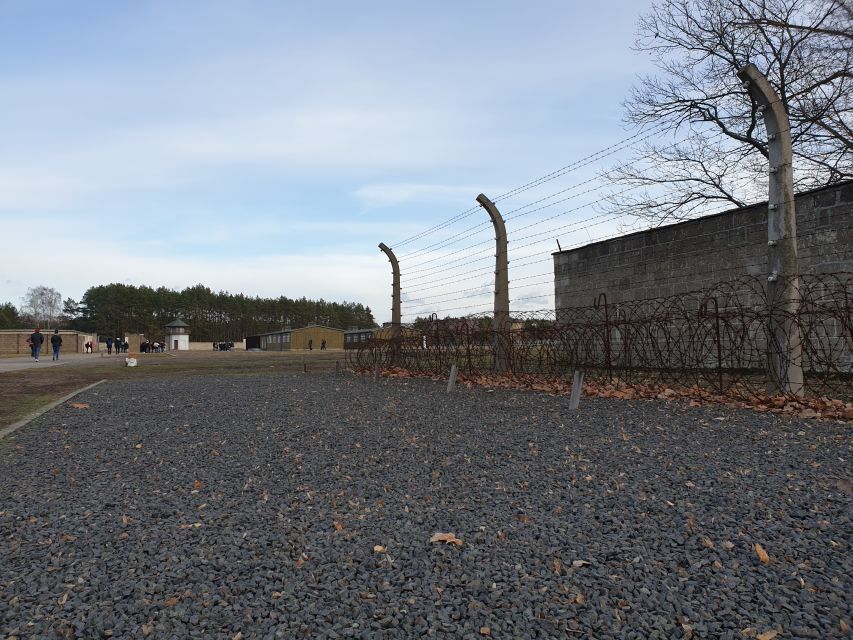
I find the camp’s planned design especially important to understand. Sachsenhausen was not simply a collection of barracks placed outside town. Its physical arrangement was meant to make prisoners feel watched and powerless. The architecture helped enforce SS authority, with sightlines, controlled entrances, a central roll-call area, and a layout built around obedience.
That is one reason a guided visit adds real value. You can walk through the site alone, but it is harder to see how individual buildings fitted into the larger system. A good guide connects the physical remains with survivor accounts and historical research, showing how control operated minute by minute.
The site also tells a second story after 1945. Under Soviet occupation, Sachsenhausen became a special camp where former Nazis, political opponents, and civilians were detained. Thousands died from hunger and disease. That later period does not erase the camp’s Nazi history, but it adds another difficult chapter that many visitors might otherwise miss.
More Walking Tours in Berlin
- Discover Berlin Half-Day Walking Tour
★ 5.0 · 9,624 reviews - Berlin: Third Reich and Cold War 2 Hour Walking Tour
★ 4.9 · 6,830 reviews - Berlin: Discover Berlin Walking Tour
★ 4.9 · 5,998 reviews
Leaving Berlin by S-Bahn
The day begins in Berlin, though the exact meeting point depends on the option you book. Arrive at least 15 minutes early. The group will most likely catch a train about five minutes after the official start time, and the guide cannot wait for late arrivals.
The train journey to Oranienburg takes about 40 minutes. You need a valid Berlin public transport ticket covering zones ABC, and the tour does not include it. A 24-hour ABC ticket is recommended, which is a sensible choice because you will need transport for both the outward and return journeys.
This part of the day is useful rather than glamorous. It gives the guide time to explain the route, introduce the historical setting, and help the group prepare for the memorial. You may also want to eat during the journey, since food is not allowed at the memorial and there is no lunch stop later.
The transport arrangement has one weakness: it can feel a little scattered, especially if you are unfamiliar with Berlin’s public transport system. Pay close attention to the meeting instructions, buy your ticket in advance, and do not cut it close. Missing the train could mean missing the tour altogether.
Oranienburg and the walk to the memorial
Oranienburg is the nearest station to Sachsenhausen. After arriving, the group has a guided segment of about 20 minutes before reaching the memorial, with roughly 20 minutes of walking included in the wider route.
This transition helps place the camp in its local setting. Sachsenhausen was close enough to Berlin to serve the capital directly, but far enough away to hide much of its daily reality from ordinary city life. The walk also means the visit begins gradually rather than with an abrupt entrance into the most painful parts of the site.
Wear comfortable shoes. The activity involves a lot of walking, and the memorial visit itself lasts about three and a half hours. Because the tour runs in all weather, you should also bring suitable clothing for rain, cold, wind, or sun. This is not the place for flimsy footwear or a plan based on perfect weather.
Tower A and the roll-call square
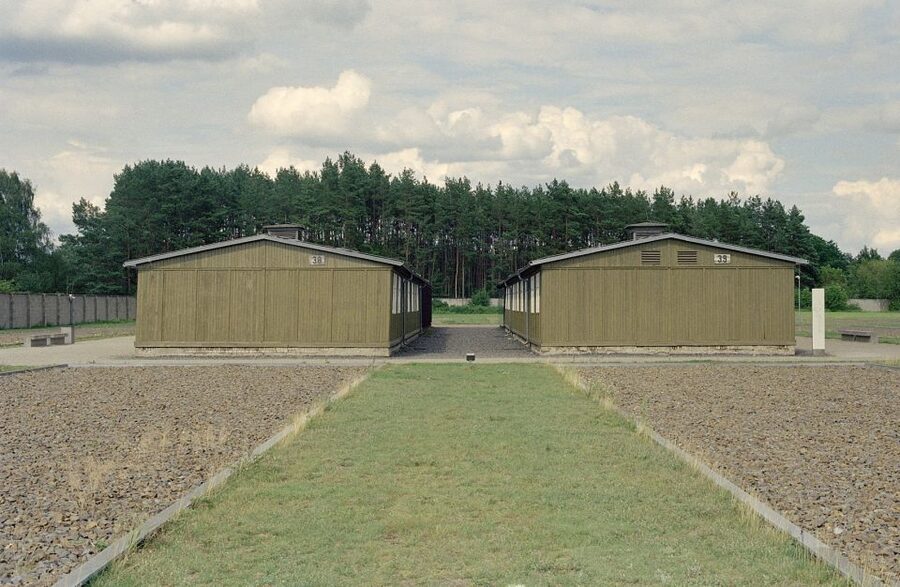
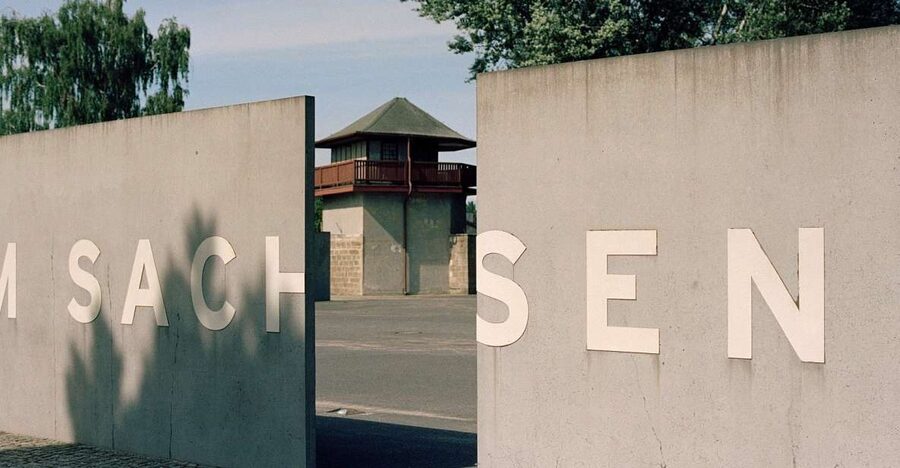
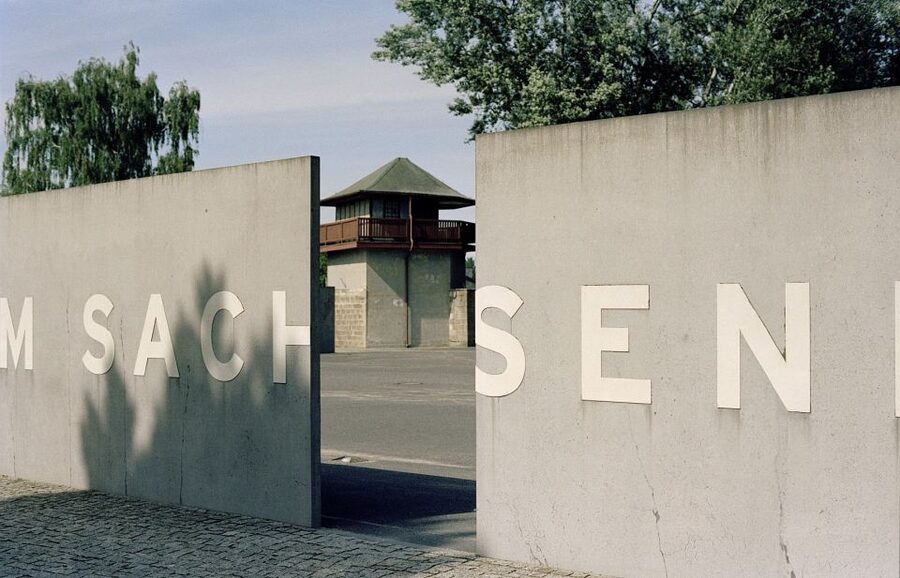
Tower A is the main entrance area and one of the first places where the camp’s power structure becomes clear. From here, the roll-call square formed the center of daily control.
Prisoners could be forced to stand for long periods during roll calls, regardless of weather or physical condition. The space was not designed for comfort or ordinary movement. It was built to make people wait, obey, and remain visible.
Your guide should help you read the site as more than an empty field and surviving buildings. The point is not only what happened in one location, but how routine, repetition, and public punishment were used to break people down.
The strongest guides make this section understandable without turning it into a theatrical performance. Fabio has been praised for bringing the group into the history through his words, while Lorenzo is described as especially strong on dates, details, and the wider picture. Those qualities matter here because the site needs context, not dramatic embellishment.
Other memorial sites open to visitors:
- Berlin: Sachsenhausen Concentration Camp Tour in English
★ 5.0 · 5,711 reviews - Berlin: Sachsenhausen Concentration Camp Memorial Tour
★ 4.7 · 3,716 reviews - Sachsenhausen Concentration Camp Bus Tour in English from Berlin
★ 5.0 · 1,962 reviews - Berlin: Sachsenhausen Concentration Camp Tour in English
★ 4.8 · 1,889 reviews
Forced labor, punishment, and the prison barracks
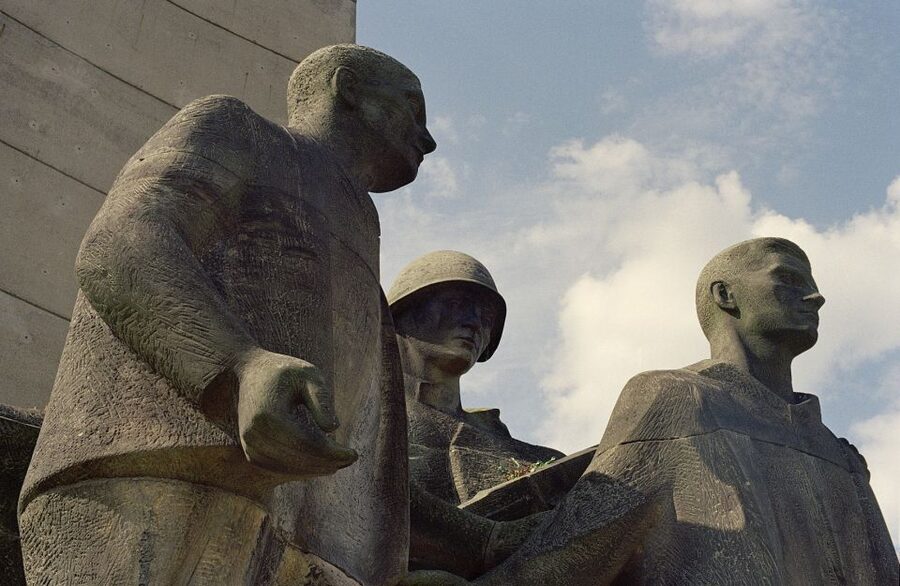
Sachsenhausen was part of a huge system of forced labor. Prisoners were exploited by the SS and by private companies, often under conditions that caused injury, illness, and death.
The tour explains how the camp connected to that wider economic machine. That is an important part of the visit because Nazi persecution was not separate from ordinary business and state administration. Companies and institutions benefited from prisoner labor, while the SS created the rules and threats that made the system function.
You also learn about punishment inside the camp. The prison barracks were not simply places where people slept. They were part of a structure of confinement, surveillance, and violence. The guide discusses daily life, attempts at resistance, and the ways prisoners tried to retain some control over their lives.
A three-and-a-half-hour visit gives enough time to move between the major areas without treating each one as a quick photo stop. Still, the pace can be demanding. You are standing and walking for much of the day, and the subject matter requires concentration. If you need frequent breaks, a private group may offer more flexibility than a larger departure, though the supplied details do not promise a custom pace.
The kitchen museum and medical rooms
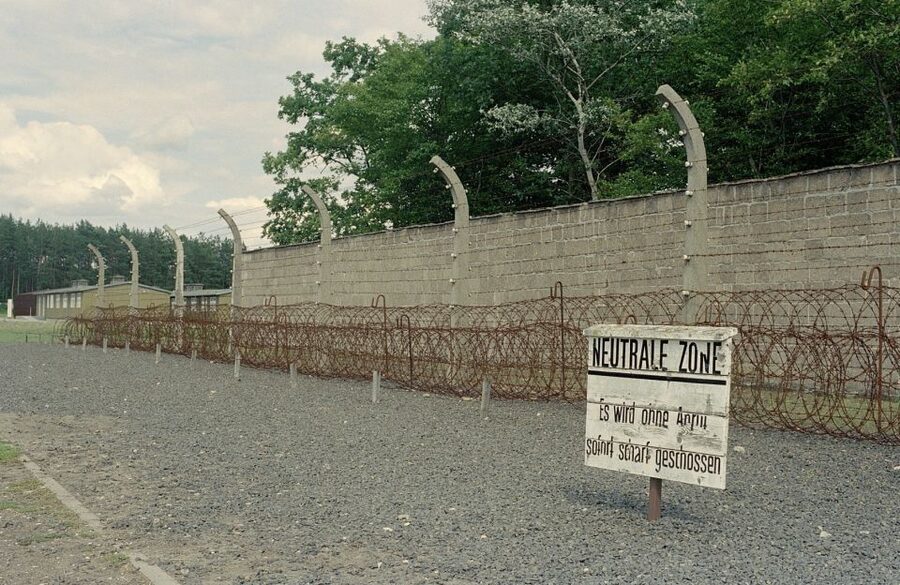
The former kitchen now houses a museum. This is one of the more useful indoor sections of the visit because it helps show how the camp operated on a daily basis.
Rather than focusing only on major Nazi policies, the museum can help you think about food, routine, prisoner management, and the practical machinery of confinement. The simple functions of a kitchen take on a darker meaning inside a camp where hunger was a weapon.
The tour also covers the prison barracks and rooms connected with medical experimentation. These stops require particular care. A guide who speaks with restraint and accuracy is essential, and the praise for Soleil and Sueli points to the value of an empathetic approach.
Sueli has been praised for helping a visitor connect the site with subjects they had never studied before. That is a useful quality in a guide. You do not need to arrive with a strong background in Nazi history. The explanation should give you enough structure to understand what you are seeing without assuming prior knowledge.
Station Z and the hardest part of the visit
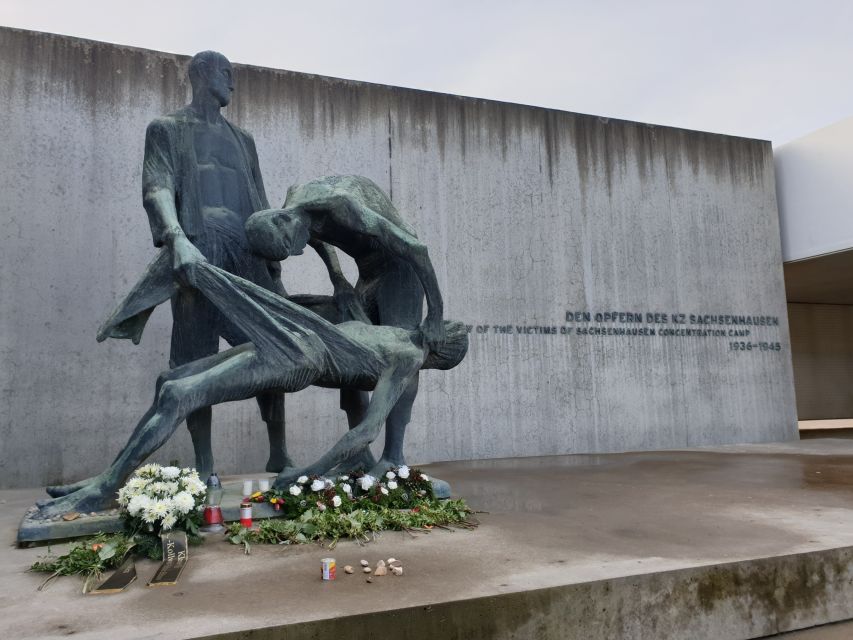
Station Z is the area where the crematoriums and gas chamber once stood. For many people, this is the most emotionally difficult stop.
The name itself came from the camp’s grim logic. If prisoners entered through Tower A, they could leave through Station Z. The tour explains this area as part of the camp’s system of murder, not as an isolated site of horror.
Expect this section to be direct and upsetting. A respectful guide should give the facts without sensational language, while also allowing the group space to process what it is seeing. The experience is not meant to entertain you, and that is precisely why the tone matters.
If you have never visited a concentration camp, you may find the physical remains less complete than expected. That does not make the visit less important. The gaps, ruins, museum displays, and open spaces all require explanation, and survivor testimony helps restore the human scale that the buildings alone cannot provide.
The camp’s wider role in Nazi Europe
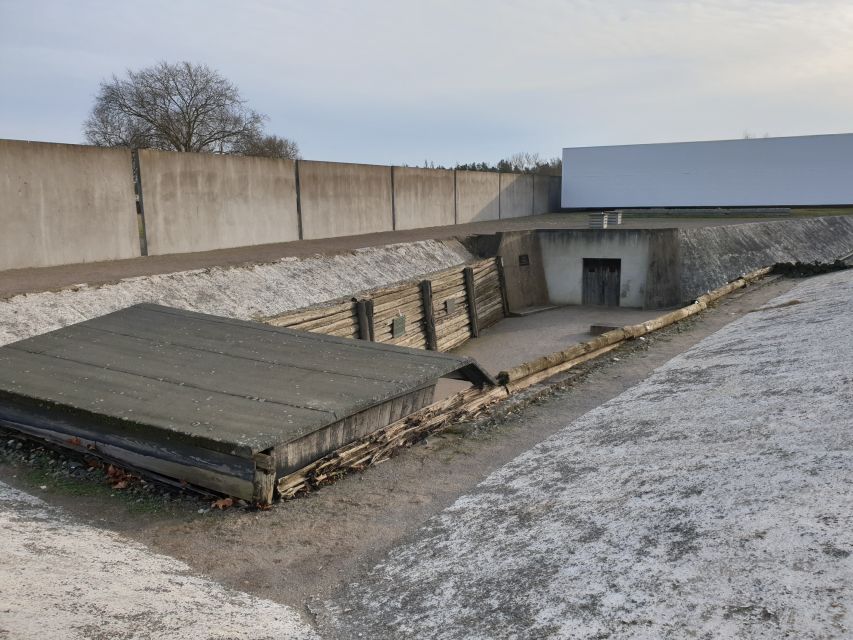
Sachsenhausen was more than a prison for people held in one location. It served as a training center for SS guards and helped shape the wider concentration camp system.
The tour explains how the camp was presented as a model SS concentration camp. You learn how methods tested or used here connected with camps across Nazi-occupied Europe. That larger view is one of the best reasons to spend a full day on this excursion instead of treating Sachsenhausen as a quick side trip.
The guide also discusses Nazi propaganda. The regime did not only rely on physical force. It used official stories, visual presentation, bureaucracy, and public claims to hide or distort what was happening.
You will also hear about the final death marches as the war ended. These marches were not a simple evacuation. They caused further suffering and death as prisoners were moved under brutal conditions. Adding the end-of-war story prevents the visit from stopping at the moment the camp was liberated.
What the guides add to the experience
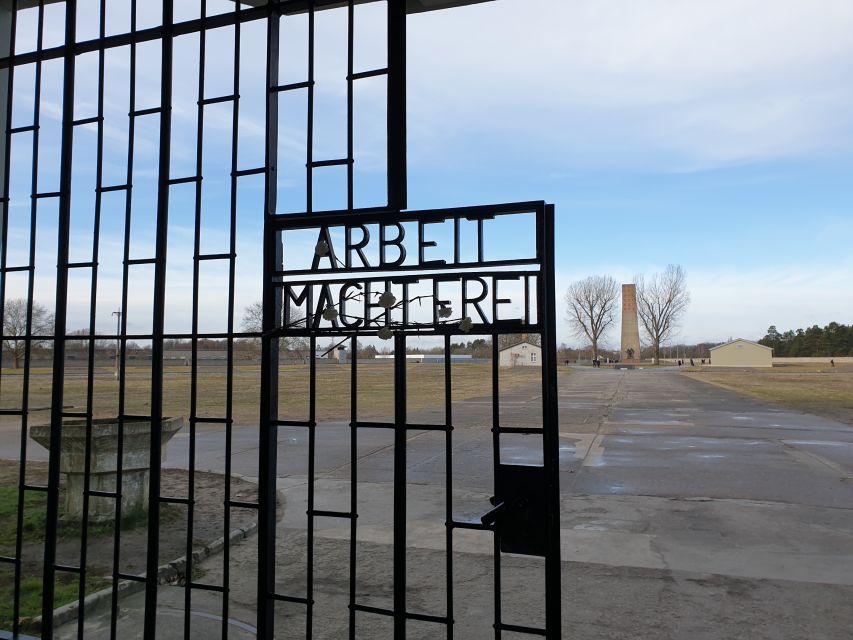
The tour is offered with live guides in French, Italian, and English. The booking details also refer to Italian or Spanish-speaking options, so I would confirm the exact language before paying if this is important to you.
The strongest praise centers on the guides rather than on transport or organization. Fabio is described as passionate and able to make the history feel immediate. Lorenzo is praised for a huge store of dates and details. Soleil and Sueli are singled out for empathy, professionalism, and the ability to handle a delicate subject with care. Andrea is praised for being engaging and precise.
That pattern tells you something useful. This experience depends heavily on who leads your group. The site is powerful on its own, but a well-prepared guide can connect the buildings, documents, survivor accounts, and political background into a clear story.
Groups can reach up to 25 people, while private group options are available. The advertised price of $511 covers a private group of up to six, so the value changes sharply depending on your party size. For six people, the cost works out to about $85 per person before transport and the donation. For one or two people, it is a much heavier expense.
The return to Berlin and time on your own
After the memorial visit, the group returns to Berlin by train. The return journey takes about 40 minutes, and drop-off points include Potsdamer Platz and Friedrichstraße.
You are also allowed to remain at the memorial longer and explore on your own instead of returning with the group. That is useful if you need more quiet time with the exhibitions or want to move at your own pace after the guided portion.
The full experience lasts about six hours. That makes it a major part of your Berlin schedule, not a small morning activity. I would avoid placing another demanding museum visit immediately afterward. The tour may end at a central location, but you may still want a calm evening.
Is the $511 price fair?
The price needs careful reading. At $511 per group of up to six, it can be reasonable for a private group that wants a guide, shared transport planning, and a focused explanation of the memorial. A full group pays far less per person than a solo visitor.
The price does not include the ABC public transport ticket or the required €3 cash donation per participant. The donation goes to the memorial, and you should carry the exact amount or at least cash. You also need to bring your own food and drinks.
For a private group of six, the cost buys a substantial six-hour experience with a three-and-a-half-hour guided visit. For a smaller party, compare the cost with other memorial tours before booking. The value is strongest if you want a guide in a specific language and prefer not to organize the route yourself.
The free cancellation policy allows cancellation up to 24 hours before the tour for a full refund. You can also reserve and pay later, which helps if your Berlin schedule is still moving around.
Who should book this Sachsenhausen tour?
I would recommend it to you if you want historical context, need guidance in French, Italian, or English, and prefer a structured visit from Berlin. It suits people who want to understand how a concentration camp operated, not just walk through a few remaining buildings.
It is also a good choice if you are visiting Sachsenhausen for the first time. The guide covers the Nazi period, daily prisoner life, forced labor, the SS, resistance, death marches, and Soviet postwar use. That is a lot to take in, but the subjects fit together.
I would think twice if you dislike long train rides, extensive walking, or emotionally difficult historical sites. The tour runs in every kind of weather, there is no meal stop, and the subject is disturbing from beginning to end.
FAQ
How long does the Sachsenhausen tour take?
The complete activity lasts about six hours, including travel from Berlin, the memorial visit, and the return journey.
How long is the guided visit inside Sachsenhausen?
The guided walking tour at the memorial lasts about three and a half hours.
How do I reach Sachsenhausen from Berlin?
The group travels by S-Bahn to Oranienburg, the nearest station. The train ride takes about 40 minutes, followed by a walk to the memorial.
Do I need to buy a public transport ticket?
Yes. Public transport is not included. You should buy a 24-hour ticket covering Berlin zones ABC.
Is there a memorial donation?
Yes. Each participant must pay a €3 cash donation at the meeting point. The full amount goes to the Sachsenhausen Memorial.
Can I eat during the tour?
You can bring food and drinks for the train journey, but eating is not allowed inside the memorial. There is no lunch stop during the activity.
What languages are available?
Live guiding is listed in French, Italian, and English. The booking information also references Italian or Spanish-speaking guide options, so confirm the language of your chosen departure.
Is this a private tour?
Private groups are available. The stated private-group price is $511 for up to six people, while group departures can include up to 25 participants.
What should I wear?
Wear comfortable shoes and dress for all weather. The activity involves a lot of walking and takes place outdoors as well as indoors.
Should you book it?
Book this tour if you want Sachsenhausen explained with care, context, and enough time to understand its place in Nazi Germany. The guides are the main strength, especially names such as Fabio, Soleil, Lorenzo, Sueli, and Andrea, who are praised for empathy, strong preparation, and engaging storytelling.
The best value comes with a full private group of six. If you are traveling alone or as a couple, check the price closely and make sure the language and meeting point suit you. Bring an ABC transport ticket, lunch for the train, €3 in cash, and comfortable shoes. Most of all, allow yourself a quiet evening afterward. This is a worthwhile visit, but it is not a light one.
Just added around Berlin
- Private Walking Tour in Berlin: Hitler’s Germany & WWII★ 5.0 · 7 reviews
- The History of Berlin: WWII PRIVATE Walking Tour With Locals★ 5.0 · 209 reviews
- Private Berlin WWII and Cold War History Tour with Local Expert Guide★ 5.0 · 28 reviews
- Private Walking Tour Berlin 3 hours: Brandenburg, Historic Center★ 5.0 · 7 reviews
- Berlin: Private Bike Tour of the Berlin Wall and Third Reich★ 5.0 · 23 reviews
- Group Driving Tour 1 to 6 people. Berlin Shore Excursion incl pick-up at Port★ 5.0 · 8 reviews
- Berlin: Guided Private Bike Tour to Explore the Highlights★ 5.0 · 12 reviews
- Berlin Photography Masterclass – Private Photography Lesson★ 4.5 · 23 reviews