
Reviewed · COLD WAR TOURS
Hitler to Stalin – WWII & Cold War Tour (Small Group)
Berlin’s past is written into its pavement. This 2.5-hour walk links the Brandenburg Gate, Reichstag, Holocaust Memorial, Führerbunker site, Berlin Wall, and Checkpoint Charlie into one clear story. I like the small group limit of 15 and the way the tour connects World War II with the Cold War instead of treating them as separate chapters.
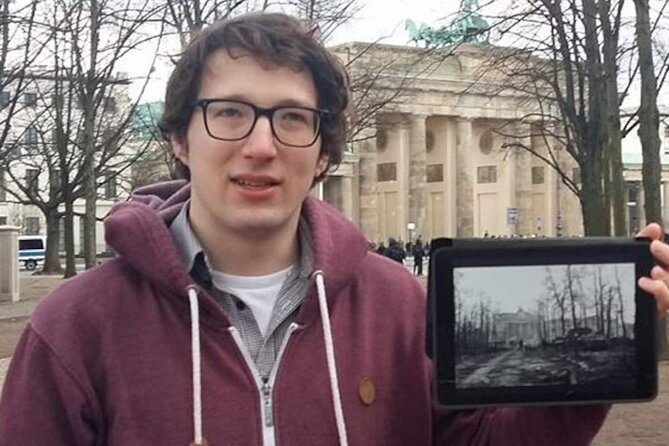
I also like the reported strength of the guiding, especially when Mark leads. He uses wartime photographs to show how places looked before and after the destruction. The main drawback is the pace: nine stops in about 150 minutes means some visits are brief, and you will spend the whole time on foot.
In This Review
- Key points to know before you book
- Why this walk helps make sense of Berlin
- Starting beneath the Brandenburg Gate
- The Reichstag and the road to dictatorship
- The Soviet War Memorial in Tiergarten
- Walking through the Holocaust Memorial
- The Führerbunker site and the final days of Hitler
- The North Korean embassy and the divided city
- The June 17, 1953 uprising
- The Berlin Wall Memorial and human cost
- Ending at Checkpoint Charlie
- What the guide adds for your $23
- Timing, walking, and practical limits
- Who should book this Berlin history walk?
- FAQ
- Where does the tour start?
- Where does the tour finish?
- How long does the tour last?
- How many people can join the group?
- Are admission tickets included?
- What happens if I cancel or the tour is canceled?
Key points to know before you book
- Nine major sites in 2.5 hours: The route covers central Berlin from the Brandenburg Gate to Checkpoint Charlie.
- The guide makes the difference: Mark is praised for clear explanations, enthusiasm, strong subject knowledge, and useful wartime photographs.
- A rare Soviet perspective: The Soviet War Memorial in Tiergarten adds context often missed on standard central Berlin walks.
- No entry fees during the walk: All listed stops are viewed from public areas, keeping the $23 price easy to assess.
- Small by design: A maximum of 15 people should make questions and discussion more manageable than on a large coach tour.
- Plan for changing weather: The experience requires good weather, and cancellations can lead to a new date or full refund.
Why this walk helps make sense of Berlin
Berlin can feel like a history book with its pages scattered across a large city. The Brandenburg Gate belongs to the age of Prussian kings. The Reichstag recalls imperial Germany and the modern parliament. Nearby, the Holocaust Memorial and Führerbunker site confront the Nazi period, while the final stops turn toward communist rule, the Berlin Wall, and the divided city.
That sequence is the real value here. You are not simply collecting famous photo stops. You are following the political transformation of Berlin from capital of an empire, to the center of Nazi power, to a ruined city occupied by the victorious Allies, and finally to a symbol of Cold War division.
The tour begins at Pariser Platz beside the Brandenburg Gate and finishes at Checkpoint Charlie on Friedrichstraße. That makes the route easy to understand geographically. It also gives the walk a strong sense of movement: you start with a symbol of unity and end at the former border between East and West.
The price is $23, which is modest for a guided city walk of this length. Since the listed stops have free admission, you are paying mainly for the guide’s interpretation and the convenience of a carefully connected route. If the explanations are your priority, that is good value. If you want to enter the Reichstag, visit a museum, or spend long periods at the Holocaust Memorial, this is not that kind of tour.
More Third Reich History Tours in Berlin
- Berlin: Third Reich and Cold War 2 Hour Walking Tour
★ 4.9 · 6,830 reviews - Berlin’s Best: 2 Hour Walking Tour Third Reich and the Cold War
★ 5.0 · 5,486 reviews - Third Reich Berlin: Hitler and WWII Walking Tour
★ 5.0 · 3,301 reviews
Starting beneath the Brandenburg Gate
The Brandenburg Gate is a good opening point because it carries several layers of Berlin’s story. Built in the 18th century under Frederick William II, it first marked the site of an older city gate. Today, it is linked with European peace and unity, but its past includes periods when Berlin was anything but peaceful.
You get about 10 minutes here. That is enough for an introduction, orientation, and photographs, but not enough for a long architectural talk. The guide’s job is to set the political stage and explain why this particular monument keeps returning in Berlin’s history.
The gate sits between Pariser Platz and the Reichstag, near Unter den Linden and the Mitte district. That central position makes the start convenient, although the open square can be busy and exposed. Arrive ready to find the guide among other groups near the meeting point.
The Reichstag and the road to dictatorship
The Reichstag building is only a short step from the Brandenburg Gate, but its story shifts the focus from royal Berlin to parliamentary Germany. It opened in 1894 as the home of the Imperial Diet, the political body of the German Empire.
The building remained a center of German politics until the fire of 1933. After World War II, it was badly damaged and later restored, with the work completed in 1999. Today, it houses the Bundestag, Germany’s lower house of parliament.
You spend about 15 minutes here. The important thing is not simply seeing the facade. The Reichstag helps you understand the collapse of parliamentary government and the later return of democratic institutions to this part of Berlin.
The tour does not include a stated interior visit, so you should not expect to enter the building during this walk. That is a practical limitation, but it also keeps the route moving. You get political context without spending the tour in a security line or inside a separate attraction.
The Soviet War Memorial in Tiergarten
The Soviet War Memorial adds a needed counterpoint to the usual account of Berlin’s wartime destruction. The Soviet Union built it in 1945 to honor soldiers of the Soviet Armed Forces who died during the Battle of Berlin.
Its location in the Großer Tiergarten, near Straße des 17. Juni, connects the monument with the final battle for the city. The memorial is not just a war marker. It reflects the enormous Soviet military sacrifice and the fact that Berlin’s defeat came through a battle involving forces from the east.
The stop lasts about 15 minutes. That gives the guide time to explain the monument’s purpose and place it within the end of the war. This is one of the more useful stops for anyone who knows Berlin mainly through the Western Allied story.
It also brings a different mood to the walk. The Brandenburg Gate and Reichstag are grand civic landmarks. The Soviet memorial is more directly tied to soldiers and battle. I would pay close attention here, because this stop helps prevent the tour from becoming a narrow story about Hitler alone.
Still Berlin, at a slower pace:
- Berlin: Reichstag, Dome and Government District Guided Tour
★ 4.7 · 18,288 reviews - Berlin: 1-Hour City Tour by Boat with Guaranteed Seating
★ 4.3 · 16,993 reviews - Berlin: Boat Tour Along the River Spree
★ 4.4 · 11,252 reviews - Discover Berlin Half-Day Walking Tour
★ 5.0 · 9,624 reviews
Walking through the Holocaust Memorial
The Memorial to the Murdered Jews of Europe is one of the tour’s most emotionally difficult stops. Architect Peter Eisenman designed the site with 2,711 concrete slabs spread across a large area of roughly 19,000 square meters.
The slabs vary in height, and the ground between them is uneven. As you walk inward, the changing levels can produce uncertainty or even a feeling of dizziness. The design does not give you a single inscription or a fixed explanation of the Holocaust. It leaves room for a personal response while placing the memorial directly in the center of Berlin.
You have about 15 minutes here. That is enough to walk among part of the blocks and hear why the memorial was designed this way. It is not enough for a long, quiet visit or for the underground information center, which is not included in the stated route.
The guide’s tone matters at this stop. A good explanation should provide context without trying to turn grief into spectacle. This is a place where a little quiet is useful. You may want to keep your camera away for part of the visit and allow time to take in the setting.
The Führerbunker site and the final days of Hitler
The former Führerbunker is an important stop precisely because so little of the original structure is visible. It was an air-raid shelter and Hitler’s final headquarters in Berlin. Hitler moved into the bunker on January 16, 1945, married Eva Braun on April 29, and the couple died by suicide less than 40 hours later.
The old Chancellery buildings were later leveled by the Soviets. The underground complex remained mostly undisturbed until 1988, but the tour does not present the site as a preserved underground attraction. You should expect an explanation of where the bunker was and what happened there, not a dramatic ruin or an interior tour.
About 15 minutes here is enough to make the location understandable. The value lies in the contrast between the ordinary modern setting and the enormous events associated with it. Berlin does not build a grand monument to Hitler at this spot, and that absence is part of the lesson.
This is also where a strong guide can cut through myths. The reviews of the experience place high praise on Mark’s ability to bring the Battle of Berlin to life and answer questions. His reported use of historical images is especially useful at a site where the physical evidence has largely disappeared.
The North Korean embassy and the divided city
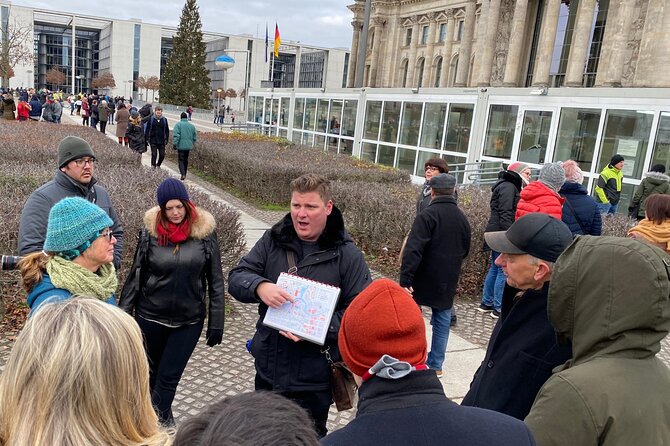
The listed stop at the Embassy of the Democratic People’s Republic of Korea in Berlin may seem like an odd break in a World War II and Cold War walk. Its address is Glinkastraße 5 in Mitte. The connection is the continued presence of a communist state in a city once split between rival political systems.
The visit lasts about 10 minutes. The available information does not describe an interior visit, so treat this as an exterior orientation stop. It is a short pause that helps shift the focus from the Nazi collapse to the broader communist world that shaped East Berlin and the Cold War.
This stop may be less immediately striking than the Brandenburg Gate or the Wall Memorial. Its value depends heavily on the guide’s explanation. If you enjoy the political links between Berlin and the wider Cold War, it adds an unusual detail. If you want only the most famous monuments, it may feel less essential.
The June 17, 1953 uprising
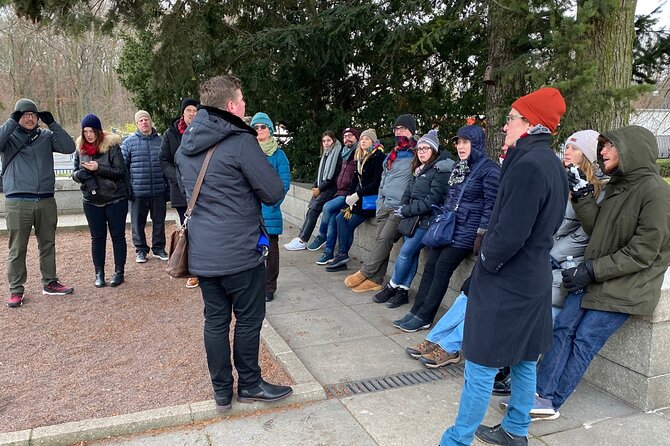
The memorial to the June 17, 1953 uprising marks the first major postwar challenge to the communist regime in East Germany. Soviet tanks suppressed the revolt, and about 15,000 people were arrested afterward.
This is one of the tour’s most important stops for understanding that the Wall was not the beginning of every East German protest. Resistance was already present years before the border closed. The memorial gives the guide a chance to explain how political control, Soviet military power, and public opposition interacted.
The stop lasts around 15 minutes. It may not have the visual force of a huge monument, but its subject is central to the story of divided Berlin. I appreciate its inclusion because short tours often skip less famous events in favor of familiar photo spots.
Listen for the connection between this uprising and later pressure for change. The tour’s stated aim is to help you understand the events that led to division and eventual reunification. This stop is one of the clearest examples of that goal.
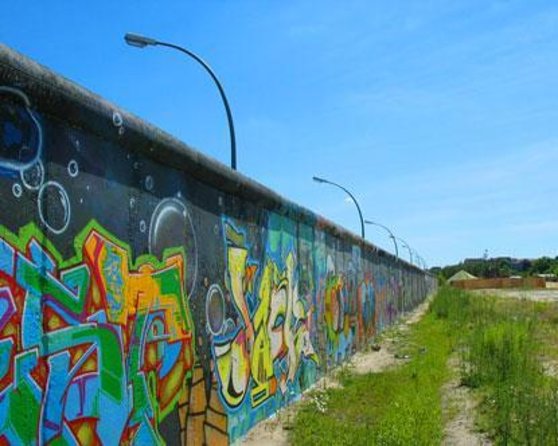
The Berlin Wall Memorial and human cost
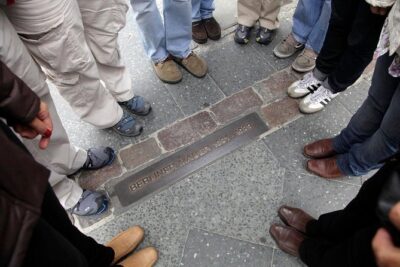
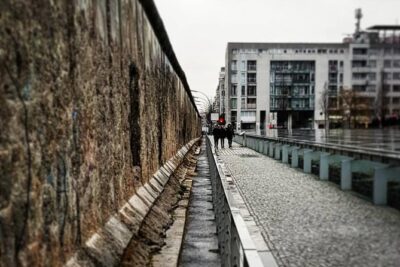
The Berlin Wall Memorial commemorates the division of Berlin and the deaths that occurred along the Wall. It brings the Cold War story down from the level of global politics to the lives of people who could no longer move freely through their own city.
You get about 15 minutes here. The stop is brief, so the guide will need to focus on the main facts and the meaning of the memorial rather than cover every detail of Berlin’s border system. Still, it gives you a more serious setting for the Wall than a painted fragment used only as a backdrop for photographs.
The emotional turn here is important. The earlier stops explain how governments and armies shaped Berlin. At the Wall Memorial, you are asked to consider the human cost of those decisions. It also prepares you for Checkpoint Charlie, where the border is remembered in a more theatrical and famous setting.
Ending at Checkpoint Charlie
Checkpoint Charlie was the best-known crossing point between East and West Berlin during the Cold War. Western Allied forces called it Checkpoint C, while the name Charlie came from the NATO phonetic alphabet.
The tour ends at Friedrichstraße 43 to 45 after about 20 minutes at the site. Because Checkpoint Charlie is famous, you will find plenty of interest around it, but the modern setting can feel commercial compared with the gravity of the Wall Memorial.
That contrast is worth understanding. Checkpoint Charlie is a powerful symbol of the divided city, but it is not a complete picture of the border. The guide can help separate the historical crossing from the later tourist presentation and explain why this point mattered during the Cold War.
Ending here works well. You finish with the physical idea of a border, after hearing how Berlin became divided and how that division shaped international politics. The walk does not promise a full account of reunification, but it gives you the key locations needed to understand why the city’s unity carries such weight.
What the guide adds for your $23
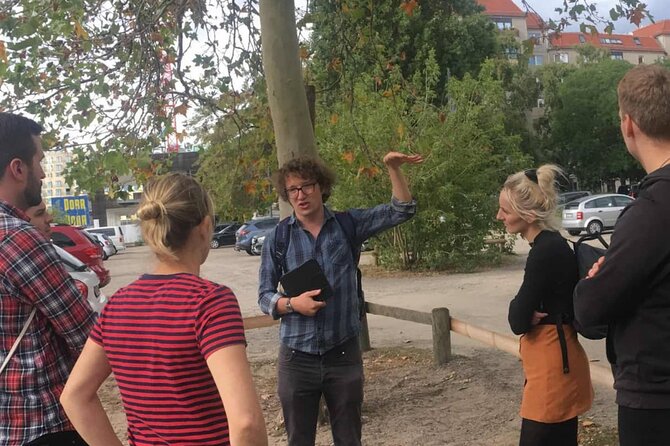
The strongest part of this experience is the human guide, not an admission ticket or special access. The available feedback gives Mark particular praise for his enthusiasm, clear storytelling, historical detail, and ability to answer questions.
The use of photographs is a real advantage. At places such as the Reichstag, Führerbunker site, and Berlin Wall, present-day Berlin can hide the damage and tension of the past. Seeing an image of the same area during the war helps you compare the modern streets with the ruined city that followed.
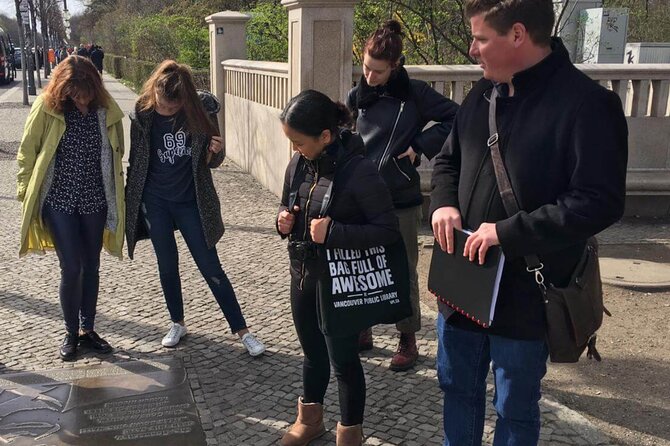
A maximum of 15 people is also useful. You are more likely to hear explanations and ask a question than you would in a very large group. Small group does not mean private, though, so the experience can still vary depending on the guide and the interests of the people around you.
The five available ratings are all highly positive, with repeated praise for the guide’s command of the subject and engaging delivery. One German-language comment also describes the walk as very informative, with many original historical locations and a strong sense that the time was well spent. That pattern suggests the tour succeeds most when you want interpretation rather than sightseeing alone.
Timing, walking, and practical limits
The experience lasts approximately 2 hours and 30 minutes. The listed stop times add up to about 130 minutes, leaving the rest for walking between locations, gathering the group, and transitions.
That schedule is efficient but full. You should wear comfortable shoes and expect to remain outdoors throughout the route. The tour is near public transportation, and most people can participate, but the supplied information does not give a precise walking distance or describe the ground at every stop.
The mobile ticket keeps the start simple. Meet at the Brandenburg Gate on Pariser Platz and finish at Checkpoint Charlie. Since both ends are in central Berlin, you can continue sightseeing from either point.
Service animals are allowed. The activity requires good weather, and it also needs a minimum number of participants. If poor weather or low enrollment cancels the walk, you are offered another date or experience, or a full refund.
For cancellation, you can receive a full refund if you cancel at least 24 hours before the start time. Cancellations or changes made within 24 hours are not refunded or accepted. That rule matters if your Berlin schedule is still uncertain.
Who should book this Berlin history walk?
I would choose this tour if you want a single, guided introduction to Berlin’s WWII and Cold War landmarks. It suits first-time visitors who need the story arranged in order, as well as history-minded people who want less obvious stops such as the June 17 uprising memorial and Soviet War Memorial.
It is also a good choice if you value a passionate guide. Mark’s reported use of photographs and willingness to handle questions could make a major difference, especially at sites where the original buildings are gone or heavily changed.
I would be more cautious if you dislike fast-paced walking or want extended time at each memorial. Nine stops in 150 minutes requires discipline. You may leave with a strong framework, but you will probably want to return later to the Holocaust Memorial, Berlin Wall Memorial, or Reichstag on your own.
At $23, the tour offers solid value because it combines free public landmarks with expert explanation and a small group cap. Book it early in your Berlin stay if you want the rest of your sightseeing to have a clearer historical frame. Skip it only if you already know these sites well or prefer to explore each one slowly and independently.
FAQ
Where does the tour start?
The tour starts at the Brandenburg Gate on Pariser Platz, 10117 Berlin, Germany.
Where does the tour finish?
It finishes at Checkpoint Charlie, Friedrichstraße 43 to 45, 10117 Berlin, Germany.
How long does the tour last?
The tour lasts approximately 2 hours and 30 minutes.
How many people can join the group?
The maximum group size is 15 people.
Are admission tickets included?
The listed stops have free admission, and the experience is a walking tour using public areas. No separate paid admission is stated for the route.
What happens if I cancel or the tour is canceled?
You receive a full refund if you cancel at least 24 hours before the start time. Cancellations within 24 hours are not refunded. If poor weather or failure to meet the minimum number of participants causes cancellation, you are offered another date or experience, or a full refund.
More Cold War Tours in Berlin
- Cold War, Berlin Wall, Spies and the East Side Gallery
★ 5.0 · 1,024 reviews - Berlin: Cold War Walking Tour on Berlin Wall Route
★ 4.8 · 437 reviews - Berlin: Cold War Era History Guided Bike Tour
★ 4.8 · 413 reviews - Cold War, Berlin Wall, Spies and the East Side Gallery
★ 4.8 · 254 reviews
Just added around Berlin
- Private Walking Tour in Berlin: Hitler’s Germany & WWII★ 5.0 · 7 reviews
- The History of Berlin: WWII PRIVATE Walking Tour With Locals★ 5.0 · 209 reviews
- Private Berlin WWII and Cold War History Tour with Local Expert Guide★ 5.0 · 28 reviews
- Private Walking Tour Berlin 3 hours: Brandenburg, Historic Center★ 5.0 · 7 reviews
- Berlin: Private Bike Tour of the Berlin Wall and Third Reich★ 5.0 · 23 reviews
- Berlin: Guided Private Bike Tour to Explore the Highlights★ 5.0 · 12 reviews
- Berlin Photography Masterclass – Private Photography Lesson★ 4.5 · 23 reviews
- Group Driving Tour 1 to 6 people. Berlin Shore Excursion incl pick-up at Port★ 5.0 · 8 reviews
Cold War Tours, compared.
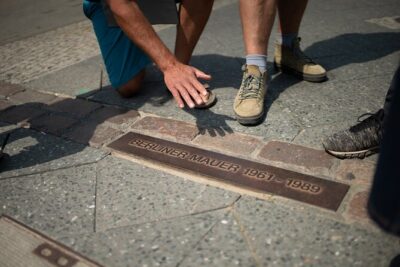
Cold War, Berlin Wall, Spies and the East Side Gallery
Read our review →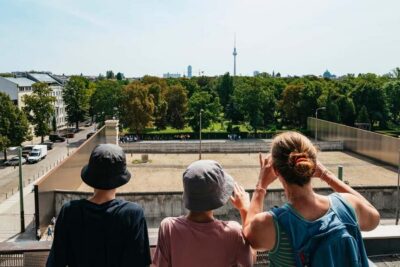

Cold War, Berlin Wall, Spies and the East Side Gallery
Read our review →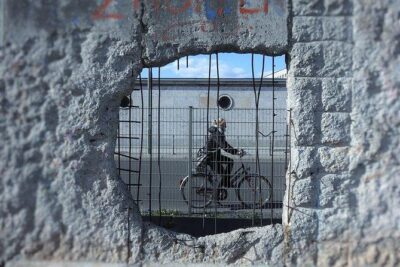
Explore The Berlin Wall: Cold War Berlin and Behind the Berlin Wall
Read our review →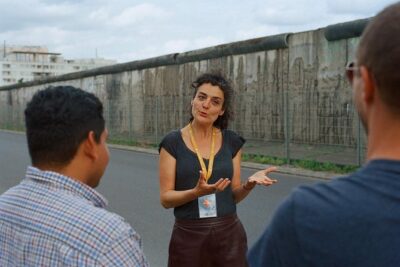
PRIVATE BEHIND THE BERLIN WALL and COLD WAR BERLIN TOUR
Read our review →Browse the lists this tour appears in