
Reviewed · COLD WAR TOURS
Hitler to Stalin – WWII & Cold War Tour (Small Group)
History leaves marks on Berlin’s streets. This 2.5-hour walking tour links the Nazi era, World War II, the Berlin Wall, and German reunification in one focused route. I like the way it connects famous sights to the events that changed them, especially the Berlin Wall and Hitler’s bunker. I also like that an English-speaking historian leads the walk with maps and then-and-now photographs, rather than simply pointing at monuments. The main drawback is pace: two and a half hours is enough for a strong overview, but not enough for long visits at every stop.
The tour begins at the Brandenburg Gate and ends there, which makes it easy to fit into a day of sightseeing. It costs $34 per person, a fair price for a guided walk covering several major sites, though you should expect plenty of time on your feet. Comfortable shoes, water, a light snack, and rain protection are sensible choices.
In This Review
- Key points at a glance
- Why this route helps you understand Berlin
- Starting at the Brandenburg Gate
- The Reichstag and the politics of power
- Nazi terror around Hitler’s bunker and Gestapo headquarters
- The Holocaust Memorial and the cost of abstraction
- Seeing the Berlin Wall as a political boundary
- Checkpoint Charlie and the divided city
- The route’s then-and-now photographs
- What the $34 price gets you
- Walking conditions and who should book
- How to make the most of the experience
- Should you book the Hitler to Stalin tour?
- FAQ
- Where does the tour start?
- Where does the tour end?
- How long does the tour last?
- What language is the tour conducted in?
- Is the tour wheelchair accessible?
- What should I bring?
- Can I cancel the booking?
Key points at a glance
- A clear historical thread: The route explains how Nazi rule, wartime destruction, Allied occupation, Cold War division, and reunification shaped Berlin.
- Major landmarks in one walk: You visit the Brandenburg Gate, Reichstag, Holocaust Memorial, Hitler’s bunker site, former Gestapo headquarters area, Berlin Wall, and Checkpoint Charlie.
- Small-group format: A smaller group should make it easier to hear the guide and ask questions during the walk.
- Guide-led interpretation: Then-and-now photographs and maps help you compare Berlin’s past with the city you see today.
- A serious but accessible tour: The subject matter includes persecution, war, dictatorship, and mass murder, so this is a history walk rather than light sightseeing.
- Useful practical setup: The tour is in English, wheelchair accessible, and runs in rain or shine, with free cancellation up to 24 hours before departure.
Why this route helps you understand Berlin
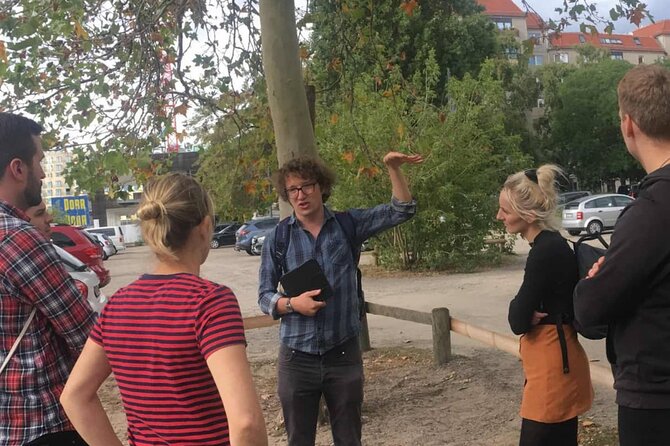
Berlin’s 20th-century story can feel like a pile of disconnected dates and memorials. One stop recalls Nazi terror, another recalls Soviet control, and another recalls the wall that divided families and political systems. The strength of this tour is the link between those places.
You begin with the physical center of modern Berlin, then move through locations tied to dictatorship, wartime destruction, postwar division, and reunification. That order gives you a useful framework. Instead of seeing the Berlin Wall as an isolated attraction, you learn how it grew out of Germany’s defeat, occupation, and split into East and West.
I would choose this walk early in a Berlin visit if I wanted the city’s political story to make sense quickly. It gives you names, locations, and basic cause-and-effect before you explore museums or memorials on your own.
The tour also deals with difficult subjects in public spaces. You may be standing beside a busy road or an ordinary modern building while hearing about events that changed millions of lives. That contrast is part of Berlin’s character. The past has not been placed in one neat museum district. It often sits beside offices, traffic, restaurants, and daily city life.
More Third Reich History Tours in Berlin
- Berlin: Third Reich and Cold War 2 Hour Walking Tour
★ 4.9 · 6,830 reviews - Berlin’s Best: 2 Hour Walking Tour Third Reich and the Cold War
★ 5.0 · 5,486 reviews - Third Reich Berlin: Hitler and WWII Walking Tour
★ 5.0 · 3,301 reviews
Starting at the Brandenburg Gate
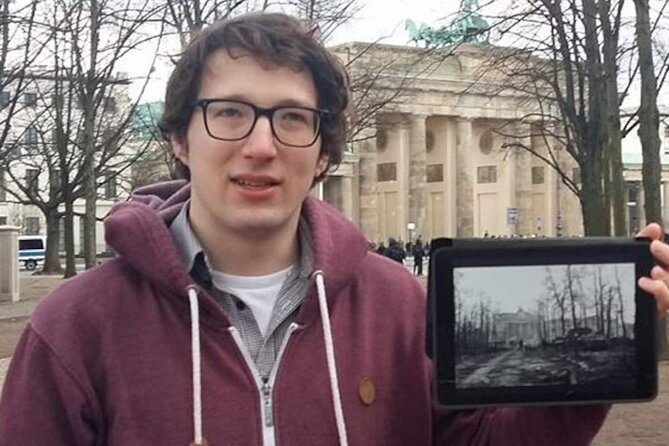
Meet at the Tourist Center by the Brandenburg Gate and look for the blue umbrella. This is a practical meeting point because the gate is one of Berlin’s easiest landmarks to recognize and a central place to begin exploring.
The Brandenburg Gate carries several meanings at once. It was built as a symbol of peace, later became linked with Prussian power, and during the Cold War sat near the division between East and West Berlin. After reunification, it became a widely recognized emblem of a united Germany.
The guide uses the gate to show how public symbols change meaning over time. A monument can survive a war, a dictatorship, occupation, and division, yet be understood differently by each generation. That makes this more than a photo stop.
The area can be busy, and the broad open space offers little shade or shelter. Arrive a few minutes early so you are not searching for the blue umbrella among sightseeing groups.
The Reichstag and the politics of power
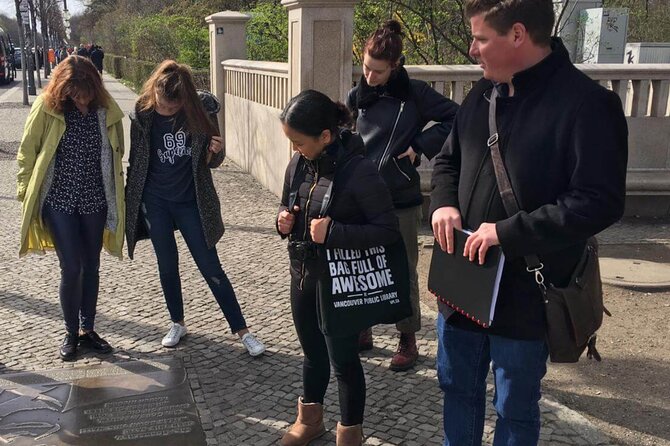
The Reichstag helps explain the political side of the story. The building is closely associated with Germany’s government and with the upheavals that brought the Nazi period into being.
On this tour, you should not expect an interior visit. The value comes from hearing how the building fits into Berlin’s political history while viewing it from outside. The guide places the Reichstag within the broader story of democracy, dictatorship, war, and the later return of government functions to Berlin.
I like this part of the route because it gives political context to the monuments that follow. Berlin’s history was not shaped only by battles and walls. It was also shaped by decisions made in government buildings, by competing political systems, and by the struggle over who had the right to rule.
If you want a detailed architectural visit or time inside the Reichstag, you will need to arrange that separately. This walk is concerned with the building’s historical role, not an extended tour of its rooms.
Nazi terror around Hitler’s bunker and Gestapo headquarters
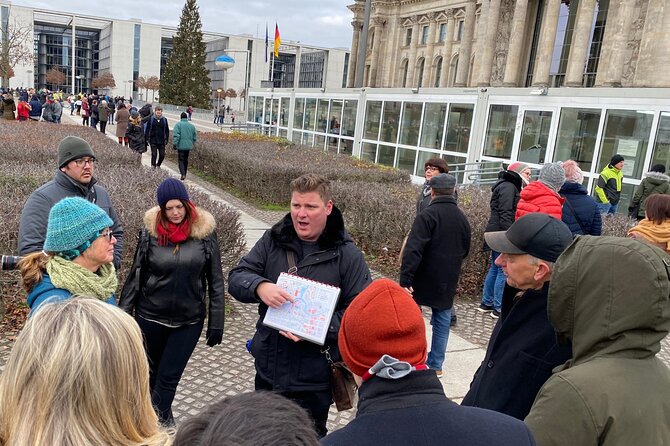
The route then addresses the darker parts of Nazi Berlin, including the site associated with Hitler’s bunker and the former Gestapo headquarters area. These places are important precisely because little traditional spectacle remains.
Hitler’s bunker is not a preserved underground attraction for visitors. The location is understood through explanation, maps, photographs, and the surrounding urban setting. That can feel anticlimactic if you expect rooms, tunnels, or a dramatic ruin. Yet the plain setting makes an important point: one of the most infamous places in modern European history is now part of an ordinary city block.
The former Gestapo headquarters area brings the machinery of Nazi repression into view. Here, the focus shifts from military events to political policing, persecution, and the destruction of civil rights. The guide’s job is especially important at these stops because the physical remains alone cannot explain what happened.
I would approach this section with patience. It is not designed for entertainment, and the subject matter can be upsetting. The benefit is a clearer understanding of how dictatorship operated through institutions, threats, imprisonment, and systematic violence.
The supplied tour information describes the guides as passionate historians, and Tom is specifically praised for being interesting, appropriate, and engaged with every member of his group. Those qualities matter here. A good guide needs to explain hard facts without turning suffering into a spectacle.
Still Berlin, at a slower pace:
- Berlin: Reichstag, Dome and Government District Guided Tour
★ 4.7 · 18,288 reviews - Berlin: 1-Hour City Tour by Boat with Guaranteed Seating
★ 4.3 · 16,993 reviews - Berlin: Boat Tour Along the River Spree
★ 4.4 · 11,252 reviews - Discover Berlin Half-Day Walking Tour
★ 5.0 · 9,624 reviews
The Holocaust Memorial and the cost of abstraction
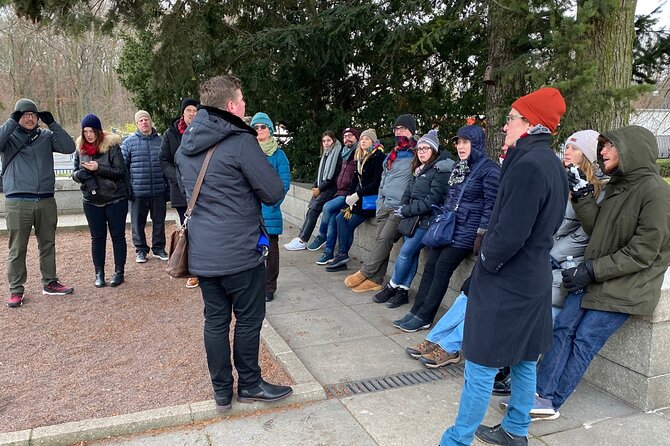
The Memorial to the Murdered Jews of Europe, often called Berlin’s Holocaust Memorial, gives the tour a quieter and more reflective pause. Its field of concrete stelae invites you to think about the scale of the Holocaust without reducing it to one simple story.
The memorial is open to the city around it. You can see people crossing through, taking photographs, or sitting nearby. That public setting can feel uncomfortable, but it also reflects the memorial’s role in present-day Berlin. Remembrance is part of the city’s daily life, not something sealed away from it.
A guide can help you understand the memorial’s purpose and the Nazi era’s wider lessons. Still, no short walking tour can provide the full history of Jewish life, Nazi persecution, deportation, and mass murder. If this subject matters deeply to you, allow separate time for Berlin’s museums and documentation centers.
This stop is valuable because it slows the route down. After political buildings and bunker sites, you are asked to consider human loss. I would not rush through it simply to reach the next landmark.
Seeing the Berlin Wall as a political boundary
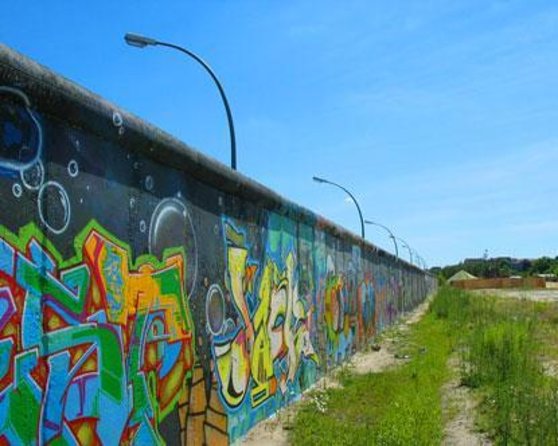
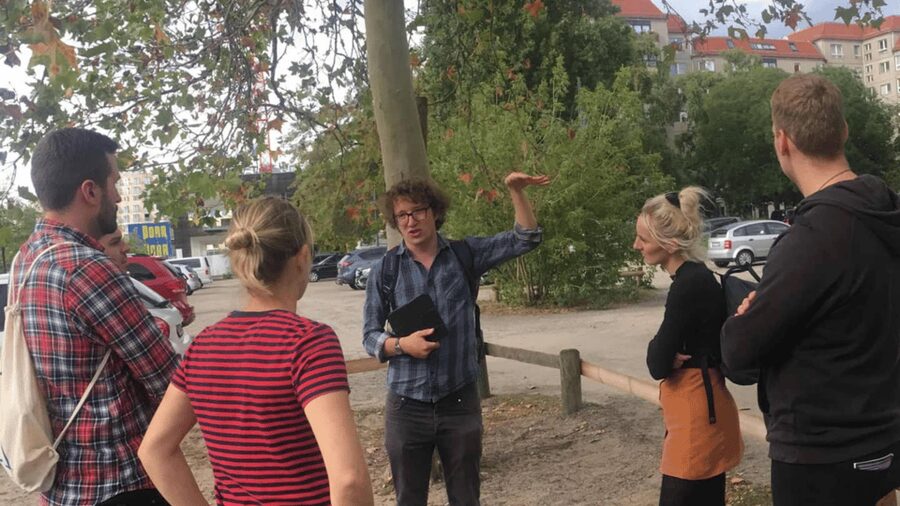
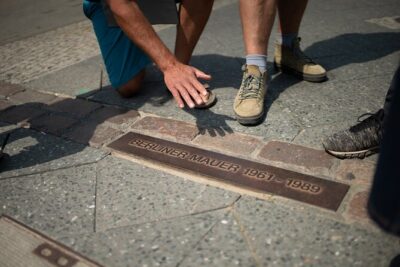
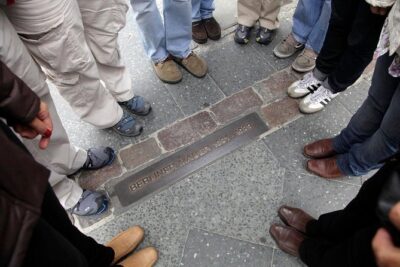
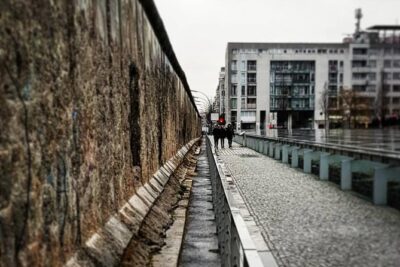
The Berlin Wall section explains the division of Berlin and the meaning of the Iron Curtain. The remaining wall fragments and marked routes help you picture a barrier that once separated neighborhoods, workplaces, families, and political systems.
A wall segment by itself can look modest. Its power comes from knowing what it controlled and why it was built. The guide connects the physical barrier to the conditions that followed World War II, including the division of Germany and the competing influence of the Western Allies and the Soviet Union.
The phrase Berlin Wall can bring to mind a single famous gallery of painted concrete. This tour aims for something broader. You learn how the wall affected the city and why its fall became a world event.
The route may not include every major wall memorial in Berlin, since the activity lasts only 2.5 hours and returns to the Brandenburg Gate. If you want extensive wall photography, watchtowers, or a longer look at escape stories, plan another visit to a dedicated wall site.
Still, this stop gives you the essential political lesson: the wall was not simply a barrier between two neighborhoods. It represented the wider conflict between East and West and the division of Europe after the war.
Checkpoint Charlie and the divided city
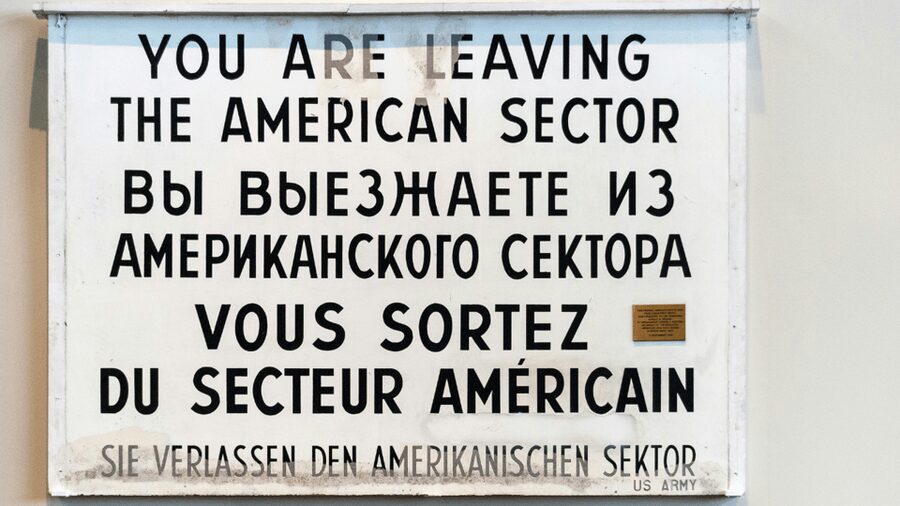
Checkpoint Charlie is one of Berlin’s most recognizable Cold War locations. The former crossing point became a symbol of confrontation between the United States and the Soviet Union, and of the daily reality of a city split into separate systems.
Today, the setting is heavily visited and commercialized. You may find souvenir shops, crowds, and staged photo opportunities around the famous guardhouse replica. That does not erase its historical value, but it means you should separate the modern tourist setting from the serious events connected with the crossing.
The guide helps make that distinction. Rather than treating Checkpoint Charlie as a quick photograph, the tour explains what it represented and how Berliners experienced division. You learn why the checkpoint mattered politically and how the city eventually moved toward unification.
I appreciate this kind of context because famous sites can lose their meaning when they become familiar images. A short explanation can turn a photo stop into a lesson about power, borders, and the risk of military confrontation.
The route’s then-and-now photographs
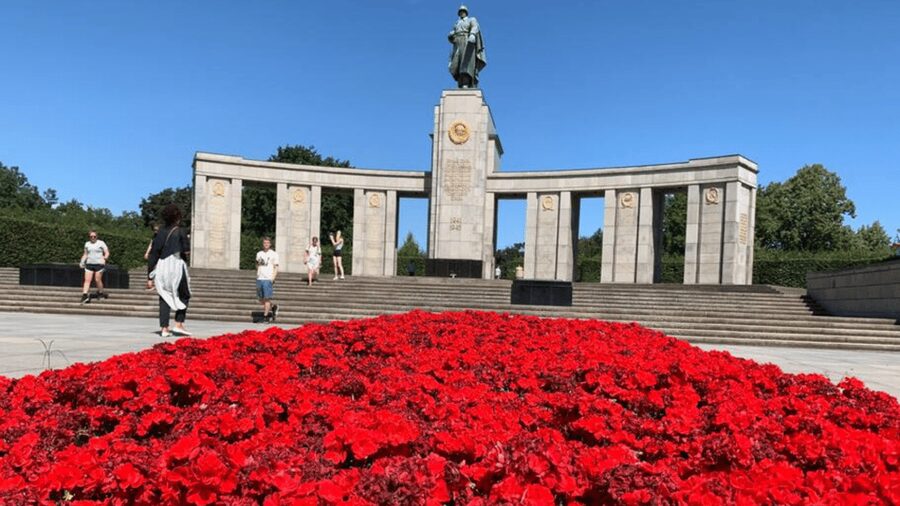
The included maps and then-and-now photographs are especially useful in Berlin. War damage, reconstruction, demolition, and modern development have changed the appearance of many central locations.
A photograph from the Nazi or Cold War period can show you what the same street looked like when it was covered with propaganda, rubble, barricades, or military controls. You then compare that image with today’s streetscape. This makes the city easier to read.
I would value these materials most at places where the original buildings have vanished. Without visual aids, you might walk past an important site and see only a modern office or an open patch of ground. The photographs give the absent history a physical reference.
The maps also help explain Berlin’s divided geography. The city’s borders and political zones were not abstract lines on a classroom map. They cut through streets and neighborhoods. A guide who can point to those changes while you are standing there adds real value.
What the $34 price gets you
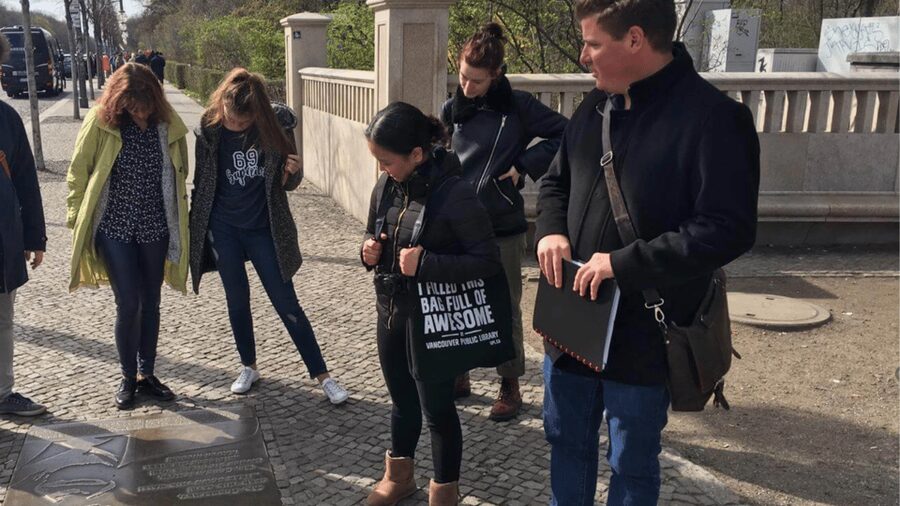
At $34 per person, the tour offers a reasonably priced way to cover several major historical locations with a guide. You are paying for an organized route, live interpretation in English, a small-group setting, and supporting photographs and maps.
The value is strongest if you are new to Berlin or want a broad historical orientation. Visiting the same places alone would cost less, but you would need to research the background, build the route, and work out why each site matters. The tour saves that preparation time.
It is less useful if you already know Berlin’s Nazi and Cold War history well or plan to spend several days with specialist museums and longer guided visits. In that case, you may prefer a narrower tour focused on one period.
The 2.5-hour length is a sensible compromise. It is long enough to connect the main sites without taking an entire day. The tradeoff is that most stops are viewed and discussed rather than explored at length. Think of it as a strong introduction, not a complete study of Berlin from 1933 to reunification.
Walking conditions and who should book
This is a walking tour, so comfortable shoes are essential. Bring water and a light snack, especially if you have another activity planned afterward. The tour runs rain or shine, so carry an umbrella or raincoat when the forecast looks poor.
The activity is listed as wheelchair accessible, which makes it a practical choice for many visitors with mobility needs. You should still be prepared for a city route with outdoor stops and changing conditions, and confirm any specific access concerns when booking.
I would recommend this tour to:
- First-time Berlin visitors who want the city’s major 20th-century events explained in order
- History-minded adults and older children who can handle serious subjects
- Visitors with limited time who want several central landmarks in one outing
- Anyone who prefers a guide’s explanation to reading signs at each stop
- People who want to understand the connection between Nazi Berlin, postwar division, and reunification
I would be more cautious about booking it for very young children. The content concerns dictatorship, persecution, war, and genocide, and the tour’s value depends on paying attention to that material.
How to make the most of the experience
Arrive early at the Brandenburg Gate Tourist Center and look for the blue umbrella. Wear shoes suited to several hours of city walking, and bring weather protection even if the morning looks clear.
Try to treat the route as a connected lesson rather than a checklist of photo stops. At each location, ask yourself what changed, who controlled the space, and how ordinary Berliners were affected.
If you are particularly interested in the Holocaust, set aside extra time for a museum or documentation center. If the Berlin Wall interests you most, visit another wall site after the tour. This experience gives you the framework, while additional visits can supply the detail.
The strongest praise attached to this experience concerns the guide’s handling of the material. Tom is singled out for being engaging, appropriate, and attentive to the whole group. Another assessment specifically credits the guide’s command of the subject and the fact that the expected sites were visited. Those are useful signs for a history tour, where clear explanation matters as much as the route.
Should you book the Hitler to Stalin tour?
Book it if you want a serious, well-organized introduction to Berlin’s Nazi and Cold War past without spending a full day on a guided program. The route covers the Brandenburg Gate, Reichstag, Holocaust Memorial, Hitler’s bunker site, former Gestapo headquarters area, Berlin Wall, and Checkpoint Charlie, then returns to the starting point.
The $34 price is sensible for the amount of ground and historical context covered. Just keep your expectations realistic: this is an outdoor overview with discussion, not a set of long museum visits. If you bring good shoes, weather protection, and enough attention for difficult subjects, it can give you a useful foundation for seeing Berlin with sharper eyes.
FAQ
Where does the tour start?
The tour starts at the Tourist Center at the Brandenburg Gate. Look for the blue umbrella.
Where does the tour end?
The tour ends back at the Brandenburg Gate meeting point.
How long does the tour last?
The walking tour lasts 2.5 hours. Starting times vary, so check availability when booking.
What language is the tour conducted in?
The tour is conducted in English with a live guide.
Is the tour wheelchair accessible?
Yes, the activity is listed as wheelchair accessible.
What should I bring?
Bring comfortable walking shoes, water, and light snacks. An umbrella or raincoat is recommended in unfavorable weather.
Can I cancel the booking?
Yes. You can cancel up to 24 hours in advance for a full refund. You can also reserve now and pay later.
More Cold War Tours in Berlin
- Cold War, Berlin Wall, Spies and the East Side Gallery
★ 5.0 · 1,024 reviews - Berlin: Cold War Walking Tour on Berlin Wall Route
★ 4.8 · 437 reviews - Berlin: Cold War Era History Guided Bike Tour
★ 4.8 · 413 reviews - Cold War, Berlin Wall, Spies and the East Side Gallery
★ 4.8 · 254 reviews
Just added around Berlin
- Private Walking Tour in Berlin: Hitler’s Germany & WWII★ 5.0 · 7 reviews
- The History of Berlin: WWII PRIVATE Walking Tour With Locals★ 5.0 · 209 reviews
- Private Berlin WWII and Cold War History Tour with Local Expert Guide★ 5.0 · 28 reviews
- Private Walking Tour Berlin 3 hours: Brandenburg, Historic Center★ 5.0 · 7 reviews
- Berlin: Private Bike Tour of the Berlin Wall and Third Reich★ 5.0 · 23 reviews
- Berlin: Guided Private Bike Tour to Explore the Highlights★ 5.0 · 12 reviews
- Berlin Photography Masterclass – Private Photography Lesson★ 4.5 · 23 reviews
- Group Driving Tour 1 to 6 people. Berlin Shore Excursion incl pick-up at Port★ 5.0 · 8 reviews
Cold War Tours, compared.
Cold War, Berlin Wall, Spies and the East Side Gallery
Read our review →

Cold War, Berlin Wall, Spies and the East Side Gallery
Read our review →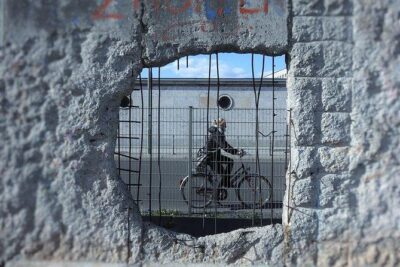
Explore The Berlin Wall: Cold War Berlin and Behind the Berlin Wall
Read our review →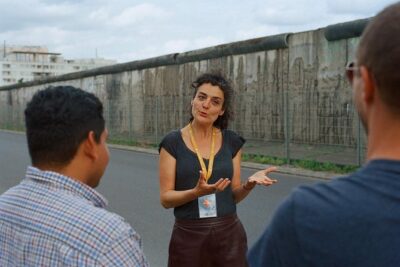
PRIVATE BEHIND THE BERLIN WALL and COLD WAR BERLIN TOUR
Read our review →Browse the lists this tour appears in