
Reviewed · MUSEUMS
Berlin: Museum Island Guided Walking Tour
Museum Island makes a grand first impression. This two-hour walk gives you a clear map of Berlin’s major museums, linking their buildings, collections, and political past before you decide where to spend your museum hours. I like the access to historic spaces such as the Altes Museum rotunda, Humboldt Forum courtyard, and Friedrichswerdersche Kirche. I also like the focus on architecture, not just famous objects.
The main thing to know is that museum admission is not included. You will see the buildings from outside and enter selected halls and spaces, but this is an introduction rather than a full museum visit. At $34 per person, it offers good value if you want context and orientation, though dedicated art lovers may still need separate tickets and several more hours afterward.
In This Review
- Key points before you book
- Why Museum Island needs an introduction
- Starting at the Bode Museum
- From the Pergamon Museum to the Old Arsenal
- Neue Wache and the weight of memory
- Friedrichswerdersche Kirche and its sculpture collection
- Humboldt Forum and the Schlüter Courtyard
- Lustgarten, Berlin Cathedral, and the Altes Museum
- Alte Nationalgalerie and the grand museum sequence
- Neues Museum and the final orientation
- What the $34 price really buys you
- Who will enjoy this walk most
- Practical advice for making the most of it
- Should you book the Museum Island tour?
- FAQ
- How long does the Museum Island guided walking tour last?
- What is the price of the tour?
- Where does the tour begin?
- Which languages are available?
- Does the tour include admission to the museums?
- Which interior spaces are included?
- Is the tour wheelchair accessible?
- Can I book a private group?
- Can I cancel the tour for a refund?
Key points before you book
- Two hours across Berlin’s cultural core: The route covers Museum Island, Unter den Linden, Lustgarten, Berlin Cathedral, and several important buildings nearby.
- Selected interiors are included: You enter the Bode Museum entrance hall, Friedrichswerdersche Kirche sculpture collection, Humboldt Forum’s Schlüter Courtyard, and the Altes Museum rotunda.
- A guide who brings the buildings to life: Guide Klaus Wehner is praised for his passion, clear explanations, and ability to adjust the pace, including for families with children.
- No museum gallery admission: The tour does not include entry to the full Bode, Pergamon, Neues, Altes, or other museum collections.
- A strong history and architecture focus: You hear about Germany’s first purpose-built museum building, Berlin’s changing political eras, and the huge granite bowl called the Granitschale.
- Good for a first Berlin visit: The walk helps you choose which museums deserve your limited time later.
Why Museum Island needs an introduction
Museum Island is easy to underestimate. You can walk across it in minutes, yet its buildings represent changing ideas about education, empire, monarchy, war, reconstruction, and public culture. Without some guidance, you may notice the grand facades but miss the arguments and ambitions behind them.
This tour treats the island as one connected story. Your guide explains why the museums were placed here, how their roles changed, and how Berlin’s past shaped the buildings you see today. That broad view is the real value. You are not simply looking at a row of handsome structures. You are learning why Berlin created this cultural center and why it matters.
The walk is also useful if you have only a short stay. In two hours, you get an outside look at the Bode Museum, Pergamon Museum, German Historical Museum, Humboldt Forum, Altes Museum, Alte Nationalgalerie, and Neues Museum, along with several nearby monuments and historic buildings.
The pace receives especially strong praise. Klaus Wehner is described as warm, enthusiastic, and able to explain complex subjects without turning the tour into a lecture. A family with a seven-year-old found the pace comfortable, while other participants appreciated the amount of detail packed into the route.
More Museums in Berlin
- Berlin: Natural History Museum Entrance Ticket
★ 4.6 · 3,382 reviews - Skip-the-Line: Berlin Wall Museum at Checkpoint Charlie
★ 4.1 · 2,041 reviews - Berlin: Museum Island Multiple Museum Entry Ticket
★ 4.4 · 2,007 reviews
Starting at the Bode Museum
Meet your guide in front of the Bode Museum’s main entrance, at the bottom of the stairs. The guide wears a name tag, which is helpful at a busy meeting point.
The Bode Museum is a fitting place to begin. Its rounded dome and position at the tip of Museum Island make it one of Berlin’s most memorable buildings. The first guided portion lasts about ten minutes and includes the entrance hall, where you can see the scale and decoration of the building before moving on.
The Bode Museum is associated with sculpture, Byzantine art, and the Numismatic Collection, but this walk does not provide general admission to the full museum. You are getting a sense of the building and its place within the island rather than a gallery tour.
That distinction matters. If you want to study the museum’s collection, plan a separate visit. If you want to understand why the building looks the way it does and how it fits the island’s grand plan, the opening stop does that well.
From the Pergamon Museum to the Old Arsenal
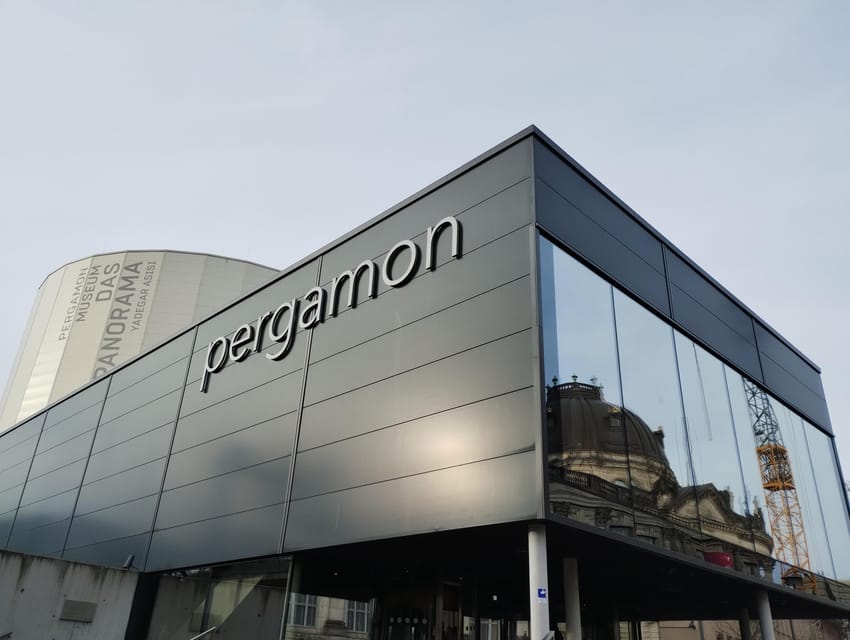
The route continues to the Pergamon Museum for another short guided stop. Its name is linked to major ancient architectural works, but the tour focuses on the museum’s role, design, and story rather than taking you through its collection.
The Pergamon Museum has been subject to changing access arrangements, so it is wise to view this stop as an exterior explanation unless your guide confirms otherwise. The tour price does not cover museum entry.
You then walk to the former Old Arsenal, known in German as the Zeughaus, on Unter den Linden. The building now houses the German Historical Museum. This is one of the most useful historical links on the route because the building’s own past reflects Berlin’s political changes.
You hear how the Old Arsenal fits into the city’s story and how its purpose changed over time. This adds welcome balance to the art museums. Museum Island is not only about sculpture, painting, or archaeology. It is also about power, national identity, and the way public buildings can be reused as governments and ideas change.
Neue Wache and the weight of memory
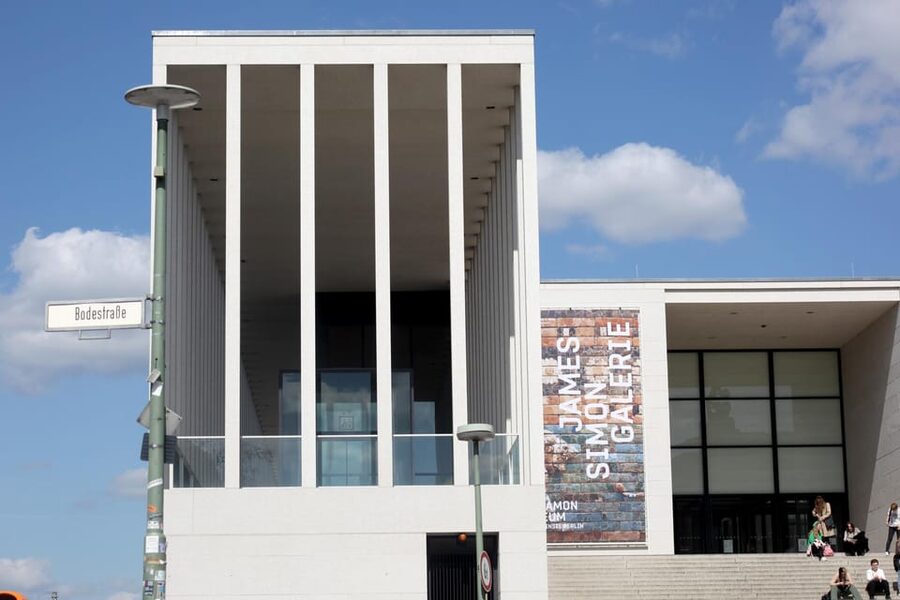
The walk reaches Neue Wache, a small but important building on Unter den Linden. The guide explains its place in Berlin’s history and the meaning attached to it.
This stop is valuable because it shifts the mood. The grand museums can feel ceremonial and triumphant, while Neue Wache brings the cost of German history into view. You are encouraged to look at the building as both architecture and a memorial shaped by political change.
The itinerary allows roughly ten minutes here. That is enough for an introduction, but not a long historical discussion. If memorials are a major interest for you, you may want to return on your own after the tour.
More Walking Tours in Berlin
- Discover Berlin Half-Day Walking Tour
★ 5.0 · 9,624 reviews - Berlin: Third Reich and Cold War 2 Hour Walking Tour
★ 4.9 · 6,830 reviews - Berlin: Discover Berlin Walking Tour
★ 4.9 · 5,998 reviews - Berlin’s Best: 2 Hour Walking Tour Third Reich and the Cold War
★ 5.0 · 5,486 reviews
Friedrichswerdersche Kirche and its sculpture collection
One of the tour’s included visits is the sculpture collection in Friedrichswerdersche Kirche. This is a welcome feature because it gives you an actual cultural interior rather than only exterior commentary.
The church adds a different architectural note to the walk. Its setting and collection help show how Berlin’s museums and cultural institutions extend beyond the most famous buildings on Museum Island. You may find this stop especially rewarding if you prefer quieter spaces and smaller collections to huge museum complexes.
The guide’s role is important here. A sculpture collection can be difficult to read without context, particularly when you have not planned a full visit. The tour gives you a starting point and helps connect the works to the wider museum district.
Humboldt Forum and the Schlüter Courtyard
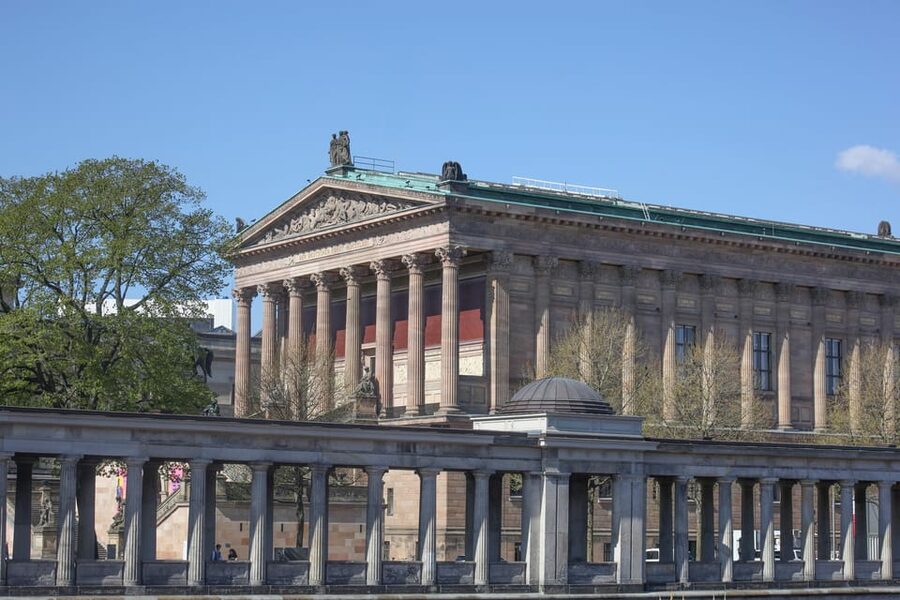
Next comes the Humboldt Forum, one of Berlin’s most discussed modern cultural projects. The building occupies a historic site and presents a striking contrast between reconstructed historical forms and contemporary cultural use.
The tour includes a visit to the Schlüter Courtyard. This is one of the clearest advantages over a walk that stays entirely outdoors. You get to experience an interior architectural space and hear how the building relates to Berlin’s earlier palace tradition and later changes.
The Humboldt Forum can raise questions about reconstruction, cultural ownership, and how institutions present collections from outside Europe. The information provided for this tour promises historical and architectural context rather than a full treatment of every debate. That is fair for a two-hour introduction, but you should not expect a specialist museum ethics seminar.
Lustgarten, Berlin Cathedral, and the Altes Museum
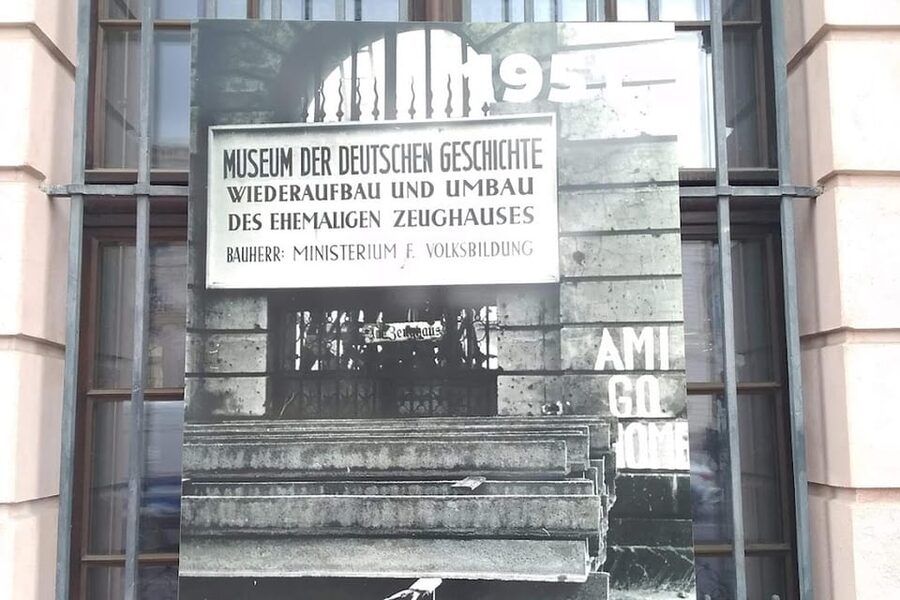
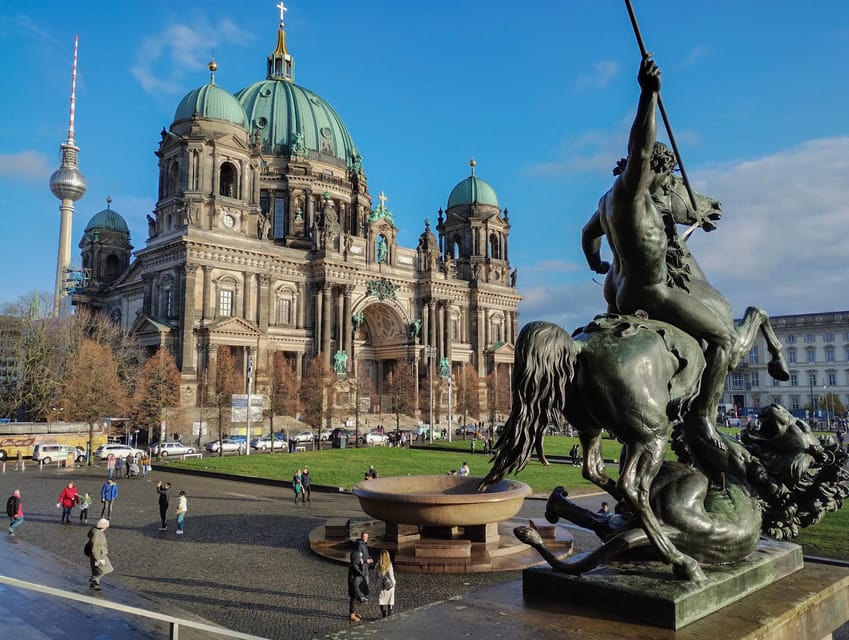
Lustgarten gives the walk an open public setting and a useful view across the central museum district. From here, the arrangement of Berlin Cathedral, the Altes Museum, and nearby buildings becomes easier to understand.
Berlin Cathedral is another major visual landmark. The guide explains its place in the area and helps you read the relationship between the cathedral, the square, and the museums. You will not be touring the cathedral as part of the included museum access, so treat this as an architectural and historical stop.
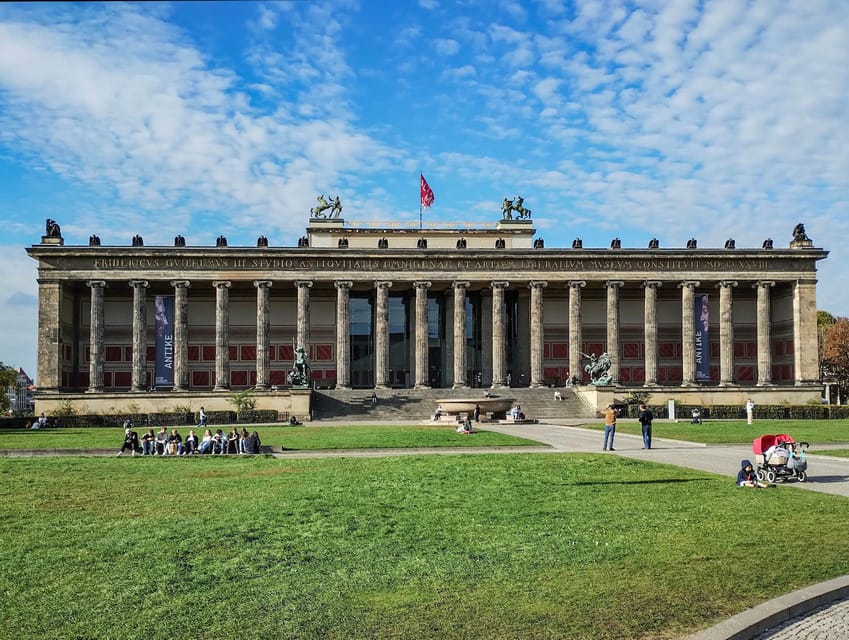
The Altes Museum is one of the most important points on the route. It is associated with Germany’s first purpose-built museum building, a detail that helps explain why Museum Island became such an influential cultural center. The building was planned as a public institution, not simply as a private collection hidden behind palace doors.
The tour includes entry to the Altes Museum rotunda. This is a real highlight. The circular space gives you a powerful sense of the building’s original ambition and lets you appreciate the architecture from within. You do not receive full admission to the museum’s galleries, but the rotunda provides more than a quick photograph from the street.
The guide also tells the story of the Granitschale, the enormous granite bowl associated with the Altes Museum. It is an entertaining and memorable detail, and exactly the sort of fact that helps a building stick in your mind after the walk.
Alte Nationalgalerie and the grand museum sequence

The Alte Nationalgalerie follows in the route. Its elevated position and classical design contribute to the formal rhythm of Museum Island. The guide explains the building’s role and its relationship to the neighboring museums.
You will see how the island was designed as a sequence of cultural monuments rather than a single institution. Each building has its own style and purpose, yet the group works as a unified public setting.
The tour does not include admission to the Alte Nationalgalerie. That is not a flaw, as long as you understand the format. The guide is helping you decide what to visit later. If nineteenth-century painting is high on your list, make a note to return with a separate ticket.
Neues Museum and the final orientation
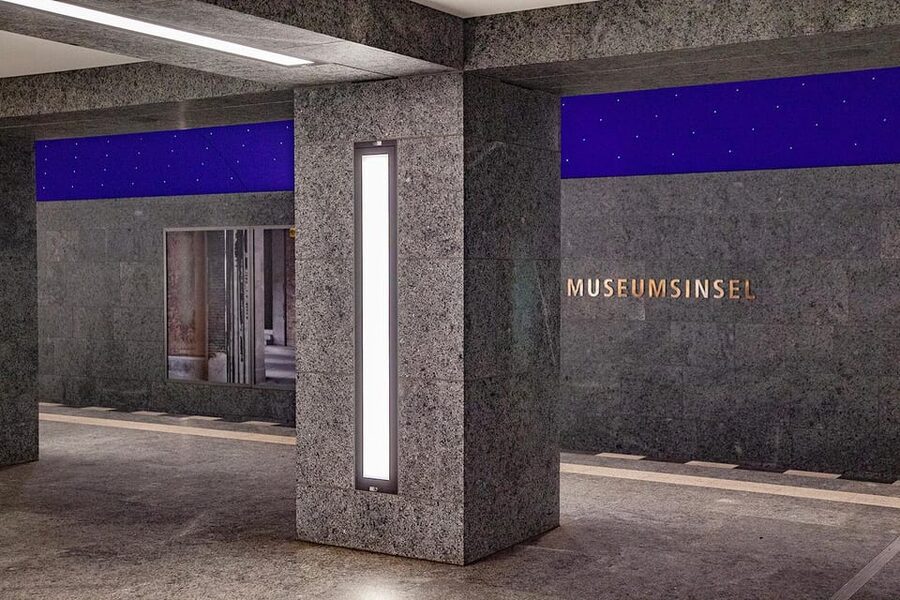
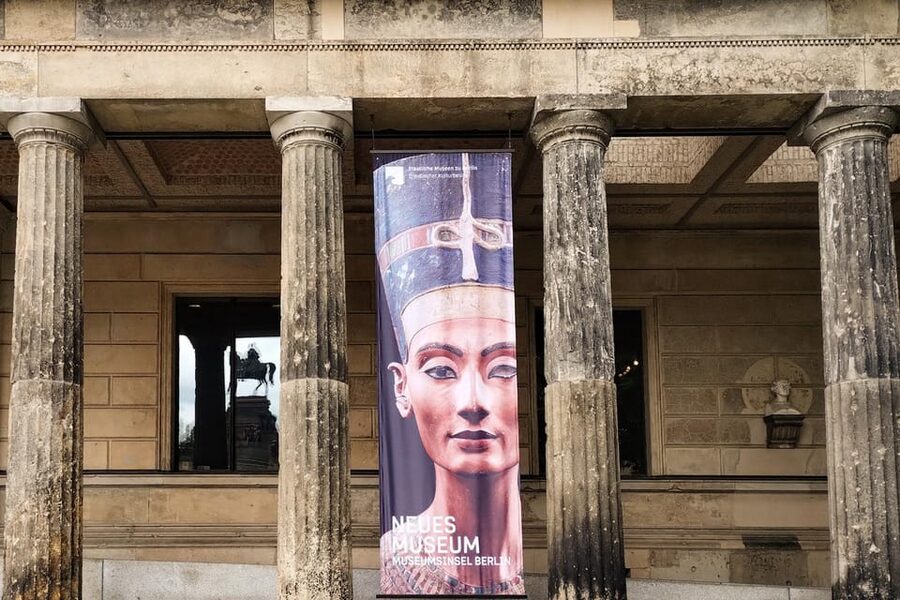
The route ends with the Neues Museum. Its story is especially tied to Berlin’s wartime damage, later restoration, and changing museum plans. The guide uses the building to show how the city has dealt with loss and reconstruction.
This is a fitting final stop because it brings several themes together: old buildings, new uses, war damage, restoration, and the continued importance of public museums. You see the building from outside and hear about its place on Museum Island, but entry to the collection is not included.
By the end, you should have a practical sense of which museums deserve your time. The Neues Museum may appeal if you want ancient Egyptian and prehistoric collections. The Bode Museum may suit you if sculpture and Byzantine art catch your eye. The Altes Museum offers classical antiquities, while the Alte Nationalgalerie focuses on painting and sculpture from later periods. The guide does not replace a museum visit, but the orientation can prevent you from wandering into the first open door without a plan.
What the $34 price really buys you
At $34 per person, this is not a cheap way to enter Berlin’s museums. It is a reasonably priced guided orientation to one of the city’s most complex cultural areas.
You are paying for two hours with an expert guide, access to selected architectural spaces, and a connected explanation of the district. You are not paying for museum tickets, audio guides, or a detailed tour of individual collections.
I think the value is strongest in three situations:
- You have limited time in Berlin and want a fast, useful introduction.
- You plan to visit one or more museums afterward and want help choosing.
- You care about architecture and city history as much as individual artworks.
The value is weaker if you already know Museum Island well or want to spend two hours examining objects inside a single museum. In that case, a museum ticket may be a better use of your time.
The tour can be booked with free cancellation up to 24 hours before the start, and you can reserve now and pay later. Those terms make it easier to fit into a changing Berlin schedule. English and German tours are available, and a private group option is offered.
Who will enjoy this walk most
I would recommend this tour to first-time Berlin visitors, families, architecture fans, and anyone who feels unsure about how to approach Museum Island. It also suits people who want a concentrated introduction before returning to a museum independently.
Klaus Wehner receives repeated praise for his enthusiasm and ability to answer questions. His background as a freelance artist and guide adds a useful creative viewpoint, especially when discussing buildings and sculpture. His style is described as engaging rather than rehearsed, which matters on a route containing a lot of dates and names.
Families should note the positive experience with a seven-year-old and a comfortable pace. Still, the subject is mainly architecture, art, and German history, so younger children may need some help staying interested.
The tour is wheelchair accessible, though the route includes several historic buildings and outdoor areas. If you have specific mobility needs, confirm the details when booking. Private groups are available if you want a more personal pace or have a special interest.
Practical advice for making the most of it
Wear comfortable shoes. The route covers a lot of ground around Museum Island and nearby Unter den Linden, even though the total time is only two hours.
Arrive at the Bode Museum entrance with enough time to find the guide at the bottom of the stairs. Look for the name tag. Starting promptly matters because the tour has many stops and only about ten minutes for each one.
Bring a short list of museums you might visit later. Ask the guide which buildings best match your interests. The tour becomes more useful when you treat it as a planning session, not only a sightseeing walk.
Keep your expectations clear about interior access. The included spaces are the Bode entrance hall, Friedrichswerdersche Kirche sculpture collection, Humboldt Forum Schlüter Courtyard, and Altes Museum rotunda. Full admission to the museums is not included.
If you have more than one day in Berlin, consider taking the walk early in your stay. You can then use the remaining time to return to the Altes Museum, Neues Museum, Bode Museum, Alte Nationalgalerie, or another site with a better idea of what you want to see.
Should you book the Museum Island tour?
Book it if you want a lively two-hour introduction to Berlin’s museum district, especially if Klaus Wehner is leading your departure. The strongest parts are the connected story of the buildings, the selected interior spaces, the Granitschale detail, and the help choosing future museum visits.
Skip it if your only goal is gallery time or if you already have a firm plan for one museum. The $34 fee does not include full entry, so dedicated art fans should budget separately.
For most first-time visitors, this is a smart way to get your bearings fast without sacrificing historical depth. You leave with a better understanding of Museum Island and a clearer plan for the rest of your Berlin cultural day.
FAQ
How long does the Museum Island guided walking tour last?
The tour lasts two hours.
What is the price of the tour?
The price is $34 per person.
Where does the tour begin?
Meet your guide in front of the main entrance to the Bode Museum, at the bottom of the stairs. The guide wears a name tag.
Which languages are available?
The tour is offered in English and German.
Does the tour include admission to the museums?
No. Entry to the museums is not included.
Which interior spaces are included?
The tour includes the Bode Museum entrance hall, the sculpture collection in Friedrichswerdersche Kirche, the Schlüter Courtyard of the Humboldt Forum, and the rotunda of the Altes Museum.
Is the tour wheelchair accessible?
Yes, the activity is listed as wheelchair accessible.
Can I book a private group?
Yes. A private group option is available.
Can I cancel the tour for a refund?
Yes. You can cancel up to 24 hours in advance for a full refund. You can also reserve now and pay later.
Just added around Berlin
- Private Walking Tour in Berlin: Hitler’s Germany & WWII★ 5.0 · 7 reviews
- The History of Berlin: WWII PRIVATE Walking Tour With Locals★ 5.0 · 209 reviews
- Private Berlin WWII and Cold War History Tour with Local Expert Guide★ 5.0 · 28 reviews
- Private Walking Tour Berlin 3 hours: Brandenburg, Historic Center★ 5.0 · 7 reviews
- Berlin: Private Bike Tour of the Berlin Wall and Third Reich★ 5.0 · 23 reviews
- Berlin: Guided Private Bike Tour to Explore the Highlights★ 5.0 · 12 reviews
- Berlin Photography Masterclass – Private Photography Lesson★ 4.5 · 23 reviews
- Group Driving Tour 1 to 6 people. Berlin Shore Excursion incl pick-up at Port★ 5.0 · 8 reviews
Museums, compared.



Skip-the-Line: Berlin Wall Museum at Checkpoint Charlie
Read our review →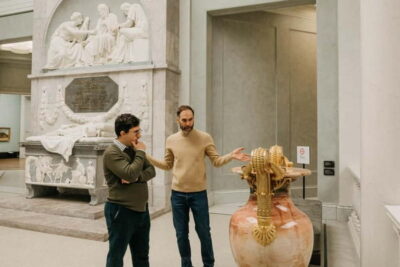
Browse the lists this tour appears in