
Reviewed · BERLIN WALL TOURS
Berlin: Cold War History and Berlin Wall Guided Walking Tour
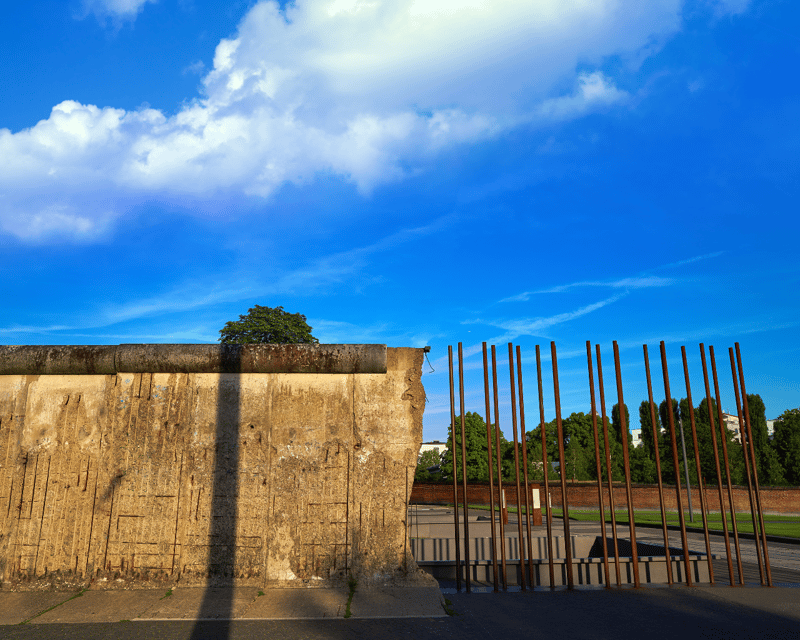
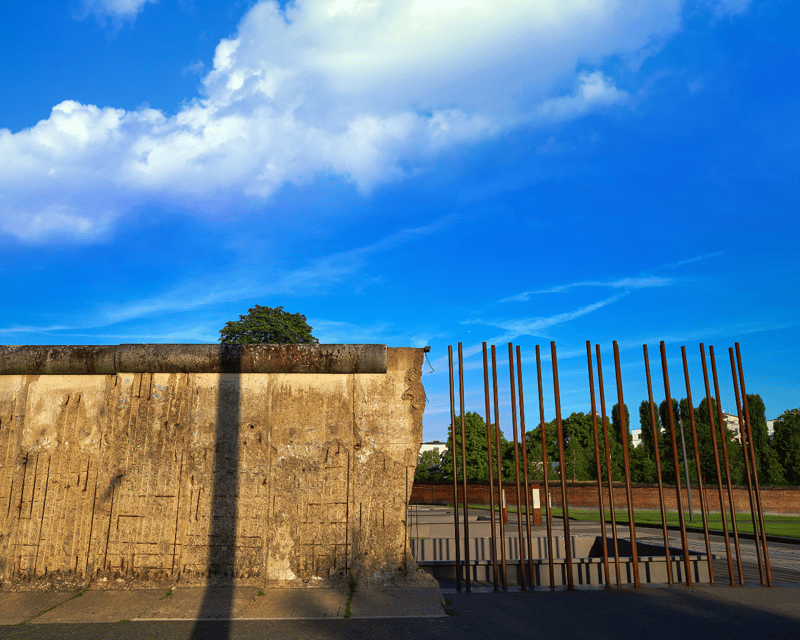
Berlin’s old divide still hides in plain sight. This three-hour walk connects Brandenburg Gate, Checkpoint Charlie, Potsdamer Platz, and the Berlin Wall Memorial with the political and personal stories that make each place matter. I like the clear Cold War focus and the way guides such as Eugen, Cieran, and Paul use escape stories, family photos, and plain explanations to bring the period to life. You also see a 200-meter stretch of wall along Niederkirchnerstrasse and a former DDR watchtower.
The price is $31 per person, a fair deal for three hours with a live local guide. The main drawback is that much of the tour takes place beside city streets, so traffic noise can make some explanations harder to hear. Wear good shoes, face the guide when possible, and dress for the weather.
In This Review
- Key details worth knowing before you go
- Why this Cold War walk is worth your time
- Starting at Brandenburg Gate and Ebertstraße
- Berlin Wall remains and Niederkirchnerstrasse
- Topography of Terror and Potsdamer Platz
- Checkpoint Charlie in 25 minutes
- Seventy-five minutes at the Berlin Wall Memorial
- What the guides add to the experience
- The walking conditions and pace
- Is $31 a fair price?
- Who should book this walk?
- Should you book the Berlin Cold War walk?
- FAQ
- Where does the tour begin?
- Where does the tour finish?
- How long does the walking tour last?
- Which languages are available?
- Which main sites are included?
- How much time is spent at the Berlin Wall Memorial?
- What should I bring?
- Is the tour wheelchair accessible?
Key details worth knowing before you go
- The walk begins beside Brandenburg Gate: Meet outside Hopfingerbräu at Ebertstraße 24, then return to the same point.
- The Berlin Wall Memorial gets the most time: The guided visit lasts about 75 minutes, giving the tour its strongest focus.
- Checkpoint Charlie is only one part of the story: You also visit Potsdamer Platz, Topography of Terror, and surviving wall sections.
- Personal stories are a major strength: Guides have shared family photographs and detailed accounts of escape attempts and daily life behind the Wall.
- Plan for three hours outdoors: Comfortable shoes and weather-appropriate clothing are essential, even in snow or cold.
- English and German tours are available: The walk is also listed as wheelchair accessible.
Why this Cold War walk is worth your time
Berlin offers no shortage of history tours, but this one has a useful purpose: it explains how a defeated postwar city became the front line of a world conflict. You are not simply taken to famous photo stops. The guide links the sites together, showing why the Wall appeared, what it divided, and why its fall mattered far beyond Berlin.
I especially like the human scale of the experience. Dates and political labels can feel distant, but stories of escape tunnels, border crossings, separated families, and life on opposite sides make the subject easier to grasp. Guides Eugen and Cieran received especially warm praise for their storytelling, while Paul was noted for his strong command of the subject and his ability to answer questions.
This is still a walking tour, not a museum visit. You spend much of the time outside, often near roads and open public spaces. If you want a quiet, highly visual experience with lots of time to read displays, you may prefer visiting the Berlin Wall Memorial on your own afterward. If you want the sites explained in sequence, this tour gives you a useful framework.
More History Tours in Berlin
- Berlin: Natural History Museum Entrance Ticket
★ 4.6 · 3,382 reviews - Berlin: World Heritage Cruise to Potsdam
★ 4.5 · 1,435 reviews - Berlin Historical Highlights Walking Tour
★ 4.9 · 657 reviews
Starting at Brandenburg Gate and Ebertstraße
The meeting point is outside Hopfingerbräu, next to Brandenburg Gate. That makes the start easy to find, especially if you are already visiting the government quarter or walking from central Berlin. The tour returns to Ebertstraße 24 at the end, so you do not need to arrange a second pickup point.
Brandenburg Gate is a fitting place to begin. Today it is one of Berlin’s most familiar monuments, but during the city’s division it sat near the boundary between East and West Berlin. The guide uses the setting to explain the uneasy postwar arrangement among the Soviet Union and the Western Allies, then shows how that alliance broke down.
That opening context is important. Without it, the Wall can seem like an isolated construction project. The tour instead places it within the tension between competing political systems, a divided Germany, and a divided Berlin.
The first stop lasts about 15 minutes. That is enough time to establish the main story, but not enough for a lengthy monument lecture. I see that as a good choice on a three-hour route, since the stronger evidence of the division comes later.
Berlin Wall remains and Niederkirchnerstrasse
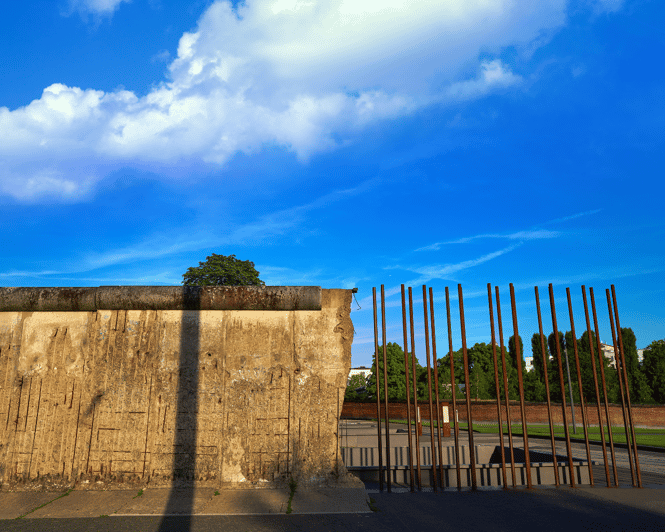
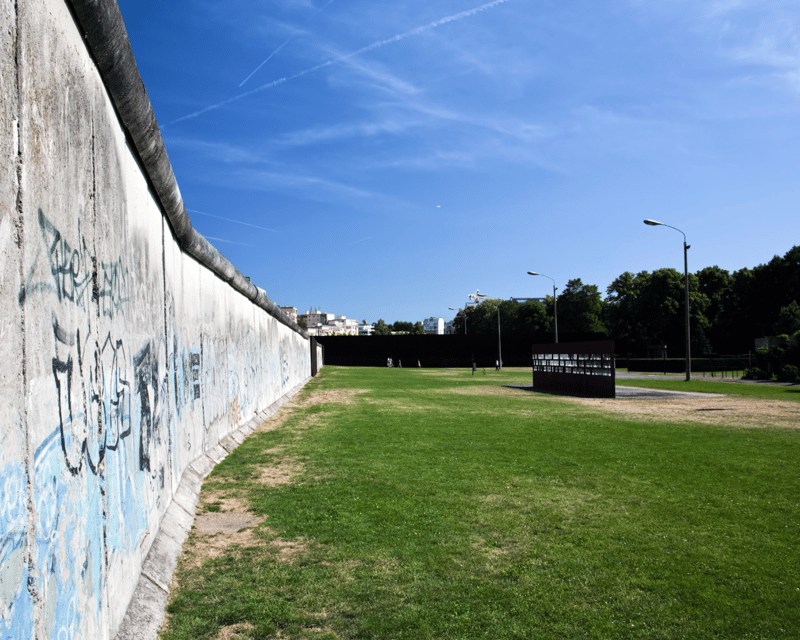
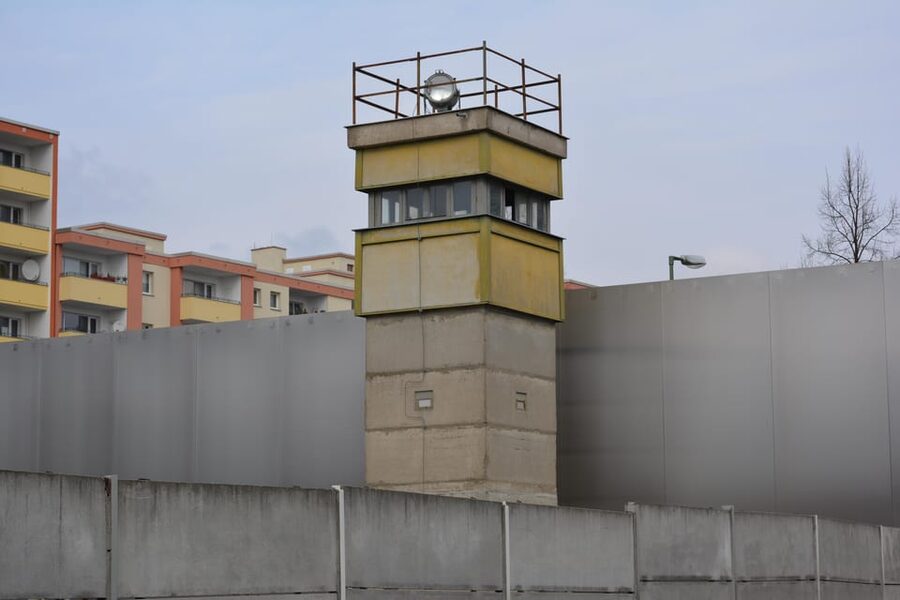
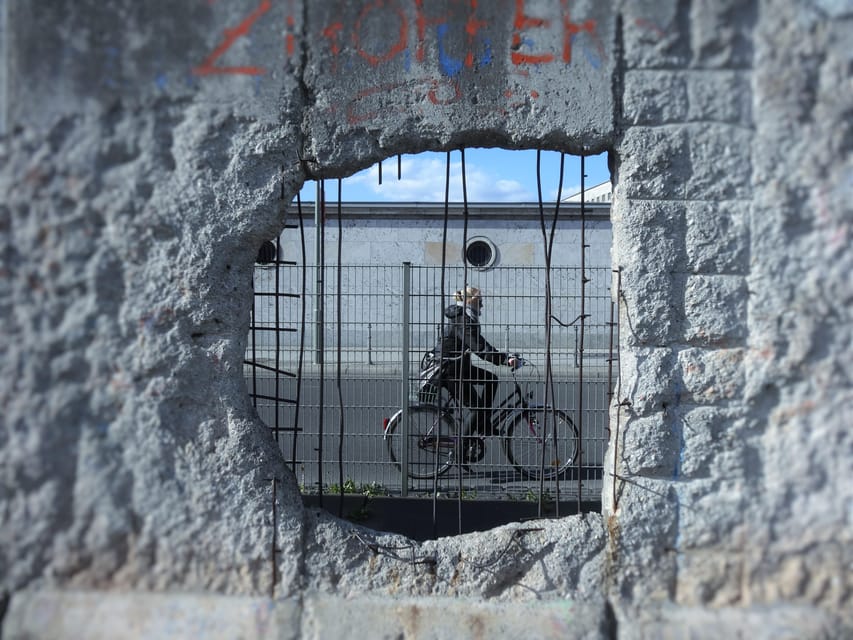
One of the most useful features of the route is that it does not rely only on reconstructed displays. You see surviving traces of the former Wall, including a 200-meter stretch along Niederkirchnerstrasse. These remains help you understand that the barrier was not a single simple wall. It was part of a border system that controlled movement through the city.
The tour also includes a former DDR watchtower. Details such as this can be easy to miss when you walk through Berlin alone. A guide can point out what you are looking at and explain how it fit into the wider border system.
The scheduled visit to the Wall lasts around 25 minutes. That time is long enough to inspect the remains and hear the main explanation without turning the walk into a technical study of construction methods. The exact amount of time spent looking at any one feature can vary with the group and the guide.
This is also where the human stories begin to carry more weight. The guide explains what it meant to live with a hard border cutting through streets, neighborhoods, and personal relationships. The best moments of this tour appear to come when facts are tied to individual choices: who tried to escape, what risks people took, and what happened to those who were caught.
Topography of Terror and Potsdamer Platz
The stop at Topography of Terror lasts about 15 minutes. This site is tied to the Nazi period rather than being solely a Cold War location. Its inclusion may seem surprising at first, but it helps place Berlin’s postwar division within the larger story of Germany’s twentieth century.
The walk does not treat the Cold War as if it began from nowhere. Germany had been defeated, occupied, and divided after the Second World War. The choices made by the occupying powers shaped the later rivalry between East and West. A short stop here helps connect the dictatorship that came before with the political conflict that followed.
You then visit Potsdamer Platz for about 15 minutes. This area is one of the clearest places to sense how much Berlin has changed. The tour uses it to discuss the former border and the way the divided city affected a central urban space.
Do not expect every stop to offer a large amount of surviving Wall material. Some locations are valuable because of what once happened there, not because a major structure remains. Potsdamer Platz is especially useful for that reason. It helps you picture the gaps, barriers, and empty zones that once shaped movement through Berlin.
These two stops also break up the route. You are not spending three straight hours beside one memorial display. Instead, the walk shifts between surviving evidence, rebuilt city spaces, and places that require explanation to understand.
More Walking Tours in Berlin
- Discover Berlin Half-Day Walking Tour
★ 5.0 · 9,624 reviews - Berlin: Third Reich and Cold War 2 Hour Walking Tour
★ 4.9 · 6,830 reviews - Berlin: Discover Berlin Walking Tour
★ 4.9 · 5,998 reviews - Berlin’s Best: 2 Hour Walking Tour Third Reich and the Cold War
★ 5.0 · 5,486 reviews
Checkpoint Charlie in 25 minutes
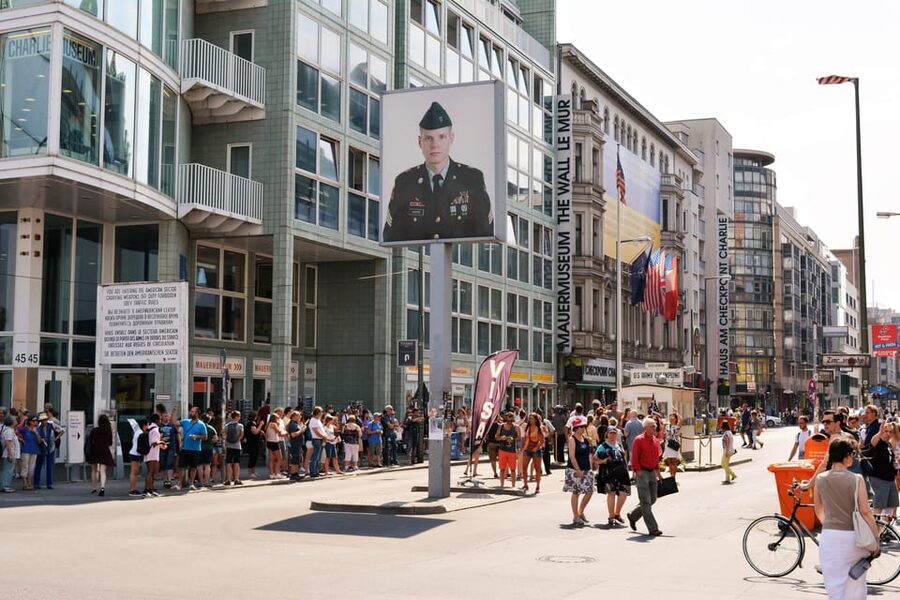
Checkpoint Charlie is the most famous border crossing on this route. The guided portion lasts about 25 minutes, giving you time to understand why this ordinary-sounding checkpoint became such a powerful symbol of the divided city.
The name is familiar, but a quick photograph does not tell you much. The guide explains its role as a crossing between East and West Berlin and places it within the wider system of border control. This is where the political tension of the Cold War becomes especially clear.
Checkpoint Charlie can feel busy and theatrical compared with quieter memorial sites. That is part of the point, but it can also make the stop feel less solemn. I would treat it as a place for explanation rather than expecting an untouched historical setting.
The guide-led format helps. You can ask questions about the crossing, the border, and the people who tried to get through. Guides have been praised for answering with tact and patience, which matters when the subject turns from international politics to personal danger.
The stop is also a reminder that famous places are not always the most complete ones. Checkpoint Charlie is an essential symbol, but the Berlin Wall Memorial later in the tour offers a more extended and reflective look at the actual border system.
Seventy-five minutes at the Berlin Wall Memorial
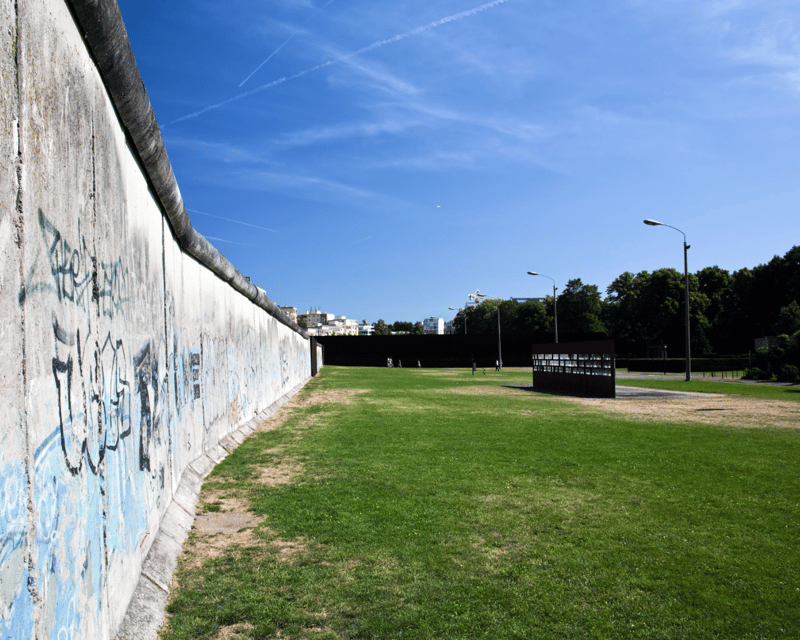
The Berlin Wall Memorial is the heart of the experience. The guided portion lasts about 75 minutes, far longer than any other stop. That timing tells you where the tour places its main emphasis.
Here, the guide commemorates the city’s division and the people who died because of it. The extended visit lets you look beyond the Wall’s political meaning and consider the human cost. You learn why the border was built, how it affected daily life, and what led to its eventual fall.
This is also where a strong guide can make the biggest difference. Eugen has been praised for explaining not only what happened, but when and why it happened. Cieran has used photographs from his own family’s experience with the Berlin Wall, adding a personal layer that a standard script cannot provide.
Those details can make the memorial more than a collection of dates. You may hear about daring escapes, failed attempts, and the practical realities of living on either side. The stories show both courage and tragedy. They also make clear that the Wall was not only a line between political systems. It was a barrier that shaped work, family life, friendships, and basic freedom of movement.
The memorial is the place where I would pay closest attention to the guide’s explanations, then allow yourself a little quiet time to look around. A walking tour has to keep moving, but this stop has enough time for the subject to settle.
What the guides add to the experience
The quality of this tour rests heavily on the person leading it. The strongest comments describe guides who explain the sequence of events clearly, keep the group engaged, and handle difficult questions with care.
Eugen is noted for powerful stories, personal insight, and details that are not always found in a guidebook. Cieran has been praised for keeping the group’s energy up through heavy snow and cold, while also sharing family photographs. Paul is described as highly informed about the Cold War and the Berlin Wall.
Those names are useful, but guide assignments can change. I would book this for the structure and subject, not on the promise of one specific person. Still, the pattern is encouraging: the guides appear to bring more than memorized dates to the walk.
One practical issue is sound. Traffic can interrupt explanations, especially at roadside stops. Try to stand where you can see the guide’s face, and do not drift too far behind the group. One useful comment about the tour specifically noted that facing the group and speaking at a measured pace helps in noisy areas.
The walking conditions and pace
The tour lasts three hours and covers several central Berlin locations on foot. You should be comfortable walking for that length of time and standing outdoors during each explanation. Good shoes matter more here than stylish shoes.
The activity is listed as wheelchair accessible, which is important for planning. Still, the route includes public streets, memorial spaces, and outdoor stops, so you may want to confirm current route details if you have specific mobility needs.
Weather can shape the experience. A guide kept the group going through snow and cold, but that does not mean you should underdress. Bring weather-appropriate clothing and expect the tour to continue outdoors in changing conditions.
Traffic noise is the clearest practical drawback. It does not ruin the walk, but it can soften the impact of a carefully told story. Stay near the guide, listen closely, and consider asking for a point to be repeated if a vehicle drowns it out.
Is $31 a fair price?
At $31 per person, this is a sensible price for a three-hour guided walk with a local historian. You are paying for a connected explanation across several major sites, not just access to places that are free to enter.
The value is strongest if you are new to Berlin’s Cold War story. A guide can save you from seeing Brandenburg Gate, Checkpoint Charlie, and the Wall Memorial as separate attractions. The route gives you a basic timeline and shows how the sites relate to one another.
The price is less compelling if you already know the subject well and prefer to read memorial panels at your own pace. You will also spend time walking between locations rather than inside a museum with climate control and seating.
Flexible booking adds practical value. You can cancel up to 24 hours before the start for a full refund, and you can reserve now and pay later. Starting times vary, so check availability when choosing a date.
Who should book this walk?
I would recommend it to first-time Berlin visitors who want a clear introduction to the city’s Cold War past. It also suits anyone who finds political history easier to understand through streets, borders, and personal stories rather than a lecture hall.
Families with older children may find the escape stories and visible Wall remains engaging, though the subject includes death, repression, and separation. People with a strong interest in twentieth-century Germany will appreciate the links between the Nazi era, postwar occupation, the Cold War, and reunification.
You may want another plan if you dislike walking, cold weather, or outdoor explanations. The tour is not designed as a relaxed sightseeing stroll. It asks you to concentrate, keep up, and think about painful events.
Should you book the Berlin Cold War walk?
Yes, if you want Berlin’s divided past explained by a real guide rather than assembled from disconnected photo stops. The Berlin Wall Memorial gives the tour its strongest section, while Checkpoint Charlie, Potsdamer Platz, Topography of Terror, and Brandenburg Gate fill in the political setting.
Book it early in your Berlin stay if possible. The walk can give you a useful frame for later visits to museums and memorials. At $31, it offers solid value, especially when the guide brings the subject to life with escape stories, family photographs, and careful answers to difficult questions.
Go prepared for traffic noise, cold, and three hours on your feet. If that sounds manageable, this is a thoughtful and worthwhile way to understand why Berlin was divided, how people lived with the Wall, and why its fall changed the city.
FAQ
Where does the tour begin?
The tour begins at Ebertstraße 24, outside Hopfingerbräu next to the Brandenburg Gate.
Where does the tour finish?
The walk returns to the starting point at Ebertstraße 24.
How long does the walking tour last?
The tour lasts three hours.
Which languages are available?
The tour is available in English and German.
Which main sites are included?
The route includes Brandenburg Gate, Berlin Wall remains, Topography of Terror, Potsdamer Platz, Checkpoint Charlie, and the Berlin Wall Memorial.
How much time is spent at the Berlin Wall Memorial?
The guided visit to the Berlin Wall Memorial lasts about 75 minutes.
What should I bring?
Bring comfortable shoes and clothing suited to the weather. The tour takes place outdoors and may be affected by cold or snow.
Is the tour wheelchair accessible?
Yes, the activity is listed as wheelchair accessible.
More Cold War Tours in Berlin
- Berlin: Cold War Era History Guided Bike Tour
★ 4.8 · 413 reviews - Cold War, Berlin Wall, Spies and the East Side Gallery
★ 4.8 · 254 reviews - Explore The Berlin Wall: Cold War Berlin and Behind the Berlin Wall
★ 5.0 · 168 reviews - Cold War and Berlin Wall Tour in Italian
★ 5.0 · 81 reviews
More Berlin Wall Tours in Berlin
- Skip-the-Line: Berlin Wall Museum at Checkpoint Charlie
★ 4.1 · 2,041 reviews - Cold War, Berlin Wall, Spies and the East Side Gallery
★ 5.0 · 1,024 reviews - Berlin: Guided Bike Tour of the Berlin Wall and Third Reich
★ 4.7 · 499 reviews - Berlin: Cold War Walking Tour on Berlin Wall Route
★ 4.8 · 437 reviews
Just added around Berlin
- The History of Berlin: WWII PRIVATE Walking Tour With Locals★ 5.0 · 209 reviews
- Private Walking Tour in Berlin: Hitler’s Germany & WWII★ 5.0 · 7 reviews
- Private Berlin WWII and Cold War History Tour with Local Expert Guide★ 5.0 · 28 reviews
- Private Walking Tour Berlin 3 hours: Brandenburg, Historic Center★ 5.0 · 7 reviews
- Berlin: Private Bike Tour of the Berlin Wall and Third Reich★ 5.0 · 23 reviews
- Berlin: Guided Private Bike Tour to Explore the Highlights★ 5.0 · 12 reviews
- Berlin Photography Masterclass – Private Photography Lesson★ 4.5 · 23 reviews
- Group Driving Tour 1 to 6 people. Berlin Shore Excursion incl pick-up at Port★ 5.0 · 8 reviews
Berlin Wall Tours, compared.
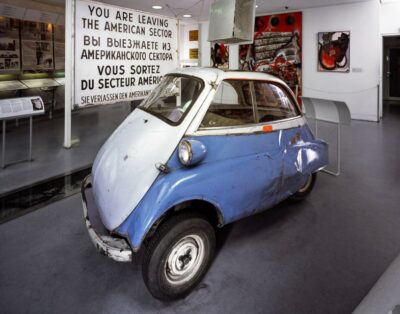
Skip-the-Line: Berlin Wall Museum at Checkpoint Charlie
Read our review →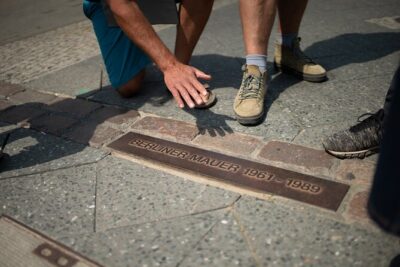
Cold War, Berlin Wall, Spies and the East Side Gallery
Read our review →
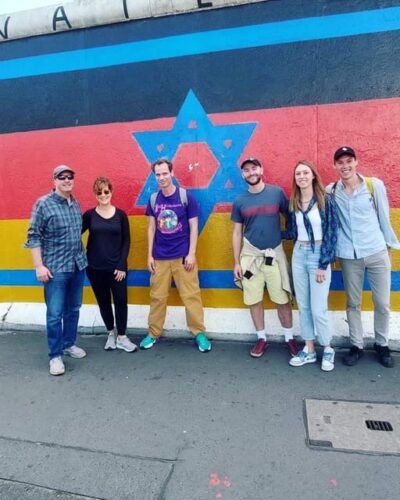
Cold War, Berlin Wall, Spies and the East Side Gallery
Read our review →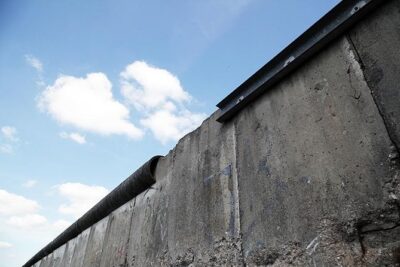
East Berlin and the Berlin Wall 2-Hour Walking Tour
Read our review →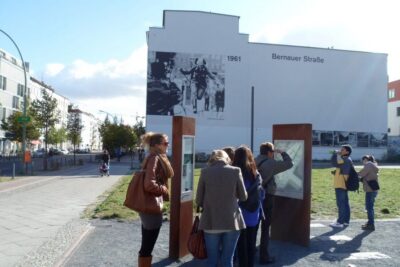
Browse the lists this tour appears in